 Great news: New Directions is putting out a new edition of Helen DeWitt’s The Last Samurai, which is without a doubt one of the best, most surprising, and most moving novels I’ve read in the last decade or more. I’m excited to reread it when it appears in all its finery. In the meantime, here’s what I wrote about it when I read it for the first time.
The Last Samurai is the story of a single mother, Sybilla, and her son, whom she calls “Ludo”–though on his birth certificate it says either ‘David’ or ‘Stephen,’ ‘one or the other.’ It makes sense that Sybilla would consider it pointless to be certain, because one of the things this novel is about is precisely how we figure out and then live up to who we think we are. It’s also about the accidents that determine the lives we lead, regardless of who we might be, and about the choices and values and loves and hates and languages and books and ideas and music and art and movies and people that constitute those lives and make them worth living–or not. It’s a celebration of genius and an attack on mediocrity, a paean to the human capacity to create and learn and think and reason and a lament for the seductions of banality. It’s about quests and heroes and, of course samurai. Its parade of erudition is at once dazzling and surprisingly entertaining, and also inspiring, because it’s in the service of intellectual curiosity and love of knowledge, not accomplishment or grades or prizes. It’s Ludo’s curiosity, in particular, that gives the novel its momentum: he is a child prodigy whose brilliance at once thrills and terrifies his mother. Ludo’s voice, and his quest for his father, eventually take over the novel from Sybilla, but she remains its presiding genius; without her, Ludo’s endless questions would go unanswered. Though their relationship is never sentimental (indeed, they rarely seem like parent and child, at least in the ways we would casually expect), their attempts to care for each other have an emotional intensity and an intellectual integrity that are ultimately very moving. A book so extravantly episodic and allusive risks losing its humanity. Somehow, miraculously, for all its jouissance, all its postmodern display, The Last Samurai never does.
This is a novel that feels exceptionally difficult (and more than usually pointless) to excerpt from–and yet, the temptation! And it incorporates so much that it’s difficult to know what to single out for commentary. One aspect of it that is obviously very important, both structurally and thematically, is its engagement with Kurosawa’s The Seven Samurai (which I have never seen–but the range of things alluded to in this novel that I don’t know first-hand is so long there’s no point remarking them all). The Seven Samurai is Sybilla’s favourite film. Not only does she watch it over and over, but she thinks of it as taking the place of a male role model in Ludo’s life. What she doesn’t expect, when she first shows it to him (when he’s five) is that it will prompt him to demand to learn Japanese.
L: When areyou going to teach me Japanese?
I: I don’t know enough to teach you.
L: You could teach me what you know.
I: [NO NO NO NO NO] Well
L: Please
I: Well
L: Please
Voice of Sweet Reason: You’ve started so many other things I think you should work on them more before you start something new.
L: How much more?
I: Well
L: How much more?
The last thing I want is to be teaching a five-year-old a language I have not yet succeeded in teaching myself.
I: I’ll think about it. . . .
Her problem is that Ludo is urgent with his demands to learn, not just Japanese, but Latin and Greek and much much more, and that there isn’t, really, any reason not to teach him whatever he wants to know except the widespread (mis)understanding that he is too young for this kind of thing–a view they encounter over and over as they ride the Circle Line to keep warm:
. . . he has been reading the Odyssey enough for a straw poll of Circle Line opinion on the subject of small children & Greek.
Amazing: 7
Far too young: 10
Only pretending to read it: 6
Excellent idea as etymology so helpful for spelling: 19
Excellent idea as inflected languages so helpful for computer programming: 8
Excellent idea as classics indispensable for understanding of English literature: 7
Excellent idea as Greek so helpful for reading New Testament, came through eye of needle for example mistranslation of very simple word for rope: 3
Terrible idea as study of classical languages embedded in education system productive of divisive society: 5
Terrible idea as overemphasis on study of dead languages directly responsible for neglect of sciences and industrial decline and uncompetitiveness of Britain: 10
Stupid idea as he should be playing football: 1
Stupid idea as he should be studying Hebrew & learning about his Jewish heritage: 1
Marvellous idea as spelling and grammar not taught in schools: 24
(Respondents: 35; Abstentions: 1,000?)
Oh, & almost forgot:
Marvellous idea as Homer so marvellous in Greek: 0
Marvellous idea as Greek such a marvellous language: 0
What place genius, what price genius, in a world like this? These are among the difficult questions Sybilla faces, as she reads about the education (and eventual breakdown) of John Stuart Mill, or about “the example of Mr. Ma (father of the famous cellist).”
 One of the most fascinating explorations of this in the novel is the story of the pianist Kenzo Yamamoto, who becomes obsessed, not with how to play a particular note or phrase or piece, but with how else you could play it, or how else it could sound:
Yamamoto: To put it another way, let’s just take a little phrase on the piano, it sounds one way if you’ve just heard a big drum and another way if you’ve heard a gourd and another way if you’ve heard the phrase on another instrument and another way again if you’ve just heard nothing at all–there are all kinds of ways you can hear the same sound. And then, if you’re practising, you hear a phrase differently depending on how you’ve just played it, you might play it twenty or thirty different ways and what it actually is at any time depends on those things it might be–
He gives a disastrous concert at Wigmore Hall in which he played “about 20 minutes of drum music after each of six [Chopin] Mazurkas . . . with the result that the concert ended at 2:30 in the morning & people missed their trains & were unhappy.” Sybilla takes Ludo to hear Yamamoto in concert at the Royal Festival Hall. The first half is uneventful, but after the interval, Yamamoto begins to play the Brahms Ballade Op. 10 No. 1, first just phrases and then eventually the whole piece:
For the next seven and a half hours Yamamoto played Op. 10 No. 1 in D minor, and sometimes he seemed to play it exactly the same five times running but next to the sound of a bell or an electric drill or once even a bagpipe and sometimes he played it one way next to one thing and another way next to another. . . .
Eventually he plays it through nine times along with a tape of traffic and footsteps, then when the tape stops and there is silence he plays it “so that you heard it after and over the silence.” Then, after all those hours playing Op. 10 No. 1, the audience is “shocked to hear in quick succession Op. 10 No. 2 in D major, Op. 10 No. 3 in B minor and Op. 10 No. 4 in B major, and you only heard them once each”:
It was as if after the illusion that you could have a thing 500 ways without giving up one he said No, there is only one chance at life once gone it is gone for good you must seize the moment before it goes, tears were streaming down my face as I heard these three pieces each with just one chance of being heard if there was a mistake then the piece was played just once with a mistake if there was some other way to play the piece you heard what you heard and it was time to go home.
Her bitterness at the inadequacies of the Circle Line riders is balanced by this moment of grace. Why do we put such limits, not just on our children, but on our art? Much, much later in the novel, Yamamoto says to Ludo, “When you play a piece of music there are so many different ways you could play it. You keep asking yourself what if. You try this and you say but what if and you try that. When you buy a CD you get one answer to the question. You never get the what if.” There’s no place for Yamamoto’s “what if” in the world of concert halls and recording studios and trains to catch.
The risk DeWitt takes is that this dedication to the highest possible forms becomes, or at least will come across as, sheer elitism, a blunt attack on popular taste. About a third of the way through the novel, pestered endlessly by Ludo for the name of his father, Sybilla presents him with a challenge: she gives him a tape of Liberace, a drawing by Lord Leighton, and a magazine article and tells him “You will not be ready to know your father until you can see what’s wrong with these things.” More than that,
Even when you see what’s wrong you won’t really be ready. You should not know your father when you have learnt to despise the people who have made these things. Perhaps it would be all right when you have learnt to pity them, or if there is some state of grace beyond pity when you have reached that state.
As Ludo takes over as the novel’s narrator and the plot (to the extent that it is linear) becomes the story of his attempt to find (or choose) his father, this quest to discern the failings of Liberace (which is, not incidentally, also the code name Sybilla uses for Ludo’s father), of Lord Leighton, and of the boring magazine article runs in parallel. I wasn’t sure I wanted Ludo to grow up into another Sybilla, or even to pass her test–Sybilla herself does not live happily or easily with her ideas, after all–and yet the whole book pits itself against relaxing into easy compromises, whether moral or ethical or aesthetic (and I’m not sure that the novel allows for a distinction between these). There’s nothing easy about Ludo’s progress towards the novel’s conclusion, but I think that through each of his encounters with potential fathers, he learns and grows in ways that eventually exceed what Sybilla wanted, or even thought was possible, for him.
There’s much more to The Last Samurai than this, but if I started listing off more of its ingredients it would make the novel sound like a kind of flamboyant bricolage rather than the gratifyingly readerly treat it is.
Originally published at Novel Readings October 26, 2011.

 In These Old Shades, however, despite the age gap (the Duke is forty, Léonie is twenty), I was quite reconciled to the romance by the end, and not just because twenty is older than sixteen. Avon protests too much about Léonie’s youth, for one thing; as one by one the other characters perceive the romantic potential in their relationship, he keeps insisting that it is a strictly platonic one, even declaring more than once that she sees him as a grandparent. “Infant, it’s madness!” he exclaims about the possibility of her marrying someone as decrepit as he.
 I have been very glad to see eloquent and well-informed responses to Ron Srigley’s screed “Pass, Fail” in The Walrus (which largely reiterates his screed in the Los Angeles Review of Books). I was disappointed in both venues, frankly: it seems to me to show poor editorial judgment to publish rants of this kind without checking their intemperate anecdata and wild generalizations against at least a broader sampling of facts and opinions about the very complex business that is higher education. I would have expected both journals to think better of themselves and their readers. Both
  But then I realized that I have said so, that I have made my argument — over and over, for almost 10 years. Here at Novel Readings I have posted regularly about my teaching, for instance, since 2007, when I began my series on
  It sounds more poetic
 It’s a busy time at work, with papers and midterms piling up a bit, so it’s still a bit quiet over here at Novel Readings.
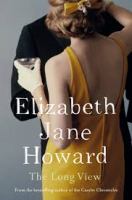 The “literary” book I’ve been reading “for fun” is Elizabeth Jane Howard’s The Long View, which I bought after my book club read and enjoyed
  Also, when I’m busy and distracted, the lure of television is very strong! And, conveniently, Netflix recently dropped two tempting series — the fourth season of
  Not for them — for me!
 Another reason teaching is a tonic for me, though, is precisely that I am not faking my interest in the course materials, and time spent really focusing on them brings me back in touch with the things that brought me into this profession in the first place. I loved being an English student myself (well, I loved being an undergraduate student – I mostly hated being a graduate student), and it’s in the classroom that the reasons for that are most present to me: the books themselves, of course, but also the open-minded engagement with them — teasing out what is most interesting, looking at the details and trying to put them into patterns that illuminate the whole, thinking and talking about the ideas that animate them, and all this, best of all, in conversation with other keen readers who bring their own questions and ideas to the process. This week’s readings are very purposeful, too, which gives our work on them extra urgency: in Mystery & Detective Fiction, we’ve just wrapped up
 Valdez himself is an interesting character: though he feels no ambivalence about his specific conflict with Tanner, he is less certain about his own role in life more generally, and the relationship he develops with Tanner’s fiancée Gay (whom he kidnaps as leverage) adds more nuances. It’s to be expected, though, that the protagonist will have some depth, so what I appreciated more is the way key secondary characters also have their own motives and their distinct roles to play in the denouement, including Gay herself but also Tanner’s “segundo.” One of the best bits in the novel is wholly inessential to its plot but adds a great deal to the atmosphere and to our sense of the kind of world its characters live in. Valdez shoots one of Tanner’s men and sends him back with a message. He delivers it and then lies dying, and we spend nearly two pages with him as he reflects on Valdez, and on his own life and immanent death:

