This Term In My Classes: A Recap and Some Reflections

It’s all done: final essays have been returned, final exams are marked, Excel has worked its (carefully supervised) magic, and I’ve submitted my final grades for Fall 2017. As usual, it’s a relief and also an anti-climax, as one of the first things that happens after you click the button to “approve grades” for one term is that you start thinking about what needs to be done in preparation for the next term!

Still, it’s the in-between time now, and that means I can stop and breathe and think for a bit, including about what went well in my fall courses and what didn’t, and what I might be able to do about it next time around. My winter term courses are quite different from my fall ones in both size and objectives, but that doesn’t mean there’s nothing I can carry forward to them, and then next fall I’m teaching 19th-Century Fiction again (though the Dickens to Hardy version), so it’s worth contemplating whether things there are working the way they should.

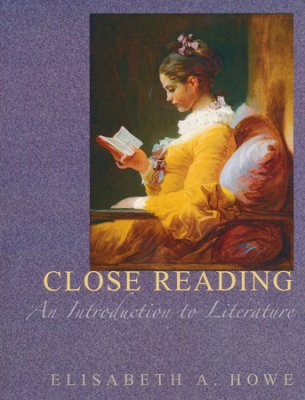
My first thoughts, though, are about Close Reading, which I am not teaching next year, and which frankly I rather hope I don’t have to teach again, at least for a while. It’s not that I don’t believe it’s a valuable course. In some respects I believe it is the most useful one I teach: that is certainly what many students over the years have reported–though, and this matters, they often reach this conclusion after they’ve completed it, when they discover ways that the close attention we paid to textual details pays off in their work for other courses. I am also still satisfied with the conceptual framework I developed for it, which emphasizes both the literary and the ethical implications of an author’s choices. We’re always trying to get at the difference it makes to say things one way rather than another–or to say one thing rather than another thing. This can mean minute attention to individual words, brainstorming about the political dimensions of a particular organizing metaphor, or discussions about the implications of writing in first-person or third-person, just for example. These discussions can get really interesting!

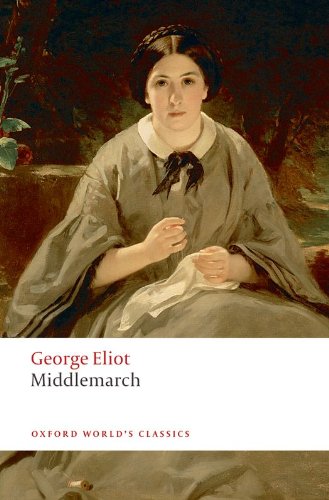
It seemed harder than usual to carry the class along with me this year, though, especially when we were working through Middlemarch: though I know at least a few students were deeply engaged with it (one even described her experience of reading it as “life-changing”), a lot of them at least gave the impression that it was an unwelcome chore. I have taught Middlemarch a lot over the years, and there is always some resistance, even some resentment, about it: I’m used to that, and generally just carry on. My impression that it was worse this time may be mistaken: I might have been projecting my own anxiety or defensiveness about assigning it onto the students, who may actually have been fine with it–but that it was so hard for me to tell how they were doing became its own source of stress, which led to various forms of  overcompensation, including lecturing too much because discussion seemed to be flagging. I still think Middlemarch is a great text to use for a course with these purposes, but it is also true that students signing up for Close Reading have not self-selected for reading long Victorian novels the way students in 19th-Century Fiction have. If I ever do teach the course again, I might reconsider.

Having said that, I have to acknowledge that discussion flagged a fair bit in 19th-Century Fiction this term too, especially towards the end of term. I know I am not the only one in my department who thinks that our inordinately long fall break made things worse instead of better: students did not come back refreshed and invigorated but rather seemed deflated, and the time remaining seemed very short and hectic. I blame myself, though, for not having taken action earlier to break what eventually became a fixed pattern of limited participation. I had unusually lively groups last year in both of my Victorian classes, and that made me overly sanguine about just letting things take their course without deliberate strategies (simple stuff, like pair-and-share exercises or break-out group discussions) to make sure more people were actively involved. When I finally did do some of that, it was really too late to change the overall classroom dynamic. Once or twice, I also let my frustration show, and that is never a good idea! After all, who wants to speak up when the prof is visibly cranky? Next fall I will intervene earlier (and more cheerfully) if it starts to seem that a handful of students are going to carry everyone else.

Who knows: that might be a lesson I’ll need to apply sooner than next fall! I’m teaching Victorian Sensations this coming winter term, and a seminar is even more dependent on widespread participation. There will be a lot of familiar faces in it, for me and thus presumably also for them, so I hope that makes everyone more comfortable about pitching in. The readings are such a lot of fun that surely everyone will want to jump in! But you never know. I’m teaching Pulp Fiction again next term and last year I expected a lot of discussion given the provocative and highly entertaining readings I’d chosen for that class–but no matter what tricks I tried it felt like pulling teeth to get students to speak up. Was it me? Was it them? It was both, probably: there’s always that mysterious alchemy that gives every class its own personality. I so hope that this year’s group gets a bit more excited!

Something else I’ve been thinking about (and again it is very hard to know if my impression of what was going on reflects what was really happening) is that this year students seemed to struggle more than usual to keep up with the readings. I also had an unusually high proportion of students just struggling this term, one consequence of which is that I will have an unprecedented number of assignments coming in next month from students who were unable to complete their courses on schedule. The university has protocols for these situations and of course I’m happy to support students who need them; it’s just striking how many more there were than usual. Primary duties of empathy aside, the increase in these cases raises administrative challenges for me: I already realized this term that I need a more formal system to track accommodation requests, as there are many more of them than there used to be (and thus more forms to fill out and more exams to drop off early and pick up again), and I’ll also need a better plan than usual to follow up on this unfinished work.

I mentioned before that it seemed like kind of a difficult term; this post dwells on the reasons why. I don’t want to leave the wrong impression, though. A lot of the time classes clearly went well, or at least just fine, and despite my own nagging concerns during the term I’ve had some very generous feedback from students since classes ended, which is always encouraging as well as a salutary reminder of something a frequent reader of Middlemarch should hardly need to be told: things often look quite different from someone else’s perspective.

The Sincerest Form of Flattery: Samantha Silva, Mr. Dickens and His Carol

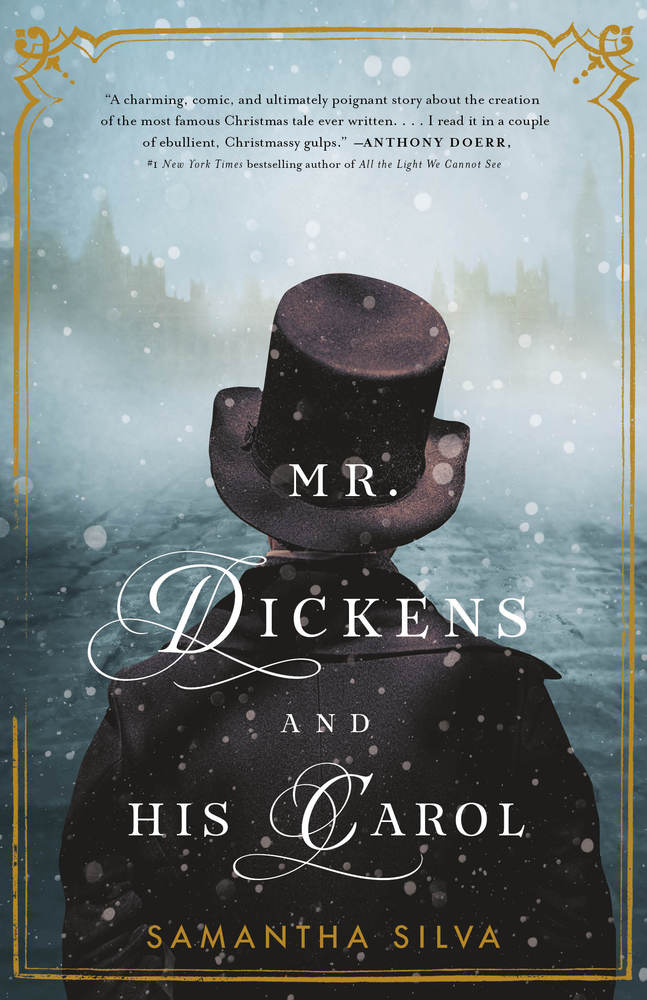
Dickens’s A Christmas Carol was first published on this day in 1843, so it seems like an apt time to say a little about Samantha Silva’s homage to that holiday classic, Mr. Dickens and His Carol. I actually read Silva’s novel with the intent to review it more formally, but two different plans for that fell through. Frankly, I was relieved both times, because I didn’t–don’t–have that much to say about the novel! It’s inoffensive. It’s moderately diverting. It’s a nice idea. You should reread A Christmas Carol instead.

The thing is, they called Dickens “The Inimitable” for a reason. Love him or hate him, he’s a writer who absolutely revels in what words can do, and who takes risks and leaps with them, who frolics and freaks out with them, who tries every trick he can think of to make us laugh and tremble and cry with them. His is an aesthetic of excess, of extravagance, both structurally and emotionally, and I know plenty of readers who get impatient with it, or worse. I myself am actually a late convert–and there’s still plenty of Dickens I haven’t read–but I’ve come to cherish him for just that sense that he’s absolutely throwing himself into his writing, giving it, and thus giving us, everything he’s got. As I wrote a few years ago, when David Copperfield saved me from a reading slump, “his books radiate delight in words and stories and imagination.” It can be intoxicating.

Nothing about Mr. Dickens and His Carol is intoxicating. It’s a perfectly fine story in which the writing of A Christmas Carol itself becomes the means of saving both Dickens and Christmas. Inevitably, Silva’s writing is pedestrian by comparison with her predecessor’s. When at long last the redemptive tale is written and then read aloud to the rapturous delight of Dickens’s audience,

Dickens bowed, long and low. His heart was thundering inside him, too, louder than all the clapping, which seemed not to subside at all. He needed the moment. It was as if he’d come to the crest of a great mountain peak and, though panting and spent, could see all the world. And how vivid a view. Even the Turkish carpet under his feet was every color imaginable, an alchemy of alum, copper, and chrome mied with madder root, indigo, poppy, and sage. What magic there was all around him. Words were inadequate, but all he had. He didn’t know where they came from or why, but it was how we told one another what the world was and might be. Who we were, and might become. It was the only magic he had. Everything else was faith.

Fair enough. But here’s an example of the real magic he had:

Oh! But he was a tight-fisted hand at the grindstone, Scrooge! a squeezing, wrenching, grasping, scraping, clutching, covetous old sinner! Hard and sharp as flint, from which no steel had ever struck out generous fire; secret, and self-contained, and solitary as an oyster. The cold within him froze his old features, nipped his pointed nose, shrivelled his cheek, stiffened his gait; made his eyes red, his thin lips blue; and spoke out shrewdly in his grating voice. A frosty rime was on his head, and on his eyebrows, and on his wiry chin. He carried his own low temperatures always about with him; he iced his office in the dog-days; and didn’t thaw it one degree at Christmas.

External heat and cold had little influence on Scrooge. No warmth could warm, nor wintry weather chill him. No wind that blew was bitterer than he, no falling snow was more intent upon its purposes, no pelting rain less open to entreaty. . . .

I could go on–Dickens certainly does (“and on and on and on,” I imagine the nay-sayers muttering)–but I’m sure you already see the difference. One writer is competently telling a story; the other is having a grand old time. “I know that of late I’ve pitied myself a poor man,” says Silva’s Dickens to his long-suffering wife Catherine,

–poor in love, in riches, in prospects. But I’ve learned, in these days of your absence . . . that whatever I suffered was a poverty of my own vision.

“I will honour Christmas in my heart,” exclaims Dickens’s redeemed miser,

and try to keep it all the year. I will live in the Past, the Present, and the Future. The spirits of all Three shall strive within me. I will not shut out the lessons that they teach. Oh, tell me I may sponge away the writing on this stone!

And then discovering he does indeed have a precious second chance, he is “checked in his transports by the churches ringing out the lustiest peals he had every heard”:

Clash, clang, hammer, ding, dong, bell. Bell, dong, ding, hammer, clang, clash! Oh, glorious, glorious!

Running to his window, he opened it, and put out his head. No fog, no mist; clear, bright, jovial, stirring, cold; cold, piping for the blood to dance to; Golden sunlight; Heavenly sky; sweet fresh air; merry bells. Oh, glorious. Glorious!

Only one of the two novels feels like a revelation.

It is of course not fair to insist that someone writing about Dickens should try to write like Dickens. The results would probably be pretty awful, actually, so Silva was almost certainly wise just to write her own novel in her own way. I don’t think it’s unreasonable, though, to expect that a novel so heavily invested in another writer’s work will engage with it in some transformative way: even if that endeavor too is likely to fail (or at any rate I don’t know of many great examples, and I can think of some really dreadful ones) at least the attempt will be more interesting–and I just didn’t find Mr. Dickens and His Carol particularly interesting. There are aspects I would have tried to make more sense of for a more formal review, such as how consistent it is to make the story of Dickens’s Christmas redemption turn as much on the commercial success of his new book as on any spiritual revelation–but I don’t think much would really have come of that exercise.

On its own terms, though (and I honestly don’t mean to be damning it with faint praise) Mr. Dickens and His Carol is readable and kind of charming, and it has stretches of prose that, if not truly Dickensian, are still wonderfully tactile and evocative:

The night was an embroidery of stars on a taffeta sky so blue it bled all the black away. No more drab-colored December fringed with fog. The even of Christmas week burst into the world, clear and dry, the streets one continuous blaze of ornament and show. . . . Shops sat in their best trim under bright gaslights turned all the way up, with evergreen plumage four stories high, like a great forest canopy. There were great pyramids of currants and raisins; brown russet apples and golden bobs, Ribston Pippins and huge winter pears; towers of jams, jellies, and bonbons; solid walls of sardines, potted meats, bottled pickles, drummed figs. . . . Over grappling horses’ hooves, roaring drivers, and chaffering dealers, rose the harmonies of an oboe, French horn, and flute, warbling a pastoral Christmas tune.

All of London seemed set upon suffering gladly a sprinkle of brotherly this and that, but cheer most of all.

And the novel is sometimes even touching, as Dickens struggles through his writing slump and emerges–thanks to some visitations of his own and some hard-won insights into his own life–renewed and filled with the spirit of Christmas: “He turned his face to the star-kissed winter sky, from which tiny, glittering snowflakes began to fall. He couldn’t have been happier had he been transported to Paradise.” Silva says in her Author’s Note that “the book is, most of all, a fan letter”–and the sincerity of her appreciation for Dickens and his brilliant little Christmas ornament of a book is palpable and more than a little heartwarming.

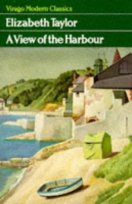
“Deeper Wonders Hidden”: Elizabeth Taylor, A View of the Harbour

taylorSeen from afar, the lighthouse merely struck deft blows at the darkness, but to anyone standing under the shelter of its whitewashed walls a deeper sense of mystery was invoked: the light remained longer, it seemed, and spread wider, indicating greater ranges of darkness and deeper wonders hidden in that darkness.

Views are a great subject for a novel, because they are always already metaphorical. “After all,” comments Will Ladislaw to his artist friend Naumann in Middlemarch, “the true seeing is within.” “I have a view, I have a view!” exclaims Mr. Emerson in A Room with a View; then, “This is my son; his name’s George. He has a view too.” What they see is not just Florence but “courage and love.”

Elizabeth Taylor’s A View of the Harbour (1947) also makes the most of the literary slippages possible between literal and metaphorical views. On one level it is a novel about people who share a particular view, looking out across a small harbour where the waves slap against the shore, and against the sides of the fishing trawlers that come and go. Their homes, shops, and businesses, in their turn, are the view for the men on those boats.

A View of the Harbour is very much about this setting: the literal view of the harbour is the surface of the novel, though Taylor’s rendering of it is anything but superficial. A View of the Harbour is set just after the war, and the war’s effects permeate the town and the lives of its residents in many ways, from the fragments of sunken wrecks that the fishermen’s nets dredge up, to the lost loved ones whose absences stunt the lives of their survivors. There’s an air of stoic shabbiness about the whole place, too, a kind of worn out fortitude. “When I was young it was so different,” says Tory Foyle, now a divorcée delicately balancing her bitterness against her ex-husband against her infatuation with her best friend’s husband:

Or, to look back upon, it was–a perpetual summer, like all those plays with young men in blazers coming through french windows–so many of them and all the same. It always seemed to be the week-end.

A-View-of-the-Harbour_NYRBWithin a few pages of the novel, Taylor has deftly introduced us to a cluster of the small town’s residents, including Tory and her novelist friend Beth Cazabon, and set in motion the small movements that over the course of the novel will gather intensity until by the end they crest and break, their energy dissipating, like the waves. Moving among them is one outsider, Bertram Hemingway, a visiting would-be artist who gradually moves from observing to participating in the subtle human dramas unfolding around him. Watching over them is Mrs Bracey, once a key player in the town but now an invalid whose acidity is somewhat tempered when she decides to have her bed relocated upstairs. From there she will once again be able to look out over the harbour “which had been a grey and white, remembered, half-imagined scene for so long”:

She wanted to watch the great dappled waves riding in to the foot of the cliffs, breaking and crumbling and scurrying back in confusion, to be conscious of the pulse of the lighthouse, to see once more visitors with folded raincoats stepping into rowing boats named Nancy or Marigold or Adeline; the moving water, the sauntering people, the changing sky, the wrinkled moonlight on the sea, and fishermen, coming out of the anchor on Saturday nights, standing round the lamp-post singing Sweet Genevieve.

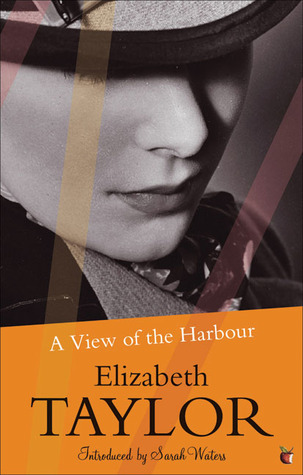
She does see the scenery again, but the scenes of greater interest to her prurient curiosity are those played out by people she knows. And she’s not the only one watching from a window–or looking towards a window, including hers. As Sarah Waters remarks in her introduction to my Virago edition, “Taylor’s fascination here is with the perils and the pleasures of perspective. This is a novel in which people watch each other.”

eric-ward-cornish-harbour-scene-1887A View of the Harbour is intricately constructed, all of its interconnected stories moving a little piece at a time, paths crossing, perspectives changing, the lights brightening or fading as the characters move in and out of the foreground. It is easy to imagine many of the incidents as framed tableaux, caught by an artist’s eye so that a moment of intimacy takes on the character of a broader revelation. Unsurprisingly, it’s often Bertram, the designated artist, who makes this potential explicit:
He sat on the edge of his bed and imagined the picture he was going to paint–the harbour buildings seen across the harbour water, the crumbling texture of plastered walls, the roofs of purple, of grey-blue, the grey church on the shoulders of the other buildings, the green weed on steps and the sides of the harbour-wall, silk-fine and damp like the hair of the newly-born–all the different surfaces and substances, the true being of it coming luminously through the essence of such a scene.

He is not a very good painter; perhaps, Taylor seems to suggest, and he himself seems to realize, his artistic deficiency is, paradoxically, what makes him such a good observer–or perhaps it’s that he is too nice a man to ignore what he sees around him, and thus he lacks the self-absorption necessary for greatness. He takes an interest in real people, and thus cannot achieve the sublime perspective needed to transcend their ordinariness, or their commonplace surroundings, and raise them to the level of art. Bertram is probably a better man for it, but his paintings are not worth much except as mementos of time passed.

Taylor-virago-2An interesting complement to Bertram is Beth Cazabon, who is often so lost in the lives of her characters that she struggles to stay connected to the lives of her children, or her husband–which is a blessing insofar as she remains oblivious to his infidelity. Beth (and thus also, by implication, Taylor) is only too aware that this preoccupation with fiction is not altogether to the benefit of the author or her real-life friends and family, and that it also may mean little to posterity–Beth has no pretensions about the lasting value of her work. “I’m not a great writer,” she reflects;
Whatever I do someone else has always done it before, and better. In ten years’ time no one will remember this book, the libraries will have sold off all their grubby copies of it second-hand and the rest will have fallen to pieces, gone to dust. And, even if I were one of the great ones, who, in the long run, cares? People walk about the streets and it is all the same to them if the novels of Henry James were never written. They could not easily care less. No one asks us to write. If we stop, who will implore us to go on? The only goodness that will ever come out of it is surely this moment now, wondering if “vague” will do better than “faint,” or “faint” than “vague,” and what to follow; putting one word alongside another, like matching silks, a sort of game.

It seems at once ironic and apt, then, that the greatest pleasures of this novel are due to its novelist, to her uncannily precise choice of words and her ability to place them alongside each other so that they constantly delight and surprise. She shows us these commonplace people and their straggling lives–and also their landscape, with its roughness and its manmade debris but also its timeless beauty–with paradoxically ruthless grace.

Recent Reading: Mostly Romance

I had been feeling unnecessarily guilty (because after all, it’s not as if I’m answerable to anybody about this!) that I haven’t done much reading–and thus much book blogging–for some time. But then it occurred to me that in fact I have been reading pretty steadily; it’s just that it has mostly been what I think of as “interstitial” reading–reading that fills in the time between other more demanding tasks, reading that distracts and amuses rather than demands much in its turn, either because it’s already familiar or because its prose is light rather than dense.

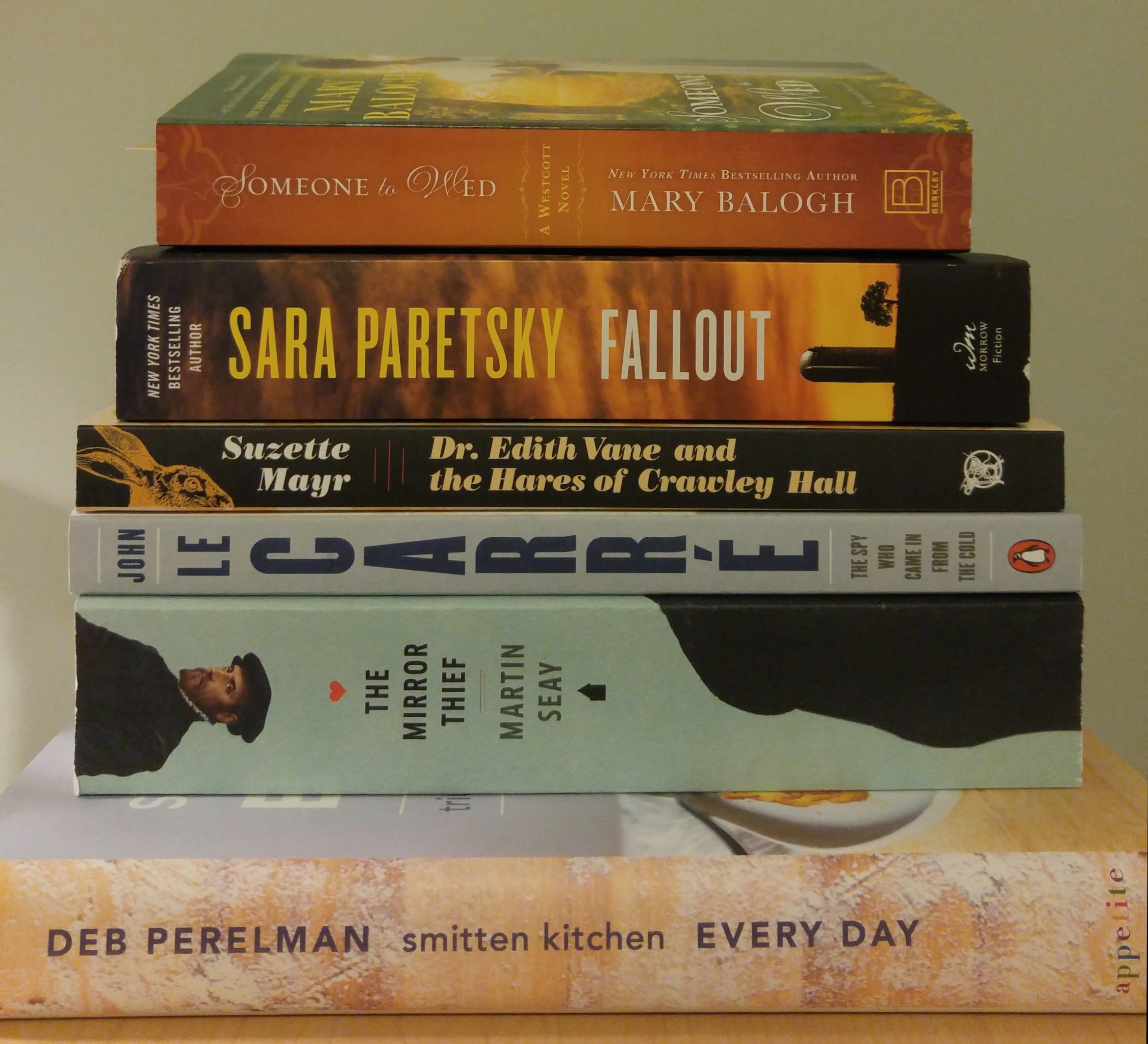
I don’t in any way mean to belittle the books I read in this way: they are a vital part of my reading ecosystem! They used to be mostly mysteries, and Dick Francis and Robert B. Parker still make regular appearances in this role–for instance, not long ago I finished a reread of Francis’s 10-Lb. Penalty, which I decided in retrospect got short shrift in my round-up of Francis’s “Top Ten.” Since I belatedly learned to stop worrying and love romance too, now I also have a pool of reliable favorites in that genre that I reread, and I’m also alert to suggestions for new ones to try. In fact, these days I’m more likely to search up new romances than new mysteries: for whatever reason, right now I find it harder to accept the necessary machinery of detective novels unless I’m already friends with the protagonists – and even then it doesn’t necessarily go well for us.

So while I have been starting and then putting aside other books that demand more concentration than I seem able to apply right now outside of work and deadlines (including Elizabeth Taylor’s A View from the Harbour and Lynne Sharon Schwartz’s The Fatigue Artist, both of which I fully intend to finish eventually), I have read and reread a bunch of other titles. Some quick comments on the new ones (or the ones that were new to me):

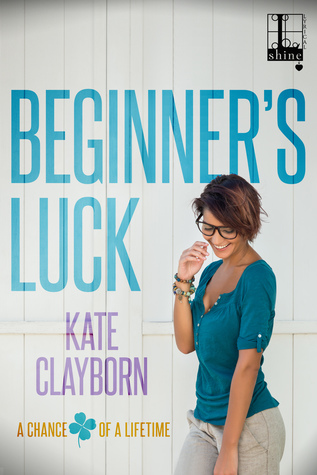
I really enjoyed Kate Clayborn’s Beginner’s Luck. Right away I liked that its leads had unusual jobs, meaning there was a fair amount of “neepery”: the heroine is a lab technician with the potential to be a research scientist of a different kind if she saw her life a bit differently, and the hero is a corporate recruiter but also hangs out in his family’s salvage yard, so on top of the science stuff there are also lots of details about things like old light fixtures. The title refers in part to the premise of what is presumably going to be a trilogy about three best friends who have won the lottery, but while Kit’s financial fortune is certainly part of the context for the story, I appreciated that it is a fraught part–it has not by any means solved all of her problems. The story is well told and the relationship (including its “big mis”) is believable.

I’ve also enjoyed the two I’ve read so far from Ruby Lang’s Practice Perfect series. I liked Hard Knocks better than Acute Reactions, and neither of them really delighted me; I think both of those reactions are about my own preferred angst-to-wit ratio–which is probably why I liked Jennifer Crusie’s Manhunting, which somehow I had missed before in my Crusie reading, better than either of them.

Not all of my romance reading has been very successful. I’ve DNF’ed three historicals in the past couple of weeks: two by Eloisa James, including Wilde in Love, and Loretta Chase’s newest, A Duke in Shining Armor. They all felt perfunctory to me, from their starting premises to their characters, and I just didn’t care enough about how we were going to get to the inevitable HEA to keep going. I was trying to put my finger on why Chase’s Carsington novels interest me so much more (they are among my most frequent rereads).  Part of it is because so much more is at stake in them than the feelings of the leads (the dispute over the planned canal in Miss Wonderful, for example), but there’s also something different in the quality of the characterization, and in the pace and wit of the dialogue–something that just seems to be missing in the new ones. As I set these three books aside (and remembered, too, how uninspired I was by recent books by Tessa Dare and Sarah MacLean, who have written other books that are among my favorites), I  found myself thinking with renewed appreciation also of Cecilia Grant‘s excellent historical romances, not one of which has given me that sense of just going through the motions.

At least I know better now than to assume that a bad run (for me, of course – YMMV etc.) is not a reflection on the genre, which like all kinds of books will have hits and misses for any individual reader. I think I am a bit quicker to abandon genre fiction (including mysteries) if I’m not really enjoying it, whereas I tend to persist to the end of “literary” novels in case the payoff there just takes longer to emerge. Is that snobbery, or a reflection of the different reasons I read, and the different expectations I bring to, different kinds of books? I also read mysteries and romances quite differently when I’m reading them for other purposes, such as teaching. But sometimes I want to read without thinking all that hard–maybe the way to put it is that sometimes I want the book to do all the work, and to carry me along. I’m pretty sure some people do all their reading that way! At any rate, for me the books that serve this purpose for me when I need it are among those I treasure the most.

This Week In My Classes: It’s All Over But the Crying

cassatt the teaToday is the last day of fall term classes. I’ve felt a bit confused all day because while it is a Tuesday really, we had Monday classes, thanks to a scheme some committee cooked up to “equalize” the exact number of days every class meets. (Next term the same geniuses have ordered that we have thee “Fridays” in a row, one actually on a Friday, then two more on the following Monday and Tuesday. You tell me how much sense that makes if your Friday meetings are usually tutorials…)
Anyway, today was a faux Monday, so I had my usual morning and afternoon classes. In Close Reading, I ended with a heartfelt peroration about the value of close reading, not (just) for literary analysis but for life. Then in Nineteenth-Century Fiction it was exam review time. With our class meetings over with, we all move on now to the “essays and exams” phase. I have one set of unit tests still to mark, then papers come in on Friday from my Close Reading students (who have no final exam). The two students who chose the final essay option for 19th-Century Fiction turn those in soon after, and then the rest of that class writes their final exam next Wednesday. I feel lucky this term that neither of my classes is particularly large (both are around 40) — it will be a push to get it all done in a timely way, but it won’t be as overwhelming as when I have groups of 90 (as I will next term for Pulp Fiction).

It has felt like a somewhat difficult term, though I can’t really explain why and it is probably too soon to reflect on it anyway, as we aren’t, after all, quite done. I had another reminder today, too, that you can’t always tell when you are making a positive difference in someone’s life just by turning up and doing the best you can to show why the work you’re all engaged in is both interesting and important. So for now I’ll just press on, buoyed by that heartening message, and just keep doing the best I can until it’s really all over for this round.

In this brief lull before the papers and exams come in, I do get to unwind a bit. I might even get a little good reading done! I started Elizabeth Taylor’s View of the Harbour a week or so ago and had to put it aside as I was having trouble concentrating: I was really liking it, though, so I’d like to return to it. I also need to finish a book review that has been hanging over my head: I’ve been plugging away at it over the last couple of evenings and it is about half done now. I’d like to do a little Christmas shopping too, because by the time the marking is in and done, there won’t be much time left, and rushing never seems very festive.

A New (and Final) Open Letters Monthly

Final-issue-1I have often but not always marked the occasion of a new issue of Open Letters Monthly here. The thing about publishing on the first of every month, regular as clockwork, is that it seemed predictable enough that people who cared shouldn’t have any trouble remembering the schedule and finding the new issues on their own! I feel as if I should not let the December 2017 issue go by without acknowledging it, however, because as some of you already know from our announcements on Facebook and Twitter, it will be the last one.

We’ve made our official statement about this on the site itself, and I’m not going to say more here about the collective discussion that brought us to this point. Speaking just personally, I feel a potent mixture of regret and relief. Open Letters Monthly is pretty venerable in internet years–it was founded in 2007–and has had a very good run. Indeed, I think it’s fair to say that at its best Open Letters Monthly was as good as any literary journal you’ll ever read, and I will always be very proud to have been part of it. It has also always been a lot of work, all of it challenging and most but not all of it rewarding. Though I feel ready to move on from it, I also know that I have OLM to thank for where I am now as a writer and critic, and thus for the new opportunities I hope to keep reaching for. I learned an enormous amount from my co-editors and from our contributors–about writing and editing above all, from the intense hands-on experience, but also about books and criticism, and about literary culture more generally and how I would like to participate in it.

For our final issue, we opted to highlight some of our favorites of the many essays and reviews we have both written and edited over the past decade. The result is a sampling that I think truly epitomizes what we always hoped Open Letters would be: a place that showcases smart, engaged writing on a wide range of topics, writing that is detailed and probing but also has plenty of personality. It is our plan to keep Open Letters available in its entirety so that people can still browse and enjoy its rich archive. We will all also still be reading, writing, and talking about books in a range of venues, so keep your eyes open for us!

On that note, I should add that I have no plans to give up Novel Readings, which actually predates my own association with Open Letters Monthly by a couple of years. I moved the blog from its original location to the OLM site in 2010. I always find change difficult, and I remember very clearly how anxious I felt when I made that decision. I feel a bit anxious now too, but as we all know, change is the only real constant! So as OLM winds down, so too will new posting at the OLM address, and this will become the only current home for Novel Readings.

This Week In My Classes: Slouching Towards the End

I was about to open this post by saying “it has been a tough week” when I realized it’s only Monday! On the other hand, it has been a challenging week if we start it back at last Monday, and since I haven’t posted here since then, I think that’s fair enough.

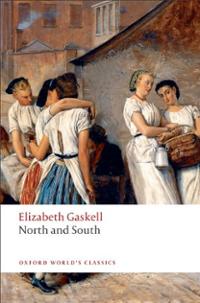
It’s nothing in particular making things difficult: just the usual end-of-term craziness. I had four different assignments to grade last week. In 19th-Century Fiction, the students who’d opted to write their first paper on Jane Eyre had turned those in, while the students who’d opted to write theirs on North and South submitted their proposals; and most of the class also wrote our unit test on North and South. Then in Close Reading the students who had opted to do their second assignment on Middlemarch (which was most of them) turned those in. I’m pleased to say that as of this morning I had returned all of these assignments, meaning I’ve cleared the deck for the North and South papers coming in on Wednesday, after which nothing else is due until the Great Expectations test next week.

I know I’m not the only one feeling a bit overwhelmed: my students are too. I’m doing what I can to keep up my own spirits and bring a lot of energy to class, but I admit I faltered today when all my efforts to spark discussion of Great Expectations seemed to dead end. I’ve never struggled to get people talking about Wemmick and his Aged Parent before! Things have been a bit quieter than I’m used to in 19th-Century Fiction for a while now, and today after class I was worrying that I’ve made it worse by talking more myself to compensate, and then by showing my frustration, which is always a bad move. I haven’t felt this stymied in class since the last time I taught Waverley–which was the time I decided to stage an “intervention” and see if we could bust out of our collective slump. It worked pretty well, and I think I need to try something similar on Wednesday, if probably less elaborate: we have only two sessions left on Great Expectations and it will be a real shame if they all go the way today’s did.

In Close Reading we are nearly finished with The Remains of the Day. Discussion is going better there: I always feel that I get a bit of a bump just because a lot of students are so relieved to be done with Middlemarch that Remains looks especially good to them! But of course it is a genuinely great novel and full of artful and important things to talk about. I should say, too, that although I felt at times that as a group we were struggling with Middlemarch, I did hear from a couple of students who appreciated the novel a lot, which I found very encouraging, as I did the excellent work a number of them did on their assignments. I do think it is worth giving students the opportunity to read it and think about it even if they don’t enjoy it: I try every trick I can think of to boost their pleasure in it, but ultimately a literature class is a place to learn, after all. I have resolved, however, that the next time I teach Middlemarch it will be in a 19th-century fiction class where nobody can reasonably express surprise or resentment at being assigned a very long book.

It’s going to stay pretty busy for the next week, and then the pace changes as daily classes end and we move on to final essays and exams. I usually steal a little time for Christmas shopping before these last assignments come in, as once they do they have to be my top priority until grades are filed. I’ve also got an outstanding review to finish: I’ve read the books (two of them, on Golden Age crime fiction) but my notes and draft have been malingering because I’ve just been too tired to concentrate on writing after my other work is done. When my brain is otherwise too addled to use, I’ve been working on this website, especially on updating my blog indices so the links go to addresses on this domain. It occurred to me last night that this is barely half the battle, as so many of my posts have internal links as well…wish me luck! And if you know of any shortcuts to getting this stuff done, do tell.

Piffle: Dorothy L. Sayers, Strong Poison

“If anybody ever marries you, it will be for the pleasure of hearing you talk piffle,” said Harriet, severely.

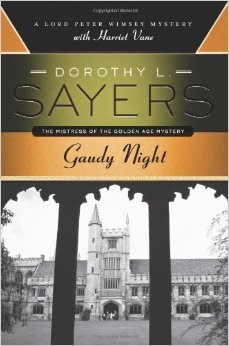
Strong Poison was the first Peter Wimsey novel I ever read. It was the right one for me to start with, as it is the first one that features Harriet Vane, who is superb from the first moment we meet her; I went eagerly on to read (and have since reread many, many times) the rest of the Peter-and-Harriet sequence: Have His Carcase, Gaudy Night, and Busman’s Honeymoon. I used to reread Strong Poison pretty regularly too, as the tattered condition of my copy testifies, but I haven’t gone back to it in ages–decades, perhaps. Rereading it this time, I felt the usual nostalgic pleasure in revisiting something once loved and still familiar in almost every word, but I was also surprised that it had inspired me to read on in the series.

It’s not just that now I have much less patience for elaborate but very unlikely crimes and protracted displays of ingenuity in their investigation: it’s that I can’t imagine that I ever liked this Peter Wimsey at all. How was I not then, as I am now, both horrified and creeped out by his opportunistic, entitled, manipulative “courtship” of Harriet? “When all this is over,” he says to a woman he is meeting for the first time and who is currently on trial for murder and thus facing the death penalty, “I want to marry you, if you can put up with me and all that.” It’s inexcusable, and it’s exactly right both that Harriet refuses him every time he returns to visit her in prison, update her on her case, and press her once more to consent to his proposal, and that at the end of the novel he slinks away without facing her.

Of course, Sayers herself realized the same thing: as she explained, what began as a simple enough plan to marry Peter off went completely off the rails when her two-dimensional chatterer came face to face with a woman of substance and complexity. Before she could let Harriet say yes, she had to reinvent Peter as a man of a very different kind while also giving them both, but especially Harriet, time and space to recover from his first ridiculous, blundering advances. Only then could they develop (and could we believe in) a relationship based on genuine respect, intellectual camaraderie, and love. The process begins in Have His Carcase, reaches its triumphant conclusion in Gaudy Night, and then carries on with mixed success in Busman’s Honeymoon.

I think because I rarely read the pre-Harriet Wimseys (I’m not even sure I’ve ever read them all) and hadn’t read Strong Poison in so long, I’d forgotten just what a long journey Peter makes across the sequence. It’s not that there’s nothing at all interesting or redeemable about him in Strong Poison, but he is conspicuously more shallow than in Gaudy Night, in which he can deliberately put on or take off the aristocratic buffoon persona that nearly defines him here. What really bothered me this time, though, was his abuse of Harriet’s confinement and vulnerability to press his attentions on her. “Do please stop asking me,” she says near the end of the novel:

“I don’t know. I can’t think. I can’t see beyond the–beyond the–beyond the next few weeks. I only want to get out of this and be left alone.”

That seems more than fair! He’s harassing her. She can’t get away, what with being in prison and all, and for all she really knows, if she keeps rejecting him he’ll stop detecting for her. It’s true he’s preeningly self-conscious about the awkwardness of the situation, but by far the most insightful thing he says about it is the last line of the book: “I intend to marry the prisoner,” he tells his family … “if she’ll have me.” It is, and should be, up to her–and he’s right to be worried.

If Peter is the worst thing about Strong Poison (and I say this as someone who considers the Peter Wimsey of Gaudy Night very nearly the perfect man), Miss Climpson and her “Cattery” are the best. Smart, resourceful, intrepid spinsters working covertly in the service of justice: wouldn’t that make a splendid TV series? The first episode could be Strong Poison, just so we have the fun of following Miss Murchison’s adventures in the lawyer’s office and then Miss Climpson’s star turn as a medium. After that, though, Peter could be a minor character, which frankly, if we’re in the world of Strong Poison, is as much as he deserves.

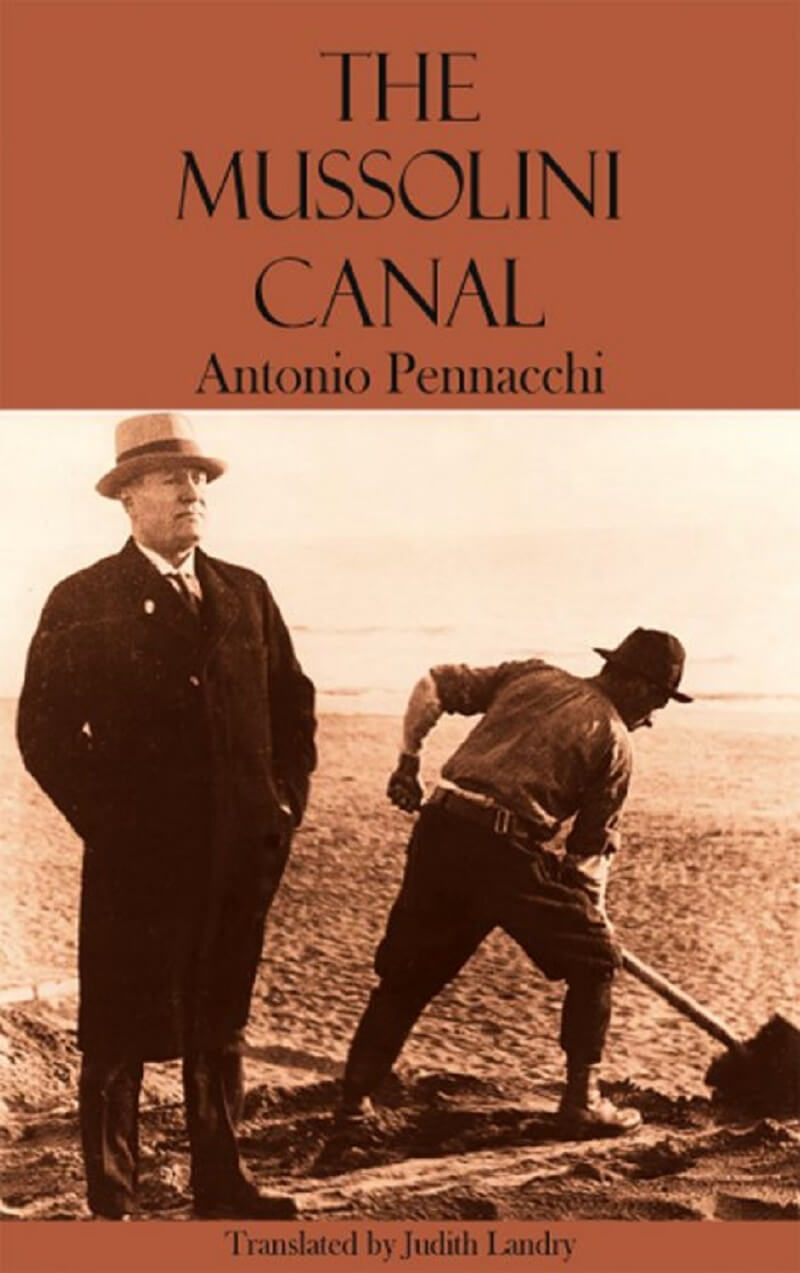
“According to the Peruzzi”: Antonio Pennacchi, The Mussolini Canal

I make no claim to be telling you God’s own truth, the perfect and absolute truth which is known to Him alone. I’m telling you the truth according to the Peruzzi, as my uncles told it to me, as they themselves had lived it. To hear the other side of the story, and about other people’s rights, you’ll have to talk to them. From us, all you’ll hear about are our own.

I’m not really sure I deserve to write a blog post about The Mussolini Canal: I skimmed a fair amount of it, which may or may not be a better thing to do with a book you’re struggling with than simply giving up. I’m a big believer in persisting to the end of a book if you possibly can, not least because more than once in my own reading experience a book has grown on me, or I’ve grown into it, so that by the time I’ve finished it I am engrossed in ways I didn’t initially think possible. Sometimes, too, persistence in itself feels like progress–now at least you know, if only in a preliminary way, what the book is. For all I knew, reading The Mussolini Canal would be like that: just because by page 200 I was restless and irritable with it didn’t mean that by page 500 I wouldn’t be glad to have stuck with it!

But I wasn’t glad. Maybe it’s because I started skimming, which really only “helps” if you’re just trying to keep up with the plot, and The Mussolini Canal (despite being a book in which a great deal happens) is not at all a plot-driven book. Rather, it is a digressive family history with a narrator who sounds like a garrulous old man at a bar: “What–you don’t believe me? You think it sounds like the stuff of fiction, that it’s impossible that someone like Rossoni should have put himself out for the likes of them?” 

It’s a history well worth telling: the narrator’s family, the Peruzzis, are peasants who are early supporters of Mussolini and end up being relocated as part of his massive project to drain and farm the Pontine Marshes. Through the stories of the many (but, for me, often indistinguishable) members of the Peruzzi family, Pennacchi takes us through a big stretch of modern Italian history, from the rise of fascism to the end of World War II. Because the focus is always on the Peruzzis, it’s history up close and personal, with family feuds and village rivalries and petty acts of greed or revenge folding into the bigger national narrative.

It’s great material, and (in theory, at least) a great strategy, too, made especially interesting because it puts us, with the Peruzzis, on the wrong side of history, not heroically resisting tyranny but, without quite meaning to or really understanding, enabling and cheering it on–until the tide turns, and the Allies land, and everything is ruined: “the Mussolini Canal itself beggared description.” The problem, for me, wasn’t with the story but with its telling, which is one almost continuous and, to me anyway, fairly shapeless monologue, going around in circles and off on tangents–our narrator goes on for several pages about “privies,” for instance, and about road construction and paving, and about beekeeping. There are two full pages on how to make cappelletti, starting with killing and plucking the chickens and ending with Christmas dinner.

Some readers would revel in all of this. I’ve read other books that are garrulous and digressive and reveled in them myself: indeed, I rather specialize in them! But The Mussolini Canal just didn’t work for me. I’m not sure if my own poor concentration was cause or effect here, but for me all this miscellaneous stuff overwhelmed not just the Peruzzis but even Mussolini himself: it drowned out the human drama, and it muffled, instead of humanizing, the historical drama.

That said, even as I worked here on writing up my failure to read the novel well, it started sounding more interesting than I thought it was while I was actually reading it. This too is something that often happens! In fact, this blog has a lot of skeptical posts about books or authors that made a bad first impression but which I ended up learning to appreciate much better over time and rereading, and also through writing about them. The Mussolini Canal was highly recommended to me by someone who is a really smart and insightful reader: he clearly found things in it that I didn’t. (Perhaps reading it in the original Italian, as he did, made a difference?) Right now I can’t imagine rereading The Mussolini Canal, but I’ll certainly hang on to my copy, just in case.

This Week In My Classes: After This, The Deluge!

I was talking with some colleagues last night and we all agreed that it is going to be hard to regain the momentum we’ve lost in our classes after this unusually long fall break–it’s extended because today is a holiday “in lieu of Remembrance Day.” A fall break itself is a relatively new thing: last year was the first year Dalhousie worked it into the schedule (adding a day or two at the beginning and end of the semester to make up for the “lost” time). I was (indeed, I am) a bit skeptical about it in some ways, especially pedagogically, but it certainly has been nice to have my schedule ease up for a bit, and I’m sure our students have been grateful too to have the day-to-day pressure lifted. But when we go back, will we find ourselves restored and energized, ready to throw ourselves back into the work that remains, or will we be sluggish and struggle to get going again?

I am certainly hoping that students in Close Reading have used some of their extra time to catch up on reading Middlemarch. It seemed pretty clear to me before the break that only a handful of them were really in the game during class discussions. I don’t know if the proportion of students who are engaged with the novel is actually that different from last year, but it has felt harder to me to draw people out, or in, and naturally I have been brooding about why. Is it me? Is it them? It’s both, no doubt–there’s always that mysterious classroom alchemy. (Maybe I can blame our windowless concrete block room, too, just a bit? It does have such a gloomy aspect.) The resistance I often experience to the novel in Close Reading is also, I think, partly a function of the class being one none of the students chose in order to read Middlemarch in particular (or any other 19th-century fiction): it’s a program requirement, a hoop to jump through. When I assign it in the ‘Dickens to Hardy’ class, at least nobody can claim they didn’t expect to read any long books! I do sometimes point out to students in Close Reading who say Middlemarch is too long to read in a one-term class that in my other one-term class it is one of five Victorian novels . . .

Anyway,  I hope those who needed it have take this opportunity to catch up, and that our  class discussion on Wednesday, which will be our last on the novel, shows the results. I’m keeping my own lecture notes for that day to a minimum to make sure there’s enough time and flexibility for the things they want to talk about. After that, we will be hurtling towards the end of term: their Middlemarch assignments are due next Monday, when we will also be starting The Remains of the Day, which is our last reading and, with Middlemarch, the subject of their term papers.

In Austen to Dickens, we’ve got a couple more sessions on North and South – which I also hope students will have caught up on! Then it’s time for Great Expectations, which is our final book in that class. The students who chose Jane Eyre for their first paper will be submitting them this week: there are a lot of them (for some mysterious reason, Vanity Fair was not as popular a choice!), so I’ll be busy marking these and then the North and South tests and papers, and then we are on to proposals for final essays and/or preparation for the final exam.

The end of term always feels like a mad rush for all of us. We have  had such a mild fall that I think it added to the illusion that we were somehow still just starting up: both the time change (which means dark afternoons) and the precipitous drop in temperatures have shifted us abruptly into more wintry conditions. From the relative quiet of our last day off, it’s hard to imagine getting it all done, but somehow we always do!