 In Pulp Fiction, this is our second and final week on The Maltese Falcon (no, it does not seem like enough time, but we have other work to do too!). Leading up to our discussions of the novel I made a big deal about Raymond Chandler’s claim that the novel “demonstrated that the detective story can be important writing. The Maltese Falcon may or may not be a work of genius,” he says in “The Simple Art of Murder,” “but an art which is capable of it is not ‘by hypothesis’ incapable of anything.”
I’m not sure I admire The Maltese Falcon quite as much as all that, or that I think the detective story hadn’t already shown its literary potential, though much depends on what you rule in or out as an example (if The Moonstone counts, then that’s pretty old news by 1930). But it’s a great starting point for discussion, especially about what we think it takes for writing to be “important.” One suggestion about what distinguishes The Maltese Falcon from the kind of mystery Chandler’s contrasting it with in his essay (basically, the Golden Age detective novel) is its thematic ambition: the crimes its plot is organized around are really just devices for raising questions about what is worth living and dying for–about what, if anything, gives life meaning. Any murder mystery will address motives and consequences at a literal level, but in The Maltese Falcon the black bird takes on symbolic significance in excess of those requirements. I never feel any need to interpret the dagger in Roger Ackroyd’s throat symbolically: it’s enough to know that it came from the table with the glass lid in the drawing room that Dr. Sheppard examines so attentively when he comes to visit Ackroyd the night of the murder. That’s the difference, right there.
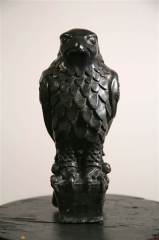 Two of the questions I asked my students to think about for class discussion this week were what the falcon ultimately stands for–to individual characters and, perhaps not the same thing, in the book as a whole; and how they viewed Brigid O’Shaughnessy by the end–as a femme fatale or a woman fighting for survival in a man’s world. Today we also considered what it means that the actual statuette the characters have been chasing (and have killed and died for) in the novel turns out to be a fake. It’s one thing to imagine what it might mean to actually get whatever it is that you most want: what if it isn’t worth it after all, or it is but now you don’t know what to do next? But what if you think you’ve got it and it isn’t real? Gutman recovers quickly and proposes they keep looking: after all, the real one is still out there, isn’t it? Isn’t it the quest itself that really matters? Or in chasing their dream are they missing their chance to actually live?
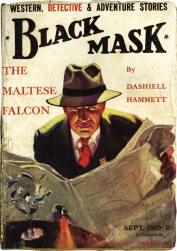 It seems pretty clear that Sam is missing some kind of chance by following his dream, except that his is a dream of justice for his murdered partner. One of my favorite things about this novel–which in many ways I find deeply unpleasant–is how shadowed Sam’s choices are by their consequences. In the end he chooses justice over love, which is (as Effie comments) the right thing to do; Sam himself gives a long list (literally numbered) of reasons why he should turn Brigid in, against which there is only “the fact that maybe you love me, and maybe I love you.” “It isn’t always easy to know what to do,” he tells Brigid when she first comes to see him pretending to be the innocent and vulnerable “Miss Wonderly.” He may in fact know exactly what to do, but the ending to the novel shows that that, too, isn’t easy: he may live up to his principles, but he also has to live without love, without trust, and probably without happiness. In a different novel, the alternatives might not be so stark, but Sam lives in world where “if they hang you, I’ll always remember you” really does, I think, count as romantic. While Effie may agree with him in principle, though, she also recoils from him, a judgment I share.
 In Victorian Sensations we finished up East Lynne this week–with some relief, I think, though I was glad to hear some students saying they did enjoy it: curiosity about what would happen next helped them keep going, even though it dragged a bit at times. One of the reasons I think this novel falls short of being “important writing” is its ineptness, artistically speaking: a lot of it seems quite haphazard or just plain incoherent, and our well-trained desire to find patterns and unities was frequently frustrated. That’s not to see it doesn’t contain many interesting elements, but I don’t really think that, through them, Wood is saying something worth really thinking about. She does have plenty to say, but it’s the very heavy-handedness of her overt message that becomes tedious. I said before that the novel reads very clearly like a cautionary tale–but so, of course, is Vanity Fair, which has a similar moral lesson for us: live well so you have no regrets on your deathbed. “Oh, Barbara,” says the tediously honorable Mr. Carlyle after presiding over the pathetic deathbed of his first wife:
never forget–never forget that the only way to ensure peace in the end, is to strive always to be doing right, unselfishly, under God.
Why does that solemn conclusion make me go “yeesh!” while I find Chapter LXI of Vanity Fair both touching and morally compelling? It’s not just that Wood is so prescriptive (and it’s not as if Thackeray isn’t prescriptive). Thackeray has in common with Hammett a rich awareness of social and human complexity, for one thing, and a wry understanding of what drives us: in fact, his indictment of the vanity of human wishes fits nicely with the ultimately futile quest most of Hammett’s characters are on–“everyone is striving for what is not worth the having,” as Lord Steyne remarks, and yet both authors also see that that’s where the drama, the energy, is. Wood’s moral world seems simplistic by comparison. If Hammett makes us wonder about the meaning of it all, Wood seems too quick to tell us, and to reduce it to following the rules. One of the critical articles we read concludes that “it is clear that Mrs. Wood does not possess the insight of a major novelist.” That’s not the kind of conclusion a more recent critical article is likely to hazard (this one is from 1976, a simpler time in literary criticism, for better and for worse)–but I have to agree.

 It’s inconsistent, I realize, to say that I found I Am, I Am, I Am disappointingly slight and to say that I’m also glad it did not fall into philosophizing. But my dissatisfaction and my relief actually go hand in hand: it’s hard to be profound, and books that try and fail seem worse, to me, than a book with fewer pretensions. That’s why I preferred Atul Gawande’s

 Not only is February a short month already but it includes two of the winter term’s time-outs (times-out?): Munro Day and Reading Week. Because February is often one of our most difficult months weather-wise, it’s usually a big relief to have the pressure ease up at work a bit, even if there’s always still plenty to do. This year, the February weather actually hasn’t been that bad, but the change of pace is welcome just the same.
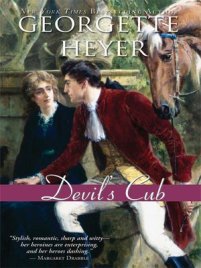 I haven’t started a new book since I finished Tinker, Tailor, Soldier, Spy, though I did reread Georgette Heyer’s Devil’s Cub last week after recommending it to a Twitter friend looking for a Valentine’s Day present for his wife. I hope she liked it! Sometimes I reread just the final third but this time I started from the beginning. It does take a little while for all the pieces of Heyer’s plot to get lined up, but once they’re in place it’s comedy gold, I think, and also pretty romantic–though YMMV depending on your tolerance for bad boy heroes. (But Mary is so having none of his self-indulgent nonsense!) It’s also good preparation for teaching Lord of Scoundrels, which will be up in Pulp Fiction in just a few weeks!
 As I did with Spy, I read Tinker, Tailor with mostly passive fascination, not trying to get ahead of Smiley to the truth about the mole known as “Gerald”–which is not to say I didn’t have my guesses, but the novel is not written to satisfy fair play conventions, and we only get information as it is doled out, by Le Carré as he chooses whose story to tell next and by Smiley, whose tactical reticence is its own form of genius. Smiley is of course the greatest of the characters here, but they are all–from gruff Jim Prideaux and his “watcher,” little Bill “Jumbo” Roach, to the four members of the Circus who give the novel its name–rendered with memorable specificity. Le Carré creates not just a world but multiple worlds, too, the best of them the damp, grubby, second-hand London in which Smiley conducts his backwards investigation. As he carries out his inquiries, we make excursions to other times and places, some louder and more lively, some even darker and more fraught with menace. But we always come back with Smiley to the Hotel Islay in Sussex Gardens, where he stays still while moving, in his mind, without cease:
 What’s particularly brilliant, though, is the way that in its very final chapters–once the mole’s identity is confirmed and thus the puzzle that is supposedly central to the novel has been solved–Tinker, Tailor, Soldier, Spy turns on itself. After all that time and work, there is no satisfaction, no triumph, for Smiley, in his own success. Instead, abruptly, what was almost an abstract research exercise becomes all too real, its consequences all too human: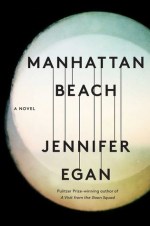
 Anyway, hype aside (and as I was once reminded, it’s not as if publicists are going to put nuanced commentary on the cover instead of high praise or pitch it to readers with modest claims such as “a good traditional novel by one of the top 30 American writers of our time”) Manhattan Beach is an excellent traditional historical novel. By “traditional” I mean it is deeply researched and refreshingly (to me) laden with the results of that work. I like exposition, I like artfully displayed period detail, I like neepery–and Manhattan Beach has plenty of all three. Since Goon Squad was my only previous experience with Egan’s fiction, I didn’t know what to expect of her as a historical novelist, or even really as a prose stylist (at least not at any length). I was glad she did not opt for the currently fashionable minimalism. She does not go into Dunnett-like detail, but both the criminal underworld–what gangster Dexter Styles thinks of as the “shadow world”–and the bustling, hi-tech world of the navy yard where Anna Kerrigan works are evoked with great specificity. It is a very atmospheric novel: Egan moves us repeatedly through several different environments, from the upper-crust world of the city’s elite to the rowdy bars where gangsters and dock workers mingle, from the grime and clamor of life aboard ship to the murkily dreamlike underwater world accessible only to divers like (eventually) Anna:
 Though there’s some mystery around Eddie Kerrigan’s fate, Manhattan Beach isn’t really built as a mystery novel; its gangster elements add suspense and occasionally give it twists like a thriller’s, but I thought it was really a novel of character, or rather of characters–tangled, most of them, in circumstances they are trying (with very mixed success) to change. The ruthlessness of the gangster story line is tinged with unexpected pathos, and Anna’s pursuit of work below the surface of the sea she has always loved to watch is both a professional and a personal quest that connects (in ways she eventually learns) to her father’s story, as if she has been unconsciously drawn all her life to the one place she might find answers.
 When I visited my parents in Vancouver last May, one of the many nice things we did was watch the recent adaptation of Doctor Thorne. I thoroughly enjoyed it. Trollope (like Austen) adapts very well–much better, in my opinion, than Dickens or George Eliot, the brilliance of whose fiction lies so much in the narrator’s voice and in the other very written qualities of their novels that (for me) adaptations almost always seem inadequate.
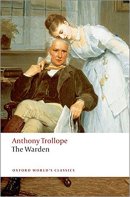 The very qualities that make Trollope such a pleasure to read, though, also make him a bit challenging to teach. The thing about people just “going about their daily business” is that often not much is really happening–there’s not much action, or at least not much dramatic action. To put it another way, the action and the drama in Trollope are often internal, and usually subtle: the characters puzzle through personal and moral problems in infinite shades of grey, rather than the more “glaring colours” of a writer like Dickens (that’s Trollope’s own characterization of Dickens’s method, from the parody of him as “Mr. Popular Sentiment” in The Warden). Given that Trollope’s novels are mostly also quite long, there’s a significant risk that students’ reaction will be boredom: pressed for time as they are, and unaccustomed to fiction that rolls out quite so slowly, they can struggle to find pleasure or interest in the process.
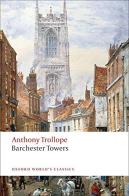 That, at least, has been my experience with Barchester Towers, which I have tried in my standard 19th-century fiction class a couple of times. I’ve had somewhat better reactions to
  It was the longing to get away from just those humming distractions that sent me back to Doctor Thorne last week: not just my own to-do list, but the overwhelming clatter and clutter of the rest of the world. Especially on the news and on social media, what a constant clamor of catastrophes there is, big and small, near and far away, with everything from Can Lit to the CDC in crisis, all demanding attention, all generating takes and counter-takes in an unceasing cascade of anger, fear, and weaponized self-righteousness–much of it wholly justified, but all of it eventually exhausting. It’s all very well to advise simply “unplugging,” but even setting aside the obligation we might have to be informed citizens of both our personal and our political worlds, for me there’s a lot of good mixed in with the bad–a lot of people and issues I don’t want to lose contact with or miss insight into.
 Both of my classes are focusing a lot on masculinity right now, particularly on representations of or challenges to ideas of masculine heroism.
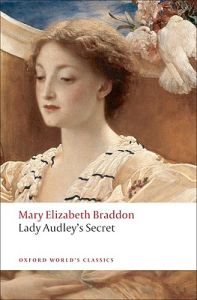
 Once he faces injustice, though, and especially once he’s felt the full force of Tanner’s malicious bullying, he becomes the unrelenting agent of retribution he needs to be. In that sense he’s an interesting parallel to Robert Audley, whom we are currently discussing in Victorian Sensations. When his novel begins, he just wants to laze around Fig Tree Court and read French novels and not be bothered; like Valdez, he’s forced out of his relative placidity by an injustice he can’t leave unaddressed. The morality of Robert’s mission is murkier, though: what exactly the stakes are in his pursuit of the truth about Lady Audley is something we’re discussing a lot at the moment. It’s true he believes she has murdered his best friend, but he often seems more concerned about the pain her presumed duplicity will cause his uncle than anything else.






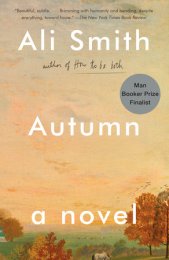
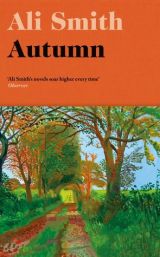 What did “I myself particularly like” in Autumn? I liked the meticulous descriptions of the landscape as it changes with the season:
 I liked all of these parts and more about the novel, and yet while I could find a lot more examples to quote with pleasure or admiration, I don’t know quite how to talk about or conceptualize the novel as a whole, and that leaves me somewhat frustrated with it overall. I trusted Smith’s bricolage more than that of some other more fragmented novels I’ve read in recent years (Jenny Offil’s Department of Speculation, for instance, or Jennifer Egan’s A Visit From the Goon Squad, neither of which I actually enjoyed much at all). I think that’s because there’s a stronger narrative thread running through Autumn, and it gives a deeper grounding in its central characters while still (especially in Daniel’s case) leaving them somewhat opaque or enigmatic. There was enough in Autumn for a reader like me to enjoy in my usual way, though Smith clearly wants to do something more, or something other, than that.
