This Week In My Classes: Men, Mopes, and Munro Day

valdezBoth of my classes are focusing a lot on masculinity right now, particularly on representations of or challenges to ideas of masculine heroism.

In Pulp Fiction, we’re working our way through Valdez Is Coming. Valdez epitomizes a certain kind of Western hero: he is a man of few words, a man whose actions speak for him, whose principles are hard for him to articulate but are nonetheless non-negotiable for him. Leonard really emphasizes, though, that living up to his principles is not a no-brainer for Valdez, who often seems a bit frustrated with his own compulsion to do what he thinks is right. “What do you need besides this?”he wonders, sitting with the horse-breaker Diego Luz listening to Diego’s children play around the house:

To have a place, a family. Very quiet except for the children sometimes, and no trouble. No Apaches. No bandits raiding from across the border. Trees and water and a good house.

But he doesn’t stay put: he goes back again to Mr. Tanner, the man who instigated the situation that led to Valdez shooting an innocent man, the man Valdez needs to persuade to go along with his plan to provide restitution to the dead man’s wife. “I’m talking about what’s fair,” he tells Mr. Tanner, a seemingly simple statement that says everything about the difference between them.

Valdez doesn’t particularly want to be a tough guy: he doesn’t go to Tanner’s seeking a confrontation, though it’s clear to him by this point that he’s going to get one. He is resolute, and once the conflict begins he’s prepared to do whatever it takes to win it, but I find it interesting that Leonard makes it seem like an act of will, not an inevitability, as if to say that being such a man is a difficult but necessary choice. That puts the novel’s less principled characters (like the miserable mope R. L. Davis) in a worse light, because they aren’t just weak (Valdez too has weaknesses) but choose their weaknesses (including moral weakness) over real strength, including moral strength.

Valdez is a somewhat reluctant hero. He doesn’t ride into the novel like a man on a mission–at first, he’s just a man doing his job, and he’s not even that committed to his job:

He didn’t have to say here. He didn’t have to be a town constable. He didn’t have to work for the stage company. He didn’t have to listen to Mr. Beaudry and Mr. Malson and smile when they said those things. He didn’t have a wife or kids. He didn’t have land that he owned. He could go anywhere he wanted.

ladyaudleyOnce he faces injustice, though, and especially once he’s felt the full force of Tanner’s malicious bullying, he becomes the unrelenting agent of retribution he needs to be. In that sense he’s an interesting parallel to Robert Audley, whom we are currently discussing in Victorian Sensations. When his novel begins, he just wants to laze around Fig Tree Court and read French novels and not be bothered; like Valdez, he’s forced out of his relative placidity by an injustice he can’t leave unaddressed. The morality of Robert’s mission is murkier, though: what exactly the stakes are in his pursuit of the truth about Lady Audley is something we’re discussing a lot at the moment. It’s true he believes she has murdered his best friend, but he often seems more concerned about the pain her presumed duplicity will cause his uncle than anything else.
Also like Valdez, Robert Audley is not 100% committed to his quest for justice–again, at least at first. We talked this week about his initial lack of interest in “being a man,” from his general indolence to his indifference to his besotted cousin, who keeps throwing herself at him. Robert Audley starts the novel as a mope, albeit a charming and good-hearted one, and only his strong bond with the mysteriously vanished George Talboys eventually stimulates him to principled action and self-assertion. It’s a bit hard to tell if the newly amped-up Robert is supposed to be truly heroic or whether Braddon is poking fun at him, especially when he starts ranting about how much he hates women for always causing so much trouble:ingres-joan-of-arc

They don’t know what it is to be quiet. They are Semiramides, and Cleopatras, and Joan of Arcs, Queen Elizabeths and Catherine the Seconds, and they riot in battle, and murder, and clamour, and desperation. If they can’t agitate the universe and play at ball with hemispheres, they’ll make mountains of warfare and vexation out of domestic molehills; and social storms in household teacups. . . . They’re bold, brazen, abominable creatures, invented for the annoyance and destruction of their superiors. Look at this business of poor George’s! It’s all woman’s work from one end to the other.

Robert’s maturation into a responsible adult is certainly the result of women’s interference with his privileged do-nothing existence. They may end up making a man of him, but he clearly resents it, and one way of reading the ending of the novel is that he gets his revenge–which may or may not be heroic, depending on how you read the rest of the novel, especially Lady Audley herself.

My personal hero this week is George Munro, patron saint of Dalhousie’s much-appreciated February long weekend. It has been a tough couple of weeks of bad weather and frayed nerves, so I am happy to have no classes tomorrow. I have tests to mark and reading to do, but neither of these tasks requires me to venture out in the snow.

In the Gallery: A Study in Contrasts

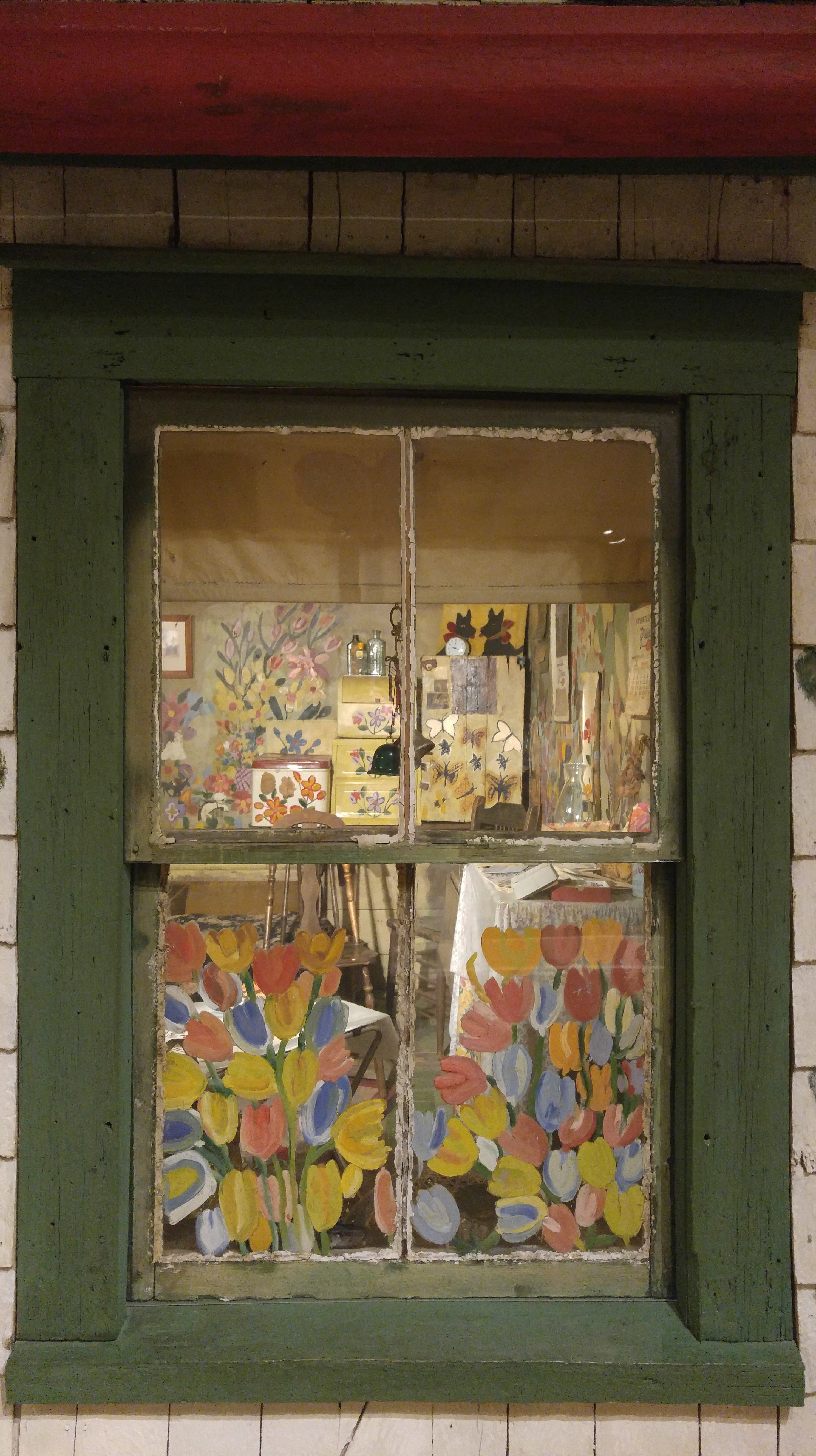
Maud Lewis WindowWe are enjoying a nice snow-free interlude in Halifax this weekend so I thought I should make the most of it and actually go do something today (besides the grocery shopping, which is my standard Saturday chore). I settled on a trip to the Art Gallery of Nova Scotia, where I haven’t been in many years.

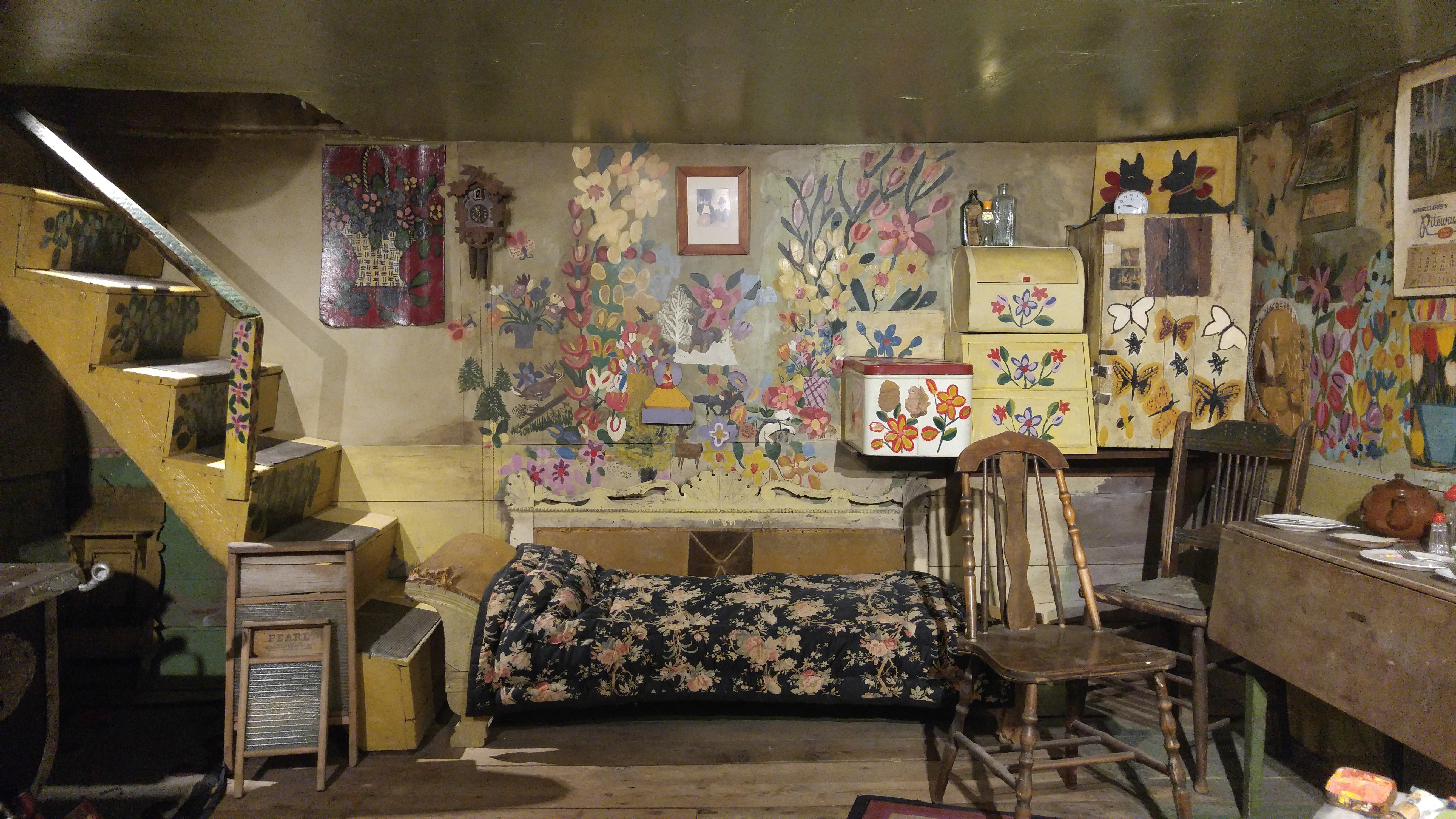
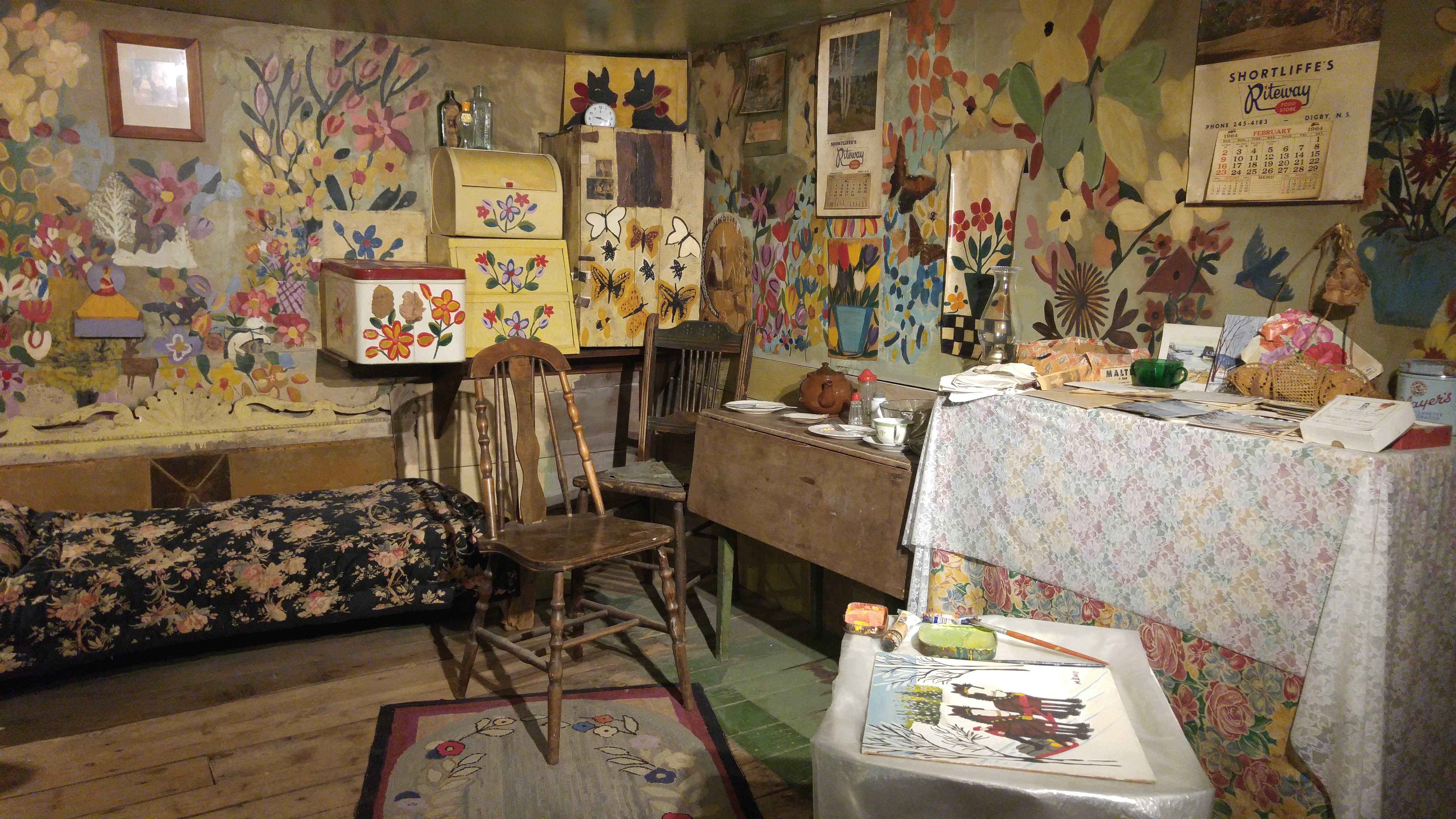
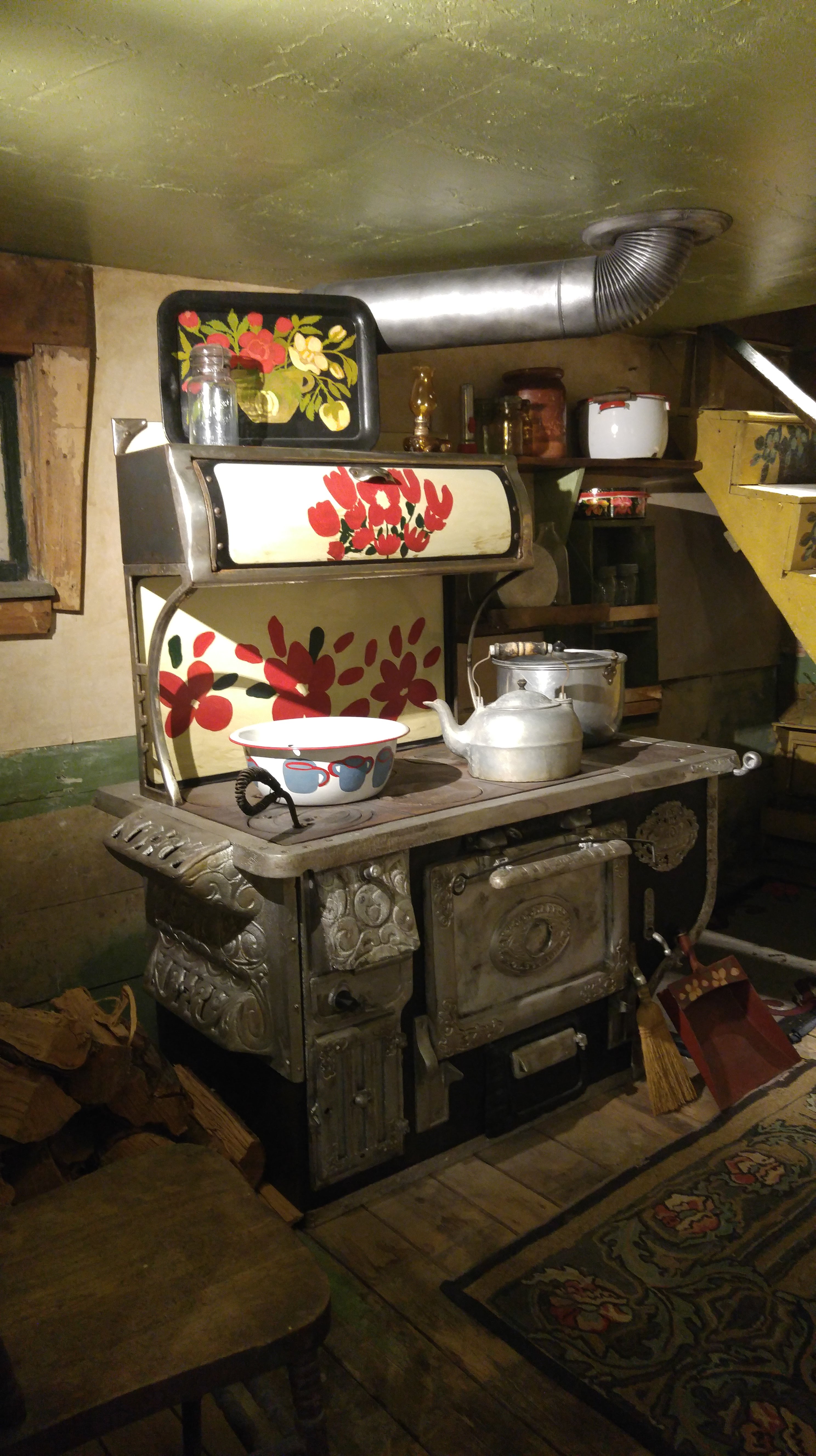
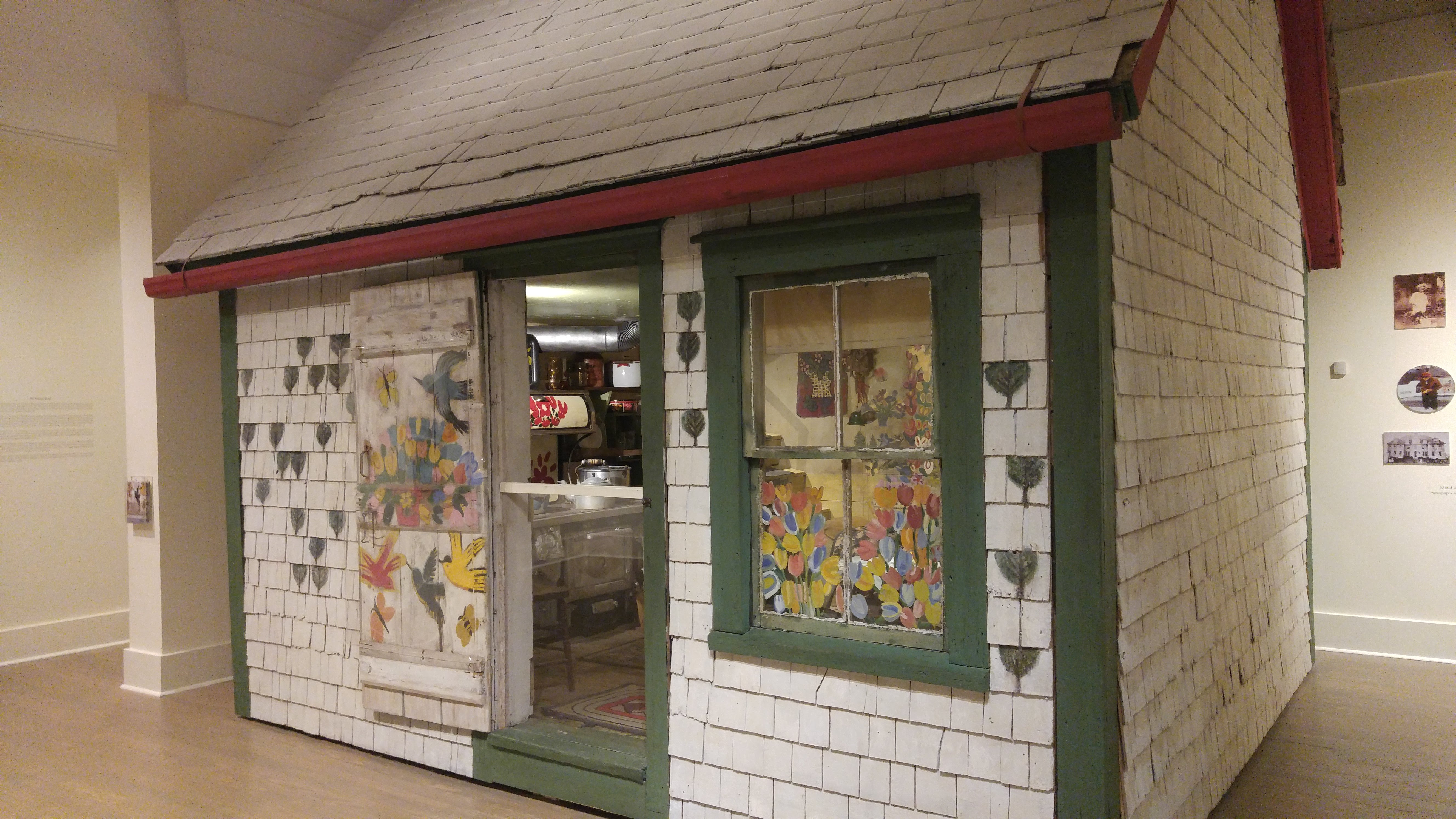
The AGNS is probably best known (especially since the release of Maudie) for its Maud Lewis collection, which includes her improbably tiny and delightfully colorful house–yes, the entire house:

Charming and joyful as the house is, with all its vibrant colours and free-spirited florals, it is hard to imagine two people actually living in it: it looks like a playhouse when you first see it, and at about 12′ x 12′ it is about the size of a single room in most contemporary homes.

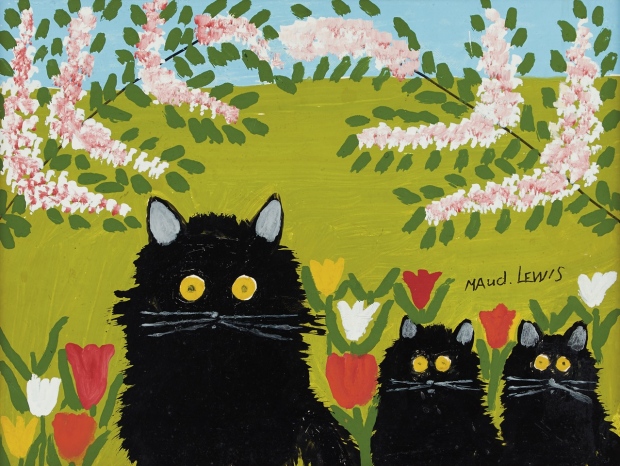
Lewis was a folk artist and her work is bright and simple and unsophisticated. I find it cheering but also fairly uninteresting:

It has a childlike quality to it that is particularly endearing, for me anyway, in her cartoon-like animals:

While these creatures amuse me and the landscapes charm me, nothing about Lewis’s work engages me deeply: I have no urge to linger over it. I suppose that’s consistent with its naive or primitive style–it’s not supposed to be layered or sophisticated. Still, just as a matter of personal taste, I prefer art that’s more complex and less cute. The Maud Lewis gallery has a lot of personality, but its interest for me is not really aesthetic.

Also in the AGNS (but only until January 28, so I am very glad I went when I did) is an exhibit called “Centuries of Silence: the Discovery of the Salzinnes Antiphonal.” This is a completely different experience: intellectually and historically fascinating, and aesthetically thrilling.

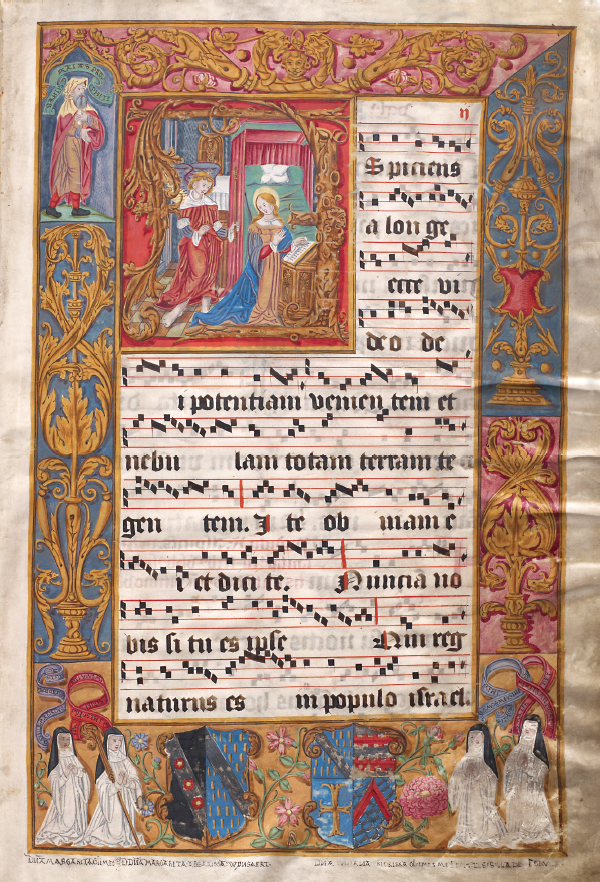
The Salzinnes Antiphonal is a 16th-century manuscript that was discovered in the library of Saint Mary’s University here in Halifax. It has been painstakingly restored and is displayed along with a fine and thoughtful collection of related materials, including portraits of some of the abbesses who presided over the Abbey of Salzinnes in Belgium at the time of its creation:

The volume itself has stunning full-page illustrations:

The music has been recreated in modern notation and recorded; as you explore the exhibit its ethereal, otherworldly beauty surrounds, calms, and inspires you.

The exhibit includes other works of art collected by the Archbishop who was most likely responsible for bringing the Antiphonal to Halifax; paintings of and records from the Abbey that was its source and original home (including three 16th-century papal bulls); a video demonstrating the process of creating an object so beautiful and lasting, from preparing the vellum to layering in the gold leaf; and these hand-sewn recreations of the nuns’ habits, a project by a student in Dalhousie’s Costume Studies program:

I found it all fascinating, as you can probably tell! Though the Antiphonal is in some ways quite an imposing object, and though of course the original volume, though on display, is inaccessible behind its protective glass, still in its own way it felt every bit as intimate as Maud Lewis’s house. The illustrations, reproductions of which are displayed on the walls, have many details that personalize them, reminding us that this work too was done by very human hands.

It was a nice afternoon, especially rounded off with tea and a browse at the Halifax Central Library. I should get out more–and weather permitting, I will!

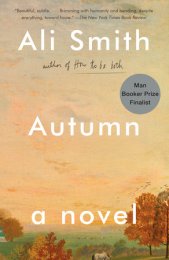
“Things That Happen In the World”: Ali Smith, Autumn

autumn-cover

What pictures? Pictures of what? her mother said.

Things. Things that happen in the world, Elizabeth said. A sunflower. A man with a machine gun like out of a gangster film. A factory. A Russian-looking politician. An owl, an exploding airship —

Ali Smith’s Autumn seemed incoherent to me, though artfully so. It is composed of many pieces, some of which fit together in the orderly way we expect of a novel, with interconnected characters moving forwards (and sometimes backwards) through a shared plot, but other sections don’t belong to that plot, or they are related to it tangentially or associatively; instead of completing the picture, they add color or shape or contrast or interest of their own.

There’s a lot of attention to collages within the more conventional narrative parts of the novel, and it occurred to me after a while that Autumn was designed to be collage-like itself. After hearing her friend Daniel describe a work that we later learn is by the British Pop artist Pauline Boty, the novel’s main character Elisabeth, then a child, comments, “I like the idea of the blue and pink together”:

Pink lace. Deep blue pigment, Daniel said.

I like that maybe you could touch the pink, if it was made of lace, I mean, and it would feel different from the blue.

Oh, that’s good, Daniel said. That’s very good.

“Today I myself particularly like the ship,” Daniel adds; “The galleon with the sails up.” Juxtaposition brings out texture; our own interest and attention vary and need different provocations at different times. These both seem like ideas that illuminate the process of Autumn itself.

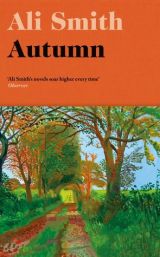
autumn-2-coverWhat did “I myself particularly like” in Autumn? I liked the meticulous descriptions of the landscape as it changes with the season:

October’s a blink of the eye. The apples weighing down the tree a minute ago are gone and the tree’s leaves are yellow and thinning. A frost has snapped millions of trees all across the country into brightness. The ones that aren’t evergreen are a combination of beautiful and tawdry, red orange gold the leaves, then brown, and down.

I liked Elisabeth’s unruly mother, especially her timely and heartfelt outburst:

I’m tired of the news. I’m tired of the way it makes things spectacular that aren’t, and deals so simplistically with what’s truly appalling. I’m tired of the vitriol. I’m tired of the anger. I’m tired of the meanness. I’m tired of the selfishness. I’m tired of how we’re doing nothing to stop it. I’m tired of how we’re encouraging it. . . . I’m tired of how those liars have let this happen. I’m tired of having to wonder whether they did it out of stupidity or did it on purpose. I’m tired of lying governments. I’m tired of people not caring whether they’re being lied to or not.

I liked the riff on “things from the past” accumulating and spilling out across the nation. I liked learning about Pauline Boty. I liked Elisabeth and Daniel a lot. I liked the nods to Dickens, beginning with the opening line (“It was the worst of times, it was the worst of times”). I liked reading the more fantastical, dream-like bits–but those are also the parts that most frustrated my desire to make collective sense of what I was reading.

offillI liked all of these parts and more about the novel, and yet while I could find a lot more examples to quote with pleasure or admiration, I don’t know quite how to talk about or conceptualize the novel as a whole, and that leaves me somewhat frustrated with it overall. I trusted Smith’s bricolage more than that of some other more fragmented novels I’ve read in recent years (Jenny Offil’s Department of Speculation, for instance, or Jennifer Egan’s A Visit From the Goon Squad, neither of which I actually enjoyed much at all). I think that’s because there’s a stronger narrative thread running through Autumn, and it gives a deeper grounding in its central characters while still (especially in Daniel’s case) leaving them somewhat opaque or enigmatic. There was enough in Autumn for a reader like me to enjoy in my usual way, though Smith clearly wants to do something more, or something other, than that.

I’ve been thinking lately (not without some anxiety, to be honest) that my reading taste and habits are hopelessly conventional, mainstream, middlebrow–choose your poisonous label! I don’t seek out experimental fiction or make my critical home in some interesting and underpopulated niche, whether literature in translation or obscure mid-century novelists of the NYRB Classics kind. This is a disadvantage for someone trying to define a critical voice or personality: what (I wonder in my bleaker moments) if I don’t really have such a thing? But then I remind myself that it’s OK just to read as well as you can, and that besides, I can’t become a reader I’m not (though of course it’s good to question and challenge my own taste). It’s a bit disconcerting to think that Autumn, which is hardly a fringe work, is very nearly outside my comfort zone. For all the things I liked about it, I admit I do not feel inspired to follow up with Winter.

This Week In My Classes: Counts, Cowboys, and Critics

I have to stop putting pressure on myself to make these update posts more than they have to be. When I started doing this, all I had in mind was opening up my classroom to anyone curious to know more about what English professors actually get up to–rather than fulminating against what they imagine we’re doing. The reality is both more mundane and (I think, anyway) more inspirational than people who think we should “ALL be flushed down the toilet” believe. I thought I could at least illustrate this widely misrepresented aspect of my professional life–the day to day (or at least week by week) effort I make to guide students towards being better (more thoughtful, more experienced, better informed) readers and writers–while also giving a sense of the kinds of books we read in my own classes and the kinds of discussions we have about them.

A lot of what I’ve written in this series is more or less straight reportage along those lines but then I began writing posts with more of a conceptual angle, and that seemed to raise the stakes. I still hope to do that, and often that’s actually what generates the teaching posts I look back on with the most satisfaction–but sometimes I just don’t have anything that profound to say! Lately that has made me hesitate about posting at all, and then I end up missing it. I like the process of it: as usual, I need to stop fretting so much about the product and just get on with it.

So, without more ado, here are some updates on my classes this week!

In Pulp Fiction we have just begun our discussions of Elmore Leonard’s Valdez Is Coming. I still feel as if I’m doing a lot of preparatory work in this class–maybe too much, I thought today, as I went on and on about issues of terminology and then the methods of close reading until by the time I actually tried to get the students involved in doing some close reading, they didn’t have much energy. That’s my fault: lesson learned! I also felt off my game the whole class: I was well prepared, in theory anyway, but the things I had planned to say didn’t come out that coherently, and once I started worrying about that and second-guessing myself, of course it just got harder to keep my focus! Self-consciousness is indeed, as Carlyle said, the beginning of disease: when things are going well I’m just absorbed in the discussion, with none of this meta-level anxiety. Of course, who really knows if that means I’m doing a better job then–or that today’s class really was in some way worse than usual! It was probably fine, and there are lots more chances to make up for it if it wasn’t.

I thought the discussion was a bit stuttering in Victorian Sensations this morning too–maybe that’s what set me up for my unease in the afternoon! We’ve been having very lively discussions of The Woman in White, but today was the first of our sessions focused on ‘critical approaches’: we read a selection of contemporary reviews, then a couple of modern critical essays, one from 1977 and one from 2006. My idea is that over the term these classes will add up to a mini-seminar in critical trends, though I haven’t chosen the readings that systematically–I just want us to engage with a range of different kinds of critical approaches and see how the conversation about these books has changed over time. That kind of meta-critical conversation is not as easy or familiar as talking directly about Marian’s subversion of gender norms or Count Fosco and the mysterious Brotherhood–and students understandably seemed less certain where or how to jump in. As always, a couple of students brought in discussion prompts for us, and these were very good. Next time I’m going to prepare a bit differently myself–particularly for the 19th-century material, which is (as we discussed) more diffuse and–to students more accustomed to working with very focused and analytical modern scholarship–more difficult to recognize or engage with as criticism, because the apparatus is much less explicit.

Friday is a very student-centered day: in Victorian Sensations we have our first group presentation, and I’m looking forward to that, as there’s usually so much intelligence and creativity on display, and then in Pulp Fiction it’s tutorials, which this week will be focused on a close reading activity.

I haven’t had much marking yet, beyond the reading journals I collect in random clusters in Pulp Fiction. That will change soon, though, and more generally I can already feel the term picking up speed. Next week we have Friday off for Munro Day, then it’s not long until Reading Week–and then it will feel like a mad rush to April and exams. But for now, it’s just one foot in front of the other. And that’s what’s up this week in my classes!

This Week In My Classes: Winter, Westerns, and The Woman in White

It’s week 2 of the winter term and things haven’t quite settled into a routine yet. One cause is my pet peeve, the too-long add-drop period: students are still joining my classes (which they can do online without so much as checking in with me first) even though they’ve already met four times each. The ripple effects of this are pretty significant for both instructors and students–but clearly we are never going to persuade the administrative Powers That Be (who are quite as inscrutable as their namesakes in Angel) that this system is pedagogically unsound, so I should probably stop complaining about it.

The other unsettling factor is winter, which has taken on its more accustomed form this week: after several spells of either fiercely cold (but dry) days and unseasonably warm (but very rainy) days, last night we had our first real dump of snow, and there’s more in the forecast for tomorrow. I am so happy that next winter term I’ll be on sabbatical! And the winter term after that (amazingly enough) I will no longer be chauffeuring Maddie to high school, so I will have much more flexibility about exactly when I venture out in the morning.

However! These various sources of stress aside, the business of the term is underway and really, as far as I can tell, it’s actually going pretty smoothly so far. In Pulp Fiction I’m done with warm-up material and we’ve started our unit on Westerns. Yesterday was mostly about context–the history and myth of the American West and the origins and conventions of the Western. The reading I assigned was Sherman Alexie’s “My Heroes Have Never Been Cowboys”: from the discussion we had, and from the reading journals the students submitted, most of them seem to have found his critique and subversion of Western tropes engaging and thought-provoking. It’s also a good text for introducing the importance of point of view, which we’ll want to be self-conscious about throughout the term. Tomorrow we’ll be talking about Dorothy Johnson’s “The Man Who Shot Liberty Valance,” which has many elements of a classic western but takes some unexpected turns. We’ll work through two more short stories before starting our main text, Valdez Is Coming, next week. So far the energy seems good in the classroom: I really hope that persists, as last year I really struggled to get much participation. It’s a lot more fun for everyone when the discussion is lively, and as I’ve been really emphasizing in my own comments so far, English is a discussion-based discipline (yes, I’m going to bring up “coduction” eventually), so talking and listening are also key ways to hone the relevant skills.

In Victorian Sensations we are also done with our warm-up material, though there was less of it there as it’s a 4th-year class. I set things up for the term with one lecture on “the rise of the novel” and some specific features of sensation fiction. This year there are a lot of students in the seminar who have taken at least one of my 19th-century fiction courses, which means some of this was review for them, but a little reinforcement never hurts, and this brings those without that previous experience in the genre up to speed. With that preliminary work out of the way, we’ve begun our discussions of The Woman in White. What a lot of fun the novel is! I haven’t taught it (and thus haven’t reread it) since 2012, and I am reveling in its twists and turns and excesses and absurdities, from Walter’s pathetic pining after Laura–the perfect and, as students quickly concluded, perfectly dull representative of ideal Victorian womanhood–to her indomitable half-sister Marian–Magnificant Marian, as the effusively charming and sinister Count Fosco calls her. Here too the energy seems good so far, with plenty of people already chiming in: this is not just desirable but essential in a seminar, of course, so I’m glad to see it. I really enjoy the more open-ended style of a seminar class–although I find it takes every bit as much concentration, and is every bit as tiring, as a lecture class precisely because I’m not as much in control of where the discussion goes but I have to be very responsive to it.

So here we are: well launched on another season. There are administrative wheels turning as well, which means meetings and paperwork, and I hope to get some writing done in the interstices, but even more, right now, I hope to get some better reading done–besides the reading I’m doing for class, of course. I’ve just started Dr. Edith Vane and the Hares of Crawley Hall, which looks just about perfect for this time of term.

Reading and “Spots of Commonness”

Among our valued friends is there not some one or other who is a little too self-confident and disdainful; whose distinguished mind is a little spotted with commonness; who is a little pinched here and protuberant there with native prejudices; or whose better energies are liable to lapse down the wrong channel under the influence of transient solicitations? (George Eliot, Middlemarch)

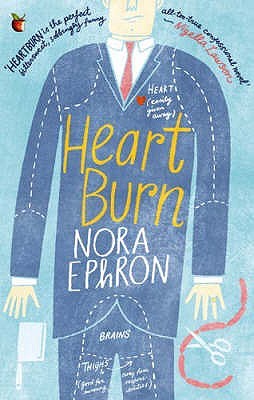
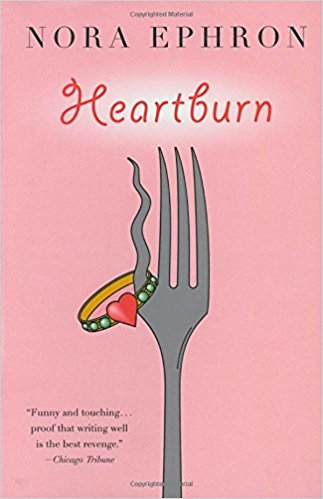
My book club met on Sunday to discuss Nora Ephron’s Heartburn. We all basically really enjoyed it: we found it funny and sharp and yet also just serious and touching enough to be anchored in believably human feelings about the kind of deception and betrayal that not only ends a marriage but taints its happiest memories. Towards the end of the novel its narrator Rachel recalls being asked why she turns everything into a story:

So I told her why:

Because if I tell the story, I control the version.

Because if I tell the story, I can make you laugh, and I would rather have you laugh at me than feel sorry for me.

Because if I tell the story, it doesn’t hurt as much.

Because if I tell the story, I can get on with it.

What a lot of truth about stories, about laughter, and about life is packed into those few lines!

I liked a lot of things about Heartburn: the laugh-out-loud comedy, the book’s clever plotting, the ring Mark gives Rachel that comes to symbolize her stolen and then freely relinquished relationship with him. “I love the ring,” Rachel says to the jeweler she sells it back to, “but it really doesn’t go with my life.” I especially liked the cooking. I too consider potatoes a comfort food–though I had never thought to connect potatoes with love quite the way Rachel does. (Her recipe for Potatoes Anna sounds particularly delicious, but it also sounds like more trouble than I’m ever likely to go to.)

There was one thing in the novel that I didn’t like. When Rachel’s friend Richard tells her that his wife Helen has fallen in love with another woman, Rachel figures it would be a mistake “for me to have introduced the word ‘dyke’ into the conversation,” but then Richard introduces it himself and they go back and forth about how you can “tell if someone’s a dyke” or whether “all women have tendencies of that sort.” It seemed to me as I read this section that it was a mistake for Ephron to have “introduced the word ‘dyke,'” and then to have kept on using it. I blame Ephron (not Rachel or Richard) for it because I don’t see any reason to read it as a “tell” of some kind about the characters: there’s no sense that this is a moment in which (as in one of Browning’s dramatic monologues, for instance) they give away more than they mean to about themselves; there’s no implicit narrative judgment, no distancing irony, no self-conscious scare-quotes, nothing that would make this other than what it sounds like, that is, the casual deployment of a homophobic slur by two characters we’re supposed to like.

Some members of my book club wondered if “dyke” would have been meant or heard as derogatory in 1983: if not, my negative reaction would be anachronistic. I was pretty sure it wasn’t, but I did poke around in a few sources that confirmed “dyke” was basically always an insult, though the term has of course also been reclaimed as a positive one–as in the “dykes vs. divas” softball game that is a well-known feature of Halifax’s annual Pride Festival. I don’t think Rachel and Richard are engaging in any such subversive recalibration of the word (and it wouldn’t be their business to do so in any case), and I don’t think Ephron is either. She just strikes a wrong note here–she betrays what George Eliot calls in Lydgate a “spot of commonness.”

This exchange takes up less than half a page in a scene that is fairly incidental to the novel as a whole. The insignificance of it by that measure got me thinking about cut-off points for my tolerance of this kind of–what should I call it? a failure? a blot? a slip? When or why do we shrug off something that we recognize as a lapse, something that signals a gap between our own values or standards and those on display in a book–and when or why do we find it too much to take? It sometimes feels as if we are in a particularly absolute phase right now in this respect. I’ve seen some recent books written off entirely by some readers for their insensitivity on a particular point–one example that comes to mind is Sally Thorne’s The Hating Game, which was roundly criticized for its characters’ fat-shaming. I’m not in any way suggesting the fat-shaming is OK; I’m wondering about how we decide the extent to which such a “spot of commonness” affects our judgment of the book as a whole. When do we say “it’s a good book except for X ” and when do we say “it just isn’t a good book because of X”?

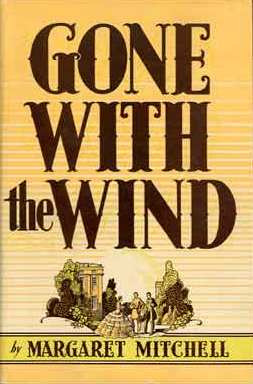
The extremes are easy. Gone with the Wind, for instance, doesn’t just include a couple of incidentally offensive bits: as I wrote in my 2010 essay about it, the novel “endorses racism and romanticizes slavery.”  But so many books include but (arguably, at least) aren’t actually built on problematic views or attitudes: some examples in books or authors I generally like a lot include the anti-Catholicism in Villette, for example, or the occasional anti-Semitism in Georgette Heyer and Dorothy L. Sayers, or Dickens’s annoying tendency to either vilify or idealize women, or the racist caricature of Miss Swartz in Vanity Fair (here’s a thoughtful little piece by John Sutherland on Thackeray’s racism). One approach is to read every such “small” example as indicative of wider and cumulatively unforgivable systems of prejudice and oppression and condemn the books accordingly as complicit. I think that is true about the big picture but not very helpful about specific cases: symptoms of even the worst diseases can range from mild to severe, after all, and sometimes a book’s own moral energy can be part of what makes its moral failings stand out so urgently.

I expect we all handle moments of disappointment with a book in our own way: we all probably have our own particular issues on which we allow no compromise, as well as our own degrees of tolerance for “spots of commonness” in cases where (as Eliot intends with Lydgate) the good, in our estimation, outweighs the bad.  This means being clear-eyed about faults, not excusing or ignoring them, but also not letting them set the entire terms of our engagement. For me, the more I otherwise admire a book–the more I think it deserves and repays a thoughtful response–the more effort I’m willing to put into weighing the implications of its flaws. The risk, of course, is that I might end up making excuses for them, but we all also probably have books for which we are willing to take that risk because they mean so much to us and we want to do our best by them. I’m certainly not going to go to that kind of trouble with Heartburn: I mostly enjoyed it, I almost certainly won’t reread it, and that’s an end of it.

Next Week In My Classes: Once More With Feeling

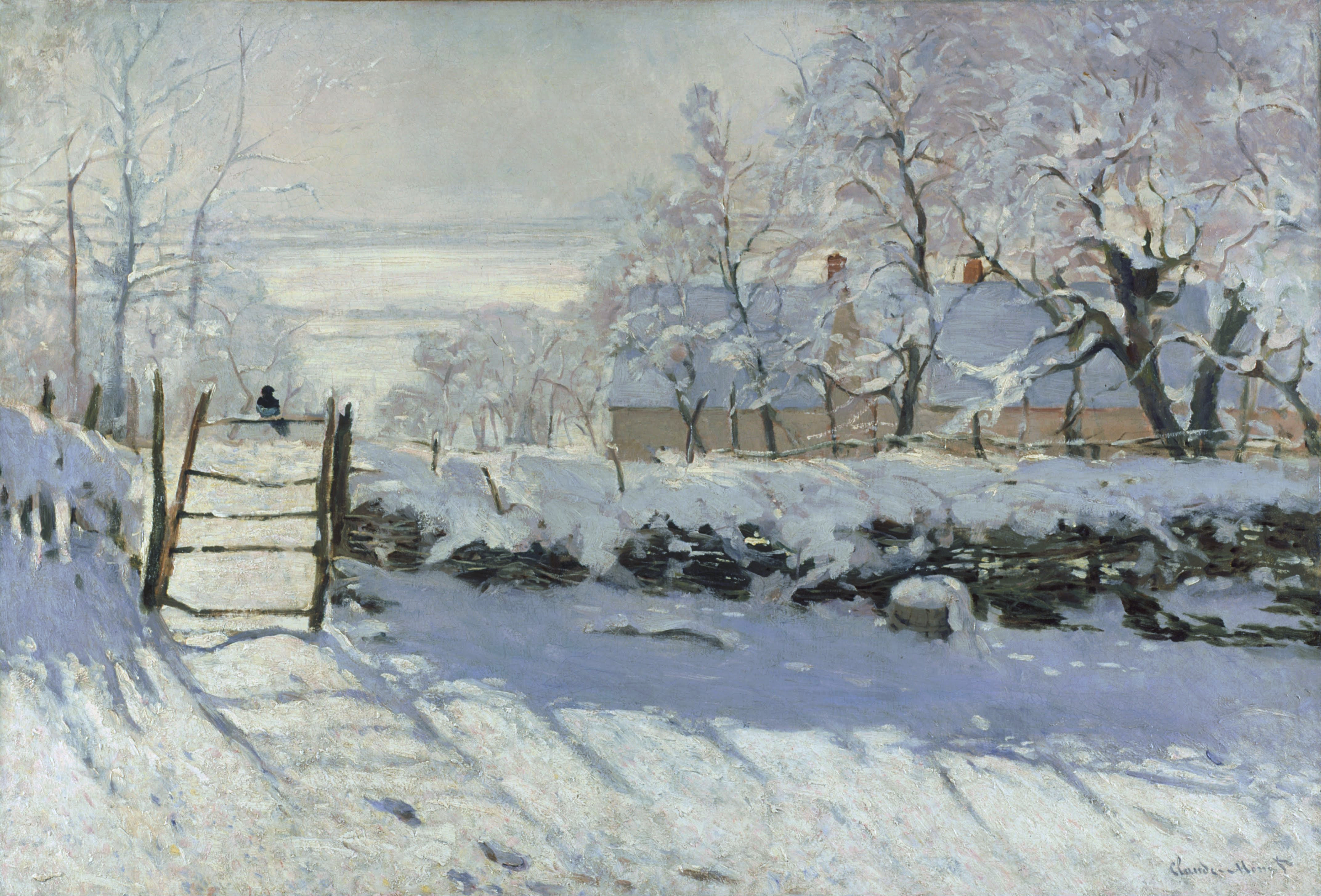
SnowyTreesWe’re hunkered down bracing for the big storm that is working its way up the Eastern seaboard. It isn’t clear yet whether Halifax will get much snow or mostly rain and freezing rain, but the biggest threat seems to be strong winds and thus power outages. Happily, the school board cancelled classes preemptively and classes at Dalhousie don’t start until Monday, so none of us has anywhere to go. [January 5 update: Our power went out almost as soon as I pressed ‘publish’ on this post and we just got it back. It got pretty cold in the house but otherwise we got off easy–and there was no measurable snow in Halifax at all, so no shoveling!]

I also don’t have much I have to do, as with the forecast in mind, I went in to campus the last couple of days and finished up most of my materials for the new term. My syllabi and Brightspace sites were already mostly done: I prefer to chip away at work over the break rather than have a big panic when it’s over and everything needs to be ready in a hurry. (I know this is contrary to the oft-heard advice to academics to take a “real” break, and I certainly understand the way our work’s porous boundaries can become debilitating, but this is what works best for me.)

So what lies ahead? I have just two courses again this term, and they are at opposite ends of our undergraduate curriculum, so that will keep me alert. I have taught them both before, but as always, I hope I can teach them better this time! One is Pulp Fiction, which I am offering for just the second time. I haven’t changed much since last year’s iteration: individual classes (as all teachers know) develop their own personalities and that can skew one’s sense of what readings, discussions, and assignments worked or didn’t work. That doesn’t mean I didn’t learn anything last time, of course, or that I haven’t changed anything at all.

cornellmethodOne specific innovation–a modest but, I hope, a valuable one–is that this year I am going to take some time to talk explicitly about note-taking strategies. Particularly for class meetings that are discussion based, I often get the sense that students do not know what to write down. Many clearly do not record anything at all, while those that think of themselves as conscientious note-takers often seem to be trying to transcribe every word. I’ve been reading up on the Cornell system and I think it’s easily adapted to the kinds of class sessions I typically run, so that’s what I’m going to focus on. Once I’ve gone over it, I will try to make it a common practice to take the last few minutes of a class to have students literally compare notes. (The image here is from the JMU website; many universities advocate or adapt this format.)

Another minor innovation is a new policy I’m experimenting with to help students who have a crush of overlapping deadlines. Pulp Fiction is a pretty big class (90 students) so it isn’t practical to be endlessly flexible about when our major assignments are due–plus ultimately it doesn’t help students to be stuck working on older material well after the class as a whole has moved on–but sometimes there are cases when a day or two would make a big difference to a student’s workload and stress level, so I thought I would try to formalize a way for them to ask for it. Under this new policy, students can request a penalty-free extension on a paper if they can show that they have another paper or a midterm due on the same day. (They already have options covering illness or other emergencies.) It’s an incremental change but one that I hope will be helpful for the students who need it while keeping things fair and transparent. There have always been students who have asked for extensions or chosen to accept a late penalty in this kind of situation, so this makes clear what principle will guide the process.

valdezThe overall structure of the course will be the same, though, as will the readings, which means I can draw on the notes I had to develop more or less from scratch last year. We’re starting with some general discussion about how and why “pulp” and “genre” fiction get differentiated from “literary” fiction. Then we’ll work through our examples of Westerns, mysteries, and romances, with Valdez Is ComingThe Maltese Falcon, and Lord of Scoundrels complemented by a selection of short fiction and, for Westerns, one poem (Sherman Alexie’s “My Heroes Have Never Been Cowboys”). The only one of the readings I really had second thoughts about was The Maltese Falcon, not because it wasn’t perfect for the course but because it is the only one of our three novels easy to cheat about. This year I will take that into account in the paper topics I assign about it. (Sadly, that means nobody gets to write about Brigid O’Shaughnessy as a femme fatale.)

broughtonMy other course is a 4th-year seminar on Victorian sensation fiction. I have taught it several times before but not recently–in fact, to my surprise, I realized I haven’t taught it since 2009! I have, of course, assigned a couple of the key texts we’ll be reading in it for other courses: I have often covered both The Woman in White and Lady Audley’s Secret in 19th-Century Fiction. Even The Woman in White hasn’t been on my syllabus since 2012, though. I started rereading it yesterday and I am really looking forward to discussing it with my students. I’ve never taught Ellen Wood’s East Lynne in any other course: it is such a strange novel! In previous versions of this course the fourth sensation novel on the reading list was Braddon’s Aurora Floyd, but I always thought it was less than ideal to have two novels by the same author, however different they are, so this year I have substituted Rhoda Broughton’s Cometh Up As a Flower. Yes, when I read it this summer I wasn’t entirely sold on it–but as is so often the case, it got more interesting as I read and thought about it, and it is refreshingly unlike the other three. I think it will provoke good discussion. We will wrap things up with Sarah Waters’s Fingersmith, one of my favorite novels and always a class favorite as well. There was a terrible time last summer when it looked as if we wouldn’t be able to find a Canadian distributor for it, but our diligent bookstore buyer found an available stash and it’s ordered and ready.

DALHOUSIE-UNIVERSITYIn many ways, I’m looking forward to the term. There are only two real sources of anxiety (besides the usual anticipatory stage fright). One is just that it’s winter, which always brings complications. The other is that it’s a bargaining year and negotiations between the administration and the faculty association seem to be dead ended. Last time around, they were right up against the strike deadline when a deal was finally reached, and it was very hard on everyone but especially the students. I’m not in the faculty association myself (technically I am appointed to the University of King’s College, an affiliated but independent and non-unionized institution). My classes are all Dalhousie classes, though, and if there is a strike we’d almost certainly all be locked out in any case. The parties are heading to conciliation: we can all hope things get sorted quickly and reasonably.
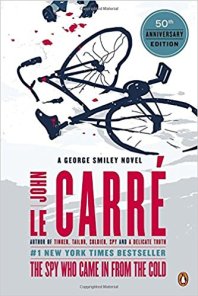
“A Squalid Procession”: John Le Carré, The Spy Who Came In From the Cold

le-carre-spy

“What do you think spies are: priests, saints, and martyrs? They’re a squalid procession of vain fools, traitors, too, yes . . .  . They don’t proselytise; they don’t stand in pulpits or on party platforms and tell us to fight for Peace or for God or whatever it is. They’re the poor sods who try to keep the preachers from blowing each other sky high.”

Remember when I said that you’d hear about it if I got really excited about another book before the end of the year? Well, here I am: all fired up about John Le Carré’s The Spy Who Came In From the Cold!

I’m very late to the Le Carré party, of course, though I’ve read a fair amount about Le Carré over the years; it was this excellent recent piece in the New York Review of Books that finally convinced me to try him for myself. As a result I knew, or thought I knew, more or less what the book’s atmosphere would be–cynical, murky, morally ambiguous–and, if very approximately, what its plot would be–lies, secrets, betrayals, morally compromising means to equivocal ends. I suspect that the (presumed) familiarity of the books was one reason I felt indifferent for so long to actually reading them.

The Spy Who Came In From the Cold lived up to my preconceptions: it is every bit as grim, every bit as grey, every bit as intricate as I expected. In its atmosphere, and in the nature (though not the specifics) of its plot, it did not surprise me at all. What did surprise me–precisely because I thought I knew so well what I was getting into–is how good it was. It’s not that I hadn’t heard that about Le Carré too, but lots of people praise and admire books I don’t end up gripped by: what Henry James called the “ultimate test”  (“‘liking’ a work of art or not liking it”) can only be administered personally, and the results are always unpredictable.

So that, for me, was the surprise: that The Spy Who Came In From the Cold not only passed that test for me but passed it so swiftly and so convincingly–and I’m told it is not even Le Carré’s best novel! I liked Leamas, tired, angry, but unbroken; I liked the cold and the darkness and the small rooms and the terse conversations; I liked (meaning I was appropriately chilled by) the ruthlessness the work requires, and I liked even more the novel’s running commentary, mostly implicit but sometimes out loud, about its human costs. “We have to live without sympathy, don’t we?” Control asks Leamas as he makes the opening moves in the game Leamas will end up playing to its bittersweet ending:

“That’s impossible of course. We act it to one another, all this hardness; but we aren’t like that really, I mean . . . one can’t be out in the cold all the time; one has to come in from the cold . . . d’you see what I mean?”

I liked Le Carré’s prose, which is economical but at the same time rich with evocative details and a strange sort of yearning:

There was a girl standing on the beach throwing bread to the seagulls. Her back was turned to him. The sea wind played with her long black hair and pulled at her coat, making an arc of her body, like a bow strung towards the sea. He knew what it was then that Liz had given him; the thing that he would have to go back and find if he ever got home to England: it was the caring about little things–the faith in ordinary life; the simplicity that made you break up a bit of bread into a paper bag, walk down to the beach, and throw it to the gulls. It was this respect for triviality which he had never been allowed to possess; whether it was bread for the seagulls or love, whatever it was he would go back and find it; he would make Liz find it for him. A week, two weeks perhaps, and he would be home.

I wasn’t sure I would find spy plots interesting: this is another reason I haven’t read Le Carré until now. In some ways the plot of The Spy Who Came In From the Cold was the least interesting aspect of the book for me: just as I read most mysteries without trying to figure out the murderer before I’m told, I didn’t exert myself much to anticipate the twists the story took. It was clear in practice what I already knew in theory: that Le Carré uses his plots as vehicles for character, and for their potential to explore moral problems, including (as he says in his introduction to my edition) “the same old question that we are asking ourselves fifty years later: How far can we go in the rightful defence of our Western values without abandoning them along the way?” “London won–that’s the point,” Leamas says near the end, refusing the hard, perhaps impossible, work of deciding whether the end justified the means. But he knows there is another way to do the calculation, that there are other measures of winning and losing, and that is surely why he makes his final decision to come in, once and for all, out of the cold.

2017: My Year in Reading

The year isn’t quite over, but while things are quiet around here it seems like a good time to take stock of my year in reading. If a book gets me really fired up between now and New Year’s, believe me, you’ll hear about it!

Like 2016, 2017 included a fair amount of “assigned” reading, but (also as in 2016) this meant I discovered some titles and authors I would otherwise have missed. I’m most glad to have been introduced to Sarah Moss’s intense, cerebral historical fiction. I wrote about her novels Bodies of Light and Signs for Lost Children for Numero Cinq. I very much enjoyed Gillian Best’s The Last Wave, which I reviewed for Canadian Notes & Queries, and I found Adam Sternbergh’s “taut conceptual thriller” The Blinds both smart and engrossing.

Books of the Year

The highlight of my reading year was rereading the entirety of Dorothy Dunnett’s The Lymond Chronicles in preparation for the feature I wrote on them for the TLS. What a luxury it was to have an excuse to put everything else aside and immerse myself in them again–it was hard for anything else I read to compare! The essay is behind their paywall but if you want a sense of what I said you can listen to me talk about Dunnett on the TLS podcast, which (once I got over being nervous) was a lot of fun to be part of.

an-odyssey-coverThe best of my new reading this year was Daniel Mendelsohn’s An Odyssey, which I loved–and which has prompted me (very belatedly, I know) to secure a copy of The Odyssey to read in 2018. I so admire Mendelsohn’s gift for weaving together different narrative strands into a compelling and unified whole, something he also did in The Lost (which topped my “best of” list when I read it in 2009 and still holds its place as one of the best books I’ve ever read): while some writers who meander make me impatient, he always kept me engrossed as he worked through related ideas about family, pedagogy, journeys (real and metaphorical), and Homer’s epic itself.

Second best, though mostly because I haven’t finished it yet, was John Galsworthy’s The Forsyte Saga. It took me a while to get drawn into The Man of Property but by the end I was thoroughly absorbed in and impressed by it; I really loved its immediate sequel, the novella Indian Summer of a Forsyte. One of my top reading goals for 2018 is to finish the next two novels.

Other Highlights

Katherena Vermette’s harrowing and thought-provoking The Break, which uses one terrible incident as a device to explore systemic problems that strain our capacity to imagine what achieving a just outcome would require.

Adam Haslett’s Imagine Me Gone, an engrossing story about a family riven by mental illness that is also a meditation on whether it is possible to right the wrongs of the past–personally but also nationally.

Helen Simonson’s The Summer Before the War, which I found “rich in charm and humanity and, ultimately, pathos.”

Kathleen Rooney’s Lillian Boxfish Takes A Walk, which I enjoyed for its own sake and because in her independence, wit, and love of language, Lillian reminded me of my grandmother.

Viet Thanh Nguyen’s The Sympathizer , “a stinging satire, of American hypocrisy and self-delusion in particular but also of pomp and corruption and ideological posturing on all sides.”

Elizabeth Taylor’s A View of the Harbour, which is a subtle and sharp and meticulous portrait of a flagging community.

Two particularly good book club choices: Shirley Jackson’s We Have Always Lived in the Castle and Sylvia Townsend Warner’s Lolly Willowes, both of which I thought were wonderfully sly and artful.

In the Middle

A number of books I read were fine but not as thrilling as I expected from the hype or my own previous experience with the author. I enjoyed but wasn’t bowled over by Ann Patchett’s  Commonwealthfor instance; Max Porter’s Grief Is the Thing With Feathers was touching but too formally precious for my taste; Anne Tyler’s A Spool of Blue Thread was vintage Tyler, which isn’t a bad thing but is also not an exciting thing; Marilynne Robinson’s much-lauded Housekeeping resonated with me much less than Gilead had; Sarah Perry’s The Essex Serpent was promising but, for me, never quite delivered. I started and didn’t finish a fair number of romance novels–but I found a few new ones that seem like keepers. My reading in that genre always seems a lot more hit or miss than in other genres; I think that may be a function of just how many there are to choose from.

Low Points

There really weren’t many this year, which is interesting in itself. I didn’t read anything that riled me up the way, say, Nutshell did last year; the worst books I read were mostly in the “meh” category. The one I liked least was The Stepford Wives, which I read with my book club: I wasn’t convinced it’s a satire about sexism rather than just underhandedly sexist, and even if it is satire, it’s pretty heavy-handed. For different reasons, maybe not good ones, I really struggled with Antonio Pennacchi’s The Mussolini Canal, even though, as I wrote in my post about it, it is great material.

Looking Ahead

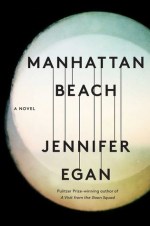
Last December, flush from the success (at least from my perspective) of my first reading of Moby-Dick, I said 2017 might be the year I finally tried Ulysses. It wasn’t, but maybe 2018 will be. First, though, I’d like to read The Odyssey: I am woefully undereducated in the ancient classics, and between Mendelsohn’s new book and all the talk about Emily Wilson’s new translation I have been feeling the lack even more than usual. (I don’t have Wilson’s version: I traded a colleague in the Classics Department a nice Oxford edition of Middlemarch for his spare copy of the Fitzgerald translation. That’s fine with me: this one has stood the test of time, after all, and if I get really engaged, I can always follow up with Wilson’s and appreciate how untraditional it is.) As already mentioned, I’d also like to complete The Forsyte Saga. Otherwise, I have no particularly lofty goals: just a lot of books I’m looking forward to reading. I got a nice stack of them for Christmas, including Suzette Mayr’s Dr. Edith Vane and the Hares of Crawley Hall, Martin Seay’s The Mirror Thief, and The Spy Who Came In From the Cold–which I’ve already started and am liking a lot. I have a couple of ideas for the gift card I got to Bookmark, including Jennifer Egan’s Manhattan Beach, but I should probably read more of what I already have before I decide what else I want! Nearest to hand, though, is Katherine Ashenburg’s Sofie and Cecilia, which I agreed to review for Quill & Quire–and the deadline is nearly upon me, so in the short term, that had better be my priority.

All in all, I think 2017 was a pretty good reading year: not as prolific as some, but steady and without catastrophes. And that’s just my not-for-classes reading: any year that also includes Bleak HouseCranford, and Middlemarch has got to count as a good one!

Rereading, Nostalgia, and Genre: The Dark Is Rising

On a bit of a whim, I decided to join in with “The Dark Is Reading”: a mass reading of Susan Cooper’s fantasy classic The Dark Is Rising, originally published in 1973. I read The Dark Is Rising often as a child, along with the other books in the series, especially Over Sea, Under Stone and Greenwitch. I don’t have my original copies any longer, but (probably at my urging) my parents gave new copies to Owen for his 10th birthday in 2007. Sadly, I don’t think he ever read them; I found them on Maddie’s bookshelf, but I don’t think she has read them either. I never did quite learn the lesson that my children won’t necessarily share my taste! I’m certainly glad we still had them, though, if only for my own sake.

I hadn’t reread The Dark Is Rising in decades, and one interesting aspect of rereading it now was actually realizing how my own taste has changed–or perhaps it is more accurate to say how my reading habits have changed, as it isn’t that I didn’t like the book so much as I wasn’t quite at ease with its conventions and demands. In fact, I really loved some things about rereading it, starting with how immediately I remembered it. I couldn’t have told you the details of the plot, but as each event unfolded it was vividly familiar, as was the overall atmosphere of the book, which opens on Midwinter’s Eve and is full of wintry beauty and dread comingled. Cooper is really good at taking an ordinary landscape and imbuing it with magic, as when her hero, Will Stanton, looks out of his window to see his usual world transformed by snow:

In the first shining moment he saw the whole strange-familiar world, glistening white; the roofs of the outbuildings mounded into square towers of snow, and beyond them all the fields and hedges buried, merged into one great flat expanse, unbroken white to the horizon’s brim. . . .

His attention is briefly drawn away from the window by a flash of uncanny music; when it fades away, he looks out again and finds it has taken his world with it:

In that flash, everything had changed. The snow was there as it had been a moment before, but not piled now on roofs or stretching flat over lawns and fields. There were no roofs, there were no fields. There were only trees. Will was looking over a great white forest: a forest of massive trees, sturdy as towers and ancient as rock. . . . the only break in that white world of branches was away over to the south, where the Thames ran; he could see the bend in the river marked like a single stilled wave in this white ocean of forest, and the shape of it looked as though the river were wider than it should have been.

The book as a whole turns on such revelations of different worlds somehow coexisting, layered by time but not fixed in it, at least not to those who, like Will, belong to all times.

The Dark Is Rising is the story of Will’s discovery that he himself, like the landscape, is not as he has always seemed, and of the quest his uncovered identity as one of the “Old Ones” imposes on him as part of the ongoing struggle between the elemental forces of Dark and Light. There’s plenty of high drama and some epic confrontations, though I think Cooper does chills better than thrills: she excels at building up a sense of menace through small details, particularly as Will’s new awareness begins to separate him from his merrily innocent family.

Much as I liked revisiting Cooper’s evocative descriptions and enjoyed the familiarity of the story and characters, I found the plot itself somewhat unconvincing–the wrong standard, perhaps, for a fantasy novel, but at the same time, isn’t it a sign of successful fantasy that you give yourself over to it without puzzling over its coherence or internal logic? I don’t know if the mild dissatisfaction I ended up feeling is because I am out of practice at reading fantasy (which, like science fiction, is a genre I have almost never read as an adult) or if it’s because, for all its elegance, The Dark Is Rising is a children’s book, and thus a bit sparse on exposition. Is its world a fully realized one? When I began it, I was relieved not to be plunged into an info-dump of “world building,” but is it possible that’s what I was missing, by the end?

I do think my own recent reading habits account at least in part for my mild disenchantment. Every genre makes its own kind of demands and has its own conventions: my experience learning to read romance on its own terms taught me a broader lesson about that, and (closer to the point here, perhaps) so did my adaptation and then conversion to Buffy. In her very engaging Tolkien lecture Cooper gives a good primer on how fantasy works; her emphasis on its elements as vehicles for more universal ideas and conflicts makes a lot of sense, but it’s just not how I usually read now, or that’s not how the books I currently like best work. It’s interesting to me, though, that I didn’t have or need this kind of conceptual apparatus to enjoy The Dark Is Rising as a child, and in fact I don’t recall ever thinking much about genre as a classifier or about the possible need to read different kinds of books differently–I just read what I liked, which at the time included not just Cooper but Tolkien and Anne McCaffrey alongside historical fiction, mysteries, and everything else.

I never consciously decided not to keep reading fantasy; it just fell away. I think I began (however unfairly) to associate its overt inventiveness–its dragons and sorcerers and improbable made-up worlds–with a kind of childishness, like fairy tales, and never made the further connection that, also like fairy tales, such stories might be a means to deeper ends. Understanding better how a genre works doesn’t of course, mean admiring  or enjoying every example. What I came to love about Buffy is how rich the characterizations are, and how well so much of the story-telling develops them even as (at its best) it explores ideas about good and evil. So far, I haven’t been tempted to try most of the other shows Netflix now recommends for me because I’ve watched Buffy so much: it’s not the genre in general that I have embraced, it’s the specific show. Interesting as I found Cooper’s lecture, and much as I enjoyed some aspects of The Dark Is Rising, I’m not currently inspired to go on a fantasy-reading binge either. For me, the book was most powerful in its nostalgia: it reminded me of the reader I once was, but it didn’t really inspire the reader I now am.