What a thing! To go from dying in your underwear in the snow to this! Warmth, colors, antlers on the walls, an old-time crank phone like you saw in silent movies. It was something. Every second was something. He hadn’t died in his shorts by a pond in the snow. The kid wasn’t dead. He’d killed no one. Ha! Somehow he’d got it all back. Everything was good now, everything was —
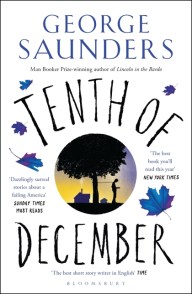
Although I found several of the stories in it interesting and memorable, I didn’t much like Tenth of December until I read “Tenth of December,” the final story in the collection. Perhaps this is a lesson in the importance of reading to the end; it is certainly a reminder that abandoning books part way through brings the risk of missing what is best about them.
I was doing OK, if not great, with Tenth of December until I got to “The Semplica Girl Diaries.” Up to that point the story I’d appreciated the most was “Sticks”; I was gripped by both “Victory Lap” and “Puppy,” and “Escape from Spiderhead” moved quickly enough that I didn’t quite tire of the conceit before it ended. Then, unfortunately, I really bogged down in “The Semplica Girl Diaries”: it was obviously doing a lot, but the story’s concept was so aggressive, its execution so heavy-handed, that for me the whole exercise just drowned out any underlying humanity in the story itself. (I’m not saying it isn’t there: just that the style and conceit were very distancing for me.) This slowed my momentum in the collection to the point that I nearly didn’t pick it up again.
Nevertheless, I persisted with Tenth of December, both because of Lincoln in the Bardo and because of Saunders’ reputation, including with readers whose sensibilities I trust. “Home” was a better experience for me; “My Chivalric Fiasco” was worse. Then I read “Tenth of December.” This story put a lot less gimmickry in my way; it was the only story in the book that seemed to me clearly written by the author of Lincoln in the Bardo. I loved it. One in ten: not a great ratio, if you weigh every reading experience equally, but I don’t think art really works that way. Reading “Tenth of December” made reading Tenth of December more than worthwhile to me. That’s part of the trick of short fiction, isn’t it? The brevity of the form means writers can try a lot of things, take a lot of chances, be a lot of different things–if they want to (as Saunders clearly does). And one really solid connection is, really, everything that matters.

My edition of Tenth of December includes a conversation between Saunders and David Sedaris. I enjoyed their discussion very much. I read it before I got to “Tenth of December” and I thought at that point that my blog post about the collection might end up noting that I liked what Saunders had to say about short stories more than I liked his short stories themselves! (As it turned out, that was only partly true.) Saunders comments that people often say his work is cruel or angry; he acknowledges the truth of this and suggests it is “a bit of a technical flaw” but one that reflects who he is and how he sees the world. I actually wouldn’t have thought to call the stories cruel, but I did think that they were mostly kind of cold: that they were driven primarily by whatever concept animated them and so they came off as technical, even virtuosic, but lacking in the quality I would call heart. This is not to say that they aren’t in their own way sympathetic and often poignant: it’s just that what tenderness they have towards the characters, or towards the human condition, seemed to me to be hard to feel under the performance of self-conscious cleverness.
 Naturally, my mixed and sometimes vexed response to Tenth of December got me thinking about what contemporary short fiction I have responded to more readily and positively. Because I don’t read a lot of short stories, I really don’t have a lot of other examples to draw on. I was very impressed with Adam Johnson’s Fortune Smiles, but my favorite fairly recent short story is probably Jhumpa Lahiri’s “Interpreter of Maladies.” I have but have not read all of the collection it comes from. I think I will go back to it now and see what else is there. For those of you who read a lot more short stories than I do: is there a writer in the genre you’d recommend to me, knowing that I’m a realist by instinct and training, that my favorite classic short story is (predictable but true) “The Dead,” and that I get irritable with stories that are more cleverly self-referential than they are committed to storytelling?


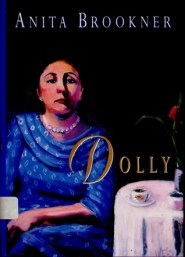 This is the model of Dolly: “Charm, Jane, charm!” Jane, or the novel, acknowledges that Dolly’s way of life has been discredited by feminism, but the idea sometimes seems to be that those “older simpler longings” are natural, essential, defining, not just of Dolly but of what women need and want. “I now understand,” Jane explains, reflecting on her own reactions to Dolly’s choices,
 It has not felt like a very productive week, though it is hard for me to be sure right now as I am still in the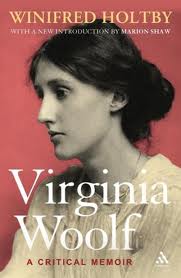
 My other reading has also felt relatively unproductive, though I suppose productivity is not really an appropriate measure for it (though I have long struggled with how or whether to make distinctions between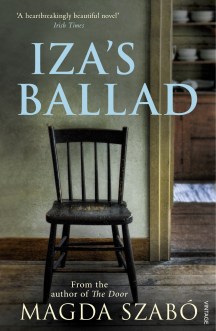
 This is how things go for Ettie and Iza once settled in Budapest as well. Iza does what she thinks is best, and Ettie’s attempts to participate are either thwarted or criticized. Ettie’s ways are not Iza’s; she does not belong in the modern world of the flat, the city, the trams, the markets, the technology. Her cooking, her shopping, her cleaning–none of it is right. She tries to make a friend and brings home the wrong sort of person. Eventually she realizes that she is an inconvenience, a burden, on both Iza and her housekeeper Teréz: “Teréz would get on better without her. Iza could never relax when she was around.” One of the strangest and saddest signs of Ettie’s growing isolation is the relationship she develops with Iza’s refrigerator, at once a symbol of the alien modern world and a stand-in for the old life from which she has been so completely cut off:
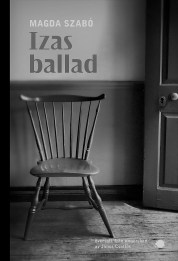 Though it incorporates several people’s perspectives and stories besides Ettie’s, including Iza’s, Iza’s Ballad felt to me like Ettie’s book, which is why the novel’s title puzzled me at first. It’s Lidia, who looks at Iza and sees her clearly “for what she was,” who articulates why it is really Iza who is central, Iza whose “self-discipline” is also “a hardness of heart that dares not indulge itself by grieving over dead virgins.” Iza’s perfection is the result of a lack of imagination and empathy, a resolute clarity of purpose that obscures rather than illuminates. The things that made Ettie’s life vivid and meaningful to her are invisible or irrelevant to Iza. “The poor woman believes,” Lidia reflects,
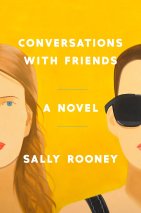
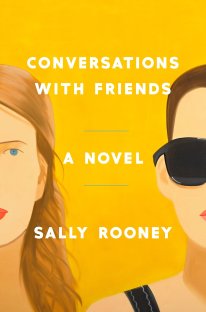 I don’t typically post about books I didn’t finish, and I don’t want to make a big contrarian to-do about my having given up on Conversations With Friends, but it is what I’ve been reading lately and I have given up on it, so I might as well at least comment briefly on it here.
 The start of a new month seems like a good time to take stock, once again, of how my plans and projects for this sabbatical term are progressing. May is actually the point in a winter term sabbatical when being on leave stops meaning that much, as the regular teaching term is now over for everyone anyway. May is often very busy with meetings, though (including our department’s traditional ‘May Marks Meeting’), so my time is still more my own than it would be otherwise.
 I have until the fall to settle on the book lists for my winter term courses, which are British Literature After 1800 and 19th-century British Fiction (the Austen to Dickens variation). I’ve spent quite a bit of time examining anthologies for the survey course and concluded that the most reasonable way to go is a slim custom text assembled from Broadview’s wide-ranging options. (Who is actually assigning these behemoth volumes? And how do they assign enough in one term to make it worth their students’ expense?) The down side is that for copyright reasons I can’t include much material past Joyce, but I think I can fill in a small number of contemporary poems and a story or two by other means. I have been playing around with a lot of different options for longer texts that I think would work well in combination, because the assignment sequence I am planning to use includes a final essay for which students would compare our last book with either of our previous ones. (One reason for this is that it means one way or another everyone has a stake in our final reading.) Right now the front runners are Great Expectations, Three Guineas, and The Remains of the Day: I can imagine a lot of interesting ways to connect Remains with the other two, including first-person narration, questions of class, dignity, money, and morality, and connections between personal and public politics. The 19th-century fiction book list is still uncertain: one of the big questions for me is whether Wuthering Heights will make it in or whether I’ll lose my nerve and fall back on old favorites.
 Having said that, the more I read about Holtby and Woolf, and especially the harder I try to understand what’s going on with The Years, the more I’ve been identifying continuities between this material and longstanding interests of mine, including genre (
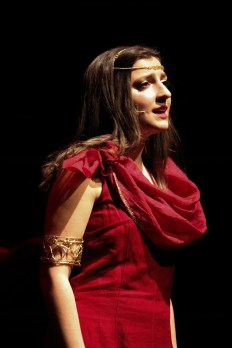
 So that’s where I am now, at the two-thirds point in this six-month sabbatical. I have checked off a number of the concrete tasks I set myself, and I have made progress on the more amorphous but no less important task of refreshing my own intellectual engagement. There have been other things going on too, of course (including Maddie’s performance in Jesus Christ Superstar and, exciting in a different way, her acceptance of a place in Dalhousie’s Fountain School of Performing Arts for next year), and as always I’ve been doing other reading, most recently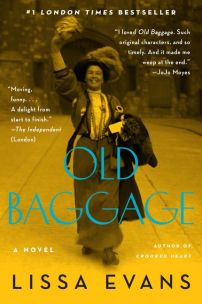
 Evans does a wonderful job delineating Mattie’s world, from its domestic apparatus to its politics. The novel takes place mostly in 1928 and 1929, and while like Mattie herself this world is full of energy and change, it is also shot through with pathos from the aftereffects and memories of the war, in which Mattie’s brother Angus was terribly injured:
 This is all really good material, and the novel is well told start to finish, but my initial enthusiasm was somewhat deflated by the way its story eventually played out. Mattie compromises her own mission for reasons that seemed to me both out of character and insufficiently dramatic to create a genuine crisis of either conscience or story. The potential for significant conflict between the youth organizations, their leaders, and (most importantly) the larger political stakes they represent was not realized–perhaps because it would have been incompatible with the novel’s overall lightness of tone and touch–and the novel’s final twist not only seemed weirdly random but was a disappointing relegation of Mattie’s fighting spirit to a form of caretaking retirement. Perhaps the ending was meant to signal that the torch has finally been passed: that the best thing Mattie can do for the next generation of activists, or for the women (such as Ida) who are making new lives based on their achievements, is to free them from domestic responsibilities–to look after their baggage?–so that they can carry on. Still, I thought Mattie deserved better, though I suppose I should not underestimate the radicalism of the doctorate she earns. And as she says, quoting its subject, “All things are difficult before they are easy”: Mattie’s fighting life, which has certainly been difficult, has maybe earned her a future a bit out of the fray, away from the front lines of what we know too well would be an ongoing war.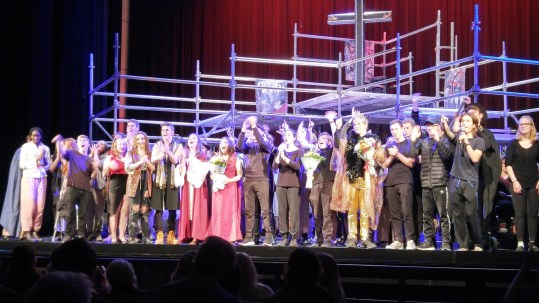
 That’s all still in the future, though, and in the meantime Maddie has exams to get through and I have a bit more time on my sabbatical to make the best use of that I can. Now that everyone else is also done teaching, being on leave feels a bit less special, but I remind myself that May typically fills up with administrative commitments, so I can still enjoy not being part of that. I will write up a post soon reflecting on my sabbatical so far. Before too much longer, I may also actually finish reading a book, and then I can post about that too! I have three in progress: The Break, which I am rereading for my book club, Lissa Evans’s Old Baggage, which I am enjoying so far, and Lucy Parker’s The Austen Playbook which to be honest I am not really loving. I am not currently reading anything on assignment for a review: I’m not sure if that’s good or bad! (It does mean I’m available, if any editors are reading this…)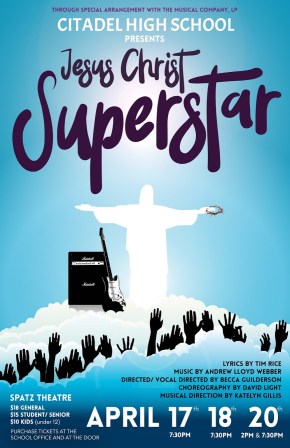


 Novel Readings