 I remember soon after Owen was born feeling as if I had been admitted into a vast secret society, one where people talked freely about really personal things like sore nipples and episiotomy stitches and traded used onesies and shared tips about teething pain and diaper rash. I looked at (and talked to) people we knew who were already parents in a new way—not necessarily as guides or models, but as people who had been where we were and who had, one way or another, come through it still standing, or at least seemed to have.
Since Owen died I have been unwillingly inducted into a different society: the mourners’ club. It’s a surprisingly welcoming place, perhaps because nobody already in it wants to belong to it either: each of them has already had to deal with the wrenching realization that membership is neither optional nor revocable, and so they empathize effortlessly with your shock and confusion. At the same time, it is quieter, or at least less conspicuous, than the parents’ club—you can’t hide your children, after all, but a lot of people, it turns out, are hiding their grief, which, once you start listening for it (or people start talking to you about it) really is “the roar on the other side of silence.”
 “This instant enlargement of human sympathy,” as Denise Riley puts it, can be overwhelming, especially at moments when my own personal feelings of loss are more than I can bear. There’s so much, too much, sorrow in the world: this is not news, of course, but as George Eliot observes in Middlemarch, if we allowed the scope of everyday tragedy to be constantly present to us, “our frames could hardly bear much of it”—and thus, as she says with her characteristic blend of insight and critique, “the quickest of us walk about well-wadded with stupidity.” It’s a matter of survival, not (or at least not just) self-centeredness that we aren’t constantly preoccupied with “all the troubles of all the people on the face of the earth” (to quote Dorothea’s “Hamlet-like raving”). And yet to retreat into solipsism is a failure: enlarging our sympathies is both an aesthetic principle and a moral imperative for her. It’s a beautiful theory but one that’s not easy to put into practice, especially when our own suffering is intense and immediate.
Like my changed perspective on the other parents in my life, my heightened awareness of other people’s grief is a source of strength, though not always comfort. There are concrete ways other mourners have helped me: by being generous enough to share their own experiences, by offering a sympathetic ear, by passing on a poem or a book or an idea that helped them and they hope will do the same for me. But it’s also strangely, a bit perversely, encouraging just knowing there are so many other sad people out there. I don’t imagine that it feels easy to any of them, or that they are “over it” or have “moved on,” but there they all are, carrying on with their lives while also somehow carrying their grief. “How do they do that?” I still wonder, even though I suppose I am now doing the same, however haltingly.
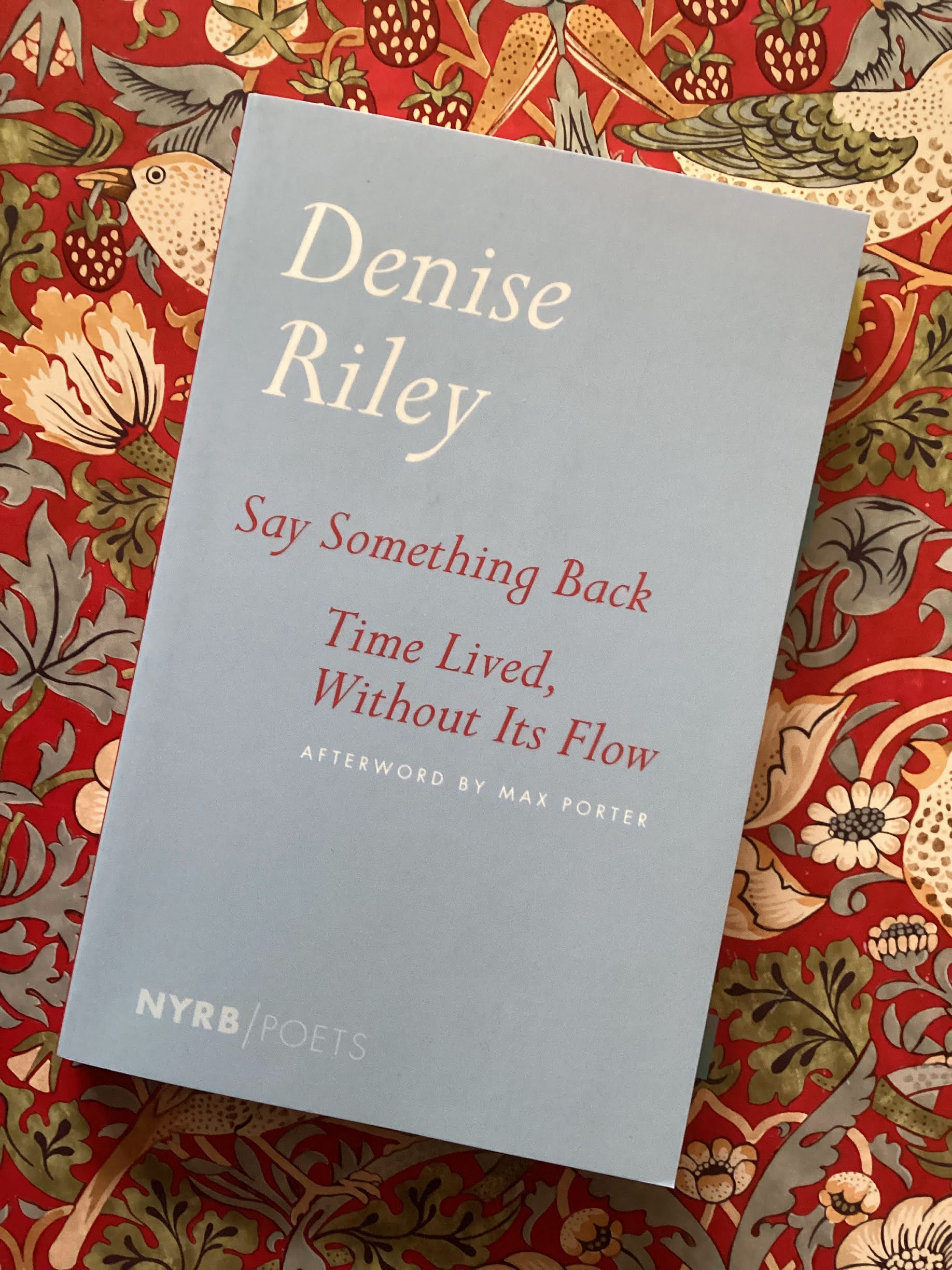
 Looking again at Riley’s book this week, I paused at the section headed “Five Months After,” which seemed such an unfathomable distance away when I first read it in February. Though the received wisdom about grief these days is that there is no common timetable, it turns out that Riley’s “five months after” feelings are very much like mine. The overwhelming sensation is of disorientation, “knowing and also not knowing that he’s dead. Or I ‘know’ it, but privately I can’t feel it to be so.” There’s the “recall” of the person you knew, so complete and vivid and real, and “your knowledge of the fall of sudden blackness”; “you struggle to hold both in mind at once.” Recently I have experienced literal, physical dizziness trying to do that, as if my brain cannot reconcile itself to the two facets of my new reality, which is a world in which all the familiar features of Owen’s life surround me but he is not here (“what could it mean to know this,” Riley asks in her poem “He Lies Somewhere in France”). Poking around in books about grief, I have a few times come across the term “integration.” I don’t know its technical meaning, but “disintegrated” seems like a good way to describe how I feel. It’s not just that I can’t adjust, though: I don’t want to integrate Owen’s death into my life. Like Riley, I resist calling this “denial” (“Yet who,” she wonders, “is policing my ‘acceptance’ of it?”). I’d call it “refusal,” which I’m sure is (therapeutically speaking) not any better for being more self-conscious.
 My most recent related reading has been Hope Edelman’s The AfterGrief, which I didn’t find offered me much that other books haven’t, though it does some useful synthesizing. The most helpful aspect of it, for me anyway, is its emphasis on “account making.” She quotes Rebecca Solnit’s The Faraway Nearby on stories: “we navigate by them, we build our sanctuaries and prisons out of them, and to be without a story is to be lost in the vastness of a world that spreads in all directions like arctic tundra or sea ice.” Edelman describes her own early grieving as a state of “narrative limbo.” Inevitably, this literary take on mourning appeals to me. “Lives do not serve as models,” Carolyn Heilbrun says in Writing a Woman’s Life, the small critical book that has had such a large influence on my own thinking and writing; “only stories do that.” It’s interesting that though we all have, or will inevitably have, our own stories of loss, that doesn’t make them all the same (quite the opposite, in fact, as they are as unique as each of us)—or any easier to tell.
 The past few weeks, though still often sad and difficult, have been a bit better for reading. I’m not sure if it’s me or the books—probably a bit of both.
 I didn’t much like Andrew Sean Greer’s Less. I persisted to the end, but it never engaged me deeply at all. My least favorite quality in a book is archness, and that seemed to me Less‘s primary mood. It will shock some of my Twitter friends when I say that I also didn’t much like Laurie Colwin’s Happy All The Time: it isn’t arch, exactly, but it is crisp and clever and detached to the point that it felt thin, even superficial, and thus unsatisfying. I was interested in the premise of Kate Grenville’s A House Made of Leaves and there are good things about it, but overall the execution felt dry and the messages (about history and gender and colonialism) perfunctory, delivered rather than dramatized.
 I have some promising options in my TBR pile to choose from next, including Nicola Griffith’s Spear (a sequel to
  I’ve assigned Margaret Oliphant’s Autobiography many times over the years in the graduate seminar I’ve offered on Victorian women writers. I read it first myself in a similar seminar offered by Dorothy Mermin at Cornell: I realized later that this was while she was working on her excellent book
 Twenty-one years pass between these painful sections and the next section of the Autobiography, and in that gap is, as she notes, “a little lifetime.” “I have just been rereading it all with tears,” she says, “sorry, very sorry for that poor little soul who has lived through so much since.” Writing those words in 1885, she had no idea how much more sorrow lay ahead. First came the death of her son Cyril in 1890 (“I have been permitted to do everything for him, to wind up his young life, to accept the thousand and thousand disappointments and thoughts of what might have been”), and then in 1894, the death of her son Cecco (“The younger after the elder and on this earth I have no son—I have no child. I am a mother childless”). “What have I left now?” she laments. “My work is over, my house is desolate. I am empty of all things.” In her despair (“It is not in me to take a dose and end it. Oh I wish it were”), her vast literary output brings her no comfort: “nobody thinks that the few books I will leave behind me count for anything.”
 She kept writing, though, not just the Autobiography—which she reconceived somewhat, pragmatically, once it was no longer intended for her children, as something lighter and more anecdotal—but also more fiction, including her excellent ghost story “The Library Window,” recently reprinted by Broadview. It’s not hard to understand the appeal of ghost stories to a mother whose beloved children would have been there but not there every waking minute. I know what that’s like.
 I’ve been thinking about how many times people have expressed their love and sympathy for us by saying “there are no words,” and then about how important it has felt to me, since Owen’s death, to try to find some words for what it feels like to lose him and grieve for him. Writing has helped, even though I have also often felt the truth of Tennyson’s lines:
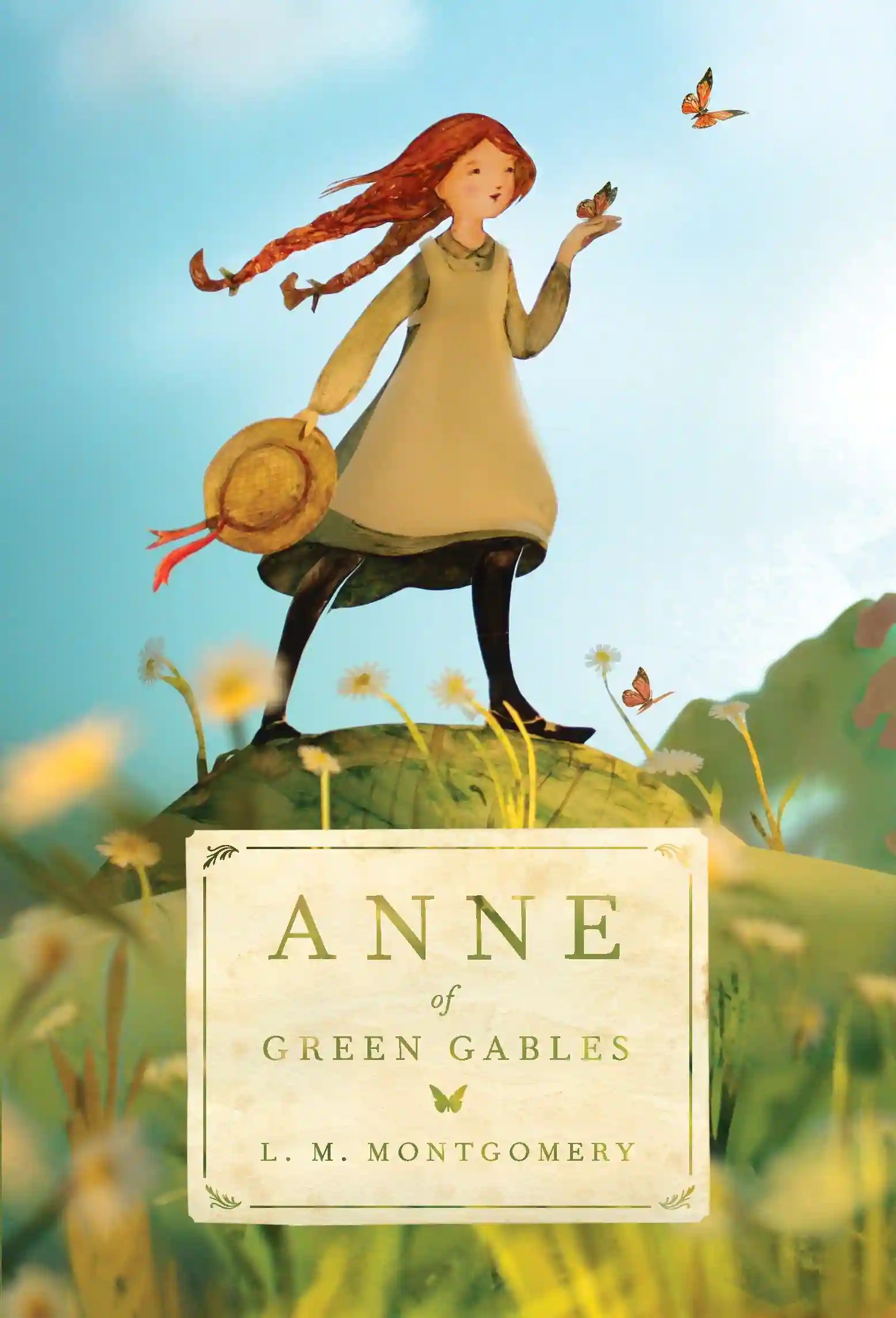 The last three months haven’t been very good reading months for me: I have picked up and then put back down a lot more books than I have finished. This is true of new (to me) books, at any rate: since January I have actually reread quite a few books that were easy and comforting, including the first four Anne books (thanks to a dear friend who sent me a lovely box set), several favorite romances and mysteries, and The Beethoven Medal (part of one of
 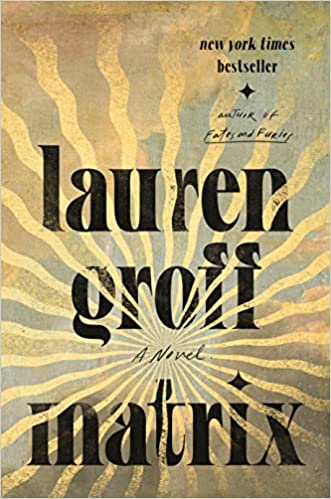 In January, I read Lauren Groff’s Matrix. I expected to like it more than I did. This is not to say I didn’t like it; the premise was fascinating, and I remember being impressed at how vividly Groff built her world, and how strong, strange, and specific she made Marie as a character. Female agency and empowerment, creativity, desire, spirituality: the book explores them all, with a compelling combination of grittiness and lyricism. For some reason, though, I was disappointed when I learned that this particular work of historical fiction is much more fictional than historical—that almost nothing is actually known about Marie, that Groff’s character and story is all invention. This retroactively took some of the life out of the book for me, which is hardly fair given that I read and love a lot of historical fiction that is mostly made up.
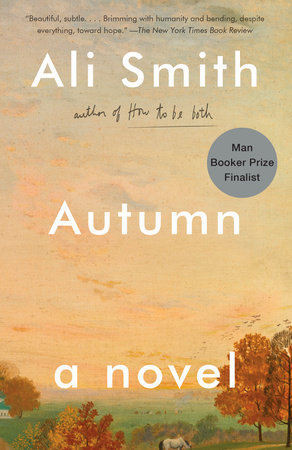 In February, I read through Ali Smith’s seasonal quartet. The sabbatical project I am picking away at has to do with the relationship between fictional form and social or political engagement (or, to put it another way, with fictional form as itself a kind of social or political engagement). With this in mind I was poking around in information about the Orwell Prize and this led me to some articles and interviews about Smith’s win, which in turn made me curious about whether her series might make a good contemporary example for me. I reread Autumn, and then picked up the other three and read them all through. By the end of Spring I was a bit less sure about using this series for my purposes, but some of my hesitation came from feeling unqualified to work on Smith: both her style and her influences, including the explicit invocation of Shakespeare plays, are a bit far afield for me. That doesn’t rule the books out, of course; it would just mean I would have to work hard to figure out how to talk about them, a prospect which is actually kind of appealing, or it would be if my mind didn’t feel so scattered all the time right now.
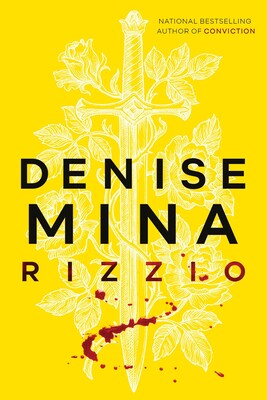 In March I read Denise Mina’s Rizzio, another historical novel I ended up being a bit disappointed in. There was something awkward (to my reading ear, anyway) about the combination of meticulous historical detail and a too-contemporary idiom, especially in the dialogue. Mina is good at foreboding and action, as you’d expect from a crime novelist. I reread Mrs. Palfrey at the Claremont, which I loved all over again, though it is even more melancholy than I’d remembered. Then I read Louise Erdrich’s The Sentence, which went really well at first and then started (I thought) to lose its focus and ended up feeling scattered, full of good bits but not a satisfying whole. I read two recently reissued novels by Rosalind Brackenbury, A Day to Remember to Forget and A Virtual Image, for an upcoming review (I finished a third, Into Egypt, yesterday). My last March book was Katherine Ashenburg’s Her Turn, which I enjoyed a lot. It’s less ambitious than some of my other recent reading, but it seemed to me to do well what it set out to do, including explore the possibilities and implications of both revenge and forgiveness in the context of our most intimate relationships.




 The other question I’m hearing more and more is some variation on “have you considered talking to someone?”—meaning, of course, someone else, someone professional, someone who knows what to say. (Maybe that’s why the “how are you doing” question feels a bit loaded, as the combined subtext starts to seem like “this has gone on long enough.”) This has made me think again about Ignatieff’s comments in On Consolation about our current reliance on “therapeutic professionals” who “treat our suffering as an illness from which we need to recover.” “When suffering becomes understood as an illness with a cure,” he says, “something is lost.” I don’t think anyone who has suggested this to me means to imply that it is wrong for me to still be grieving; again, I know that they want to help, they want—for my sake—for me to be feeling better, doing better, living better. I don’t know if a therapist would approach my grief as something to be fixed or cured. I hope not: I don’t want to “recover” from it, and I don’t think I could. (“Some part of you may still remain in the underworld,” Riley says, and that seems right, meaning both true and appropriate.) I will find out, though: I have found someone to talk to (it’s not an easy process, as many of you probably know), though they can’t fit me in for a while. It is hard to think even that far ahead, but it seems likely I will still need whatever it is that they have to offer.
 The two things I’ve heard or read most often about grief are “it takes time” and “wait until you’re ready.” These are helpful comments, as far as anything is helpful; they lessen my anxiety and confusion by reminding me that there is no timeline, there are no rules, there are no ‘oughts’ that follow from this shocking and disruptive ‘is.’ They are also, less reassuringly, very vague: nobody knows how much time or can say exactly what “it” is, or when, if ever, I’ll be “ready” for the things I currently can’t face doing—sorting through his belongings, for example, so poignantly scant and so heartbreakingly reminiscent of him. But it has been good to remind myself that it is OK for now just to get from one day to the next as best I can.
 The world won’t wait for me, though. The
 As it happens, my recent reading has also been seasonal, though I don’t think there’s any connection to these ruminations. At any rate, if there is a link, it’s not conscious or deliberate. Prompted by my attempts to conceptualize my book project, I looked up information about Ali Smith’s recent Orwell Prize win. What I read about it and her it sent me back to reread
