Corridor

Heart Rock November 22It has been quiet around here. I’m not really sure why that is. I’ve been busy at work, but that has never stopped me before. When this term began, I intended to make posting about my teaching routine again. When I kept that up, in the old days, it didn’t matter if I felt I had something in particular to say when I started: eventually I would discover what I had to say, because (as I’ve been trying to convince my first-year students) that’s how writing works. My reading hasn’t been going very well, but I used to write about it anyway.

One challenge for me right now, something not directly related to my blogging or teaching or reading and yet maybe essential to them, or to me, to what I can do, is that I am still in what I imagined a year ago (a whole year ago!) as the corridor:

One way I suppose I could think about where I am right now is precisely in a corridor between two blocks, one of them my previous life, which included Owen, and the other my future life, which will go on without him. In a literal sense, of course, I am already in that new life, but it doesn’t feel that way yet: I feel disoriented, adrift, unsettled.

Then, when I was still (to an extent that I didn’t really understand) in the first shock of my loss, I felt the passing of time, and especially the coming of spring, as an offense against my grief. Spring is here again, officially anyway, and though on the surface my life appears much as it did before Owen died, I still have not figured out “how to incorporate his death into my understanding of my life”; although my life continues, I cannot understand or experience it yet as continuous. “Superficially ‘fine,'” as Denise Riley puts it, sixteen months after her own son’s death,

as my daily air of cheerfulness carries me around with an unseen crater blown into my head, the truth is that my thoughts are turned constantly to life and to death; all that I can attentively hold.

Two years after, two and a half years after, three years after, she is still writing her shock: “The severance of a child’s life makes a cut through your own”; “No time at all. No time.” The corridor, it turns out, is long, longer than I could have known, or was willing to know (she tried to tell me) — and now that so much actual time has passed I feel self-conscious, even a bit defensive, that I haven’t emerged from it yet.

It’s not that anybody has said or even implied that I should be “over it” by now, but — rightly, understandably — for most people the urgency of my loss is over, the tide of sympathy and care has receded, new demands and crises and losses have come up. Life goes on, and “how are you doing,” while still a kind question, and sincere, becomes perfunctory, a question I answer in the same spirit, superficially, because what else, really, can I do? If sometimes I’m just going through the motions, well, at least that means I’m moving, and how else can I get to the other end of this corridor, whatever it means, wherever it leads? If I look straight ahead, it’s not so bad, either, although sometimes that’s actually the worst. “There’s no denying,” C. S. Lewis comments in A Grief Observed, “that in some sense ‘I feel better,’ and with that comes at once a sort of shame, and a feeling that one is under a sort of obligation to cherish and foment and prolong one’s unhappiness.” He’s wise about the complexity of that reaction:

We don’t really want grief, in its first agonies, to be prolonged: nobody could. But we want something else of which grief is a frequent symptom, and then we confuse the symptom with the thing itself.

Lewis talks of recurrences and cycles, like Riley seeking to articulate the temporal disruption and disorientation of grief. “Am I going in circles,” he asks, “or dare I hope I am on a spiral?”

But if a spiral, am I going up or down it?

How often  — will it be for always? — how often will the vast emptiness astonish me like a complete novelty and make me say, ‘I never realized my loss until this moment’? The same leg is cut off time after time. The first plunge of the knife into the flesh is felt again and again. a_grief_observed

When people say “it takes time,” they aren’t thinking about the knife, about the craters. “What a different result one gets by changing the metaphor,” George Eliot says in The Mill on the Floss. At least a corridor connects, rather than severs. Maybe it also shelters, protects, directs.

One book I did finish recently is Stephen Marche’s On Writing and Failure. If it sounds like a discouraging read, well, it is, but it also isn’t, because amidst the real talk and the cynicism there is also sincerity, even conviction. I loved this little passage, which helped me understand why I keep this up (why I want to keep this up):

I do not know who I am writing for, or for what time, or to what purpose. But there is a deep longing in me — and that’s not a lie, not a fraud — to make these words for you. These ephemeral connections are the substance of victory, to belong to a constellation of meanings, to alleviate a specific, miniscule cosmic loneliness. It seems like such a small satisfaction to expend your life on. It isn’t. “You ask, why send my scribbles,” Ovid, in his exile, asked. “Because I want to be with you somehow.” Somehow, anyhow.

I also read a book of poems by Linda Pastan. I especially loved “The Bookstall” (“For life is continuous / as long as they wait / to be read”). Her poem “Yahrzeit Candle” begins “On the second birthday / of your death / nothing / much / has changed.” I’m not there yet. I don’t want to be there. It seems impossibly far off, which is both good and bad, but time passes.

Cold Trees Feb 2 23

A Warm-Hearted Reading Update

strout-againAfter I finished Gwendoline Riley’s My Phantoms, I commented on Twitter that I was finding cold, meticulous novels wearing and asked for recommendations of good, recent warm-hearted fiction. Along with the understandable and spot-on nods to writers I already know well (such as Barbara Pym and Anne Tyler), I got a lot of good tips, which I am still working through. Here are the ones I have read so far. I have to say that while they have all been fine, none of them really got much traction with me: I don’t think it is necessarily the case that “warm-hearted” means lightweight, but that’s how these mostly felt. I don’t think I will remember much about them. The exception so far is Jessica Au’s Cold Enough for Snow, which I found very moving; that’s why it got its own post!

Elizabeth Strout, Olive, Again. I read Olive Kitteridge years ago – long enough that I didn’t write it up here, that I can find. I remember enjoying it, but it seemed dispensable, so after a while I put it in my “donate” pile. I didn’t like My Name is Lucy Barton much, and that seemed like the end of my relationship with Strout. Still, she’s much beloved, and so I picked up Olive, Again to see if I’d underestimated her. My conclusion is “not really.” I liked it fine, but it felt incidental, meandering. The ‘linked short story’ effect irritates the novel reader in me: it feels lazy, as if the author couldn’t be bothered to do the work of actually integrating the characters and events into one more substantial and meaningful whole. I’m a lover of Victorian multi-plot novels, which I consider, at their best, a high form of art. If the whole is supposed to be more than the sum of its parts, I’d like the author to be the one who does the work of building that up. Don’t just give us the pieces and assume we’ll believe there’s more to it than that.onan

Stewart O’Nan, Emily Alone. I read this right after Olive, Again, and I couldn’t shake the feeling that I was still reading the same book. There was nothing (to my ear, anyway) to distinguish the voice or tone or prose of one author from the other; Emily’s story could easily have been one of the chapters in Strout’s book (see, I’m reluctant to call it a “novel”!) – except, of course, for being book-length itself. I liked Emily herself just fine, and “older woman living alone” is one of my favorite tropes (see Plant Dreaming Deep, for a cherished example) but the novel recounted day to day events in tedious detail. I like exposition, but I like it to be more than an accumulation of (fictional) facts.

mccrackenElizabeth McCracken, The Hero of This Book. I liked this one quite a lot except for the uneasiness it created in me about what kind of book it is, exactly. I realize that is one of the main points of the book, to destabilize assumptions about what constitutes a memoir or a novel or autofiction or whatever. I understood this because McCracken makes rather a lot of noise about it: “What’s the difference between a novel and a memoir?” she asks; “I couldn’t tell you. Permission to lie; permission to cast aside worries about plausibility.” “It’s not a made-up place,” she says about a trip she and her mother make to the theater (or do they?),
though this is a novel, and the theater might be fictional, and my insistence fictional, and my mother the only real thing, though this version of her is also fictional.

OK, whatever. I found these intrusions distracting. If I wanted to explore theoretical differences between genres in that kind of explicit way, I’d read critical writing; if you want to play with genre, you can do it without so much handwaving about it. And yet as a book about love and mourning, The Hero of This Book was sometimes quite powerful:

Was this grief? I could feel my mother’s joy on the London Eye, her love of heights and good views. That streak of daredevilry and thrill-seeking. I had once taken her on a helicopter tour of downtown Miami, after she’d seen somebody parasailing and had guessed aloud that she couldn’t do that. My mother laughed as the helicopter wove through skyscrapers; I believed that I would fall to the ground at any moment and thought, I’ve had nightmares like this. That was actual joy; the joy I could apprehend now had not occurred, was counterfeit, made of regret and set in regret. osman

Richard Osman, The Thursday Murder Club. When Levi Stahl recommended this, he prefaced it by asking if I read or liked “cozies.” I don’t, much, but this one sounded really charming – which it is, or at least the cast of characters is. By about half way through, however, I had completely lost interest in the actual murder case. (I also got irritated at the repeated device of revealing some key bit of evidence to the characters but withholding it from us: I get that it’s a provocation for us to figure out what it might be on our own, but IMHO it’s a bit of a cheap trick.) This had some ripple effects on the quality of attention I paid to the rest of the novel: I read just closely enough to find out what happened to the people I liked, but overall I wasn’t very invested, and I don’t think I’ll read on in the series.

The Decline of Reading (in My Classes)

trollope-wardenI’ve been ordering next year’s books — not because I’m that ahead of the game in general but because early ordering enables the bookstore to retain leftover copies from this year’s stock and students to get cash back at the end of term if they have books we’re using again. I’m teaching a couple of the same classes again in 2023-24 (my first-year writing class and Mystery & Detective Fiction) and so it isn’t too hard to get those orders sorted out. While I was at it, I thought I’d also make my mind up about which novels I’d assign for the Austen to Dickens course (this year I’m doing Dickens to Hardy — once upon a time I taught them both every year, but now I do them in alternate years) . . . and this has had me thinking about how my reading lists have changed over the past twenty years.

I don’t mean substantively, although over the years titles have come and gone and been offered in many different combinations. But going back over recent book lists to get ideas, what stood out to me the most is that in the early 2000s I routinely assigned six novels in these one-term courses, often including one really long one (Vanity Fair, Bleak House or Middlemarch, say). Then around 2008 I went down to five, which remained standard for my book lists until 2020, again usually including one of the big ones but often balancing it with one pretty short one (The WardenCranford, or Silas Marner, for example).

Then in Fall 2020, when we “pivoted” to online teaching, I took the widespread advice to reduce students’ workload, both because online pedagogy is more laborious for everyone (because of things like written discussion boards replacing more impromptu in-person discussions) and because of the additional stress of the pandemic. That term I assigned just four novels. I taught the 19th-century fiction class online again in Fall 2021 — and again I assigned four novels. Both times one of the four was a big one, but overall, there was less reading than I used to require.

OUP MiddlemarchWhen I came back to in-person teaching last term, I was wary about going back to pre-pandemic norms. Things in general didn’t really seem normal, after all. So once again I assigned just four novels. OK, one of them was Middlemarch! (But again, I used to assign Middlemarch routinely as one of five or even six.) My impression was that for many of the students, this reduced reading load was a lot — overwhelming, even, for some of them — and so I have ordered just four novels again for next year (although one of them is David Copperfield).
What this has me wondering about is what has changed. Was I delusional, back in 2003 or 2004, thinking that most of the class was actually getting through six Victorian novels in a term? My memory of those years is that they included some of the best classes I’ve taught: lively, engaged, enthusiastic, with students often showing up again and again to work with me. Perhaps that was just a very self-selecting fraction of them; perhaps I focused too much on those who were keen and keeping up and the others coasted through somehow (SparkNotes, maybe?) without my being any the wiser. What about all those years I assigned five novels? Again, I always thought things were going fine, if not for everyone, then for most of the class. I certainly don’t remember complaints about the reading load in those days, but over the last two years I have had quite a few students contact me to express concern about their ability to get through, and also just to comprehend, the novels on my reading lists.new-austen

Did the pandemic make that big a difference, with its disruptions to students’ learning and study habits perhaps undermining their patience or capacity for sustained reading? Are students working a lot more outside of school now than they were in 2008 or 2015? Is it an ongoing generational shift, as the trend towards easier modes of media consumption continues? Or is it a question of my own lowered expectations lowering their expectations — of their classes and of themselves? If I put five novels back on the list, would they rise to the occasion? I do feel there have been losses as the number of titles we work on goes down, because there’s less variety, but I have heard the wisdom that less content actually means more learning. I could address the variety problem by replacing the one big novel with two shorter novels, I suppose, but I am reluctant to give up the chance to work through one of the long ones, not least because that kind of doorstopper is one of the literary glories of the period — and not many students are likely to try any of the really big ones on their own, so my class is a rare opportunity to offer them that experience.

copperfieldI could still add a fifth book to next year’s list if I want to. So far, I’m committed to Pride and PrejudiceJane EyreDavid Copperfield, and The Warden. In 2017 I assigned Persuasion, Vanity FairJane EyreNorth and South, and Great Expectations for the same course; in 2013 the list was PersuasionWaverleyJane EyreDavid Copperfield, and North and South (I remember that year distinctly, because it was the year of the Waverley intervention!). I wouldn’t dare add Waverley at this point, I don’t think (I last taught it in 2020, just before we all got sent home, and oh my goodness does looking back at that post make me nostalgic) but I wonder if Mary Barton or Adam Bede would break them, or maybe little Silas Marner. Or maybe I should accept that for whatever reason, at this point less really is more, or at least enough.

What about the rest of you who assign reading for a living? Do you find that the amount of reading you dare demand keeps going down? If so, do you mind, or do you think it is a net benefit? What do you think are the causes? Is it just reality catching up with us (after all, if we’re in this line of work, we do probably read more, and faster, than most) or has something really changed? Students out there — current, former, or prospective — what’s your perspective?

“No Longer Cold”: Jessica Au, Cold Enough for Snow

auThe last train was in forty minutes. I pulled the sleeves of my jacket over my hands and wrapped my arms around myself as I sat on the bench to wait. Eventually, I got up and bought a bottle of sake from one of the vending machines. It was clear and cold, tasting at first of alcohol and something vaguely sweet, before evaporating into nothing. After a while, I was no longer cold, but only very tired. I had one vague, exhausted thought that perhaps it was all right not to understand all things, but simply to see and hold them.

Jessica Au’s Cold Enough for Snow was one of the recommendations I got on Twitter when I asked for “warm-hearted” books as an antidote to the chilly forensic exactitude of Gwendoline Riley’s My Phantoms. It was a great suggestion: I loved it. Like My Phantoms, it is about the relationship between a mother and a daughter, and it has in common that things between them are a bit complicated. In Au’s slim, quiet novella, though, there is no hatred, bitterness, resentment, or resistance. There’s no friction, no hurt. There’s just the reality that even those you know best remain at some level opaque, separate, different—that you may never really know them, even if you love them. All you can know is what they do and what they say, which may leave something essential about them still out of reach.

Cold Enough to Snow follows its mother and daughter as they travel together in Japan. Travel is always a useful metaphor for other kinds of movement, and it’s clear from the beginning that where they are really going, or at least where the narrator, the daughter, wants them to go is towards greater closeness and understanding. She herself is preoccupied with trying to figure out things about herself and her own life, including whether she wants to have children, but she also seems sincerely interested in her mother, whose reserve and self-effacement (all of the gifts she buys, her daughter notices, are for other people) give her a remote, elusive quality.

The narrator plans outings and activities seeking connection, but often she looks around to find her mother is not with her but is sitting quietly on a bench, resting and waiting. When they talk, she often wants something from her mother that she isn’t quite getting, or she is disappointed in her own inability to respond to her mother the way she hopes to:au Fitz

When she was growing up, she said that she had never thought of herself in isolation, but rather as inextricably linked to others. Nowadays, she said, people were hungry to know everything, thinking that they could understand it all, as if enlightenment were just around the corner. But, she said, in fact there was no control, and understanding would not lessen any pain . . . She spoke about other tents, of goodness and giving, the accumulation of kindness like a trove of wealth. She was looking at me then, and I knew that she wanted me to be with her on this, to follow her, but to my shame I found that I could not and worse, that I could not even pretend. Instead I looked at my watch and said that visiting hours were almost over, and that we should probably go.

She wrestles with her sense that something is not right, that perhaps her expectations make her mother uncomfortable. Sometimes it seems that she is projecting her own confusions or frustrations onto her mother, as when she reassures her mother that it is okay not to understand what you are looking at in galleries, not to have an opinion about it: “The main thing was to be open, to listen, to know when and when not to speak.”

This receptivity seems to be what the narrator is striving for in her relationship with her mother, and as their journey continues I thought she succeeded, particularly as she contemplates what it must have been like for her mother, who moved long ago from Hong Kong to Australia, to live a life separated from her childhood and especially from her first language:

Perhaps, over time, she had found the past harder and harder to evoke, especially with no one to remember it with. Perhaps it was easier that way, so much so that after a while this new way became her habit, another thing she grew used to, like eating cereal for breakfast, or keeping your shoes on in other people’s homes, or rarely speaking to another in your mother tongue.

It’s not a novel of epiphanies or revelations or breakthroughs; there’s no drama. The tone is quiet, and the prose is careful, evocative, minimal. Sometimes I get impatient with novels that are so spare, but in this case the small acts of tenderness the mother and daughter show to each other say enough: the moment when they meet up after a day or two apart and the mother hurries towards her daughter, holding a supermarket bag with their dinner — “When she recognized me her face broke out with warmth. Here you are, she said, as if we had merely missed each other by minutes, as if she were welcoming me into her home. Come and eat, she said” — or when the daughter, seeing her mother struggling with her shoe, kneels down to help her pull it on.

Rooms of Their Own: Anne Tyler, French Braid

For the next little bit, then, Mercy continued sleeping at home. She got up in the mornings and made Robin’s breakfast; she tidied and bustled around until he went to work. (Oh, leave! Just leave! she told him in her mind. How long can it take to just go?) Then, the instant he was out of the house, she was off to her studio. She didn’t have much to carry anymore. All the essentials were there now, and even those seemed excessive, because she’d envisioned her future life as taking place in an empty room.

Reading a new Anne Tyler novel always feels familiar, like coming home again—which is also, aptly enough, often the theme of her novels. I have heard the criticism that Tyler always writes the same novel. I don’t think that’s exactly fair, or at least it’s no more true of her than of many other writers who have found their voice, or their niche — “his subject, his idea, what the French call his donnée,” as Henry James puts it. (I was irked by Toby Litt’s snide comment in A Writer’s Diary that Sarah Waters always writes the same book?!) But I also have to concede that there is some truth in that complaint, because the scale and the tone and even, to some extent, the characters in Tyler’s fiction are pretty similar.

For that reason I don’t actually have much to say about French Braid. I liked it a lot, because it’s the kind of thing I like. Like many of Tyler’s novels, it’s a small-scale family saga, here the interwoven stories of three generations. There are no extremes in it (or in any of Tyler’s novels)—no real highs, no real lows. It’s just more or less ordinary people, with their quirks and aspirations and successes and failures and dislikes and loyalties, getting through their lives as best they can. As I read, they all felt very real and immediate to me, but I already can’t recall their stories with much specificity.

The thing that I expect will stick with me about French Braid is its variation on Tyler’s frequent theme of people thinking they want a change but then discovering that what they already have is actually what they want. This pattern is exemplified in my longstanding favorite, Ladder of Years, in which Delia walks away from her family and starts a whole new life for herself. Here’s what I wrote once about that escape fantasy and its results:

Much as I vicariously enjoy Delia’s escape and the cool, unsentimental way she sets about reinventing herself, it’s her return that makes the novel calming, something I turn to when I’m feeling fretful in my own life. We don’t really want to abandon the people we love, no matter how difficult or annoying or distracting they can be; without the elements we sometimes chafe against as complications or impositions, our lives would be thin and bare and joyless, like Delia’s spartan rented room. Delia tries to walk away, not just from her life, but from life itself. The novel unassumingly, with Tyler’s characteristic dry whimsy, returns her, and us, to where we belong.

It’s calming, but it’s also, in a way, deflating: you could read it as saying there’s no point trying to start over, or do better, or free yourself from disappointment, or maybe even as chastening, implying that there’s something awry if you can’t settle for what you have, which is probably better than you think it is.

In French Braid, Tyler envisions a compromise between escape and resignation. Mercy never explicitly leaves her husband Robin, but as soon as she feels free to do so, after their last child heads off to college, she sets herself up in what had been her painting studio, gradually moving her things there and sleeping over, first the occasional night, then more often, until it becomes her (unofficial) residence. It isn’t that she doesn’t love Robin—she continues to look in on him, even to look after him—but she wants something for herself, a degree of freedom or space or clarity, a kind of life that she can’t have living with him. Neither of them ever acknowledges that they are actually, in practice, separated. Nobody else in their family ever talks openly about it either. When her granddaughter Kendall says that she would like to live as Mercy does, doing what she wants when she wants to, Mercy responds that “it does have its pleasures,” adding,

“Sometimes people live first one life and then another life . . . First a family life and then later a whole other kind of life. That’s what I’m doing.”

For Mercy, this “semi-detached” marriage is a way to have that other life without dealing Robin too hard a blow. It’s not such a good deal for Robin, perhaps, but by the time it dawns on him that Mercy does not ever intend to settle back into a conventional married life with him, their new pattern is so well established that it’s not much of a shock. (And after all, must married couples live together forever, no matter what? I’m reading the newly collected letters of Winifred Holtby and Vera Brittain, and one of the central issues of Brittain’s life is her “semi-detached” marriage, the result of many factors including her determination not to be the one who put family first and career second. Robert B. Parker and his wife were married for decades but lived for many of them in separate apartments under the same roof, preserving the things they valued about marriage while freeing themselves from the parts of it that chafed.) If Delia’s attempt to “begin again from scratch” is misguided because it artificially separates her past and her future, maybe Mercy’s studio apartment—a literal room of her own—works better because it meets her needs but remains anchored in her reality.

January Reading

weekendI read 8.5 new books this month and blogged about . . . none of them? Hmmm. I’m honestly not sure if the fault is mine or theirs. Not one of them lit me up, but that didn’t used to keep me from rambling on about a book! So maybe the problem is what I’m bringing to them as a reader these days—but if so, does that mean my reports on them are unreliable? Who knows? As always, all we can really talk about is our experience of a book.
Here, then, in brief: my January reading.

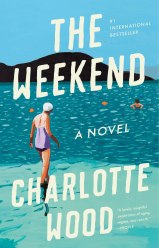
Charlotte Wood, The Weekend. I enjoyed this one quite a bit. It is a story of female friendship—but it is more probing and uncomfortable than that theme might make you expect. I appreciated its focus on older women. They have been through a lot, separately and together, and Wood does a good job exploring the kind of bond the sheer longevity of their relationships creates.

Roy Jacobsen, The Unseen. I was not enthralled by this; I definitely will not be searching out the others in the series. However, the prose has a starkness that suits the bleakness of the landscape and the hardships of the characters’ lives, and sometimes it achieved a resonance that elevated its otherwise rather laborious cadences (perhaps the fault of the translators?) to something almost stirring. kennedy feast

Margaret Kennedy, The Feast. Fun! But not as delightful as I expected. I even started skimming after a while because many of the characters were so annoying that I got impatient for the cliffs to cave in on them. I think I should have been reading it differently to get more out of it—not just more slowly but less for plot and more for ideas about virtue and vice and the meaning of life. One day I’ll read it again and do better.

Sy Montgomery, The Soul of an Octopus. The octopus stuff is really cool (for example, did you know that because an octopus’s brains are spread through its arms, a severed octopus arm will just go about its business for a long time as if nothing has happened? even continuing to hunt?!), but after a while I felt as if Montgomery was trying too hard to make more of it than it could bear. Even the title goes a bit far! (I loved My Octopus Teacher, which is a captivating nature documentary and includes thoughtful but not overwrought reflections on how spending time with an octopus can change your perceptions, including of yourself.)

octopusKate Clayborn, Georgie All Along. The long-awaited (well, for at least a year anyway) new romance novel from my favorite contemporary romance author—that is, my favorite author of contemporary romances. I enjoyed it fine but it seemed too much like her other novels and not as good as the earliest ones. They are packed full (almost too full) of details, especially of the kind I learned to call “neepery” (whether it’s metallurgy or home restoration or photography, Clayborn is good at conveying the texture and fascination of people’s interests); they are also quite emotionally intense. This one included some of the same kind of stuff but in a less engrossing way; the characters also seemed too conspicuously constructed, like concepts that didn’t 100% come to life. But I might change my mind on rereading: I had a similar reaction to her previous one, Love At First, but liked it quite a bit more when I went back to it more recently.
god-rabbitSarah Winman, When God Was a Rabbit. I happened across this one at a thrift store and grabbed it because I liked Still Life so much. It is not as good as Still Life but it kept my interest from start to finish, which these days is saying something. The narrator’s voice in particular is effective, and I also appreciated the novel’s journey across key events in recent decades, landing on them as events in specific people’s lives. This includes 9/11; I learned from the author’s note that this was a controversial aspect of the novel, which didn’t really make any sense to me.

Elisa Gabbert, The Unreality of Memory. This was a hard one for me in ways that I probably should have expected, or would have, if I’d studied the table of contents more carefully beforehand. I know Elisa (in the internet sense of “know”) from collaborating with her husband John Cotter at Open Letters Monthly, where for a while Elisa wrote a column about perfume. Since then I have read some of her other public writing, but not, that I recall, any of the essays collected here. The hardship was that they are all fairly grim! They deal with hard, scary, or disheartening topics, from natural disasters to the disaster of American politics under Trump. Elisa writes wonderfully, with a poet’s eye for the telling detail at the right moment; as an essayist, she is more associative than argumentative. Sometimes this felt digressive and sometimes as a result I occasionally lost my own focus, but in fact she is always in excellent control; as I kept reading I learned to remind myself to trust her.

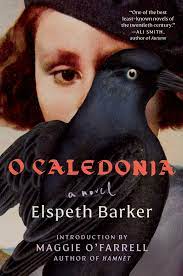
rileyGwendoline Riley, My Phantoms. I didn’t enjoy this at all. I could tell it was “well written,” meaning it has crisp, often resonant sentences and is constructed with conspicuous care. The narrator is unpleasant; the relationship she has with her mother is worse than that. I wasn’t sure what the point of the exercise was supposed to be: it takes about 2 pages to get the gist of how uncomfortable it is all going to be and then it’s just discomfort and nastiness, with a bit of pathos thrown in, for another 150 pages. OK, I exaggerate slightly, but I want this post to serve as a cautionary tale for me: beware Twitter enthusiasm! I have learned not to rush off after whatever mid-century middle European novel from NYRB Classics is currently getting all the buzz, because it will probably just sit unread on my shelves along with Sybille Bedford’s A Legacy. For people who like these kinds of things, these kinds of things are great! (And it’s true that sometimes, a bit to my own surprise, I like them too.) But cold, clinical, forensically observant narrators are not my thing. Gorgeous cover on this edition, though!

Which brings me to the .5 in my 8.5 books this month: Barbara Kingsolver’s Demon Copperhead. Its narrator is definitely not cold and clinical, but he is also no David Copperfield, and (so far) the novel has none of the warmth or wit of Dickens’s novel. That’s fine! Kingsolver is perfectly free to write her own book. But it is so disorienting to “know” all the details, to recognize everybody as they arrive in their new outfits, ready to play their accustomed parts in David’s (sorry, Demon’s) oh-so-familiar story—but to hear only bitterness and cynicism. A good page of Demon Copperhead might have a bit of wistfulness, maybe even a trace of pathos, but David’s narrative is full of heart, and (again, so far) Kingsolver’s version has none of it, and no humor either. And it’s loooooooong. I’m not giving up: my book club chose it, and the others who have read it pretty much all report having really enjoyed it. It seems likely that knowing David Copperfield as well as I do has actually been a disadvantage for me.kingsolver

I’ve also been reading for work (The MoonstoneThe Hound of the Baskervilles, and selected stories and poems).

All in all, it actually hasn’t been a bad month for reading. Even My Phantoms at least interested me, plus it was too short for me to be really bothered by the things I didn’t like about it. Still, I hope February brings more books that genuinely excite me.

Recently

PPP Blues“Start where you are and see where it takes you” is the wise advice from blogger extraordinaire Kerry Clare for those times when you want to write but don’t know quite what you want to say, so here I am, trying to break through the inertia of not blogging by just blogging.

Sometimes I look back through the Novel Readings archive and wonder at how much blogging I did in periods of my life when I was much busier than I typically am now, when I had two small children who needed attention and care of all kinds, drop-offs and pick-ups at school and daycare, swimming lessons and library visits, homework and piano lessons and chess club, highly particularized meals (allergies, aversions) necessitating frequent shopping and endless packing up of safe snacks, appointments with doctors and dentists and orthodontists; in those years the demands of teaching, too, were greater, because I didn’t have an archive of materials to fall back on, or years of experience to give me trust in myself, belief that if I just showed up I could probably actually do just fine. I took on more then, more committee assignments and supervisions and all the rest of it; I say no a lot more now, partly because after my failed promotion bid I “quiet quit” (a term I hadn’t heard of back then!)—not completely, of course, and I try to still be a good department citizen especially, but it was a good reminder that (another catch-phrase I didn’t know then) the university will not love you back.

Somehow those crazy busy years were also my peak blogging years. Busy people get more done, they say, but I realize now, too, that blogging fed me—gave me nourishment, intellectual and eventually social—in ways my busyness, my business, wasn’t otherwise doing. I came to feel part of something, something I could reach beyond the constraints of my schedule, my remote location, myself. I enjoyed advocating for something I believed in; I could feel parts of myself expanding that had become cramped and anxious after the hard slog through graduate school and which I had not had, or made, time for in the intense early years of my job here, which were equal parts exhilarating, terrifying, and exhausting. Then came Open Letters, which I also somehow made time for in spite of, on top of, everything else (a mistake, perhaps, professionally speaking, but one I can’t regret).

woolf-by-bellThere’s so much emptiness in my life now. It’s not just Owen’s death, although every day I confront the ongoing ache and mystery of his absence. Some of it is the ongoing isolation of our COVID-cautious lifestyle: especially as most of the rest of the world seems to be moving on, it feels worse than it did when we were all in it together. Being back on campus and teaching in person helps with that, but it’s not the same as it was: I’m in my office a lot, but mostly with the door closed, because masks are required in classrooms but not hallways and I like to take my own mask off while I work. It’s winter, so the outdoor visits that sustained me through summer and fall are less appealing, as are my long solo walks in the park, when I was alone but, somehow, never lonely. (I often think of Marianne Moore’s line “the cure for loneliness is solitude.”) I could be busier at / with work than I am. I will be, soon, as assignments start coming in, but even so I don’t expect to be even as busy with teaching as I was last term, just because of the nature of my classes this term, the easy familiarity of one and the high degree of automation in the other. There is other work I could be doing, even a writing commitment I should be doing. I can’t seem to summon up much urgency or energy for it, though, or for the book idea I still sort of believe is worth pursuing. I’m not even reading much. I can’t seem to concentrate on most books I try; I don’t seem to like many of them, and it bothers me, worrying that it’s me, not them, that’s the problem.

“Start where you are and see where it takes you.” I’m not in a great place, I guess, though things aren’t really so bad: another word for emptiness is spaciousness, and maybe that’s what I need right now. There are ways, I realize, in which it is a luxury, a privilege. Something I’ve heard a lot since Owen died was that grieving people should be kind to themselves, so I have been trying not to judge what I’m doing or not doing, or how much I’m doing, or just how I’m doing.

LittTwo things I did recently: a review of Emma Donoghue’s Haven for Canadian Notes and Queries, and a review of Toby Litt’s A Writer’s Diary for The TLS. My editor at the TLS thought of me for Litt’s book because it’s a novel that began as a blog, or at any rate as a Substack (which I realize is not exactly a blog, but Litt also has a WordPress blog). The novel was initially released one day at a time, like a real diary, but has now been released in bound book form: that change in form was really interesting to me, not least because (like many long-time bloggers, I expect) I have often wondered if there is a book here somewhere, and if so, how radical the transformation would have to be for it to succeed in another form. My conclusion about Litt’s experiment:

I wish he had resisted the temptation to republish A Writer’s Diary as a conventional book. He could instead have accepted the ephemerality that is a blog’s most defining quality, letting the posts scroll away as they first appeared, one day at a time.

This Week In My Classes: A Hybrid Experience (For Me)

We’re back at it: our winter term officially began on Monday, meaning today marks the end of the first full week of classes. The very familiarity of it is intensely familiar: that’s how it feels after a long time doing any work that is as cyclical as teaching, I expect. The familiarity of it also continues to be disorienting for me; that too, in its own strange way, is now familiar.

moonstoneThis is my first term teaching both online and in person – not in the same course, but with one of each. So far I like it, actually. My in-person course is an old favorite, Mystery & Detective Fiction. I haven’t taught it in the classroom since Fall 2018, which feels a lot more than four years ago. I taught it online more recently, with some success, measured at least by the number of students who showed up in my Fall 2022 classes at least in part because (according to them) they’d enjoyed it a lot. I’ve remarked here before about the oddity that this has become my most frequently taught course, because it’s such a popular elective. It’s full again this term, at 64. I am grateful for its familiarity: I hope to be able to relax into it. Usually it sparks some of the liveliest discussion of any of my classes, I think because everyone’s there out of interest (it doesn’t fulfill any requirements, so nobody has been coerced into taking it). We warmed up this week with “big picture” stuff about genre fiction, with an overview of the history of detective fiction, and then, today, with “The Murders in the Rue Morgue.” Monday we start The Moonstone, which I omitted, reluctantly, from the online version. I was rereading our first instalment this afternoon and it’s just such a lot of fun. I hope they think so too!

My online course is Literature: How It Works, which is the same first-year writing course I’ve offered online twice before. I am really glad to be getting more use out of the materials I prepared for it, which took hours and hours, first to conceptualize and then to make. Some of them, of course, have already had to be updated, but I’m not changing a lot of the content for each new iteration of the course because I’m still putting  a lot of thought and energy into the specifications grading approach I’m using. I’ve revised the bundles again this year, simplifying and reducing or rationalizing them further based on my previous experience. The second time I taught this course this way it was already an improvement on the first time, so I’m hopeful that I have ironed out more wrinkles and we’ll all—me, my teaching assistants, and the students—have an even smoother term. I don’t want to reduce the students’ workload to the point that it doesn’t have the desired outcome: I do think that forcing them to just keep writing is, overall, an excellent approach for a writing course. The challenge is finding the line between productive work and busy work, or between work they have time to care about and work that is perfunctory because they are scrambling to get the credits they want.1015StartHere-crop

It’s too early in the term in both classes to have much sense of how they’re going, or going to go, but I can say that I don’t hate going to class first thing and getting energized by the in-person session and then having the rest of the day to do everything else, from follow-up and preparation for the next class meeting to all the various tasks for my online course (mostly emails and introductions, so far, but soon to include a steady flow of discussion posts and journal entries). I’m used to recuperating in my office just long enough to head out and teach my second class, and then needing some recovery time after that class (hey, I’m getting old—pacing around and manifesting enthusiasm while talking a lot and fielding students’ comments and questions is tiring for me!) before I can dig in and get more work done. Today I did a couple of reference letters as well as my course-related stuff, and I reread Monday’s portion of The Moonstone, which I almost certainly would have put off until the weekend if I’d had to show up in person for a second class hour. I like the balance, and I’m perfectly happy not to be meeting my big first-year class in person. (Of all the classes I teach, it’s often the least rewarding to be doing face to face, because what I’m often face to face with is indifference.)Rocks and Clouds PPP

Despite the difficulties I still have adjusting to a reality that seems (still) unreal, I’m glad to be back to the routine. I was quite busy until late in December with work from last term; the time in between then and now was restful in some ways but wearing, personally, in others. Work is a good distraction; being with students forces me out of my head and into a more cheerful space; and I honestly do believe in the value of all of this—that it is worth keeping up, keeping at, even if, as today, I have to take a break from it sometimes to grieve the person whose presence is everywhere in my office, just as it is at home.

Novel Readings 2022

The first year after death
is full of stretching, where things

pull so hard your bones
break, because they were never
bones, were always solitude.

Victoria Chang, from “The Trees Witness Everything”

This has been an unusual year for Novel Readings, one in which my reading life was overtaken by my real life—or, since I firmly believe that “the world of books is still the world,” a better way to put it would be that my reading life changed because so did the rest of my life. I read a lot in 2022 about grief, and about suicide; I read a lot of poetry, or at least a lot more than I usually do; and I failed to finish a lot of novels that I started, or at least a lot more than is typical for me.

Mourning

Denise Riley’s Time Lived, Without Its Flow was the most resonant book I read about grief. I didn’t find it so at first, but as the days after Owen’s death turned into weeks and then months, parts of it returned to me over and over, especially her observation about how “the dead slip away, as we realize that we have unwillingly left them behind us in their timelessness.” (I feel this very acutely this week, as the calendar turns to the new year, the second year of his absence.) The poems in Say Something Back, in the same slim volume, have also stayed with me. “How should I take in such a bad idea?” Riley demands in “Part Song.” How indeed. William Styron’s Darkness Visible brought me greater understanding of the intensity and suffering of depression; and Kay Redfield Jamison’s Night Falls Fast was difficult but valuable reading about the painful truths and also the mysteries of suicide. I also found new meaning in Margaret Oliphant’s lamentations for her “dear bright child”; and in Virginia Woolf’s mourning for her nephew Julian.

Other Reading

It seemed for a while that this would be my year of Ali Smith, the way last year I went all in on Jo Baker. I read straight through her seasonal quartet at a time when otherwise I could hardly concentrate; I became interested enough to add her to my ongoing book project on women writers and social reform. I went on to read and enjoy Companion Piecebut then I tried How to Be Both and lost my grip.

Some standout experiences from those early months, when to read at all was a success and to read something and love it seemed almost too good to be true: Sarah Winman’s Still Life and Patricia Lockwood’s No One Is Talking About This, neither of which got the attentive post it deserved; and Andrew Miller’s The Slowworm’s Song, which was one of the first books I blogged about ‘properly’ (meaning, as I used to do) in 2022. Quite a few other books I read with interest, appreciation, or pleasure ended up mentioned here only in round-up posts, if at all: Monica Ali’s Love Marriage; Elizabeth Jane Howard’s The Light Years; Emily St. John Mandel’s Sea of Tranquility; Graham Macrea Burnet’s Case Study; and Damian Lanigan’s The Ghost Variations, my last book of the year and a very good one.* I did manage to write up my experience rereading Ishiguro’s Never Let Me Go.

Both reading and writing about my reading did get gradually easier as time passed, and I had a run of good luck, or good choices, too, towards the end of the year: Anthony Doerr’s Cloud Cuckoo Land, Ian McEwan’s Lessons, and Richard Powers’ Bewildermentwhich I have since learned got quite a critical drubbing, but which for me stands out as perhaps the best novel I read in 2022.

I managed some formal reviews this year, notably Maggie O’Farrell’s The Marriage Portrait, which I thought was smart and powerful and elegant, Emma Donoghue’s taut and graphic Haven (my review at CNQ should be available eventually!), and Sina Queyras’s Rooms: Women, Writing, Woolf which gave me a lot to think about, in a good way.

All year I struggled with the possibility that books I disliked or DNF’ed were victims of my circumstancesalthough why I should consider my grieving brain any more unreliable in its criticism than in its praise I don’t know. In any case, with that caveat in mind, the book I liked least this year was Tessa Hadley’s Free Love, which was generally admired both by reviewers and by astute readers in my Twitter circle but which I just could not come to terms with.

On the other hand, a book I stalled out in but fully intend to try again in 2023, because even in the moment I could tell it deserved a better reading than it was getting from me, is Doireann Ní Ghríofa’s A Ghost in the Throat. I also already have a tempting stack of new (to me) books I’m looking forward to reading and blogging about in 2023, including Margaret Kennedy’s The Feast, Roy Jacobsen’s The Unseen, Niall Williams’s This Is Happiness and The History of Rain, Barbara Kingsolver’s Demon Copperhead, and Gwendoline Riley’s My Phantoms. I’ve started the year, though, with Charlotte Wood’s The Weekend, lent to me by a dear friend with a note pointing out that it is a novel about female friendship. At about 100 pages in, I’m rather hoping she doesn’t see much of us or our friendship in itbut I’ll have to see how things unfold.

Writing at Novel Readings turned out to be really important to me in 2022. At times I felt self-conscious or uncomfortable about how personal, and how mournful, my posts often were, but the simple fact was that writing themfinding the words to give shape to the ideas and feelings I otherwise found overwhelminghelped me when little else did. So I reassured myself by thinking of how many other writers have put their grief into words, often much more publicly than this, and by remembering that nobody ever has to read anything here that they don’t want to. And some of my happiest times in 2022 were actually those I spent writing here about books: to be immersed in that work always proved both intellectually invigorating and emotionally restorativea reminder, which I sometimes really needed, of why it is I do this in the first place. I am truly grateful to everyone who kept reading and especially to those of you who have showed so much sympathy and kindness in your comments over this long, hard year.


*Lanigan’s pianist protagonist is preoccupied with the slow movement of Beethoven’s Hammerklavier Sonata, which I have since been listening to over and over, appreciating its melancholy drifting. Here it is, in case that sounds appealing to you too.

Still the World: This Term In My Classes:

I’ve been reading through my archive of posts about “This Week In My Classes,” which goes back to September 2007, nearly the very beginning of Novel Readings itself. There are some (possibly) practical reasons for doing this, including considering what to say in my contribution for a forum on teaching Victorian literature today that my colleague Tom Ue is organizing for the Victorian Review.

I’ve also been thinking more generally about the unbearable lightness of blogging—the flip side of the immediacy that is such a big part of its appeal as a form is its ephemerality. I have put so much effort, and so much of myself, into writing here at Novel Readings; as it becomes increasingly evident that, however persistently some of us keep up the habit, the ‘Golden Age of Blogging’ is past (something that is clearer to me than ever as I review the vigorous discussions that once happened in my comments sections), I find myself wondering if any of this archive is worth revisiting, revising, repurposing in some way that might be—I don’t want to say “more substantial,” because I fondly believe it is already substantial, if in a diffuse way—so let’s say a bit stickier.

The exercise so far has been at once invigorating and strangely mournful, or maybe not so strangely, given the context. For one thing, it’s not just blogging as a phenomenon that is past its prime but also, perhaps, my teaching career, although in my brighter moments I hope that there is time, and that I will have the energy, to make its last decade meaningful to both me and my students. Another context, of course, is Owen’s death and my continuing sense of disorientation in my own life, a feeling that is somehow harder, more confusing, to deal with when I am in the midst of what used to be normalcy, including especially, this term, on campus. So much is the same, including the work I am doing and (more or less) the person that I am while I’m doing it: how can that be? The discrepancy between my two realities continues to give me emotional vertigo, and rereading my old posts intensifies the effect, because they immerse me, in the moment, in the world before everything split apart. They are full, too, of casual references to my children—to sick days and holidays, to March break camps and Christmas shopping. Many of those years were actually hard times in many ways, both personally and professionally; frank as I have been about some aspects of my life, there’s a lot I’ve never talked about here. Now, though, they seem like such innocent times. Whatever my struggles, whatever I imagined or dreaded about the future, it was never this.

One question in the back of my mind throughout this term was: should I say anything to my classes about Owen’s death? Was there any way in which that recent experience of mine was relevant, not just to me personally but to what we were doing there together? Most of the time the answer pretty clearly seemed to be “no.” I did say, once or twice, that for personal reasons I wasn’t necessarily at my best and they should feel free to remind me or correct me about things if I got muddled. But in general I like fairly clear boundaries with my students (“be friendly, but not their friend” is the advice I got early on, and I still consider it sound); of course I’m always communicating my enthusiasms, interests, and values, just through what I teach and how I teach it, but I’m not a fan of oversharing, on either side. Suicide is also a fraught topic, and it is impossible for me to know how bringing up my own trauma might affect other people in the room. I think some of my students did know—and in fact one or two kindly extended their sympathies to me outside of class, which I appreciated.

I did finally bring it up, though, on the last day of class in 19th-Century Fiction. I usually end that class with a peroration about why I think our work is worthwhile, on what I hope they have learned from our readings and discussions, and, most important, on what I hope they will take away from it all. For many years (and my review of my teaching posts has shown me just how long this has been true) I have thought about my classes as less about conveying specific content than about teaching reading—about training better readers. Always, in these closing remarks,  I note that they will only be assigned “required reading” for a fragment of their reading lives; the rest of the time, what they read and how they read it will be up to them, as will be their relationship with books in other ways, from supporting public libraries to attending book festivals, from joining book clubs to getting involved in debates about the curriculum in the public schools. I do care about their engagement with the particular books I’ve worked on with them; I am always delighted when I hear from a former student who has carried away a love of Victorian novels and continues to seek them out, or who thinks back on our journey through Middlemarch as a highlight of their university years (and some do!). But I also hope that my students carry away a set of habits and skills for reading, and a set of questions to ask of anything they read, questions like the one Booth proposes as fundamental in The Company We Keep:  “Is the pattern of life that this would-be friend offers one that friends might well pursue together?” (The best literary “friends,” he elaborates, are identified by “the irresistible invitation they extend to live during these moments a richer and fuller life than I could manage on my own,” which is as good a definition of literary merit as I know.)

In my closing peroration in 19th-Century Fiction this year, I said a lot of the same things, but I also commented on two specific contexts for our work together that really mattered to me this term, both of which had given new urgency, in my mind, to questions about how we all spend our time, not just but especially in the classroom. The first was my return to in-person teaching after two+ years of teaching online, an experience which has prompted a lot of pedagogical reflection for me. Before COVID, I made a lot of assertions about the importance of teaching in person (some of them prompted by MOOCs, which seem to have fizzled out conspicuously as both promise and threat). I have learned a lot in the past three years about online teachingenough not to dismiss it or recoil from it, but also enough to know that I was right that, for me and the kind of teaching I enjoy and value most, being in the room with my students is preferable. I struggled a lot this year because it wasn’t clear that a number of my students thought the same; I hope that this is a lingering effect of the COVID years (not that they are really over, sadly) and that eventually those meetings will hum with their old energy. I didn’t go on and on about this to my class, not least because the ones who were present were the ones who had pretty much always been present, so they had shown their own commitment to what I strongly believe is, at its best, a collaborative venture.

And the second context I brought up was that this had been my first term back in the classroom since my son died. I did not go into any details about his death, but I told them that, inevitably, it had prompted a lot of questions for me about how I spend (and have spent) my life and my work, about what my priorities have been over the years. I have worked hard, I told them, to recover and sustain my conviction that if  teaching was the kind of thing that had been worth doing before Owen died, it was still worth doing, and doing as well as I could manage, after he died as wella principle I have tried to believe in and live up to in other ways as well, including maintaining this blog.  I got a bit choked up talking about this, which I knew was a risk, and maybe it was too personal a thing to say. Rightly or wrongly, though, it really mattered to me to tell themthis group who had stuck it out with me all term in our grim, windowless room, heads up, masks onthat our time together had really meant something to me, that I wasn’t just going through the motions, that teaching might be “just a job” in some respects, but that it is a lot more than that in others. I guess that’s something I hope they will carry away from my class as well, that (as Aurora Leigh tells us), “the world of books is still the world,” and that how we read, and how we think about reading, is inseparable from how we live.