Once a thing is known it can never be unknown. It can only be forgotten. And, in a way, that bends time, so long as it is remembered, it will indicate the future. It is wiser, in every circumstance, to forget, to cultivate the art of forgetting. To remember is to face the enemy. The truth lies in remembering.
I decided to read Anita Brookner’s Look At Me after hearing Trevor read an excerpt from it on the Mookse and Gripes episode about favorite passages. This is what he read:
And I did not write for many evenings that followed. In my new security I began to see it all in a different light. I began to hate that inner chemical excitement that made me run the words through in my head while getting ready to set them down on the page; I felt a revulsion against the long isolation that writing imposes, the claustration, the sense of exclusion; I felt a thrill of distaste for the alternative life that writing is supposed to represent. It was then that I saw the business of writing for what it truly was and is to me. It is your penance for not being lucky. It is an attempt to reach others and to make them love you. It is your instinctive protest, when you find you have no voice at the world’s tribunals, and that no one will speak for you. I would give my entire output of words, past, present, and to come, in exchange for easier access to the world, for permission to state ‘I hurt’ or ‘I hate’ or ‘I want.’ Or, indeed, ‘Look at me.’ And I do not go back on this. For once a thing is known it can never be unknown. It can only be forgotten. And writing is the enemy of forgetfulness, of thoughtlessness. For the writer there is no oblivion. Only endless memory.
Who could hear or read that and not be devastated by it? It’s an absolutely ruthless declaration of bitterness, alienation, and loneliness. Maybe it’s perverse that I wanted to go to this place, to meet this person for myself, to find out how her story surrounds this moment, to understand what kind of life encompasses it. Probably I would not have been tempted down this sad path by any other novelist, but Brookner is a maestro of misery—not the screaming or wailing kinds but the stealthily accumulating, erosive kinds—and in other novels she brings to her exploration of this grim territory a faint redemptive sympathy for her sad characters.
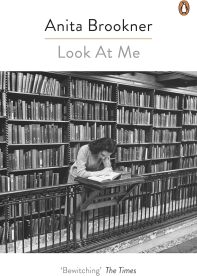 Does she do this for Frances, the wary, lonely narrator of Look At Me? Do we—should we—find compassion in our hearts for her? There’s definitely something pathetic about her, as we follow her through her unexpected and initially life-affirming friendship with Nick and Alix Fraser, who are so much brighter and more beautiful and more exciting than she is:
I slipped into the routine of dining with the Frasers, scarcely believing my good fortune. I registered with amazement the fact that Alix seemed to have taken to me, and that Nick accepted my presence in their flat without comment . . . I don’t think I was forcing my company on them, although I was avid for theirs.
What do they see in her? It is difficult (rightly so, it eventually proves) to take their interest in her at face value, as genuine friendship: she’s an audience, a useful hanger-on, a pet, a project, an object of quizzical condescension. Perhaps there is kindness there, but the Frasers (and Alix especially) are so self-centered that Fanny’s groveling readiness to accept any terms they offer becomes increasingly depressing.
 And yet Fanny’s motives and character also seem uncomfortable: she is manipulative, jealous, reticent to a fault. I’m not sure she’s meant to be an unreliable narrator, strictly speaking, but she’s certainly not a trustworthy one. She reminds me very much of Lucy Snowe in Villette, cast in the role of a spectator to life, showing strength and resilience but also stubbornness, bitterness, and even malice as she endures her marginalization and denies her own desires, even to herself. Just as Lucy watches Dr. John fall in love with Ginevra, insisting all the while that her own heart is untouched, so Fanny refuses to admit her love for James Anstey, only eventually to realize that if he did ever have romantic feelings for her (which I’m not sure of, really), the moment for claiming them has irrevocably passed. Lucy and Fanny also both endure an absolutely nightmarish walk through their city, so overcome with their own emotions that it makes them physically ill. Here’s Fanny, making her way home across London late at night after seeing James in love (or lust, anyway), with another woman:
I was not very fast now, and my feet stumbled from time to time. I went past the sex shop, and the television rental company, past the ethnic hairdresser, whose fluorescent tube in the window blinked weakly, lessening my feelings of total desertion. I greeted the wax nurse in her spectral uniform like an old friend. I passed the banks and the supermarkets and the mysterious shops which seemed to have an air of dereliction about them and whose normal purposes I could now no longer remember. The rain had stopped but my coat was damp and it impeded me. I felt intimations of nightmare; I seemed to be making no headway. It was as if I were trying to wade through some viscous substance wearing an old-fashioned diving suit. There was no one in sight. There was no sound, apart from a distant rumble, which I could not identify. I was breathing harshly now and I could feel a pain in my chest; my hair stuck to my damp face in wisps, and I was very thirsty.
At the end of the walk she is home again, but there is no sense of comfort or reassurance: her flat is the life she doesn’t want, with its stasis and isolation and memories of illness and death. She tries to sleep, and waking up brings new pain as she forgets for a moment how bad everything is (“as if I were on holiday, being cared for, with a day full of surprises and treats ahead”) and then remembers again: “I think this is one of the cruelest tricks we play on ourselves,” she reflects, “this inability to banish early expectation.”
 Writing, for Fanny, is no balm, no refuge, only a retreat—though I think we are meant to take Look At Me as a sign that it can also be revenge. I find myself wondering (not knowing much at all about Brookner herself) how she talked about her own writing. The passage Trevor read is such a crushing statement about writing as the last resort of the outcast. I’m reminded of a passage from Hotel du Lac that I often think about, spoken by Edith, the “romantic fiction” writer who is the protagonist of the novel:
In my books it is the mouse-like unassuming girl who gets the hero, while the scornful temptress with whom he has had a stormy affair retreats baffled from the fray, never to return. The tortoise wins every time. This is a lie, of course . . . In real life, of course, it is the hare who wins. Every time. Look around you. And in any case it is my contention that Aesop was writing for the tortoise market. Axiomatically . . . hares have no time to read. They are too busy winning the game. The propaganda goes all the other way, but only because it is the tortoise who is in need of consolation.
Look At Me offers no such consolation, especially if you recognize anything of yourself in “Little Orphan Fanny.” Fanny is a tortoise to the end, but her only victory is having the last word.

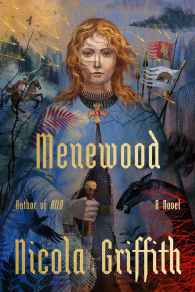
 The novelist Griffith most reminds me of is Dorothy Dunnett. She luxuriates in tactile details the way Dunnett does, for one thing, as in this description of a waterfront marketplace:
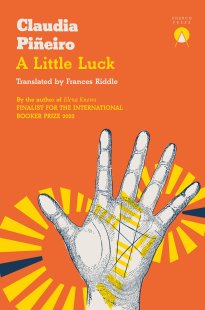 Like Elena Knows, A Little Luck is a small book that packs a powerful punch. Now that the first impact of reading it has passed, I do find myself wondering: did it earn its effect? Is that even a fair question? But Elena Knows is
  I’ve always loved these lines from Tennyson’s The Princess:
 Actually, thinking about it now, maybe there are more moving parts than there used to be. Once upon a time we didn’t use an LMS, for example, and while there’s no doubt that Brightspace (formerly Blackboard formerly Web CT formerly DIY websites) is a useful back-up system for in-person courses—a storage facility available to your students 24/7 so they can never not locate their syllabus!—it’s also the case that expectations have gone up considerably around our use of them (and students’ reliance on them). Now I post my PPT slides on Brightspace after class, for example, something that requires multiple additional steps, assuming I remember to do it in the first place. (I never used to use PowerPoint, either, and I blame it and Brightspace, which both require incessant mousing, for my now chronic shoulder pain.) I used to give quizzes and midterms in class; now, they are all taken in Brightspace—but that too means many more steps than devising the questions and making copies, setting up all the many features just right and entering the questions in the optimal way. When we were all online, I posted weekly announcements for my classes: it turns out students really appreciated these, so I’ve kept doing them, but they take me (no kidding) hours to compose, both to make sure they are optimally clear and useful and because heaven forbid there’s a mistake in one, like a wrong deadline, that gets fixed in their minds or calendars in spite of any subsequent efforts to correct it! Recently, too, in a departmental discussion around class size and workload, one of my colleagues pointed out ruefully that “there didn’t used to be email” and that is such a good point, especially as our class sizes have gone up even as we became not just teachers but customer service representatives! (And yet somehow, without an LMS and without Outlook and without PowerPoint, we managed to do our jobs. Imagine that. Did we do a worse job? Maybe in some respects—accessibility seems like a key point here—but I really do wonder how much all of this apparatus actually helps, rather than hinders, us in our core mission.)
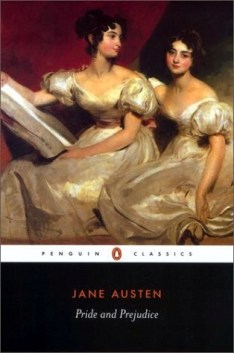 How are things going otherwise in my classes? So far 19th-Century Fiction seems great (I hope it’s not just me who thinks so!). It’s the Austen to Dickens version this term, and I took the risk of assigning Pride and Prejudice, which as regular readers will know
  My other class this term is a section of intro, once again the prosaically-named “Literature: How It Works.” But this time it’s in person, because I was so disheartened by the end of
 It used to be a ritual for me to post a recap of
 Like everyone else I know, I was really impressed by Elena Knows; it was a treat to find that Piniero’s
  Devotion or Semi-Detached (or, in parts, North Woods)—that otherwise deal in wholly human or natural problems. De Gregorio doesn’t resort to wish-fulfillment or fantasy and that is both the pain and the strength of her treatment of love and loss.
 My last two reads of this summer were Yiyun Li’s The Book of Goose and Ann Patchett’s Tom Lake. For me, one was a hit, the other a miss.
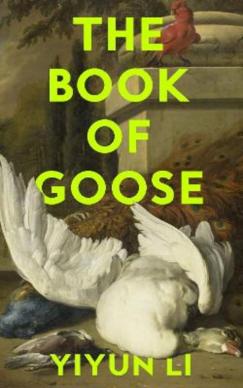 Another warning sign should have been how many reviews (including some quoted in the pages of “Praise for The Book of Goose” that lead off my paperback edition) compare it to Ferrante’s Neapolitan novels. I am cynical about these tendentious excerpts so I don’t pay very close attention to them when I’m making up my mind about what to read. Maybe I should change my habits! Because the Ferrante comparison occurred to me not too far into Li’s novel, and not for good reasons. (
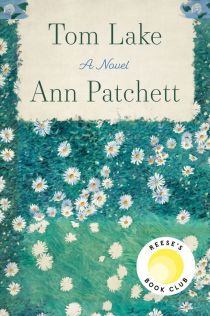 Tom Lake was a much more enjoyable read, although like the other Patchett novels I have read recently, it didn’t seem to me to go particularly deep. Still, there was something really satisfying about it: I liked it a lot more than either
  I was raised with the kind of faith that does not doubt. God had been as much a part of me as my own marrow, and when I discovered my bones to be empty, fluting music discordant to anything I had sung in church, my anguish was real . . . The understanding I have now, that the world spins on a deeper mystery than anything that might be set into language, was not with me then. Now I know that my mind is too small to hold the spirit. The spirit, I hope, holds me.
 If you’re a friend of mine on social media, it won’t surprise you that Hernan Diaz’s Trust is the first one. It is an inarguably ingenious novel, but I thought (and the other members of my book club agreed) that the payoff for its ingenuity in the second half wasn’t enough to make up for the extraordinary, if self-conscious, dullness of the first half. Even a novel that can only really light up on a second reading can (and, arguably, should) generate some excitement the first time through. For me, a case in point would be
  I picked up Daniel Mason’s The Winter Soldier because I’m writing up his latest novel, North Woods, for the TLS and it’s good enough that I wanted to read more by him. The Winter Soldier is quite unlike North Woods, mostly in ways that favor the newer novel—which suggests Mason is getting better at his craft! The Winter Soldier (2018) is a good old-fashioned historical novel. It is packed with concrete details that make the time and place of its action vivid in the way I want historical fiction to be vivid. It takes place mostly in a remote field hospital in the Carpathian mountains during WWI; its protagonist, Lucius Krzelewski, is a medical student rapidly converted to a doctor to serve the desperate needs of the Austro-Hungarian army. His time at the hospital is full of harrowing incidents; through them runs his growing interest in an illness that eludes physical diagnosis and treatment—what today we would call PTSD. There are chaotic battle scenes and idyllic interludes; there’s a love story as well. It’s good! It really immerses you in its world, and (unlike Trust!) makes you care about its characters. I ended it not really sure it was about anything more than that. Novels don’t need to be, of course, though the best ones are. Still, I liked it enough that I will probably also look up Mason’s other novels, starting with The Piano Tuner. North Woods is a lot smarter and more subtle, though. (I am not sure it’s entirely successful: in my review, I will say more about that, when I figure out how to!)
 And then there’s Claudia Piñeiro’s Betty Boo, which I found a really satisfying combination of smart plotting, thoughtful storytelling, and ideas that matter. In some ways it is less ambitious than the other two novels: it is structured more or less conventionally as a crime novel, and there aren’t really any narrative tricks to it, unless you count the sections that are ostensibly written by the protagonist, Nurit Iscar, about its central murder case. Iscar is a crime novelist who has had a professional setback (a crushing review of her foray into romantic fiction) and is currently getting by as a ghost writer. A contact at a major newspaper asks her to write some articles about a murder from a less journalistic and more contemplative perspective; in aid of this mission, she moves into the gated community where the victim lived and died. She ends up collaborating with the reporters on the crime beat as they investigate the death and discover that it is a part of a larger and more sinister operation—about which, of course, I will not give you any details here! Betty Boo is an unusual book: it doesn’t read quite like a “genre” mystery, as it is at least as interested in Nurit’s life and especially her relationships, with her close women friends and her lovers, as it is in its crime story. Also, Betty Boo is about crime, reporting, and fiction as themes, though its attention to these issues is integrated into the storytelling so that it never really feels metafictional—unlike Trust, which is all gimmick and so no substance, Betty Boo seems committed to the value and possibility of substance, even as Piñeiro provokes us to think about the obstacles we face in achieving it, in writing or in life, especially now that the news as a vehicle for both information and storytelling has become so degraded. I appreciated how original Betty Boo felt, and how genuinely interesting it was: I haven’t read another writer who does quite what Piñeiro does, in it or, for that matter, in Elena Knows. Of the three novels I read recently, this is the one I’m most likely to recommend to others, and I’m definitely going to read more of Piñeiro’s fiction, probably starting with A Little Luck, when I can get my hands on it.
 I’m running a bit behind on writing I need to get done sooner rather than later, but I don’t want to let Elizabeth Lowry’s The Chosen go unmentioned, so I thought I’d say at least little bit about it while it’s still fresh in my mind.
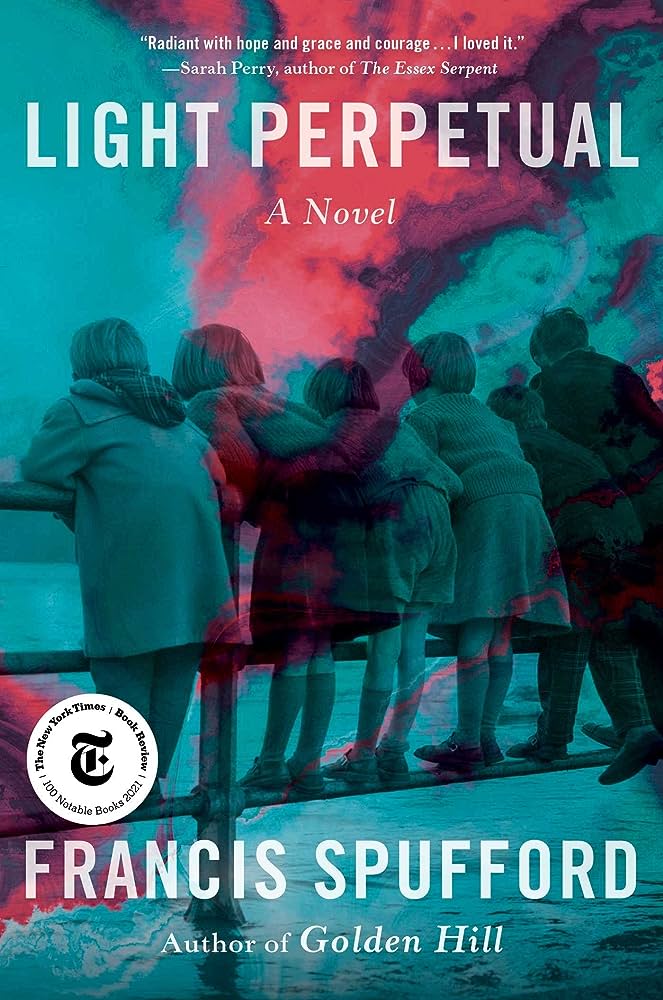 And all of a sudden with the last mug in her hand, a message comes through loud and clear from her psyche: this is an accident. There is no need for her life to have worked out like this at all. So many other possibilities . . . How can this be her life, how can that be her love, if it rests on such accidents? Surely her real life is still waiting to happen . . . Surely the real thing has yet to come along.
 Is it just me, or is there something there reminiscent of the third-person narrator in Bleak House, who also likes to rise above the landscape, giving an almost cinematic effect, and whose voice also rises in such moments into a visionary or prophetic tone? “Come, other future,” exclaims Spufford’s narrator; “Come, other chances. Come, unsounded deep. Come, undivided light”; “Come night, come darkness, for you cannot come too soon or stay too long by such a place as this!” exclaims Dickens’s. (I also heard a strong echo of Middlemarch in a passage about everyone finding themselves “the protagonist of the story. Every single one the centre of the world, around whom others revolve and events assemble.”)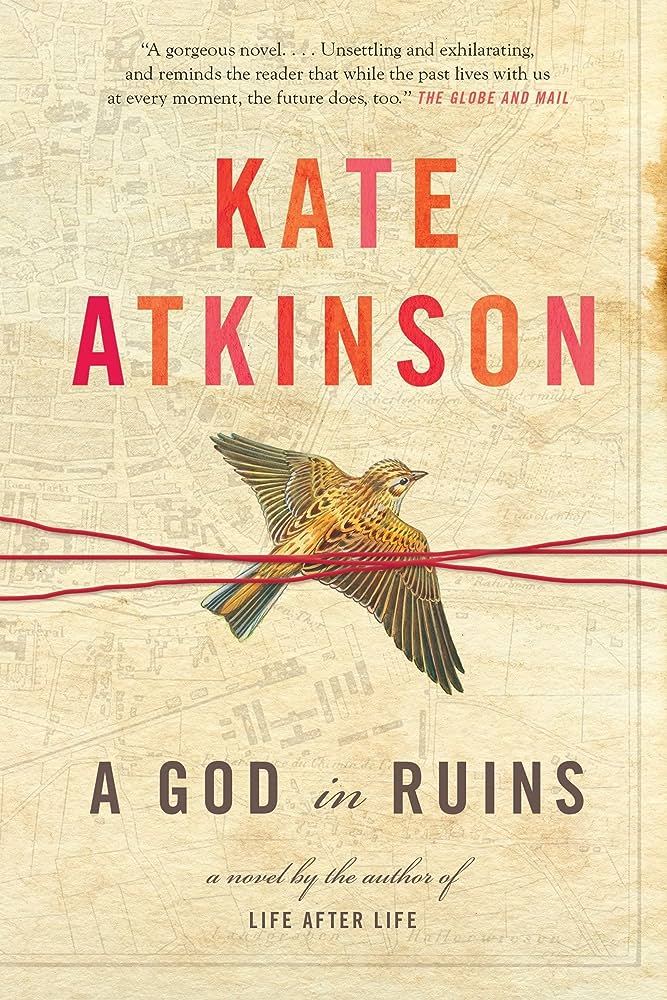
 Novel Readings