 I’m not quite ready for my traditional posts about what I’ve read and written in the past year: for one thing, I often read at least one really great book between Christmas and New Year’s, when the holiday bustle has ended and the book-shaped packages under the tree have revealed their secrets! (In fact, I’m currently reading Emily Wilson’s translation of the Odyssey, which seems a likely contender for any “best of 2018” list.) That doesn’t mean, though, that I’m not looking back over 2018 and ahead to 2019, trying to figure out where I’ve been, where I am, and where I’d like to be going.
Taking stock in this way is particularly relevant for me this year because as of January 1, 2019 I will be on a half-year sabbatical, which means instead of being caught up in the routine busyness of the new teaching term I will have the luxury of time to think and write, to consider and then advance my own priorities as a scholar and a critic–and as a teacher, since one of the most valuable things about a term off from actually teaching is a chance to reconsider reading lists and pedagogical approaches without an imminent deadline for book orders making the usual into the inevitable. (In another post, in part with the goal of making myself accountable, I will be drawing up a reading list to help me refresh, rethink, or reinvent some of my standard course offerings.)
 I do have a sabbatical plan–you have to submit one as part of your application–and also some existing deadlines I need to meet, so I’m not heading into the new year entirely aimless. Still, the precise form my work on that plan will take is really up to me, and figuring that out will be my first and possibly hardest task. A crucial context for me is what I did on and then after my previous sabbatical, in Winter 2015. Over that winter I threw myself into writing what I hoped (and perhaps still do hope) would become a book of “crossover” essays about George Eliot. I wrote a lot of material, and then towards the end of the term I peeled off two parts that I eventually published as self-contained essays. (I did not really appreciate at that point how bad it might be for the book I was imagining to publish a lot of its intended content first.) By and large I enjoyed doing that writing: I felt very motivated and productive, and across my sabbatical my confidence in my overall portfolio grew–which is why I decided, at its end, that I was ready to apply for promotion. This administrative project, too, was initially exhilarating: I had done so much (I thought), in so many different forms, since my first promotion, and the result was (I thought) a body of work I was rightly proud of, some of it well within the usual academic boundaries, but a lot of the more recent work reaching across them or representing my principled resistance to them.
Well, we all know how that turned out…and since the 18-month saga of arguments and counterarguments, appeals and, ultimately, rejection ended, I have struggled to regain the buoyancy that had led me to what in retrospect seems like a terrible error in judgment. I have been gradually (if unevenly) reconciling myself to the change in my professional outlook and I have found renewed pride in what I have accomplished since the university handed down its verdict against me. Now that I’m not seeking institutional validation any more, though (which of course is wonderfully liberating in some ways), I face the rather more existential question of what it is that I really do want from my work–what am I writing for?
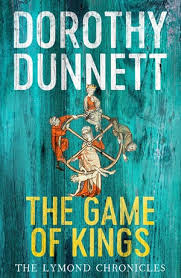 In the last couple of years the kind of writing I’ve been doing has, more and more, been book reviews. I like doing this: I enjoy the variety of books and the challenge of finding a way in, and while it can be frustrating trying to say something that I think is insightful and convincing in what is often a pretty tight word limit, that too has its gratifications. I am starting to feel, however, as if I am on kind of a plateau where this work is concerned. I could probably keep puttering along doing a regular string of reviews indefinitely now that I have proven myself reliable to a couple of editors at different places. Is this what I want? Is this enough? Looking over some of my old reviews for Open Letters Monthly, which were a minimum of 2000 words and often more, I envied their roominess, and even more, I envied the greater freedom I felt in the writing, which is partly from having the space but also from the confidence my co-editors gave me in my ideas. I would like the chance to stretch like that again–but who will give me that kind of room to play and both trust and help me to use it well? The closest I’ve come so far outside of OLM is my TLS piece on Dorothy Dunnett: I was and am so thrilled that the editor I proposed it to took me up on it. (I’m sorry that this, like most of my TLS reviews, is behind their paywall; if anyone ever really wants to read one of them but can’t subscribe, just let me know.) On my sabbatical, one thing I want to do is think about what other opportunities like that I might reach for.
 The other question is whether I want–or in some sense need–to stop working (only) in small increments and re-commit myself to a book project, and if so, of what kind? If an essay collection of the kind I have long been playing around with is a non-starter unless I self-publish it (which I might yet do), is there another kind of book I would feel was worth the long-term single-minded effort to produce? I have long objected to the academic fixation on “a book” as a necessary form. I suspect, now, that there is a similar bias in non-academic publishing, or at any rate that one way to get off the kind of plateau I am on is to publish a book of my own which might (at any rate, it seems to have, for others) give me increased visibility and credibility as a critic. I resist that implicit pressure too: I think it’s a good thing to have practising critics who are one step removed from the immediate business of publishing. How long, I wonder, or in what venues, do you have to write reviews before you are perceived as having any stature as a critic, though? How is that kind of professional credit or reputation earned? Do I care? I guess so, or I wouldn’t be wondering! But should I? Is it possible, even if it might in theory be desirable, not to eventually start thinking about going further, doing more, being more?
So: these are some of the things on my mind as 2018 yields to 2019! I’m not sure how I will answer these questions; indeed, one of my plans for January is precisely not to try to answer them but to reread my archive of essays and reviews (and blog posts) and try to understand and evaluate it–not with a judgmental eye on my past but with an eye out for what aspects of it I especially want to bring with me as I move ahead. I’m hoping I will learn something from that exercise, about both my writing and myself.
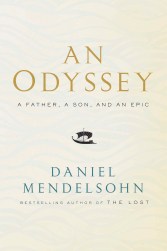 The best of my new reading this year was Daniel Mendelsohn’s


 2016 has been a somewhat unusual reading year for me because quite a few of the books I read were ‘assigned’ for reviews — or else were books I chose not entirely because I wanted to read them but because they looked like books I could pitch for reviews. Although at times I ended up feeling a bit stifled as a result, because it felt as if reading obligations were crowding out reading pleasures, at other times it meant a thrill of discovery, as a book or author I wouldn’t otherwise have read turned out to be wonderful. This was also a sign that as a writer I was being pushed in new directions and, as a result, learning new skills and finding (I hope) new strengths — about which, more in my next post on my year in writing!
 Book of the Year:
  Inspired in part by The Portrait of a Lady, I finally read Colm Tóibín’s
  Another author I discovered thanks to a prompt from someone else was David Constantine: Scott Esposito asked me to review
  Finally, Gerald Durrell’s
  I finished my first full viewing of both







 Novel Readings