This Month in My Sabbatical: Marching On!

I feel as if March was a reasonably productive month, sabbatical-wise. Let’s see:

Graduate Supervision and Advising: This is one part of my ‘regular’ workload that doesn’t go on hold during a sabbatical (or during maternity leaves, just by the way). This month I received thesis installments from all three of my continuing PhD students. I also met with two of them, one in person, one by Skype, to discuss the progress of their thesis writing and do some long-term planning. I alsomet with a former PhD student who withdrew from the program about 18 months ago but has been wondering about returning. I find this part of my job a disconcerting mix of pleasure and pain. These are all wonderful young women–smart, accomplished, hard-w0rking, and just plain nice. So the pleasure comes from spending time with them, learning from them, and doing my best to support and improve their research projects. The pain, of course, comes from worrying about their professional situations. I have been, I think, very clear and direct with them, encouraging them to prepare to be competitive for academic jobs but also to consider other options–I’ve sent them links to a range of online discussions about graduate school in the humanities (including Thomas Benton’s infamous Chronicle columns as well as this one from Hook & Eye) and to some of the many sites addressing PhDs about non-academic options. In one case I think there is actually no intent to pursue a tenure-track academic position anyway; in another, options will be limited by geography, which makes the likelihood of a tenure-track option just that much smaller. But in that case, presumably if there was a local opening you’d still need to be competitive to have a shot, and in the case of the other continuing student, Lennard Davis’s advice is probably good to share–except what he doesn’t say but should is that it is perfectly possible to work insanely hard to do all the things he says, and you still might not win the job lottery. He also seems a bit sanguine about the pace of academic publishing: it’s all very well to submit things, but from submission to acceptance can take months or years. The hardest conversation, from my point of view, was the one with the student considering coming back. “You escaped!” was most of what I really wanted to say to her, along with what I more or less said, which is that a PhD in English is no kind of safety or default option. It seems attractive (if, and that’s a BIG if) you can get steady funding, because it’s a known world with clear expectations, work you’ve already trained for, and genuine intellectual rewards. But you could well end up, four or five years from now, right back in the difficult situation of trying to figure out what else to do–only by then you’ve invested heavily in your specialized training, including comprehensive exams and the huge chore of writing a thesis–not to mention trying to publish and otherwise pump up your c.v. (These are the features of the PhD program that make it difficult for me to accept the whole “it doesn’t have to be seen just as preparation for academic positions” argument. Sure, it doesn’t have to be, but if it’s not, what is the point of this intensive training in narrowly specialized fields and the hard, hard work of thesis-writing following stringently academic models? Unless we introduce streamed PhD programs, these will remain key components, and streaming is impossible as long as luck remains such a big factor in who actually gets a shot at the tenure-track when it’s all done.) In the end, as I told her, it’s her choice, and I understand it’s a difficult one. All of this (plus reading La Vendee, which is the subject of one of the thesis chapters now in progress) took up a fair amount of time but also, almost more significantly, a lot of mental energy this month. And the next pieces of chapters are already landing in my in-box, so on it goes! I’d be even more busy with graduate students if I hadn’t refused to take on any new MA supervisions: this is thesis proposal / first chapter season, and then the writing heats up heading into May and June. Usually I have at least one, and some years I have had as many as three. When my sabbatical ends, I’ll come in as second reader on a couple of theses, I expect, but it is a relief not to be juggling these meetings and drafts at this point.

Soueif Project: I did some relevant reading, reviewed my research notes, and drafted some new pages for the academic paper I’m trying to produce on Ahdaf Soueif. Then, prompted by reflections about how dissatisfying this work felt when Soueif’s current speaking and writing is all directed towards the Egyptian Revolution, I took the advice of some of my commenters and let myself address that new context in a separate piece, “A Novelist in Tahrir Square,” which appears in this month’s Open Letters. I wanted to use the time and thought I’ve given to her fiction, connecting its ideas to the sense of broader changes in perception and understanding that accompanied the Revolution. It was very challenging distilling the overflowing details of the novels and of my own notes and ideas, but I felt pretty good about it when I finally sent in the revised version (I appreciate very much the input I got from the other editors at Open Letters–though of course any lingering stupidities or infelicities are all my fault). I hope this will have settled me down so that I can appreciate the academic project for what it is: as some of you said, no one piece needs to do or be everything.

Filing and Stuff: I did quite a bit more of my electronic file sorting. I do think it will be helpful when I begin to put my course materials together for 2011-12 that I have eliminated a lot of redundancy and put lecture notes, handouts, quiz questions, exams, and assignments into a system that doesn’t require me to remember in which year, or in which course, I did that group exercise on Felix Holt or whatever. The problem turns out to be courses that aren’t themselves really focused on a particular genre, period, or author. My materials for Close Reading, for instance, will stay all together for now: the lectures and worksheets and assignments I devised on Middlemarch for that course are so different from the ones I use in my Victorian novel courses that I think it’s easiest just to leave that as its own category.

Reading: I have blogged about most of my reading for this month–except The Transit of Venus, which I will write up later today, as the discussion gets underway at Slaves of Golconda. The highlight has definitely been Vera Brittain’s Testament of Youth. Most of my reading was not strictly work-related (though, as I’ve often noted here, you never can tell–wouldn’t an honours seminar on the ‘Somerville Novelists’ be cool, for instance?). The coming month will be different, though, as I’m moving on to another of my sabbatical plans, which is catching up on criticism in my field. In January I took some recent monographs out of the library, but I think this is not actually the best way to proceed: many scholarly books now are just so specialized that the rest of us don’t really need to know that much about their subject. The case has been made a few times recently, I think, that many books in the humanities are artificially inflated essays–the introduction is crucial for making the argument, but then the chapters offer variations on the theme rather than essential development or elaboration. I really do think this is true, and I wouldn’t exempt my own book–though I suppose it hardly counts as recent (© 1998). There’s nothing wrong with the chapters, but there’s really no necessity to my choice of novels to discuss in the context I’d established–they were the ones I wanted to discuss, as much as anything. In any case, I’ve decided to try a different strategy and last night I downloaded a whole bunch of book reviews (and a few articles, but mostly reviews) from the past several years of Victorian Studies–71 PDFs, in total. Going through the reviews will alert me to books I may wish to read, or at least leaf through, in full, but it will also give me a sense of what people are up to, what is trending, and so forth. (I’m sure there are people who do this kind of upkeep on an ongoing basis. Obviously, I’m not one of them! But maybe I’ll find a good routine for it in future–this is something that my iPad will be very helpful for, for instance, as I can load the PDFs into GoodReader and page through them at my leisure.)

Paperwork: Finally, this month I confirmed my intent (or, I should probably say, my hope!) to participate in a panel at the British Association of Victorian Studies in Birmingham the very first weekend in September. I can’t be absolutely sure I can pull this off until I find out what level of funding I can get, especially at the rate air fares are going up. I do think it would be a really good professional opportunity for me, though, not just through my own participation but for what I expect will be the quality of the rest of the conference, so I’m going to give it a good try. I have had some pretty bad conference experiences in recent years, so I’d love to go to one that might help me feel excited about “my” field again.  In aid of that, I’ve begun assembling the necessary paperwork to apply for a travel grant.

And so, onward, with all of these tasks and also with some pedagogical planning, as book orders for the fall are due soon, which means I have to commit myself to my detective fiction list as well as my first round of 19th-century novels, for the Austen to Dickens course. . . .
This Month in My Sabbatical: Stupid Short Month!

Where the dickens did February go? It only just started, and now it’s past. Sigh. I knew it was going to be a compromised month because in its infinite wisdom the Halifax Regional School Board decided to move the kids’ usual March break to February and extend it to two weeks, ostensibly to allow families to attend the Canada Winter Games, which Halifax hosted. I have yet to talk to one family that went to any of the sporting events: most seem to have left town, or just hunkered down–which is what we did. Between my sabbatical and my husband’s February break overlapping with the kids’ for one week, we managed to juggle things OK without packing them off to some kind of camp: this option is one great gift of the flexibility of academic schedules, but also as the kids get older (they are 9 and 13 now–which makes me … young! very young!) they are more self-sufficient about entertaining themselves. Still, I am cursed with a need for silence and extended contemplative periods without interruptions if I want to do serious reading or writing, so I knew that the second half of the month would not be my most productive time. What I hadn’t figured on was the four snow days in the first two weeks of the month, which meant that altogether they were in school (and thus I was “at work” in the usual way) only SIX DAYS in February.

Still, there was time to read and write, and even some time to think. When I fretted about how the break weeks were going to go, my daughter sagely recommended that I should “make plans for things that you can do, and then do them!” And that’s pretty much what I did: I adjusted my expectations and ambitions to focus on the projects that weren’t quite as intensive. Hence all the reading and blogging about crime fiction, which has actually brought me a lot closer to some decisions about how to mix up the second half of the reading list for my mystery fiction course. Right now, I’m thinking I’ll take out Rankin’s Knots and Crosses and probably a few short stories, and put in Ed McBain’s Cop Hater (to make the transition to contemporary police procedurals and a bridge to the Scandinavian writers explicitly influenced by him) and then either one of the Sjowall and Wahloo series or one of Henning Mankell’s. I still have more to read, but this direction makes sense to me, and I feel increasingly comfortable about being able to work with the material. I’m almost finished Mankell’s The Fifth Woman, and it really is quite a different kind of book than Faceless Killers. I don’t like the case much, and I still am finding the style dull, but it is just much richer and more interesting. That said, it’s also quite long, which may make it less than optimum for late in the term. I have a handful of other related titles to read but this seems like progress.

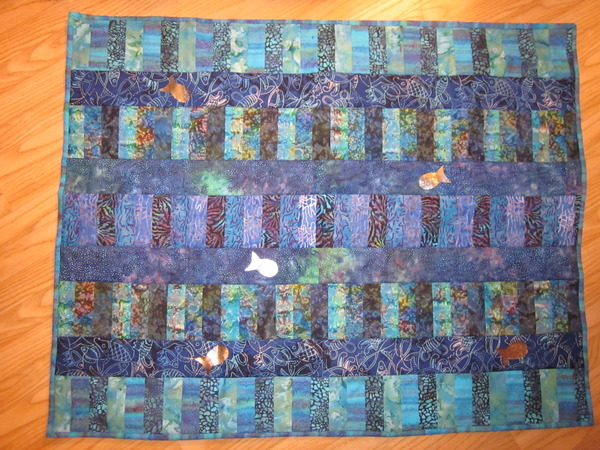
Let’s see: what else? I’ve done some other reading and blogging, and I’m working on a small piece for another site about one of my favorite books (the struggle I’m having being satisfied within the 400-word limit is a salutary one for me, as I often give my students very short limits on their papers and blithely tell them how much harder it is to make a few words densely meaningful than to ramble on for several pages). I have done more letters of reference (and another request for one came in this week). Yesterday I returned a 50-page thesis chapter on Frances Burney. I prepared some materials in support of my nomination for a teaching award. I explored funding options for a conference I hope to attend in early September–in the next week or so, I need to write up a proper proposal for my part in a panel as well as one for a workshop for graduate students, which will probably be something to do with academic blogging. I practised using my iPad. The keyboard still nearly defeats me. Maybe I could use little sticky things to give me some tactile indication of where the darned space bar is: about 75% of the time, if I try to actually ‘touch’-type, I put “n” in instead. It’s a long way from the IBM Selectric I learned on back in 1983 to a perfectly flat glass screen. I worked on soliciting and editing pieces for the March issue of Open Letters Monthly. That’s about it. Oh: I also finished my little ‘Blue Ocean’ quilt!

This Week in My Classes: Not with a bang but a whimper

My last class of the term was Monday afternoon–a review session for the final exam in my Brit Lit survey. I had hoped to go out on some kind of high note. Usually I plan a bit of a closing peroration about the value of literature and the intellectual rewards of our work over the term, and sometimes (ever the optimist) I bring a list of suggested further reading. Two things militated against rhetorical flourishes on Monday. First, I got sick–“just” a cold, but you try (I’m sure some of you have tried) being eloquent when you have a cold. (It turns out that even speaking as much as I did was a bad idea, since almost immediately after class the virus marched its happy way to my  larynx and took away my voice, which made my other major commitment for this week, participating in a PhD comprehensive exam, just that much more challenging!) The second factor was the format of the class: I like to do review in a Q&A format working off a handout of possible exam questions. I figure they should have their last chance to make me explain or clarify the things they feel uncertain about. But that means it wasn’t a very orderly session, and I didn’t have the physical or mental strength to reclaim the room at the end to make any kind of goodbye statement. Well, I’m sure they didn’t mind. I feel frustrated about this particular class because I really haven’t been able to judge their level of engagement as well as I usually can. One-on-one exchanges with students usually gave me a good feeling, but then the students who bother to talk to you one-on-one are a self-selecting group. I think I offered them quite a lot of good stuff this term (with the help, too, of some great guest lecturers) but I’m not sorry that someone else is taking this class next year: I’d like to rethink a few things about it before I do it again. I’m sorry to say that one of the things I’m reconsidering is the wiki project I designed. I was very enthusiastic about this assignment when I introduced it last year, and the results were pretty good despite some initial resistance and some lackluster participation from a few. I thought I could overcome the resistance better this time by talking about the value it had proved to have for last year’s group, and I made it worth more to motivate the slackers to do their share. Though some students really stepped up, overall the investment in the wikis seemed worse this year. Given how much effort it takes to set them up and administer them, I think I might not try again, or I might try such a thing only in a much smaller class where I can really play an active role in stimulating ideas and generating the kind of enthusiasm for results that is necessary to carry it along.

So now it’s all over but the marking: 23 essays for Mystery & Detective Fiction (they went through proposals with me already, so I’m expecting the final results to be quite good–plus in this group the level of engagement was conspicuously high), 60 or so for the survey (which thankfully I split with my TA), and then 60 or so exams, which don’t even get written until December 18. I can’t say I am looking forward to the next two weeks, but at the end of them lies my sabbatical, for which I have high hopes.

This Week in My Classes: Almost the End!

The last couple of weeks of term always feel like the mental (and organizational) equivalent of coasting hands-free down a steep hill on a bicycle while wearing an unzipped backpack spewing pieces of paper. Though to some extent the pressure of new content subsides (I have really only two more class hours in which I am responsible for lecturing or leading discussion), there are a lot of moving parts. This week these include practice exams and peer editing worksheets, for instance. Also, realizing the end is nigh, students suddenly start actually coming by my office hours for help with their papers, or (less endearingly) brandishing medical notes or sob stories of various kinds to explain their many absences or failure to meet course requirements along the way. Complaints about scheduled exam times are not uncommon, either. For the record, I too would be much happier not to have an exam at 8:30 a.m. on December 18!

Tomorrow, then, is my last real lecture in the British Literature After 1800 survey class. Last year, due to an oversight when I drew up the original syllabus (I forgot about Good Friday!) I had to cut my planned final lecture on Atonement and use that hour for our peer editing. This term I have that hour back, and I hope to use it not just to highlight and discuss some of the most interesting things we learn about Atonement from its concluding revelations but also to elicit some reflections on the course overall. After all, Atonement raises a number of questions about what we want or expect or need from art–particularly the novelist’s art, but also, along the way (with its invocations of Auden and Yeats, for instance) from poetry, and through The Trials of Arabella, perhaps from drama as well. Friday is peer editing, and Monday is exam review, and that’s a wrap. Well, except for the grading,  of course, which (between final essays and the late exam) will take me right through to Christmas, I expect. Sigh.

And tomorrow is also our last seminar discussion in Women and Detective Fiction, as Friday’s class is a student presentation and Monday I have set aside our class time for conferences on their final papers, as these are their major assignment of the term. They’ve done proposals already. We are working our way through Prime Suspect, and have been having some good discussions–with wide-ranging allusions back across our other texts, which I’m happy to see at the end of a course–especially about what many critics discuss as the dual crimes of so many women’s crime novels: there’s the specific crime under investigation, and there’s the broader ‘criminal’ context of what I suppose is easiest to label misogyny, though depending on the example, it may be something that seems to deserve a subtler name, like discrimination, or marginalization, or depreciation. Even going back to Miss Marple we find that one aspect of the case is the detective’s gender: for Miss Marple, there’s the way she is constantly underestimated by those around her because of her little old lady persona (as we discussed, this can be a strategic advantage for her, of course) and who also often solves a puzzle thanks to experience or expertise that is also gendered–domestic knowledge, for instance. So not all of the works we looked at take gender as a problem, but it’s always an issue, because it always does make a difference to who someone is and how they live in the world. I think the first novel we read this term that clearly stakes out territory as a feminist analysis of this context is Death in a Tenured Position, though An Unsuitable Job for a Woman is a tricky case (James disavowed any feminist intention, but the reasons for feminism are all over the place in the novel). With Prime Suspect, one of the questions we haven’t finished with is how far Tennison’s efforts are ‘feminist’ and how far they are self-interested, with sexism simply an obstacle she needs to overcome to succeed. (Is there a difference?)  Like Miss Marple, Tennison uses knowledge she has because of her sex (recognizing the labels on victims’ clothing, for instance), but she also makes an issue of looking closely at women’s faces: the initial misidentification of the victim is a result of the men on the case not differentiating between women, which is a theme continued through the series, including the incident we discussed yesterday in which Tennison is approached by a ‘john’ while interviewing two prostitutes. At key moments like this her proximity to the victims is played up and her power as a DCI shown to be unstable, or at least something that needs to be repeatedly asserted. One important sequence near the beginning has her standing next to a photo display of two murdered women, both blonde: in that shot, she can easily be seen as the next in line, a possibility recharged near the end when one of the forensic team holds up a hair he’s pulled from a crime scene and asks, “Your girl blonde?” Tomorrow we’ll look closely at the final interview with Moyra and then at Tennison’s triumphant celebration with “the lads” after the case is cracked. Many of the early scenes emphasize (through camera angles, for instance) her isolation from the team. At the end she has certainly won them over:  is that success? On what terms?

This Week in My Classes: Grafton, Paretsky, Auden, Heaney, Rushdie!

I think the only unifying theme to this week’s readings is (a slight variant on) Cliff Clavin’s immortal Jeopardy question.

And, speaking of Jeopardy, Monday’s class was our final session on Grafton’s ‘A’ is for Alibi, which means it was time for a student presentation. What is the connection? Thanks for asking! Years ago I decided I couldn’t allow students to drone on from notes for these events so I instituted some rules: no more than 10 minutes just talking at the class, and the rest of the time must be used for some balance of audio-visual materials, group discussion, and activities. Lots of different activities are allowed, from splinter groups to take up particular passages or problems, to hands-on activities, role-playing, or games. Probably because it’s the most fun, many groups choose to devise a game. My rule is that the game (or other activity) must be thematically relevant and somehow move us closer to understanding some substantial issue from the course or reading. Students usually prove ingenious at accomplishing these goals! With An Unsuitable Job for a Woman, for instance, we played Hangman (!): each challenge was a key quotation from the text, and if we killed off our victim we had to tackle a discussion question. Monday, then, we played Sue Grafton Jeopardy. Categories included ‘Biography,’ ‘Plot,’ ‘Characters,’ and ‘Weapons,’ which certainly tested our familiarity with the details of the novel,and the “daily doubles” were (again) discussion questions. They let me play! Often I am assigned an impartial role (I was the presiding judge, for instance, in “Law and Order: Gaudy Night edition”). But I’m sure my team would have won without my participation. (Hee.) It’s amusing to see how competitive everyone gets–and the discussion questions give us a chance to put that more trivial knowledge into wider contexts, so don’t worry: it’s not all about the cookies. Tomorrow we start work on Sara Paretsky’s Indemnity Only. I lectured on this novel in my detective fiction survey course last winter term (see here, for instance) but I think it will be especially productive to come to it right after Grafton, because the two novelists are often discussed together and they do, structurally, some similar things–revising hard-boiled detective conventions, for instance. But both the personalities and the styles of feminism are quite different in the books. The two series are still going strong and they have developed in quite different ways, too, though I think in ways that you can see from the beginning, Grafton more of a quirky individualist, Paretsky with a more ambitious social and political reach. My students responded quite positively to Kinsey Millhone, though not for the kinds of reasons I necessarily hope for (they found her very “relatable”).

I got sort of inspired, as I prepped for Monday’s session on Auden for my Brit Lit survey class, and thought that if I couldn’t necessarily bring my students to the cathedral, I could perhaps bring the cathedral to them. So I planned to take a few minutes of class to dim the lights and play them this clip (which sadly I’m not able to embed), even though “Funeral Blues” is not in our anthology. I think John Hannah does such a beautiful job, and of course the poem itself is beautiful, mournful, but unsentimental. That it’s a clip from a mainstream film seemed right for my purposes, which include making sure we think about literature as something not meant to be confined in homogenizing anthologies. Luckily, I’m teaching in a classroom that, though it’s terrible for discussion, is all set up with computers and projectors. Well, of course, when I got to class the computer in the podium was not on, and no combination of buttons on the console brought it to life–and the machine itself is completely secured inside various locked panels. So much for that. I may bring my laptop on Wednesday and try again (although it occurs to me that when I showed them a video clip, I also could not locate a volume control, so who knows how well they’d be able to hear it). Dear People Who Preach The Importance of Teaching With Technology: You have to support us well or we just can’t do it. A/V support is in a different building (ironic, since I’m teaching in the computer science building).

Ah well. Back to basics on Wednesday, then, with Seamus Heaney–though I’d like to be able to show some graphics of the bog people. I moved Heaney from the tutorial session into the lecture session because things went so splendidly last year when we talked about “Digging.” Probably it will fall completely flat as a result. And I moved Rushdie into the tutorial spot, thinking “The Prophet’s Hair” was just the kind of story to stimulate lively discussion around the seminar table.  (That, and the excellent colleague who lectured on Rushdie last year is on sabbatical this year and could not be corralled into making her guest appearance again.) We’ll see.

In lieu of the Auden clip, here’s Seamus Heaney reading “Digging” himself. I’m interested in the emphasis he places on the two instances of “my” in the last bit. I hadn’t heard it that way, in my mind.

Last Week and Next in My Classes: A Mess of Modern(ist)s

It’s that time of term now when every day is a struggle to triage the demands on my time and attention–and last week I got distracted by a personal (or at least not-quite-work-related)  issue and failed utterly to settle in to grading assignments as I really should have, meaning this coming week will need to be even more tightly packed. Unlike this time last term, though, I have lecture notes and class materials on hand already for the Brit Lit survey, which is a huge help, and I also have the luxury of not one but two guest lecturers. Last week my very able TA took over for the class on Joyce’s “The Dead,” and next week another very able Ph.D. student is dealing with T. S. Eliot. Not only is it a relief to let someone else take charge for a while, but I thoroughly enjoy being on the other side of the podium on these occasions. After all, it was the rewards of being a student that lured me down this path in the first place! And I’m never reminded of that more clearly then when I get the treat of learning from someone smart and passionate all over again. It’s interesting, too, to observe how other people manage both the material and the room.

My own lecture last week was on Virginia Woolf’s essay “Modern Fiction.” I surprised myself by how worked up I got about it! Not only are the governing ideas of the essay really helpful and important to thinking about how formal and aesthetic priorities shift between the Victorian and the modern period, but they also lay the groundwork for the analysis we’ll be doing of Atonement in just a few weeks. All that aside, though, it’s just such a strikingly intelligent, thought-provoking, and beautifully written essay. Observing to my class that it appeared in the TLS in 1919, the same year as Woolf’s great essay on George Eliot, I wondered aloud (as if any of them care about this–but then, you never know, maybe they lie awake at night wondering, too!) who writes for the TLS today in anything like such a memorable way, with that stunning combination of erudition and idiosyncrasy. Have the conditions of contemporary publishing and reviewing made such magisterial yet speculative writing inconceivable? “Modern Fiction” is, of course, the one with the marvellous image of the ‘luminous halo,’ part of Woolf’s protest against the dreary literal materialism of Wells, Bennett, and Galsworthy. “Life escapes,” she says of their writing; “Whether we call it life or spirit, truth or reality, this, the essential thing, has moved off, or on..”:

The writer seems constrained, not by his free will, but by some powerful tyrant who has him in thrall, to provide a plot, to provide comedy, tragedy, love interest, and an air of probability embalming the whole so impeccable that if all his figures were to come to life they would find themselves dressed down to the fashion of the hour. The tyrant is obeyed; the novel is done to a turn. But sometimes, more and more often as time goes by, we suspect a momentary doubt, a spasm of rebellion, as the pages fill themselves in the customary way. Is life like this? Must novels be like this?

“Must novels be like this?” That seems to me a great question to ask–of any fiction. What are its imperatives? What (perhaps as a result of those imperatives) are its limitations?

That’s actually sort of the angle from which we approached Friday’s reading, Katherine Mansfield’s “The Garden Party”–not a novel, of course, but an inquiry (or so I read it) into what fiction can or should do. There’s the party, with its beautiful flowers and other aesthetic preoccupations, and there’s the gritty reality of the accident and the “poky little holes” where the workers live. Laura’s moral confusion–can they, should they, continue with their party?–is diverted by the sight of her reflection in “her black hat trimmed with gold daisies,” which renders the painful idea of the dead man and his bereaved family “blurred, unreal, like a picture in the newspaper.” Later, having carried the basket of party leftovers to the widow, Laura stands over the body of the dead man, and says,”Forgive my hat.” But just when you might think she (and perhaps through her, the story overall) is turning against, apologizing for, choosing frivolous beauty over serious realism, we are confronted with her ecstasy at what she has seen: “It was simply marvellous,” she tells her brother about the sight of him. “Isn’t life . . . isn’t life—” Isn’t life what? She doesn’t say, and that sense of revelation inflected with uncertainty epitomizes something about at least one aspect of modernism. Whatever life is, it isn’t simple–or, to return to Woolf, it isn’t “a series of gig-lamps symmetrically arranged.”

Next week, before T. S. Eliot we have Yeats. And not to neglect my Women and Detective Fiction seminar, we have finished up our work on Death in a Tenured Position, and moved on to Sue Grafton’s ‘A’ is for Alibi. So those two, plus the remaining assignments, plus two promotion cases, plus revised MA and PhD thesis chapters hungry for comments, plus curriculum proposals to review, plus about eight remaining reference letters with deadlines coming up . . . But I’ve been through enough weeks like this before, now, to know that it all, somehow, always gets done.

This Week In My Classes: The Importance of Being Earnest

The thing is, though Wilde means it ironically and makes it seem very funny, I think it is important to be earnest–not all the time, maybe, but in essence, and certainly about important things. And the move from Gaskell’s Mary Barton to Wilde’s play in my survey class this week really made me feel that preference on my reading pulses. We spent Monday on the conclusion of Mary Barton. It’s heavy-handed, sentimental, didactic, and politically compromised, but for all its faults, it’s a rousing rejoinder to Wilde’s quip that “there is no such thing as a moral or an immoral book: books are well written or badly written, that is all.” That is not all.  Mary Barton really means what it says, and that sincerity makes it worth my time and argument–that, and its commitment to making people’s lives better by helping them understand each other better. It also finds beauty in acts of common human love and decency, and conveys the richness and variety of human lives even in the face of the most unrelenting circumstances. Wilde may have enjoyed the idea that you need a heart of stone to read the death of Little Nell without laughing, but I am wholly susceptible to scenes such as this one:

Barton grew worse; he had fallen across the bed, and his breathing seemed almost stopped; in vain did Mary strive to raise him, her sorrow and exhaustion had rendered her too weak.

So, on hearing some one enter the house-place below, she cried out for Jem to come to her assistance.

A step, which was not Jem’s, came up the stairs.

Mr Carson stood in the door-way. In one instant he comprehended the case.

He raised up the powerless frame; and the departing soul looked out of the eyes with gratitude. He held the dying man propped in his arms. John Barton folded his hands, as if in prayer.

“Pray for us,” said Mary, sinking on her knees, and forgetting in that solemn hour all that had divided her father and Mr Carson.

No other words would suggest themselves than some of those he had read only a few hours before:

“God be merciful to us sinners. – Forgive us our trespasses as we forgive them that trespass against us.”

And when the words were said, John Barton lay a corpse in Mr Carson’s arms.

So ended the tragedy of a poor man’s life. (from the Gaskell Web etext)

Gaskell really wants her writing to be a force for good in the world. That’s not every artist’s goal, and it is a risky one. But despite everything, I am moved by this tableau of the murderer dying in the arms of his victim’s father, both desperate to salvage their humanity from the wrecks of their lives. And in fact, maybe I am moved, not despite everything, but because of everything Gaskell has done to prepare us for this moment. As some parts of Mary Barton show, and as is still better demonstrated by her later novels, Gaskell is capable of much greater restraint, which is what we often take as a key element of ‘artistry,’ but at this moment she  throws that kind of aesthetic caution to the winds: it’s all about the pathos, the regret, the forgiveness. You’re in or you’re out, at this point in the novel. Me, I’m in.

With The Importance of Being Earnest, in contrast, I tend to side with Shaw, who reviewed it in the Saturday Review in 1895:

I cannot say that I greatly cared for The Importance of Being Earnest. It amused me, of course; but unless comedy touches me as well as amuses me, it leaves me with a sense of having wasted my evening. I go to the theatre to be moved to laughter, not to be tickled or bustled into it; and that is why, though I laugh as much as anybody at a farcical comedy, I am out of spirits before the end of the second act, and out of temper before the end of the third . . .

Still, despite resenting my amusement just a little, I did enjoy (and I think the class enjoyed), the clips from the brilliant film starring Edith Evans as Lady Bracknell, who delivers this famous line better than anybody:

This Week in My Classes: Worlds in Crisis–Mary Barton and P. D. James

After last week’s big effort towards launching the students in my survey class on their research assignments, we spent our first two classes this week with Mary Barton: no PowerPoint, no overheads, just me, them, and the novel. My impression (though it is necessarily impressionistic, since I can’t even really focus on most of their faces in our particular room) is that they are finding the reading a bit of a slog right now. This is not really surprising, since for many of them this is their first experience reading Victorian fiction (probably, any long fiction, though since many of them are English majors, I shouldn’t assume the worst, I suppose). And even those who have ventured into the nineteenth century before are more likely to have read Austen or the Brontes than any Gaskell, much less Gaskell at her most sentimental and didactic. Wait–that’s probably Ruth, so they should consider themselves lucky to be reading a novel in which there is a lot of action, including a fire (with a daring rescue), a murder, a boat chase, a trial scene, and a touching deathbed reconciliation. In Ruth, as I actually told them yesterday, the basic story is that Ruth is seduced and then spends 400 pages being very, very sorry. On Monday I focused on Gaskell’s strategies for softening her readers up to the working-class families who make up the large majority of the novel’s population, only, once she’s made us all cozy with them, to start bumping them off in large numbers. The string of deaths in the first 90 pages of the novel really is quite shocking, which of course is the point: we need to ask, as the characters themselves as, why their lives are so precarious. We looked also at John Barton and the process by which he becomes a radical, a Chartist, and eventually a [spoiler alert!] murderer. Gaskell is careful to show the social and economic causes of his alienation, hostility, and violence: his Chartism is not the result of any moral failing on his part, but of his desperate circumstances, and, most important to her analysis, of his perception (largely justified) that those around him with power and money do not listen or care. Communication between the classes: this is, essentially, Gaskell’s prescription for solving the ‘condition of England’ problem, and of course her novel is explicitly offered as an aid to that conciliatory process. Mary Barton is another example, that is, of a novel in which the characters have difficulties that would be solved if only they had the opportunity to read the novel they inhabit. (Vanity Fair is another one, or so I have argued.) Is there a name for this kind of self-referential intertextuality?

If Mary Barton were called John Barton, as Gaskell once planned, then it would be a more radical book than it is, but in Mary Barton John’s story is–not sidelined, exactly, but nearly overwhelmed by Mary’s story, which is in some ways a predictable love triangle. Yesterday we (well, I–Monday, I hope to really bring them into the discussion, since by then they should have read the whole book!) focused on how that story, and women more generally, fit into the novel’s larger interests. I looked especially at Mary’s Aunt Esther, who is lured by her experience of financial independence (she worked in a factory) to desire more social mobility than the novel sees fit: she eventually falls for a rich man and then becomes a fallen woman, and she wanders the margins of the town, and the novel, as a cautionary tale for Mary. Tomorrow we will spend our tutorials on the ever-exciting topic of proper MLA-style citations, then Monday we wrap up our class work on the novel with, I hope, some vigorous debate about the novel’s proposed solution to its problems.

In Women and Detective Fiction we’re reading P. D. James’s An Unsuitable Job for a Woman. I very much admire this novel, which exemplifies James’s desire to use the structure of the mystery novel as a frame on which to hang (an unfortunate verb, in this particular case!) issues of character and theme. I was rereading its conclusion today soon after reading this eloquent and depressing post at Tales from the Reading Room about the recent catastrophic budget cuts being proposed for higher education in the UK, which include potentially reductions of as much as 100% for humanities education. This juxtaposition gave unusual resonance to the confrontation between Cordelia and Sir Ronald Callender, who has murdered his own son in order to protect the funding for his laboratory. In response to Cordelia’s appeal to love, Callender makes an overtly utilitarian argument for his crime:

[D]on’t say that what I’m doing here isn’t worth one single human life. . . The greatest good of the greatest number. Beside that fundamental declaration of common sense all other philosophies are metaphysical abstractions.

Callender is a ‘conservationist,’ that is, an environmentalist. So in some sense he is pursuing the ‘greatest good of the greatest number.’ But Cordelia confronts his narrow definition of ‘good’ with an appeal to humanity (‘what is the use of making the world more beautiful if the people who live in it can’t love one another?’), and it’s surely no accident that the individual victim here is a humanist and that one of the battlegrounds is Cambridge, which Cordelia idealizes as “ordered beauty for the service of learning” before she realizes that its scholarly pursuits have at least two faces: in Bunyan’s words, which she quotes, “then I saw that there was a way to hell even from the gates of heaven.” That James takes Cordelia’s side is suggested by Sir Ronald’s role as the villain of the piece. He has created his own Frankenstein’s monster in the person of his lab assistant, Lunn, whose subservience to his scientific master nearly leads to Cordelia’s death. In a genre that typically rewards objectivity and detachment, Cordelia (though just barely) survives and succeeds because of her attachments and loyalties, her refusal to allow love to be devalued, even after death. Though in the end she causes at least one, arguably two, deaths, and lies even to the point of becoming an accomplice to a murder, Dalgliesh concludes that “she’s absolutely without guilt.” Using the skeletal apparatus of a crime novel, then, James has in fact written a novel about values, and in particular about the conflict between two visions of learning, one coldly scientific and the other youthful, naive, idealistic, but ultimately worth fighting for–a novel, as it turns out, well suited for the current moment.

This Week In My Classes: Gaskell, Sayers, and Literary Research

It was a short week, thanks to the Thanksgiving holiday–so why do I feel so flattened? It has something to do with the 6-8 hours I put in just trying to decide what to include in and how to present an introduction to literary research for my survey class. There are just so many things I want to say to them, to help them with, and to warn them against! They are doing a very particular kind of assignment that mimics the process of doing the research for a critical essay but with several specific steps that are really about learning to use (and discriminate among) the overwhelming array of potential sources of information now available. Having now heard not one but two presentations in my fourth-year seminar that relied heavily and unapologetically on Wikipedia, I’m more determined than ever, not to stop students from using Wikipedia (I use it myself, after all), but to make sure they start there, not stop there, and that they know why.

Anyway, I feel as if I hadn’t quite got to the point I wanted with the presentation, but here it is–without, of course, my running commentary including qualifications, elaborations, and acknowledgments of points of controversy. What I was most interested in accomplishing was getting them away from the idea that research means looking up ‘the right answer,’ and impressing upon them that research is not a linear journey from one question to one result but a kind of spiralling process. I tried to find the graphics that best represented the way I hoped they conceptualize their task. If anything strikes you as a major howler, do let me know, as it seems fairly likely I’ll get another chance at this course next year.

My other task for the survey class this week was setting up our study of Elizabeth Gaskell’s Mary Barton (which is what their research assignment focuses on–I used Hard Times for my examples as it seemed close enough to be useful and suggestive). I’m disappointed now in the way I did that, actually. The class size and room, along with the particular goals of the course, which make me feel pressured to ‘cover’ things, made it seem right to provide a lot of general context on the 19th-century novel and social problem fiction. But I used to do a lot more interactive teaching even in the early sessions on novels, and I think I’d like to go back to that even if it’s hard to pull off in a tiered lecture hall. While it’s true they don’t usually know much, if any, of that general context, it will probably mean more to them if I let the explanations arise more organically from developments in the novel itself and make sure they are getting involved sooner rather than later.

In Mystery and Detective Fiction, we wrapped up Gaudy Night. Here too I felt a bit disappointed. Maybe I’m losing my teaching mojo! It’s true that I haven’t been nominated for a teaching award since 2007 and my evaluations are not as consistently high as they once were… But actually in this particular example my disappointment was that the class just didn’t seem very excited about the novel, and since it is one of my very (very, very!) favourite books, I felt I had somehow failed it. Or them. Maybe that was the problem, though I tried not to make it too obvious that it is one of my very (very, very!) favourites but to entertain arguments on both sides about how effectively it achieves Sayers’s aims of integrating the ‘novel of manners’ with the detective story, or how intelligently Sayers unifies her characters and situations with the novel’s themes, including women and academic life and the difficulty of balancing the demands of the head with the desires of the heart. It’s funny how it is sometimes much easier to teach things you aren’t very invested in personally!

And now, home for the weekend. In my bag: Mary Barton and An Unsuitable Job for a Woman, for work; Elif Batuman’s The Possessed, for fun (and a little for ideas, as I keep turning around and around in my head different ideas for writing projects of my own); Brenda Maddox’s George Eliot in Love, for a review I must finish this weekend (!); and an advance copy of Jill Paton Walsh’s latest Peter Wimsey concoction–maybe, also, for a review, but also just because.

This Week in My Classes: Head and Heart

Both of my class readings for today focus on conflicts–real, assumed, or perceived–between the demands of the head and the demands of the heart.

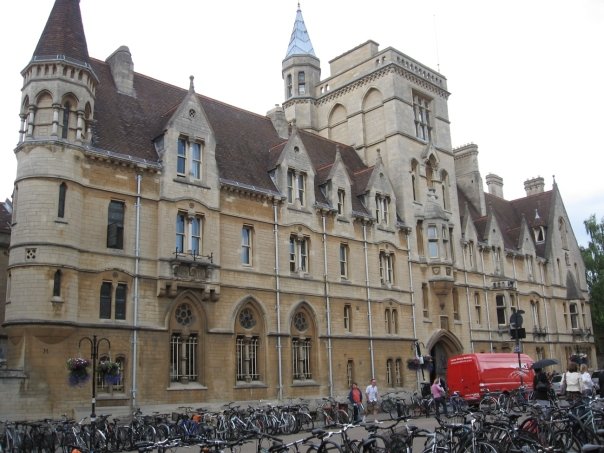
Balliol College, Oxford

In Women and Detective Fiction, it was our first session on Dorothy Sayers’s Gaudy Night. The novel opens as Harriet Vane revisits Oxford for her college’s Gaudy celebrations. She is pleased to be leaving behind her, as she thinks, the emotional disruptions of her life in London, including her troubled past as a murder suspect and her current relationship with Lord Peter Wimsey. Oxford, to her, represents at this point an oasis of order and clarity:

To be true to one’s calling, whatever follies on might commit in one’s emotional life, that was the way to spiritual peace. How could one feel fettered, being the freeman of so great a city, or humiliated, where all enjoyed equal citizenship? . . . In the glamour of one Gaudy night, one could realize that one was a citizen of no mean city. It might be an old and an old-fashioned city, with inconvenient buildings and narrow streets where the passers-by squabbled foolishly about the right of way; but her foundations were set upon the holy hills and her spires touched heaven.

This “exalted mood” does not altogether survive the ensuing encounters with old classmates or former teachers, but even as clues emerge that beneath its beautiful surface Oxford conceals its share of ugly truths and dark secrets, Harriet continues to be compelled by the ideal of a place in which the highest value is placed on “integrity of the mind.” Writing about Gaudy Night, Sayers recalls having been asked by her own Oxford college to give a toast at the Gaudy dinner:

I had to ask myself exactly what it was for which one had to thank a university education, and came to the conclusion that it was, before everything, that habit of intellectual integrity which is at once the foundation and the result of scholarship.

Much of the novel explores the implications of this commitment, and whether the intellectual life can, or should, be isolated from the life of the heart. For Sayers, the technical challenge was to integrate her interest in this problem, and in the characters she had invented who were living out its implications, with her chosen fictional form:

The new and exciting thing was to bring the love-problem into line with the detective-problem, so that the same key should unlock both at once. I had Harriet, feeling herself for the first time one equal ground with Peter, seeing the attraction of the intellectual life a means of freeing herself from the emotional obsession he had produced in her, and yet seeing (as she supposed) that the celibate intellectual life rendered one liable to insanity in its ugliest form. I had Peter, seeing the truth from the start and perfectly conscious that he had only to leave her under her misapprehension [about the causes of that insanity] to establish his emotional ascendancy over her. . . . Peter’s honesty of mind had to tell him that if Harriet accepted him under any sort of misapprehension, or through any insincerity on his part, they would be plunged into a situation even more false and intolerable than that from which they started. She must come to him as a free agent, if she came at all . . .

Sayers explains in the same essay that her creation of Harriet as a strong, deep, and independent woman necessitated her reinvention of Peter: she had to rewrite him from a caricature to a human being so that a relationship between the two was conceivable. More than that, though, and I think this is at the heart of why so many women writers and critics cherish this novel, she would not compromise Harriet’s autonomy in the interests of romance, so she devotes this entire novel to the struggle of both Peter and Harriet to find the necessary balance or equipoise in their relationship that they can achieve both love and respect, can satisfy both head and heart.

In British Literature Since 1800 we are spending this afternoon’s class on Elizabeth Barrett Browning’s Aurora Leigh. I am fortunate to have as a colleague one of the leading experts on EBB, Marjorie Stone, who recently co-edited the definitive annotated edition of EBB’s poetry for Pickering and Chatto. Marjorie has kindly agreed to do a guest lecture. I’m always very excited when someone else lectures in my class. I thoroughly enjoy lecturing myself, but I love feeling like a student again–that experience, after all, was what sent me down this path in the first place! It’s wonderful to hear someone speak with passion and wisdom about a subject really dear to their heart. We are reading just the excerpts in the Norton Anthology: the bits from Book I on Aurora’s education, from Book II in which she faces off against her conventional cousin Romney, and then from Book V in which she (meaning both Aurora and EBB) redefines the epic form for the modern age, and for the woman poet:

Never flinch,
But still, unscrupulously epic, catch
Upon the burning lava of a song,
The full-veined, heaving, double-breasted Age:
That, when the next shall come, the men of that
May touch the impress with reverent hand, and say
‘Behold,–behold the paps we all have sucked!
This bosom seems to beat still, or at least
It sets ours beating: this is living art,
Which thus presents, and thus records true life.

It’s an exciting moment, but one that Aurora has earned (or so she thinks) by choosing her head over her heart, rejecting Romney’s proposal that she give up her poetic ambitions to become his helpmate in social reform: “If your sex is weak for art,” he says,

(And I, who said so, did but honour you
By using truth in courtship), it is strong
For life and duty.

Romney’s assumptions about women reflect Victorian commonplaces about the division of the world into separate spheres of natural aptitude and interest. His assumptions about poetry are also representative, in this case of the Utilitarian prejudice against such frivolous pastimes (“men, and still less women, happily, / Scarce need be poets”). Aurora’s rebuttal is one of many great passages in the verse-novel that reject such polarizing binaries, not just between men and women or poetry and useful work, but between the real and the actual, the spiritual and the material, the individual and the social:

I hold you will not compass your poor ends
Of barley-feeding and material ease,
Without a poet’s individualism
To work your universal. It takes a soul
To move a body: it takes a high-souled man,
To move the masses, even to a cleaner stye:
It takes the ideal, to blow a hair’s-breadth off
The dust of the actual.

Just as Romney must learn to value the heart (or poetry, or the soul, or the spiritual), Aurora must let go of her own absolutism and make manifest the value of poetry as a force for social good, as well as reconciling her head and her heart by accepting the value of love. By the end of Aurora Leigh, they have achieved a rare equality of both passion and commitment, which they celebrate in some wonderfully erotic, ecstatic poetry that (sadly) is not included in the Norton excerpts:

But oh, the night! oh, bitter-sweet! oh sweet!
O dark, O moon and stars, O ecstasy
Of darkness! O great mystery of love,
In which absorbed, loss, anguish, treason’s self
Enlarges rapture, – as a pebble dropt
In some full wine-cup over-brims the wine!
While we too sate together, leaned that night
So close my very garments crept and thrilled
With strange electric life, and both my cheeks
Grew red, then pale, with touches from my hair
In which his breath was. . . .

Sure, it’s perhaps a bit excessive, but isn’t rapture precisely excessive? And even Jane Eyre doesn’t bring her physical response to Rochester to such sensory life.