This Week in My Classes: Nancy Drew and Tennyson

That’s perhaps the oddest couple I’ve ever put together in the title of a post! Yet both in their own wildly disparate ways provided plenty of material for my Monday classes.

I was nervous heading into our first session on Nancy Drew in Women and Detective Fiction that The Secret of the Old Clock would not bear up well under close examination. Luckily, we didn’t head into it cold but have spent a couple of weeks already setting up some of the major themes and tropes we’ll be following as we move along through the course, from the relationship of women to the law and authority to ways women detectives and their creators manipulate conventional expectations about gender to set up their cases and provide ingenious solutions–Miss Marple, for instance, sometimes finds it advantageous to be underestimated, while her expertise in domestic ‘trivia’ repeatedly turns out to be as useful as her insights into human nature.

We started off our discussion today by reading the first two pages of Chapter 1 aloud and then going over all the information we get about Nancy from them. This exercise, which I settled on as my opening gambit partly to be sure we did focus on details and not skip too merrily along, proved more fruitful than I’d hoped, actually. We talked about her appearance, her mobility (specifically her car), her relationship to her “Dad” (who relies on her “intuition”), her quick response to a crisis, her apparent expertise as a paramedic (is there any situation she can’t handle?), her rapid adoption into the homes of strangers who immediately become her intimate friends and confidantes. We moved on to discuss the case: I usually suggest looking at the central case in a detective novel as symptomatic of what needs to be fixed in the imagined world we’re in, and then the investigation helps us see what qualities or elements are needed to resolve it. In this case, right away we are focused on problems of inheritance and the damage done by depriving good people (in this novel, particularly nice women) of the resources they need to sustain their homes and families. We talked about Nancy’s strengths–her father’s good connections, her own unexplained freedom from other duties or obligations (in the first version of the novel, she was only sixteen, so at least at her revised age of eighteen there’s no expectation that she’d be in school), her resolute niceness.

In preparation for this part of the course I read around in some of the critical literature on the Nancy Drew series; among the most interesting explanations I read of her strong and lasting appeal is that she exists in a paradoxical place, in between childhood and adulthood, enjoying the perks of both but not the drawbacks, just as she both is and is not a rebel against conventional expectations. To me she seems like a child’s idea of what it is like to be grown up, something I see in my daughter’s pretend play in which she mimics things like going to work or having children. In the imagined version, it’s all about being the one who is in control, who copes, who solves problems–with no suggestion that the control may be hard won, or temporary, that the coping sometimes takes more effort than collapsing would, that some problems are not, after all, within our power to fix. Having begun thinking through the ways in which Nancy is exemplary and inspiring, we also considered the limits on her “universal” appeal. She’s not necessarily someone every girl can “relate” to, representing as she does quite a particular ideal of the All-American girl. I think it was a good discussion overall. One additional benefit of bringing Nancy Drew into the syllabus seems to have been that she has tempted a few students to speak up who have been pretty quiet so far! I hope they keep up this momentum.
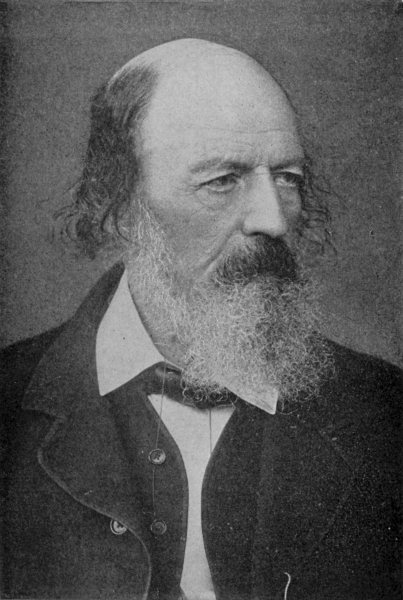
In British Literature Since 1800 it was time for an introduction to the Victorian age (yes, we’re done with the Romantics already–shocking! but in about 10 weeks we have to have made it to Ian McEwan, so onward we go, relentlessly). Just as Wordsworth does nicely for setting up Romanticism, so Tennyson–who takes up his mantle as Poet Laureate, after all–does fine as our lead-in to Victorianism. I proferred some generalizations about things like an Age of Transition, faith and doubt, science and nature, the importance of the novel, and the role of sage writing. That was fine, I think, but what really got me worked up today was trying to sell them on the importance of prosody. There’s the sort of technical issue that they are being trained to write analytically about literature and that’s a hard thing to do about poetry without the vocabulary and a sense of what form is and how meter works. But more important, because it motivates that kind of analysis, is just grasping how fundamental rhythm is to our experience of poetry–to the sound and feeling of it. We spent last Friday’s tutorial on this and it turned out (again!) that almost none of them had any idea how to scan a line, or even that there was such an exercise as scanning a line. Then, in my group at least (and yes, NYT, there are ‘actual’ professors who lead tutorials–and mark papers, too!) they tried to get the hang of it and mostly got confused–so much so that I overhead one group arguing strenuously about how to pronounce ‘hamburger’ (I start them out with ordinary words and just ask them to mark in the stressed and unstressed syllables). I’m pretty sure not one of them would go into Wendy’s and ask for a hamBURger, or a hamburGER. Anyway, I knew they were (are) going to need more than that one session, but I also can’t take a great deal of lecture time on it, and besides, it’s the sort of thing you have to learn by actually doing. So today was all about dramatizing the sound and rhythm and demonstrating how great poets work with and against their basic meter to make things exciting. I had collected a bunch of good examples but it occured to me as I reviewed ‘The Passing of Arthur’ that I might be able to make them hear what I meant if I read this passage with all the feeling I could muster, and so that’s what I did:

Nor ever yet had Arthur fought a fight
Like this last, dim, weird battle of the west.
A deathwhite mist slept over sand and sea:
Whereof the chill, to him who breathed it, drew
Down with his blood, till all his heart was cold
With formless fear; and even on Arthur fell
Confusion, since he saw not whom he fought.
For friend and foe were shadows in the mist,
And friend slew friend not knowing whom he slew;
And some had visions out of golden youth,
And some beheld the faces of old ghosts
Look in upon the battle; and in the mist
Was many a noble deed, many a base,
And chance and craft and strength in single fights,
And ever and anon with host to host
Shocks, and the splintering spear, the hard mail hewn,
Shield-breakings, and the clash of brands, the crash
Of battleaxes on shattered helms, and shrieks
After the Christ, of those who falling down
Looked up for heaven, and only saw the mist;
And shouts of heathen and the traitor knights,
Oaths, insult, filth, and monstrous blasphemies,
Sweat, writhings, anguish, labouring of the lungs
In that close mist, and cryings for the light,
Moans of the dying, and voices of the dead.

Try reading it for yourself, as if you really, really mean it. Tennyson may be a better poet than he is a thinker, but OMG, when he’s a good poet, he’s very, very good, and I think these lines are just marvellous. There’s hardly a line in there, either, that scans as ‘straight’ iambic pentameter. Then after going over a few more simple examples, I went through a few lines of Donne’s Holy Sonnet ‘Death, be not proud’:

Death, be not proud, though some have called thee
Mighty and dreadful, for thou art not so;

and
One short sleep past, we wake eternally,
And death shall be no more; Death, thou shalt die.
I’m not a wildly outgoing person by nature, so my willingness to make a fool of myself in class amazes and amuses me sometimes. There I was striding around declaiming “For THOU ART NOT SO! Death! Thou! Shalt! Die!” and asking them “So? Who’s the boss of Death here? Who’s the boss of the meter? Who’s the boss of the sonnet form?” I’m sure they were mostly wondering “Who’s the crazy lady at the front of the room?” but if just a couple of them were thinking “OK, wow, poetry really is amazing,” then it was worth it. And really, if you can’t get excited about “Death, be not proud,” you shouldn’t be an English major in the first place.
As for the rest of the week, it’s Nancy Drew again on Wednesday in Women and Detective Fiction, with a student presentation on Friday, and in the survey class it’s Browning and then Arnold.

This Week in My Classes: Agatha Christie and a Trio of Lyrical Treats

Actually, the trio of lyrical treats identified in Dorothy Parker’s delightful “Pig’s-Eye View of Literature” are Byron and Shelley and Keats, while this week in British Literature Since 1800 we’re doing Coleridge and Shelley and Keats. But Coleridge can be lyrical too, and ‘The Rime of the Ancient Mariner’ is something of a treat, though of just what kind I’m never sure. We’re still very much in the warming-up phase in this class. Building any momentum is significantly hampered, I find, by the long course add-drop period (two weeks in which at any time new faces may appear while ones you were just starting to attach names to vanish without a trace). The system is clearly designed to make things easier for the students, who can take their sweet time sorting out their courses; the pedagogical inconvenience and paperwork generated for us as we try to keep our class lists up to date and initiate the dribble of new people into the class expectations and materials don’t seem to matter to the people in charge. Yes, this is making me cranky: I’ve just updated my class lists for about the 12th time, then had to manually add and remove students from Blackboard and PBWorks in the hopes that the newbies will show enough initiative to check out all the information provided on these sites rather than just showing up this afternoon and asking “did I miss anything?” In an entire week of classes? YES! Of course you missed something. (Yes, I know the Tom Wayman poem about this.) Anyway, it’s routine business at the start of every term, but it’s absurdly inefficient.

What they missed, if it’s English 2002 they are just joining, is our introduction to the course, first of all, in which I outline not just the schedule and requirements and so forth, but also the principles and motivations behind them and the objectives I hope they’ll meet. Next was our introduction to Romanticism, via Wordsworth, and a training session on using PBWorks. I raised the stakes a bit this year to motivate better participation in the wiki projects. Last year’s results were OK, but the weak spot was the concept of “gardening,” signing in a couple of times a week just to tweak the site and make it a little better. With the project overall worth a bit more of their final grade, I hope they’ll take this responsibility more seriously. It’s not a big time commitment, but as everyone who works online knows, a few minutes every so often can make a big difference. Last year I waited for weeks to see if someone would correct a main headline that read “Woodsworth” (someone eventually did, but not until I dropped a big hint in class about embarrassing typos). This week we continue our discussion of Romanticism but complicating and even undermining some of the generalizations I offered about it as a chronological period and, more importantly, as a literary movement. Coleridge’s preoccupations are not the same as Wordsworth’s, and Keats and Shelley are different again, from the ‘first generation’ as well as from each other. I always feel that Romantic poetry is a like Impressionist art, in that it is easy to like it in a casual sort of way: the surface features are pretty and undemanding, and the first layer of ideas is easily assimilated. But both get more interesting in context, as you get a sense of what the artists were working against and for. With Wordsworth in particular, that’s what I tried to bring out in the short time I had for him: I made a pitch for how it is possible to read “I wandered lonely as a cloud,” which is about as simple and child-like a poem as you could dream up, as revolutionary precisely in its simplicity and child-like attitude, as well as its invocation of memory and nature as balms for the troubled modern soul. OK, it’s maybe a bit of a stretch, but if they can come to see daffodils as aesthetically subversive, they are on their way to appreciating some of the ways a text achieves its significance–and to realizing that its significance will not always be obvious but will often require some thought and some research to understand.

In Women and Detective Fiction, we warmed up last week with samples from some ‘classic’ authors, to get a sense of the history and conventions of the genre to which our women writers will provide a counter-tradition (or, as I suggested today, a counter-point tradition, as the intersections are many). So we read Poe’s “The Purloined Letter,” “A Scandal in Bohemia,” and Hammett’s “The House on Turk Street.” Then on Friday we looked at a couple of early examples of women writing about crime and detection, with Susan Glaspell’s great story “A Jury of Her Peers” and Mary Wilkins Freeman’s “The Long Arm.” Both press us to consider the adequacy of conventional ideas about both crime and justice; in both cases, people’s gendered expectations interfere with solving the crime. This week it’s Agatha Christie, with a selection of Miss Marple stories, and then next week we’re on to Nancy Drew. In this class the material is quite fun and the group is highly self-selecting, so in some respects things are bound to go along smoothly. The challenge becomes making sure we take the material seriously ourselves. I’m a little worried that two classes on Miss Marple is too much: it’s tricky scheduling things so that the pace of topics is reasonable, especially when the readings aren’t especially deep or complex. (There’s a reason, as others have noted as well, that close reading tactics become dominant just when there’s a significant body of literature that is quite difficult to understand at first glance, and also why certain writers are especially ‘teachable’ using these methods–Donne, say, rather than a more literal poet like Dryden, or Hammett rather than Christie, to use a more immediately relevant example.)

This Week in My Classes: Let the Wild Rumpus Start!

Well, it won’t be wild today, I don’t expect, but my teaching term does begin, with the first meeting of my seminar on Women and Detective Fiction. I’ve always really enjoyed teaching this seminar in the past: it usually attracts a good group of students, the readings are varied and, I think, productively juxtaposed, and the discussion as a result tends to be lively and interesting. Plus who wouldn’t like a reason to read Gaudy Night and call it working? Today is just administrative stuff, mostly, though I’ll make a few remarks about my choice of readings and some of the themes that I expect we’ll concentrate as we go forward. Then we’ll discuss the course requirements and expectations, and then sign everyone up for question sets and seminar presentations. Looking at my incredibly detailed syllabus, I am amused to remember the one page mimeographed sheets that served this purpose when I was an undergraduate. Now, if it’s not in the syllabus, good luck insisting on it! Today, students expect a very literal and precise explanation of what they are supposed to do and how they will be evaluated for their efforts. There are some good reasons for this, including transparency (it seems only fair that they should know what they are supposed to do and how they will be evaluated for it!) but at the same time the trend towards hand-holding does rather sap the student experience of what I guess I’d consider adult expectations. I worry, too, that my detailed handouts (and Blackboard sites) sometimes backfire, in that students don’t even try to infer anything or figure anything out for themselves (looking up regulations, for instance)–and then there are the students who blithely ignore all the support materials and email or corner you with tediously repetitious questions about when things are due, what the policy is on late papers, and so forth. I no longer answer these questions, except with a smiling “You’ll find all that information and more in your syllabus.” It’s that whole teach a man to fish philosophy (imagine, then, how it peeved me to see on one of my course evaluations a year or so ago, “She’s not very helpful: whenever I asked her anything, she just said “look in the syllabus”…).

Anyway, these petty annoyances aside, I’m glad to be heading into the classroom, and I expect to post regularly about it as I have been doing since Fall 2007! I still find the expectation (mine, not anybody else’s) that I’ll keep up the series a helpful kind of discipline, and I’m still frequently surprised at what I discover I have to say about the class meetings, even if it’s only some idea about what not to do next time when I cover the same material. This term is all repeat teaching, actually, except that I always tinker a little with the reading lists from year to year. In the British Literature Since 1800 survey course, for instance, I’ve put in Gaskell’s Mary Barton instead of Great Expectations, which mixes things up a bit. Much as I love Great Expectations, brilliant as it is, and sorry as I am not to be doing any Dickens, as a result, in the course–I just couldn’t go through it one more time quite so soon! And Mary Barton, while not nearly as brilliant, is in lots of ways just as interesting and representative of important things about Victorian literature. Plus it has a boat chase. I love the boat chase. In Women and Detective Fiction I didn’t succeed in really revamping the list, but then I’ve always been mostly very happy with it. But I did eventually add in Nancy Drew. And did I mention that I get to reread Gaudy Night? To my annoyance, Death in a Tenured Position (which nicely rounds out the academic focus of Gaudy Night and An Unsuitable Job for a Woman with a more contemporary perspective on feminism and universities) went out of print right after I placed my book order, but happily our bookstore has been able to round up nearly enough copies for everyone, and if the students can show a little extra initiative, they will be able to find more themselves. I didn’t want to let this book go, not just because of the academic angle (and the importance of poetry in it, which makes another interesting link to Gaudy Night) but because I definitely wanted to talk about Carolyn Heilbrun (who has also written some of the best essays around on women and detective fiction). I could have picked a different one of her novels, of course, and next time I might have to, but I’m fond of this one–and sometimes, with so many to choose from, that’s as good a reason as any!

So, off I go to class, and then this afternoon we all ‘meet and greet’ our incoming graduate students, and then we’re well underway for the year.

This Month in My Class and Other Updates: Hilary Mantel, Beyond Black

A long, long time ago, I noted that I was about to begin teaching an intensive spring session course…oh, wait, it was only four weeks ago! And tomorrow is our last class meeting before the final exam. As Archdeacon Grantley would say, Good Heavens! As I said then, “the pace is relentless . . . and it all goes by in what seems like a flash”–and it certainly has gone by with amazing speed and intensity. We’ve read and discussed Pride and Prejudice, Scott’s “The Two Drovers,” Jane Eyre, Gaskell’s short stories “Lizzie Leigh” and “The Old Nurse’s Story,” A Christmas Carol, and Silas Marner. Though at times during class discussion I did regret not having done bigger books (with Dickens, especially), for the time we actually had between class meetings this did seem like plenty to read, as the students were also completing (and therefore I was also reading and evaluating) daily reading responses and two other writing assignments. Also, though at times I regretted having signed up for another of these mad romps, overall it still suits me better to be teaching than not. I was lucky in my students, too, the large majority of whom seemed keen and participated energetically and intelligently pretty much every day.

I hoped that being under some pressure and on a regular work schedule would be good for my reading and blogging. That turned out to be somewhat optimistic (you may have noticed a couple more posts from the archives–though I always meant that to be part of establishing myself at this new address, so it wasn’t altogether a sign of being overwhelmed with other business.) As for my reading, I did complete The Antiquary and write about it for the Scottish Literature Reading Challenge (you should also look at the posts on it at Wuthering Expectations–between us, I think we did it justice–and it is indeed uncanny how allusions to the darn book do crop up once you’re noticing them, as in a review of Silas Marner from which I was reading to my students just yesterday, quite unsuspecting that once again, the Mucklebackit cottage would come up as exemplary of how to write about simple folk without diminishing them). I sneaked in Penelope Fitzgerald’s The Bookshop, too, before things got too crazy (and it appears to be the case that The Blue Flower, which I take to be her best, or at least most highly acclaimed, novel, is not currently in print, at least in Canada? can this be true?).

Last night I also finally managed to finish the only other book I’ve been able to read any of during the course, which is Hilary Mantel’s Beyond Black. It’s a very strange, grimly comic, discomfiting book. A bit hesitantly, I do recommend it, even if (like me) you are a complete skeptic about psychic phenomena of all kinds. Mantel has an astonishing ability to compel my belief in her stories–and her versatility is astonishing as well, as I can’t think of anything about Beyond Black that gives it away as being “by the author of Wolf Hall,” or “by the author of A Place of Greater Safety,” for that matter. You’ll get an idea of the book’s flavor from this remark, by her “sensitive,” Alison, who is impatient with the reiterated questions she gets about proof:

Why should people come through from Spirit for other people who don’t believe in them? You see, most people, once they’ve passed, they’re not really interested in talking to this side. The effort’s too much for them. Even if they wanted to do it, they haven’t got the concentration span. You say they give trivial messages, but that’s because they’re trivial people. You don’t get a personality transplant when you’re dead. You don’t suddenly get a degree in philosophy. They’re not interested in helping me out with proof.

“You don’t suddenly get a degree in philosophy”–I love that. And poor Alison should know, as the spirits (if that’s even the right word) that she deals with are spiteful, even vengeful, dirty-minded, low-humored, or else vaguely pathetic, lost and confused about their situation. When her pale assistant Colette, in a panic, begs for advice on what to do if she dies, Al’s advice is hardly spiritual in the sentimental way we might casually expect:

Don’t start crying. Don’t speak to anyone. Don’t eat anything. Keep saying your name over and over. Close your eyes and look for the light. If somebody says, follow me, ask to see their ID. When you see the light, move towards it. Keep your bag clamped to your body–where your body would be. Don’t open your bag, and remember the last thing you should do is pull out a map, however lost you feel. If anybody asks you for money, ignore them, push past. Just keep moving towards the light. Don’t make eye contact. Don’t let anyone stop you. If somebody points out there’s paint on your coat or bird droppings in your hair, just keep motoring, don’t pause, don’t look left or right. If a woman approaches you with some snotty-nosed kid, kick her out of the way. It sounds harsh, but it’s for your own safety. Keep moving. Move towards the light.

It’s as if the afterlife is a tube station at rush hour, crammed with people equal parts lost, desperate, and treacherous. Al’s spirit guide is an offensive low-life named Morris, who (we gradually learn) was (is?)  intimately connected with Alison’s childhood traumas, which include sexual abuse and mutilation (to oversimplify). I don’t think Mantel is setting up her story of the other side simply as a projection of memories and feelings from this side: though there is some cynicism mixed in about the possible chicanerie among the ranks of the mediums or psychics themselves, and about the neediness and self-absorption of their clients, that some people are “sensitive” to disembodied presences is a reality in the novel, worked out in a wry spirit of ‘what if…’ What if people are just as self-interested and emotionally needy after they pass over? What if they retain some capacity to interact with the living world? What if they can find you, or follow you, and annoy you, no matter where you go to hide? What if the pressure of their intrusions and demands makes you ill and exhausted? On the night of Princess Diana’s death, for instance, Alison is reduced to “rocking herself and groaning” from the shockwaves to her sensitivities. But Mantel shuns pathos: when Diana “manifests” to Alison, she’s lost her glamour but retained a quality of peevish entitlement:

“Give my love to my boys,” Diana said. “My boys, I’m sure you know who I mean.”

Al wouldn’t prompt her: you must never, in that fashion, give way to the dead. They will tease you and urge you, they will suggest and flatter; you mustn’t take their bait. If they want to speak, let them speak for themselves.

Diana stamped her foot. “You do know their names,” she accused. “You oiky little grease spot, you’re just being hideous. Oh, fuckerama! Whatever are they called?”

“Give my love to . . . Kingy. And the other kid. Kingy and Thingy,” she says as she begins to fade away, “melting away to nothing,” Alison thinks, “to poisoned ash in the wind. . . . Al implored her silently, Di, don’t go. The room was cold.”

The constant emotional battering is exhausting, debilitating. If that’s indeed what it’s like being receptive to messages from the beyond, you might find yourself, as poor Alison does, standing in your own hallway yelling “What testicles?” to a recalcitrant spirit. Though I had some sympathy for Colette (‘”That’s it,” she says. “I don’t intend to spend another night under this roof. How can I live with a woman who has rows with people I can’t see, and who stands outside my bedroom door shouting ‘What testicles?’ It’s more than flesh and blood can stand”), it’s tormented Alison, unable to separate her present from her past, who earned my compassion, as she seeks understanding and perhaps relief from her haunted life:

Back and back. There is an interval of darkness, dwindling, suspension of the senses. She neither hears nor sees. The world has no scent or savour. She is a cell, a dot. She diminishes, to vanishing point. She is back beyond a dot. She is back where the dots come from. And still she goes back.

Gaskell, “The Old Nurse’s Story”

I’m in the thick of my summer course: it’s hard to believe that we’ve already covered Pride and Prejudice, “The Two Drovers,” and Jane Eyre. I have a great group of students–they seem very engaged and a significant proportion of them are contributing with gusto to class discussion. But the assignments are starting to come in, so it may be a bit quiet around here for a bit. In the meantime, let me recommend Elizabeth Gaskell’s “The Old Nurse’s Story,” one of our texts for tomorrow, for your reading pleasure. Here’s a teaser:

And the great frost never ceased all this time; and whenever it was a more stormy night than usual, between the gusts, and through the wind, we heard the old lord playing on the great organ. But, old lord, or not, wherever Miss Rosamond went, there I followed; for my love for her, pretty helpless orphan, was stronger than my fear for the grand and terrible sound. Besides, it rested with me to keep her cheerful and merry, as beseemed her age. So we played together, and wandered together, here and there, and everywhere; for I never dared to lose sight of her again in that large and rambling house. And so it happened, that one afternoon, not long before Christmas Day, we were playing together on the billiard-table in the great hall (not that we knew the way of playing, but she liked to roll the smooth ivory balls with her pretty hands, and I liked to do whatever she did); and, by-and-by, without our noticing it, it grew dusk indoors, though it was still light in the open air, and I was thinking of taking her back into the nursery, when, all of a sudden, she cried out:

‘Look, Hester! look! there is my poor little girl out in the snow!’

I turned towards the long narrow windows, and there, sure enough, I saw a little girl, less than my Miss Rosamond dressed all unfit to be out-of-doors such a bitter night, crying, and beating against the window-panes, as if she wanted to be let in. She seemed to sob and wail, till Miss Rosamond could bear it no longer, and was flying to the door to open it, when, all of a sudden, and close up upon us, the great organ pealed out so loud and thundering, it fairly made me tremble; and all the more, when I remembered me that, even in the stillness of that dead-cold weather, I had heard no sound of little battering hands upon the window-glass, although the Phantom Child had seemed to put forth all its force; and, although I had seen it wail and cry, no faintest touch of sound had fallen upon my ears. Whether I remembered all this at the very moment, I do not know; the great organ sound had so stunned me into terror. . .

The full text can be found here or here.

This Week in My Classes – Yes, Really!

That’s right: I’m teaching again, starting this Thursday. Why do I put in for summer courses? Though the extra $$ is always welcome, a stronger motivation is the classroom experience itself, which is intensified in the summer session because we cover a full term course in just over three weeks, meeting ten hours a week. Usually, the students are taking just the one course, so it is easier to build up some momentum as everyone remembers, from class to class, what we’ve been talking about. We get to know each other well, and usually there is good energy in the room. The pace is relentless (or, as I urge them to see it on their syllabus, the fun is non-stop!) and it all goes by in what seems like a flash–but an intense one. This year I’m offering the early half of our pair of 19th-century fiction courses, the Austen to Dickens part. For a limited time only (because once the course is underway, I’m going to password-protect the site) you can read all about it here! In deference to our limited time, I’ve reduced the number of long novels: during the regular term I typically assign five, usually starting with Pride and Prejudice or Persuasion, sometimes including Waverley, always Vanity Fair, usuallyJane Eyre (though sometimes I rotate in The Tenant of Wildfell Hall), sometimes North and South, and ending with Dickens, usually Great Expectations but sometimes Hard Times or, if I’m feeling my oats, Bleak House, and once, because I was doing a French Revolution / Napoleonic Wars motif throughout, A Tale of Two Cities. It’s just not physically possible for us to turn that many pages in the time we have, but I think “The Two Drovers” gives us a lot of what is important about Scott, and though A Christmas Carol is maybe not the richest Dickens option, it pairs really interestingly with Silas Marner, which is a gem. I’m going to make them write a lot, and I’d rather they have time to read pretty closely; I think (I hope!) I’ve found a reasonable balance. One of the challenges of these summer classes is that we meet for 2.5 hours at a time, which can actually mean more classroom time on smaller sections of text–again, an opportunity to read closely, but to avoid tedium I’ll probably work in group exercises, video clips (responsible framed, or so I hope, with interpretive problems, so we don’t just zone out), and maybe even some games! First up will be Pride and Prejudice, which I haven’t actually taught (or read) in a few years. I’m looking forward to giving it a fresh look–especially after working on a review of Jane’s Fame: How Jane Austen Conquered the World for the June issue of Open Letters Monthly (due out any moment now).

The hectic pace will probably, perversely, be good for my reading and blogging schedule. The looser routine of the last week or so has been bad for my self-discipline! But I needed some puttering time after the intensity of last term. I made a lot of demands on my students (they felt it, judging from my course evaluations)–but that of course also means, though the students don’t always seem to recognize this, that I put myself under a lot of pressure as well. You hear these urban legends (mostly, it sometimes seems, put out by Margaret Wente) about creaky professors bumbling into class late carrying yellowed notes from the 1970s before ambling off to sherry hour, or else acting like prima donnas and refusing to teach at all, but all the academics I know work really hard for their classes and their students.  We’re all driven by our inner demons-mostly – ‘imposter syndrome‘ and  hunger for approval (remember, we understood success in terms of letter grades ourselves, so imagine the confused state of our egos now that nobody grades us anymore except our students…many of whom, let’s just say, don’t altogether share our obsessive qualities or our peculiar interests). Anyway, the night before my class starts I’ll probably have one of my usual paranoid dreams about not being able to find the classroom, or showing up without any notes, or discovering I’m supposed to teach a subject I actually know nothing about, and then I’ll be all jittery on Day 1 and talk way too fast for a bit, instead of just my usual rattling pace–and then things will settle down, and I’ll settle down, and we’ll all get a lot done.

Another Year of Blogging My Teaching

My annual series of posts on ‘This Week in My Classes‘ has come to an end, once again, with the end–not of term, since I won’t file my grades and move on until the 125 exams coming in later this week are marked–but of class meetings. So it’s time again to reflect on what it meant for me to write here about my teaching.

Not much has changed since I first wrote about the experience back in 2008. Then, I emphasized how my initial motivation, to make my work as an English professor more transparent to a skeptical public, had been replaced by a sense of the intrinsic value of being more self-conscious about one of the most important and time-consuming aspects of my job:

I found that taking this extra step each week not only helped me identify the purpose, or, if writing retrospectively, the result of each class, but it made each week more interesting by giving me an opportunity to make connections or articulate puzzles or just express pleasure and appreciation in ways that went beyond what I had time for in class. I pursued links between my teaching and my research projects, for example, as well as between my teaching and my other ‘non-professional’ interests and activities. I articulated ideas suggested by class discussions that otherwise would have sunk again below the surface of my distracted mind. Blogging my teaching enhanced my own experience of teaching. That in itself is a worthwhile goal.

I also noted the benefits of writing more, and more openly: “Though perhaps nobody will read your posts, somebody actually might! And once you realize that, you try to write better–just in case.” And I liked contributing what I hoped might be useful material to the vast reservoir of expertise and enthusiasm that is the ‘blogosphere.’ All of these things are still true, though as I cycle through my classes over the years I am finding that it seems pointless to reiterate what I’ve said before about the readings or themes. I do change up the book list almost every time I offer a course, but rarely by more than one or two books (or else I lose the hard-won benefits of having “prepped” most of the material before–which can be a huge and essential time-saver as I become more senior and take on more administrative responsibilities, and as class sizes, also, creep up, creating more paperwork and demand for my attention from students). Still, this year with the Mystery class in particular it felt a bit repetitive writing up the weekly reports. Yet I still find that when I sit down and make myself give it some thought,  I pretty much always get caught up in writing about something that I find interesting. Indeed, my posts seemed to just keep getting longer!

The biggest teaching challenge for me this year was this term’s Brit Lit survey. I wrote often about the rapid pace of it and the disorienting experience of teaching a great deal of material well outside my comfort zone. Intellectually, though it was exhausting, it was also exhilirating, not least because of the treat of returning to writers I hadn’t paid much attention to since my own undergraduate survey class–though it was also interesting to note how the list of potential inclusions had expanded since those long-ago days (I’m quite sure, for instance, that we didn’t read any Elizabeth Barrett Browning back then, not even “How do I love thee?”). Although the day to day prep was intense for this course (the pay-off will be in the fall, when I get to do it all again), the hardest work I put in was before it started, when I researched and then committed to an assignment sequence involving having the tutorial groups build their own Study Guides using PBWiki. I’m in the middle of evaluating the finished projects now, and I am certainly glad I thought so hard about how to explain the assignment and the evaluation criteria. I was full of zeal and enthusiasm about the wikis when the course began, then I began to feel frustrated when I saw what my current review is confirming: most of the students did just fine on their assigned topic but very few entered with any spirit or creativity into the collaborative aspects of wiki-building. On the other hand, as I read through the final versions of all the pages, I’m satisfied that on the whole they put together a valuable resource–something I expect they are realizing now too, as they turn to them to study for their final exam. Some of them put in a lot of effort, too, and some of them, I think, had a little fun. They all learned something about using computers actively, rather than passively consuming content. These seem like good results to me. I don’t know what they thought about having to do this. I’m sure their course evaluations will tell me!

The other experiment I tried was having my graduate students maintain a course blog. Once they warmed up and got over their self-consciousness, they did a great job: they posted question sets and then followed up with comments, and every week there was a lot of lively online discussion that I thought made our classroom time more focused and energetic. I’m hoping they will post some retrospective thoughts about the pros and cons of incorporating that kind of writing into the seminar. I didn’t think it was that different from posting questions and responses to a discussion board, but several of them hadn’t done that for classes before either, and those that had seemed to find this form more exposed, even though the blog was (and so far, remains) password protected.

Writing this post, I realize that though blogging about my teaching has been interesting but not that revelatory this year, blogging has clearly affected my teaching, by giving me experience in new forms of writing and thinking that I think are worth using in pedagogical contexts and by exposing me to a community of innovative scholars like those at the very successful Profhacker site whose posts on using wikis in the classroom gave me courage (and know-how) to be a little bit innovative myself.

This Week in My Classes: ‘Almost Over’ Edition

This is our last week of class meetings before the exam period begins. It seems I may be swimming against the tide in still trying to cover some actual content this week, as I finish up City of Glass in Mystery and Detective Fiction, Atonement in the Brit Lit Survey, and Daniel Deronda in my graduate seminar. But even I am nearly out of new material now and entering into the ‘review and conclusions’ phase. I actually like this phase, as I think it is good for us all to look back over what we have done, or tried to do, and see what sense we can make of it, so it frustrates me that attendance flags for review classes. Ornery to the end, I’m trying to counteract the apparently widespread conviction that the best approach to finishing a class is to stay away from it. I have many devious strategies: for instance, I now distribute the essay questions for the final exam at the review session, usually a list of two or three topics one of which will be the one they ultimately face on exam day. In addition to bringing more bodies into the room for my attempt to draw together the central ideas of the course and offer some kind of closing peroration, this tactic also benefits them, because it gives them structure for their studying and, I hope, reduces their anxiety about the exam (results are better if they are more in control, which I like as much as they do). The down side for me is that I have to think up the exam questions now, instead of two weeks from now when we reach the exam date–but then, overall it’s a zero sum game for me, and right now I’m not also marking papers.

Speaking of papers, one thing we did this week in the survey class was a peer editing session. Over the years my enthusiasm for this process has ebbed and flowed. Sometimes I worry that, no matter how much effort I put into planning the editing worksheet and other preparatory materials, it too often is just the blind leading the blind. And they’re so timid with each other: faced with a paper that has no discernible thesis, so often they politely praise the way it “flows” and tweak a comma here or a word choice there (again, no matter how precise the instructions that tell them, first, never to use the world ‘flow,’ which has no analytical value at all when applied to an argument, and second, that editing is not the same as proofreading). On the other hand, even if the actual editing is not always as stringent and rigorous as would be ideal, it is valuable to expose your work to another reader and get at least some response, just as it is valuable to read another writer and realize how differently someone else may approach the same problem you have been working on. And, whatever else goes on–and these days this is the consideration that trumps all others when I schedule such a session–meeting the requirement that you turn up with a complete draft in hand several days before the deadline means that you do, in fact, have a complete draft several days before the deadline. If you use the great gift you have now been given, namely, time to rethink, reconsider, review, and revise, then it’s all worth it. I know, because my students frankly admit this over and over, that the vast majority of them typically begin writing an essay less than a week before the deadline, maybe even just a day or two. Most of the time, it shows. For instance, if I had a loonie for every time I wrote in my comments that the strongest statement of their argument was at the end of their essay rather than in its introduction, I could, well, not retire, but maybe buy an iPad (if I wanted to, that is). That’s a symptom of the time crunch they are usually in: they haven’t really figured out their argument when they begin writing–which is typical, of course, because writing and thinking go on together–but they haven’t got time, once they’ve figured it out, to rewrite and restructure. Write, print, submit: that’s the usual process.  To be sure, some of those who brought their drafts to Monday’s workshop still won’t care enough to revise before Friday’s deadline. But I’ve had enough students tell me how glad they were not to have handed in that first ‘finished’ version that I think it’s a class hour well spent.

Having confessed last time that I don’t like City of Glass, I should say that I enjoyed Monday’s discussion much more than I expected. Perhaps because I was unfettered by strong commitments to the novel, I roamed a bit wildly around in the questions I put to the class, though I think I did keep us thinking and talking about central issues in the novel, such as identity and naming, or the difference between doing something and pretending to do something. The novel is playful (a bit tediously so, but again, that’s just my taste) about the possibility that identity is, if not wholly arbitrary, at the very least malleable, or interchangeable. Who are we really? What kind of a question is that, anyway? Auster literalizes some of the paradoxical conclusions of post-structuralist theory or post-humanist perspectives, and taken as an intellectual game, it has its entertaining side. The games he plays with the expectations of detective fiction are amusing too, in our context–the expectation that information is relevant, for instance, and can be assembled into meaningful patterns. Many detective novels in fact ironize, or at least thematize, the will-to-order enacted by their form, but they also cater to it by giving us, not (just) random bits of trash but clues, urging us to distinguish red herrings from the real thing and so on, and then offering up the big ‘reveal’ at the end, the promise, as Auster says, of plenitude. So his faux-detective obsessively collects information and finds meaning in it, though the further he goes in his quest the more fragmented, elusive, and ultimately unreliable and meaningless the whole process becomes. In the end, of course, there’s only writing.

The last meeting of the George Eliot graduate seminar was mostly used for discussion of Daniel Deronda, but I asked them also to reflect on the pros and cons of our single-author focus (pros, the consensus seemed to be, included the satisfaction of feeling you really knew a lot and could notice, appreciate, and investigate connections and relationships across the oeuvre; cons included some repetitiousness, as her thematic concerns do have a certain consistency, and also some difficulty appreciating her by contrast, through seeing what other 19th-century novelists did, either with similar themes or plot structures, or with the form of the novel–all fair concerns). It is striking, when you read so many of the novels all in a row, how much they have in common, despite also being so different one from the other (The Mill on the Floss and Daniel Deronda, for instance, don’t sound at all the same, except perhaps in some passages of narrative commentary, and even there, not as much as you might expect). The interplay of egotism and altruism, and the secularization of sacred feelings, seemed to me the strongest continuities. We had some good discussion specifically of the tension some of us felt between the ‘sympathy project’ GE is so palpably and overtly engaged in through the earlier novels and the turn to a more essentialist kind of identification, and to nationalism, in Deronda. Perhaps, as some critics have argued, the Jewish nationalism of Derondashe sh should not be taken too literally but should be understood as an almost metaphorical antedote to the spiritual vacuity of the upper-class English world that makes up the ‘other’ half of this famously dis-unified (or is it?) novel. But that reading is difficult to sustain given the specificity with which Mordecai and then Daniel’s dream of a Jewish homeland is articulated. Of course we had to take some time for Daniel’s mother, too, the singer Alcharisi, whose uncompromising rejection of both Judaism and conventional female roles is at once heroic and tragic, and ultimately, we felt, undermined by the novel, which celebrates all the kinds of feelings she lacks (submission, loyalty, love, faith, altruism). So Gwendolen is chastened, and Alcharisi is like an object lesson (as if we needed one by this time) of the damage GE so insistently suggests is done by those who pursue their own selfish desires. But…(and that’s a frequent turn in working through this novel) she also has lived for art, and the nobility of that vocation is surely one of the novel’s interests. But, again, Mirah is idealized and sings beautifully, not on stage, but in homes. Often in the course we have struggled with the ways GE acknowledges women’s struggles for self-realization but then cuts them off, usually in the interests of realism. Something else seems at stake, though, with Alcharisi: that she should be the character to rail against ‘the slavery of being a girl’ makes such a feminist critique seem not just unattractive but dangerous. I had a terrific group of students in this seminar: smart, engaged, articulate, sincere. In this case at least, I’m looking forward to reading their term papers. I’ve asked them if they would mind my lifting the password protection on our class blog now that they’ve finished their ‘official’ contributions. I think the discussions were consistently lively and interesting, and might therefore be of some interest to other people–who might even be tempted to join in with a comment or two. I don’t know what they’ll conclude about this. Like most academics, they’re a bit shy. Whatever they decide, I think I’m pleased with having required them to maintain a blog rather than, say, to give formal class presentations. Our class discussions were more productive because of it, and they also now have an archive of ideas-in-progress to consult as they work on their essays. The give-and-take of blogging, too, is something I like better than the often stilted experience of presentations, in which one person has thought a lot and the rest of the group tries to catch up and think of something to say. They may disagree, of course: I won’t know until I see their course evaluations!

This Week in My Classes: Eliot, Auster, McEwan

There’s a lot of variety in my classes this week. After a short stint with Tony Hillerman in Mystery and Detective Fiction, we’re starting Paul Auster’s City of Glass on Wednesday. I really enjoy the Hillerman story we discussed, “Chee’s Witch”; it presents, in microcosm, some of the larger themes Hillerman takes up in his novels, about competing systems of evidence and explanation, for one thing–does Chee actually believe there might be a witch? We’ve talked a lot this term about detective fiction as a genre that rules out supernatural explanations (the various rules drawn out in the Golden Age explicitly bar them), but Hillerman plays with this conventional expectation, undermining the classic emphasis on ratiocination but keeping it just ambiguous enough, in the story, that we can believe, if we want to, that Chee never really entertains the witch theory–though he studies to be a medicine man later on, so why should we believe that? What’s at stake? That last question makes for an interesting discussion, anyway, especially when “Chee’s Witch” turns on racist stereotypes. City of Glass also undermines or plays with conventions and expectations of the mystery genre, which is why I include it on the syllabus, though I don’t particularly like it, myself.

In British Literature Since 1800, we’re moving further into Atonement. I thought Monday’s class went really well. I began with some pretty open-ended questions about Briony as a character; participation was strong, more than usual, including students who haven’t typically jumped in, and we moved from collecting impressions of her (young, immature, neat, a writer) into questions about her perceptions of what she sees, especially Robbie and Cecilia at the fountain, then in the library, and then of Lola’s assault. Because we’ve been talking a lot about (mis)perception as a central issue in the movement from Victorian fiction into modern fiction, they were primed to see her misinterpretations in relation to the interest in psychology emphasized, for instance, by Woolf in “Modern Fiction,” and to see how McEwan’s presentation of alternative points of view on those key scenes acts as a kind of critique of the potential solipsism of that preoccupation. We got into quite an interesting discussion about how far we can or should judge or blame her for imposing her story on what she sees–a conversation that of course we get to continue, with complications, when they have read to the end of the novel and realize that they are being set up for exactly that struggle between understanding and forgiveness. We also talked about sex, of course: it wouldn’t be an English class if we didn’t, right? But there’s Robbie’s letter, for one thing, forcing the subject into explicitness, breaking through the layers of propriety and repression that characterize so much of the action in that section of the novel (and in so many other novels, of course, as we are insistently reminded). Is his letter obscene, shocking, or threatening, I asked? Of course, being modern young people, they denied its shock value (“maybe in those days” seemed to be the consensus view). Maybe–they did acknowledge that even today, context would matter (“if just some guy sent it to you,” as one of them rightly remarked, “that would be creepy”). I found myself thinking of the scene in The Mill on the Floss in which Stephen Guest kisses Maggie’s inner arm. Again, context matters: it’s a startling and intensely erotic moment not just because ‘in those days’ you didn’t just kiss your fiancee’s cousin’s arm all of a sudden, but because that action is so transgressive and speaks of the strength of the forces social taboos and rituals work to control and organize. (This was one reason contemporary reviewers found The Mill on the Floss so shocking, just by the way–because it conceded so much to the strength of “physiological law.”) There was a lot of intelligent engagement on display, and I left feeling very pleased at my choice of Atonement as our capstone reading for the course. (It’s not easy choosing just one novel to represent ‘contemporary fiction’!) Tomorrow we will be talking about the war section. Again, I’m hoping to keep things open and lively, not least because they are writing papers on the novel and I don’t like to do too much of the organization for them, or leave them feeling they are just reiterating arguments I’ve made. At the same time, I do have some topics I want to focus on, particularly the effect (formally and thematically) of juxtaposing the account of Robbie’s wartime experiences and the almost surreal horror of the Dunkirk scenes against the much more cerebral and aestheticized first part. Is the second section somehow more realistic, or more important? What are the connections, besides the obvious one of plot? Later in the novel Cyril Connolly will tell Briony that artists have no obligation to write about war–but of course, she has, and so have many other writers we’ve read. I had thought of showing the famous 5-minute shot of Dunkirk from the adaptation, but I think time will be too short, because tomorrow will also be course evaluation day–I need all our time next week for peer editing and then (gasp) conclusions and review.

Last but never least, we’re still on Daniel Deronda in the George Eliot graduate seminar. Today we talked quite a bit about the developing contest of wills between Gwendolen and Grandcourt, her fixation on Daniel as priest and confessor, and his increasing involvement with Mirah and Mordecai. Like most readers and critics of the novel, we are struggling with the idealization of Daniel (I wondered aloud today if what we resist is hearing a character say the kinds of things usually reserved for GE’s narrators) and the relationship, whatever it is, between his spiritual yearning and discovery and Gwendolen’s more earth-bound struggles. That part of our discussion will certainly continue next week, when we will have read all the way to the end. And we talked about music, authenticity, national identity, family loyalty, adoption, boa constrictors, and little Jacob’s pocket knife!

This Week in My Classes (March 22, 2010)

This week I have the pleasure, if also the challenge, of starting up work on two tremendously interesting and intelligent novels. In British Literature Since 1800, we are turning to Ian McEwan’s Atonement; in my graduate seminar, it’s time for Daniel Deronda. Reading the first instalments over the past few days, I’m reminded how thrilling it is to know you are in the hands of a skilled writer, someone with not just ideas, but the craft to support them formally. As often happens through this kind of serendipitous juxtapotion, I’m also struck by the unexpected connections between them. In particular, both deal with female protagonists bent on shaping the world to their will–though the more literal willfulness of Gwendolen Harleth, eager to fulfill a destiny worthy of a heroic narrative, becomes, in Atonement, the more characteristically modern preoccupation with the writing process, with Briony desiring control over the story itself.

It’s Gwendolen who is most on my mind tonight, with the seminar meeting tomorrow morning. After reading four other novels by George Eliot in fairly quick succession, it’s hard to escape the feeling that the characters are all close kin to each other–cousins, perhaps. We have been fretting, in our recent class discussions, about the emphasis Eliot places on submission and resignation. “Grant me at least a new servitude!” Jane Eyre cries, but we know, as she does, that her rebellious spirit can never be content with submission. Dinah, Maggie, Romola, and Dorothea, however, have in common a tendency to subordination; when they resist, they are likely to be chastened, as Maggie is (fatally) for even drifting away towards the gratification of her individual desires, as Romola is by Savonarola’s chiding voice calling her back to “her place,” or as Dorothea is by the gradual realization that the same ardent sympathy that elevates her above the common run of men or women inhibits her from claiming too much for herself. Egotism must be beaten back, is the incessant lesson–though Dorothea, at least, is able to seize happiness for herself. Egotists are the villains: Hetty, whose child pays the ultimate price for her inability to look away from the mirror to the window; Tito, whose hatred of anything unpleasant leads him step by compromised step away from the ties to the past that would steady his conscience; and Rosomand, flower of Miss Lemon’s Academy whose steadfast self-love crushes her ardent husband (who will eventually call her his “basil plant”–because basil, he says, flourishes on a dead man’s brains).

But in Daniel Deronda, we lead off with Gwendolen, whose governing principle is to do as she likes, whose sense of entitlement overpowers many of those around her so that, for instance, her mother cannot bear to deny her the horse she considers her right even when money is tight. Gwendolen aspires to mastery, though (unlike Rosamond) not through marriage, which she views, due to her mother’s sad experience, as a “dreary” option:

her thoughts never dwelt on marriage as the fulfilment of her ambition; the dramas in which she imagined herself a heroine were not wrought up to that close. . . . Her observation of matrimony ha dinclined her to think it rather a dreary state, in which a woman could not do what she liked, had more children than were desirable, was consequently dull, and became irrevocably immersed in humdrum.

Yet she is well aware that “marriage was social promotion,” and when the eligible bachelor Mr. Mallinger Grandcourt moves into the neighbourhood, she (and everyone else) can hardly avoid the expectation that a match will soon follow. There’s a nice wry allusion to Pride and Prejudice in the set-up:

Some readers of this history will doubtless regard it as incredible that people should construct matrimonial prospects on the mere report that a bachelor of good fortune and possibilities was coming within reach…

The evil twist that Eliot puts on this familiar story–in addition to making Gwendolen as sassy, but not nearly as honorable or upright as Lizzie Bennet–is in making Grandcourt every bit as determined on mastery as Gwendolen (“ah,” exclaims the narrator as their courtship reaches a climax, “piteous equality in the need to dominate!”). Against Gwendolen’s fierce ambition to rule at least herself, if not all those around her, is pitted the truly chilling will to power of a cold-blooded man (he is described as a “lizard”) whose interest in her increases as (even, because) she resists the lure of his wealth. Even before she has any particular reason, she is wary of commitment, uneasy at the prospect of “subjection to a possible self, a self not to be absolutely predicted.” This is the wariness we wish Dorothea had shown, especially in retrospect when we, and she, experience the soul-numbing effects of the actual self to whom she has, indeed, chosen subjection! And so Gwendolen’s resistance, though it seems to those around her, including Grandcourt, mere “coquettishness,” feels like more, like resistance, perhaps, to the inevitability of the marriage plot. Perhaps here, at last, is someone, however faulty, who is equipped to make a different life for herself. Faced with facts about Grandcourt’s past that make accepting his offer uncomfortable, maybe even immoral, she turns her back on him and heads off to Europe.

But we already know, because Eliot manipulates the chronology of the novel, that she is turned back by the collapse of the family fortunes. And so the long process of chastening begins. Reality will not accommodate her fantasies of control; life does not bend itself to her imperious will. Back in her modest home, soon to relocate to even shabbier quarters, Gwendolen faces humiliation: life as a governess, provided, of course, that she proves satisfactory at the interview (“The idea of presenting herself before Mrs Mompert in the first instance, to be approved or disapproved, came as pressure on an already painful bruise”). She is unable to keep her hopes up despite the model of Jane Eyre:

Some beautiful girls who, like her, had read romances where even plain governesses are centres of attraction and are sought in marriage, might have solaced themselves a little by transporting such plans into their own future . . . [but] her heart was too much oppressed . . .

But she is young, and beautiful, and accustomed to praise for her music, and so it occurs to her to try for a career on the stage:

The inmost fold of her questioning now, was whether she need take a husband at all–whether she could not achieve substantiality for herself and know gratified ambition without bondage.

That’s it! That’s what we have been wanting for these women; that’s what many feminist critics have blamed Eliot for not providing. After all, she achieved her own substantiality; she gratified her ambition! But no, the slapping down continues. The musical genius Herr Klesmer, called in to consult, refuses Gwendolen the easy satisfaction of praise, instead breaking down her shallow, superficial vanity. She has no talent, no discipline, no vocation. Being, as he says, a “beautiful and charming young lady” is not, after all, a qualification for success in the arduous life of an artist. Nothing seems to be left, after all, but resignation: “Things cannot be altered, and who cares?” she says to her mother; “It makes no difference to any one else what we do.”

When Mr Grandcourt re-enters, then, it seems to her  like a great chance to regain control: “she had the white reins in her hands again,” she feels. What follows is one of the most disturbing proposal scenes I know from this period. It only looks conventional: “any one seeing them as a picture would have concluded that they were in some stage of love-making suspense,” but it’s a game of a different kind, thinly disgused as “love-making.” Even the narrator seems uncomfortable at the end: “Was there ever before such a way of accepting the bliss-giving ‘Yes’?” And it’s a relief, not just for Gwendolen, but for all of us, that “she [has] no alarm lest he meant to kiss her.” She still hopes to rule, looking out the window at Grandcourt’s fine horses, for instance, and seeing them as “the symbols of command and luxury.” “Everything is to be as I like,” she reports triumphantly to her mother–but we can hardly believe that, knowing what we know. It’s the beginning of a marriage that will be truly a contest of wills, unlike the two disastrous examples in Middlemarch of a greater person (weak through the capacity for sympathy) being morally compelled into submission to a lesser one (stronger through unreflective egotism). Gwendolen and Grandcourt are like gladiators entering the ring.

And we can root for her, though with reservations, because she is not, in fact, monstrous quite as Tito or Rosamond is monstrous. Her wilfullness has a childish quality to it, a certain artifice or even pretense:

She rejoiced to feel herself exceptional; but her horizon was that of the genteel romance where the heroine’s soul poured out in her journal is full of vague power, originality, and general rebellion, while her life moves strictly in the sphere of fashion; and if she wanders into a swamp, the pathos lies partly, so to speak in her having on her satin shoes.

Ouch! There’s a sting in that last bit reminiscent of Eliot’s barbed analyses of Rosamond. But Rosamond doesn’t get any bits like this:

Solitude in any wide scene impressed her with an undefined feeling of immeasurable existence aloof from her, in the midst of which she was helplessly incapable of asserting herself. The little astronomy taught her at school used sometimes to set her imagination at work in a way that made her tremble; but always when some one joined her she recovered her indifference to the vastness in which she seemed an exile; she found again her usual world in which her will was of some avail. . . .

It seems likely that, in accepting Grandcourt, she is heading into a different kind of vastness, one in which her will may be of little avail. That experience will no doubt be morally salutary–but then, it seems, we’re back in familiar territory, giving up hope of dominating or even deciding our own lot, facing the uncaring blankness of existence with our only hope of grace being submission to our inevitable failure to do just as we like.

I’ll have to leave Briony for another time!