This Week In My Classes: Coercive Pedagogy

keepcalmstudyMonday was my last day of class meetings, and now I’ve moved into the exams-and-essays phase of the term. I have mixed feelings about both final exams and final essays, but for different reasons. Final essays can be triumphant culminations of a term’s work, the products of significant reflection and practice.  But they can also be perfunctory hoop-jumping or last-minute rush jobs, and because they are final, there’s no hope that you can turn them into learning opportunities. I still comment pretty thoroughly on them, but I bet we all have that disheartening file of uncollected papers stashed away in our offices: for some students, the recorded grade (which we often see as the least important part of our evaluations) is all that matters. (One of my favorite things about electronic submissions is that I can email them the marked papers, which at least puts the ball back in their courts — and doesn’t increase my clutter.) I often rethink how I approach or build up to a final essay assignment, but I never rethink including a final essay, or essay option, in my courses: organizing ideas about literature into well-supported analysis is just too fundamental to my goals for the courses, and indeed to my ideas about the discipline of literary studies.

I do often rethink holding final exams, however. Again the results for individual students can be triumphant or passable or disastrous, but though they can produce flashes (occasionally even pages!) of brilliance, and though I try to make them meaningful reflections of the course objectives, I don’t really believe in the exam as a form that’s intrinsically worthwhile. Yet especially in recent years I hold exams in every class except 4th-year seminars. Why? Because knowing that there will be a final exam turns out to be highly motivating for a lot of students in ways that benefit them, and the course, over the rest of the term. It encourages attendance, note-taking, and (most important) doing the readings, which means it reinforces the things students need to do to be actively rather than passively present (and by actively present I don’t necessarily mean participating vocally in discussion, but just being ready and able to follow and mentally engage with what’s going on). Even for students who are highly motivated intrinsically, there are a lot of competing demands on their time and effort, and it’s rational (if sometimes regrettable) that they make choices about how to invest them based on the immediate consequences of not doing so. If mine is the only class in which the consequences are not conspicuous and quantifiable, then it may lose out in the inevitable triage. Exams, then, are one of my strategies for literalizing and enforcing my expectation that they do the work for my class too. And it does help: one sure way to focus the attention in the room is to point out that whatever we are doing — whether it’s sorting out some details of literary history or analyzing a passage from a novel — is the kind of thing that they will also be expected to do on the exam.

But final exams seem pretty far away for most of the term, and students can count on having time to catch up on notes or readings after classes end. So like most teachers, I require students to do a lot of other things that have both pedagogical and coercive aspects — depending on the class, these might include reading quizzes, in-class writing starts, online discussion threads, question sets, or reading responses, for example. The primary purpose of these smaller assignments (as opposed to the weightier ones like essays or seminar presentations, which have loftier aims) is simply to encourage students to keep up with the reading — so, they are pedagogical tools because in an English class, the readings are the main focus of all of our class time, but they are coercive because, oddly enough, students often don’t seem motivated to do the reading if there aren’t marks immediately tied to it.

I kind of hate the whole circular logic of that, though. If I tie marks to doing the reading, I am tacitly agreeing that you should be rewarded for doing what I actually believe you should just do because after all, if you don’t, what’s the point? Aren’t you in class in the first place because you want to learn about the books on the reading list — not just to read them but to grapple with them, question them, argue about them, make sense of them, see how they work? If you decide you’re fine with just showing up and letting everyone else have the fun of actually knowing what we’re talking about, isn’t that your problem, anyway, not mine? But then I go around the question again and think how often we all need to be prodded into doing things that, afterwards, we realize the benefit of. And I think how much better the class meeting is when a critical mass of students can contribute in an informed way. And I remember the arms race we’re all in: if their chem prof, or their stats prof, or their Spanish prof outbids me in the quest for their time and attention, then nobody wins! We’ve all seen attendance drop off in our intro classes around midterm time, right? And how many of us have had students tell us blithely that they missed class for a chem lab or a math midterm, or something else they felt they couldn’t fudge? I want to at least be in the game.

letter_paper_and_pen_vector_275746In my 19th-century novels class this term I tried what I hoped would be a more flexible and intrinsically valuable approach than the reading quiz: I required students to keep an online reading journal, using the journals tool in Blackboard. (I don’t like Blackboard in general, but this particular feature seemed unusually streamlined and user-friendly, so I took a chance on it.) The requirements were simple: three posts per novel minimum (no more than one per day for credit), at least 150 words and in full sentences. This way I figured they could keep track of their reading at their own pace, get regular small-scale practice writing (with the chance of regular quick feedback from me), and end up with a useful record of ideas and observations. After the first round, though, I realized that I had not been coercive enough: easily 75% of students did all three of their journals on the last three possible days, and often their posts suggested that they were way behind on the reading. What I hadn’t done, you see, is explicitly tie credit for the journals to the portions of the novels assigned for each class meeting, or insist that they stagger their work so that they were writing and thinking throughout our time on each novel. Silly  me: I thought they would just be doing that anyway, and that self-interest and forethought would motivate them to do a journal here, a journal there — rather than piling them all on at the end. But apparently all that many of them wanted (and therefore got) out of the exercise was the credit for having done it. There were certainly some students who approached the whole exercise in exactly the spirit I hoped for, and kudos to them. My strong suspicion (and in some cases, my past experience) is that these are the students who don’t need coercion anyway: they’re just into it, and more power to them. But they are a minority.

So my question heading into the next iteration of this course is just how much more coercive I should be: is it really up to me to micromanage when students write and what they write on in order to make them get the wider benefits from the exercise if I possibly can? It’s exhausting, after a while, providing all the incentives and policing all the rules. But it is also exhausting asking provocative questions about Tess of the d’Urbervilles and getting mostly blank stares in response (and shocked gasps when I “reveal” how the novel ends!). Must I make it worth their while in some tangible way to show up ready for that conversation? I’d really rather just expect them to and not be disappointed. I’m thinking, though, that next time I try this I won’t make it three posts per novel but one, or maybe two, posts per week, and I’ll tighten the requirements for getting full credit so that their posts must reflect specific knowledge of the reading installments assigned for that week. At the very least that will distribute their work (and thus mine) better across the term.

Do you fret about how to get your students to do the reading for your classes? A colleague of mine recently expressed concern and frustration that often her students are showing up without even bringing their course packs to class — not having the text in hand even if you’ve read it (and I think she believes they are also not doing the readings) is also a real problem for class discussion. But are we just perpetuating the wrong idea about why to do things (to get a gold star!) if we give marks for something as fundamental as that? Or (to go around the circle once more) are we pragmatically using whatever tools work to make sure everyone gets the most value out of the course experience? And is it their problem if they aren’t doing the reading, or ours — or both?

This Week In My Classes: Sitting Around Admiring Significant Texts

Arcimbolo LibrarianThis week in my classes, which are traditional English classes rather than warm and fuzzy creative writing classes, I am burdening students with historical background, wrapping ideas in grad-school jargon, and generally obscuring the pleasures of reading and the power of literature. No, really!
OK, not really, but if you believe this recent encomium on the virtues of creative writing classes in the New York Times, that’s what I’m usually up to. Bad English professor! Bad! Don’t I understand that “students don’t like to be told to sit around and admire something simply because it is theoretically or historically significant”?

The really frustrating thing for me about pieces like this is that I agree that love is an important part of reading – and that it can and should be an important starting point for discussion. (At least, it should be a starting point some of the time. I wonder what Professor Bakopoulos recommends his students do about works they don’t love. Should they stay away from them? Or just not talk about them or learn from them? What if they don’t have a “favorite line” — how does the discussion proceed then? What if the seduction fails? What if that “instinct” you’re urging them to trust is actually a prejudice or presupposition?) What I don’t agree with is that love is always and only a visceral reaction, a thing of the heart, and not of the head. There’s a not-so-subtle anti-intellectualism in proclaiming that pleasure is “something they may have experienced with Harry Potter but lost when they wrote a five-paragraph essay about Hawthorne.” Analysis can be dry and distancing, sure, but it can also be thrilling: fiction, after all, can make us think as well as feel, and novels are built by writers who thought deeply and worked hard, and not always with the primary goal of making us shiver. Appreciating their craft, understanding their historical context, and asking theoretical questions about their work are also ways to see how it “ripples with energy.”

The thing is, I don’t think Professor Bakopoulos wants his students to rest content with subjective first impressions any more than I do. That’s why he keeps using phrases like “to begin with” or “at first.” He understands that love is not all you need to be a really good reader (much less a really good writer). Indeed, not only is it not a sufficient condition for that, but it is not even a necessary one. For he also, I hope, (though you can’t tell this from his essay) does not want his students staying safe within a bubble of fiction they find immediately lovable–or even lovable at all. Surely he wants them to test and expand and redefine and go beyond what they already know they love. He doesn’t really want the bar for pleasure set by Harry Potter, or reading responses to be effusions rather than five-paragraph essays.

I’m also morally certain that he would not know nearly as much as he presumably does about the fiction he reads with his students without the training he has had in “traditional” English classes. When he talks about putting “further pressure” on favorite lines, he’s talking about prodding his students to notice aspects of form and meaning for which he provides, I’m sure, explanations, vocabulary, context — maybe even a little theory!

Why, then, does he set up such an artificial opposition — why set up as a straw figure the tiresome stereotype of the buzz-killing English professor? Who on earth in any kind of classroom tells their students to “sit around and admire something” f0r any reason, anyway? Well, it’s a big world, and there are tens of thousands of English professors in it, so I guess I can’t rule this out as a complete impossibility. But as for the rest of us, just because we may aim a little higher than the viscera (anatomically speaking only, of course – no other judgment intended!) does not mean that we are doing it wrong: we head into the classroom every day fired up to bring our students into the critical conversation, keen to equip them as best we can to be part of it in all of its complexity. It can be a difficult process — an intimidating one, even. If the comments on my teaching evaluations are to be believed, however,  a lot of students actually love doing exactly that.

This week, we’re reading Carol Shields’s Unless and Hardy’s Tess, by the way. I haven’t so far asked anyone to identify a favorite line. I have asked a lot of other questions, though.

As a final note, I’ll add that I started posting about ‘this week in my classes’ in response to negative stereotypes of what English professors do. It’s most depressing when they come from other English professors. (You can read the whole archive if you want – maybe you’ll catch me out ruining everyone’s fun.)

This Week in My Classes: Anger and Passivity

Donkey Ears

Andrea Kaston Tange’s post on ‘the chastising professor‘ at Curiouser and Curiouser was timely: on the very day it went up, I had started my intro class with a brief rant pep talk about last week’s disappointing attendance and lackluster participation. It was a subdued occasion: no hissy fits, I promise! My intervention was very much along the lines of Andrea’s “Sincere and Concerned Speech on Investment in Your Own Education,” with a dose of “We’re Talking About Things That Really Matter.” We were reading Adrienne Rich and Sylvia Plath, for crying out loud! This is not material to be encountered passively.

I share Andrea’s concern about whether these speeches are in fact motivating. In the moment, they are guaranteed to be downers: nobody who’s been publicly criticized is going to feel a lot like cooperating with the person who just chastised them. I thought hard over the weekend about whether to bring this negative energy into the room, but in the end I decided that it was important for me to make a public statement about expectations, and about what real success and productivity look like in a discussion-based class. It’s not like you get a lot of positive energy going anyway when people are arriving unprepared, or at any rate not prepared enough to contribute to discussion, or are putting their heads down on their arms to nap during discussion, or not showing up at all. We have been going along pretty well all year and the recent slump has been conspicuous – not for all of the students, of course, but for enough to make a significant difference in the overall class experience. I don’t know if it’s feminism causing them to disengage, or midterm exams in other classes, or what — but it seemed wrong just to press on as if nothing’s the matter, as if it’s quite OK to treat our class as a time and place when they can just show up and that will be good enough.

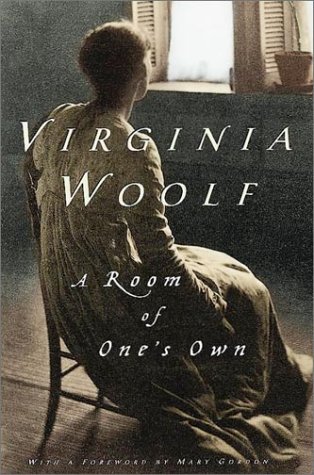
Things seemed a bit better yesterday. We’re working our way through A Room of One’s Own, which is not an easy text to make sense of, but I had given them a couple of specific things to think about beforehand (as I almost always do), and I also let them warm up in small groups first before we came together to talk as a class. We focused on the two college meals Woolf describes in such detail in the first chapter, working out the connections she makes, both implicitly and explicitly, between eating and writing. Then we went with her to the British Museum and considered her attempt to find “facts” — and the resulting analysis of the angry Professor she discerns behind the studies she reads. We’re reading Chapter 4 for tomorrow and I’ve asked them to focus on her comments about Austen and Brontë, especially about her idea that in great writing we are unaware of the writer’s state of mind. Since a lot of them don’t know Austen and Brontë well or at all, I suggested they think back over our course readings for examples of writers whose state of mind is or is not conspicuous in their work, and whether they agree that when we become aware of it, it deforms the writing the way she thinks Brontë’s anger deforms Jane Eyre. Martin Luther King is one of the first of our other authors that occurs to me: I’ll be interested to hear what they came up with. A follow-up question, of course, will be whether they think Woolf’s own quite discernible anger (beautifully controlled though it is) in any way diminishes the artistry of A Room of One’s Own.

In 19th-Century Fiction, we’ve moved on to Lady Audley’s Secret. I was a bit petulant yesterday when my questions for discussion elicited very little response. Maybe I need to give them the “Sincere and Concerned” speech too! But actually, in that class I think I probably just need to back off a bit more than I have been doing. When I have a lot to say, student passivity can become a self-fulfilling prophecy, and I think I’ve just been too quick in the last couple of weeks to fill in when their answers weren’t forthcoming. Lady Audley’s Secret certainly gives us plenty to talk about. So for now, I’ll do my best to stay upbeat, and hope that their apparent inertness is just fallout from the hour we lost with the time change.

This Week in My Classes: Feminism and Fatality

richThis week in my section of Intro to Literature we’re starting a unit organized around women writers and feminism. We’re starting this week with some poetry — Adrienne Rich’s “Aunt Jennifer’s Tigers” and “Diving Into the Wreck,” Margaret Atwood’s “You fit into me,” Marge Piercy’s “The Secretary Chant,” and Sylvia Plath’s “Daddy.” Next we’re working through A Room of One’s Own, and then we close out the unit — and the term — with Carol Shields’s Unless.

I decided to lead off yesterday with some introductory comments: a bit about the history of feminism, and a bit more about feminism and literature, with a focus on ways feminist critics have challenged and revised the literary ‘canon’ as well as on some of the ways feminist critics taught us to read differently. Am I alone in feeling an uncomfortable blend of diffidence and defensiveness when introducing these kinds of questions? I have had just enough comments over the years, on course evaluations and in class, from students who are offended by what they feel is an unnecessary or unwelcome emphasis on gender issues that I know there will be some resistance (whether or not it’s spoken aloud) to the idea that this is something we ought to talk about. The attitude I’ve heard expressed most often is that the time for all that is over and so it’s quaint but annoying to read a writer such as, say, Sara Paretsky (whom I teach often in Mystery and Detective Fiction) drawing overt attention to inequality and making openly polemical statements. (A variation of this is approval of Paretsky’s detective, V. I. Warshawski, because she’s a feminist but doesn’t make a really big deal about it — which isn’t true, actually. And there’s always a minority that enjoys V.I.’s outspoken politics and unapologetic attitude.) Once a student complained in an evaluation for a course on the 18th and 19th-century novel that the class was biased towards feminism, a bias clearly revealed by the preponderance of women writers on the syllabus: as it happened, that year the reading list for the course in question was split 50/50 between women and men, so I could only conclude that the bias was perceived because our male writers also raised pressing questions about women’s roles. In Intro a couple of years ago, a student (again, anonymously in his or her evaluation) protested that “the prof was such a feminist” — which struck me as odd because that year I honestly couldn’t think of what would have been the trigger for this complaint. It doesn’t take very many such remarks, however ill-founded or oddly calculated they seem, to make one aware that teaching feminism (or as a feminist) is a tricky business.

I believe (though I may be wrong about this, of course) that I do not approach gender issues or feminist interpretations in an aggressive or polemical way. However, it’s rare for these topics not to come up in my classes because they are so fundamental to my own critical apparatus — and, of course, for courses in Victorian literature, they are central to the material itself. One thing I don’t feel is apologetic, then. My guess is that just talking openly about gender issues and feminism simply comes across as polemical to people who aren’t used to, or are resistant to, having that conversation. (That probably explains the intro student’s comment above, as well as my own obliviousness to what exactly I’d done “wrong.”) Basically, these students just need to get over it!

roomHowever, I do want to make our class discussions productive and inclusive, especially for this class of (mostly) first-year students, many of whom may not have had explicit discussions about feminism and literature before, so I fretted quite a bit about exactly what to say and what tone to take on Monday. One thing I pointed out is that politics broadly understood have been part of our discussions all year: we just haven’t identified what we’re doing as political criticism. And I noted that we’ve already talked about the challenge of literary evaluation, and about canonicity. We’ve also already worked on texts that are all about women’s position in society: “The Yellow Wallpaper,” for example, and “A Jury of Her Peers.” So we’re doing more of the same. Now that we’re doing a whole cluster of works with this focus, though, it makes sense to create a more explicit framework, both for what the authors are doing and for what we are doing. I hope I hit the right note in my introductory remarks. We’ll see how it goes. One of the particular challenges (something I’m going to address specifically tomorrow) is that a lot of the works we’ll be reading are angry ones — including A Room of One’s Own, though the anger there is very, very carefully managed (but is it entirely hidden?). I think anger can be off-putting: it makes the reader a bit squirmy, as if they are being blamed or attacked. It’s hard to like an angry person! The tendency (which I have been unable, despite my efforts, to quell completely) to prefer speakers or characters who are “relatable” makes anger a problem for a lot of students. My hope is that we can make it a useful problem — because after all, what does it mean to tell someone not to be angry, or not to listen to someone who is angry — especially if they have good reason for it? Angry women, of course, always get a particularly hard time.

I’d be interested in hearing from other people about their classroom experiences with feminism. Some of you probably teach (or have taken) courses much more completely and explicitly dedicated to the topic: classes on feminist theory, for instance, or feminist philosophy. I expect the population of such classes is more self-selecting so perhaps the awkwardness I sense (or am I just projecting?) does not arise.

In 19th-Century Fiction we are finishing up The Mill on the Floss this week. Tomorrow we’ll discuss the ending. I’ve collected a string of quotations from various critics onto a handout which I hope will provoke plenty of discussion…some of it about feminism! Reading “Diving Into the Wreck” over today for class, I found myself thinking that it resonates uncannily with the ending of The Mill on the Floss — not just in being watery but in being difficult to explain.

This Week In My Classes: Cranford and The Road

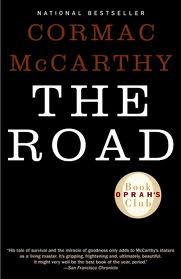
roadThe honeymoon is over. At the beginning of every term things putter along easily enough while I wonder why I felt so stressed out at the end of the previous term … and then marking starts to come in, and the new assignment sequences dreamed up over the break loom on the horizon and require planning and handouts and Blackboard drop-boxes, and forms for the letters of reference I forgot I still needed to do appear in my inbox, and the thesis material I made my students promise to have ready duly shows up. And that’s about where I am now, staying on top of things but with effort. It doesn’t help that it’s winter (when has winter ever helped with anything?). It takes more energy to do everything in the winter, from driving away in the morning (bundling up, scraping, clearing) to just staying warm (even my LL Bean fleece slipper socks are just not enough this year, down in my basement office with the cold, cold floor).

So that’s how things are going, in a general way. It’s a good busy, mostly, especially the class prep for the novels that are new for me this term: I enjoy figuring out what I want to do with them and trying out my ideas in the classroom. I’m out of time for Cranford now: next time, I think I’ll allow more than four classes, because it feels like our work on it ended too abruptly. But then, I don’t typically have more than six classes on any but the longest novels! I’m going to miss its subtle good humor, which has been a good antidote to the relentless gloom of The Road in my intro class. One of my favorite bits on this read was the Great Pea-Eating Challenge:

When the ducks and green peas came, we looked at each other in dismay; we had only two-pronged, black-handled forks. It is true the steel was as bright as silver; but what were we to do? Miss Matty picked up her peas, one by one, on the point of the prongs, much as Amine ate her grains of rice after her previous feast with the Ghoul. Miss Pole sighed over her delicate young peas as she left them on one side of her plate untasted, for they would drop between the prongs. I looked at my host: the peas were going wholesale into his capacious mouth, shovelled up by his large round-ended knife. I saw, I imitated, I survived! My friends, in spite of my precedent, could not muster up courage enough to do an ungenteel thing; and, if Mr Holbrook had not been so heartily hungry, he would probably have seen that the good peas went away almost untouched.

I’ve always found peas quite inconvenient myself — and not particularly tasty, though I do occasionally serve them now that I’m All Grown Up (my parents could testify that this is a sign of maturity beyond what they would have predicted, given my childhood aversion to most green vegetables). Next up in this class is The Mill on the Floss. It’s not cheerful (well, the first part is pretty funny, but after that … ) but I’m really looking forward to it, especially after having worked up my essay on it for this month’s Open Letters.

In Intro to Lit, we had our first general class discussion of The Road today, and the students seemed quite engaged with it. We warmed up by talking about things like the title (I always start there with novels!) — why “the” road, why not any road in particular (especially considering they have a map), why just “the man” and “the boy,” what seems to have happened, what matters to them now, what is their relationship like, and so on. There’s lots more to talk about, but for Wednesday I want us to focus on the language of the novel for a while. I am aware that admiration of McCarthy’s style is not universal, and I’m not altogether convinced about some aspects of it myself, for all that I find the novel both gripping and moving. It’s a conspicuous style: there’s no illusion of transparency and there are a lot of what could be considered affectations, from the eccentric punctuation (argh! the apostrophes!) to the use of obscure words (obscure to me, anyway — words I had to look up for today’s installment included “rachitic,” “gryke,” and “kerfs”). Most sentences are very short, and indeed many are fragments, but some are longer and more elaborate, even florid. Because the novel is quite suspenseful, it’s easy to read along quickly and not fret the details (I didn’t look up any of these words on my first reading), but that’s obviously not good enough. I think we might try an exercise on “found poetry” in The Road. I think that this would focus our attention very closely on details of wording, including not just meaning but also sound, placement, and relationships to major themes. It would also probably prompt some useful discussion about what we think makes prose “poetic.” So! A handout for a group activity along these lines goes on the to-do list for tomorrow.

This Week In My Classes: Information and Education

cranfordWe’re starting new books in both of my classes this week (well, weather permitting, we are, anyway!): The Road in Introduction to Literature and Cranford in 19th-Century Fiction. What makes this a particularly exciting but also daunting prospect for me is that they aren’t just the next books on our syllabus but they are also both novels that I have not taught before, in any course. So: no lecture notes, worksheets, handouts, discussion questions, slides, or other materials lurk in my archive of teaching materials. Also, I have no experience of, and therefore no expectations for, what ‘works’ or ‘doesn’t work’ about these books for students: what will be the sticking points? what will get them fired up? what will I discover, as we go along, that I need to know more about?

I’m not just going to show up, book in hand, of course. I’ve read them both before, and reread them both last week (and will reread them again in the assigned installments as we go along in class). For The Road, I’ve been collecting background information from books and scholarly articles as well as from online resources such as the website of the Cormac McCarthy Society or Oprah’s Book Club guide to The Road (which, just by the way, has some pretty good stuff, including these bits on ‘Fiction and Science’ in the novel and clips from McCarthy’s apparently very rare interview with Oprah). I’ve got some of my own materials on Gaskell, but they focus on Mary Barton and North and South, both of which I’ve taught fairly often, so though I don’t need to look up much general background, I’ve been surveying academic sources specific to Cranford (which are not nearly as abundant as for her social-problem fiction — something we’ll talk about in class, actually) and, again, peering around online for things to help get me thinking. One stimulating source is one of my long-time favorite bloggers, Amateur Reader, whose posts on Cranford at Wuthering Expectations are models of insightful brevity: here, for instance, on ‘Cranford and the Strong Female Character‘, or here on the trickier-than-she-seems narrator, Mary Smith.

This process of class preparation has had me thinking (not for the first time!) of the odd way our work as professors is often characterized. Recently, to give just one example, Melonie Fullick tweeted a link to an article proclaiming that recent developments in online education signal “the coming end of the monopoly of information held by professors in classrooms.” If it were true that professors believed they held some kind of monopoly on information, and that suddenly there was an unprecedented challenge to that monopoly because of the internet, a lot of the end-of-the-university-as-we-know-it rhetoric would ring true — but there have always been abundant sources of information outside of classrooms, and outside of universities altogether. It’s true that some of what I’ll be doing is passing along to my students information that they could get for themselves somewhere else — if they knew where to look, and, more important, if they knew what to choose from the flood of information out there. One of the things I’m doing is filtering information for them: for our purposes, here are the kinds of things we need to know, or know enough about that we can follow up in other venues. Another thing I’m doing is framing that information: what are our purposes, after all? what do we want to be able to do with these texts? And I’m synthesizing and shaping it for them, and looking for new directions it could send us in — and here’s where it gets more idiosyncratic, because the ways I will do this are not exactly the same as someone else would do it, because I am who I am — and because they are who they are, and so I’ll be responding to them as we go along. Information transfer is part of my job, but it’s silly and reductive to imagine that it’s a straightforward part of my job, or that students new to this material, and beginners in this discipline, could effectively (never mind efficiently) conduct the process of finding, sorting, and making meaning from available information without any guidance. Also, that transfer of information is only the beginning of what we will do together, because ultimately my goal is not for them to memorize facts about Elizabeth Gaskell or Cormac McCarthy but for them to become better readers and critics, which means they have to engage independently with the texts, framing their own questions and trying out their own answers. They can get a lot of information from Wikipedia (I get some of mine there, too), and if that was all our classroom time was about, then sure, that’s the beginning of the end. But that’s not education: not really. I strongly agree with Melonie’s characterization of education in her post “Can education be sold?“:

My friend Dr. Alex Sevigny has an analogy that I think works much better: education is like a fitness program. Yes, you can pay for access to a gym with top-of-the-line facilities. You can pay for a trainer to take you through the best possible individualized regimen. You can buy the shoes and expensive gym clothes. But ultimately if you don’t get yourself to the gym, multiple days a week, and push yourself to get fit–there’s no benefit in any of it.

Education works in much the same way: it is a process, one in which the student plays a necessary part, and an experience, in which the student plays a major role in the “outcome”. In fact every student actually receives a different “education”, with different outcomes, even if they’re all paying the same amount. What you pay for with tuition money is not “education”, but access to resources–libraries, expert staff, teaching and mentorship, even social contact–and access to a formal credential. Even the credential isn’t guaranteed, since students must complete academic requirements in addition to paying tuition and fees.

Another common way to dismiss what happens in ‘traditional’ classrooms is to scoff at the ‘sage on the stage’ model. I don’t agree that there’s never a good time, or a good way, to lecture. In addition to offering information, lecturing can model ways to argue, or, in my field, ways to build and support an interpretation. Even when transferring information, as I’ve said, there’s a process of filtering and framing that makes a thoughtful lecture something more than a list of facts or claims. Passivity in the face of information, though, is never the point, the process, or the purpose. It’s the interaction between a thinking person and information that really matters, and that we aim to promote, ultimately, in our students. Professors don’t have a monopoly on that process either, but it’s what we train for, it’s what we stand for, and it looks like it’s also what we’re going to have to fight for, as the pressure mounts for ways to automate, commodify, and depersonalize our classrooms. It’s frustrating to see how often the arguments for a revolution in higher education turn on reductive stereotypes of the work we actually do.

This Week in My Classes: Focus on Writing

I don’t seem to be posting my teaching updates with the regularity I used to: “this week” too often means “last week” or “these days.” I was wondering why I put off posting, and I think it’s because after doing this series for so long, I worry about repeating myself if I simply report on the week’s activities. It’s not that things don’t change in my teaching, but I think at this point I have blogged about every course in my repertoire at least once and sometimes two or three times. I mix up the readings every time (for instance, this term I’m teaching 19th-Century Fiction from Dickens to Hardy with a completely different book list than I used in this course last year) — but even so I’ve often assigned the books in other courses. And I change up the assignments regularly, for better or for worse (“I think Dr. Maitzen is trying too hard to make her assignments different,” says one of the evaluations for last term’s Somerville Novelists seminar). But after a while, how interesting is it to hear about this kind of thing?

Still, I stand by my reasons for launching the series, and I see no signs that misunderstandings or misrepresentations of academic work have abated (cough cough Forbes article cough cough). So, I’ll keep it up at least to the end of this term and then maybe reconsider. In the meantime, I’ll try to get back to more of a brief update than a long screed or meditation, just to reduce the psychological roadblocks I’ve been putting up!

nightIn English 1000 this week, we’re finishing our discussion of Wiesel’s Night. In our conferences at the beginning of term a lot of students said they still have difficulty coming up with a good thesis, soI’m going to use a fair amount of our class time on how to move from observations about Night to an interpretive argument of the right kind. One of my strategies for tomorrow is to show them the ‘suggested essay topics’ for Night that are posted at SparkNotes. None of them would lead to an essay that is really appropriate to the kind of work we’ve been doing in the course in general or on Night in particular: we’ve been talking mostly about the difficulties of representing the Holocaust, and thus on what strategies Wiesel uses both to show and to overcome the inadequacies of language.  I’m hoping that the SparkNotes topics will clarify by comparison the kind of thing we are trying to do. Then we’re going to walk through the thesis-building process again, starting from something they find worth noticing to collecting observations about it to asking questions about its significance and finally to stating a thesis about it.

In English 3032 the students are writing the first of their “mini-midterms” tomorrow — these are replacing the multiple-choice pop quizzes I used for many years to motivate reading and note-taking. Then on Wednesday, this class too will focus on essay writing. Though it’s a 3000-level course, it’s not limited to senior students and I find there’s always a range of levels. Even the more advanced students, too, in my experience, often benefit from some guidance on the difference between an essay that describes something in the novel to an essay that interprets something in the novel. So we’ll walk through a similar exercise to the one I’m doing in Intro. I’ll be interested to see what attendance is like for that session. I know I never would have missed an opportunity to hear more about expectations and standards for an assignment! But not one of my professors ever spent time on this kind of “how to” or “process” class. It’s up to the students which of our first four novels they write about for their first essay. I’m happy to say that two students did in fact resolve to write on Bleak House! I wonder what the breakdown will be over the other options (Cranford, The Mill on the Floss, and Lady Audley’s Secret).

With just two classes this term rather than last term’s three, I do feel more relaxed, especially about finding time to do marking. There’s lots else to do, though, from administrative meetings to reference letters to MA thesis proposals etc. etc. Plus it’s winter, and both kids have been sick off and on, so all the daily logistics are a bit harder than would be ideal. Thankfully, my husband is on sabbatical this term and working at home, so he’s coping with most of the fall-out from sick days and snow days. This month I also had five contributors working on pieces for Open Letters, which has been great, of course (thank you all!) but has rather hampered my work on my own piece. Well, if not this month, then next month for sure, especially as I’ll have the February reading week guaranteeing me some stretches of uninterrupted time.

This Week In My Classes: The Value of F2F

The Student (Dixon)Last week I cancelled two regular class meetings for my Introduction to Literature Class and instead set up individual conferences, 15 minutes per students. (If you want to do the math, of the 26 registered students 24 ended up meeting with me, so that was six actual contact hours in place of two, and since it wasn’t possible to run the meetings entirely consecutively, overall I had about eight hours of my schedule taken up with this exercise.)

In a previous post I wrote quite a bit about my motivations and goals for these conferences. It will be a while before I can tell if they made much difference in terms of how students respond in the classroom. Many of them set as one of their goals that they would like to participate more in discussion — yet on Monday things were not especially lively, even though I thought the readings (Randall’s “Ballad of Birmingham” and Hughes’s “A Dream Deferred”) were reasonably provocative. Whatever happens, I think the process had value for them, because it prompted them to reflect on their work for last term and to consider what role they might have in making this term successful. All of them seemed to take the exercise seriously, and some of them realized important things about their work habits or about relationships between different course requirements (such as reading journals) and outcomes (such as understanding of material or grades on papers). So that’s good!

And the process had value for me too, not least because meeting with them face to face renewed my conviction that teaching is a very personal activity. “Content delivery” is not nothing, but it’s far from everything; skills development is also something, but it too is not sufficient. Education is an internal process as much as anything: something has to change within, and while no avid reader is going to say face to face interaction is the only route to inner transformation, I really believe that there’s something special about speaking directly to another human being who takes a sincere interest in you. I was at a faculty meeting today where we were invited by our university’s president to imagine the program we would create if we could do anything we wanted, without constraints. It was an ironic suggestion, really, as the meeting was about dealing with a looming budget crisis–it was all about constraints! The problem is that what I imagine is a program in which that kind of personal interaction is routine–if not throughout a student’s entire degree, at least at key moments, and I’d consider their first year just such a moment. My “blue sky thinking” always brings me back to something like a “freshman seminar” model, with maybe 15 students around a table with a dedicated, experienced instructor with plenty of time and attention for them. But I can’t figure out how such a dream is compatible with our need to (as our Dean put it) “do less with less,” especially when the only recipe for financial flourishing appears to be more students and fewer faculty.

Anyway, I’m glad I worked these meetings into my plans for this term. If nothing else, they know there’s one person on campus who’s really paying attention to them! And it’s a rarity for me to have any class, much less an intro class, small enough to make this logistically feasible.

Now we’re back to our regularly scheduled programming, with another week of poetry before beginning Elie Wiesel’s Night next week. This week’s poem are something of a build-up to Night, in that they all deal with difficult realities, from Randall and Hughes yesterday to the horrors of trench warfare on Friday, with Owen’s “Dulce et decorum est.” One thing we’ll talk a lot about with Night is how (and even whether) to transform suffering into art, and how choices of literary form and representation are also choices about the meaning of real events. After that we’ll move on to The Road — so basically we’ll all be depressed for about the next month.

In 19thC Fiction I won’t be having conferences, but I am having the students write regular reading journals, and that gives me at least a little sense of them individually to add to what I can glean from class discussion. I’ve had just a few submitted so far but I like reading them: they seem to be just formal enough that the students have put some thought into them, but not so high stakes that they (or I) need to stress out over them. That said, I’m going to be reading a lot of them this term: if every student submits the three required entries for every novel, that’s 630 journal postings at approximately 150 words each, for a grand total of … eek, about 94,500 words. Will I end up regretting not just assigning more standard essays? But these have other purposes, and they come in small and so far quite tasty doses. And if any students in this class want to meet with me one on one (which I will emphatically encourage them to do when they are working on their longer papers), they’ll be welcome — and, in case they need any extra incentive, I’ll let them know that I have a stash of extraneous books in my office from which visiting students are always welcome to help themselves…

From the Archives: The Last Time I Taught Bleak House…

bleakhouseoupFor some reason this phrase has been running through my head to the tune of “The Last Time I Saw Paris.” I don’t know why I would be feeling nostalgic about teaching Bleak House, though it was rather a while ago–it was Fall 2008, to be precise. Because we’ve started work on it in my 19th-century fiction class this week, I’ve been reviewing old notes and also old blog posts, which prove (among other things) to be a valuable archive. Because (so far at least) my ideas about the novel haven’t really changed in the meantime, and because a lot of people who might stop by and read this post almost certainly never read my earlier ones, I thought I’d repost a couple of them, starting with this one about the beginning of the novel and the beginning of my class discussions of it.

From the Novel Readings Archives: Fog. Mud. Smoke. Soot. Gas. Fog.

Bleak House Shadows (Phiz)

No, that’s not today’s prediction from Environment Canada (though there is something implacable about today’s weather, even if it’s not yet November). This week in one of my classes, it’s time for Bleak House–by comparison with which, nothing else I’m doing at work really matters. The introduction to our Oxford World’s Classics edition remarks that the opening ‘set piece’ is ‘too famous to need quotation.’ Well, I don’t know about that, especially because I consider it an aesthetic accomplishment self-sufficient enough to render critical commentary not just redundant, but irritating. Here are the first four paragraphs, then (three of them composed entirely, it’s worth noting, of sentence fragments).

London. Michaelmas term lately over, and the Lord Chancellor sitting in Lincoln’s Inn Hall. Implacable November weather. As much mud in the streets as if the waters had but newly retired from the face of the earth, and it would not be wonderful to meet a Megalosaurus, forty feet long or so, waddling like an elephantine lizard up Holborn Hill. Smoke lowering down from chimney-pots, making a soft black drizzle, with flakes of soot in it as big as full-grown snowflakes–gone into mourning, one might imagine, for the death of the sun. Dogs, undistinguishable in mire. Horses, scarcely better; splashed to their very blinkers. Foot passengers, jostling one another’s umbrellas in a general infection of ill temper, and losing their foot-hold at street-corners, where tens of thousands of other foot passengers have been slipping and sliding since the day broke (if this day ever broke), adding new deposits to the crust upon crust of mud, sticking at those points tenaciously to the pavement, and accumulating at compound interest.

Fog everywhere. Fog up the river, where it flows among green aits and meadows; fog down the river, where it rolls deified among the tiers of shipping and the waterside pollutions of a great (and dirty) city. Fog on the Essex marshes, fog on the Kentish heights. Fog creeping into the cabooses of collier-brigs; fog lying out on the yards and hovering in the rigging of great ships; fog drooping on the gunwales of barges and small boats. Fog in the eyes and throats of ancient Greenwich pensioners, wheezing by the firesides of their wards; fog in the stem and bowl of the afternoon pipe of the wrathful skipper, down in his close cabin; fog cruelly pinching the toes and fingers of his shivering little ‘prentice boy on deck. Chance people on the bridges peeping over the parapets into a nether sky of fog, with fog all round them, as if they were up in a balloon and hanging in the misty clouds.

Gas looming through the fog in divers places in the streets, much as the sun may, from the spongey fields, be seen to loom by husbandman and ploughboy. Most of the shops lighted two hours before their time–as the gas seems to know, for it has a haggard and unwilling look.

The raw afternoon is rawest, and the dense fog is densest, and the muddy streets are muddiest near that leaden-headed old obstruction, appropriate ornament for the threshold of a leaden-headed old corporation, Temple Bar. And hard by Temple Bar, in Lincoln’s Inn Hall, at the very heart of the fog, sits the Lord High Chancellor in his High Court of Chancery.

Sure, there’s plenty to be remarked about this passage, beginning with its literary virtuosity and metaphoric ingenuity. Dinosaurs and compound interest? Snowflakes in mourning? ‘Fog’ used 13 times in one paragraph? Gas that’s ‘haggard and unwilling’? I’m reduced to the exclamatory mode some critics objected to in James Wood’s How Fiction Works: “What a piece of writing that is!” It puts to shame other writers called ‘Dickensian’ for no apparent reason except that they write multiplot novels with quirky characters and lots of emotion. There’s also its extraordinary efficiency at launching both governing ideas and dominant images of the vast novel it introduces; fog, mud, and infection order the thinking of Bleak House as much as webs do the same for Middlemarch. But really, the point of this passage is just to read it, to experience it, and then to carry the impression of it with you as you read on. (Is this response ‘aesthetic’? I’m not sure, or at least I’m not sure I could separate my admiration for the literary features of this passage from my sense of its ethics–or, better, its ethos.)

Today I’ll give a brief introduction to Dickens and some context for the first publication of Bleak House. Then my chief concern is to help my students find some reading (and note-taking) strategies to make their experience of the novel rewarding, which means helping them organize the mass of material (and the array of characters) they will be rapidly confronted with. We’ll do some ‘getting to know you’ work first of all: who do we meet in each of the first few chapters, and how are they connected? I’ll encourage them to keep a list of characters in each plot or location and to draw lines between them as relationships are discovered. They will have a chaotic criss-cross of lines before too long, which of course is the point–everything and everyone is connected, as Dickens challenges us to realize with his disingenous questions in Chapter 16:

What connexion can there be, between the place in Lincolnshire, the house in town, the Mercury in powder, and the whereabout of Jo the outlaw with the broom, who had that distant ray of sunshine on him when he swept the churchyard-step? What connexion can there have been between many people in the innumerable histories of this world, who, from opposite sides of great gulfs, have, nevertheless, been very curiously brought together!

My other main strategy is to get them thinking in terms of themes and variations. Today, for instance, we’ll look at how many ways the idea of housekeeping is refracted across the different story lines. Finally (though this is certainly not my last priority) I will try to convey, and make contagious, my enthusiasm for Dickens’s language in the novel, and to get them thinking about how his literary strategies (including the kinds of wild metaphors we get in the first few paragraphs) are important to his conception of the ‘condition of England question,’ and to his answer to it.

[originally posted October 27, 2008]

Next Week in My Classes: Winter 2013 Term Begins!

ScreamThe past week has been all about getting organized: packing and cleaning up from Christmas, sorting the kids out to get back to school, and sorting myself out to be ready for the start of winter term classes tomorrow. I wasn’t starting from scratch, happily, but I made some adjustments to my plans for my Introduction to Literature class, which continues from last term, and finalized the plans for The 19th-Century British Novel from Dickens to Hardy, which is just beginning.

Reflecting on the first term’s work in Intro, what I decided was that this term I want to get the students more involved. They’ve been a good group: diligent, attentive, and basically cooperative for class discussion, group work, and peer editing. My sense is, though, that most of them did not sign up for the class because they were passionately interested in literature or in becoming literary critics. For most of them, English just seemed like the default option for their mandatory writing requirement. Dal’s writing courses are based on a ‘writing across the curriculum’ model, though, which means that our courses are not composition classes but are intended to introduce students to the methods of our discipline. Most of our upper-level courses have one or the other of these introductory classes as their prerequisites, with the program as a whole building up to increasingly specialized critical work. I’ve always taken this discipline-specific mission pretty seriously, not by working in literary theory or anything but by focusing on ways to talk precisely about things like poetic form or narration or characterization, and by working hard on how to develop and support an interpretive argument. Though this does vary by background and training, first-year students very often arrive having done little analytical work in English classes: their experience tends towards book reports or personal (or even creative) responses. So there’s lots to be learned, and that’s what we focused on in the fall.

Now I’d like things to — not loosen, so much as liven up. There is still a fair amount of uncertainty about literary terminology and about how to think your way through to a strong and interesting thesis, but the focus will be on practising, on doing, even more than before. So I want more class discussion, more partner and group work, more students talking in class, and maybe to the rest of the class. I want them to feel in their bones that class time when I’m not talking can be some of the most valuable, rather than least valuable, time: that trading ideas with each other and challenging each other is our version of doing labs, and, above all, that just staring at the words on the page is not enough to prepare for class. Finally, having spent a lot of the first term telling them what they need to learn and do, I want them to take over the task of motivating themselves: I want them to identify their strengths and weaknesses and consider these in relation to their goals for the course. One way to put it is that I have brought them to the water and now they need to decide if they will drink ! Another way to put it is that having, I hope, established a clear framework for their learning, I can gradually get out of their way.

I don’t think I’m talking about a drastic shift (it’s not as if I micromanaged every aspect of their work or our discussions last term) but it is something I want to be deliberate about. So what I decided to do this week is to work on personalizing the course for them by replacing a couple of our first class meetings with one-on-one conferences in which we’ll discuss their work in the course so far and their goals and expectations for the rest of it. I’m asking them to do a self-assessment for their first journal assignment, to bring along to the meeting with me: that way I know they will have given some thought to the purpose of our little chat. I think it will be useful for them to take stock, and asking them to so in writing that they submit will show them that I am interested in their ideas. My experience has also been that individual meetings help students get more comfortable with me, and help me understand better who exactly they are and how I might be useful to them. It’s relatively rare for me to have a small enough class that I can afford the time to require such conferences, but in this case not only is it the smallest intro section I’ve ever taught but it’s also a full-year course–a real luxury these days–so the logistics aren’t overwhelming. Here’s hoping the effects are beneficial.

Bleak House Shadows (Phiz)I taught the Dickens to Hardy class just last winter, but with a book list that was 100% different, so I won’t be just coasting along this time. This year’s reading list is thematically unified (sort of) around troublesome women, and it includes two novels I’ve never lectured on (Cranford and Tess), so I’ll be busy finding out what I have to say, and what I want us to discuss, about them. I’ve also tweaked the assignments again, introducing online reading journals and what I’m calling “mini-midterms” as ways of stimulating and measuring attention on a regular basis, and then assigning one short paper for everyone followed by the option of a longer research paper or a final exam. I found I just didn’t have the stomach for the letter exchange assignment I used for many years. While pedagogically I think having them write really frequently is very beneficial, I was exhausted by organizing all the bits and pieces and dealing with students who (sometimes for good reasons, sometimes for no reason at all) messed up the system. For the short papers this time, I’m allowing them to choose which of our first novels they write on and thus which deadline they meet. I almost decided against this because I was worried they’d all gravitate towards the latest deadline and thus (oh no!) nobody would write on Bleak House (which we’re reading first). But then it occurred to me that I don’t much want to read essays on Bleak House by students who don’t actually want to write on Bleak House, and the mini-midterms give them an incentive to read it on schedule, at least … and the same goes for the other books. Surely I can trust them to manage their time and follow their hearts. In the worst case scenario, I get 40 essays on Lady Audley’s Secret and they have to wait a while to get them back.