It’s a crazy week, with midterms and proposals and assignments piling up on top of the routine business of class meetings — which isn’t entirely routine at the end of term because I always prepare practice exams and review handouts and everything needs to be printed and copied and sorted and ready on time and yet there are still class notes to be prepared and readings to do and … well, you get the picture. Add in that the next issue of Open Letters is in production, which means writing and editing in every ‘spare’ minute and you’ll understand that I’ve been feeling kind of frazzled.
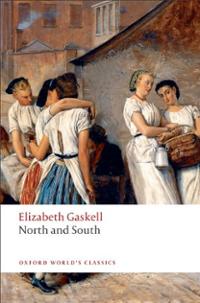
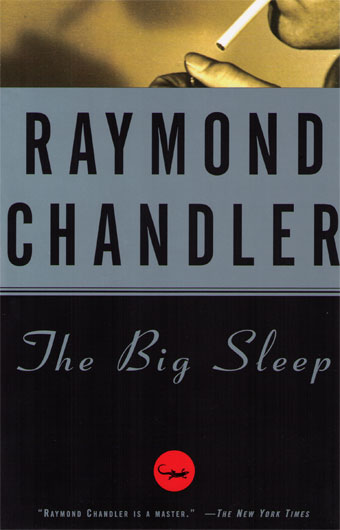
And yet, there are books. Some are assigned ones, and happily they are really good ones this week. It’s a bit funny that I say that, as one of them is a book I really disliked the first time I read it – Walter Mosley’s Devil in a Blue Dress. The more time I spend on it the more I appreciate it: for me, this kind of experience is always a good cautionary tale about taking first impressions as final ones. They also help me (I hope) with my teaching, as I honestly do understand what it’s like to read something and not really get it, but to stick with it and learn what mental lenses bring out its most interest aspects. Even more to the pedagogical point, I know that I don’t have to like something — it doesn’t have to conform to my personal taste — for me to know it’s worth engaging with. I persisted with this one because I knew it would bring a valuable new dimension to my mystery class, which it does, and in working on how to explain it, I ended up making friends with it. Mind you, I still haven’t read any other Easy Rawlins novels, but my excuse is that I’ve been trawling for the next great addition to my syllabus. Then it’s North and South in the 19th-century novels class, which is an old favourite of mine.
I have managed to do some reading outside of class too. Last week I reread (very briskly! skimming!) both of the first two Bridget Jones novels in preparation for reviewing the new one, which I also read (and spent much of the weekend writing about – stay tuned for the new issue, to see what I thought). Over the weekend I also read Georgette Heyer’s A Civil Contract, which was the most subdued Heyer I’ve met so far. It was bittersweet enough to make me almost sad at times, even at what should have been the happy ending.
With all that light reading going on, I needed the occasional bracing tonic, so I have been dipping into The Young Rebecca: Writings of Rebecca West 1911-1917. It’s an astonishing volume: she is fiercer and smarter at 20 than most of us will ever be, whether she’s writing on socialism or feminism or Jane Austen or some hapless lesser novelist whose book “need never have been written.” One of the most memorable pieces so far is her essay on “The Life of Emily Davison” — Davison was the suffragette who threw herself in front of the king’s horse and subsequently died of her injuries, though West is if anything more vehement about the pain and cruelty of the force-feedings she had endured:
But for her last triumph, when in one moment she, by leaving us, became the governor of our thoughts, she led a very ordinary life for a woman of her type and times. She was imprisoned eight times; she hunger-struck seven times; she was forcibly fed forty-nine times. This is the kind of life to which we dedicate our best and kindest and wittiest women; we take it for granted that they shall spend their kindness and their wits in ugly scuffles in dark cells. And now in the constant contemplation of their pain we have become insensible. When enlightened by her violent death, we try to reckon up the price that Emily Davison paid for wearing a fine character in a mean world, we realise that her whole life since she joined the Women’s Social and Political Union in 1906 was a tragedy which we ought not to have permitted. For if, when we walked behind her bier on Saturday, we thought of ourselves as doing a dead comrade honour, we were wrong. We were making a march of penitence behind a victim we allowed the Government to do to death.
As soon as the dust clears / the new issue has gone to ‘press’ / I can, I want to read the rest of this collection as well as the two other of her novels I have in my Virago collection: This Real Night (the sequel to The Fountain Overflows), and The Judge. And then I’m turning to Black Lamb and Grey Falcon and I’m reading it ALL. I’m sick of spending time reviewing brand new novels that aren’t really worth the effort it takes to write about them well. (OK, I guess that’s a spoiler for my upcoming review of Mad About the Boy!)
 Finally, as I’ve temporarily run out of Georgette Heyers, I’m revisiting Mary Balogh’s A Summer to Remember for something soothing to read with my morning tea and when everything else is done at the end of the day. Now that I’ve read several more Heyers, the differences are more conspicuous, chief among them that Balogh (as far as I’ve seen, anyway) is absolutely never funny! She is much more sentimental than Heyer — and also much sexier, which is not better or worse but just different. A Summer to Remember is a nice one, though Lauren is a bit too perfect (my favourite Balogh is Simply Perfect, probably because I identify with the prickly schoolteacher heroine!).
Looking ahead, I have more treats in store besides West, as both of my book clubs have chosen Daphne du Maurier titles: my local group meets in mid-December to discuss The Scapegoat, and the Slaves of Golconda group chose Jamaica Inn (all welcome, to post or just join in the comments). Now, if I can just make it through the incoming deluge of papers and exams — and the meetings!


 First of all, I did decide to do something different, rather than just pressing on with my usual strategies. I had to admit to myself — and I admitted this morning to my class — that if year after year a critical mass of students just isn’t getting engaged by the novel, at least to some extent this is a failure on my part — a pedagogical failure. Dropping Waverley from my reading list was also a failure: some students in Waverley-free years have told me how happy they were to have missed it, but missing out on it was not a win for them any more than it was one for me. As I told my class this morning, it’s a novel that deserves its place on our syllabus, one that is well worth reading for our curriculum, whatever anyone’s personal response to it. But the failure isn’t all mine. To use the analogy I suggested to my class, if you’re stumped by a difficult calculus problem, you don’t blame the problem: you work it as hard as you can, get more help if you need it, and try to bring your skills up to the level you need to solve it.
 Again, this is all standard classroom procedure — lecture mixed with discussion prompted by questions designed to build interpretations out of observations. But it just doesn’t go well with Waverley, though there are always a few stalwart souls who put their hands up (thank you!). I’m always a bit puzzled by the conspicuous collapse: the novel doesn’t strike me as that opaque, especially once we’ve done our warm-up sessions. On the assumption that incomprehension is a problem, though, my first response is usually to step up what I think of as the ‘modeling’ component of class — that is, walking the students through those key episodes and showing them what’s in there to notice, enjoy, and work with. Then I try backing off again — but still with lackluster results. Is it me, I wonder? Perhaps I come on too strong: if they are feeling bemused or bored, then my enthusiasm, rather than ‘selling’ them on the novel, may just alienate them from both it and me. Also, sometimes I catch myself hectoring them: this week, for example, I gave them a heads-up that we’d be discussing three particular incidents, and when hardly anyone seemed prepared to do that, well, I did take them to task! But that backfires too, I bet: rather than feeling challenged to do better, they probably just feel defensive.
 The second full week of term has gone by already: it’s amazing how time seems to accelerate when things get busier. In both my classes we have moved from throat-clearing and context-setting to richer discussions about our readings: in The 19th-Century Novel from Austen to Dickens, we’ve wrapped up our work on Persuasion, and in Mystery and Detective Fiction we’ve got only one more class on The Moonstone. Starting the term with these two novels eases the transition from summer’s languors to fall’s stresses because both are so delightful. At least, I think so — and it seems as if a lot of students are enjoying them as well. Discussion in the Mystery class has been particularly good so far this term, especially considering it’s a big class (capped at 90), which can sometimes be inhibiting. I hope they keep putting their hands up!
 One thing I’ve been thinking about as our work gets underway, and as I contemplate my own non-teaching ambitions for this term, is trying to make the process as meaningful and rewarding as possible, shifting some emphasis away from the product — which for students is often the course credit or the grade, and for me is the finished piece of writing. I’ve been reading Donald Hall’s The Academic Self: An Owner’s Manual (thanks to