 Lately I have found myself both gripped and soothed by a particular genre of television, and happily for me there turns out to be a lot of it–in fact, since I brought it up on Twitter I’ve learned of many more options, which means that even at my current rate of consumption I won’t run out for months. The shows I’ve been binge-watching (as much as I can binge-watch anything in this busy time of term!) are all examples of what you might call ‘gamified creativity’: shows in which dedicated amateur practitioners of some art or craft compete through a series of challenges in the hopes of being recognized as the best of the bunch.
 The well-known Great British Baking Show is one such show; over the past few years I’ve greatly enjoyed both the original series and the Canadian version. I didn’t initially think about it as showcasing creativity because in some ways baking is such a practical and also such a non-negotiable skill: the cake either rises or it doesn’t, the bottom of the pie is either soggy or it isn’t. Watching Blown Away, Next In Fashion, and some of The Great Pottery Throw Down, however, has clarified for me that a big part of the appeal of TGBBS always was the combination of that practicality with ingenious concepts and creative designs and decorations. That’s what these other shows highlight as well: it’s not enough to be able to sew a hem (or a whole jacket), or throw a pot–you also have to come up with a concept for the project and execute it in a way that (if all goes well) sparks both admiration and pleasure. “Fit for function” is an essential standard on the pottery show, but if all your teapot does is pour, it’s not going to make Keith cry!
 I’ve been wondering what it is about these shows (which have been around for years, after all) that is so appealing to me right now. Certainly part of it is that they are not particularly demanding to watch, and also that overall they are quite cheering: the very idiosyncrasy of the participants combined with their shared passion for their craft is just so heartening, so humane, at a time when there seems to be so much anxiety and inhumanity going around. These shows also celebrate qualities that are often devalued in the wider world, including not just creativity but also beauty, originality, and mastery outside the domain of the relentlessly technical and utilitarian. Sure, there’s something artificial about the competitions themselves (must everything be turned into a game show?) but I actually find the judging process fascinating: speaking as someone who recoiled from Elizabeth Gilbert’s “all that matters is that you made anything at all” pitch in Big Magic, I embrace the idea that it is worth striving to do something well, and that people who themselves have achieved excellence are entitled to weigh in on what that means. I feel that I learn something about the technical skills they are evaluating by listening to their comments, which in turn helps me appreciate related artifacts in my own world (such as my own modest pottery collection), and while aesthetic judgment is inevitably more complicated, here too I feel I learn from how the experts carry it out–much as I think we all, as readers, can learn from reading analyses of books by experienced critics, even if we don’t necessarily agree with them.
 I think too that I am engaged by these shows because I have been feeling restless in my own work. What I feel, often, watching the participants demonstrate their plans and then do their best to carry them out, is envy. I think it must be wonderful to be able to do the things they can do–and also to be passionate about doing them, so much so that you never question why you are doing them and are happy to keep trying and trying and trying again to do them better. I especially envy the leap of imagination that takes them from “here’s the task” to “here’s my idea for that task”: bread that looks like a lion, a toilet that looks like a turtle. (That turtle toilet filled me with such irrational joy when it turned out so well! Who would ever think of such a thing? Who would ever make it? And yet isn’t it just delightful?) By comparison, my relationship with my own work is often much more uncertain, and the work itself–whether it’s teaching, grading, researching, or reviewing–doesn’t really feel creative, or at any rate it doesn’t really satisfy my vague desire to be creating something. That’s one reason I took that drawing class a couple of years ago–it was an experiment in bringing more creativity into my life, which I guess to me means bringing more art into my life–and it’s also the reason I still sometimes wonder why I gave up so early in my life on the idea of writing, rather than just reading, fiction.
 And yet there are creative aspects to my job. As I was starting to write this post, for example, I was also working on my class notes for some new (to me) material I’m teaching next week, including Woolf’s “Kew Gardens” and Three Guineas, both of which I’ve read before, of course, but which I’ve never assigned. This means that I have to come up with a teaching strategy for them, which means figuring out what story I’m going to tell about them: where I’ll begin, what background exposition I’ll include, what plot (for want of a better term) I’ll try to shape our experience of them into. I also think of book reviewing as a kind of storytelling: what might look to a reader of the review “just” like a bit of plot summary, for example, is actually a highly selective retrofitting of the book’s own elements in order to tell my story of what the book is about. The hardest part of writing every review is spotting that story and figuring out how to tell it (and one of the freedoms I most enjoy when writing blog posts, by comparison, is being able to discover it as I go along rather than having to shape the piece around it from the beginning).
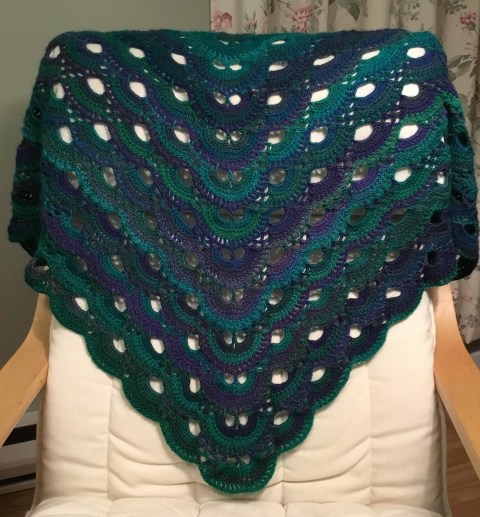 Is it because the building blocks of these particular processes are someone else’s stories that, for all the pleasures they really can offer, they don’t quite satisfy the craving for creativity in my own life, the underlying hunger for it that I am feeding with the vicarious experience of it offered through these shows? Perhaps. So what to do about that? I don’t particularly want to change up my approach to either criticism or teaching: I don’t much like criticism that crowds out its real subject (as I see it) with too much other stuff, and though I know my approach to teaching isn’t the only one (I have colleagues, for instance, who incorporate creative writing and other activities into their classes), it is one I believe in and feel comfortable with. I do have some hobbies–crochet and quilting–that give me the satisfaction of actually creating something, but it’s interesting that they are both (for me, anyway, at my limited skill level) pattern-following crafts; my self-expression in both is limited to choosing a pattern and choosing the materials. That’s not nothing, of course! (Also, crochet in particular is perfect to do while watching TV shows of other people making amazingly creative things. 😊)
Will I ever find the courage (not to mention the time) to try something else? What would it be? Would doing it badly–as I am bound to, at first and perhaps always–actually be rewarding at all? Could I ever shut up my inner critic long enough to just enjoy myself while I was doing it? (Here is where I wryly acknowledge that if only I could join in with Gilbert’s celebration of the “disciplined half-ass” I would no doubt be bolder and maybe have more fun!) The only way to find out would be to try, I guess, as I did with drawing. Maybe I should get back to that — or maybe at some point I should try a pottery class. Or try writing something that isn’t about someone else’s writing…
 It certainly is easy to fall out of the habit of blogging–and this in spite of the fact that the most fun I’ve had in the last little while was writing my two previous posts. I enjoyed doing them so much! I felt more engaged and productive than I had in a long time, not because I was fulfilling any external obligation but because I was sorting out my ideas and putting them into words. To be honest, though, in both cases I was also a bit disappointed that the posts didn’t spark more discussion in the comments, and that set me back a bit, as it made me wonder what exactly I thought I was doing here–not a new question, and one every blogger comes back to at intervals, I’m sure. I appreciate the comments I did get, of course, and there was some Twitter discussion around the Odyssey post, which as I know has been remarked before is a common pattern now–though I can’t help but notice that there are other blogs that routinely do still get a steady flow of comments. Anyway, for a while I felt somewhat deflated about blogging and that sapped my motivation for posting. I know, I know: it’s about the intrinsic value of the writing itself, which my experience of actually writing the Woolf and Homer posts more than proved–except it isn’t quite, because if that was all, we’d write offline, right?
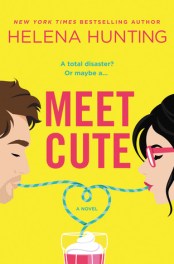 It hasn’t helped my blogging motivation that not much has been going on that seems very interesting. I certainly haven’t read anything since the Odyssey that was particularly memorable. I’ve puttered through some romance novels that proved entertaining enough but aren’t likely candidates for my “Frequent Rereads” club. Two were by Helena Hunting, a new-to-me author–Meet Cute and Lucky Charm, both of which were pretty good; one was Olivia Dade’s Teach Me, which had good ingredients but seemed just too careful to me, too self-consciously aware of hitting all the ‘right’ notes; and finally Christina Lauren’s Roomies, which was diverting enough until the heroine breaks out of her career funk by writing her first (ever!) feature essay, submitting it (not pitching it, submitting it) to the New Yorker, and learning in THREE WEEKS that it has been accepted. I’m not sure which struck me as more clearly a fantasy: the acceptance itself or the timeline.
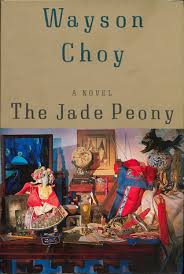 The other book I finished recently is Wayson Choy’s The Jade Peony, for my book club. I wanted to like this one more than I did. It certainly illuminates a lot about the Chinese community in Vancouver in the time it is set (the 1930s and 1940s): one thing our discussion made me appreciate more than I did at first is how deftly telling the story from the children’s perspectives lets Choy handle the historical and political contexts, as they often don’t quite understand what is happening and so our main focus is on the young characters’ emotional experiences in the midst of them. The book reads more like linked short stories than a novel, and for me it lacked both momentum and continuity as a result (that’s not my favorite genre), but many of the specific scenes have a lot of intensity and I think they will linger with me more than I initially thought.
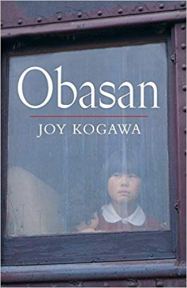 We chose Joy Kogawa’s Obasan for our next read. I’ve been trying to sort out why I’m not entirely happy about this. It makes perfect sense given our policy of following threads from one book to the next, and also Obasan is widely considered a CanLit classic, so it’s not that I don’t expect it to be a good book. I was mildly frustrated, though, that one of the arguments made in its favor was that The Jade Peony was very educational (about a time and place and culture not well-known to the group members) and Obasan would be more of the same. It will be, I’m sure, and in some ways this is an excellent reason for us to read and discuss it. But at the same time this “literature as beneficent medicine for well-intentioned consumers” approach is what turns me off
  My recent viewing has actually been more engrossing than my recent reading: we just finished watching Rectify, which I thought was superb–it is intense, thoughtful, and full of turns that surprise without seeming like cheap twists. It is very much character- rather than plot-driven, and it works because every performance is entirely believable. I hadn’t even heard of Rectify before I noticed it on a list of ‘best TV dramas’ and decided we should give it a try. It is not at all what I expected from the premise (a man is released after 19 years on death row): it is much more about how he and his family and community deal with this unthinkable change in circumstances then about the case and his guilt or innocence–though what they do with that question is also very interesting.
  I don’t write up every TV show I watch, but I just finished a complete viewing of all 12 seasons of Bones and 12 seasons is a lot–so I thought it deserved a bit of comment. (Warning: spoilers ahead.)
 My biggest bone to pick with Bones is that the writers didn’t have the courage not to marry off Booth and Brennan. I understand that there’s a lot of cultural pressure to have a romantic relationship between your male and female lead and that this is something a lot of fans wanted. Watching the first few seasons in the wake of the #metoo and #timesup movements, though, I found it really refreshing to see a man and a woman in a working relationship who didn’t lust after each other. It felt really healthy, and I enjoyed the way Booth and Brennan pushed back against the constant assumption that because they trusted and fought for each other they must also be lovers. It’s true that marriage and children add elements to a series that are useful for both plot and character development–but I can easily imagine how much richer the arcs could have been if they had married other people, especially people outside law enforcement, and then dealt with the challenges of those people’s feelings towards their work and their partnership. I knew when I started the show that they did eventually marry, so I knew it was coming; still, I was disappointed. I got used to it, though, and I admit I thought their married relationship was pretty cute overall. I’m glad they never stopped bickering, at least.
 Probably my favorite thing about the show was the science. I read around a bit to see if it was any good, and I gather it’s at least not terrible, though of course it is all sped up and simplified. (I don’t know if any of the things Angela does are plausible: I found the “Angelatron” stuff the hardest to take seriously.) Regardless of the accuracy of it all, it’s always presented as if we should find it gripping, and I especially appreciated the unapologetic enthusiasm of Brennan and Hodgins for their work. (I loved Hodgins’s experiments.) Even Booth’s frequent impatience with the “squints” didn’t detract from the fact that in this show, nerds are not just cool–they are heroic! And with the exception of Avalon the psychic, the show had little truck with unscientific theories or methods. Booth’s “gut”–and his faith–are significant parts of his individual character, but solving the case always came down to the evidence.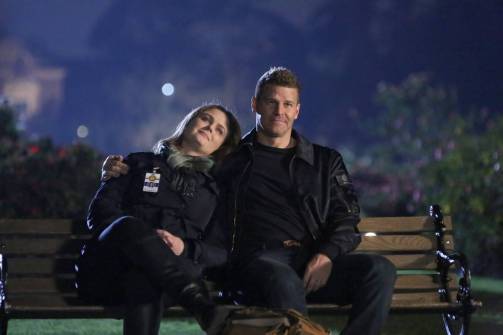

 My initial thought at this point is that overall, while I like Buffy the series better than Buffy the character, I like Angel the character more than Angel the series. I would happily watch another two or three (or more!) seasons about Angel, despite how dreadful Angel occasionally was, because I find him complicated and fascinating, whereas Buffy (though she does develop over the course of her series) always seems somewhat two-dimensional to me. I suppose this is a version of the age-old artistic problem that virtue is intrinsically less interesting than vice, except that of course with Angel we’ve got the best of both worlds: good and evil in unending tension, Angel and Angelus distinct but never entirely separable. Buffy, on the other hand, has a clear and singular role to play: while she sometimes rebels against it, when things turn bad she always, always, rises to the occasion — which is great and inspiring, because she’s strong and principled and brave and autonomous, but also somewhat predictable.
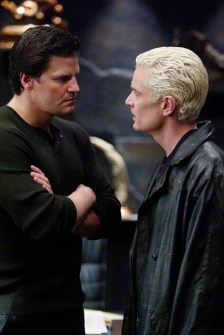
 I didn’t like the Angel ensemble as much as the Scoobies in Buffy, but another thing Angel and Buffy have in common is that they both show individual characters transforming in ways that leave them astonishingly far from where they started but that somehow happen in utterly believable ways. Other long-running shows I’m familiar with put fairly consistent characters into lots of new situations, but what happens with Spike in Buffy happens with both Cordelia and Wesley in Angel. If you’d told me while I was watching Buffy that one day Wesley would make me cry, I would not have believed you! As for Cordelia, I couldn’t possibly do better than
 It’s a busy time at work, with papers and midterms piling up a bit, so it’s still a bit quiet over here at Novel Readings.
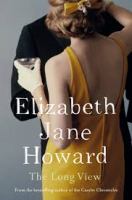 The “literary” book I’ve been reading “for fun” is Elizabeth Jane Howard’s The Long View, which I bought after my book club read and enjoyed
  Also, when I’m busy and distracted, the lure of television is very strong! And, conveniently, Netflix recently dropped two tempting series — the fourth season of
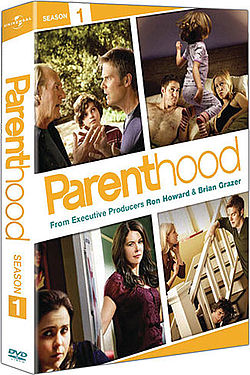

 It has been very quiet around here, I know. It’s a combination of re-adjusting to the start of term and having been hard at work on my review of Rebecca Mead’s My Life in Middlemarch for the next issue of Open Letters Monthly, which has taken up the couple of hours each day when I have both time and energy for writing. I’ve been getting up pretty early (for me, anyway) a few days a week to get in some regular exercise, and that has meant I fade sooner at night, too.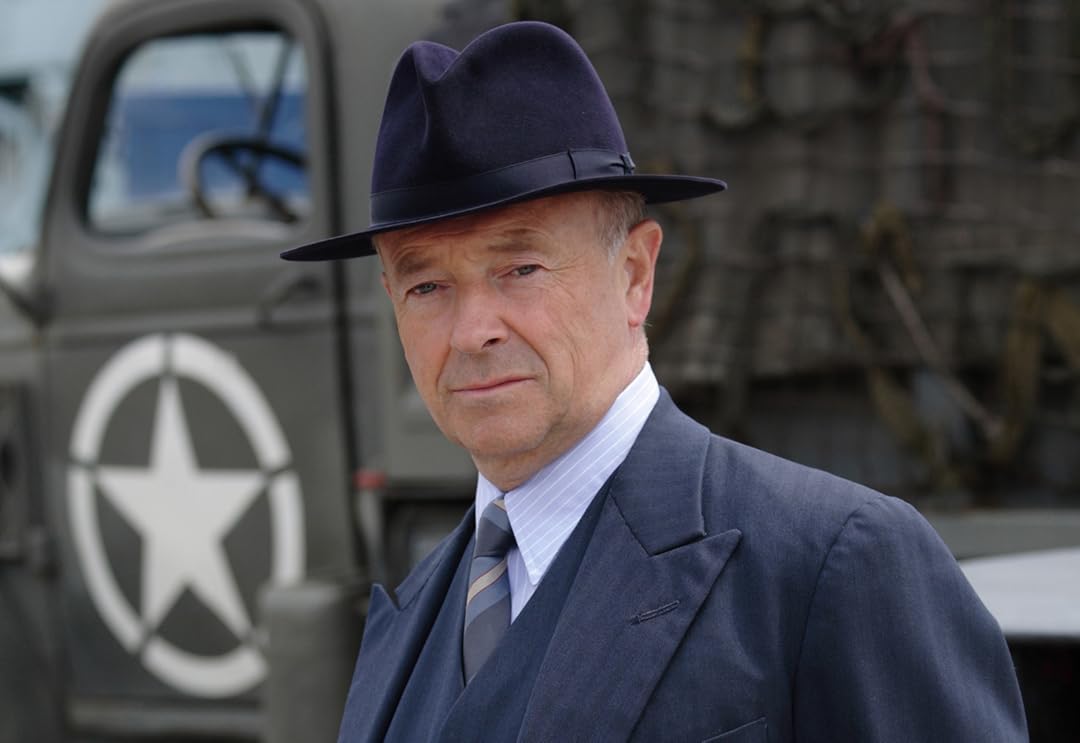
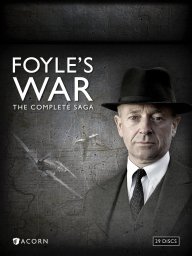
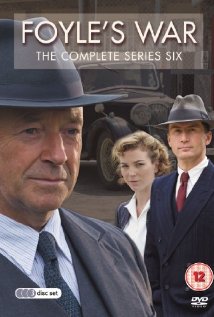 I started S6 Episode 1 this morning so I’ve just entered the post-war world, though as the characters and stories emphasize, VE Day has not magically restored the world to idyllic happiness. The war Foyle was fighting continues unabated, returning soldiers struggle with how both they and their old lives have been transformed, and the realignment of the wider political world is creating new enmities. Also, Milner’s become a bit of a jerk. Wondering how this will go will be a good motivation to face another early morning session on the treadmill tomorrow!
 Novel Readings