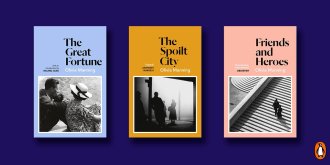
 It’s not that I haven’t been reading. In fact, in the last couple of weeks I reread all three novels in Olivia Manning’s Balkan Trilogy, which is, cumulatively, over 900 pages. This is because I’m going to be writing up something about them for the TLS to mark the nice new reissues by Windmill Books. What exactly I’m going to say is something I’m still working out: the problem is not too few ideas but too many, given what strange and fascinating and provoking books these are. But because I have a formal writing project to do about them, I won’t be adding anything about them here. (I blogged about the whole batch years ago when I first read them, and I also reviewed Deirdre David’s outstanding biography of Manning for Open Letters Monthly.) Also for a review, I read The Appraisal and Deceptions by Anna Porter, two mystery/thrillers set in the very fascinating (under)world of buying and selling fine art masterpieces. My review will be out in Canadian Notes & Queries
 soon: the tl;dr version (though it’s actually quite a short review anyway!) is that they are good and have real historical and moral depth behind the genre-fiction surface, especially through the way their stories reach back to Hungary’s fascist and Soviet-dominated past. My mother kindly just shipped me her copy of Porter’s memoir The Storyteller, apparently out of print now, which I am looking forward to reading.
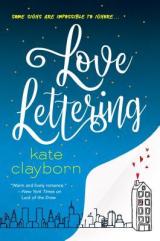
 I’ve done some other reading “just” for myself and it’s really here that I’ve felt that things are not going so smoothly. The books have been fine. Well, two of them have been fine: Jo Baker’s The Body Lies and Kate Clayborn’s Love At First. Baker’s is the next one we’ll be discussing in my book club: because we are all tired, stressed, and distracted, people wanted something plotty, and I took on the job of rounding up some crime fiction options that looked like they would also be “literary” enough for us to have something to talk about. I think we chose reasonably well with The Body Lies: it purports to be a novel about both violence against women and about how that violence is treated in so much crime fiction, meaning it has a metafictional aspect that adds interest beyond the novel’s own story. I finished it quickly, because I found it quite engrossing, so that’s a good sign in a way–but I also finished it unconvinced that it had avoided the trap of reproducing the things it aims to critique. I read it too soon, as we won’t be meeting up for a while, so I’ll have to reread at least part of it before our discussion to refresh my grasp of the particulars: I’ll come to that rereading with this question top of mind.
 I was really excited for the release of Love At First because I am a big fan of Clayborn’s previous novels: they are in the relatively small cluster of romance novels that I have appreciated more the more often I reread them (which in this case has been quite frequently), because she packs a lot into them. That complexity, which can make them seem a bit cluttered at first, turns out (for me at least) to give them more layers and more interest than I often find in recent examples of the genre, which are either too thin and formulaic to sustain my interest or try too obviously to check off too many boxes, making them read like they were designed by focus groups, rather than emerging in any way organically. I really enjoy the intense specificity of her characters and their lives, including their work, which she pays a lot of attention to (yay, neepery). I feel a bit deflated by Love At First, because it seemed – while both very sweet and very competently written and structured – a lot less interesting and a lot less intense than the others. For the first time reading Clayborn, I felt I was reading something almost generic: the story goes through the motions rather than jumping off the page. I’ll reread it eventually: maybe I will find more in it then. I did like it! But I had hoped to really love it, and I didn’t–at least not at first. 🙂
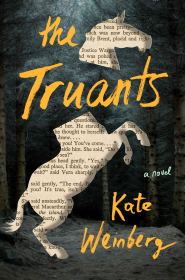 And speaking of books I don’t love, I have stalled half way through Kate Weinberg’s The Truants. It showed up on my radar around the same time I was looking into The Body Lies and they seemed so well paired that I ordered them both at the same time. Now I wonder what got into me: I started, hated, and quickly abandoned Donna Tartt’s The Secret History and everything about The Truants (including many of the blurbs!) signals that it is in the same vein. There’s nothing wrong with it qua book; it seems deft and clever and (like The Body Lies, but in a different way) it is also aiming at something metafictional through its engagement with Agatha Christie and ideas about how crime fiction works. But I can’t stand academic stories that turn on cults of personality around professors, which are creepy and and antithetical to everything I believe about teaching, not to mention about student-teacher relationships (hello, Dead Poets Society, which once upon a time I found enthralling but now consider kind of appalling). Also, while I try not to hold academic settings up to reductive standards of realism — and I’m also aware that I don’t understand the British system being portrayed very well, so I can’t actually be sure if I’m right when my reaction is “but this isn’t what we do!” — it gets distracting when the scenarios seem too far off. I have not so far managed to get genuinely interested in any of the characters, which means I keep not picking the book up to read further, which in turn means I’m also not picking up anything else because I feel as if I should finish it first. That’s a foolish “should,” I know, though I am by habit and on principle someone who does mostly try to finish the books I start, in case they get better or I figure out how to read them, both things that have happened often enough to make me hesitant to toss things aside. I’m not going to toss this one aside, or at any rate I’m not going to put it in my malingering “donate” stack (how I wish the book sale was once again able to accept donations, as this stack is getting kind of large!). Instead, I’m going to put it back on my Mysteries shelf and try it again another time.
 I think I need to read something richer and more challenging to turn things around — and to do that I need to stop making excuses about distractions or poor concentration. Reading, including reading well, is a decision we can make, I honestly think, and it’s not just that I feel disappointed in myself when I’m not doing it; it’s also that my life overall feels worse without it. One of my favorite quotations is from Carol Shields’ wonderful novel Unless: “This is why I read novels: so I can escape my own unrelenting monologue.” My current unrelenting monologue (like most people’s these days, I expect) is not a particularly sustaining one: I need reading to give me other stories to think about. I need blogging for the same reason, I find: it is still the only writing I do that feels genuinely my own. This is not by way of making some kind of bold resolution about either reading or blogging, but it actually helps just putting into words why I hope I will be doing more of both.
 It hasn’t been a good stretch for me in my romance reading. I haven’t read anything since Love Lettering that I expect to re-read, which for me is the real sign of success: since I found my groove as a romance reader (nearly a decade ago, now!), romance has filled a nice niche for me as my go-to genre for incidental reading, books that divert, distract, and cheer me when I don’t have the time or am not in the mood for heavier options. I don’t mean to belittle the genre at all with this characterization. I have always read and reread books in that spirit, but they used to be mostly ‘light’ mysteries (Dick Francis, for instance) or relatively undemanding but satisfying general fiction (Anne Tyler, Joanna Trollope). I still reread old favorites in those genres too, but now my interstitial reading (as I have come to call it) also includes Georgette Heyer and Loretta Chase, Courtney Milan and Kate Clayborn.
 What is it that makes rereading–sometimes frequent rereading–pleasurable? Why do some books invite and reward it and others not? I reread for a living, of course, and for the books I teach the answer usually has to do with complexity: with layers of meaning and intricacies of language or form. Books teach well that don’t reveal themselves completely on a first try–otherwise what is there to talk about, after all? The better you know a book like that, the more you appreciate on each reading: the pleasure itself gets more complicated and multidimensional. That’s not (or not quite, or not usually) the same with the mysteries or romances I reread, though–or with writers like
  But not every romance novel inspires rereading for me, even if I enjoyed it just fine the first time. Sometimes there’s an obvious problem–stilted prose, unconvincing characters, a plot that feels too utterly contrived, leaden dialogue–but others fall flat for no reason I can really put my finger on. The recent string of books that prompts this post included just one of the first kind (Tessa Dare’s The Wallflower Wager, which felt creaky from the get-go and then lumbered predictably along while trying to be spritely and witty, which is the worst effect for me) but mostly books of the second sort, where nothing was overtly wrong but they still didn’t do much for me. Get A Life, Chloe Brown was like that–it was perfectly fine, sometimes even charming, but when I was done, it went straight into the ‘donate’ pile. Ditto Mhairi McFarlane’s Don’t You Forget About Me, and Lucy Parker’s Headliners, and Alyssa Cole’s A Duke by Default. This morning I finished Linda Holmes’s Evvie Blake Starts Over and overall I enjoyed it the most of this recent batch–though I’m not 100% sure it qualifies as romance. (It sits on the fuzzy line between contemporary romance and “chick lit” or “women’s fiction,” especially as it doesn’t quite serve up the requisite HEA–its ending is a very nice happy-for-now one.) If I went back a couple of months, I could give a much longer list of titles–very few of them actually bad but also few of them particularly good. (In romance as in all reading, of course, YMMV, and these are all books others have enjoyed a lot. Love works in mysterious ways, I guess! As we say on Twitter, “don’t @ me.” 😉 )
 When I mentioned my discouraging string of “meh” romance reads on Twitter,
 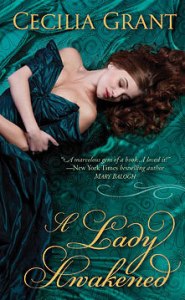 Although my relationship with romance has come a long way since my first skeptical and ill-informed attempts at reading in the genre, I do sometimes get fed up. As I mentioned in that Twitter conversation, I “DNF” romance novels far more often than books of any other kind, and while it’s possible that this result is mostly about me (as a reader or a person, who knows) it’s hard not to think it also says something about the genre, though what exactly that is, I’m not sure. But it’s also true that most romance novels are relatively fast reads, which is why I can get through so many of them in such a short time. Perhaps, proportionally, the hits and misses are not really that out of line with the rest of my reading–they just stack up more quickly! That also means that each romance novel on its own is a fairly low risk endeavor (certainly compared to, say, Ducks, Newburyport, which so far I dislike much more intensely than any of the romances I have picked up and put down without finishing, and which will require a vastly greater investment of time and effort to get the rest of the way through). Moreover, when I do find a romance novel I really like, the pay-off is disproportionately large because of how often I am likely to end up rereading it. I have now read all three of Kate Clayborn’s ‘Chance of a Lifetime’ trilogy three or four times each, for example, and will no doubt reread them again before too long; the same is true of Cecilia Grant’s ‘Blackshear Family’ series, the first one of which, A Lady Awakened, I recently reread with great pleasure. There are even some individual scenes that make the whole exercise worthwhile! Sometimes I pick up Heyer’s Devil’s Cub just to reread the chapter in which Mary, all unwitting, tells the Duke of Avon about her misadventures with his wayward son Vidal: it’s the perfect antidote for a fit of gloom, a reliable dose of “restorative pork jelly” (an allusion other Heyer readers will appreciate!).
 Ring out the old, ring in the new,
 The first time I read Beginner’s Luck I felt that there was so much going on that it got a bit distracting. Maybe this has something to do with my expectations for romance: though there is a lot of emotional intensity in Clayborn’s novels, the central relationship is embedded in a lot of what seemed like padding. It turns out, though, that for me anyway this is exactly what makes her books fun to reread, as more of the novels’ patterns–the connections between their parts–become clearer over time. At the same time, it’s the emotional intensity that means I give a pass to what might otherwise bother me about them, which is that the love story relies (more so in the second and third books in the trilogy than the first) on an initial set-up that seems, if you think about it hard at all, pretty contrived or unlikely. This is especially true of Luck of the Draw, which has nonetheless turned out to be my favorite of the trilogy.
 The Witch Elm has been written about a lot elsewhere; of the reviews I’ve read, I think
  It certainly is easy to fall out of the habit of blogging–and this in spite of the fact that the most fun I’ve had in the last little while was writing my two previous posts. I enjoyed doing them so much! I felt more engaged and productive than I had in a long time, not because I was fulfilling any external obligation but because I was sorting out my ideas and putting them into words. To be honest, though, in both cases I was also a bit disappointed that the posts didn’t spark more discussion in the comments, and that set me back a bit, as it made me wonder what exactly I thought I was doing here–not a new question, and one every blogger comes back to at intervals, I’m sure. I appreciate the comments I did get, of course, and there was some Twitter discussion around the Odyssey post, which as I know has been remarked before is a common pattern now–though I can’t help but notice that there are other blogs that routinely do still get a steady flow of comments. Anyway, for a while I felt somewhat deflated about blogging and that sapped my motivation for posting. I know, I know: it’s about the intrinsic value of the writing itself, which my experience of actually writing the Woolf and Homer posts more than proved–except it isn’t quite, because if that was all, we’d write offline, right?
 It hasn’t helped my blogging motivation that not much has been going on that seems very interesting. I certainly haven’t read anything since the Odyssey that was particularly memorable. I’ve puttered through some romance novels that proved entertaining enough but aren’t likely candidates for my “Frequent Rereads” club. Two were by Helena Hunting, a new-to-me author–Meet Cute and Lucky Charm, both of which were pretty good; one was Olivia Dade’s Teach Me, which had good ingredients but seemed just too careful to me, too self-consciously aware of hitting all the ‘right’ notes; and finally Christina Lauren’s Roomies, which was diverting enough until the heroine breaks out of her career funk by writing her first (ever!) feature essay, submitting it (not pitching it, submitting it) to the New Yorker, and learning in THREE WEEKS that it has been accepted. I’m not sure which struck me as more clearly a fantasy: the acceptance itself or the timeline.
 The other book I finished recently is Wayson Choy’s The Jade Peony, for my book club. I wanted to like this one more than I did. It certainly illuminates a lot about the Chinese community in Vancouver in the time it is set (the 1930s and 1940s): one thing our discussion made me appreciate more than I did at first is how deftly telling the story from the children’s perspectives lets Choy handle the historical and political contexts, as they often don’t quite understand what is happening and so our main focus is on the young characters’ emotional experiences in the midst of them. The book reads more like linked short stories than a novel, and for me it lacked both momentum and continuity as a result (that’s not my favorite genre), but many of the specific scenes have a lot of intensity and I think they will linger with me more than I initially thought.
 We chose Joy Kogawa’s Obasan for our next read. I’ve been trying to sort out why I’m not entirely happy about this. It makes perfect sense given our policy of following threads from one book to the next, and also Obasan is widely considered a CanLit classic, so it’s not that I don’t expect it to be a good book. I was mildly frustrated, though, that one of the arguments made in its favor was that The Jade Peony was very educational (about a time and place and culture not well-known to the group members) and Obasan would be more of the same. It will be, I’m sure, and in some ways this is an excellent reason for us to read and discuss it. But at the same time this “literature as beneficent medicine for well-intentioned consumers” approach is what turns me off
  My recent viewing has actually been more engrossing than my recent reading: we just finished watching Rectify, which I thought was superb–it is intense, thoughtful, and full of turns that surprise without seeming like cheap twists. It is very much character- rather than plot-driven, and it works because every performance is entirely believable. I hadn’t even heard of Rectify before I noticed it on a list of ‘best TV dramas’ and decided we should give it a try. It is not at all what I expected from the premise (a man is released after 19 years on death row): it is much more about how he and his family and community deal with this unthinkable change in circumstances then about the case and his guilt or innocence–though what they do with that question is also very interesting.

 Over the past week I read three novels. Only one, Michele Roberts’s
 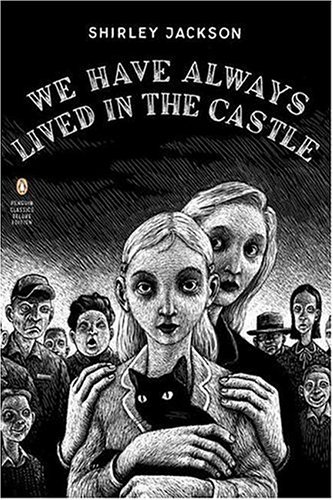 For my book club, I read Shirley Jackson’s We Have Always Lived in the Castle. What a treat that was. It’s like a perverse inside-out fairy tale. In our discussion of it, we got particularly interested in the way it destabilizes our sympathies. There’s the initial instinct to side with the narrator, which of course quickly turns out to be a mistake, except that she is being persecuted–though not unfairly, since after all, she is a murderer. Jackson evokes the horror of mob violence as well here as she does in “The Lottery”: the scene that begins with the fire chief throwing the first stone unfolds in an equally horrifying way–except that at least one of the targets is in no way an innocent victim, and later on, some of the villagers seem to be horrified, in their turn, at what they’ve done. We puzzled over Merricat’s motivation, or rather, over whether she has one, for killing her family. The suggestion seems to be that she didn’t much like being sent to her room without dinner, or in any way being thwarted or crossed. So the murders may be the act of a vengeful narcissist, a spoiled brat gone rogue. On the other hand, maybe there is no reason, which in its own way is even scarier. It’s a brilliantly written little book. I was hooked from the first paragraph, which is a perfect combination of whimsy and menace:
 I expected Sarah MacLean’s The Day of the Duchess to be a lot of fun too, but I really didn’t enjoy it and ended up skimming the last third or so of it just to get to the end. I have liked some of MacLean’s romances a lot, including The Rogue Not Taken, the first one in this series, but this book tilted too far towards the “feels” for me: it’s all angst and yearning, without any frolicking. I’m not necessarily saying it isn’t well done. It’s just that my own taste in romance tilts instead towards comedy. Also, more than I remember noticing in MacLean’s books before, The Day of the Duchess is full of the kind of writing that seems meant to force feelings on you, rather than allow you to arrive at your own reactions–lots of fragments, and lots of single line paragraphs, devices which to me almost always backfire: rather than increasing the impact of the line, they make it seem artificial, especially if the trick is used over and over again. I’ve been trying to think if there are any consistently serious romances that I really like. Laura Kinsale’s Flowers from the Storm is the only one I can come up with. Blame my inner cynic, which, as I’ve said before, makes me accept an HEA only if it doesn’t take itself too seriously.
 I didn’t plan it this way, but it turns out that teaching Lord of Scoundrels at the end of a term that has also included Bleak House, Adam Bede, and Tess of the d’Urbervilles is a good way to bring home the truth of
  And yet, while the overt and (ultimately) happy sexiness of Lord of Scoundrels is indeed “awesomely excellent,” it’s not entirely fair to set up modern romance fiction as the positive alternative to punishing Victorian fiction, which I think can actually be quite “sex positive,” albeit usually in a much more subtle, and sometimes perverse, way. For one thing, the women who pay such a high price for breaking society’s rules are very often portrayed as victims: the novelists direct our disapprobation not against them but against the world that treats them so cruelly for something so understandable or natural. Lady Dedlock should not have died cold and alone reaching for her lover’s grave: all the moral and emotional force of Bleak House is directed against that outcome. It’s true that the implication may still be that she has sinned, but she deserves to be forgiven and brought back into the loving embrace of her long-lost daughter, our moral exemplar. Eliot and Hardy make it particularly clear that their “erring” heroines are participating (more or less willingly, of course) in a natural process made shameful and dangerous by social codes, not because it is intrinsically wrong. If only some reconciliation could be made between flesh and spirit, between nature and law — so much shame and fear and violence could be avoided!
 You’d think from my recent blog posts that I wasn’t doing anything but teaching these days! That’s not quite true, but like a lot of people I know, I’m finding myself too distracted to get a lot of “quality” reading done in my leisure time – what ability I have to concentrate hard I’m expending on work, and on books I am reading for off-blog reviews that have deadlines. The rest of the time my reading alternates between anxiety-inducing news stories and pleasantly diverting romance novels.
 I have some completed reviews that should see the light of day in the near future. One of those is my TLS review of Danielle Dutton’s Margaret the First (which I loved); another is my Quill & Quire review of Jean McNeil’s The Dhow House (which is strange and uncomfortable and gripping); and the last is my review of Yasmine El Rashidi’s Chronicle of a Last Summer, which I wrote last summer and is expected to show up, at long last, in The Kenyon Review Online in early March. Though there are some down sides to all this reviewing, one definite up side is that it has made me a bit more sure-footed as a critic, including with books that are not obvious “fits.” I can’t really say if I am developing my critical voice or style: I’m not deliberately trying to do anything other than what I’ve always done here and at OLM, which is find the best way to express whatever I think about the book. I don’t focus on answering “should I buy this book or not?” — because that’s the kind of review I find the least interesting to read — but instead I try to figure out what kind of book it is and what’s the most interesting conversation for me to have with it or about it. Academics (myself included) often hesitate to get into conversations outside their official area of expertise: this is an anxiety I have largely overcome when it comes to fiction, partly because blogging loosened me up so much as a reader and a writer, and partly because the more I teach, the more I’m aware that my expertise is as a reader — it’s my skill and experience at reading, as much as or more than my body of scholarly knowledge, that equips me to do this kind of criticism.
 As for my romance reading, I’ve been rereading some favorites, just for the good cheer (Georgette Heyer’s Devil’s Cub, for instance, and Tessa Dare’s Any Duchess Will Do), but I’ve also read a scattering of new ones. I have all of Courtney Milan’s Brothers Sinister novels but hadn’t gotten to
  I read Eloisa James’s Seven Minutes in Heaven and thought it was fine — as I mentioned on Twitter, I especially appreciated the heroine’s competence, which is a quality not often portrayed as attractive, and I enjoyed following the character through to their HEA. I also read Fool for Love, which I chose somewhat at random from the ebooks the library had available: I liked the set up but was a bit let down by the conclusion, for reasons I won’t give in case they are spoilers! I have yet to really fall in love with one of James’s novels. They seem very competent and usually keep me interested to the end, but they don’t make me laugh the way Loretta Chase’s do, and I don’t find them as entertaining as Tessa Dare’s (which seem more sprightly, somehow) or as touching as my favorite among Mary Balogh’s. Maybe I haven’t found the right one for me (not all of Dare’s work well for me either, after all).
 Now I’m rereading Ruthie Knox’s Truly: I liked it the first time, partly for the beekeeping ‘neepery,’ and it’s holding up well on a reread. I am starting to feel a bit restless, though, as if it’s almost time for me to read something else again. I picked up Lillian Boxfish Takes a Walk on a recent trip to the bookstore: it looks like it might be a good intermediate step between light and really serious reading.
 I’ve just finished two Scottish-themed romance novels — Sarah MacLean’s A Scot in the Dark and Tessa Dare’s When a Scot Ties the Knot — and they have enough similarities that the juxtaposition has provoked me to figure out why I enjoyed one so much more than the other, a question that quickly expanded, in my mind, to the more general question of why some romance novels work for me and others just don’t, including novels by the same authors. Of these two, for instance, I much preferred Dare’s, though I really enjoyed The Rogue Not Taken, the previous novel in MacLean’s “Scandal & Scoundrel” series, and I liked but didn’t love Dare’s most recent novel, Do You Want to Start a Scandal.
 For instance, I have mentioned before that I don’t always read right to the end of the HEA. This is partly because while I can enjoy the development of a romantic relationship, especially when it involves witty sparring and plenty of sexual tension, I don’t find unmitigated happiness (which is where, of course, romance novels always end up, sooner or later) that dramatically interesting. But it’s also because I don’t really believe marriage itself is necessarily a particularly blissful state. For both of these reasons, the rosier things get for the protagonists, the more disengaged I become from their novel. Thus I usually prefer romances that defer the protagonists’ happiness until the end of the novel, or very nearly. In a lot of Georgette Heyer’s novels, for example, hero and heroine don’t come joyfully together until pretty much the last page. That keeps things interesting! Our attention then is also less on how delightful they find each other and more on their learning about each other, and / or on wondering how they will ever discover how delightful they are to each other, or on how they will overcome the personal or social obstacles keeping them apart.
 I also often find with more recent romances that the protagonists get intimately sexy too soon and too often for my taste. I don’t think this means I’m prudish! No doubt it’s partly the result of many years spent reading Victorian novels, which are full of erotic undercurrents but have vanishingly few explicitly sexual moments. When feelings (and body parts) are usually kept covered, it’s that much more exciting when you finally get a glimpse! As well, I don’t think lust and love are the same thing, and sometimes — including in A Scot in the Dark — they get too quickly conflated. I suppose this is a variation on my preference for deferring their happiness, and it’s also about the sacrifice of tension involved. (I think there may also be some problems with realism — but I’m really not an expert on sexual mores during the Regency, so I may be quite wrong about what well bred men and young, “respectable,” unmarried women would get up to in their carriages without anxiety, shame, or repercussions.)
 A specific romance-reading preference of mine that I know is about me more than about the novels is that I have a fondness for bluestocking heroines, or at least ones with an intellectual passion, who have a lot more on their minds than romance. I love Dare’s A Week to be Wicked and Courtney Milan’s The Countess Conspiracy for this reason, and of course my favorite romance of all — so far — is Loretta Chase’s Mr. Impossible. Madeline in When a Scot Ties the Knot, with her passion for illustrating natural history, is a good addition to this collection. I also prefer more mature heroines, and I have a fondness for prickly ones, like Claudia Martin in Mary Balogh’s Simply Perfect. I find ingenues annoying and get bored easily by heroines who are too nice. It’s not hard to see that I appreciate romance novels that show women at least somewhat like me as lovable!
 The other day while idly browsing the ever-changing array of titles on ‘special’ at Kobo, I happened across Laura Kinsale’s Flowers from the Storm for only $1.99. Not long ago, the same thing happened with Loretta Chase’s Lord of Scoundrels. What serendipity — two of my favorite romances! The alacrity with which I snapped up both titles (hooray – no more waiting for library copies) was a reminder of how much has changed for me since my first forays into reading romance.
 I have read some things badly that I know I could learn to read better — Ford Madox Ford’s
  For me, romance is an interesting in-between case. I had no external obligation to get anywhere with it. But my curiosity was roused by following discussions about it among other readers who clearly enjoyed it and found interesting things to say about it. I think what stood out the most is how often they talked about reading romance in terms of pleasure — which is not to say the conversations didn’t get critical, or didn’t address complicated topics. But it seemed like for a lot of people reading romance (and talking about it together) was really fun, and that was enticing. Given that my early experiments in the genre were not very successful, I might not have tried again, FOMO notwithstanding, if it weren’t for those other readers both challenging and encouraging me — and finding, before I’d soured on the project, some romances that were easy for me to like. That line crossed, I pretty rapidly got better at reading in the genre. This is not to say I have any special insights about it: just that I have acquired a reasonable working awareness of important conventions and styles. Because I’ve also now done some reading about romance, and have followed and even contributed to a lot of informal and formal discussions about it, I also have a decent, if still somewhat superficial, understanding of the history of and cross-currents within the genre. I don’t like every romance novel I try any more than I like every mystery novel I pick up, but in both cases I feel equipped to read them, if that makes sense.
 Getting back to Lord of Scoundrels, the problem I had with it at first is that I thought it was ridiculous: melodramatic, overwritten, heavy-handed. I still think it is some of these things, some of the time — but I experience them quite differently: as playful, as tongue-in-cheek, as intertextual, as sexy. Now I enjoy the novel’s wit in a way I couldn’t before, because then I was too distracted by my initial negative reactions; now I appreciate its strong-minded heroine, not just on her own merits but because I have met more of her literary sisters. I can’t remember exactly the sequence that brought me back to Lord of Scoundrels in a more receptive frame of mind: my 2012 progress report notes that “I have yet to read a ‘historical’ that I really like” and mentions Heyer’s Sylvester in particular as a failure — and Sylvester, too, is now a favorite, though not nearly as much as Venetia or Devil’s Cub. (Jessica and Mary Challoner would get along just fine: they could compare notes on the beneficial effects of shooting alpha males in the shoulder — a link between the novels that I’m sure Chase makes quite deliberately.)
 Novel Readings