 We don’t stay up until midnight on New Year’s Eve anymore. I can’t remember when we gave up on this tradition, exactly. The last New Year’s Eve I specifically remember was 1999-2000: remember the Y2K panic? We didn’t really expect a dramatic catastrophe on the stroke of midnight, but it was hard not to wonder just what would go wrong. I think we rang in the New Year a few times after that, but there came a point at which it was just too obvious that nothing significantly changed with a new date, and also while the children were small, staying up late on purpose when we were already tired all the time didn’t make much sense. This is one way in which I have broken with my upbringing: to this day my intrepid parents and whoever’s celebrating with them stand out on their front porch in Vancouver and listen for the ships in the harbor to tell them when it’s officially midnight, then bang enthusiastically on pots and pans — a ritual I participated in with glee for many years. (To my knowledge, none of our neighbors ever complained.) I don’t think they still have Pêches Flambées for dessert, though: that used to be the showy finale to our elaborate New Year’s Eve dinner.
 Anyway, here we are now, writing 2017 instead of 2016 but otherwise puttering along more or less as usual. For me, that means getting things in order for my winter term classes, which begin on Monday — a week later than is typical, which has been a real boon. The campus itself, including the administrative offices, opened up this week, so I’ve been able to get handouts printed and copied and all kinds of other preparatory business done, including a trek across campus to scout out the room where I’ll be teaching ‘Pulp Fiction,’ which is in an unfamiliar building. Will that preemptive action ward off anxiety dreams about getting lost en route? Here’s hoping.
It’s ‘Pulp Fiction’ that I’ve been working on the hardest so far, because although it is “just” a first-year writing class using popular fiction for its main texts, most of the readings are ones I haven’t taught before, which means I have no notes or handouts or exercises or assignments to draw on. The general remarks I want to make about the course’s aims and interests are also affected by the shift in focus to ‘pulp fiction’: I’ll be talking more than usual about canonicity, for example, and paying more attention than usual to best practices for talking and writing about difficult topics, or about books that include problematic language (like the racial slurs in Valdez is Coming). As Westerns are the first genre we’re working with, I am also working on synthesizing the historical and contextual material I’ve been reading (which is all new to me) into lecture notes.
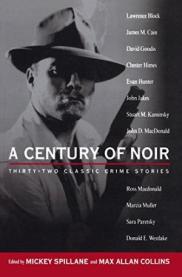 The very first reading we’re doing, though, is a nifty little short story by Lawrence Block called “How Would You Like It?” I often begin the fiction unit in an introductory class with Kate Chopin’s “The Story of an Hour”: it’s really short, but also full of things to talk about, so it makes a great warm-up exercise. It didn’t really fit ‘Pulp Fiction,’ though, so I hunted through my anthologies looking for something else equally brief that would help us get some key literary terms on the table right away while also (hopefully) catching people’s interest. I found the Block story in an excellent anthology called A Century of Noir; though it actually isn’t exemplary of noir, I liked that it was twisty as well as short, so I thought I’d try it out. One of the topics I always address early on is point of view, along with the different options for narrators; the story will work well for that, and it also provocatively introduces questions about vigilante justice that we will be discussing with both our Westerns and our mystery readings.
 My other course this term is 19th-Century British Fiction from Dickens to Hardy. As regular readers will know, I do this class (or its prequel, 19th-Century British Fiction from Austen to Dickens) pretty much every year, but I mix up the reading lists at least a little every time to keep it fresh. This year I’m using almost the same list as in 2013, which was organized around the theme of “troublesome women”: then, we read Bleak House, Cranford, The Mill on the Floss, Lady Audley’s Secret, and Tess of the d’Urbervilles. (More recently, in 2014-15, the list was Villette, Great Expectations, Middlemarch, The Odd Women, and Jude the Obscure.) This year I’m substituting Adam Bede for The Mill on the Floss: I think Hetty’s sad story will make a nice complement to both Lady Dedlock’s and Tess’s. I have taught Adam Bede several times in graduate seminars, but never in an undergraduate class, so I’m curious to see how it goes over. Because I have never actually lectured on it, that means a bunch of new prep there too, but otherwise I’m on pretty familiar ground in this course.
I haven’t made any particular resolutions about research or writing for the new year — which doesn’t mean I don’t have ambitions in these areas, just that at this point I’m mostly still thinking over my priorities. I submitted three book reviews over Christmas (you can see one of them now in the January issue of Open Letters) and I have a couple more lined up. I’m never sure how much other writing I’ll manage during a teaching term, especially one with this much new prep. I will certainly keep up my blogging, though. Novel Readings will be 10 years old later this month, which is somewhat astonishing! I was reading Tom’s New Year’s post at Wuthering Expectations and feeling a bit sheepish that my own blogging (meaning, in part, my own reading) is so much more random than his: what a journey he has been on, since he too started up in 2007. But one of the great pleasures of blogging for me is being able to go wherever my interests take me — or my life and work. I will almost certainly say more about blogging and what it has meant to me when that anniversary arrives.
The one way in which I really hope 2017 is not like 2016 is in the level of angst around my professional life. I’m not doing as well as I’d like at putting my promotion debacle behind me, but though it can still work me up into mental knots when I think about it, I am certainly not thinking about it as often anymore. It would help not to be constantly running into the people responsible for it, but there’s not much I can do about that. I mostly don’t mutter epithets under my breath as I pass them in the hallway now: that’s progress, right? And one resolution I do have is, as I said in my post about my year in writing, “to stop seeking validation on other people’s terms.” This is a very hard habit for me (and most academics) to break, but if nothing else good comes from last year’s experience, it has certainly clarified for me just how debilitating and counterproductive it is to focus on getting approval, rather than on doing the work.
So, 2017! Bring it on.

 Earlier this year there was a lot of buzz when a Princeton professor published a “
 I have been thinking about the question of failure in academia again since my promotion was denied. The appeal is ongoing, so I don’t yet know how the story will finally turn out, but no matter how it does, the fact will always remain that I was not successful in this process.** It has recently occurred to me that one reason last year was so difficult for me is that when things took a turn for the worse, one of my most intense reactions was humiliation. I felt profoundly embarrassed, because I had been held up for scrutiny and found wanting: I had not passed the test, and in this world, that feels not just like a professional evaluation but also like a very personal and all-too-public shaming. I know that this is not an entirely rational response, but I bet it also isn’t unusual for academics who fail in this way, especially when you add in
  What I have been thinking about more recently, though, is how much worse this cringing attitude made the whole experience for me, because it led me to be not just discreet but downright secretive about what was going on. I’m not saying that I should have made all aspects of the case public (and I don’t plan to now, either): I have some doubts about the advice on
  I don’t rule out that some of the intensity of my own reactions might be idiosyncratic: I myself was surprised that I took it all so hard, and that has been cause for some self-reflection. (Indeed, I have experienced fits of meta-failure in which I have been thoroughly unimpressed with myself for not handling everything better!) That’s what got me thinking again about the general context, though — about what failure means and how failure is treated in the academic world. And it also got me thinking about other failures in my own life, along the lines of the ‘CV of Failures.’ It isn’t, after all, as if this is the first time I have swung at something and missed. So in the spirit of Johannes Haushofer, here are a few more of my own failures. I’ll restrict the list to things that quantify more easily than, for instance, my general failure to thrive during my graduate coursework, and that are on a larger scale than, say, the many books I have failed to understand.
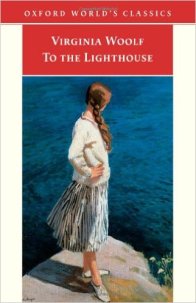 I’m reading To the Lighthouse for the first time. I know, I know. I also know that I should love it, because it is beautiful and moving and brilliant and original — and I sort of do, so far, except when I don’t. I am not a particularly good reader of Woolf’s fiction: it was only a few years ago that I finally read
  “Time passes.” It’s such a neutral-sounding phrase, almost like a stage direction, one that requires all the director’s ingenuity to show us its truth without taking us through the whole chronology. It’s an obvious truth, one we’re all perfectly well aware of, but we feel it deeply only during what George Eliot calls “one of those rare moments of experience when we feel the truth of a commonplace,”
 You see, I’ve been working on these off and on since 1993. I was newly married then and still not quite accustomed to the amount of golf my husband likes to watch on TV every weekend. Since it was hard to get away from the TV in our small apartment, and it didn’t seem very friendly (or very practical) to absent myself from home altogether, I decided to take up some hobbies that would keep my hands busy and give me a sense of accomplishment while I watched golf with him. A long-time reader of Tudor fiction, I was also working on a dissertation about Victorian historical writing, including Agnes Strickland’s Lives of the Queens of England— one way or another, Henry VIII and his wives had been in my life a long time. My thesis also included a chapter on the symbolic significance of needlework in Victorian historiography! So I was pretty excited when I chanced on a pattern in New Stitches magazine for Katherine Howard (wife #5, beheaded, in case you can’t keep them all straight). and even more excited when I realized it was part of a series and I could order the back issues, which I did. Over the next few years I completed four of the queens (Katherine Howard, Anne of Cleves, Katherine of Aragon, and Anne Boleyn). Just two wives were left, plus Henry himself.
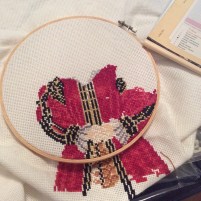 What inspired me to take her out? Mostly that I’ve been experimenting with


 think that for me, The Turner House would actually have come closer to being a (if not the) “Great American Novel” if it had really embraced its potential capaciousness. How can a novel about a family with thirteen children (and assorted grandchildren and great-grandchildren) be under 35o pages? Imagine if every one of them — and Francis and Viola, too — had a separate section, full of contexts and choices and rich, textured details about their characters and their lives. This (missed) opportunity really struck me near the end of the novel, when we got a crisp précis of the account Lelah gives Brianne of her marriage to Vernon:
 The house I live in now will be the setting of my own children’s family memories, as we moved in when they were still too young to remember anything else. My most vivid memories of their infant years, though, are all from our first two Halifax homes. One was a traditional old house with bow windows up and down and lots of character inside — meaning, of course, lots of things that weren’t in very good condition. The walls, for example, were paint over wallpaper over aged plaster, and not altogether as solid as you’d like! That’s where we set up Owen’s nursery, where he took his first steps, where he used to astonish me with words, math, and music with his magnetic fridge letters, and where he played his first notes on the piano. I remember sitting up many, many nights that first hot summer after he was born, rocking and nursing and idly watching TV (usually Law & Order, which was always on somewhere) so I wouldn’t fall asleep and drop him — that’s where I was when the news broke of Princess Diana’s death.
 It sounds more poetic
  Not for them — for me!
 Another reason teaching is a tonic for me, though, is precisely that I am not faking my interest in the course materials, and time spent really focusing on them brings me back in touch with the things that brought me into this profession in the first place. I loved being an English student myself (well, I loved being an undergraduate student – I mostly hated being a graduate student), and it’s in the classroom that the reasons for that are most present to me: the books themselves, of course, but also the open-minded engagement with them — teasing out what is most interesting, looking at the details and trying to put them into patterns that illuminate the whole, thinking and talking about the ideas that animate them, and all this, best of all, in conversation with other keen readers who bring their own questions and ideas to the process. This week’s readings are very purposeful, too, which gives our work on them extra urgency: in Mystery & Detective Fiction, we’ve just wrapped up