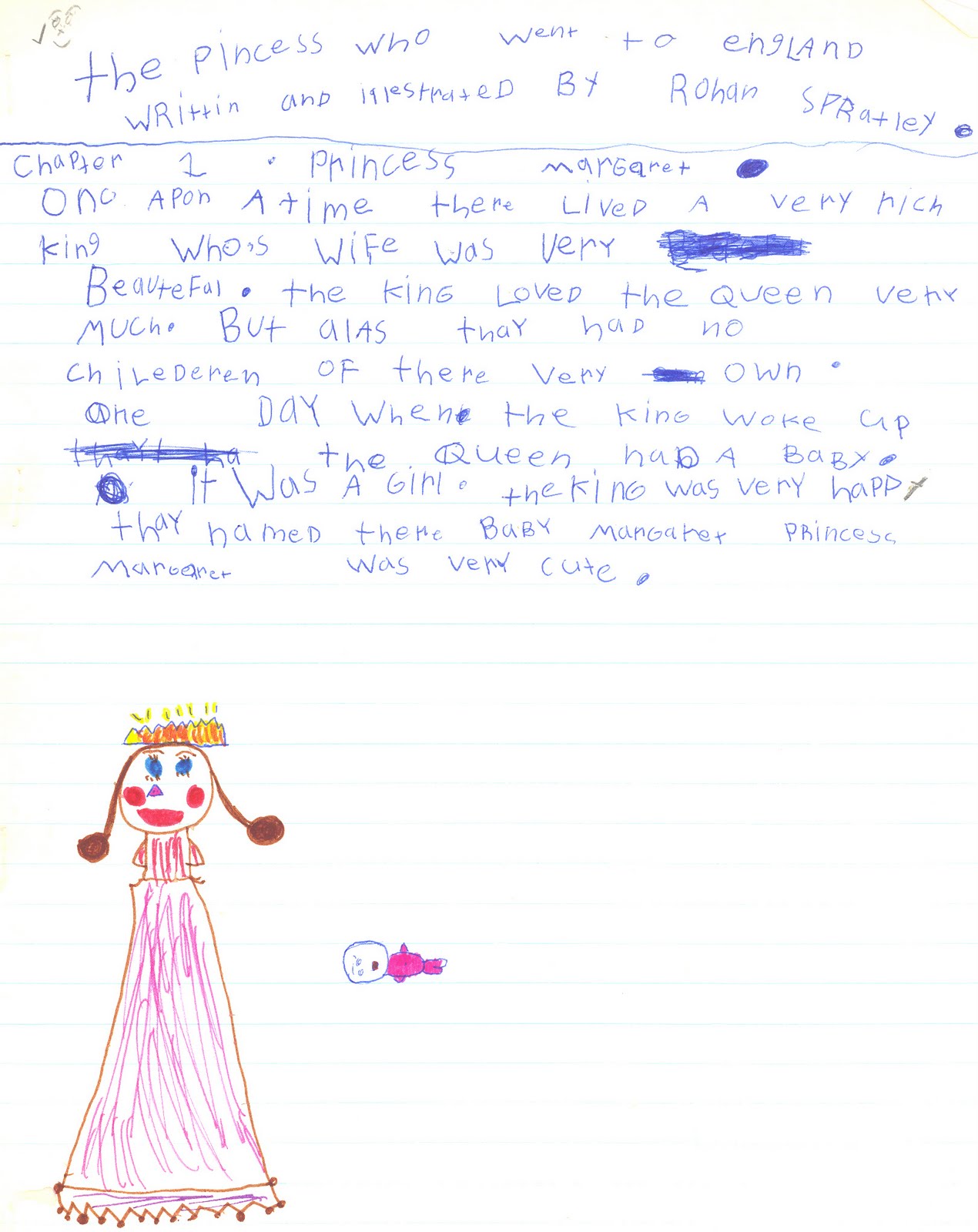
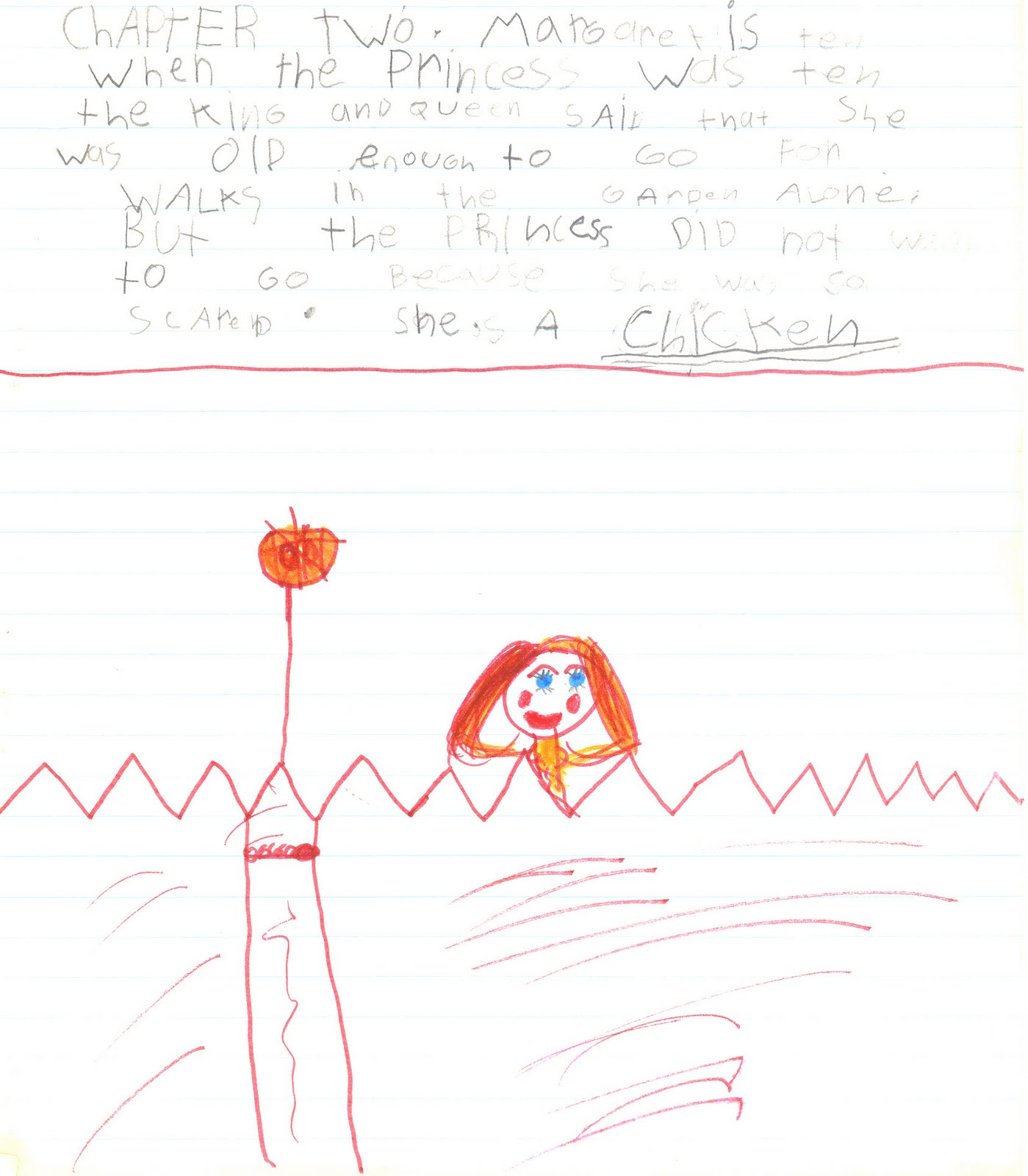
Forget Jane Austen’s History of England. . . Introducing, for the first time ever in digital form, The Princess Who Went to England — also partial, also prejudiced, with even fewer dates, and with a surprise ending!
(technical hint: clicking on the image brings it up full size)
See? I bet you hadn’t anticipated the war. And how postmodern is it to end, and then to end again?
Bonus Feature: Lucia Di Lammermoor in a nutshell:
More real posts soon.
P.S. Princess Margaret is still a chicken; she had a lovely time in England this time too.
My daughter signed up for the summer reading club at our local public library. She pledged to read at least 20 new books between the beginning of July and the end of the summer. I pledged to match her. Because it was summer, ‘light’ reading was fine. Here’s how we did:
Rohan:
1. Kate Atkinson, When Will There Be Good News?
2. Arthur Conan Doyle, The Hound of the Baskervilles
3. Raymond Chandler, The Big Sleep
4. Lloyd Jones, Mister Pip
5. Dick (and Felix) Francis, Silks
6. Robert B. Parker, The Godwulf Manuscript
7. Nadeem Aslam, The Wasted Vigil
8. Mary Ann Shaffer, The Guernsey Literary and Potato Peel Pie Society
9. Virginia Woolf, Mrs. Dalloway
10. Sarah Dunant, In the Company of the Courtesan
11. Penelope Lively, Consequences
12. Stieg Larsson, The Girl with the Dragon Tattoo
13. Ian Colford, Evidence
14. Louise Penny, Dead Cold
15. David Lodge, Deaf Sentence
16. K. Anthony Appiah, Cosmopolitanism
17. Penelope Lively, Cleopatra’s Sister
18. Daniel Mendelsohn, The Lost: A Search for Six of Six Million
19. Deborah Crombie, Where Memories Lie
20. Joseph O’Neill, Netherland (whew, I’m just squeaking this one in under the wire!)
Maddie:
1. Puppy Place: Princess
2. Princess Power: The Charmingly Clever Cousin
3. Puppy Place: Pugsly
4. Alice Finkle’s Rules for Girls: Moving Day
5. What Every Girl (Except Me) Knows
6. Happily Every After
7. Ivy and Bean Break the Fossil Record
8. Clementine’s Letter
9. Princess Power: The Awfully Angry Ogre
10. Junie B. Jones, Boss of Lunch
11. Judy Moody M.D., The Doctor is In
12. Junie B. Jones Has a Peep in Her Pocket
13. Ready Freddie, King of Show and Tell
14. Mercy Watson: Something Wonky This Way Comes
15. Ready Freddie: The Pumpkin Elf Mystery
16. Junie B. Jones, Dumb Bunny
17. Canadian Flyer Adventures: Pioneer Kids
18. The Magic Tree House: Night of the New Magicians
She didn’t quite make 20, but as she pointed out, she spent a lot of weeks in summer camps that didn’t allow any time at all for reading–which strikes me as interesting and unfortunate, in retrospect. Two weeks were in a science camp, so she learned a lot, and two in a “mini-university” camp, also a good mix of education and fun. The YMCA camp was all outings and swimming; these are both good things, and I know we are all obsessing about keeping kids physically active, but aren’t books important too? I’m sure Maddie would also want me to point out that we are pretty inflexible about bedtimes. But you see, that’s important so that I can get some reading done! And she and I are both proud of all the reading she did.
I enjoyed most of the books I read, but the highlights for me were certainly The Wasted Vigil, Mrs Dalloway, and The Lost. In the Company of the Courtesans and The Girl with the Dragon Tattoo were the low points, the first because it was all show and no substance, the second because it somehow managed to be at once prurient and dull. I’m still thinking about Netherland, which I just finished. I have never thought so much about cricket, before, that’s for sure; until I read it, the only other literary cricket scene I knew was the awesome match in Dorothy L. Sayers’s Murder Must Advertise (I love that scene!).
Gently they go, the beautiful, the tender, the kind;
Quietly they go, the intelligent, the witty, the brave.
I know. But I do not approve. And I am not resigned.
One of my favourite quiet corners around here is a site called Escallonia Hedge. The name, as explained on the site, refers to the hedges surrounding the garden at Talland House, Virginia Woolf’s childhood summer home. Its author describes it as “a space through which things are meant to be discerned,” an opportunity for “trying to get comfortable with talking about texts in a comfortable but nonetheless what is called a ‘productive’ way. Maybe some dawdling along the way.”
I’ve read Escallonia Hedge since its inception. There aren’t many posts there, just over a dozen altogether, but every one showcases the author’s playful intellect and her delight in words and ideas. Here’s an excerpt, for instance, from a post on “Woolf and the Body”:
I have been thinking lately about Woolf and the body. Woolf is always thought of as being incredibly cerebral—which, no doubt, she was—but always to the point that I think there must be a popular misconception that she somehow rejects the body, does not think it important or take it seriously, just as there is the popular conception that she is somehow of a parcel with figures like T. S. Eliot, or how she must always and only be egotistical, when, really, she has one of the most sympathetic eyes ever.Thinking about this I am of course reminded of a frequently cited passage in On Being Ill, on the body as a pane of glass:
“[L]iterature does its best to maintain that its concern is with the mind; that the body is a sheet of plain glass through which the soul looks straight and clear, and, save for one or two passions such as desire and greed, is null, and negligible and non-existent. On the contrary, the very opposite is true. All day, all night the body intervenes; blunts or sharpens, colours or discolours, turns to wax in the warmth of June, hardens to tallow in the murk of February. The creature within can only gaze through the pane—smudged or rosy; it cannot separate off from the body like the sheath of a knife or the pod of a pea for a single instant; it must go through the whole unending procession of changes, heat and cold, comfort and discomfort, hunger and satisfaction, health and illness, until there comes the inevitable catastrophe; the body smashes itself to smithereens, and the soul (it is said) escapes.”
It just occurred to me as I lay in bed this morning, procrastinating on my papers (actually, not wanting to face the world), that Woolf’s frequent use of metaphors of glass is connected to this. Why is it sometimes that these very obvious things take so long to process or register?
Here’s another excerpt, this one from some commentary on a collection of Woolf’s writings called The Platform of Time:
The satire “JB” I found especially striking: it’s full of very interesting nonsense. It reminds me of how I tried to write at one point because I couldn’t find a sentence or a sense-making group of words that expressed what I thought, only I was writing that way sincerely whereas VW parodies the practice as confusion and excess. The character VW tells the character JB to find a single “image” to express what he means instead of clumping together various descriptors, and then JB tries to figure out what an “image” (simile, metaphor) means! (What is its use; where he can find an example of one; how it’s no good because it’s not GE Moore-ish enough (“how can a thing be like anything else except the thing it is?”).) This in contrast to JB looking at a “male siskin under a microscope” in an effort to compose a poem “in the manner of Gerard Hopkins” (“The siskin’s been dead a week”):
“Seepy, creaking, sweeping, with a creaking kind of beating of the penultimate dorsal jutting out femoral crepitational tail. The siskin whisking round the peeled off mouldy bottle green pear tree rivers. Well, I flatter myself that’s a pretty good poem—all true to an inch.”
Then there’s a big fuss about finding an image for the siskin, which in the end is arrived at by what JB has for lunch: “The siskin lies like—like cold salt roast beef the siskin lies. My word—that does it.” It’s moments like this I feel like saying “Oh Virginia Woolf, you’re the best!” I think the interesting thing about that line “like cold salt roast beef the siskin lies” is that it sounds beautiful but is being a framed in a way that makes it silly, reaching, and untrue. This is always the interesting thing about Woolf’s satirical moments, I think, and why I would say “Oh VW you’re the best”—many of them are a mixture of a form of sympathy and ridicule. Like Samuel Johnson’s satire manqué.
The author, Samantha Li, graduated from Dalhousie in May with first-class Honours in English. She would have begun her M.A. in English at U.B.C. in September. Tragically, she died on July 11, in a terrible car accident. She was 24. Her funeral service was today; I had the honour of being one of those invited by the family to speak at this heartbreaking event. All of us who had the pleasure and the privilege of working with Samantha will always remember her questing intelligence, her self-deprecating grace, her vivacious warmth, and her kindness. She was much loved, and will be greatly missed.
The lines I’ve quoted at the head of this post are from Edna St. Vincent Millay’s “Dirge Without Music.” As Samantha was also an exceptionally talented musician, however, it seems fitting to remember her with music as well. In this video, she is playing the violin; she is second from the left as we watch.
I complain a lot about living in Halifax, but when spring finally arrives out here, the city has some redeeming features. This bright, beautiful morning, I enjoyed one of my favourite Halifax things: a trip to the city’s Victorian Public Gardens.
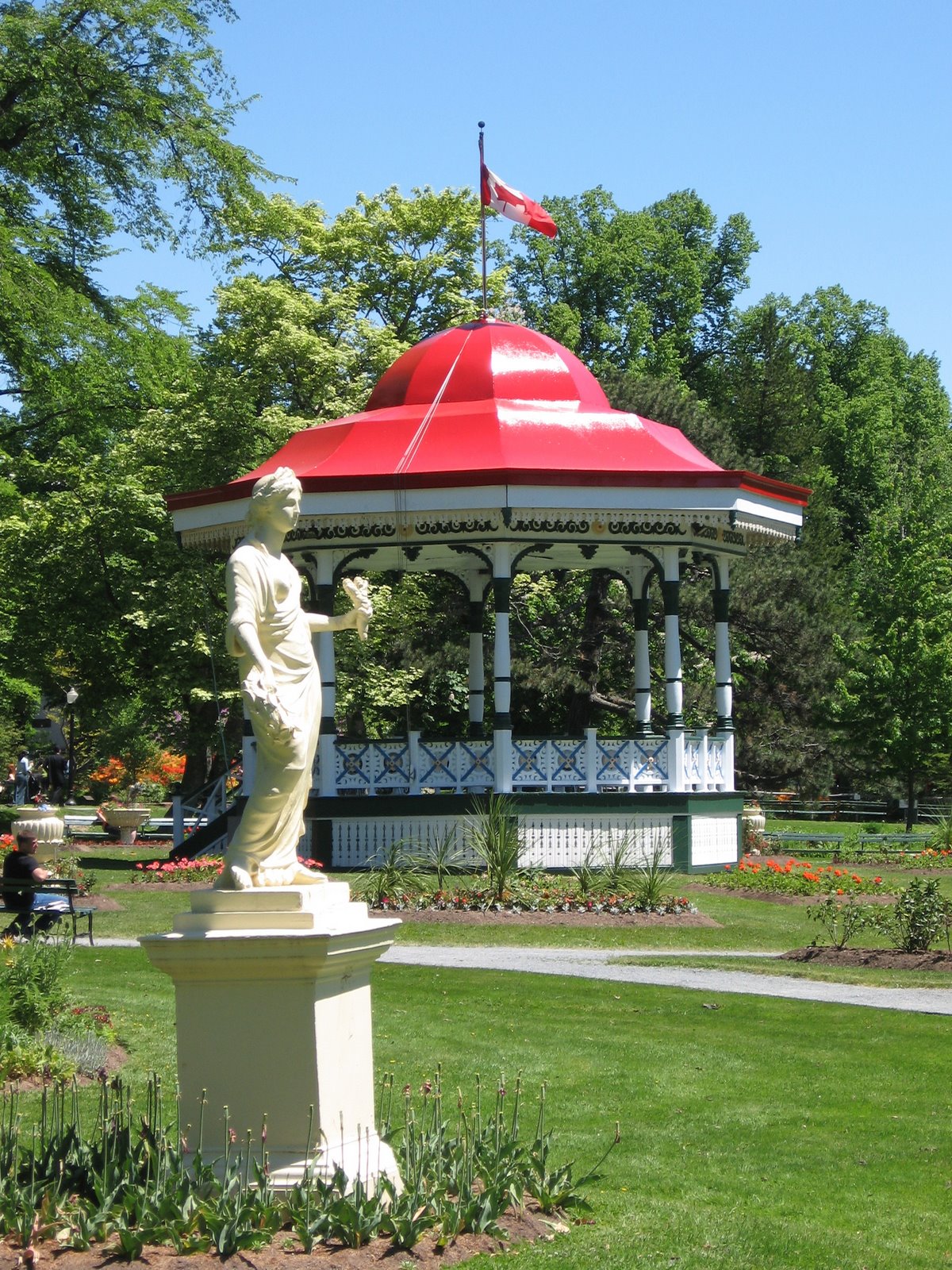
First opened in 1867, the Public Gardens feature the most spectacular rhododendrons I’ve ever seen, as well as formal flowerbeds, a gazebo (with band concerts on Sunday afternoons), a large duck pond (with abundant ducks) and all manner of fountains and statues. It’s a green oasis in the middle of downtown: you can barely hear the hum of traffic, and as you stroll the well-kept walkways (no dogs, no joggers, and no bicycles allowed!), you can easily feel as if you have stepped back into a Victorian fantasyland.
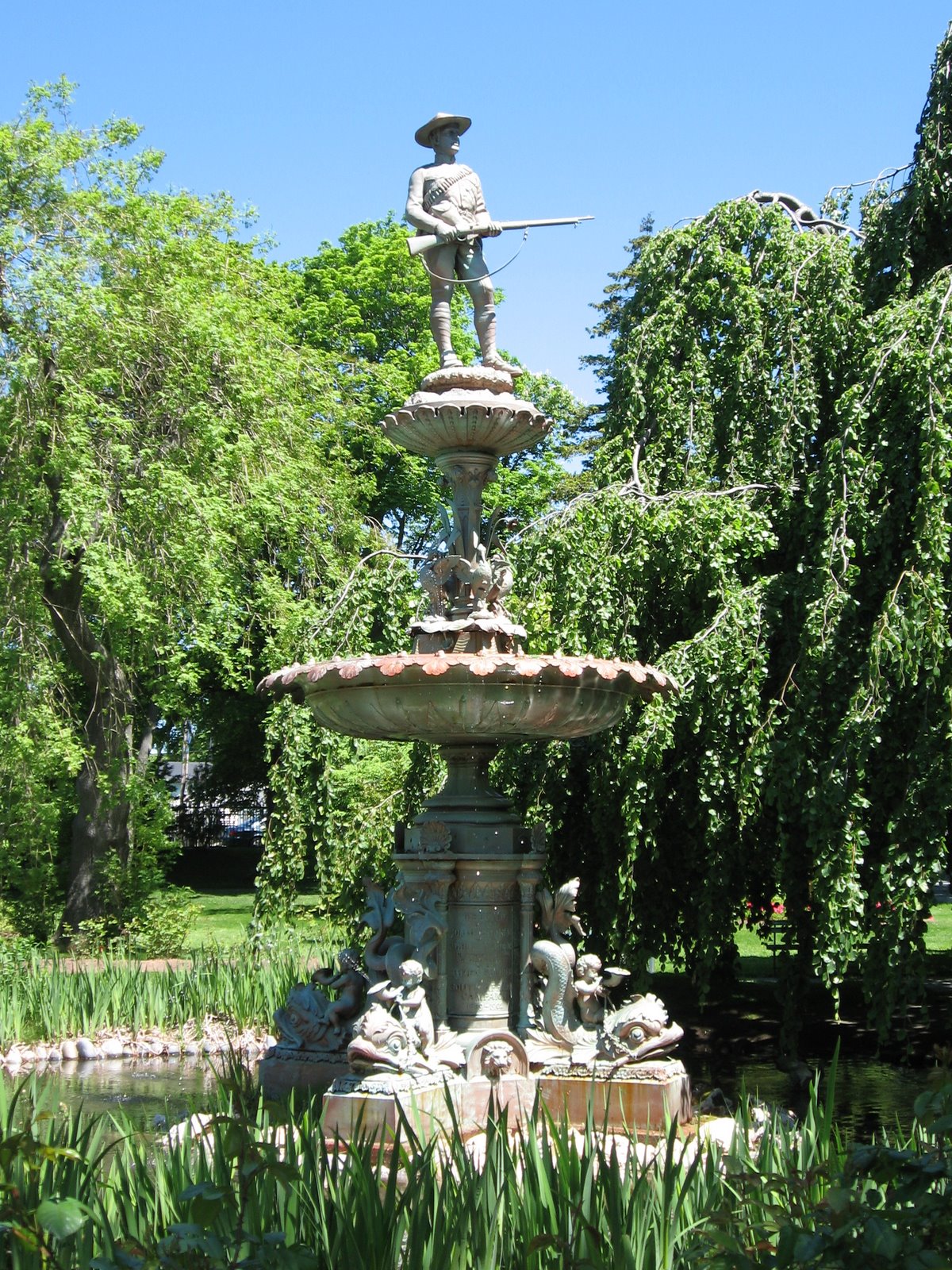
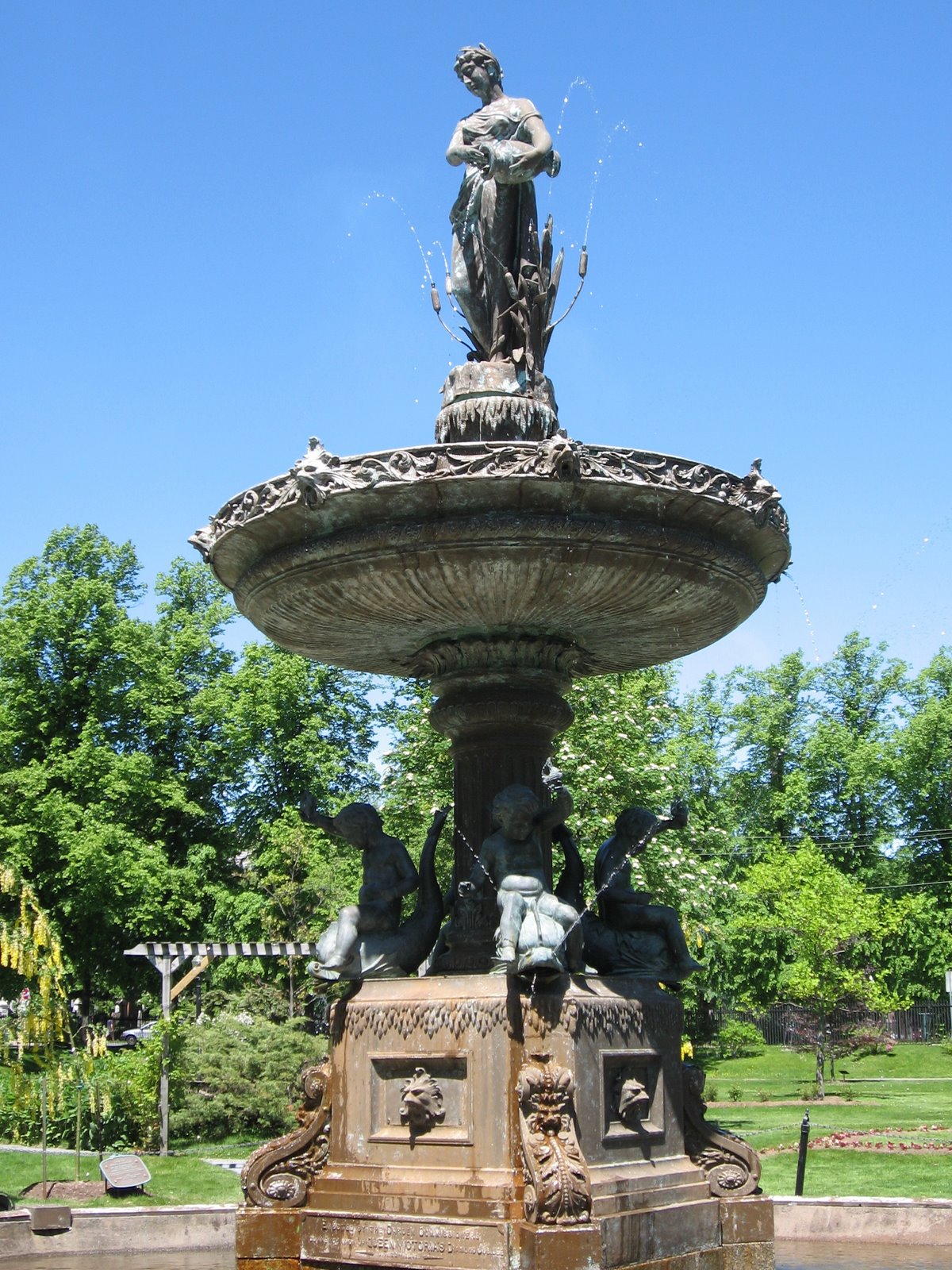
There’s a Boer War memorial fountain, and a fountain commemorating Queen Victoria’s Diamond Jubilee. Even the swans are named ‘Horatio’ and ‘Nelson.’
Boer War Memorial
Diamond Jubilee Fountain
Horatio (or Nelson)
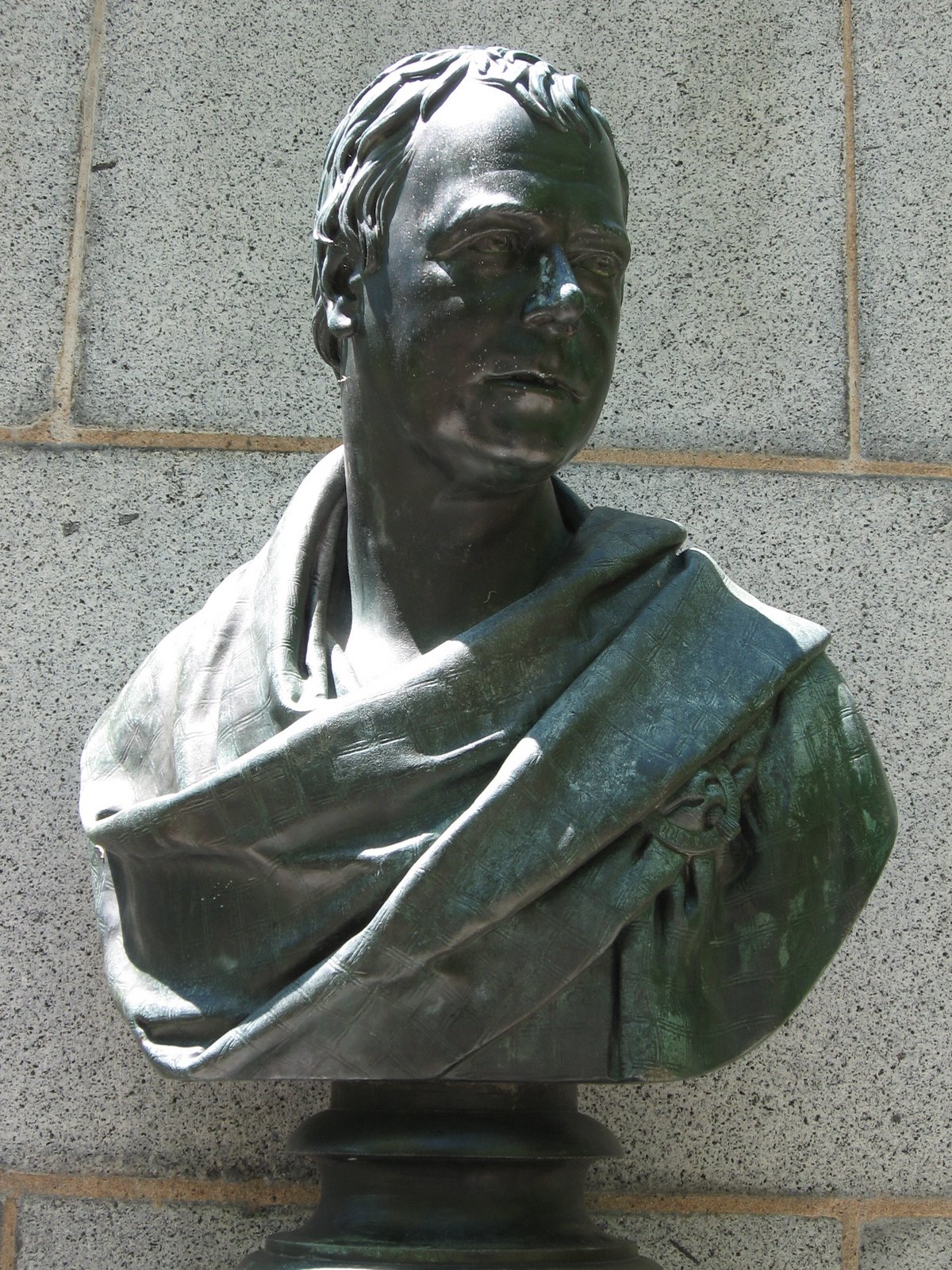
When Hurricane Juan struck Halifax in 2003, the Public Gardens were hit hard (though not with quite the devastating results seen at nearby Point Pleasant Park, which lost an estimated 70% of its trees). Since then, the Gardens have been beautifully restored. Here are a couple more pictures from today’s trip, including a shot of the bust of Walter Scott that used to be right outside the front gates (during the restoration, it was relocated to just across the street, near the statue of Robbie Burns–we’re not called New Scotland for nothing).
My daughter has been studying poetry in her Grade 1 class. I approve! I especially like the careful way she reads poems aloud, as if every word is important and meaningful–just as it should be. Getting in the spirit of Poetry Month, we bought a bunch of the Poetry for Young People books through her school’s Scholastic Book Club: our (somewhat miscellaneous and heavily American) pack includes Whitman, Dickinson, Coleridge, Poe, Frost, and Shakespeare. I’m impressed with these books, not least because the editors have definitely not dumbed down the content or made painfully kid-friendly selections. As a result, she’ll be able to grow into them, rather than rapidly growing out of them. However, the real point of this post is to showcase an early effort of hers. OK, it takes a sort of prosaic turn towards the end…but she’s a practical sort of girl.
CATS
I love cats! Anything is not better than cats. If you have a cat don’t come near because my Dad is allergic to Cats.
Growing up in Vancouver, I never understood the whole thing about April being the cruelest month. Now, on the other hand, I get it. You see, in Halifax, where I live, we won’t see tulips and daffodils until May, or leaves on the trees until June. In Vancouver, however, where I would like to live….The constraints on your location and the near-impossibility of ‘lateral movement’ are among the great cruelties of an academic career. After over a decade of resistance, I have faced the fact that in order to move ‘home’ I would need to change professions (or, somehow, belatedly, become a different kind of academic–a more ‘successful’ one, by some measures). It’s frustrating, of course, to be less employable in my chosen field after 12 years of experience than I was when still ABD, but that’s the way this game is played. I’ve gone through most of the stages of grief over this and moved a long way towards acceptance–but spring sure makes me homesick. Is the job worth it? Sometimes. But the likelihood of being separated from your family and your history is one of the aspects of this career that I emphasize most strongly when advising prospective graduate students, not least because I never really thought much about it until, in many ways, it was too late.
The company has been importing, blending and selling its specialty teas and coffees for the Victoria and Vancouver markets since John Murchie founded the company in 1894.
The elegant tea rooms and shops remained a family operation under current president Gwen Murchie, but now the company is up for sale. (read the full CBC story here)
What does this have to do with literature or criticism, you ask? For me, lots, as I have been sitting down with a book and a cup of Murchie’s tea for more than three decades! Here’s hoping they find a sympathetic and savvy buyer who can keep the tradition alive–and all my favourite blends available.