 It has been very quiet here lately, for reasons that may seem counterintuitive: I have had very little going on, because (long story short) the faculty at Dalhousie has been locked out by the administration since August 20, and while I am not in the union (I’m a member of the joint King’s – Dalhousie faculty) I have been instructed to do no Dal-specific work while the labour dispute continues. You’d think that this would mean I have all kinds of time to read books and write about them here, and yet what has happened instead is that the weird limbo of this situation has prolonged my usual summer doldrums and overwhelmed me with inertia. At this point I can hardly imagine summoning up the energy to stand up in front of keen young people and sustain a lively discussion—and yet at the same time there is nothing I want more to do, especially because if we were in classes this week we would be wrapping up our work on Austen’s Persuasion, my favourite of her novels. The two sides are at the bargaining table again this evening: who knows, maybe by the time I press ‘post’ there will be news of a deal.
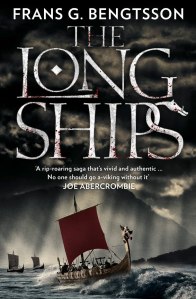
I have done some reading since O, the Brave Music, but nothing that really stuck except William Maxwell’s So Long, See You Tomorrow, which is as good as everyone said it was, bleak but somehow not depressing. I have just started Frans G. Bengtsson’s The Long Ships, which I am enjoying even though it is not at all what I expected: for no good reason, I suppose, I thought it would be more like Dorothy Dunnett’s novels, or Hild, but it is not nearly so dense or expository but is rather more like a chronicle, with a faintly antique cadence as if it is being told rather than written / read. Maxell’s novel deserves its own post but is not going to get one—score one for inertia!—but when I finish The Long Ships, I resolve to write it up properly! In between I have been rereading Robert B. Parker and Dick Francis, most recently The Edge, which is one of my favourite of Francis’s novels and also helps to sustain my dream of one day taking a cross-country train trip.
 I have also been continuing my read-through of Woolf’s diaries. I am into 1923 now. 1922 seemed like a slow year and then she published Jacob’s Room and read Ulysses, both of which events generated a lot of interesting material. I am fascinated by her self-doubt: we meet great writers of the past when that greatness is assured, and also when their writer’s identity is established, but Woolf is not so sure on either count, and is hypersensitive—as George Eliot was—to criticism, especially when she felt her work was misunderstood, not just unappreciated. Jacob’s Room is significant because it is the first novel that, to her, really feels like her own voice: “There’s no doubt in my mind,” she says, “that I have found out how to begin (at 40) to say something in my own voice; & that interests me so that I feel I can go ahead without praise.” I am always fascinated and inspired by accounts of artists of any kind who find their métier and know it; I still think often of Mary Delany, and when I reread that post I also reflect on the expanding confidence I felt at the time and wonder where it went and how to recover it. Well, as Molly Peacock tells us in her wonderful book, Mary Delany was 72 when she discovered and fulfilled her own artistic purpose, so I will try to think of myself as “only” 58 and take heart, again, from her story.
 Another paradox around my lack of posting is that for whatever reason, this is the writing I like doing the most. All summer I have been struggling to get something, anything done on a couple of other projects, and while I did meet a couple of small reviewing deadlines and submit something to a CFP for a special issue of a journal (I won’t know for a while if anything comes of that), my larger plans keep fizzling out because I can’t shake the feeling that they are futile: even if I completed exactly what I imagine they could be, the odds that they would find a publisher or an audience seem so slim. When nobody is asking for something and there’s no extrinsic need or reward for it, you really have to believe in it to actually do it. Perhaps my lack of conviction is a sign that these are not in fact the right projects for me . . . but then what is? These have not been good years for trusting myself, partly because of the legacy of my failed promotion bid. Oh wait, that’s where that surge of optimism and confidence went! and in fact that’s exactly right: I’ve been struggling to rebuild ever since, and I was making some progress when COVID hit and then all the hard personal stuff of the last few years. At some point, of course, explanations shade into excuses—and I have in fact been getting lots of other things done, and would be getting more done if I were back in my classes now, as I should be and hope to be soon. Teaching is almost always restorative for me, and this term—when it finally starts—should be especially so as due to an administrate release I have just one class, 19th-Century Fiction from Austen to Dickens.
Cross your fingers that a fair deal is struck soon, not just so that I can get out of this dreary purposeless limbo but so that I don’t have to cut Cranford from our reading list because we don’t have enough time for it. And whatever happens with the negotiations, I will try to stop malingering.
 I had barely recovered from my jet lag after my recent trip to Vancouver when I got caught up in another big distraction: I have adopted a cat! Her name is Fred, short for Winifred (she happily acknowledges either
  I had thought for a long time about getting a cat. I had one growing up, an elegant Siamese named Bothwell—I was in a big Mary, Queen of Scots phase when he joined the household. (Maybe Fred should consider herself lucky?) He was a great companion: loyal, eccentric, and independent, so basically a lot like me. During my marriage having a cat wasn’t an option, as my ex-husband is allergic; so too is my daughter, but only to some cats, and she encouraged me to take a chance. (So far, so good: she has visited Fred a few times and even held her, without any noticeable reaction.) I am extremely good at overthinking things, and I also don’t much like making decisions when I can’t clearly foresee the outcome, which is obviously the case when taking on a pet that is going to have her own personality and needs. I just could not get the pro / con list to be decisive either way! Then while I was away I missed out on an opportunity to adopt what sounded like the perfect cat for me, a ragdoll in sudden need of re-homing. My disappointment at not getting her clarified that I did want a cat in my life, and after an unsuccessful visit to a local shelter where the cat I went to meet first threw up at my feet then hid so I really could not get to know him, I got lucky with some help from Cat Rescue Maritimes . . . and here I am, and here we are.
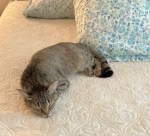 I admit I do feel somewhat overwhelmed at the moment, both at the change to my routines and by my new responsibilities. Also, pet stores have a bewildering array of options now, and the online cat-care debates are already making me crazy. The sleep deprivation definitely adds to this! (Don’t worry: I have set up an appointment with a vet and will try to follow only evidence-based advice rather than random Redditors’.) But Fred is a sweet and incredibly affectionate and trusting little cat. I was cautioned that she would probably just hide somewhere for the first few days, but she immediately explored all the available space, spent a lot of time watching out the windows, then settled on her favorite places to nap. She loves to be held and stroked and purrs like mad when you scritch her head and around her ears—just what Bothwell liked best too. I’m hopeful that we will get better at our nighttime routines. I mean, if she can sleep in this position, surely she can also figure out how to sleep more or less when I do, right? RIGHT?! 🙂
 In my
In my 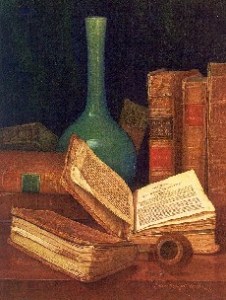 Still, this kind of incidental and largely voluntary pruning is nothing compared to the process I went through before I moved, which was often both logistically and emotionally overwhelming, especially at first. It got a lot easier as it went along, and in some ways it even started to feel good as the burden (literal and metaphorical) lifted. It involved admitting that there were books on my shelves I was never going to read again, and some I was never going to read at all, however good they might actually be (sorry, Europe Central, which took up the space of 2 or 3 other books for over a decade). It involved confronting the truth about dictionaries, desk encyclopedias, the Mayo Clinic Family Health Book, and the rest of our fine “reference” collection: nobody wants them anymore, including me, so their covers came off and their pages went into recycling. It meant carting bags of aging paperback mysteries to the Salvation Army and around 15 boxes of good quality fiction and non-fiction to the book sale depot. Hardest of all, it meant facing Owen’s books, which was particularly poignant for me because so many of them are ones I picked out for him over the years, for birthdays and Christmases. Most of his chess books went to the Dalhousie Chess Club, where he was a regular during his student years, though I kept Bobby Fischer Teaches Chess, his first and favorite book about the game. I kept all of his beloved Calvin and Hobbes collection, and many others that speak to me of the child he was and the young man he became—more than I needed to, maybe, but unlike my own books, his can never be replaced.
  So I started 2024 by clearing out a lot of books. The other change since the separation has been to my reading time. I don’t quite understand why, but there seem to be a lot more hours in the day now that I live alone! I have wasted an awful lot of them watching TV, and many of them idly scrolling online, and plenty also just moping or mourning. I think (though this may be just making excuses) that I should not be too hard on myself about these bad habits, as the past few years have been pretty tough and we are all entitled to our coping strategies. I make intermittent resolutions to do better, to use my time better; I have made some of these for 2025. (Yes, blogging regularly again is one of them. We’ll see.) However! I have had more time for reading, and I have sometimes taken advantage of it. I have especially enjoyed taking time to read in the mornings. For many years—around two decades, really—mornings were my least favorite time of the day, what with all the kid stuff (breakfasts, lunches, getting dressed, remembering backpacks and permission slips and other forms, trying to get out the door on time) on top of bracing for my own work days, with the non-trivial (for me) anxiety of driving in winter weather adding a nice additional layer of stress from November through April. Things were simpler once the kids were older then out of the house, but I never felt like it was a good time for relaxing: I still had to get off to work, for one thing. Now, between habitually waking up early and living easy walking distance to work, even on weekdays I can afford to get in some peaceful reading while I have my tea and toast. We used to end most days in front of the TV; I still do that, especially on days when I’ve read a lot for work, but other days I can settle into my reading chair, put on some quiet music, and there’s nothing and nobody to interrupt me.
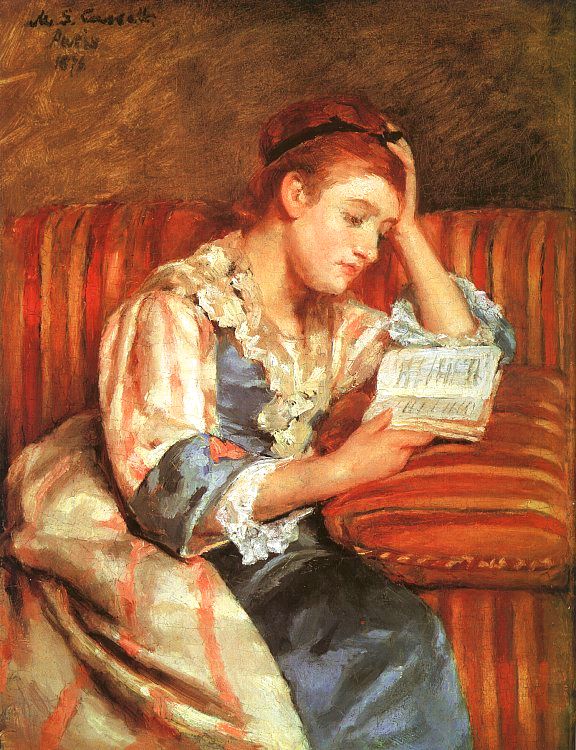 This term is the first one since I began posting about ‘this week in my classes’ in 2007 that I haven’t posted at all about my classes. What’s up with that, you might wonder? Well, more likely you hadn’t noticed or wondered, but I’ve certainly been aware of it and pondering what, if anything, to do about it.
 It certainly isn’t anything to do with this term’s classes. At least from my perspective, both of them—Mystery & Detective Fiction and The Victorian ‘Woman Question’—have gone very well. Of course there have been the occasional sessions that dragged a bit, and we had an unusually high number of snow days that created a lot of logistical headaches, but in general discussion was both substantive and lively. I continue to try to wean myself from my lecture notes. This gets easier and easier in the mystery class, as I am pretty confident now both about how I want to frame the course and readings in terms of ‘big picture’ issues and about the specific readings. (I mix in new options quite regularly, because for various reasons I have been teaching the course basically every year for ages, so this definitely keeps it fresh and interesting for me: I just finished reading Dorothy B. Hughes’s The Expendable Man and I’m 90% certain I’m putting it on the reading list for next year, for one!) The ‘woman question’ class is a seminar, so I don’t lecture there anyway; I so looked forward to our class meetings all term, both because the readings are all favorites of mine and because we always had such good conversations about them. The only slight exception was with the excerpts from Aurora Leigh, from which I learned both that assigning excerpts is a bad idea (something I already believed but overrode, for practical reasons)—when it comes to long texts, do or do not, there is no try!—and that narrative poetry is hard, or at least it takes a different kind of preparation and attention than fiction, and that if I’m going to assign any of Aurora Leigh I need to take that into account.
 So what’s my problem this term? I think it is rooted in my uncertainty about how to address some big changes that have taken place in my personal life. When I wrote up my
  In my current circumstances, this principle, if that’s what it is, runs up against the principle that I shouldn’t talk about other people’s business here: it feels wrong not to acknowledge that my life has changed significantly, but I have felt—rightly, I think—constrained from going into any detail that might cross the line, which has also meant I have felt constrained from talking about some of my recent reading as frankly and completely as I would have liked to, because I couldn’t address how something like, say, Maggie Smith’s
 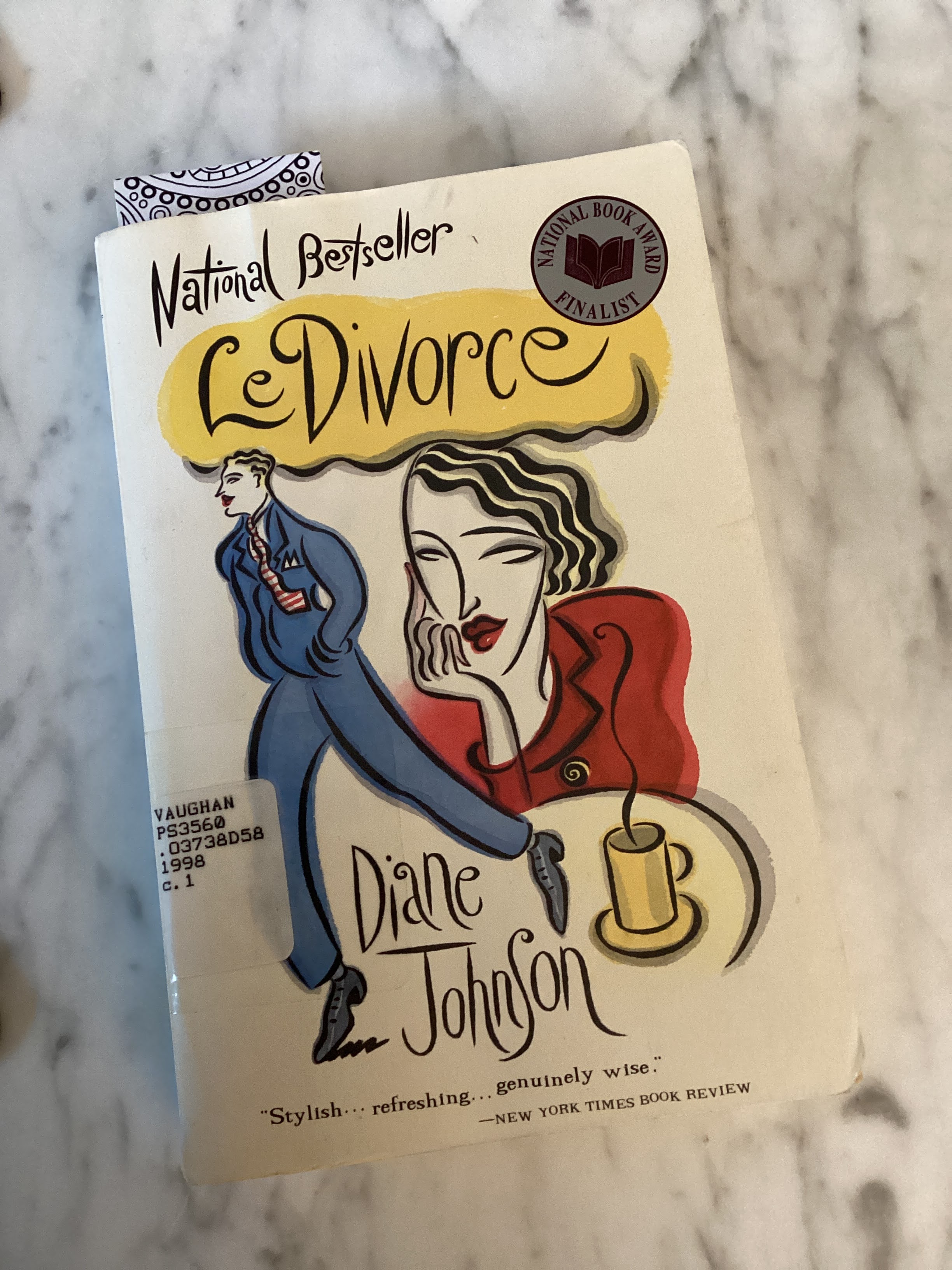 Obviously I have reached a point at which it seems fine and reasonable to say what has been going on, though I don’t expect I will ever consider Novel Readings an appropriate place to talk about how or why things have unfolded in this way, or even how I feel about it all! That’s nobody’s business but ours, by which I mean mine and my (truly excellent) therapist’s. 😉 Seriously, though, I do believe we bring our whole selves to our reading, so what I want to work on is how to acknowledge how my new reality sometimes does affect my engagement with books. I can say already that nothing about Diane Johnson’s Le Divorce, which I just read for my book club, seems relevant or resonant at all in that way (though I did enjoy it on its own terms)—though there were moments in
  March was a rough month. For one thing, I had more academic integrity hearings stemming from a single assignment than I’ve ever had in one term. It was an exceptionally disheartening experience, especially given the lengths I have gone to in my introductory class to reduce the risk for students of just trying to do the work for themselves: this is the class in which I’m using specifications grading, meaning there is really no risk involved. As I plaintively reminded the class as it became clear just how widespread the problem was, the class is designed to make it safe to be wrong, safe to be confused, safe to be learning. But if you don’t actually do your own writing, you strip the whole process of its meaning. Plus (as I pointed out to many students in the actual hearings), if your uncertainty leads you to copying other people’s writing, you will never build your own skills and your own confidence: you will never find out that you can in fact do the work, and get better at it.
 Easily the best novel I read in March was Claudia Piñeiro’s Elena Knows. This was recommended to me last year when I was (as I so often am) casting about for new ideas for my two mystery fiction courses. I started it then but had to abandon it, as a novel about suicide and a mother’s grief was not an experience I could bear. I kept it on my mental TBR, though, and I’m glad I tried again, because it really is exceptional: slight but fierce and complex, with its overlapping interests in disability, ageism, misogyny, and autonomy. I think it would be a really interesting book to read in my course on Women & Detective Fiction, even though in many ways it is not really a mystery. It is certainly about a crime – or, crimes, if you think socially and systemically – and there is an investigation, even if there isn’t a detective, or evidence, or any of the other conventional elements.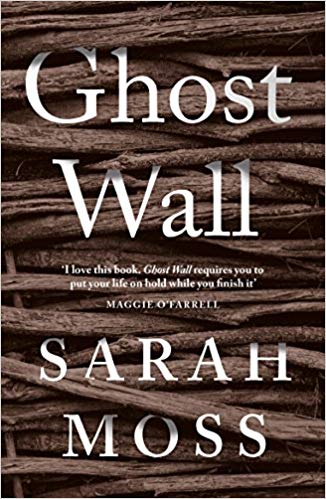
 It has been quiet around here. I’m not really sure why that is. I’ve been busy at work, but that has never stopped me before. When this term began, I intended to make posting about my teaching routine again. When I kept that up, in the old days, it didn’t matter if I felt I had something in particular to say when I started: eventually I would discover what I had to say, because (as I’ve been trying to convince my first-year students) that’s how writing works. My reading hasn’t been going very well, but I used to write about it anyway.
 “Start where you are and see where it takes you” is
  There’s so much emptiness in my life now. It’s not just Owen’s death, although every day I confront the ongoing ache and mystery of his absence. Some of it is the ongoing isolation of our COVID-cautious lifestyle: especially as most of the rest of the world seems to be moving on, it feels worse than it did when we were all in it together. Being back on campus and teaching in person helps with that, but it’s not the same as it was: I’m in my office a lot, but mostly with the door closed, because masks are required in classrooms but not hallways and I like to take my own mask off while I work. It’s winter, so the outdoor visits that sustained me through summer and fall are less appealing, as are my long solo walks in the park, when I was alone but, somehow, never lonely. (I often think of Marianne Moore’s line “the cure for loneliness is solitude.”) I could be busier at / with work than I am. I will be, soon, as assignments start coming in, but even so I don’t expect to be even as busy with teaching as I was last term, just because of the nature of my classes this term, the easy familiarity of one and the high degree of automation in the other. There is other work I could be doing, even a writing commitment I should be doing. I can’t seem to summon up much urgency or energy for it, though, or for the book idea I still sort of believe is worth pursuing. I’m not even reading much. I can’t seem to concentrate on most books I try; I don’t seem to like many of them, and it bothers me, worrying that it’s me, not them, that’s the problem.
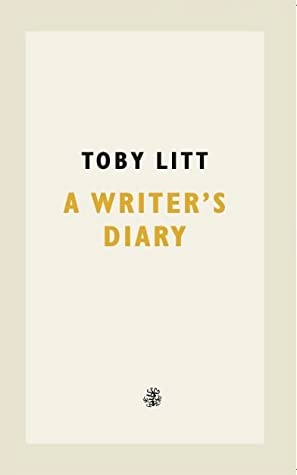 Two things I did recently:
 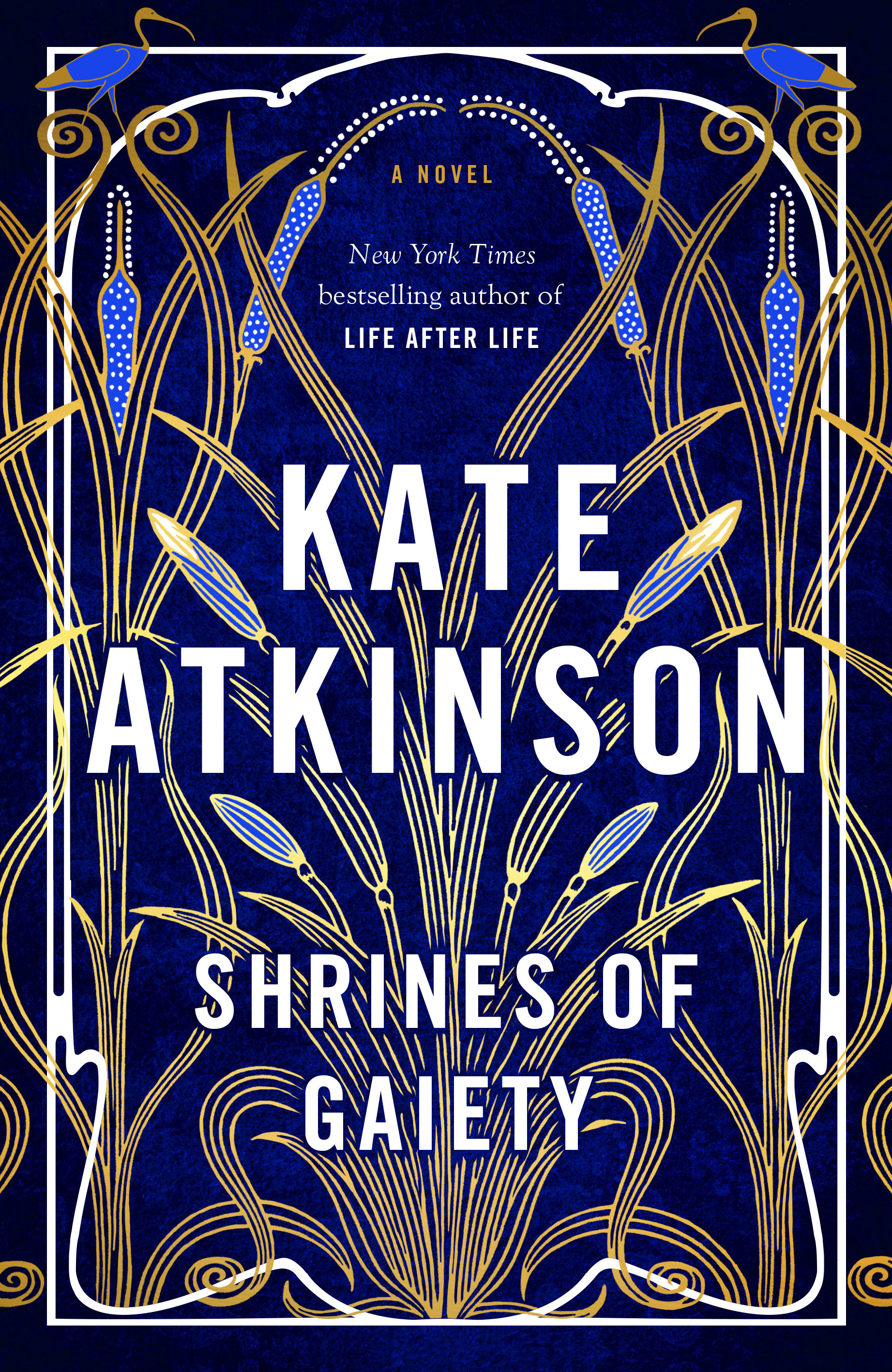 October was a terrible reading month for me. I didn’t even start many books, much less finish them. A last minute push (and, I’ll admit, a bit of fed-up skimming) got me to the end of Kate Atkinson’s Shrines of Gaiety, which I had acquired precisely because I figured that, whatever gripes I have had in the past with her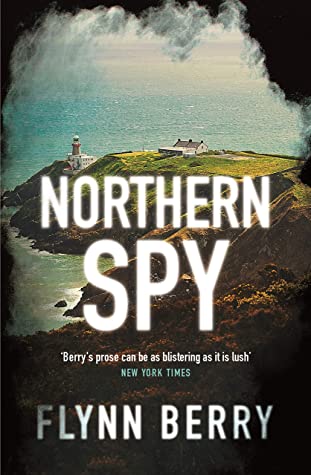
 In 19th-Century Fiction we have been working on Middlemarch for a couple of weeks. I wish I could say it is going well. I don’t think it’s going badly exactly, but honestly this term I don’t really know. Attendance is just appalling: most days, maybe 60% of the class shows up, which is unprecedented, in my fairly long experience. I don’t know what to make of this. I know it’s not personal, or at least I’m trying not to take it personally, but that doesn’t make it any less disheartening. The students who are present are pretty quiet; I think – I hope – they are engaged, but much of the time it’s hard to tell, and I worry that at this point I am mostly performing enthusiasm, not eliciting it. The ones who do speak up have good things to say, but I’m not used to having to work so hard to get anything out of the class, to get any energy back from them. I’m going to keep trying! The ones who are showing up deserve no less, and I remain hopeful that between us we can and will make the most of this opportunity to read this great novel together.


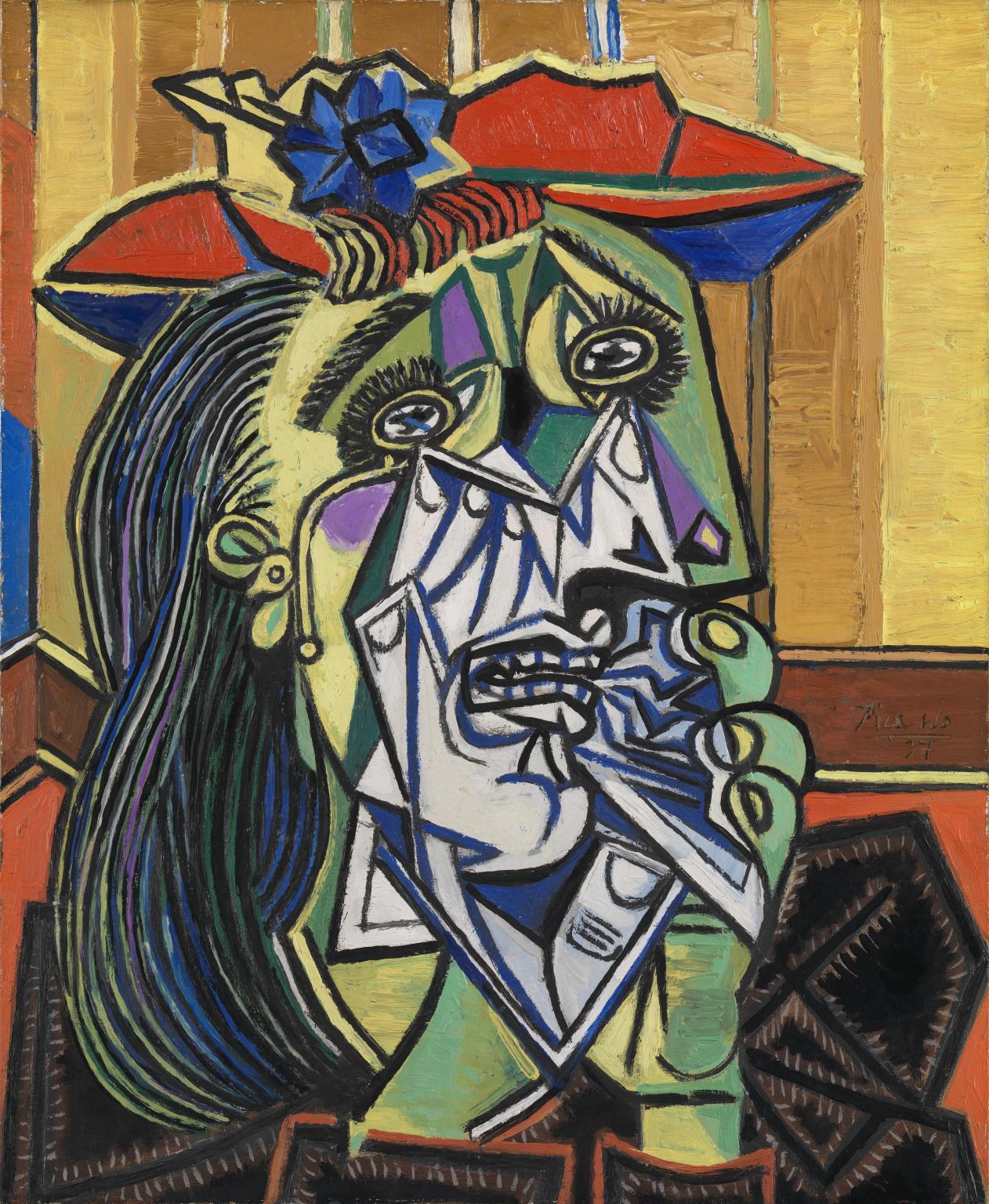

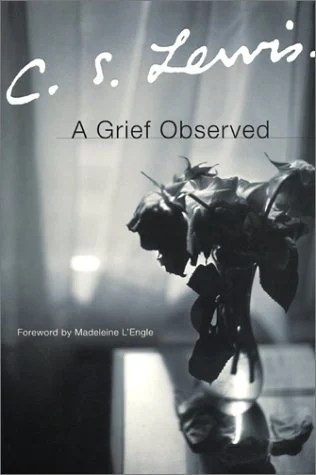
 Something else that’s different is how emotionally confusing and therefore exhausting I’m finding the present. The early days of grief are awful but absolute, almost simple, I realize now: there are no options, no expectations, for anything besides mourning. I have learned so much about grief since then, from experience but also from others, and from reading. One thing I’ve learned is that “it takes time” doesn’t mean that with time the grief lessens; it means something more like you get used to living with it, you learn to walk around with
  Novel Readings