Nomad: Phonse Jessome, Disposable Souls

disposablesoulsPhonse Jessome’s grim, violent crime novel Disposable Souls is set in the city where I live, and in a city I’ve never seen. Reading it was a constant reminder of the point Ian Rankin has often made about his Edinburgh-set novels: they show a side of Edinburgh that tourists never see — and neither do most residents, even though it is around them every day. The physical landscape is the same, but the shadow city of his crime stories has a different population and runs on different rules. Similarly, the Halifax depicted in Disposable Souls has the same geography as my Halifax, but it’s not at all the same place.

Of course, the reality is that these two cities are one city: I am just, in my own everyday life, ignorant of and sheltered from the one Jessome describes, so much so that even his vivid commentaries on very familiar places were disorienting. His description of downtown’s Spring Garden Road highlights just this duality:

In the bright sunshine of the day, the sidewalks on both sides of the road are crammed with beautiful people buying beautiful things. Trendy office workers lug six-dollar lattes past panhandlers who stand invisible at the curb, empty cups in hand. The homeless sit huddled against fire hydrants and utility poles. Halifax doesn’t have a trendy Main Street or a Skid Row. Spring Garden is a little of both.

At night, the tide shifts, and Spring Garden is taken over by angry, young rich kids in torn jeans and baggy black hoodies. They scowl and bluster at anyone who walks past and then tweet about it on seven-hundred-dollar phones. The real thugs roll past in Escalades, looking for someone to shoot. Even they wouldn’t waste real lead on wannabe hoods.

sgrFor readers who don’t know Halifax at all, Jessome provides not just vivid description but a lot of context about the city’s history. That it never feels like info-dumping is because much of it is provided by his protagonist, Detective Constable Cam Neville, a former army sniper and escaped POW, who in his new role as a cop struggles to overcome both PTSD and his past as a member of the biker’s club Satan’s Stallions. Cam views his home town with merciless clarity and an unhealthy dose of cynicism. “Halifax is a navy town,” he explains;

A military moron named Cornwallis was the first to claim it. He started his career as a bedchamber servant for King Edward over in England. He managed to sneak out of the royal bedroom long enough to slaughter hordes of unarmed Scots. The blood lust impressed the King who, although reluctant to lose a man good with a bedpan, realized he had a new bully ready for battle. With no one left to kill in Scotland, the good King sent him off to clean up the royal mess here. Cornwallis built a fort on the hill overlooking Halifax Harbour and headed off into the woods to make war. He couldn’t find the French, so he drew [Cam’s Mi’kmak partner] Blair’s ancestors into a little game called genocide. The British say he won. Cornwallis didn’t procreate; Blair is here. I call that victory.

He’s similarly blunt about the shameful story of Africville:

For 125 years, the descendants of African slaves lived along the shoreline here. They built a tightknit and proud community in isolation and poverty. Africville was part of Halifax, but the city didn’t want it, wouldn’t provide sewer, water, or even police protection. As far as the good people of Halifax were concerned, Africville was a shantytown to be ignored. The city put the open-pit dump beside it and set up sewage lagoons nearby to drive home the point.

Then, one day, Africville mattered more than it wanted to. The people were evicted, and late one cold night in 1969 heavy equipment swept in and demolished the church. The last house was flattened within a month. The city called it urban renewal. Halifax needed a new bridge, and Africville was in the way. The suddenly homeless people were jammed into inner-city slums and ignored for decades. Some of the toughest gangs in the city came out of those inner-city kitchens where bitterness and frustration still simmer.

cornwallisWe learn almost as much about Cam from these accounts as about Halifax, and, again like Rankin, Jessome also uses this contextual material to emphasize the relationship between social and historical conditions and the city’s distinctive patterns of crime and violence.

Disposable Souls alternates between Cam’s first-person narration and third-person narration that moves around among other characters in the tense unfolding drama. Cam is a well-realized character: tough, angry, brave, loyal. His voice is dominated by the anger and the toughness, and after a while I did find myself wishing for more nuance: not just Cam but the book as a whole seemed too much all in one key, and that a particularly rough, grating one. Disposable Souls is a little bit too hard-boiled for my own taste: I didn’t particularly enjoy it. On the other hand, it’s perverse to expect a story about murder, child pornography, and biker gangs to be “enjoyable” — this is the paradox of all crime fiction, of course, that it offers up horrors as entertainment. In my detective fiction class I often raise questions about this ethical problem, especially when we read Agatha Christie or other writers of Golden Age or puzzle mysteries. The  writers of hard-boiled detective fiction and police procedurals are generally credited with making mystery fiction both more literary and more morally weighty by infusing it with realism, and on those grounds, Disposable Souls is definitely a success. There’s nothing amusing at all about its crimes, and Jessome effectively immerses us in the entirely unpleasant world where they take place. That I prefer my Halifax is a reflection on me more than on the novel!

Disposable Souls is well-told and skilfully plotted. I finished it, however, wondering what else it was, if anything. If I were to assign it in my detective fiction class, for instance, what (besides local color) would it bring to our discussions? I’m not sure what its deeper thematic burden is: I couldn’t see how its particular case stood, for instance, as symptomatic of anything more general, rather than as a case study of a hypothetical but sadly plausible scenario. There’s a lot of talk about rivalries between the regional police and the Mounties, but that felt either personal or bureaucratic, not especially political. The contrasting ethos of the police and the Stallions might be a fruitful avenue to explore, particularly in a course where we will already have talked about the dangerous appeal of vigilantism; I think Cam’s military background and its psychological aftermath would also make for an interesting comparison to Knots and Crosses, where Rebus’s SAS training is a crucial part of both his character and the case. I also don’t want to underestimate the interest and value of thinking about crime as a local issue. Certainly Disposable Souls has already made me think differently about this place where I’ve lived for over twenty years — about aspects of the city I’ve otherwise confronted only through newspaper headlines — and there’s something to be said for bringing our classroom discussions of justice close to home.

Regardless of whether I decide to teach it (and I’m very tempted to), I am glad I’ve read it: it’s the first Canadian crime novel I’ve read in a long time that has really made me sit up and take notice, and I’m grateful to Nimbus for sending me a review copy.

Given to Murder: Amanda Cross, Honest Doubt

honestdoubt

“I know you said most professors aren’t given to murder, but are English departments more given to murder than most?”

“Not as far as I know,” Kate said.

Over the years I have read all of the Kate Fansler mysteries by Amanda Cross (who was really Columbia English professor and renowned feminist critic Carolyn Heilbrun). Honest Doubt, published in 2000, is the penultimate of these; the last, Edge of Doom, came out just a year before her 2003 suicide.

I remember not liking Honest Doubt very much when I read it the first time, and rereading it over the last couple of days I could see why. At least for someone with preexisting knowledge of academia and its discontents, Honest Doubt is fairly heavy-handed, with a lot of tendentious explanations of the kind of theoretical and disciplinary infighting that was characteristic of English departments in the 1990s  and also of the territorialism, defensiveness, and self-importance that remain pretty typical. If you live it, there’s not necessarily a lot of charm in reading about it, particularly when the telling offers no new insights or revelations. Often in a mystery the solution to the individual crime points towards a solution to the broader ill it is a symptom of — Honest Doubt, however, does not offer any glimmer of a way forward except the general hope that eventually the worst, with all their passionate retrograde intensity, will die off.

That said, I did appreciate that Heilbrun devised a good formal justification for her expose of academic foibles by approaching her story, not through Kate, as usual, but through a private investigator, Woody, who consults with Kate to make up for her own ignorance of academic ways and means. Woody is an engaging narrator, and her outsider status gives Kate (and many of the other characters) an excuse for explaining how things work as well as how they go awry — with details about all things academic, from adjunct labor to tenure requirements to the hazards of prioritizing teaching over research. It also lets Heilbrun (and thus her readers) have some fun with Woody’s fish-out-of-water experiences on the college campus, and with the hyper-articulate name-dropping poetry-quoting professors she has to interview. There’s no doubt that a lot about how we carry on is kind of absurd if you step back and think about it, and though there are some ways in which Heilbrun’s cynical take seems a bit outdated, she’s not wrong that the extent to which our work often seems inconsequential to outsiders is exactly why the stakes get so high internally. She also does well capturing the ways academics’ identities get bound up in their objects of study, so that it becomes near impossible to avoid taking changes in their field personally. Kate sagely acknowledges the corrupting potential of this over-identification, especially as it converges with academic ambition: she quotes Auden saying that when Tennyson “decided to be the Victorian bard . . . he ceased to be a poet,” and propose that the victim, a curmudgeonly Tennyson expert, experienced a similar fall from grace: “He was a real academic when he began with Tennyson. Then he tried to become the academic and the Tennysonian, and ceased to be even a decent professor.”

heilbrunThe case itself is cleverly contrived but not, I think, particularly meaningful. On a completely personal and thus mostly irrelevant note, I enjoyed that it turned on the victim’s fondness for retsina: retsina is actually the first wine I ever drank, back when I was a regular in a Greek dance performing group, so for some time I didn’t realize just how distinctive (many would say, just how disgusting) it actually is. I haven’t had any in years, but now I’m tempted to see if our local wine store carries any. As I recall, it certainly goes well with the robust flavors of Greek cooking — garlic, lemon, and lamb especially. It isn’t really key to the crime, though, except that because nobody likes it but the victim, it proves a useful vehicle for delivering the fatal poison. (This is not a spoiler, as the method of the murder is one of the first things we find out!)

Otherwise, the only thing that really interested me in the novel was its gesture towards another of Heilbrun’s own recurring interests: solitude. She sees, rightly, I think, that a fondness for solitude is a particularly vexed issue for women, and in Honest Doubt she gives us a character who has managed to achieve the remarkable state of being unapologetic about her need for it. “I don’t want to offer you an extended disquisition on a woman’s life,” she tells Woody (the phrase itself reminiscent of Heilbrun’s slim but mighty book Writing A Woman’s Life)

and how it is made to seem that she really wants what she has, how she believes she has what she wants, and, if she has any secret desires, which are against all the forces of her culture, she hardly dares to face them.

Kate herself also in her own way resists the pressure to want what she’s supposed to – she is happily childless, for one thing – and in other Amanda Cross novels Heilbrun offers a number of characters who try to write their own stories according to their own needs and desires rather than haplessly following cultural norms. In Death in a Tenured Position, for instance, which is the one in the series that I know the best (I’ve assigned it several times in my ‘Women and Detective Fiction’ seminar), a happily married couple struggles with the dubious reactions of friends who realize they sleep in separate rooms — a small private decision that provokes simply because it doesn’t conform to people’s assumptions about marital togetherness. “You’d think they’d decided to be tattooed, or run guns to Cuba,” remarks one of their friends.

tenuredpositionI finished Honest Doubt thinking that, though I didn’t love it this time either, I should reread more of the series. Even 2000 was a long time ago in my own academic career, and for all that aspects of Honest Doubt seemed faintly archaic already, some of its truths hit home in a way they didn’t before. Even its title, in fact, has new resonance to me, taken as it is from Tennyson’s lines (from In Memoriam) “There lives more faith in honest doubt / Believe me, than in half the creeds.” My own doubts about a range of academic values and practices have made me seem to some, I think, like a negative force, maybe even a threat (or, and I’m not sure if this is better or worse, like an irrelevance). I’ve described myself as feeling sometimes like “a nonbeliever in church”: to me, though, my doubts have always been indications of my faith that what we do not only is valuable but can be even more so.

“The End of a Long Song”: Ian Rankin, Even Dogs in the Wild

“But you’re making progress, showing the youngsters a thing or two.”

“It feels like the end of a long song, though — men like Cafferty and Joe Stark . . . and me too, come to that . . . we’re on our last legs. Our way of doing things seems . . . I don’t know.”

“Last century?”

“Aye, maybe.”

As he takes Rebus (and thus his readers) through various phases of the old curmudgeon’s on-again off-again retirement, Ian Rankin seems to me to be inventing a new subgenre — call it, maybe, elegiac crime fiction. There’s something odd about it, because the pervasive nostalgia is not just about (though it’s closely tied to) Rebus’s consciousness of aging, and of being gradually displaced by a younger generation that does things differently and isn’t much interested in old methods or old stories. In Even Dogs in the Wild, it’s also about an older generation of criminals, particularly Rebus’s old nemesis “Big Ger” Cafferty, who is being similarly edged out by new kids on the block who are as indifferent to his authority and as keen to usurp his status as any of the young cops around Rebus.

Some of this is standard passing of the torch stuff, the old order fading and yielding place to new. Having been with Rebus and Cafferty so long, though, and because a lot of the novel is told from their point of view, we inclined to sympathize with them, despite their many past transgressions. This is right and proper enough with Rebus, but it’s a bit disconcerting to realize you are rooting for Cafferty to survive, even if he does declare himself ready to apologize and even make amends for some of the things he’s done. Between them, he and Rebus repeatedly suggest that however nasty things got in the old days, still, there was something about that old way of being a cop and being a criminal that had more dignity to it than the new ways offer. In a strange way, they share a set of values, although they embody its flip sides, and that’s what enables them, particularly in these later books, to work as allies.

I don’t have a lot else to say about Even Dogs in the Wild. Rankin knows what he’s doing: the book is characteristically well written, its plot is cleverly built up, and the pieces of it fall into place with expert pacing from the novel’s gripping start to its epilogue. Malcolm Fox is well integrated into the Rebus books now; his relationships with both Siobhan and Rebus are both plausible, and the three of them continue to develop as characters, though I don’t think there’s much here specifically to learn about our oldest two friends in the series. I appreciate the way Rankin weaves past and present together in the cases here; it suits the book’s emphasis on changing times and serves his ongoing interest in the ways contemporary Edinburgh carries traces of the city’s history.

It is hard not to wonder how much longer Rebus can go on. For all his involvement in the case this time, he’s a civilian now. His identity has always been so bound up in his work, though, that given Rankin’s commitment to letting him age naturally, and the increasing oddity (or so I imagine) of a retired cop being active in current investigations, at some point presumably he really does have to retire — or die, which might seem like a better end for him than seeing him malinger in a “care home” like the one Malcolm Fox’s father has been in, or where he visits one if the witnesses in the case. At any rate, in Even Dogs in the Wild he’s clearly in the mood to take stock, and one reason he does keep at it is because, for him, the underlying principle of the work is the most important thing. “What did it matter,” he wonders, contemplating the possibility that the suspect in a string of murders, who has a damn good motive for them, might not be stopped or caught? But “somehow it did”:

it did matter. Always had, always would. Not because of any of the victims or perpetrators, but for Rebus himself. Because if none of it mattered, than neither did he.

Ian Rankin explains that the title is taken from this song, which is suitably bleak and haunting for a book that, like all of Rankin’s, takes us imaginatively to grim places we’d rather avoid.

“What I Am Is What I Do”: Robert B. Parker, Promised Land

promisedland

“The kind of man I am is not a suitable topic, you know. It’s not what one talks about.”

“Why?”

“Because it’s not.”

“The code? A man doesn’t succumb to self-analysis? It’s weak? It’s womanish?”

“It’s pointless. What I am is what I do. Finding the right words for it is no improvement. It isn’t important whether I’m scared or excited. It’s important whether or not I do it.”

I came across Robert B. Parker’s Promised Land in the library the other day and puzzled over it: was it possible I had never read this early volume in the Spenser series? Promised Land, which is the fourth Spenser novel, dates from 1976 and won an Edgar in 1977. But though I have been reading and rereading these books since some time in the 1980s, it didn’t look at all familiar, and now that I’ve read it, I feel pretty certain this was my first time.

The reason I think so is that though Promised Land is not a great Spenser novel — by which I mean, it is not much like the Spenser novels I like best — it does some really important work for the series, particularly in terms of Spenser and Susan’s relationship. It also introduces us to Hawk. So surely if I’d read it before, I would have remembered it! But maybe not.

In any case, I’ve read it (or possibly reread it) now, and though I didn’t really like it that much, I was fascinated by it. One way in which it differs from the later Spensers I am more familiar with is that it is way more wordy. I don’t really mean the exposition, though this too I think gets more spare as Parker’s formula develops. But by the last dozen or so titles, Parker’s characters are so well-defined they barely need to speak to each other in full sentences. Their cryptic utterances sometimes border on self-parody, but at other times there’s a beautiful ease to it: you know these people already, so you know what they mean and what they stand for — even, to some extent, what they will do — without their needing to explain it, to each other or to you. Thus Parker is liberated from the expository burden dialogue in novels sometimes carries and can just serve up the situation and let them volley words back and forth, witty and bracing and in some strange way pure.

promisedland1It’s an aesthetic effect that, when it works, perfectly suits the kind of man Spenser is: a man whose actions, as he says to Susan in Promised Land, speak for themselves. This doesn’t mean he isn’t introspective or capable of nuanced insight. He’d just rather act on what he discerns than spell it out. It’s primarily Susan who encourages him to articulate his life, which I’ve always thought was her primary role in the series — that and providing psychological and emotional support to people caught up in Spenser’s cases who aren’t well served, or sufficiently served, by his decisive but often unconsoling minimalism.

Even with Susan, though, there’s often not a lot of talking, or at least not that’s reproduced for us, which is why Promised Land is so interesting, because it’s early enough in their relationship that its terms haven’t yet been established. In fact (and this is the main bit I think I’d have remembered, if I’d read it before) in this novel they go through a crisis precipitated by the cliched scenario of her telling him she loves him and him shying away from what he thinks are the implications:

“Are you saying we should get married?”

“At the moment I’m saying I love you and I’m waiting for a response.”

“It’s not that simple, Suze.”

“And I believe I’ve gotten the response.” She got up from the bar and walked out.

If you know Susan and Spenser from the later novels, you’ll know them as one of literature’s most rock-solid couples, thoroughly devoted to each other but also leading lives of scrupulous independence, with their own homes, for example, without marriage, and only eventually with a shared dependent (Pearl the Wonder Dog!). Though I know some people can’t abide Susan, and I admit I sometimes find her too impeccable to bear (especially her oft-remarked habit of eating and drinking only the most microscopic portions at a time), I have always thought their partnership was exemplary for its balance of love and autonomy. They are two people who have somehow, miraculously (unrealistically?) learned simply to accept each other the way they are. Susan in particular has come to terms with the man Spenser is, from his unyielding (if largely unarticulated) code of honor to his capacity for violence. He reciprocates with unstinting admiration and respect for her. Once in a while the unusual form of their commitment is tested, but they always pass the test, in defiance of the literary and social norms it upsets. (It’s worth knowing that Parker and his wife Joan also had a somewhat unconventional union.)

What’s so interesting (well, to me — sorry if this is just so much insider baseball to you non-Spenser-fans out there) is that it turns out to be in Promised Land that Spenser and Susan first hammer out the terms that will define their relationship for the rest of the series. Not completely, but pretty clearly. The context in which they do this is also interesting, because it sheds some light on the way Parker was trying to sort out the ideology of the series, which can probably be summed up — a bit paradoxically — as a highly progressive form of rugged individualism.

promisedland3The case Spenser is involved with here involves a woman, Pamela Sheppard, who leaves her husband for no stronger reason than general dissatisfaction with her marriage. (There turns out to be more awry with her husband than that he doesn’t really see her for who she is, but that’s where she starts.) She ends up falling in with a group of women keen to start a revolution against the patriarchy, and as a result she ends up an unwilling participant in a bank robbery that goes horribly wrong. Spenser is entirely unmoved by her distress:
“You want me to bring you flowers for being a goddamn thief and a murderer? Sweets for the sweet, my love. Hope the old guy didn’t have an old wife who can’t get along without him. Once you all get guns you can liberate her too.”

Susan said, “Spenser,” quite sharply. “She feels bad enough.”

“No she doesn’t,” I said. “She doesn’t feel anywhere near bad enough. Neither do you. You’re so goddamned empathetic you’ve jumped into her frame. ‘And you felt you had to stand by them. Anyone would.’ Balls. Anyone wouldn’t. You wouldn’t.”

I didn’t like Spenser here at all (even though I don’t disagree with him about the poor bank guard). For one thing, he’s not helping — either Pamela personally, or his own work. More generally, he’s unmoved by arguments in the abstract or in principle, including, in this book, feminist arguments. When Pamela suggests he probably believes in “the sanctity of marriage,” he replies “Sanctity of marriage is an abstraction. . . . I don’t deal in those. I deal in what it is fashionable to call people. Bodies. Your basic human being.” He is impatient throughout the book with what today we would call “systemic” analyses, which is not to say he denies that women are positioned differently and often disadvantageously in society, but that he insists on addressing only the particulars he sees right in front of him.

This is what I mean when I say you can tell, if you’ve read the later books, that Promised Land shows the series was still, politically, a work in progress, or perhaps the right way to put it is that Parker himself was still figuring out how to define, or demonstrate, his own feminist politics. Because I would say, based on the other books I’ve read, that the Spenser series is quite emphatically a feminist series, or at least that it becomes so, and that one sign of that is how often Spenser actually talks about systemic problems — about gender and also, not at all incidentally, about race, though that’s not what Promised Land particularly highlights. Still, throughout the books there is always some tension between understanding that there are problems that exceed individual agency, on the one hand, and Spenser’s highly individualistic code of honor and principle, on the other. Maybe it’s a tension that’s inevitable to the form of the hard-boiled detective novel: Spenser is one man committed to doing everything he can for a particular case; it does him no good as a detective or a modernized knight errant to fixate on systemic injustices — the effect might be paralyzing. I think Parker is also just a bit too much in love with some tendencies of the hard-boiled genre (objectifying beautiful women, for instance) to entirely counteract his more deliberate investment in creating women characters who don’t need any rescuing at all, thank you very much.

At any rate, Promised Land made me uneasy in its resistance to feminism in a way that later books don’t. At the same time I appreciated that Parker makes this unease an explicit part of the book. Spenser wants Mrs. Sheppard to go back to her husband and try again, not because he believes in “the sanctity of marriage” as an absolute but because he thinks maybe if they both let go of their defined roles (his as provider and protector, hers as help-meet and accessory) they might be able to redefine their relationship. Spenser’s conversations with Susan about marriage are clearly affected by their dual (but not identical) concerns about how male and female roles are defined and are changing. When he does eventually propose, Susan, in her turn, backs away: now she isn’t sure what they should do, only that “it’s the kind of thing we need to think on.” That, I do like.

“Another Corruption of Love”: Maurizio de Giovanni, Everyone In Their Place

everyoneintheirplace

Now, in the light of these new events, the commissario came back to this idea with some concern: both because he’d seen with lucid clarity who had killed the Duchess of Camparino and because he was no doubt infected with the same disease that had triggered the murder: jealousy. Let’s call a spade a spade, he thought, as he brushed past a beggar’s extended hand. I’ve encountered a new perversion, yet another corruption of love that leads to death and to murder. And now that I’ve encountered it myself, I can clearly recognize it.

Everyone In Their Place is nearly twice as long as I Will Have Vengeance, the first book in Maurizio de Giovanni’s Commissario Ricciardi series. I don’t think it would be quite fair to say it’s also nearly twice as good, because I thought I Will Have Vengeance was already very good. The extra length, though, allows de Giovanni to develop more layers, in both his story and his characters, and the result is intensely satisfying both as a mystery and as a novel. Something I particularly admired, in fact, is how well the murder plot is interwoven with the novel’s other elements, particularly Ricciardi’s own struggles to find his place in the world.

As I explained in my previous post, Ricciardi has “visions”: he sees people in the moment of their death, which is valuable for his work as a detective but, because he sees these suffering figments everywhere he goes, takes an enormous psychic toll on him. More than the first book, Everyone In Their Place (which is the third one) emphasizes the social consequences of the commissario’s curse. He’s a profoundly lonely man, largely by choice: he is wary of forming bonds because everywhere he looks he sees the worst results of strong feelings: “in the churning maelstrom of love, passion, wealth, and poverty, envy and jealousy sprang up like weeds — and with them, murder.” He also can’t imagine inviting anyone he loves to share the reality of his world as he experiences it. As far as the beautiful, assertive Livia goes, this caution seems reasonable: though her pursuit of him makes him the envy of many onlookers, she seems ill-suited either to join him in brooding or to bring him back to trust and hope. But one of the sweetest strains in the novel is the very (very!) slow unfolding of Ricciardi’s relationship with Enrica, the girl who lives across from his apartment with whom he has been carrying on an extended — well, you can hardly call it a flirtation, when all it consists of to this point is mutual watching, but it’s something like that. Thoughtful, independent, self-contained, Enrica seems a more promising candidate to provide the morose detective with company and maybe even a little comfort, if only her parents weren’t determined to match her with the loutish Sebastiano — and if only she hadn’t seen Ricciardi with Livia, and he hadn’t seen her with Sebastiano…

There’s a comedy-of-errors quality to these personal plots as they unfold, and also a comic edge to the commissario’s partner, Brigadier Maione, who is very cranky for most of the novel because he’s dieting: he believes his wife’s eyes are wandering and that losing weight is his best move to get her back. And everywhere he goes, people are eating! He can’t avoid food: the smell of it, the sight of it, the temptation of it. The poor man! These lighter elements leaven the novel, which is darker than the first also because the political climate has become more grimly dangerous. The series is set in the 1930s, and in this novel Fascist thugs and operatives play direct roles, threatening and killing. Even here, though, de Maurizio complicates simple dichotomies of good and evil with his interlinked themes of love and pain: “in the world that the two of us were helping to create,” someone high up in the Fascist Part eventually admits to Ricciardi, “there was no place for people like us. And there never will be.”

The idea of people in their “place” is (as the title tells us) another recurrent theme of the novel. Naples itself, as a place, has a vivid presence, but different characters experience their own place in it, in society, in their families in very different ways. The most conservative ideas of place — that people should not seek to rise outside their class, for instance, or that women should stay in their homes and keep their husbands — turn out to be the most damaging, and to be congruent with Fascism, which is all about keeping people in line, discouraging independence, difference, or resistance. Against the rigid Fascistic insistence on order, Everyone In Their Place sets the disruptive power of love, which may itself be deadly (especially, as Ricciardi experiences, when it turns to jealousy) but which is also the world’s best hope precisely because it cannot be ruled or contained. “You can’t fight love, Commissario,” Ricciardi is told by someone who has tried:

Because if you fight it you’re bound to lose. Inevitably. And so you need to take the initiative, and you need to pluck this love, the way you might one of these flowers. When you love, then you find that you love the world as well, and you want to sing, and shout, and laugh about nothing at all, in the light of day.

Nothing could be less like the commissario’s usual way of being in the world! As the novel ends, though, he has not only solved the murder but also accepted that happiness might be worth the risk.

Loyalty and Cutting Your Losses

banquetAlex at Thinking in Fragments has an interesting post up about how to decide whether to carry on with a series if you aren’t that impressed with its first installment — and asking for examples of writers whose books got better as they went on. She cites the Peter Wimsey novels, for instance: if Whose Body? had been her first experience with them, she wonders if she would have read any further. (As someone who is not a fan of the early ones in Sayers’ series either, I wonder the same — I first met Wimsey in Strong Poison, fell for Harriet, and read on for her sake as much as his.) She also mentions Ian Rankin: while I like Knots and Crosses quite a bit, I agree that it’s not Rankin’s best.

I’m slow to pick up new series: life is short and books are so, so  many! So I need a strong testimonial to carry one if I’m not immediately convinced it will be worth it. One relatively recent example of a case where I’m glad I persisted would be the Martin Beck books: I didn’t like Roseanna all that much, but I could tell something interesting was going on and Dorian in particular was persuasive about the merits of the series overall. With Tana French’s Dublin Murder Squad series, on the other hand, or the Brother Cadfael mysteries, one book was enough to convince me to read them all — though I’m doling out Brother Cadfael because it’s comforting to know there are more when I need them. My first Commissario Ricciardi mystery has given me yet another series I expect I’ll be faithful to.

Where I have the most trouble, though, is knowing when to give up on a series that I’ve enjoyed for a long time but that seems to have lost its lustre. I’m instinctively loyal: I like to stick with things I’ve started. This means I do keep picking up Sue Grafton’s novels, for instance, even though I haven’t really enjoyed any of them for a long time. Keeping up with Kinsey is one motive, and now that she’s up to X, my completist instincts might kick in — having come this far, how can I not read all the way to Z? But what about Elizabeth George, whose A Banquet of Consequences I have been slogging through? I am about 3/4 through at this point, and that’s only because I’ve taken to skimming a lot of the details about the case and focusing closely only when Lynley and Havers are actively involved. Her books seem to get longer and longer, and it’s hit or miss whether I’ll be interested enough in them to make it worth while. For me, 600 pages just seems excessive for a mystery novel — or any novel, really — that is all plot and character, with no thematic complexity or depth of insight. I do want to know how things are going for her main characters though, because her early novels were so good at making me care about them. I’ve felt this way about George for some time (2009, 2012) — but then I really liked 2013’s Just One Evil Act, which I suppose makes it reasonable to at least keep trying.

Maybe it’s time I broke up with some of these series. Is loyalty really a virtue for a reader, after all? I have sometimes wondered if the guaranteed sales an author like Grafton or George has now becomes a factor in what strikes me as pretty poor editing of their books; I remember Josephine Tey’s Inspector Grant, too, scoffing at people who buy “the new Lavinia Fitch” or “the new Silas Weekley” exactly as they would “a new hairbrush”: “they never said ‘a new book by’ whoever it might be. Their interest was not in the book but in its newness. They knew quite well what the book would be like.”

Sameness is comfort, of course: we don’t always want to (and never really have to) keep ourselves constantly alert by reading only what is unfamiliar. But, as I said, life is short and there are so many books to read! Are there series you have grown disappointed enough in, or tired enough of, to cut your losses? What keeps you going back to a series even if it doesn’t always live up to its best examples?

“The Sorrow of the Dead”: Maurizio de Giovanni, I Will Have Vengeance

ricciardi

I see it. I feel it, the sorrow of the dead who remain attached to a life they no longer have. I know it; I hear the sound of the blood draining away. The mind that deserts them, the brain clinging by the fingernails to the last shred of life as it runs out. Love, you say? If you only knew how much death there is in your love …

It turns out I do have a little time for reading and writing in among the essays and exams (it’s better for everyone if you don’t get too single-minded about marking, after all). So tonight I was able to finish up Maurizio de Giovanni’s I Will Have Vengeance, which Steve Donoghue kindly sent my way after he learned I had never read any of the Commissario Ricciardi mysteries. (Steve has written about the series a few times at his blog and in Open Letters Weekly.)

I enjoyed  I Will Have Vengeance very much. It is an atmospheric whodunit set in Mussolini’s Italy in 1931. The case itself is a murder mystery wrapped in opera – specifically, the famous duo of Cavelleria Rusticana and I Pagliacci: de Giovanni elegantly combines his own plot with the themes and stories of the operas, and especially with the powerful emotions evoked by and in the music.

Commissario Ricciardi is an opera skeptic: “he didn’t like the theatrical representation of emotions,” we’re told. Listening to one of the novel’s many opera enthusiasts, he wonders “how opera, mere make-believe, could produce such emotion.” It’s understandable that he would resist such artificial stimulation, as he has abundant experience of real, if vicarious, suffering: the strange and somewhat risky gimmick of the series is that he sees dead people — or, rather, dying people:

He saw the dead. Not all of them, and not for long: only those who had died violently, and only for a period of time that revealed extreme emotion, the sudden energy of their final thoughts. He saw them as though in a photograph that captured the moment their lives ended, one whose contours slowly faded until they disappeared. Better yet, he saw them as in a film, like those he sometimes saw at the movies, only the same scene kept playing over and over again.

Risky, as I said, because this could easily be a trick that feels as artificial as Ricciardi believes operatic melodrama to be. But I thought de Giovanni pulled it off, partly because he makes Ricciardi’s visions interesting and often moving, and also because he emphasizes not their inexplicability but the psychic toll they take on Ricciardi, who cannot go for a walk or enjoy an espresso without some horrid violence flashing on his inward eye. De Giovanni integrates these chilling moments into his narrative with so little specific notice that I wasn’t always sure if we were seeing a death that is present — in our present, that is — or absent. Here’s an example will give you the idea, both of this device and of the bleak overall tone and imagery of the novel:ricciardi2

The cold wind gradually grew stronger as the tram clambered up the hill, trudging along; Ricciardi could tell from the swaying of the vegetation that was now more dense. Trees, shrubs, cultivated fields, dirt paths leading into the countryside; here and there a villa surrounded by palm trees. On either side of the road — the tramway running down the middle of it — were occasional shacks with women washing clothes and children playing outdoors. A boy with a dog and two goats tied to a rope was selling ricotta cheese and bread to a small group of bricklayers at a construction site. One of them, standing a little apart, had his head bent in an unnatural way. The Commissario looked away: one of the thousands of workplace accidents, which no one ever heard about.

Actually, I’m still not sure what he’s seeing here: is this broken man dead or living? The reality is clearer, and creepier, when Ricciardi sees a little girl outside his cafe, carrying “a bundle of rags, perhaps a doll”:

Her left arm was missing: a fragment of white bone protruded from the torn flesh, splintered like a piece of fresh wood. Her hip was staved in, her chest cavity crushed. A tram, Ricciardi thought. The girl stared at him then, all of a sudden, held out the rag doll to him: ‘This is my daughter. I feed her and bather her.’ Ricciardi set down the cup, paid, and went out. Now he would feel cold for the rest of the day.

Against the chill of all this reiterated suffering we get Ricciardi’s own effortful humanity, which in this case becomes dedicated (as it does for so many fictional detectives) to reconciling the competing demands of law and justice. There’s a glimmer of warmth, too, in his relationship (if that’s the right word) with the young woman he watches every night from his window (to her satisfaction, we discover, which saves the situation from being uncomfortably voyeuristic).

I Will Have Vengeance is the first of the Commissario Ricciardi mysteries. Though (as the translator’s note at the end spells out) de Giovanni is meticulous in his recreation of the period, the historical context is mostly just background here — the murder victim, an opera singer, is admired by Il Duce and so the higher-ups put extra pressure on the Commissario to solve the case. There are some comments about the relentless emphasis of the regime on order and conformity, which is contrasted with the city’s unruliness as well as people’s emotional turbulence. I’ll be interested to see if the later books draw us and the Commissario more deeply into the era’s troubled politics. Happily, Steve also sent me the newest one, The Bottom of Your Heart — though I wonder if I should jump straight to the seventh book or work my way up to it.

The books are published in English translations by Europa Editions, in case you think they look interesting.

Spenser and Susan and Not Minding

fortunesmilesIt has continued to be a busy and fairly miscellaneous period at work — meaning both at my “day job” (since when was being a teacher of any kind ever a job that got done during the day?) and at Open Letters. After a particularly good couple of days, though, I’m feeling on top of things. Not 100% “caught up” (since when was either teaching or writing a job at which you could ever be completely caught up?), but as if the welter of tasks is under control. Probably my biggest single recent accomplishment is that I finally got the draft of my Fortune Smiles review off to my co-editors for their input: I actually started reading and thinking about the book before I even considered writing up Big Magic, so it was starting to feel burdensome not having gotten the project done. The book is superb (it just won the National Book Award, so clearly my admiration is widely shared); it’s also creepy and sad and, sometimes, uncomfortably funny. I read a lot more long than short fiction, so I’m used to working on a review that’s unified by the entirety of the book: figuring out how to manage the material in Fortune Smiles, as well as how to frame it so the review itself cohered, was an interesting new challenge. In less than a week, you’ll see how it turned out!

But this post is actually about the reading I’ve been doing in between all the real work and required reading: a rash of Robert B. Parker’s Spenser novels. I’ve said more than once that someday I’d like to write a piece on the whole series along the lines of what I did with Dick Francis — not that it would lead me to anything like the same conclusions, but that these books too, considered as a totality, offer patterns worth thinking about. I know that Parker has already attracted more critical attention than Francis: that in itself is thought-provoking. I expect it’s because Parker so deliberately positions himself in the hard-boiled tradition of Hammett and Chandler, and because his novels are so conspicuously clever, even cheeky, about both gender and racial politics. Practically every conversation between Spenser and Hawk is as much about being black and being white in America as it is about whatever their ostensible topic is — though what precisely Parker is saying to us, through them, about race is something I wouldn’t want to pronounce on (yet, anyway), maybe because I’m afraid that if I think hard and carefully about it, I’ll discover that there are good reasons their banter shouldn’t delight me as much as it does. I’m sure that when I go looking, I will find that this is one aspect of the series that critics have already examined in some detail.

valedictionThe books are particularly interested in a chivalric version of masculinity which is at once idealized and warned against. One of the things Susan Silverman notes most often about Spenser is that he has found a vocation that allows him to use his moral absolutism and propensity for violence in the service of good; one of the things Spenser broods about, when a pause in the action allows, is whether he is drawing the right lines between what he can and can’t (or, should and shouldn’t) do with his strength. The few times he gets it wrong are among the most interesting for the development of his character: I just reread Valediction (#11), for instance, in which he is led astray and nearly killed by a young woman who takes advantage of his do-gooder instincts — a familiar enough hard-boiled trope, but one that feels more surprising in Parker’s world than in Chandler’s because Parker’s women characters do not typically fit into the angel / femme fatale dichotomy, and many of them are as strong in their own ways as the League of Spenser’s Super Friends are in their excessively manly ones. Parker’s heroic males are actually more limited as character types: to a man, they are tough, uncommunicative, resolute, and (of course) 100% devoted to Susan. (I also just reread A Catskill Eagle, in which they all band together to get her out of trouble.)

The other thing Parker’s manly men all are, though, is voyeuristic, sometimes offensively so, and I’ve been wondering why that hardly bothers me at all. It’s not that I have no misgivings about their whole manly-man thing in a more general way, but overall I enjoy the artifice and the self-consciousness of it: they enact a fantasy, in every novel, in which good triumphs over evil, and given how hard it is sometimes to believe in that possibility, I quite like living vicariously in a world in which it’s a sure thing. I like it so much, in fact, that I basically give them a pass for all their ogling. (It never crosses over into catcalling or any more active interference, or I would be far less sanguine about it.) If I think about this aspect of the novels harder and more carefully, will I discover layers of irony that excuse both their behavior and my indulgence of it, or will I conclude that I’ve let myself down as a feminist by not letting it undermine my admiration of their moral clarity and firmness of purpose? There’s a third option, of course, in which I just don’t take the novels that seriously and so what does it matter, anyway, if the heroes are also, intermittently, sexist pigs? I think we all know in our hearts that this is a bit of a cop-out. But if novels had to pass a Purity of Principle test to be beloved, I’d have to give up a lot of my own favorites — so if there’s no way out for Spenser and his buddies, that doesn’t mean I’ll toss my copies of the books. This flaw in Parker’s worldview would just become one more thing I know about the series.

catskillThe other thing I don’t mind but suspect maybe I should is Susan herself. There’s a lot I like about her as a character, including the way Parker uses her strengths, especially of psychological insight, to complement Spenser’s much less articulate moral instincts. She isn’t quite the brain to his brawn, but there’s a bit of that: at her best, she helps him resolve cases by the way she thinks about them and helps him understand them. But why must she eat and drink so very little, so very slowly? To Spenser, her quirks (she can’t cook! she scatters her clothes around!) are part of her perfection, but sometimes I worry that they trivialize her. What is it about her that inspires such absolute loyalty among all these manly men, too? We’re told incessantly how beautiful she is, in Spenser’s eyes anyway, but she never actually does anything that seems worthy of all the devotion. OK, it turns out there are quite a few things about her that I do mind — maybe because in A Catskill Eagle she is pretty much a drip from start to finish — but overall, I accept her as part of the Parker universe, even as its lodestar.

I asked once before whether I was making excuses for Gaudy Night — sidelining its faults (ideological and otherwise) because I love it so. In that case, I had a lot of answers ready to explain why my reading of the novel is, if not definitive, at least defensible. In this case I don’t even have excuses, or alternative interpretations, to settle my own reservations. I’m almost certainly going to keep on enjoying the Spenser novels, but I wonder how much of my tolerance is just loyalty, or familiarity: I’ve been reading them for decades, after all.

Are there books you can tell have problems, of this kind or some other, but for whatever reason, you don’t really mind? What makes the difference for you between books you can and books you can’t let off the hook?

“Links with the Past”: Arnaldur Indriðason, Silence of the Grave

silenceofthegrave

He no longer heard any tales, and they became lost to him. All his people were gone, forgotten and buried in deserted rural areas. He, in turn, drifted through a city that he had no business being in. Knew that he was not the urban type. Could not really tell what he was. But he never lost his yearning for a different life, felt rootless and uncomfortable, and sensed how his last links with the past evaporated when his mother died.

I finished my second Arnaldur Indriðason novel, Silence of the Grave, last night. The Girl on the Train  is supposedly a “page-turner” but I read Silence of the Grave with much more rapt attention: it’s smarter, darker, and infinitely more gripping. It was almost too dark: there’s always something uncomfortable about being entertained by suffering, and at the center of Silence of the Grave is a tragic account of an abusive relationship in which the brutal physical violence is almost less harrowing than what the victim’s daughter calls the “soul murder” it causes. “She turned out to be like these bushes,” the daughter reflects about her mother:

They’re particularly hardy, they withstand all kinds of weather and the harshest winters, but they’re always green and beautiful again in the summer, and the berries they produce are just as red and juicy as if nothing had ever happened. As if winter had ever come.

The hope that things will turn green and flower and bear fruit again is hard to sustain in this relentlessly grim novel, not only through the history of this tortured family and its eventual, inevitable, cataclysm but through the time we spend with Inspector Erlendur and his family in the present. I noted that in Jar City I didn’t get much sense of Erlendur as a character. Here Indriðason made up for that, most notably through a bleak monologue delivered by Erlendur to his comatose daughter. This speech reveals in both words and tone much more about him, especially how he came to be the man he is, in the place he now has in the world. (There’s also a painful scene with his ex-wife that made Wallander’s family life seem positively tranquil.) The novel’s various elements all illuminate the ways in which families cause each other pain: the case under investigation may be an extreme, but the question the beaten wife asks applies to all of them: “What makes people like that?”

Inevitably, Erlendur’s work forces him to confront the causes as well as the consequences of people’s capacity for cruelty. That hardly makes for light reading, but I’m impressed that Indriðason presents this difficult material without turning us into voyeurs — which was my experience of reading The Girl on the Train, that it stimulated a kind of tasteless curiosity about how bad things were or might get. There’s nothing prurient about Silence of the Grave. There’s nothing slick or glamorous about its violence or its story, either. Indriðason lets it all be ugly, which is horrible but also true. I might be reluctant to read another of his books, though, if he hadn’t ended this one with just a hint of hope.

Recent Reading: Romance, Reykjavik, and Relatives

In among my other recent chores and challenges I’ve read a few things chosen primarily for their likely distraction value. I don’t have a whole post’s worth of comments on any of them but I thought I’d round them up here, just to sort out my impressions of them.

juliejamesFirst, two romance novels: Julie James’s Suddenly One Summer and Meredith Duran’s Fool Me Twice. I really liked Suddenly One Summer. It’s more subdued than her others, but for me that was a plus. I still find it mildly annoying that all of her main characters are so relentlessly gorgeous, but the heroine’s anxiety issues in this one were both realistically and sympathetically conveyed, I thought, and I liked that the story line overall focused less on overcoming cynicism (which is often the core problem in James’s other novels) and more on taking risks and learning to trust. Fool Me Twice, on the other hand, ended up a ‘DNF’ for me. It was my first Meredith Duran, and the problem I had with it is the same I’ve had so far with the Courtney Milan novels I’ve tried: for me (and obviously others respond very differently) there was just too much of it. What I’ve found so far is that the longer and more ostensibly complex a romance novel gets, the more judgmental I get about whether it’s really a very good novel, rather than just an enjoyable read, and in these cases, I started finding the books tedious. With Fool Me Twice, I just couldn’t believe in either main character, and yet the novel went on and on about them. I am going to give Courtney Milan another try: I’ve been on the library waiting list for The Suffragette Scandal for a while and my turn just came up. And maybe there’s a Duran that would suit me better: I’m open to suggestions.

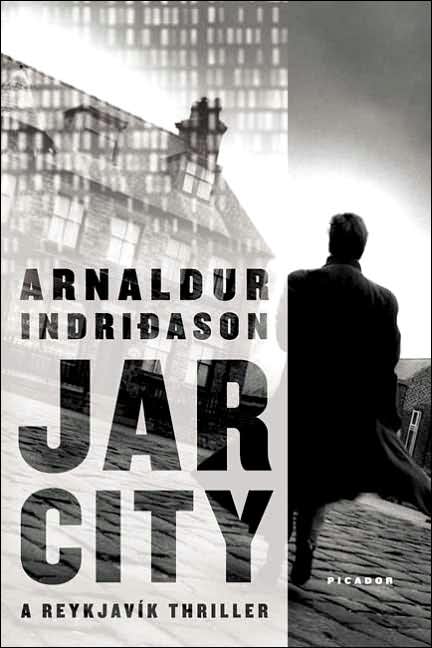
jarcityFollowing up on recommendations from both Miss Bates and Dorian, I’ve just finished my first Arnaldur Indridason mystery, Jar City. (When possible, I always prefer to start at the beginning of a series, even if it might not be the best of the bunch, because that way I’m not missing any pieces.) It took a while to get going, and at first I thought it was a bit too blandly reminiscent of Henning Mankell: is it perhaps an effect of the translations that so many of these northern crime novels sound so much the same? I got drawn in by the case, though, which proved genuinely interesting in ways that seemed quite original to me: I did not expect the story to unfold the way it did, or the motive for the crime to be quite what it was. It provoked some good questions about what counts as justice, but also about families, genealogies, and data — specifically, in this case, data about our genetic inheritance, which is going to be an increasingly pressing ethical issue, I expect. I didn’t get much of a feel for Erlendur himself: he didn’t seem terribly distinctive as a character. But I’ve got Silence of the Grave ready to read next, and maybe as I get to know him I’ll see him more clearly.

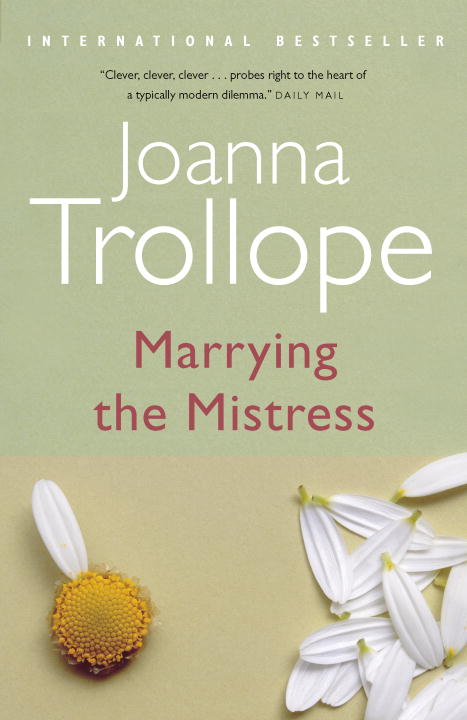
trollopeFinally, after being disappointed in Joanna Trollope’s Balancing Act, I decided to reread her earlier novel Marrying the Mistress, which I remembered thinking was excellent (and which I had been thinking of as also fairly recent but which turns out to be from 2000). I can’t quite put my finger on what makes Marrying the Mistress so much better — but it is. It is structurally very similar: it takes a family with a complex and carefully balanced set of relationships and changes the dynamic by introducing a dramatic change, in this case the husband-and-father’s decision to leave his wife of 40 years in order to marry the much younger woman he’s been having an affair with. It’s a cliched scenario but Trollope makes it feel very specific to these people, at this moment in their lives. She also plays in unexpected ways with our sympathies and with her characters’ loyalties; she discovers, for us, ways in which getting what you want, or what you think you want, might be very different than what you expect, as well as ways in which unwanted change, change that’s unkindly forced on you, might be right, and liberating, as well as painful. She’s very savvy about family loyalties and how people push and pull at each other. It’s not a very happy book, but it’s definitely a book about love.

I also read The Girl on the Train last week — but I’m going to be writing about that for an Open Letters feature so I won’t say more about it here.