In among my other recent chores and challenges I’ve read a few things chosen primarily for their likely distraction value. I don’t have a whole post’s worth of comments on any of them but I thought I’d round them up here, just to sort out my impressions of them.
 First, two romance novels: Julie James’s Suddenly One Summer and Meredith Duran’s Fool Me Twice. I really liked Suddenly One Summer. It’s more subdued than her others, but for me that was a plus. I still find it mildly annoying that all of her main characters are so relentlessly gorgeous, but the heroine’s anxiety issues in this one were both realistically and sympathetically conveyed, I thought, and I liked that the story line overall focused less on overcoming cynicism (which is often the core problem in James’s other novels) and more on taking risks and learning to trust. Fool Me Twice, on the other hand, ended up a ‘DNF’ for me. It was my first Meredith Duran, and the problem I had with it is the same I’ve had so far with the Courtney Milan novels I’ve tried: for me (and obviously others respond very differently) there was just too much of it. What I’ve found so far is that the longer and more ostensibly complex a romance novel gets, the more judgmental I get about whether it’s really a very good novel, rather than just an enjoyable read, and in these cases, I started finding the books tedious. With Fool Me Twice, I just couldn’t believe in either main character, and yet the novel went on and on about them. I am going to give Courtney Milan another try: I’ve been on the library waiting list for The Suffragette Scandal for a while and my turn just came up. And maybe there’s a Duran that would suit me better: I’m open to suggestions.
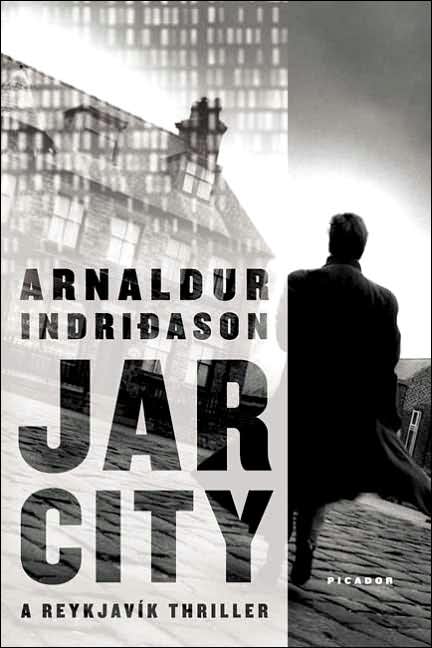 Following up on recommendations from both Miss Bates and Dorian, I’ve just finished my first Arnaldur Indridason mystery, Jar City. (When possible, I always prefer to start at the beginning of a series, even if it might not be the best of the bunch, because that way I’m not missing any pieces.) It took a while to get going, and at first I thought it was a bit too blandly reminiscent of Henning Mankell: is it perhaps an effect of the translations that so many of these northern crime novels sound so much the same? I got drawn in by the case, though, which proved genuinely interesting in ways that seemed quite original to me: I did not expect the story to unfold the way it did, or the motive for the crime to be quite what it was. It provoked some good questions about what counts as justice, but also about families, genealogies, and data — specifically, in this case, data about our genetic inheritance, which is going to be an increasingly pressing ethical issue, I expect. I didn’t get much of a feel for Erlendur himself: he didn’t seem terribly distinctive as a character. But I’ve got Silence of the Grave ready to read next, and maybe as I get to know him I’ll see him more clearly.
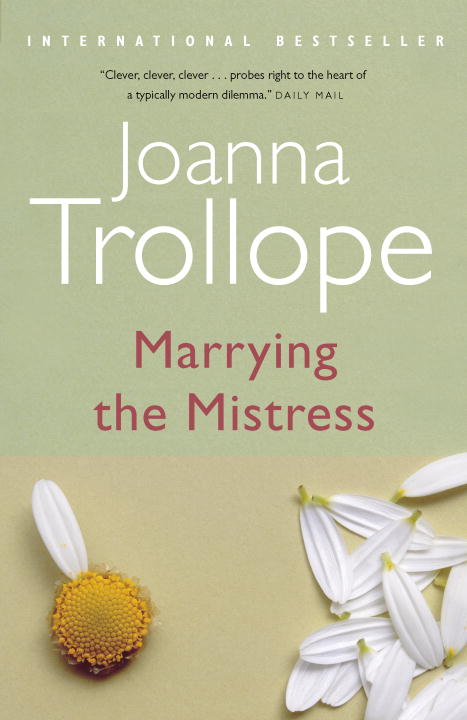 Finally, after being disappointed in Joanna Trollope’s Balancing Act, I decided to reread her earlier novel Marrying the Mistress, which I remembered thinking was excellent (and which I had been thinking of as also fairly recent but which turns out to be from 2000). I can’t quite put my finger on what makes Marrying the Mistress so much better — but it is. It is structurally very similar: it takes a family with a complex and carefully balanced set of relationships and changes the dynamic by introducing a dramatic change, in this case the husband-and-father’s decision to leave his wife of 40 years in order to marry the much younger woman he’s been having an affair with. It’s a cliched scenario but Trollope makes it feel very specific to these people, at this moment in their lives. She also plays in unexpected ways with our sympathies and with her characters’ loyalties; she discovers, for us, ways in which getting what you want, or what you think you want, might be very different than what you expect, as well as ways in which unwanted change, change that’s unkindly forced on you, might be right, and liberating, as well as painful. She’s very savvy about family loyalties and how people push and pull at each other. It’s not a very happy book, but it’s definitely a book about love.
I also read The Girl on the Train last week — but I’m going to be writing about that for an Open Letters feature so I won’t say more about it here.



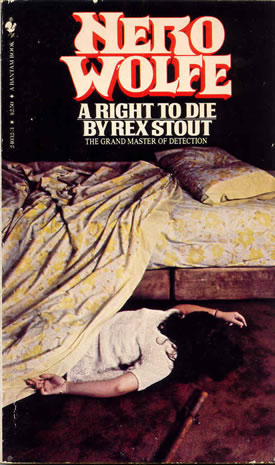
 The case involves two members of a civil rights organization, a black man and his white fiancée, Susan Brooke, who is the (first) victim. It seems pretty likely at first that race is a key factor in her death: I think it’s not giving away too much to say that this assumption is itself a symptom of the racial tensions the novel depicts, while the resolution of the mystery seems designed, not necessarily to move us past race, but to remind us that there are plenty of other sources of homicidal hatred that a preoccupation with race ought not to blind us to. The plot is set up by a visit from Paul Whipple, who was inspired to give Wolfe some crucial information in a long-ago case after Wolfe made an impassioned speech against shielding a murderer “because he is your color.” Whipple shows up and quotes the speech verbatim, including this bit:


 I didn’t love Jo Walton’s
 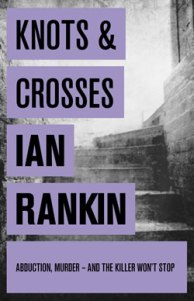 I spend a lot of time fretting about which books I assign in my Mystery and Detective Fiction course — because once you get past the few absolute “must haves” (something by Poe, some Sherlock Holmes, The Moonstone, something to represent the Golden Age, one of the hard-boiled essentials) there are many good reasons but no real imperatives to help me choose from the tens of thousands of possibilities. My guiding principles are coverage (of the major subgenres, such as the police procedural) and diversity (of voice or point of view), but that doesn’t really narrow things down that much. I’ve asked for suggestions quite a few times here, with great results: I have readers like Dorian to thank, for instance, for prodding me to read Sjöwall and Wahlöö, whose The Terrorists is currently a staple of my course reading list.
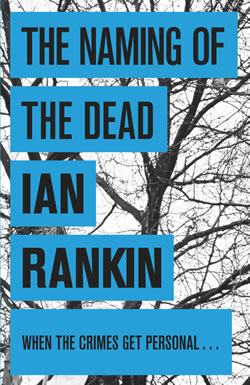 And yet … I am not convinced that I should replace Knots and Crosses after all! Much as I’m enjoying rereading it, I’m not sure it would be as teachable as Knots and Crosses, and my hesitation over this has had me wondering: what do I mean by “teachable”? It’s not something I ever really consider about Victorian novels when choosing among them for my 19th-century fiction classes, but when I’m scouting for mystery novels to assign — or contemplating assigning some new (or new to me) novel for an intro course — “How would this work in the classroom?” is always a concern. And for the majority of mystery novels I read, the (usually unarticulated) response to this question is “it wouldn’t”: I put most of them aside without seriously considering them for my syllabus, which strikes me as interesting. Why would that be? Might it (she says a little nervously) have something to do with the “literary” vs. “genre” fiction distinction? Or, to be more precise, with the ways that methods for “teaching” a novel (at least for me) align with qualities that are more likely to occur in “literary” fiction?
 Then there are other constraints on teachability: more pragmatic ones. Again, with Victorian novels I mostly don’t worry too much about these, though I am wise, or cautious, or jaded, enough never to assign two genuine door-stoppers in the same term (say, Bleak House and Middlemarch). Students who sign up for “The 19th-Century Novel from Dickens to Hardy” have to know what they are getting into! But the mystery class is a lower-level course that is purely an elective for everybody in it. I can barely get them all through The Moonstone (and in fact I am confident there are always some who never make it to the end) — and that’s a book that’s so interesting I can barely stop talking about it myself! It earns its two weeks of class time by being not just important but really complex and (for the class) quite challenging. This is actually where I fear The Naming of the Dead falls apart as an option (though I’m not 100% sure yet). Its nearly 500 pages are not nearly as dense as The Moonstone‘s, but in a way that’s just the problem: it goes on for almost as long a time without actually being as complex. It is broad, I might say, and it’s smart, but it’s not particularly deep. I’m not sure about this, because I haven’t tried to map out any lecture topics, but it would be a bad idea to assign 500 pages and then end up feeling like we were spinning our wheels in class.
