There’s a certain solace in writing about loss, too, of course, because it’s a way of coming to terms with mortality. As long as you are doing the writing, you are rehearsing the losing; unlike the friend, you are still there. You are the mourner, after all. But what happens when you start losing yourself?
Nancy K. Miller’s My Brilliant Friends: Our Lives In Feminism is an odd kind of book, or perhaps it just seems that way to me because it hovers in between genres I recognize—it is part friendship memoir, part introspective autobiography, with dashes of campus tell-all and dabs of philosophical reflection on grief and aging and physicality and mortality. It often felt unfinished to me, with its uneven sections and abrupt segues never quite developing, never going for a long time in any one direction. Miller is too experienced and self-conscious a writer not to be doing all of this on purpose: that I found the end result rather scattered is a reflection of my own preference for continuity and order, but I imagine she would say that continuity and order are exactly what the experiences the book is about have not provided, and so the form fits the content.
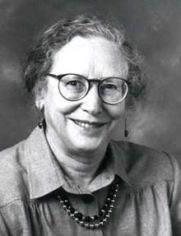
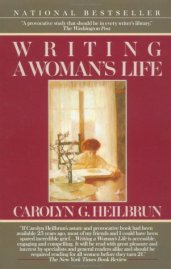 A lot of things about My Brilliant Friends really interested me. The friendships Miller is reflecting on were with Carolyn Heilbrun, Naomi Schor, and Diane Middlebrook: all four of them are big names, renowned scholars of the generation that basically pioneered feminist literary scholarship in the American academy in the later 20th century—and thus the generation that laid the groundwork for my own education as a feminist critic. I’ve written here before about the influence of Heilbrun on my own scholarship and my ongoing interest in her life and work. Miller’s own 1981 PMLA essay “Emphasis Added: Plots and Plausibilities in Women’s Fiction” greatly influenced my thinking about many novels but especially The Mill on the Floss. Part of the fascination of the book for me, as a result, was purely anecdotal and personal: I liked getting to know more about what it was like to be these women doing this groundbreaking work, getting a glimpse behind the scenes. I found myself envying these women their drive and also marveling at their persistence. It was oddly reassuring, too, to hear about their doubts and hesitations, and their fears about whether their work was worth what it took to produce or getting the notice or credit they wanted for it—familiar academic neuroses. “I don’t want to die thinking I’ve been left out of a footnote, excluded and erased” Miller comments (harking back to Naomi’s “pain at being left out of a footnote in an essay by a historian we both knew”), “though it’s not a feeling alien to me [or to me!]; alternately, I don’t want to be relegated to a footnote, which at best is what happens to most academic work.”
 At its heart, though, My Brilliant Friends is really about more personal things than that (again, I think Miller might reply that the personal and the academic are not really so separable, or shouldn’t be). I found I wasn’t always able to be as interested as I wanted to be in the details. The Heilbrun section was the easiest one for me to engage with, because I have a relationship of my own, however indirect, with its subject. Miller’s thoughts on her friendship with Naomi Schor (a relationship which was long, complex, and of intense interest and significance to her) left me mostly unmoved, a detached spectator to the emotional intricacies of its ebb and flow. Of her three main subjects, I knew the least about Diane Middlebrook when I started the book; for some reason she came more vividly to life for me than Schor did, through both Miller’s recollections and her own letters. She sounds wonderful: she possessed, Miller says, “the art of making her friends feel loved and appreciated.” Theirs was a friendship formed relatively late in life, and I found Miller’s reflections on the different bases on which such belated bonds are formed really thought-provoking, especially as I have spent so many years distant from the very dear friends I made in my younger years.
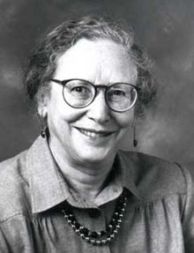 Death is the occasion for the book. Middlebrook died of liposarcoma, which she was diagnosed with not long after she and Miller met; Schor suffered a cerebral hemorrhage at only 58, which, Miller remarks, “while not a tragically young age, is young enough to feel untimely.” Heilbrun, of course, committed suicide: though a relatively small part of the book as a whole, the other women’s reactions to her choice are among the most thought-provoking moments, because they are tied up with their deepest convictions about autonomy, especially for women, as well as with their thoughts about living, aging, and dying. Miller quotes from an exchange about Heilbrun’s death between Middlebrook and Elaine Showalter (another accomplished and very influential feminist scholar of this generation, of course, and another whose work has played a large part in my own scholarly life—her book A Literature of Their Own was the first book of literary criticism I ever bought for myself, when I was just starting down this academic path). Middlebrook argues that the suicide was an act “taken on behalf of what she valued in herself, which was her independence,” while Miller sides with Showalter, at least emotionally, that while the death itself may have been a legitimate choice, it was regrettable that leading up to it Heilbrun had (as Showalter put it) withdrawn herself “from life, from the trivial, quotidian treats that gave pleasure, and from the tasks and obligations that give pleasure to others.” (As a side note, I looked up the rest of the Showalter-Middlebrook exchange because it is also a discussion about retirement, something that, while most likely a decade or more away for me, has begun to pose itself to me as a question: not just when, but what. My attention was especially caught by Showalter’s reference to a book that makes the case for “people reinventing themselves after 55. She believes,” Showalter says, “that it is actually necessary to make major life changes at this point, or fade away.” Hmm. That gives me just over two years!)
 It’s not just her friends’ deaths that prompt and shape Miller’s writing: early in her work on the book, she herself was diagnosed with lung cancer. “You discover that your position, secured among the living, is unstable, unsure,” she observes; “You may have imagined yourself safely on the side of the living, and then suddenly … you are on the verge, possibly, of disappearing yourself.” This increases her desire to be “the subject”—”to be in charge of the story even if it seemed I had lost control of the narrative.”
This is why the generic oddity of the book ends up making sense to me. At first there seemed to be a strange kind of self-assertion to the book, an assumption about the relevance of these very particular and very personal relationships. In themselves, they are probably not that different from many friendships, ones that have been written about (such as that between Vera Brittain and Winifred Holtby) and ones that will never be written about (such as most of the ones all of us experience). But for a feminist theorist, one whose life has been bound up in articulating what (and how) women’s lives mean, and especially one like Miller who has been particularly interested in criticism as a form that intersects with autobiography, some kind of commentary on the complex dynamics of loyalty, affection, support, rivalry, and resentment that made up her most important relationships with other women seems more than reasonable—it seems necessary. Miller is especially aware that in writing this book she is claiming the last word: “What else am I doing here,” she asks at one point, “but sketching biographies of my dead friends without their permission?” But she isn’t using it to put them in their place, to settle scores or fix definitions or perfect narratives about them. My Brilliant Friends is also not a manifesto about the “right” kind of friendship: it doesn’t have and also doesn’t seek that kind of unity. It just offers up Miller’s friendships, warts and all, for readers to think about. It also invites us to think about what Miller’s diagnosis has forced her to confront: not just who we will mourn and why, but who will mourn us, and what role writing will have for us, in that particularly difficult exercise in being human.

 The case itself is cleverly contrived but not, I think, particularly meaningful. On a completely personal and thus mostly irrelevant note, I enjoyed that it turned on the victim’s fondness for retsina: retsina is actually the first wine I ever drank, back when I was a regular in a Greek dance performing group, so for some time I didn’t realize just how distinctive (many would say, just how disgusting) it actually is. I haven’t had any in years, but now I’m tempted to see if our local wine store carries any. As I recall, it certainly goes well with the robust flavors of Greek cooking — garlic, lemon, and lamb especially. It isn’t really key to the crime, though, except that because nobody likes it but the victim, it proves a useful vehicle for delivering the fatal poison. (This is not a spoiler, as the method of the murder is one of the first things we find out!)
 I finished Honest Doubt thinking that, though I didn’t love it this time either, I should reread more of the series. Even 2000 was a long time ago in my own academic career, and for all that aspects of Honest Doubt seemed faintly archaic already, some of its truths hit home in a way they didn’t before. Even its title, in fact, has new resonance to me, taken as it is from Tennyson’s lines (from In Memoriam) “There lives more faith in honest doubt / Believe me, than in half the creeds.” My own doubts about a range of academic values and practices have made me seem to some, I think, like a negative force, maybe even a threat (or, and I’m not sure if this is better or worse, like an irrelevance). I’ve described myself as feeling sometimes like “a nonbeliever in church”: to me, though, my doubts have always been indications of my faith that what we do not only is valuable but can be even more so.


 Plant Dreaming Deep is one of May Sarton’s memoirs. When she was 46, Sarton bought an 18th-century farmhouse in Nelson, New Hampshire. Her parents had recently died, and part of their legacy to her was furniture – big solid pieces that traveled with them from Belgium (where they had survived the First World War), and then moved with them from place to place until they settled in their own house. Sarton, who to that point had never owned her own home, had to store the furniture in the cellar (“my mother’s desk with its many pigeonholes and secret drawers, the bahut, the long refectory table that matched it, and two eighteenth-century chests of drawers”), and she found she could not bear having these “great pieces of our lives” stashed away:

 Two other, more literary, chapters also stood out for me. One, “Unmet Friends,” talks in general about the way writers can come, in our minds, to be our close friends, though we have ‘met’ them only through their words on the page. “Women catch courage,” Heilbrun proposes, “from the women whose lives and writings they read, and women call the bearer of that courage ‘friend.'” Heilbrun’s main example is Maxine Kumin, who, she says, “exists as a close friend only in my mind.” She talks in engaging detail about how she got to ‘know’ Kumin and what their ‘friendship’ has meant to her over the years. “Kumin,” she explains, “spanned both the refuted and the desired aspects of my life.” But she also mentions Dorothy L. Sayers (“her life and her writings spoke to me of a more expansive life, an existence devoted to aims riskier than I had previously allowed myself”)–and Virginia Woolf, who, though “a writer I have studied, taught, and written about with admiration, has never been a friend: she is entirely too much of a genius for that.” There’s also a separate chapter on a writer who became Heilbrun’s real-life friend, May Sarton. Heilbrun mentions her reading of Sarton’s 1968 memoir, Plant Dreaming Deep, “a work that quite literally caught me in its spell,” as “the beginning of our friendship;” that comment, plus her account of Sarton’s eccentric personality and vexed writing career, made me glad I had coincidentally picked up Plant Dreaming Deep at the same time I bought The Last Gift of Time.
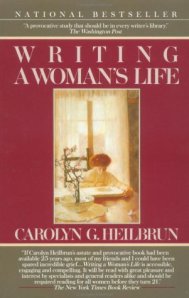 Some time ago one of my most thoughtful readers (hi, Tom!) suggested I write about “a teacher/scholar whose work has had a significant influence on you.” I really liked this idea because, as I said in

 Novel Readings