I have been very glad to see eloquent and well-informed responses to Ron Srigley’s screed “Pass, Fail” in The Walrus (which largely reiterates his screed in the Los Angeles Review of Books). I was disappointed in both venues, frankly: it seems to me to show poor editorial judgment to publish rants of this kind without checking their intemperate anecdata and wild generalizations against at least a broader sampling of facts and opinions about the very complex business that is higher education. I would have expected both journals to think better of themselves and their readers. Both Aimée Morrison and Melonie Fullick have offered valuable critiques — but because these writers don’t go to extremes, either rhetorically or ideologically, their thoughtful pieces almost certainly won’t get as much attention, and because Srigley is preaching to a nasty choir of higher ed haters, rather than actually trying to engage people interested in meaningful dialogue, critique, or reform, the people who are gleefully linking to his article are unlikely to step back and reconsider the nature or value of his arguments.
I thought about writing a detailed response as well — not because I have done the kind of research that makes Melonie so well-qualified to speak up, but because I found Srigley’s sweeping denunciations of “contentless” classrooms, the replacement of what he considers important topics by “narcissistic and transparently self-promoting twaddle,” and professors who “pandered to [students’] basest inclinations while leaving their real intellectual and moral needs unmet” profoundly insulting — to me and my colleagues and to the generations of students we have taught. Further, the claim that “most degrees involve no real content” is not just a lie but, in our current economic and political climate, a damaging lie. Yes, there are grains of truth in his criticisms of the way universities are run and in his descriptions of the sometimes incompatible priorities of students, staff, and faculty. But most of us who are dealing with these problems every day on the job (and evenings and weekends too, much of the time) do not need “friends” like Srigley, who is actually an enemy of the enterprise we are all, collectively, engaged in, in good faith if sometimes with flagging spirits.
By the time I finished his LARB piece I was seething, and I was seething again, and also profoundly discouraged, when I saw it resurrected in The Walrus. Is this really the story about higher education that people want to read? It must be, or relatively sober publications that could certainly afford to turn it down wouldn’t run it: they must have figured that it would generate traffic, and I’m sure they were right. (You’ll notice I have not linked directly to either iteration here, because I hate that the internet incessantly rewards the worst over the best.) I fervently believe that my work, and the work of thousands of others like me, is not a “retail scam”: maybe, I thought, I should try to explain why not.
 But then I realized that I have said so, that I have made my argument — over and over, for almost 10 years. Here at Novel Readings I have posted regularly about my teaching, for instance, since 2007, when I began my series on “This Week In My Classes” because of other equally vitriolic and unbalanced public criticisms of my life’s work. I have shared details about what my classes are studying, I have raised questions about pedagogy, I have fretted about students who don’t seem engaged and celebrated the much more numerous ones who care a lot, I have explored new subjects and developed new material, I have sought advice and sometimes comfort. In other words, I have tried to do the opposite of Srigley’s grand dismissive gestures: I’ve invited anyone who’s interested to come inside the academy and see for themselves what I’m up to.
I can’t rule out the possibility that someone would read through my archive of teaching posts and still reach Srigley’s dire conclusions about the state of higher education. I know, too, that I’m just one professor, so my first-person experience is also, in its own way, anecdotal rather than conclusive. But I honestly think my efforts to meet my students every time with the best that I can come up with are more representative than Srigley’s dystopian exaggerations. I’m surrounded every day with colleagues who similarly strive, with all their intelligence, creativity, and fortitude, to bring their students with them to intellectual places they think are both interesting and vitally important. Every day, we are all surrounded with students who meet us at least half way, and some who take us further than we would have gone on our own. Sure, some don’t, or won’t, for both good and bad reasons, some of them individual and some of them structural. But an imperfect process is a sign of a work in progress, which is always what education is.
Novel Readings is still a pretty quiet corner of the internet; whatever hope I had, back in 2007, that my teaching posts would make even a slight difference to the larger public narrative about higher education has long subsided. But the archive is there for those who want a different perspective: rather than grand statements, they provide a steady record of particulars. I’m not going to attempt any further response to Srigley, because in these posts I have, implicitly, responded already, over and over and over: instead, I’m just going to keep doing what I’ve been doing, both here and, especially, in the classroom, where it really matters.
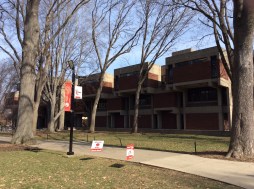 I’m back from Louisville, where
  Even taking these good things into account, though, I left Louisville feeling more than ever that, as a profession, we need to rethink how we do things. One of the main incentives for me to participate in this panel was that I have recently been given emphatic notice that I haven’t been going to the number of conferences expected of someone in my position. A significant number of academics apparently consider frequent conference-going a key measure of scholarly productivity and knowledge ‘dissemination.’ Frankly, I thought this was bollocks when it first came up as a criticism of my record, and my experience in Louisville only confirmed me in that view. Here’s why: Under pressure to show I am doing the “right” things professionally, I traveled a long distance at great expense (a significant amount borne by me personally, as the funding available did not cover nearly the full cost) to present a 20 minute paper to an audience of 8 people. All around me, hundreds of other academics were there doing the same, sometimes to even smaller audiences (the smallest I saw was 3 people plus the panelists, the largest, excluding keynotes, was about 16 — for a panel on Joyce — and one of the keynotes itself had an audience of maybe 15). Though there’s no doubt that some of the attendees were genuinely engaged with the papers they heard, most of them will take little concrete away besides a vague sense of the argument. One questioner at a panel I attended prefaced his remarks (as usual, questions were usually of the discursive rather than inquisitive variety) by saying that he’d heard a paper at another conference by someone whose name he couldn’t remember making an argument he dimly recalled had been somewhat similar to the one he’d just heard: though I’m sure there are some exceptions, that impressionistic result seems to me pretty typical, at least of a conference as diffuse as this one.
 The small audiences and inchoate overall experience is in part a function of the kind of conference this was: papers were collected under a very large umbrella, and (I suspect) accepted somewhat indiscriminately, perhaps with the admirable goal of being inclusive. But when there are 10 or more concurrent sessions in every time slot, there’s little chance of robust numbers at any given panel, and even less chance of a sizable cohort of conference-goers having much of a common experience and thus much deep, shared conversation. My experience of
  Once upon a time going to conferences really was our best option for letting a wider audience know what we are working on, for getting feedback on work in progress, and for networking with colleagues in our field. But while I think it is possible for a conference experience to be genuinely valuable, particularly if the conference has a narrower focus and a different format (a friend of mine speaks very highly, for instance, of the
  I think I personally would have found the Louisville conference more intellectually stimulating if I were a modern literature scholar myself: I had a harder time even than usual latching on to the papers’ arguments because they were typically quite specialized contributions to scholarly inquiries I know little about. I went mostly to Woolf panels because at least there I knew the primary sources a bit! (I was interested to note that there were no papers, much less panels, on Winifred Holtby or Vera Brittain at all; there was one paper on Sayers, but I saw no sign of Rebecca West or Rosamond Lehmann or Mollie Panter-Downes or Elizabeth Taylor or Olivia Manning or any of those I think of as the ‘Virago’ set. Eliot, Pound, Woolf, Joyce, a bit of Lawrence and Forster — this was a pretty canonical outing. You 20thC people can tell me if that’s typical or just Louisville.)
 Some follow-up comments on academic blogging, prompted by comments on
 And, dedicated as I am to preserving the forest, I do often recoil from individual trees — and the less time I spend reading properly “academic” criticism, the harder it is for me to tolerate it when I dip back in. I recognize, however, that other people genuinely relish both reading and writing it, which is more than fine with me, because that’s how (to stick with the arborial metaphor!) the trees I do appreciate are able to take root and flourish. It continues to mystify me, though, that so many academics seem so content to keep planting trees in those woods knowing that hardly anybody will hear their hard-won knowledge or insight when it falls into its safely peer-reviewed place. Even people who have no professional reason to play it safe any more seem oddly uninterested in, or even resistant to, getting the word out about their research in other ways (I say this because I have proposed it to some of them!) — and I get no sense that this has changed in the past decade. Is it anxiety or snobbery that makes it seem preferable to them to hold out for acceptance by a journal or press that will deposit their work safely where almost nobody will read it, rather than to tell other people about it directly through the magic of WordPress? Surely at some point you have enough credibility just to speak for yourself, and you should do that if your actual goal is to increase the overall sum of understanding in the world. Mind you, then you’d also have to try your hand at self-promotion, something else that,

 The second full week of term has gone by already: it’s amazing how time seems to accelerate when things get busier. In both my classes we have moved from throat-clearing and context-setting to richer discussions about our readings: in The 19th-Century Novel from Austen to Dickens, we’ve wrapped up our work on Persuasion, and in Mystery and Detective Fiction we’ve got only one more class on The Moonstone. Starting the term with these two novels eases the transition from summer’s languors to fall’s stresses because both are so delightful. At least, I think so — and it seems as if a lot of students are enjoying them as well. Discussion in the Mystery class has been particularly good so far this term, especially considering it’s a big class (capped at 90), which can sometimes be inhibiting. I hope they keep putting their hands up!
 One thing I’ve been thinking about as our work gets underway, and as I contemplate my own non-teaching ambitions for this term, is trying to make the process as meaningful and rewarding as possible, shifting some emphasis away from the product — which for students is often the course credit or the grade, and for me is the finished piece of writing. I’ve been reading Donald Hall’s The Academic Self: An Owner’s Manual (thanks to