 We are well into the term now, and overall I think it’s going fine. I do not like teaching Pulp Fiction at 120 students, which maybe doesn’t sound like that big a change from 90 but certainly feels like one to me. I miss being able to see their faces–and having at least a fighting chance of learning their names! I know that I have colleagues who have taught intro classes at even larger sizes, and also that I have colleagues who are comfortable, pedagogically, with teaching writing at this scale. Maybe they know something I don’t about how to make it work, but for me, the increasingly sharp division of class time into formal lecture time–you can do some Q&A, but not a wide-ranging, inclusive discussion in a tiered lecture hall–and tutorial time (where the 30:1 ratio is still far from ideal for either discussion or hands-on writing and editing work) is really unsatisfying. I don’t think it serves us or them particularly well.
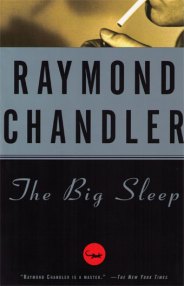 The odds that we’ll ever be able to get back to smaller first-year classes seem slim, however, so I’ll just keep trying to make the best of it. Right now I’m considering giving up on some things I think are pedagogically valuable (like frequent low-stakes work) because logistically it’s just getting to be too much–but it’s too late to do that for this year! In the meantime, we are nearing the end of our unit on Westerns; next week we start on mysteries, with The Big Sleep taking the place of The Maltese Falcon this time around. As you might recall, I had big plans for bigger changes but they fell through: first True Grit turned out to be unavailable and then I lost my nerve about assigning Laura. I’m not entirely sorry, because I have a number of new books on the syllabus for Women & Detective Fiction so it’s relief to have existing materials to rely on here.
In Women & Detective Fiction we are almost done with Gaudy Night, which overall they seem to be finding a bit much. I don’t think of it as a particularly long book: in my 19th-century fiction courses it would be only an average-sized one! I’ve been wondering if the difficulty some students have run into getting through it (or getting into it) comes from their having different expectations for crime novels. Also, our first readings were very simple and quick–Agatha Christie and Nancy Drew–so they may just have underestimated how much time they needed to allocate to reading for this class. The students have mostly been putting in a good effort, though, and I’m looking forward to tomorrow. My class notes are basically prompts: chess set, dog collar, fascism, misogyny, academic integrity, sonnet, balance, counterpoint, Bach, Placetne, Magistra? Placet.
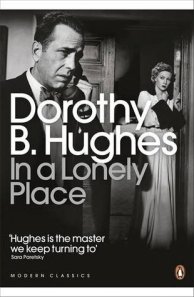 Next up is In a Lonely Place, which means for a while both my classes will be steeped in noir. Though I think both books I’ll be working on are great examples of their kind, it is not my own favorite kind of crime fiction, and it’s likely that this juxtaposition will exacerbate another lurking dissatisfaction of mine this term, which is with the amount of teaching time I’ve been spending on genre fiction. I hope it’s obvious that I am not a snob about genre fiction! I read and enjoy a lot of it; I was the one who introduced our detective fiction class well over a decade ago and I have taught it with great enthusiasm probably a dozen times; a few years ago I volunteered to do Pulp Fiction instead of one of our more standard intro to lit options; I regularly include sensation fiction in my Victorian fiction classes and offer a course exclusively on it; etc. This term, however, I have found myself unexpectedly weary of spending so much of my class time on books that (frankly) wear a bit thin over time because they aren’t, many of them, quite the kind of book that the English literature classroom–or at least my English literature classroom–was designed to showcase.
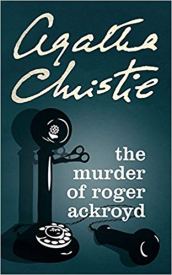 Do I really think that? Can I even say that? What exactly am I saying? I’m certainly not saying we can’t or shouldn’t teach genre fiction, or that doing so doesn’t involve doing rewarding or meaningful analysis. That we even have the concept of ‘horizontal reading,’ though, does suggest that genre fiction isn’t always best approached with the aim of deep or close reading, doesn’t it? Agatha Christie, to give just one example, is brilliant at many things (and I have gotten pretty good at making the case for them), but it’s not much fun lingering over the details of her prose; not much will come–not much of interpretive interest, anyway–from mining them for the kind of nuances we appreciate when we read, say, “Araby.” Sometimes in the detective fiction class I point out that (though of course there are exceptions) a lot of details we might read as symbolic in another kind of fiction are better read more literally in crime fiction: does it make any sense to read the dagger in Roger Ackroyd’s neck as anything other than a convenient sharp object suitable for murder? There is a similarly literal impulse in a lot of detective fiction: no matter how complex the social, political, or psychological elements, it is rare for the language in particular to be of great interest.
 I think what I’m saying is that I love my 19th-century fiction classes, which I still teach regularly, but I have also, over the years, loved teaching other more conventionally “literary” material and I’m starting to miss the greater variety I used to enjoy, especially the chance to teach more poetry and more (literary) fiction from other periods. That’s one reason I’m excited to be doing the British literature survey next term. I’ve also asked that, if possible, my next first-year course assignment be something besides Pulp Fiction. When I first designed my version of the course I imagined that students would get caught up in the contrarian spirit of reading genre fiction instead of the classics, but as far as I’ve ever been able to tell, they mostly don’t care: with rare exceptions, they’ve never thought about the difference before and what they really want is just to get their writing requirement as easily as possible. My advocacy for dismantling the canon is wasted on them: I’m standing there at the lectern basically having an argument with myself! And somehow right now I feel as if I’m losing it.
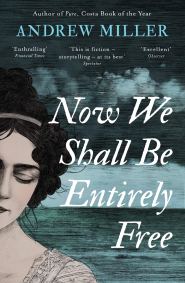 This was not how he had imagined it, the truth-telling time. It was as if his secrets had altered in the keeping, had grown like living things, so that he did not quite know them any more. Or that they were not entirely his, not the private stash or black treasure he had imagined. And once more it came to him, the thought that had touched him several times since coming back from Spain, that we are not private beings and cannot hide things inside ourselves. Everything is present, everything in view for those who know how to look.
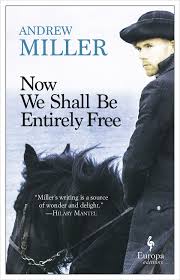 I won’t give more specifics about the plot; I’ll just note that it sets up a structure that is at once simple and increasingly suspenseful. Miller makes good use of the common trope of a geographical voyage also being a voyage of personal discovery, so that the cat and mouse game over time becomes something at once subtler and more complex. Though the plotting is very precise, even the moment when hunter and quarry coincidentally and unwittingly cross paths didn’t feel contrived: it just added to the evidence (shared eventually by at least one of Lacroix’s pursuers) that they are not really seeking a legible or reasonable form of justice but are carrying out a more arbitrary exercise of power, playing their parts in a game none of them can ever really win because those who made the rules don’t care who they really are–or who they could be, if they were free to choose.
 Last Wednesday, because of the disruption from Hurricane Dorian it felt as if we were starting the term all over again. A week later, it finally feels as if we are getting into something like a routine–even though the add-drop (a.k.a. “shopping”) period is only just ending, so the list of registered students for Pulp Fiction has been changing literally every day. Still, the majority of students in the class have been coming since September 4, and the general air of uncertainty and anxiety is fading into the usual combination of commitment and resignation. Because it’s a 4th-year seminar, Women & Detective Fiction has been a more focused group from the beginning, but there too we are past the getting-to-know-you period and are (I think) comfortably embarked on what promises to be a really good term’s discussion.
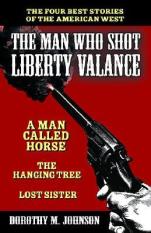 What have we done so far? Well, in Pulp Fiction we have done a bit less reading than usual by this point, but we’ve gone through all of the warm-up texts, starting with Lawrence Block’s “How Would You Like It?” and then, to set up our unit on Westerns, Sherman Alexie’s “My Heroes Have Never Been Cowboys.” If I am assigned this course again for next year, I would like to replace the Block story with something a bit more on point for the course themes. Alexie’s poem, on the other hand, has proved to be a really good opener for Westerns because it clarifies right from the beginning that this is a genre that both invites and deserves significant pushback. Our reading for Friday, for instance, is Louis L’Amour’s “The Gift of Cochise,” which I think is the worst of our Western readings in terms of flattening and dehumanizing its Apache characters. (I actually think L’Amour is trying to do better by them but does so through a version of the “noble savage” stereotype that doesn’t end up helping at all.) “My Heroes Have Never Been Cowboys” has primed us to see this as (among other things) a problem of point of view, one with both specifically literary and broader and still urgent social and political consequences. We read Dorothy Johnson’s “The Man Who Shot Liberty Valance” for today, which is a good story for challenging just what kind of cowboy really counts as a hero: as we discussed, the self-effacing Bert Barricune may be the best shot, but he’s a hero for a different reason–because he lets someone else take the credit and the girl. Next week we start Valdez Is Coming, which has not really gone over that well in previous years. Maybe third time’s the charm!
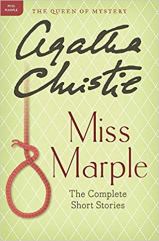
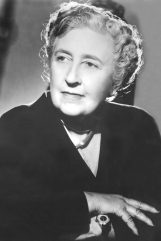 In Women & Detective Fiction we have just wrapped up three classes on Agatha Christie. Going over my notes from the last time I taught this seminar reminded me that we were struggling a bit, that year, to find enough to talk about–enough that, though I had forgotten about this until it was too late to make the change, I had resolved to assign a novel instead of the stories next time around. Happily, even sticking with the short stories, we had no such trouble this year! The class time has seemed to fly by: not only is it a keen group with plenty to say but the things they are noticing are often things I haven’t really focused on before. We talked a lot, for example, about role playing as a motif across the stories, from the overtly theatrical Jane Helier (an “actual” actress) to Miss Marple herself and the perhaps insoluble puzzle of how far her performance of self-deprecating femininity is a deliberate feint or strategy that enables her detective prowess and how far it is a way for Christie to sincerely re-value the qualities Miss Marple displays. Today was student presentation day and in addition to some useful discussion of her life and works we did an exercise in crime solving ourselves based on her mysterious 11-day disappearance. Next up in this class: Nancy Drew–and one of my students turns out to be an avid Nancy Drew fan and collector, so she is going to bring in some of her early editions to show us. I’m excited: if everyone stays this lively and engaged, it’s going to be a great term.
 It hasn’t been stormy in my classes so far–in fact, we have barely had a chance to meet because of the literal storm that passed over Halifax this weekend. Hurricane Dorian churned up the east coast of the United States, and unlike most of the other big storms that head towards us it neither cooled off into an unpleasant but basically harmless rainstorm nor turned out to sea.
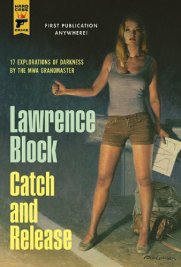 I decided to bump the scheduled classes along a day in Pulp Fiction and make up for it later, so today we picked up right where we left off last Wednesday, with the idea of “pulp fiction” and assumptions about differences between genre fiction and literary fiction. Then we turned to our first reading, Lawrence Block’s creepy little story “How Would You Like It?” It’s a story that doesn’t quite fit into any of the genres we’re actually studying–I suppose it is a kind of crime story, but it isn’t a detective story. It’s an attention-getting story, though, or at least I hope it is, and it’s useful for starting conversations about point of view, tone, and varieties of narrators, including unreliable ones. I wasn’t sure students would be willing to talk in class, given its relatively large size (120) and the rather formal lecture hall, but a lot of hands seemed to be going up, so I’m encouraged. I wonder if my using a microphone helps keep people involved because everyone can hear what’s happening: I am trying to be scrupulous about repeating students’ questions before I answer them, and also since it is wireless I can move around the room, including going up the stairs.
 In Women & Detective Fiction, I decided we would stay on schedule: Monday’s class was supposed to be spent discussion a cluster of ‘classic’ detective stories to provide touchstones for our often subversive takes on classic tropes: I’d assigned “The Purloined Letter,” “A Scandal in Bohemia,” and Hammett’s “Death & Company,” one of his Continental Op stories. I think we can hit the main points about these quickly at the start of today’s class, and then return to them through comparisons with today’s assigned readings: Baroness Orczy’s “The Woman in the Big Hat” (one of her Lady Molly of Scotland Yard stories) and Susan Glaspell’s “A Jury of Her Peers.” Both of these stories begin our term’s work of highlighting the ways gender matters to fundamental questions in detective fiction, including who has the expertise and authority to solve the crime and what “justice” means in a context where women’s experiences in particular and a broader context of sexism mean that the law may not provide it.
 Tomorrow I kick of my 25th year of teaching at Dalhousie and my 13th year of
  It wouldn’t make much of a post to say that five years later, nothing has changed! And yet in most respects that’s true. (Certainly my office looks more or less the same.) I think, or at least I hope, that the consistency in my priorities and methods is a sign of success, not stagnation. I still take class preparation seriously and regularly look for ways to change things up, whether it’s
  There won’t be big changes in my pedagogy this year, then: just the usual tweaks to see if I can get an exercise or an assignment or a reading to go a bit more smoothly or get better results. That doesn’t mean there won’t be surprises or challenges, though. That’s the thing about teaching! Every time you do the “same” thing–discuss the same book, assign the same essay topic, ask the same exam question, whatever–you are doing it with a different group of people and in a different context, not just of your own changing ideas but of theirs, which are shaped by the other courses they are taking and readings they are doing and experiences they are having–and by your life in the moment and their lives too. One of the scary, exhausting, and stimulating things about teaching is that no matter how carefully you have prepared, you never know what exactly is going to happen in the classroom that day. You just show up, bring what you’ve got, and try your best to shape, steer, listen, and respond in a way that serves the goals that you have for the course. In my case, though there are more specific objectives that vary from class to class, my fundamental goal is simply to help my students have as good a conversation about our readings as possible (meaning one that is well-informed and attentive to both text and contexts) so that they will carry away with them a sense of both how to do that and why it’s worth doing. We talk a lot these days about “transferable skills,” and those certainly matter, but the reason I teach English instead of something else is that I consider that specific work well worth doing
  On that motivational note, the two courses on my teaching schedule for this fall term are Pulp Fiction (a large introductory-level class) and Women and Detective Fiction (a small upper-year seminar). I’ve spent a lot of time over the last several weeks getting things in order for them; although I’m a bit anxious, as always at the start of term, at this point I’m eager just to get going. Once again, I will be writing about them here. Though sometimes over the years I have wondered if I’ll find anything new to say in this blog series, the exercise itself always proves that I do, and it also always proves valuable in the same ways I explained
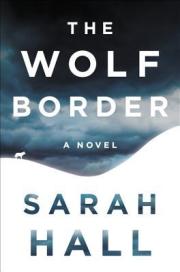 It’s not mannered or ornate, but its rhythms are varied and its vocabulary and word placement are full of small surprises.
 The wolves’ story is entwined with the story of Rachel’s pregnancy, the birth of her child, and the evolution of her relationships with her brother, from whom she has long been alienated. Without setting up overt or heavy-handed parallels, Hall creates a sense of common rhythms to the two stories: Merle and Ra grow in confidence, expanding their domain and skills and, eventually, their own family, as Rachel in her turn is easing the tight control she has always kept over herself, allowing other people into her space and finding there is room in it for feelings she had always thought were antithetical to her independence. As the wolves grow wilder, she becomes more domestic–but that is too pat a way to put either unfolding story. Rachel’s experience in particular shows there are risks and challenges at home too: different needs and desires to be held in what is sometimes a precarious balance. Then alongside this personal drama there’s also a political dimension, one that didn’t really come into focus for me until fairly late in the novel, though it’s clear from early on that Hall is interested in the artifice of human barriers (fences, walls, borders) and the tension they create with nature, which does not understand or respect them. One thing Rachel and her team cannot do is let the wolves run truly wild, for example, but as long as they are enclosed, no matter how generous the space allotted, they must be managed, their natural proclivities shaped to fit man-made limitations. What would it mean for them (or us) to override these boundaries?
 To return to my Sarah Moss comparison, I found The Wolf Border not just well-written and engrossing but consistently interesting in the same way that I did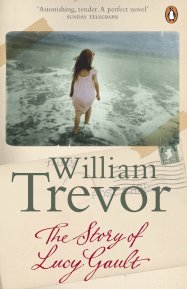
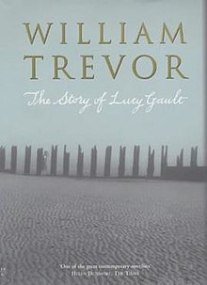 There’s an almost stately simplicity to the novel’s unfolding after this precipitating crisis, which launches its characters into a strange state of limbo. Lucy’s parents, unaware of developments back in Lahardane, roam Europe, exiled from home and happiness by their grief and guilt; Lucy, shamed by what she has done, pays penance for it with a life of near total isolation, even refusing love, when it is offered, as something she cannot accept “until she felt forgiven.” When a reunion finally comes, it is almost too late to repair the damage they have collectively wrought or to make up for the time spent apart, mourning and waiting. There is redemption in the story, though, and it comes from what the nuns who visit Lucy late in her life call her “gift of mercy.” Lucy herself sees nothing extraordinary in what she has done, nothing that needs the kind of explanation others wish they could command: “for what does it matter, really, why people visit one another or walk behind a coffin, only that they do?”
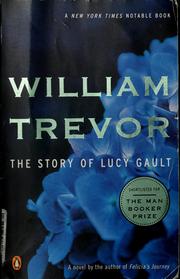 Is the story of Lucy Gault a tragic one? I don’t think so. It is a sad one, certainly, but for all its heartbreak the novel conveys the same sense of peace that draws the visiting nuns to Lucy’s home:
 “We had a limit known as the Whipple line, below which we would not sink. Dorothy Whipple was a popular novelist of the 1930s and 1940s whose prose and content absolutely defeated us. A considerable body of women novelists, who wrote like the very devil, bit the Virago dust when Alexandra, Lynn and I exchanged books and reports, on which I would scrawl a brief rejection: ‘Below the Whipple line.'” —
 But. It really doesn’t do more than tell this story. There aren’t any layers to it. The characters are fairly two dimensional, especially the French temptress Louise, who to me was the novel’s weakest element. She’s a selfish narcissist who takes what she wants for her own gratification. The whole catastrophe, in fact, is the result of her resentment at an old lover in her home town in France, himself blithely ignorant “that he, at such a distance, could have had anything to do with the breaking up of that family” or with the rift that opens up between Louise and her own parents. Her unmitigated nastiness sapped the novel of any chance of a real moral or emotional dilemma at its center: Avery is wrong to get involved with her and that’s that. Whipple plays out the moves on the board she has set up, but there’s nothing in it for us to think about: we just follow it all through to the end. And that is just not a terribly interesting exercise: Ellen is a bit of a limp noodle, and the solution that unfolds to her problem of finding her own place in the world is too pat, too easy.
 I did enjoy Someone At A Distance in the moment, but I also found myself comparing it unfavorably to another much better book (in my opinion) about an affair, Joanna Trollope’s Marrying the Mistress. In Trollope’s novel the “mistress” is a genuinely sympathetic character; the relationship that develops creates a genuine tension for the husband and then, eventually, for his children, who can’t help but like his new partner in spite of their loyalty to their mother; and the marriage that ends, while not a bad one, has weak spots that made it vulnerable—indeed, that maybe even made its end, while painful, a change worth bringing about. Yet even though her mistress is not an evil temptress, Trollope is less sentimental about love, and less blandly optimistic about fixing what has been broken. Someone At A Distance ends with the promise of restoration, but why? Knowing what she now knows about her husband, what is that promise worth to Ellen? I didn’t really care, though: by that point I was ready to be finished with her.
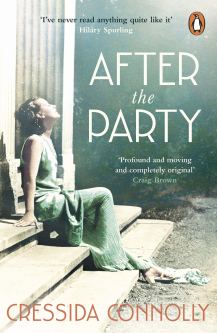 We all have our crosses to bear, our own personal sorrows. Mine is that the people who should be dearest to me, my own children, my sisters, consider me a bad woman. The grandchildren have been taught to be wary. I think I’m a disgrace to them, really. After the war when the newsreel film was shown of what had gone on in Germany and Poland, those places, the horrors . . . It all got tangled up in their minds, as if we’d stood for such barbarism.
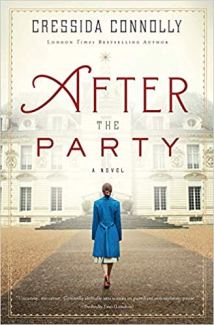 Even after her long imprisonment Phyllis remains indignant that her commitment to Mosley’s cause has cost her anything at all and especially that it has led to people concluding she is not a good person. It would be at once pathetic and laughable if it weren’t also plausible and unhappily timely: Phyllis insists that she and her fascist friends were very fine people. The novel approaches them with sly delicacy, never presenting them as outright villains but allowing the us to experience their moral corruption through the lens of Phyllis’s own self-justifications. It also focuses on the personal relationships that naturalize and sanitize the fascist cause for those directly involved, keeping the political context just vague enough that the reader almost has to shake herself to remember that what they stand for is not acceptable, that fascism isn’t just one reasonable choice among many no matter how elegantly its proponents are dressed or how preoccupied they are with their families, lovers, and friends.
 My
My 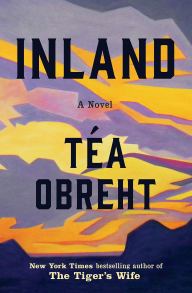 I thought it might help to write for some places that do run longer pieces, so I wrote a review “on spec” for one such venue but they didn’t want it–in the end it maybe wasn’t a great fit with the place I sent it, although the book I chose (
 This is why I keep returning to class prep! It’s so straightforward, and after all, it does have to get done. Maybe I should think of it this way: the better prepared I am for the term, the more likely it is that I can keep working on some kind of writing project even after classes start. My colleagues and I often talk about the way teaching expands to fill however much time you can (or are willing to) give it: this is something we advise TAs and junior colleagues to guard against. Good, detailed course planning is part of a strategy for achieving better balance between my various professional obligations; it’s not just a diversionary tactic when your other commitments are getting you down. Right? RIGHT?!
 Novel Readings