When the stream of the old Greek picks up, and she climbs into the story, as though climbing the wall of the priory of the rock—handhold here, foothold there—the damp chill of the cell dissipates, and the bright, ridiculous world of Aethon takes its place. . . . Turn a page, walk the lines of sentences: the singer steps out, and conjures a world of color and noise in the space inside your head.
Some novels are exhilarating to read because they are a kind of high-wire act—aspirational, excessive, risky. We are always aware, reading them, that the effort might not work—that they might fail, that their reach might exceed their grasp. Maybe the conceit will end up feeling too labored, or the philosophy too superficial; maybe the sough-after emotion will collapse into melodrama or bathos, or the structure will start to creak or even crack; maybe what’s on offer will prove not a daring exploit but an exploitative gimmick. Cloud Atlas, Ducks, Newburyport, Lincoln in the Bardo, and Piranesi all come to mind for me as contemporary novels of this kind; two of these I ended up, after some initial hesitation, absolutely loving; one I admired for its virtuosity but found too self-consciously showy for genuine delight; one (regular readers will know which one) I have started and abandoned in annoyance three times so far.
Cloud Cuckoo Land is a literary high-wire act of this kind, and for me an unambiguously successful one. The novel is ambitious, capacious, acrobatic, and above all joyful—not in its content, but in its concept, which is celebratory even though many of its stories are tragic. Cloud Cuckoo Land is a paean to reading, but it dramatizes reading’s transformative alchemy rather than lecturing us about it; it enacts through its own readerly pleasures the magic its characters, if they are fortunate, discover for themselves. It is also an elegy for the world in which we read, which—like the precious volumes its characters treasure, decipher, and preserve—is beautiful and nurturing and heart-stoppingly vulnerable.
 I won’t rehearse the details of the novel except to say (for those who haven’t encountered it or anything about it yet) that it follows a cluster of characters widely separated by time and place: in 15th-century Constantinople, a boy and a girl from two different, antagonistic worlds—both in their own way dreamers—cross paths and find fellowship; in 20th-century Idaho, the lives of an angry boy and an old man unexpectedly converge, their two forms of idealism colliding, with unintended consequences; in a remote future, young Konstance lives a surreal existence aboard a hermetically sealed spacecraft. The novel moves each plot forward a step at a time, orchestrating them with delicate precision. The novel overall is organized around fragments of a “lost” ancient text, The Wonders Beyond Thule by Antonius Diogenes, which plays a key role in each plot as well as providing imagery and inspiration for the novel as a whole.
Dealing his characters’ stories out piecemeal as Doerr does has its initial risks and disadvantages. At first, the elaborate artifice of Konstance’s world almost lost me. Then Anna and Omeir captured my heart, and my fear for Zeno grew complicated by increasing understanding for Seymour. As the connections between the plots, both literal and thematic, showed themselves more and more clearly, I ceased to find it jarring shifting between them, and the further along I got the more invested I became in everyone’s plight, and especially in the role of books and reading in carrying them through it. Like Doerr’s earlier novel All the Light We Cannot See, it is written in meticulous prose—detailed, tactile, sometimes lyrical. The final revelation about the Argos is perhaps a bit pat (though it certainly surprised me) but that was not enough to detract from the enjoyment I got out of the reading experience. Cloud Cuckoo Land was transporting for me in a way that no other book I’ve read since Owen’s death has been. I finished it with tears in my eyes, in part for the hopeful beauty of the ending and in part for the reminder the novel gave me of what reading can be.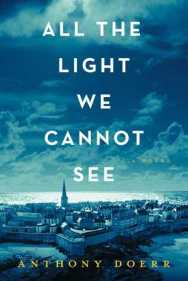
On that note, it did occur to me as I read (maybe without reason) that the biggest risk Doerr takes is that his novel will seem to (or actually) pander to his audience. In celebrating books, the magic of the imagination, the value of libraries, and so on in a big sweeping novel, he is certainly and inevitably preaching to the choir. How could we resist a book that so perfectly reflects our own values? Of course we love it: it is about us and the things we already cherish! But does that mean that the whole project is somehow insincere? I’ve seen in stores (and read, for that matter) plenty of books that do strike me as manipulative in this way, their bookishness really little more than a marketing ploy. (It annoys me a lot when I fall for it!). I don’t think that’s the case with Cloud Cuckoo Land, not just because it is such a rich and demanding blend of erudition and creativity but because the novel itself is not ‘Cloud Cuckoo Land’: it depicts a world with as much suffering and hatred in it as love and joy, in which beauty and horror, art and barbarism, coexist. The truth of our lives, as Seymour eventually realizes, “is that we are all beautiful even as we are all part of the problem, and that to be a part of the problem is to be human.”
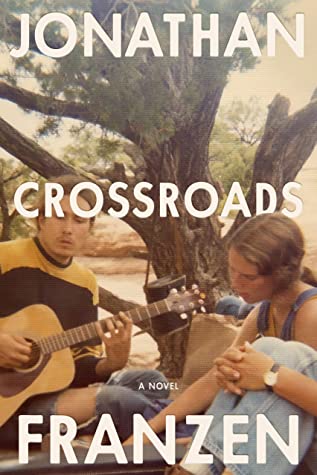

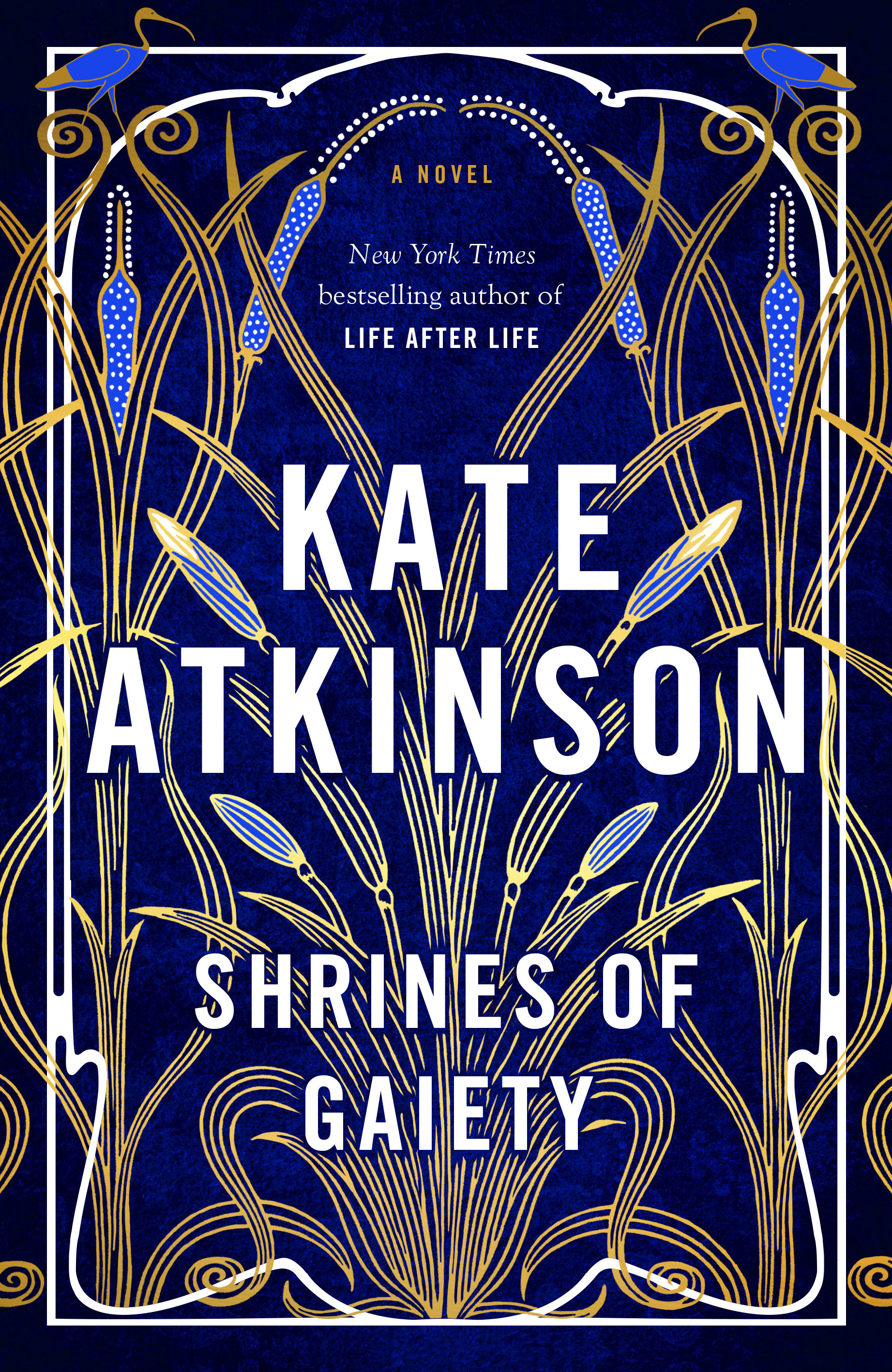 October was a terrible reading month for me. I didn’t even start many books, much less finish them. A last minute push (and, I’ll admit, a bit of fed-up skimming) got me to the end of Kate Atkinson’s Shrines of Gaiety, which I had acquired precisely because I figured that, whatever gripes I have had in the past with her
 In 19th-Century Fiction we have been working on Middlemarch for a couple of weeks. I wish I could say it is going well. I don’t think it’s going badly exactly, but honestly this term I don’t really know. Attendance is just appalling: most days, maybe 60% of the class shows up, which is unprecedented, in my fairly long experience. I don’t know what to make of this. I know it’s not personal, or at least I’m trying not to take it personally, but that doesn’t make it any less disheartening. The students who are present are pretty quiet; I think – I hope – they are engaged, but much of the time it’s hard to tell, and I worry that at this point I am mostly performing enthusiasm, not eliciting it. The ones who do speak up have good things to say, but I’m not used to having to work so hard to get anything out of the class, to get any energy back from them. I’m going to keep trying! The ones who are showing up deserve no less, and I remain hopeful that between us we can and will make the most of this opportunity to read this great novel together.


 Comparisons are foolish, I know, but often these days I recoil uncomfortably from cheerful exchanges among my many bookish ‘tweeps’ about what they’ve been reading because they seem to read so much and so enthusiastically—which is great, of course, but because I’m struggling to finish most of the books I pick up, the contrast can make me feel discouraged instead of interested and inspired. Social media has a way of making you feel inadequate or alienated, doesn’t it? And I say this as someone who has long championed Twitter (and would still do so, if challenged) on the grounds that it is very much what you make it. “My” Twitter is full of avid readers and I love that about it. It’s absolutely not their fault that lately it sometimes seems to hurt as much as it helps. I’m trying to think of it as aspirational: one day, I too will feel cheerfully bookish again!
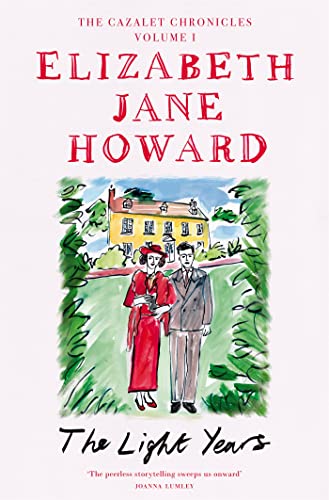 Earlier this month I read Elizabeth Jane Howard’s The Light Years, the first of her much-admired Cazalet Chronicles. I enjoyed it just fine but wasn’t swept up in it—or swept away by it! The aspect of it that surprised me the most was how much it read like a book written in the 1930s (or perhaps the 1950s) rather than in the 1990s: it felt very much of the time it depicts. As a result, in some ways it seemed like a missed opportunity, artistically speaking: it’s a smart, elegant, readable portrayal but it didn’t seem to have any layers of reflection, or to take advantage of being what it actually is, namely historical fiction. Maybe the idea was to give us the feeling of being transported back, rather than to encourage us to look back and consider gaps and differences. I already had a copy of the second book in the series, Marking Time, and I will probably read it eventually, but I’ve picked it up, read a few pages, and put it down again more than once: I just don’t feel compelled to persist. The last time I tried, I found myself thinking that (deliberately or not) it read like the novel I imagine Woolf was trying not to write when she wrote what ended up as The Years. The problem, she noted, was “how to give ordinary waking Arnold Bennett life the form of art.” Not (we might conclude, following her lead) by just recounting in meticulous detail everything that happens to a large number of people over a long period of time.
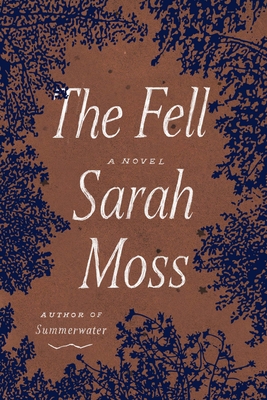 Also this month I finally got my hands on Sarah Moss’s The Fell. I’m a big admirer of Moss’s fiction (see
  My book club met in the middle of September to talk about Emily St. John Mandel’s
 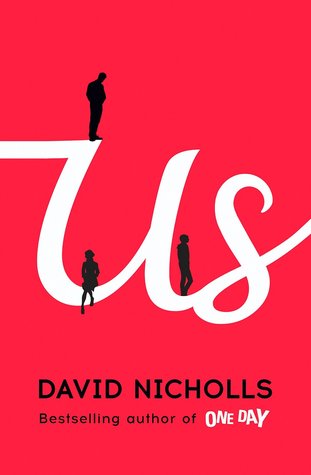 Then I read David Nicholls’s Us, which I happened to have recently downloaded, inspired by having enjoyed the TV adaptation starring Tom Hollander (which I thought was excellent). I wouldn’t say it’s a great novel, or even a particularly good one, at least in the prose: it’s a bit awkward and heavy-handed. I really empathized with its protagonist Douglas, though, and I appreciate that Nicholls refused the simplistic happy ending you might expect from a novel about a man hoping to save his marriage while going on a ‘grand tour’ with his wife and son.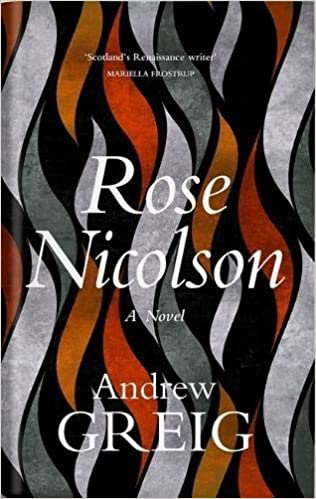
 It has been a somewhat chaotic time in my classes since I last posted—not in the classes themselves, really, which have gone on much as usual, when they have actually met. But there have been a couple of unanticipated disruptions to the term, as a result of which it feels as if we are struggling to build up any momentum.
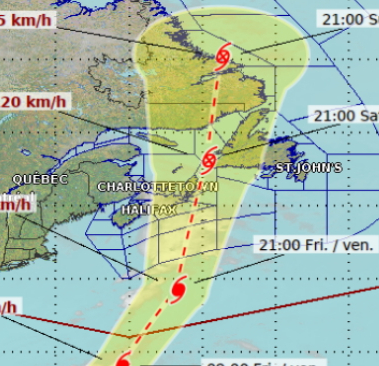 When I announced the schedule changes for the “day of mourning,” I commented “Let’s just hope we don’t also have a hurricane!” Well, what do you know: Hurricane Fiona headed straight for us this past weekend, and classes are cancelled again today, as crews clean up the debris and work on restoring power. The storm was not as severe in Halifax as in other parts of the region, where it did really
 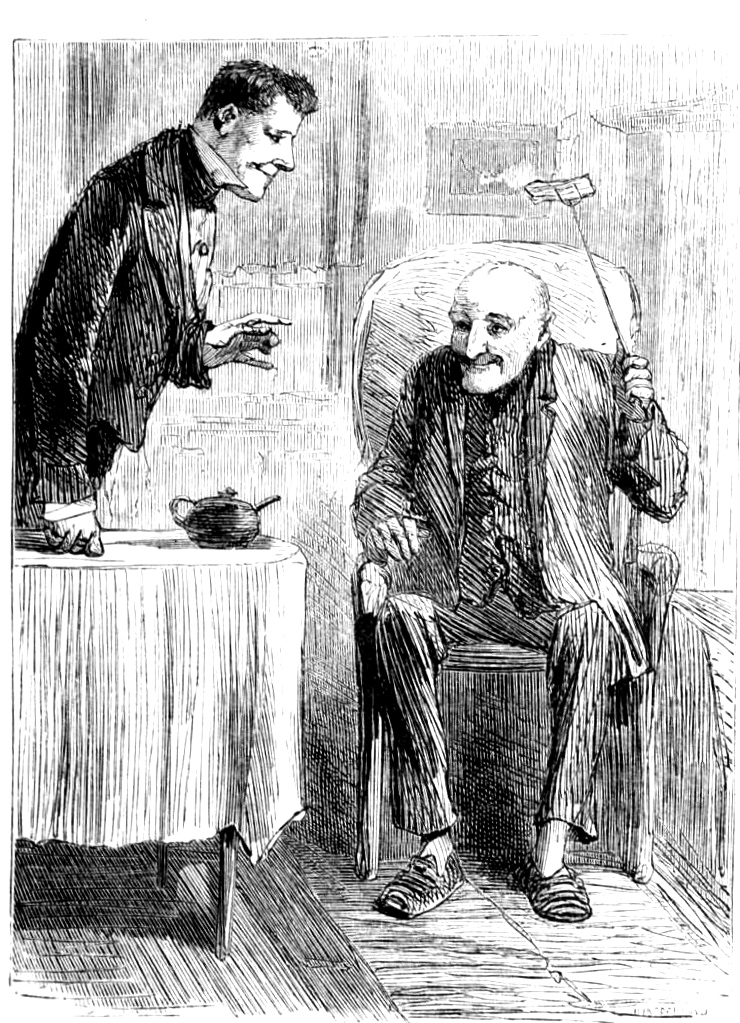 In between these disruptions, we have actually met a few times and I think it has gone basically fine. The energy seems a bit low to me in 19th-Century Fiction, although I blame it partly on our dreary windowless room, and it’s also possible that it seems that way to me because I can’t see students’ faces. I’ve been encouraging them to nod at me the way Wemmick nods at the Aged:
 We’ve finished with Agatha Christie already in Mystery & Detective Fiction. I used to allot two class hours to Miss Marple stories, but for all Christie’s significance to the genre, I honestly don’t find there’s all that much to say about them, so I don’t regret having trimmed away one of those hours this year. We had a good student presentation on her, which gave us a productive second round of discussion. On Friday we had our first hour on Nancy Drew; we’re losing an hour on her to Fiona but will get another chance on Wednesday, with another student presentation. I always enjoy these so much: the students are so smart and creative and engaged, and they come up with such good ideas for class activities. Overall the energy in this seminar started off pretty good and seems to be getting better: spirits were high on Friday, partly because Nancy always proves very provocative. She’s just so good, and so good at everything: it’s annoying, I agree!
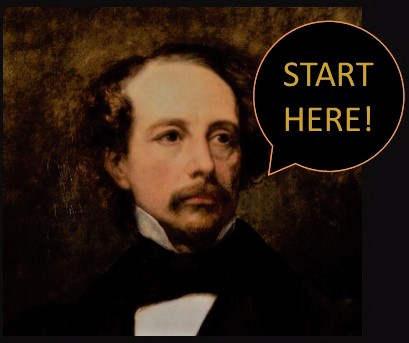 My classes have been meeting for a week now, and I said I was going to try to get back in the habit of reflecting on them, so here I am, although to be honest I find myself at something of a loss about what to say. Should I just focus on the classroom time, on what we’re reading and talking about, as if it’s just another year? Or should I try to explain how surreal it feels to be in the classroom, talking about our readings as if it’s just another year, and then, when the time is up, to be back in the strange disordered world of grief?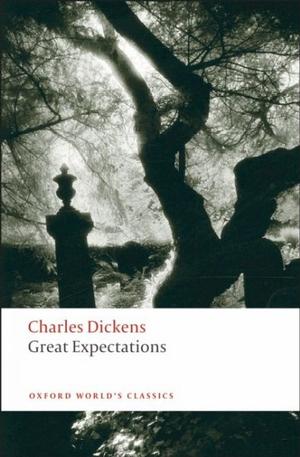
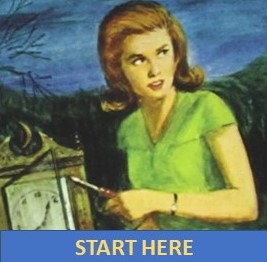 In Women and Detective Fiction I also began with some broad overviews, of detective fiction as a genre and of some of the questions that organize the course and will frame our readings. For last class we read a handful of “classic” stories to serve as touchstones for the resisting or subversive versions to come: “The Purloined Letter,” “A Scandal in Bohemia,” and, as a sample of hard-boiled detection, Hammett’s “Death & Company,” which is one of his ‘Continental Op’ stories. These give us a good sense of the masculine milieu of so much classic detective fiction, of the habits and practices of their detectives, and of the reductive roles assigned to women, or assumed of the women, in them. Today, as a contrast, we discussed Baroness Orczy’s “The Woman in the Big Hat,” which is one of her stories about Lady Molly of Scotland Yard. It has a delightful “reveal”:
 We had already talked about Sherlock Holmes’s condescending remark, “You see, but you do not observe!” and now we could revisit it with observations about how gender affects what you see, or what you understand about what you see, and about kinds of expertise that are typically devalued because they are women’s and therefore considered trivial. This issue was also key to our other reading for today, Susan Glaspell’s “A Jury of Her Peers,” a wonderful story that highlights the way the law fails women, making justice something that can only be achieved by subverting it. We talked about the way Glaspell’s story, instead of offering up a big reveal at the end by the superior figure of the detective, instead allows the story to unfold gradually, the women’s dawning awareness drawing us along with them as our sympathies shift from the murdered man to the woman whose happiness he destroyed. Their solidarity grows partly in reaction to the men, who are lumbering around doing more typical (but, we easily see, entirely misguided) kinds of investigating. Every time they come in and make their jovially condescending remarks about “the ladies,” we too close ranks against them:

 Something else that’s different is how emotionally confusing and therefore exhausting I’m finding the present. The early days of grief are awful but absolute, almost simple, I realize now: there are no options, no expectations, for anything besides mourning. I have learned so much about grief since then, from experience but also from others, and from reading. One thing I’ve learned is that “it takes time” doesn’t mean that with time the grief lessens; it means something more like you get used to living with it, you learn to walk around with
  If my book club hadn’t settled on Sea of Tranquility for our next read, I don’t think I would have read it, not because I haven’t liked the other novels I’ve read by Emily St. John Mandel, because I’ve liked them just fine (
 There’s real cleverness to the novel’s time-travel plot (though I don’t think these can ever be completely convincing), and a poignancy to the human story threaded through it, and the ongoing theme of pandemics created both menace in the moment and resonance for our moment.
