The first year after death
is full of stretching, where things
pull so hard your bones
break, because they were never
bones, were always solitude.Victoria Chang, from “The Trees Witness Everything”
This has been an unusual year for Novel Readings, one in which my reading life was overtaken by my real life—or, since I firmly believe that “the world of books is still the world,” a better way to put it would be that my reading life changed because so did the rest of my life. I read a lot in 2022 about grief, and about suicide; I read a lot of poetry, or at least a lot more than I usually do; and I failed to finish a lot of novels that I started, or at least a lot more than is typical for me.
Mourning
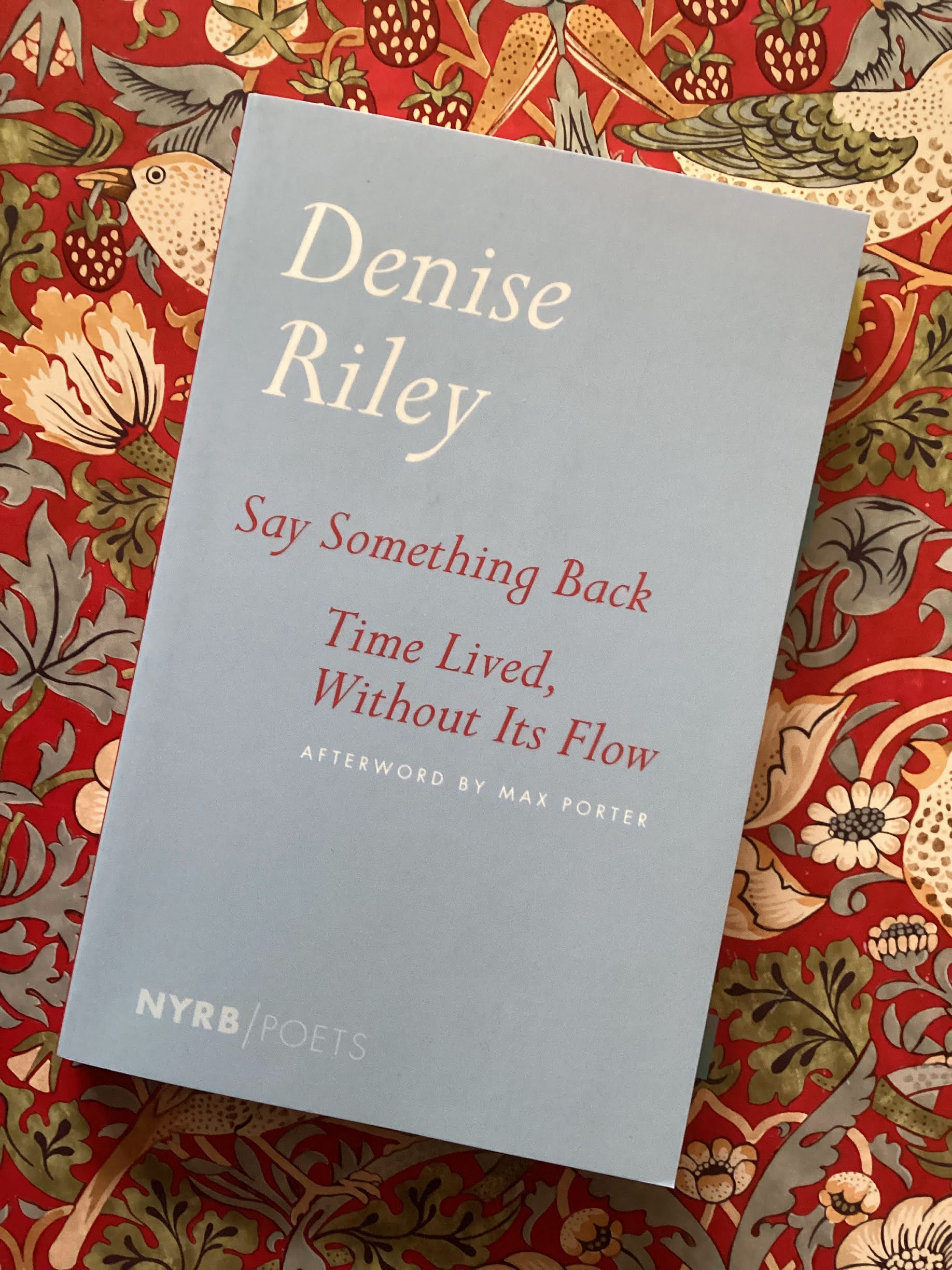 Denise Riley’s Time Lived, Without Its Flow was the most resonant book I read about grief. I didn’t find it so at first, but as the days after Owen’s death turned into weeks and then months, parts of it returned to me over and over, especially her observation about how “the dead slip away, as we realize that we have unwillingly left them behind us in their timelessness.” (I feel this very acutely this week, as the calendar turns to the new year, the second year of his absence.) The poems in Say Something Back, in the same slim volume, have also stayed with me. “How should I take in such a bad idea?” Riley demands in “Part Song.” How indeed. William Styron’s Darkness Visible brought me greater understanding of the intensity and suffering of depression; and Kay Redfield Jamison’s Night Falls Fast was difficult but valuable reading about the painful truths and also the mysteries of suicide. I also found new meaning in Margaret Oliphant’s lamentations for her “dear bright child”; and in Virginia Woolf’s mourning for her nephew Julian.
Other Reading
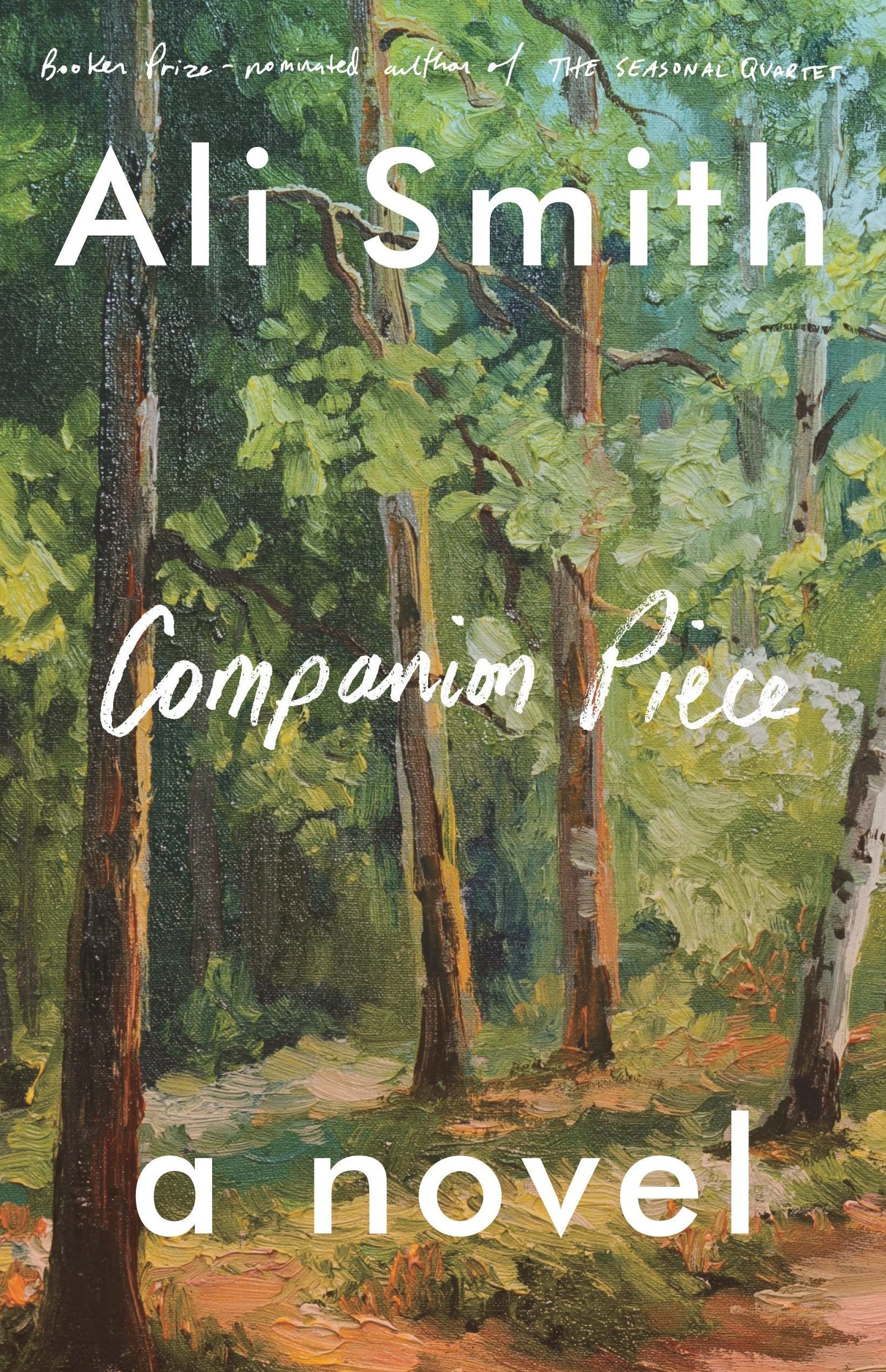 It seemed for a while that this would be my year of Ali Smith, the way last year I went all in on Jo Baker. I read straight through her seasonal quartet at a time when otherwise I could hardly concentrate; I became interested enough to add her to my ongoing book project on women writers and social reform. I went on to read and enjoy Companion Piece—but then I tried How to Be Both and lost my grip.
Some standout experiences from those early months, when to read at all was a success and to read something and love it seemed almost too good to be true: Sarah Winman’s Still Life and Patricia Lockwood’s No One Is Talking About This, neither of which got the attentive post it deserved; and Andrew Miller’s The Slowworm’s Song, which was one of the first books I blogged about ‘properly’ (meaning, as I used to do) in 2022. Quite a few other books I read with interest, appreciation, or pleasure ended up mentioned here only in round-up posts, if at all: Monica Ali’s Love Marriage; Elizabeth Jane Howard’s The Light Years; Emily St. John Mandel’s Sea of Tranquility; Graham Macrea Burnet’s Case Study; and Damian Lanigan’s The Ghost Variations, my last book of the year and a very good one.* I did manage to write up my experience rereading Ishiguro’s Never Let Me Go.
 Both reading and writing about my reading did get gradually easier as time passed, and I had a run of good luck, or good choices, too, towards the end of the year: Anthony Doerr’s Cloud Cuckoo Land, Ian McEwan’s Lessons, and Richard Powers’ Bewilderment—which I have since learned got quite a critical drubbing, but which for me stands out as perhaps the best novel I read in 2022.
I managed some formal reviews this year, notably Maggie O’Farrell’s The Marriage Portrait, which I thought was smart and powerful and elegant, Emma Donoghue’s taut and graphic Haven (my review at CNQ should be available eventually!), and Sina Queyras’s Rooms: Women, Writing, Woolf which gave me a lot to think about, in a good way.
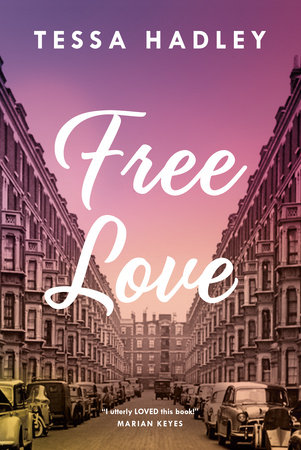 All year I struggled with the possibility that books I disliked or DNF’ed were victims of my circumstances—although why I should consider my grieving brain any more unreliable in its criticism than in its praise I don’t know. In any case, with that caveat in mind, the book I liked least this year was Tessa Hadley’s Free Love, which was generally admired both by reviewers and by astute readers in my Twitter circle but which I just could not come to terms with.
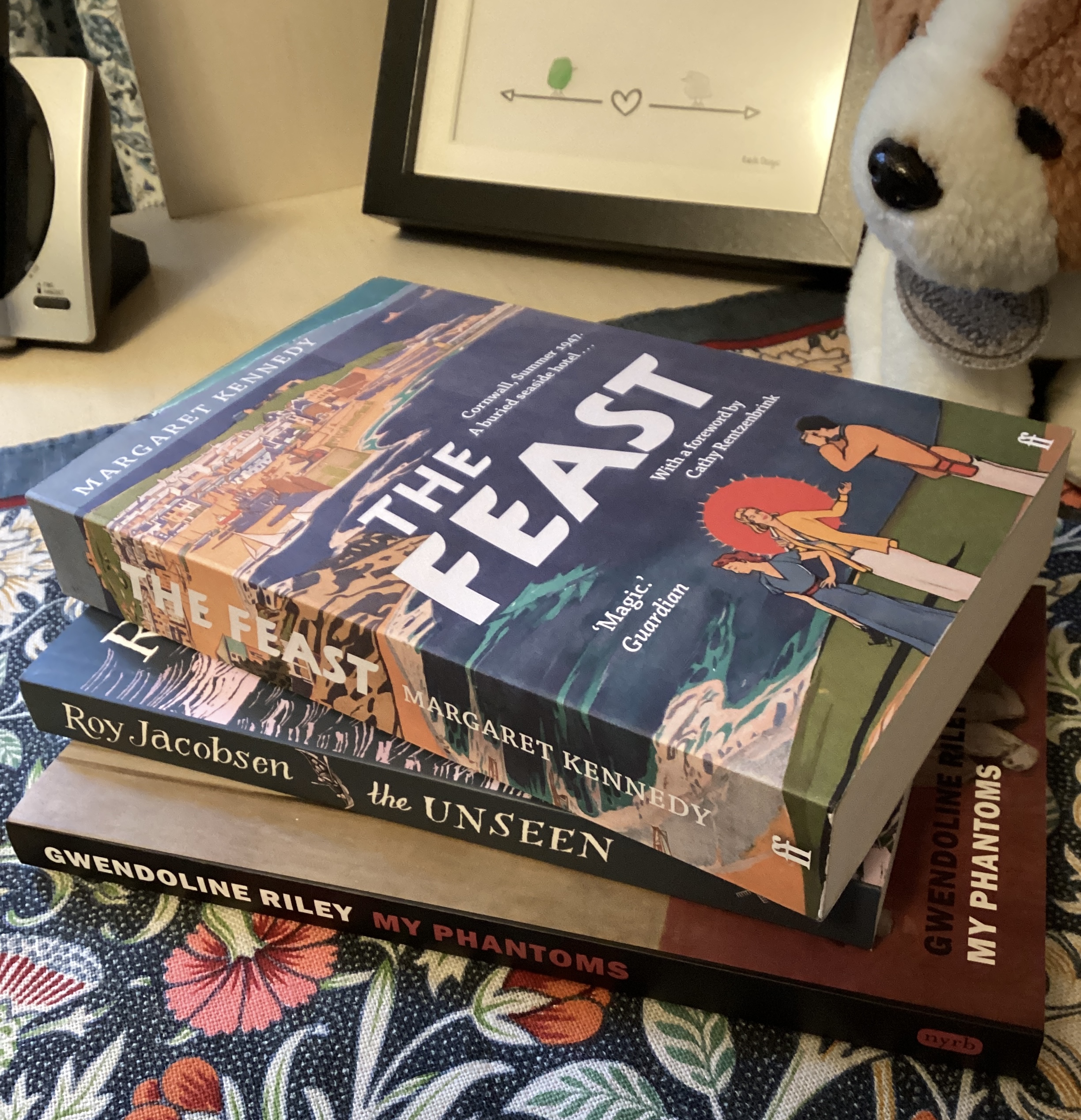
On the other hand, a book I stalled out in but fully intend to try again in 2023, because even in the moment I could tell it deserved a better reading than it was getting from me, is Doireann Ní Ghríofa’s A Ghost in the Throat. I also already have a tempting stack of new (to me) books I’m looking forward to reading and blogging about in 2023, including Margaret Kennedy’s The Feast, Roy Jacobsen’s The Unseen, Niall Williams’s This Is Happiness and The History of Rain, Barbara Kingsolver’s Demon Copperhead, and Gwendoline Riley’s My Phantoms. I’ve started the year, though, with Charlotte Wood’s The Weekend, lent to me by a dear friend with a note pointing out that it is a novel about female friendship. At about 100 pages in, I’m rather hoping she doesn’t see much of us or our friendship in it—but I’ll have to see how things unfold.
 Writing at Novel Readings turned out to be really important to me in 2022. At times I felt self-conscious or uncomfortable about how personal, and how mournful, my posts often were, but the simple fact was that writing them—finding the words to give shape to the ideas and feelings I otherwise found overwhelming—helped me when little else did. So I reassured myself by thinking of how many other writers have put their grief into words, often much more publicly than this, and by remembering that nobody ever has to read anything here that they don’t want to. And some of my happiest times in 2022 were actually those I spent writing here about books: to be immersed in that work always proved both intellectually invigorating and emotionally restorative—a reminder, which I sometimes really needed, of why it is I do this in the first place. I am truly grateful to everyone who kept reading and especially to those of you who have showed so much sympathy and kindness in your comments over this long, hard year.
*Lanigan’s pianist protagonist is preoccupied with the slow movement of Beethoven’s Hammerklavier Sonata, which I have since been listening to over and over, appreciating its melancholy drifting. Here it is, in case that sounds appealing to you too.



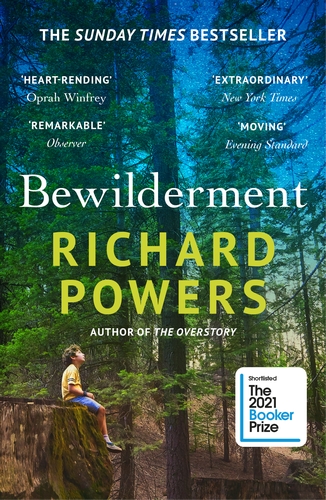 “So far the votes are two Asperger’s, one probably OCD, and one possible ADHD,” he tells Martin, a neuroscientist friend of Alyssa’s to whom he eventually turns for help. “Most of the common meds are pretty normalized,” Martin comments, but when Theo insists that he wants “some treatment short of drugs,” Martin proposes that Robbie enter his ongoing trial of a therapy called
  Theo’s tense, beautiful, heartbreaking account of his life with Robin is intercut with their “visits” to other planets: part of Theo’s work is running simulations of what kind of life might emerge under wildly varying conditions which he and Robbie “explore” with exhilarating curiosity and awe. These sections are weird and wonderful, visions of possible worlds completely unlike our own and yet always imagined as possible points of connection. On the planet Pelagos, for instance,
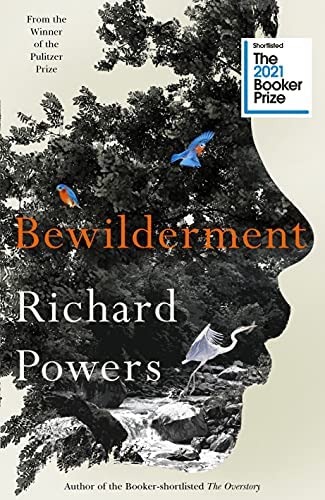 I was initially drawn to Bewilderment because of its description as the story of a father and his “rare and troubled boy.” I had a son like that, and while his specific passions and hardships were not the same as Robbie’s, Powers captures a lot of what it was like to try and to fail to know what was right for someone whose gifts and whose difficulties were equally extraordinary, excessive, sometimes exhausting, especially but not only for him. I too liked my son “otherworldly”; his ingenuousness was so precious, even as it made him, sometimes, so vulnerable. “His pronouncements were off-the-wall mysteries to everyone except me,” Theo says of Robin;

 I won’t rehearse the details of the novel except to say (for those who haven’t encountered it or anything about it yet) that it follows a cluster of characters widely separated by time and place: in 15th-century Constantinople, a boy and a girl from two different, antagonistic worlds—both in their own way dreamers—cross paths and find fellowship; in 20th-century Idaho, the lives of an angry boy and an old man unexpectedly converge, their two forms of idealism colliding, with unintended consequences; in a remote future, young Konstance lives a surreal existence aboard a hermetically sealed spacecraft. The novel moves each plot forward a step at a time, orchestrating them with delicate precision. The novel overall is organized around fragments of a “lost” ancient text, The Wonders Beyond Thule by Antonius Diogenes, which plays a key role in each plot as well as providing imagery and inspiration for the novel as a whole.

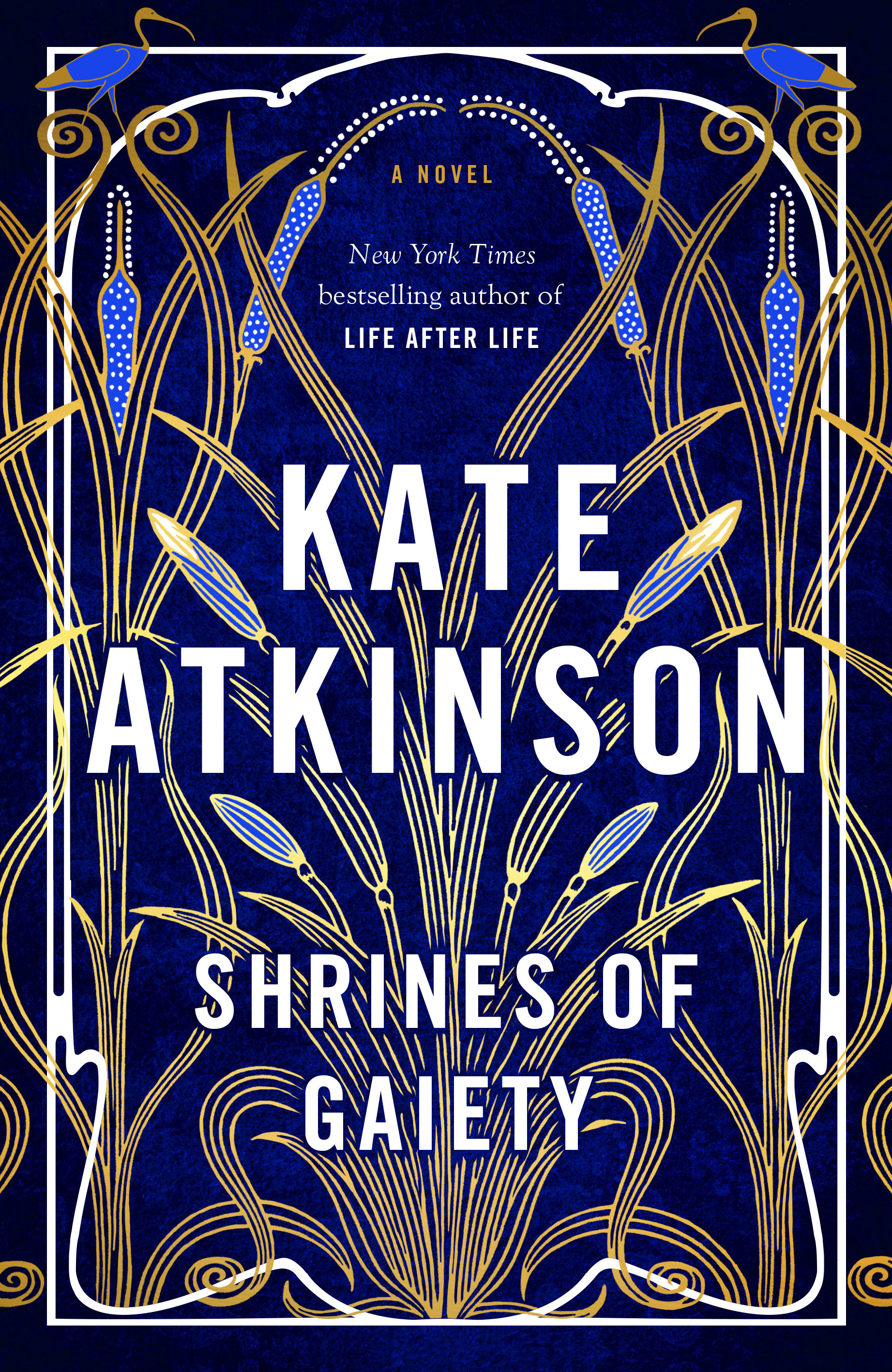 October was a terrible reading month for me. I didn’t even start many books, much less finish them. A last minute push (and, I’ll admit, a bit of fed-up skimming) got me to the end of Kate Atkinson’s Shrines of Gaiety, which I had acquired precisely because I figured that, whatever gripes I have had in the past with her
 In 19th-Century Fiction we have been working on Middlemarch for a couple of weeks. I wish I could say it is going well. I don’t think it’s going badly exactly, but honestly this term I don’t really know. Attendance is just appalling: most days, maybe 60% of the class shows up, which is unprecedented, in my fairly long experience. I don’t know what to make of this. I know it’s not personal, or at least I’m trying not to take it personally, but that doesn’t make it any less disheartening. The students who are present are pretty quiet; I think – I hope – they are engaged, but much of the time it’s hard to tell, and I worry that at this point I am mostly performing enthusiasm, not eliciting it. The ones who do speak up have good things to say, but I’m not used to having to work so hard to get anything out of the class, to get any energy back from them. I’m going to keep trying! The ones who are showing up deserve no less, and I remain hopeful that between us we can and will make the most of this opportunity to read this great novel together.


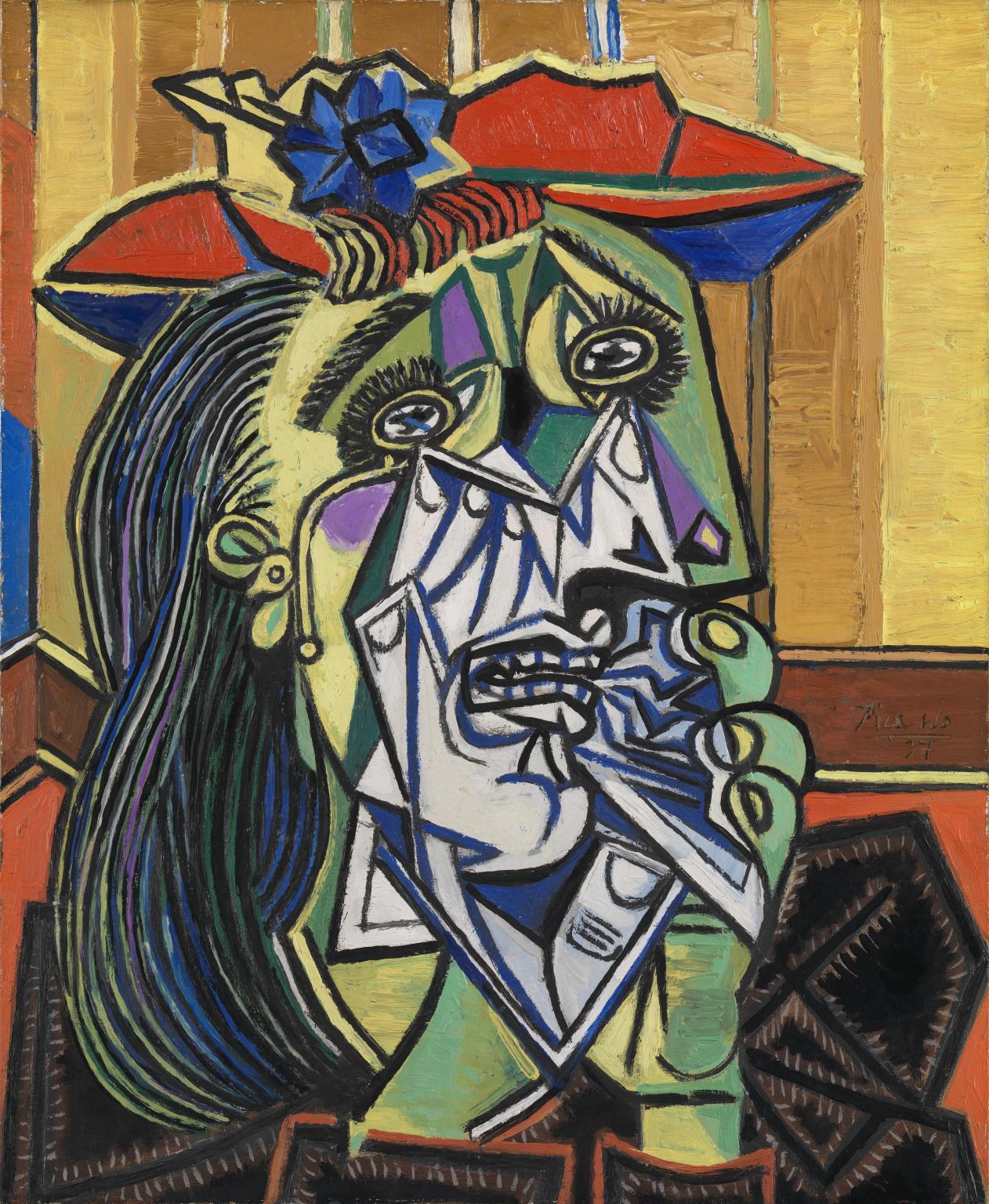
 Comparisons are foolish, I know, but often these days I recoil uncomfortably from cheerful exchanges among my many bookish ‘tweeps’ about what they’ve been reading because they seem to read so much and so enthusiastically—which is great, of course, but because I’m struggling to finish most of the books I pick up, the contrast can make me feel discouraged instead of interested and inspired. Social media has a way of making you feel inadequate or alienated, doesn’t it? And I say this as someone who has long championed Twitter (and would still do so, if challenged) on the grounds that it is very much what you make it. “My” Twitter is full of avid readers and I love that about it. It’s absolutely not their fault that lately it sometimes seems to hurt as much as it helps. I’m trying to think of it as aspirational: one day, I too will feel cheerfully bookish again!
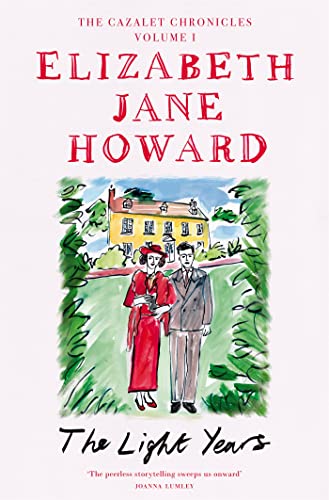 Earlier this month I read Elizabeth Jane Howard’s The Light Years, the first of her much-admired Cazalet Chronicles. I enjoyed it just fine but wasn’t swept up in it—or swept away by it! The aspect of it that surprised me the most was how much it read like a book written in the 1930s (or perhaps the 1950s) rather than in the 1990s: it felt very much of the time it depicts. As a result, in some ways it seemed like a missed opportunity, artistically speaking: it’s a smart, elegant, readable portrayal but it didn’t seem to have any layers of reflection, or to take advantage of being what it actually is, namely historical fiction. Maybe the idea was to give us the feeling of being transported back, rather than to encourage us to look back and consider gaps and differences. I already had a copy of the second book in the series, Marking Time, and I will probably read it eventually, but I’ve picked it up, read a few pages, and put it down again more than once: I just don’t feel compelled to persist. The last time I tried, I found myself thinking that (deliberately or not) it read like the novel I imagine Woolf was trying not to write when she wrote what ended up as The Years. The problem, she noted, was “how to give ordinary waking Arnold Bennett life the form of art.” Not (we might conclude, following her lead) by just recounting in meticulous detail everything that happens to a large number of people over a long period of time.
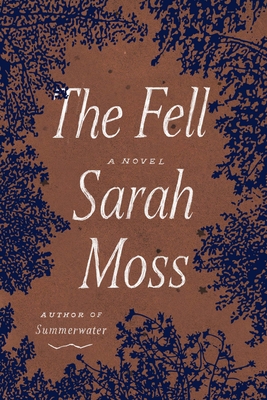 Also this month I finally got my hands on Sarah Moss’s The Fell. I’m a big admirer of Moss’s fiction (see
  My book club met in the middle of September to talk about Emily St. John Mandel’s
 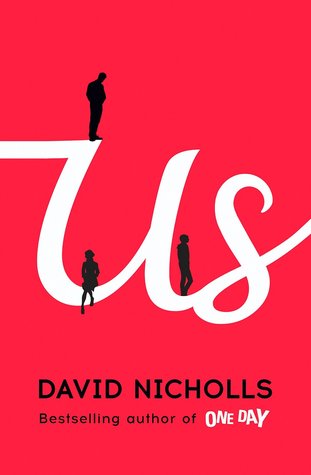 Then I read David Nicholls’s Us, which I happened to have recently downloaded, inspired by having enjoyed the TV adaptation starring Tom Hollander (which I thought was excellent). I wouldn’t say it’s a great novel, or even a particularly good one, at least in the prose: it’s a bit awkward and heavy-handed. I really empathized with its protagonist Douglas, though, and I appreciate that Nicholls refused the simplistic happy ending you might expect from a novel about a man hoping to save his marriage while going on a ‘grand tour’ with his wife and son.
 Novel Readings