 The last two months of 2023 have been so frantic (about which more, perhaps, some other time) that not only did I get very little reading done that wasn’t absolutely necessary for work, but the chaotic atmosphere drove almost all recollection of what I’d read or written earlier in the year clear out of my mind. It’s a good thing I keep records! Looking them over, it was nice to be reminded of what was actually a pretty good year for both reading and writing. I’ll run through the highlights (and also some lowlights) here, as has been my year-end ritual since I started Novel Readings in 2007.
My Year in Reading
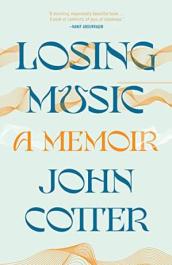 When I was asked by Trevor and Paul at the wonderful Mookse & Gripes podcast to contribute to their “best of the year” round-up episode, the book that immediately came to mind for me was John Cotter’s memoir Losing Music. It deserved but didn’t get a blog post of its own, but you can read a bit about it here. It moved me deeply: it deals with some hard things (hardest, of course, for John himself) and although it arrives at what I described as “peace born of hard-won compassion,” John does not serve up any simplistic feel-good messages about resilience or recovery. What would you listen to, if you thought it might be your last chance to hear music?
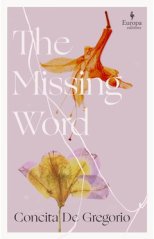 A stretch of uninspiring reading early in the year was broken by Jessica Au’s Cold Enough for Snow, which softened its spare, somewhat evasive prose with moments of delicate tenderness. I discovered everyone was right about Elena Knows and went on to read two more of Piñeiro’s strange, intense, immensely satisfying novels. I loved Martin Riker’s The Guest Lecture (which somehow got no mention on this blog at all, though it is the book I most look forward to rereading!). I found Valerie Perrin’s Fresh Water for Flowers immersive in all the best ways, if perhaps a bit too miscellaneous; I enjoyed Fellowship Point but not to the extent that the effusive praise and comparisons to George Eliot it got made me expect. Concita De Gregorio’s The Missing Word is a small book that made a big impression: it is about a mother trying to come to terms with the loss of her children, but it holds her devastation gently so we can come close to it (even those of us whose losses are similar), giving us “a place to listen, a story of love and loss to make up for the word we don’t have to give our grief a place.”
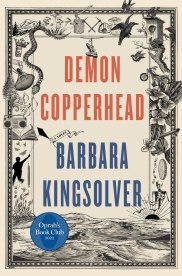 Barbara Kingsolver’s Demon Copperhead was not actually Dickensian, except in its conspicuously derivative plot; YMMV, as they say, but for me it was, overall, kind of a dud. Based on my experience with Drifts, Kate Zambreno (beloved of many in my bookish circles) is not really for me; even more off-putting, and disappointing because I have liked her earlier books, was Hannah Kent’s Devotion. (Supernatural plot twists turned out to be my pet peeve this year: that was the aspect of Daniel Mason’s North Woods that I could have done without too, and thought the novel would have been better off without as well, and a similar fault line runs through Elizabeth Ruth’s Semi-Detached.)
Olivia Manning, on the other hand, did not let me down: I finally got around to School for Love and The Doves of Venus, both of which are superb in that uneasy, gimlet-eyed way Manning is always superb at. Anita Brookner, too, really delivered with Look At Me, although I may be haunted forever by this passage, which I first heard read aloud by Trevor on his podcast, an experience that prompted me to go immediately to the library to get my hands on the novel:
[Writing] is your penance for not being lucky. It is an attempt to reach others and to make them love you. It is your instinctive protest, when you find you have no voice at the world’s tribunals, and that no one will speak for you. I would give my entire output of words, past, present, and to come, in exchange for easier access to the world, for permission to state ‘I hurt’ or ‘I hate’ or ‘I want.’ Or, indeed, ‘Look at me.’
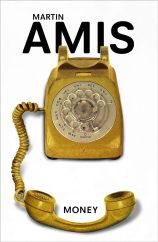 I can’t say reading Martin Amis’s Money was a highlight of my year, but our book club discussion of it certainly was, so I guess I have to give Amis some credit; and I am glad to have ended my reading year with Diane Johnson’s The True History of the First Mrs. Meredith, which was a tonic, with its feminist energy, but also thought-provoking in ways I didn’t expect but really appreciated.
My book blogging wasn’t very consistent this year: there was once a time when somehow I managed to write up literally every book I read! I do still really enjoy settling in to write about a book that really got me thinking (or feeling!), and blogging in general is still the writing I find most intellectually liberating and stimulating, so we’ll see what happens in 2024. People seem to be predicting a blogging renaissance, as social media communities are fragmenting and “the discourse” (which, when it’s genuinely bookish, is to be cherished) is suffering. I’m here for it if you are!
My Year in Writing
It wasn’t my most productive writing year ever, measured by output anyway, but I got a few things done and out!
 I wrote three reviews for the TLS in 2023, Toby Litt’s A Writer’s Diary, Jo Baker’s The Midnight News, and Daniel Mason’s North Woods. (Although I encourage folks to subscribe, so that this estimable publication can keep going, I am also always happy to send PDFs of my own reviews to anyone who asks but can’t get past the paywall.) Working on Litt’s book was particularly thought-provoking because its central conceit is that it is a literal (real-time) diary; it was in fact published (but not written) that way, on Substack a day at a time, so it mimics a blog. I admit I was disappointed when I realized it wasn’t actually a blog, and also I was sorry that the end result was a perfectly conventional published book—why not take the premise all the way and keep it available only online? But I would think that, as a blogger myself who often ponders whether the ephemerality of blog posts is a strength or a weakness of the form. If I had to rank the novels, I would probably put Mason’s at the top, but I was most pleased to review Baker’s because I am a big admirer of her fiction and successfully advocated for her new book to get a review in the TLS, her first notice there. (Does that make me some kind of influencer?!)
I wrote two reviews for Quill & Quire this year, both of books I really liked: Christine Higdon’s Gin, Turpentine, Pennyroyal, Rue, and Elizabeth Ruth’s Semi-Detached. I continue to appreciate the way reviewing for Canadian publications prompts me to pick up novels by authors I might not otherwise have heard of or tried. I would mostly likely have heard of David Bergen’s Away from the Dead even if I hadn’t been asked to review it by the Literary Review of Canada, as it has been nominated for some high profile awards: this was an interesting experience, as I was unimpressed with the novel on first reading but grew to admire and appreciate it more and more as I spent more time with it. Bergen’s prose is very understated and I have a taste, just personally, for writing with more zest or even melodrama (hello, have I mentioned that Dorothy Dunnett is my favorite novelist?). I ended up thinking he let his quiet sentences carry a lot of heavy weight. This was my first time writing for the LRC; I’d like to do it again some day.
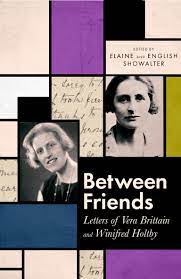 I wrote two other somewhat more academic pieces, though neither of them was, strictly speaking, a “research” publication. One was a review for Women’s Studies of Vera Brittain and Winifred Holtby’s correspondence in an excellent new edition by Elaine and English Showalter; the other was an essay for a forum organized by my friend and (nearby) colleague Tom Ue on ‘teaching the Victorians’ today, which is coming out eventually in the Victorian Review. I have written literally thousands of words about how I teach the Victorians today: this was a task for which almost two decades of blogging was exactly the right preparation!
Finally, I did a lot of writing over the summer months for what I intended as a submission to a special issue of Modern Fiction Studies on ‘women writing in public.’ Unfortunately life got in the way in November and there was just no way I could spare the time and attention that would have been required to meet the early December deadline. I will regroup and reconsider; hopefully there is some other use to which I can put the research and conceptualizing and draft material I have. I feel certain it wasn’t wasted time.
My Year Otherwise
Yesterday marked two years since Owen’s death; inevitably, my mind and heart have been especially full of memories and sorrows over the past few days. I found it helpful and also, for whatever reason, so essential to write about my grief over the early days and weeks and months after he died. I have not stopped talking about it—how could I, why would I, when grief continues to be my constant companion? His death affects everything for me, every day, and it would not be right or true not to acknowledge that. But as other grievers know, though at first the idea of integration or acceptance seems not just impossible but offensive, over time the loss becomes a part of your everyday life instead of a cataclysm that makes the whole idea of an everyday life inconceivable. I would like to write more about what this gradual change feels like and means to me, but for now I’ll just quote again from Denise Riley, whose words about her own grief I have returned to over and over:
If there is ever to be any movement again, that moving will not be “on.” It will be “with.” With the carried-again child.

 That’s the book I expected The True History of the First Mrs. Meredith to be: Mary Ellen Peacock Meredith’s life story, with Mary Ellen herself placed, rightly, at its center. And that is what we get, sort of, in part. Usually what is known about Mary Ellen is what the figure Johnson calls “the Biographer” has said about her in passing, while telling the story of her famous second husband. “But of course,” as Johnson says,
 And yet, Johnson considers, or imagines Mary Ellen’s contemporaries considering, her upbringing may have taught her to want things and to behave in ways incompatible with ordinary expectations for nice young ladies of the time. Johnson gives a brisk and basically sound overview of 19th-century gender roles and conventions, familiar to anyone who has read around in or about the history and literature of the period; she also rightly notes that the “ideal” woman (“innocent, unlearned, motherly”) was always a fiction, “encountered more often in the breach than in the observance,” although her image exerted powerful influence over how real women’s behavior was judged, as Mary Ellen’s history (meaning not her life, but the way that life would be told) was to show. Peacock’s good intentions may, ironically, have set Mary Ellen up for failure: “perhaps Mary Ellen Peacock would have been better off if she had not been so clever and educated.”
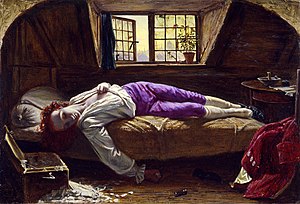 There is a lot about how things then unfolded that Johnson (like her antagonist “the Biographer”) can’t know for sure. The crucial undisputed fact is that Mary Ellen left Meredith, “eloping” with their mutual friend, the artist—and later
 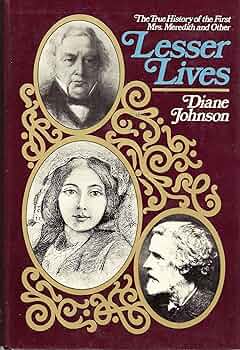 The surprising thing about The True History of the First Mrs. Meredith, for me, was how much else it does besides reconstitute Mary Ellen’s biography. One fascinating aspect is Johnson’s self-consciousness about her own methodology, something that becomes explicit through her extensive notes. These turn out to be only incidentally about citing sources. A lot of them amplify or illustrate parts of the main text (for example, in the notes you will find many of the recipes associated with the cookery books by Mary Ellen or her daughter by her first marriage, Edith Nicolls). But others take on complex questions about how to do the work Johnson has undertaken, and particularly about how to understand the relationship between conventional biographical sources and information and the insights that are offered by an author’s writings, specifically in this case by Meredith’s novels. This is, as Johnson is clearly aware, a vexed issue: she raises the specter of what critics call the “biographical fallacy,” which can lead to “facile connections” between the life and the art, but also of the biographical tendency to chronicle the work “without imagining that there was much connection between that work and the writer’s ongoing life experiences.” She advocates what she calls, citing Frederick Crews, “a sense of historical dynamics,” recognizing that though a one-to-one correspondence is an implausible assumption, still there inevitably relationships between writers’ lives and what they write.
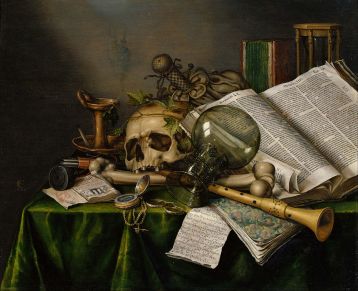 I actually found more powerful, though (perhaps, again, because this particular polemic has lost some of its urgency, though certainly not all of it), the sections of The True History that remind us that, from the right perspective, all lives are lesser. At these times Johnson’s book is less a literary history or biography and more a quirky form of momento mori, its attention to the leveling effects of death and time serving to puncture even the most inflated vanity even as it offers (perhaps) some philosophical consolation. “Whether Felix grew up to be like his Mama, or his Grandpapa, or his Papa,” she observes, in a passage characteristic of the book’s engaging yet disorienting blend of briskness and gravitas,
 I recommended this book for my book club as a “feminist palate cleanser” after Money. (I was also inspired by
  Money, money, money,
 But it matters (to me, at least) what those sentences are about, and also what they are for, and for me and most of the others in my book club, this was really the sticking point. What is it exactly that we are being invited to participate in when we read this novel? How far does “it’s for comic effect” excuse offering up the things Self says and does for our (presumed) entertainment? What kind of implied author (to let Amis himself temporarily off the hook) thinks that we will laugh, not just at how stupid Self is at the opera but at his attempts at rape? that we will be engaged and rewarded by a monologue that (however energetic and rhetorically ingenious) is relentlessly sexist and racist and bigoted? Again, we get it: John Self is an anti-hero, mercilessly exposed in all his vices; the novel is satirical, Rabelaisian, Swiftian, pick your poison. It is poisonous stuff, though, and—to bring Amis back into it—there’s such a sense of gleeful bad boy “look at me” about the whole thing, with all the metafictional cleverness deployed as back-up in case the whole “I’m only joking” excuse isn’t enough. That it is such a popular book among (as far we could tell, only) male readers is disconcerting: it’s as if an uncomfortable number of them enjoy a chance to vicariously indulge the kinds of demeaning, exploitative, offensive attitudes (towards women especially) that they know better than to express in propria persona. As we discussed, we have all had the tediously unpleasant experience, at one point of another, of calling out sexism in conversation with men we know, or in TV or movies we are watching with them, only to be dismissed or shut down or worse—often, again, with “it’s only a joke.” The feminist kill-joy is a role we’d rather not have to play, but the alternative is to shut up and take it. Between us, too, we’ve had enough of the other kinds of bad experiences John Self inflicts on the women in his life not to find his shamelessness about them entertaining. We don’t need any lessons in how bad this kind of s–t is, after all, so what social or moral or other revelation can possibly come our way from approaching them by way of John Self?
 Our discussion wasn’t all negative. One member of the group noted that she felt John Self was a genuinely memorable, even iconic character, and we all grudgingly agreed that, hate him though we did, he was brilliantly executed: his voice (which is what Amis identified as the most important aspect of the novel, and fair enough) is distinctive and unforgettable. That we would like to forget it could, I suppose, be considered our problem, not the novel’s! Money also prompted a lot of discussion about the more general question of how far a novelist can or should go with an offensive character; we also considered why or whether Self is really so much worse than, say, the soulless ensemble of characters in Succession. We thought that Money would not have worked at all from the outside: what interest we took in Self, and any glimmering of sympathy we had for him, was entirely a product of our immersion in his point of view, which in turn became a test for us of Amis’s experiment, of how far he could go without losing us. We did all read to the end (though we mostly admitted having done some strategic skimming when it just got to be too much)—and our conversation was definitely lively. I don’t expect any of us will read anything else by Amis, though. (Years ago, I remembered, we read his father’s Ending Up, which we enjoyed thoroughly.)

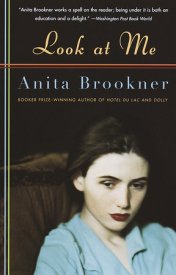
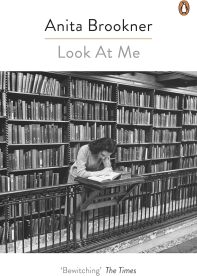 Does she do this for Frances, the wary, lonely narrator of Look At Me? Do we—should we—find compassion in our hearts for her? There’s definitely something pathetic about her, as we follow her through her unexpected and initially life-affirming friendship with Nick and Alix Fraser, who are so much brighter and more beautiful and more exciting than she is:
 And yet Fanny’s motives and character also seem uncomfortable: she is manipulative, jealous, reticent to a fault. I’m not sure she’s meant to be an unreliable narrator, strictly speaking, but she’s certainly not a trustworthy one. She reminds me very much of Lucy Snowe in Villette, cast in the role of a spectator to life, showing strength and resilience but also stubbornness, bitterness, and even malice as she endures her marginalization and denies her own desires, even to herself. Just as Lucy watches Dr. John fall in love with Ginevra, insisting all the while that her own heart is untouched, so Fanny refuses to admit her love for James Anstey, only eventually to realize that if he did ever have romantic feelings for her (which I’m not sure of, really), the moment for claiming them has irrevocably passed. Lucy and Fanny also both endure an absolutely nightmarish walk through their city, so overcome with their own emotions that it makes them physically ill. Here’s Fanny, making her way home across London late at night after seeing James in love (or lust, anyway), with another woman:
 Writing, for Fanny, is no balm, no refuge, only a retreat—though I think we are meant to take Look At Me as a sign that it can also be revenge. I find myself wondering (not knowing much at all about Brookner herself) how she talked about her own writing. The passage Trevor read is such a crushing statement about writing as the last resort of the outcast. I’m reminded of a passage from Hotel du Lac that I often think about, spoken by Edith, the “romantic fiction” writer who is the protagonist of the novel:
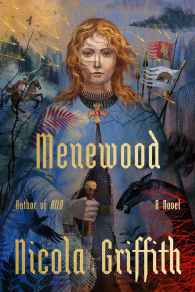
 The novelist Griffith most reminds me of is Dorothy Dunnett. She luxuriates in tactile details the way Dunnett does, for one thing, as in this description of a waterfront marketplace:
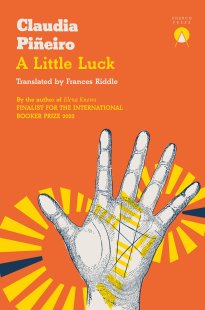 Like Elena Knows, A Little Luck is a small book that packs a powerful punch. Now that the first impact of reading it has passed, I do find myself wondering: did it earn its effect? Is that even a fair question? But Elena Knows is
 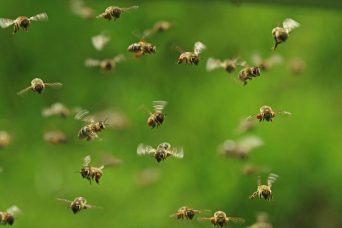 I’ve always loved these lines from Tennyson’s The Princess:
 Actually, thinking about it now, maybe there are more moving parts than there used to be. Once upon a time we didn’t use an LMS, for example, and while there’s no doubt that Brightspace (formerly Blackboard formerly Web CT formerly DIY websites) is a useful back-up system for in-person courses—a storage facility available to your students 24/7 so they can never not locate their syllabus!—it’s also the case that expectations have gone up considerably around our use of them (and students’ reliance on them). Now I post my PPT slides on Brightspace after class, for example, something that requires multiple additional steps, assuming I remember to do it in the first place. (I never used to use PowerPoint, either, and I blame it and Brightspace, which both require incessant mousing, for my now chronic shoulder pain.) I used to give quizzes and midterms in class; now, they are all taken in Brightspace—but that too means many more steps than devising the questions and making copies, setting up all the many features just right and entering the questions in the optimal way. When we were all online, I posted weekly announcements for my classes: it turns out students really appreciated these, so I’ve kept doing them, but they take me (no kidding) hours to compose, both to make sure they are optimally clear and useful and because heaven forbid there’s a mistake in one, like a wrong deadline, that gets fixed in their minds or calendars in spite of any subsequent efforts to correct it! Recently, too, in a departmental discussion around class size and workload, one of my colleagues pointed out ruefully that “there didn’t used to be email” and that is such a good point, especially as our class sizes have gone up even as we became not just teachers but customer service representatives! (And yet somehow, without an LMS and without Outlook and without PowerPoint, we managed to do our jobs. Imagine that. Did we do a worse job? Maybe in some respects—accessibility seems like a key point here—but I really do wonder how much all of this apparatus actually helps, rather than hinders, us in our core mission.)
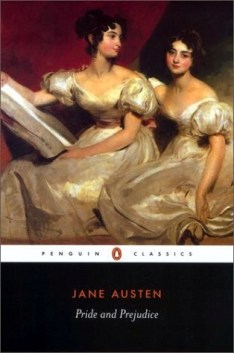 How are things going otherwise in my classes? So far 19th-Century Fiction seems great (I hope it’s not just me who thinks so!). It’s the Austen to Dickens version this term, and I took the risk of assigning Pride and Prejudice, which as regular readers will know
  My other class this term is a section of intro, once again the prosaically-named “Literature: How It Works.” But this time it’s in person, because I was so disheartened by the end of
 It used to be a ritual for me to post a recap of
 Like everyone else I know, I was really impressed by Elena Knows; it was a treat to find that Piniero’s
  Devotion or Semi-Detached (or, in parts, North Woods)—that otherwise deal in wholly human or natural problems. De Gregorio doesn’t resort to wish-fulfillment or fantasy and that is both the pain and the strength of her treatment of love and loss.
 My last two reads of this summer were Yiyun Li’s The Book of Goose and Ann Patchett’s Tom Lake. For me, one was a hit, the other a miss.
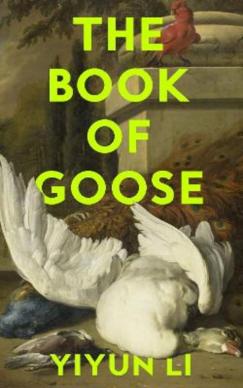 Another warning sign should have been how many reviews (including some quoted in the pages of “Praise for The Book of Goose” that lead off my paperback edition) compare it to Ferrante’s Neapolitan novels. I am cynical about these tendentious excerpts so I don’t pay very close attention to them when I’m making up my mind about what to read. Maybe I should change my habits! Because the Ferrante comparison occurred to me not too far into Li’s novel, and not for good reasons. (
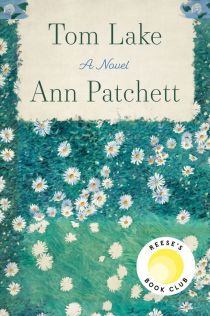 Tom Lake was a much more enjoyable read, although like the other Patchett novels I have read recently, it didn’t seem to me to go particularly deep. Still, there was something really satisfying about it: I liked it a lot more than either
