Money, money, money,
Must be funny,
In the rich man’s world.
-ABBA
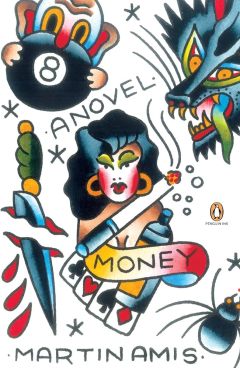
My book club met this week to talk about Martin Amis’s Money, which we chose as a follow-up to Hernan Diaz’s Trust—though I think it would not have come to mind so quickly if Amis hadn’t died relatively recently, meaning we had been hearing a lot about him. None of us had read Amis before, which is perhaps not that surprising: we are all avid readers, but we are also all women, and mature women at that, so not what you might call his target demographic. (I actually can’t think of another book we have read for which our all being women has mattered so much, except perhaps—though for pretty much the opposite reason—Lady Chatterley’s Lover.) Also, then, probably not surprising: none of us liked it. Most of us really disliked it, or at any rate we really disliked reading it, which may or may not be the same thing. There was even some talk of burning our copies after the meeting . . . hyperbole, of course, but suggestive of people’s strong reactions!
It’s not (just) that we really disliked Money‘s obscene, offensive, ridiculous, pathetic protagonist John Self. We are good enough readers not to conflate the book with its first-person narrator, especially when it is as obvious as it is in this case that we are meant to despise him. (Also, Amis is not at all subtle about this distance, almost as if he wants to be sure we don’t think he approves of John Self: “The distance between author and narrator,” his avatar in the novel ponderously explains, “corresponds to the degree to which the author finds the narrator wicked, deluded, pitiful, or ridiculous.”) We got that point early on, though—but still had to persist in his insufferable company for another 400+ pages. Yes, there are some plot twists that complicate (maybe) our relationship with him. He does (arguably) become more sympathetic as it becomes increasingly clear that he is not just Amis’s fall guy for the greed and ostentation and misogyny of money men in the 1980s but the fall guy for the other scheming characters. Yes, too, there are signs of self-awareness, even self-criticism, if not necessarily self-knowledge, that (could) soften us towards him. “Look at my life,” he says;
I know what you’re thinking. You’re thinking: But it’s terrific! It’s great! You’re thinking: Some guys have all the luck! Well, I suppose it must look quite cool, what with the aeroplane tickets and the restaurants, the cabs, the filmstars, Selina, the Fiasco, the money. But my life is also my private culture—that’s what I’m showing you, after all, that’s what I’m letting you into, my private culture. And I mean look at my private culture. Look at the state of it. It really isn’t very nice in here. And that is why I want to burst out of the world of money and into—into what? Into the world of thought and fascination. How do I get there? Tell me, please. I’ll never make it by myself. I just don’t know the way.
Yes, the novel is subtitled “A Suicide Note” so we know he’s on a downward trajectory, with despair and abjection awaiting him. Yes, sometimes his exploits are LOL funny, and yes, “at the sentence level” (as some kinds of readers and critics like to say) Amis’s writing can be virtuosic.
 But it matters (to me, at least) what those sentences are about, and also what they are for, and for me and most of the others in my book club, this was really the sticking point. What is it exactly that we are being invited to participate in when we read this novel? How far does “it’s for comic effect” excuse offering up the things Self says and does for our (presumed) entertainment? What kind of implied author (to let Amis himself temporarily off the hook) thinks that we will laugh, not just at how stupid Self is at the opera but at his attempts at rape? that we will be engaged and rewarded by a monologue that (however energetic and rhetorically ingenious) is relentlessly sexist and racist and bigoted? Again, we get it: John Self is an anti-hero, mercilessly exposed in all his vices; the novel is satirical, Rabelaisian, Swiftian, pick your poison. It is poisonous stuff, though, and—to bring Amis back into it—there’s such a sense of gleeful bad boy “look at me” about the whole thing, with all the metafictional cleverness deployed as back-up in case the whole “I’m only joking” excuse isn’t enough. That it is such a popular book among (as far we could tell, only) male readers is disconcerting: it’s as if an uncomfortable number of them enjoy a chance to vicariously indulge the kinds of demeaning, exploitative, offensive attitudes (towards women especially) that they know better than to express in propria persona. As we discussed, we have all had the tediously unpleasant experience, at one point of another, of calling out sexism in conversation with men we know, or in TV or movies we are watching with them, only to be dismissed or shut down or worse—often, again, with “it’s only a joke.” The feminist kill-joy is a role we’d rather not have to play, but the alternative is to shut up and take it. Between us, too, we’ve had enough of the other kinds of bad experiences John Self inflicts on the women in his life not to find his shamelessness about them entertaining. We don’t need any lessons in how bad this kind of s–t is, after all, so what social or moral or other revelation can possibly come our way from approaching them by way of John Self?
 Our discussion wasn’t all negative. One member of the group noted that she felt John Self was a genuinely memorable, even iconic character, and we all grudgingly agreed that, hate him though we did, he was brilliantly executed: his voice (which is what Amis identified as the most important aspect of the novel, and fair enough) is distinctive and unforgettable. That we would like to forget it could, I suppose, be considered our problem, not the novel’s! Money also prompted a lot of discussion about the more general question of how far a novelist can or should go with an offensive character; we also considered why or whether Self is really so much worse than, say, the soulless ensemble of characters in Succession. We thought that Money would not have worked at all from the outside: what interest we took in Self, and any glimmering of sympathy we had for him, was entirely a product of our immersion in his point of view, which in turn became a test for us of Amis’s experiment, of how far he could go without losing us. We did all read to the end (though we mostly admitted having done some strategic skimming when it just got to be too much)—and our conversation was definitely lively. I don’t expect any of us will read anything else by Amis, though. (Years ago, I remembered, we read his father’s Ending Up, which we enjoyed thoroughly.)
I thought we needed a feminist palate cleanser after this, so I nominated Diane Johnson’s The True History of the First Mrs. Meredith, inspired by how much I enjoyed the Backlisted episode about it. Everyone was on board, so that will be our next discussion, probably in the new year.


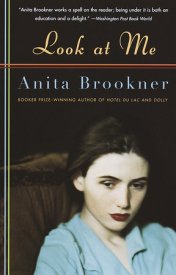
 Does she do this for Frances, the wary, lonely narrator of Look At Me? Do we—should we—find compassion in our hearts for her? There’s definitely something pathetic about her, as we follow her through her unexpected and initially life-affirming friendship with Nick and Alix Fraser, who are so much brighter and more beautiful and more exciting than she is:
 And yet Fanny’s motives and character also seem uncomfortable: she is manipulative, jealous, reticent to a fault. I’m not sure she’s meant to be an unreliable narrator, strictly speaking, but she’s certainly not a trustworthy one. She reminds me very much of Lucy Snowe in Villette, cast in the role of a spectator to life, showing strength and resilience but also stubbornness, bitterness, and even malice as she endures her marginalization and denies her own desires, even to herself. Just as Lucy watches Dr. John fall in love with Ginevra, insisting all the while that her own heart is untouched, so Fanny refuses to admit her love for James Anstey, only eventually to realize that if he did ever have romantic feelings for her (which I’m not sure of, really), the moment for claiming them has irrevocably passed. Lucy and Fanny also both endure an absolutely nightmarish walk through their city, so overcome with their own emotions that it makes them physically ill. Here’s Fanny, making her way home across London late at night after seeing James in love (or lust, anyway), with another woman:
 Writing, for Fanny, is no balm, no refuge, only a retreat—though I think we are meant to take Look At Me as a sign that it can also be revenge. I find myself wondering (not knowing much at all about Brookner herself) how she talked about her own writing. The passage Trevor read is such a crushing statement about writing as the last resort of the outcast. I’m reminded of a passage from Hotel du Lac that I often think about, spoken by Edith, the “romantic fiction” writer who is the protagonist of the novel:
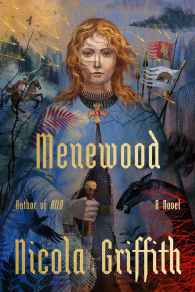
 The novelist Griffith most reminds me of is Dorothy Dunnett. She luxuriates in tactile details the way Dunnett does, for one thing, as in this description of a waterfront marketplace:
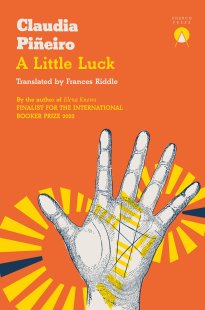 Like Elena Knows, A Little Luck is a small book that packs a powerful punch. Now that the first impact of reading it has passed, I do find myself wondering: did it earn its effect? Is that even a fair question? But Elena Knows is
  I’ve always loved these lines from Tennyson’s The Princess:
 Actually, thinking about it now, maybe there are more moving parts than there used to be. Once upon a time we didn’t use an LMS, for example, and while there’s no doubt that Brightspace (formerly Blackboard formerly Web CT formerly DIY websites) is a useful back-up system for in-person courses—a storage facility available to your students 24/7 so they can never not locate their syllabus!—it’s also the case that expectations have gone up considerably around our use of them (and students’ reliance on them). Now I post my PPT slides on Brightspace after class, for example, something that requires multiple additional steps, assuming I remember to do it in the first place. (I never used to use PowerPoint, either, and I blame it and Brightspace, which both require incessant mousing, for my now chronic shoulder pain.) I used to give quizzes and midterms in class; now, they are all taken in Brightspace—but that too means many more steps than devising the questions and making copies, setting up all the many features just right and entering the questions in the optimal way. When we were all online, I posted weekly announcements for my classes: it turns out students really appreciated these, so I’ve kept doing them, but they take me (no kidding) hours to compose, both to make sure they are optimally clear and useful and because heaven forbid there’s a mistake in one, like a wrong deadline, that gets fixed in their minds or calendars in spite of any subsequent efforts to correct it! Recently, too, in a departmental discussion around class size and workload, one of my colleagues pointed out ruefully that “there didn’t used to be email” and that is such a good point, especially as our class sizes have gone up even as we became not just teachers but customer service representatives! (And yet somehow, without an LMS and without Outlook and without PowerPoint, we managed to do our jobs. Imagine that. Did we do a worse job? Maybe in some respects—accessibility seems like a key point here—but I really do wonder how much all of this apparatus actually helps, rather than hinders, us in our core mission.)
 How are things going otherwise in my classes? So far 19th-Century Fiction seems great (I hope it’s not just me who thinks so!). It’s the Austen to Dickens version this term, and I took the risk of assigning Pride and Prejudice, which as regular readers will know
  My other class this term is a section of intro, once again the prosaically-named “Literature: How It Works.” But this time it’s in person, because I was so disheartened by the end of
 It used to be a ritual for me to post a recap of
 Like everyone else I know, I was really impressed by Elena Knows; it was a treat to find that Piniero’s
  Devotion or Semi-Detached (or, in parts, North Woods)—that otherwise deal in wholly human or natural problems. De Gregorio doesn’t resort to wish-fulfillment or fantasy and that is both the pain and the strength of her treatment of love and loss.
 My last two reads of this summer were Yiyun Li’s The Book of Goose and Ann Patchett’s Tom Lake. For me, one was a hit, the other a miss.
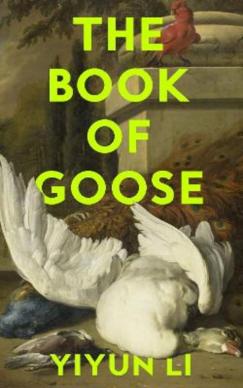 Another warning sign should have been how many reviews (including some quoted in the pages of “Praise for The Book of Goose” that lead off my paperback edition) compare it to Ferrante’s Neapolitan novels. I am cynical about these tendentious excerpts so I don’t pay very close attention to them when I’m making up my mind about what to read. Maybe I should change my habits! Because the Ferrante comparison occurred to me not too far into Li’s novel, and not for good reasons. (
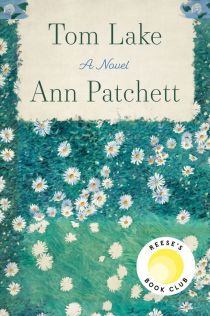 Tom Lake was a much more enjoyable read, although like the other Patchett novels I have read recently, it didn’t seem to me to go particularly deep. Still, there was something really satisfying about it: I liked it a lot more than either
 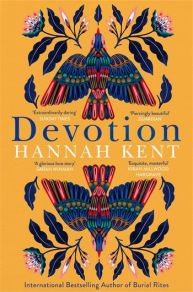 I was raised with the kind of faith that does not doubt. God had been as much a part of me as my own marrow, and when I discovered my bones to be empty, fluting music discordant to anything I had sung in church, my anguish was real . . . The understanding I have now, that the world spins on a deeper mystery than anything that might be set into language, was not with me then. Now I know that my mind is too small to hold the spirit. The spirit, I hope, holds me.
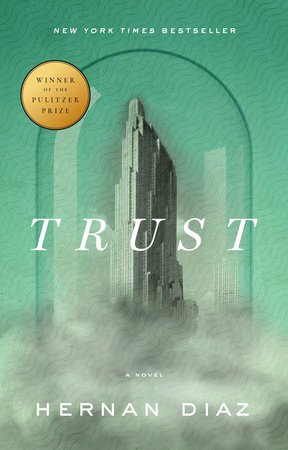 If you’re a friend of mine on social media, it won’t surprise you that Hernan Diaz’s Trust is the first one. It is an inarguably ingenious novel, but I thought (and the other members of my book club agreed) that the payoff for its ingenuity in the second half wasn’t enough to make up for the extraordinary, if self-conscious, dullness of the first half. Even a novel that can only really light up on a second reading can (and, arguably, should) generate some excitement the first time through. For me, a case in point would be
 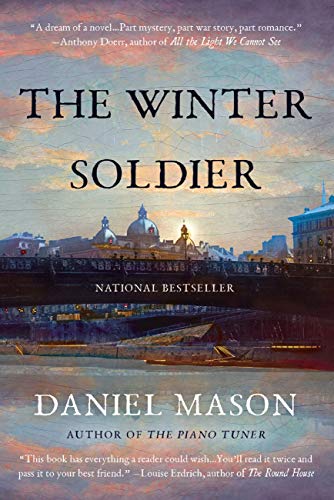 I picked up Daniel Mason’s The Winter Soldier because I’m writing up his latest novel, North Woods, for the TLS and it’s good enough that I wanted to read more by him. The Winter Soldier is quite unlike North Woods, mostly in ways that favor the newer novel—which suggests Mason is getting better at his craft! The Winter Soldier (2018) is a good old-fashioned historical novel. It is packed with concrete details that make the time and place of its action vivid in the way I want historical fiction to be vivid. It takes place mostly in a remote field hospital in the Carpathian mountains during WWI; its protagonist, Lucius Krzelewski, is a medical student rapidly converted to a doctor to serve the desperate needs of the Austro-Hungarian army. His time at the hospital is full of harrowing incidents; through them runs his growing interest in an illness that eludes physical diagnosis and treatment—what today we would call PTSD. There are chaotic battle scenes and idyllic interludes; there’s a love story as well. It’s good! It really immerses you in its world, and (unlike Trust!) makes you care about its characters. I ended it not really sure it was about anything more than that. Novels don’t need to be, of course, though the best ones are. Still, I liked it enough that I will probably also look up Mason’s other novels, starting with The Piano Tuner. North Woods is a lot smarter and more subtle, though. (I am not sure it’s entirely successful: in my review, I will say more about that, when I figure out how to!)
 And then there’s Claudia Piñeiro’s Betty Boo, which I found a really satisfying combination of smart plotting, thoughtful storytelling, and ideas that matter. In some ways it is less ambitious than the other two novels: it is structured more or less conventionally as a crime novel, and there aren’t really any narrative tricks to it, unless you count the sections that are ostensibly written by the protagonist, Nurit Iscar, about its central murder case. Iscar is a crime novelist who has had a professional setback (a crushing review of her foray into romantic fiction) and is currently getting by as a ghost writer. A contact at a major newspaper asks her to write some articles about a murder from a less journalistic and more contemplative perspective; in aid of this mission, she moves into the gated community where the victim lived and died. She ends up collaborating with the reporters on the crime beat as they investigate the death and discover that it is a part of a larger and more sinister operation—about which, of course, I will not give you any details here! Betty Boo is an unusual book: it doesn’t read quite like a “genre” mystery, as it is at least as interested in Nurit’s life and especially her relationships, with her close women friends and her lovers, as it is in its crime story. Also, Betty Boo is about crime, reporting, and fiction as themes, though its attention to these issues is integrated into the storytelling so that it never really feels metafictional—unlike Trust, which is all gimmick and so no substance, Betty Boo seems committed to the value and possibility of substance, even as Piñeiro provokes us to think about the obstacles we face in achieving it, in writing or in life, especially now that the news as a vehicle for both information and storytelling has become so degraded. I appreciated how original Betty Boo felt, and how genuinely interesting it was: I haven’t read another writer who does quite what Piñeiro does, in it or, for that matter, in Elena Knows. Of the three novels I read recently, this is the one I’m most likely to recommend to others, and I’m definitely going to read more of Piñeiro’s fiction, probably starting with A Little Luck, when I can get my hands on it.
 Novel Readings