At the moment the only topic she could discuss was herself. And everyone, she felt, had heard enough about her. They believed it was time that she stop brooding and think of other things. But there were no other things. There was only what had happened. It was as though she lived underwater and had given up on the struggle to swim towards air. It would be too much. Being released into the world of others seemed impossible; it was something she did not even want.
Nora Webster is pretty much the opposite of the happy reading places I highlighted in my last post. It’s a novel about grief, though (predictably, from Tóibín, master of reticence) it is barely, quietly, minimally so. The loss of Nora’s husband elicits no wailing, hardly even any weeping: there is nothing of the tear-jerker about the novel at all. I admit, I was a bit sorry: I have struggled before with Tóibín’s flat affect and this time too I got a bit impatient with the calm simplicity of his sentences. I know that is what a lot of readers (and critics) like and admire about his writing. It’s also more or less what I expect from him now, so at any rate I wasn’t surprised.
 More than that, it felt to me that Nora Webster uses that characteristic stillness of Tóibín’s in a meaningful way: to reflect Nora’s own emotional state, her feeling that she is both unable and unwilling to rise to the surface and meet the demands and expectations of those around her. It’s her situation that is the cause of her repression, not her character (as is the case in Brooklyn), and so there is more tension behind Tóibín’s precise prose because we see signs of her potential for fierceness even before she begins to recover and show more of it herself. Waiting to see when and how she would break through was interesting in a way that (for me) Brooklyn was not. As the novel went on, I was rooting for Nora to be more and do more, to allow herself to feel; I enjoyed her displays of strength, which made clear that it’s her grief, not Nora herself, that is the problem.
 I particularly liked the way the novel used music as Nora’s way back. It’s hard to write well about music. I think Lynn Sharon Schwartz does it wonderfully in Disturbances in the Field; I hoped for good things from Frank Conroy’s Body and Soul and William Boyd’s Love Is Blind but was disappointed. Tóibín ties Nora’s recovery to her growing engagement with music: her attention to it doesn’t just distract her from her mourning but connects her to the person she needs to become to move past it. She has no particular expertise or sophistication as a listener, but her interest is complete and genuine:
On Sunday morning when the boys were at mass and Fiona was still in bed, she put the record on and studied the photograph on the sleeve, looked at the men with their dark good looks and then at the young woman between them, who seemed happier the more Nora looked at her. She listened to the first movement over and over, relishing the uncertainty of it, as though someone was making an effort to say something even deeper and more difficult, and hesitating and then giving in to a simpler melody before moving out of it again into strange sudden lonely moments that the violin or the cello played with a sadness that she wondered how these three young people could know about.
I’m reasonably certain that the musicians on her LP are Zukerman, Barenboim, and Du Pré: the description of them fits, and also the timing is right – this recording was made in the late 60s. One of the odd things about reading this novel, actually, was that until the explicit references to watching the moon landing, I had forgotten that it was a period piece. Eventually the political events make that hard to miss, and of course once you are thinking about it as historical fiction there are lots of signs and reminders. But I think this potential for slippage between then and now is another consequence of Tóibín’s style and the sparseness of his exposition, and also of the intense intimacy of his subject, which is not really (I don’t think) Ireland or the broader context, though I could be misreading: one of the reviews quoted on my copy says the novel is “a subtle way to reflect on Ireland’s need to put its own grief into a larger context.” I can’t say that’s wrong, but it didn’t feel that way to me, and I didn’t feel any pressure to read Nora as representative in some way either. To me, the novel was exactly as personal as its title. Maybe that’s a limitation on the book: maybe it keeps it small. There is something constrained about it–but by the end, it also gave me a feeling of space as Nora comes to terms with “the way things had worked out.”
 Once several years ago I was waiting for my daughter to come out of a medical appointment. The waiting area was, as is typical, neither particularly comfortable nor particularly cheering, and yet when she came out she stopped and exclaimed “you look so happy!” And I was! Why? Because I had just been reading the part of Georgette Heyer’s Devil’s Cub in which (if you know the novel, you can probably already guess) our heroine Mary accidentally tells the forbidding Duke of Avon all about the troubles she has been having with his renegade son, the Marquis of Vidal, with whom she has, against all propriety and practicality, fallen completely in love. I say “accidentally” because she doesn’t know that the enigmatic man she’s talking to is Vidal’s father–but we do, or at least we suspect it much sooner than she discovers it, and so the whole conversation is just delicious, for reasons you have to read the rest of the novel to fully appreciate.
 Last week, because the new books I had been reading weren’t thrilling me, I decided to reread an old favorite, Dorothy Dunnett’s The Ringed Castle. I know this novel so well now that sometimes I skim a bit to get to the parts I particularly love. I read quite a bit of it ‘properly’ this time, because it’s just so good, and it helped reconnect me with my inner bookworm. Near the end, there’s a scene in The Ringed Castle that makes me just as happy as that bit of Devil’s Cub (again, readers of the novel can probably guess which one – in fact, when I mentioned this on Twitter
  “You look so happy”: that’s not the only thing reading can do, and it isn’t always what we want from our reading, but it’s a special gift when it happens, isn’t it, especially these days? I can think of only a few other scenes that have this particular effect on me: the bathing scene in A Room with a View, the evidence-collecting walk on the beach in Have His Carcase, the rooftop chase in Checkmate (so, score two for Dunnett), the ending of Pride and Prejudice, several small pieces of Cranford (the cow in flannel pyjamas!). Of course there are many, many other reading moments that I love and enjoy and return to over and over, for all sorts of reasons, but these are the some of the ones that make me feel as if I’ve turned my face to the sun: warmed, uplifted, delighted. The joy they give me depends not just on the words on the page but on my history with those pages, and also, as with all idiosyncratic responses, on my own history more generally, and on that elusive thing we could call my “sensibility” as a reader. In that moment everything, not just reading, feels as good as it gets. What a comfort it always is to know that I can return to that happy place any time, just by picking the book up again.
 I can’t post about books I’ve finished this week because I haven’t finished any. I’ve been trying to read–keeping in mind
  So, one challenge is aging, and there’s not much to be done about that (and it’s only going to get worse, I know!) The other, though, has been the books I’ve been trying to focus on. Both are ones I have wanted to read for a long time, but neither has proved the right book for this moment, although one of them I am still working on. The first one I started this week was Elizabeth Bowen’s The Death of the Heart, which has been on my reading wish list for years. It looks great! I am sure it is great! But a couple of chapters into it, I just couldn’t bear it: it was making me feel both bored and claustrophobic. I suspect some of that is a deliberate effect, as it seems to be about a stifling world that tries to stifle people’s feelings. Bowen’s sentences didn’t help. I love Olivia Manning’s description of Bowen’s prose as being like someone drinking milk with their legs crossed behind their head: often, it just seems to be making something that’s actually fairly simple much more complicated than it needs to be!
 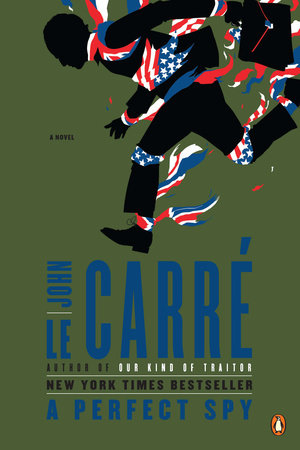 The other is John Le Carré’s A Perfect Spy, which I am still working on. I loved
  So that’s where I am this week! I have been thinking a lot about posting more in my once-usual “this week in my classes” series but I can’t seem to get past the twin obstacles of my classes
  I continued trying harder this week to do better reading, choosing books that I hoped would bring more or different rewards than my recent rather desultory choices of mysteries and romances. I had mixed success in terms of immediate satisfaction–I didn’t have a lot of fun reading either of the novels I finished this week, but both were thoughtful books that led to thought-provoking experiences.
 This is something I would never say in a lecture or a presentation or, God forbid, a paper, but, at a certain point, science fails. Questions become guesses become philosophical ideas about how something should probably, maybe, be. I grew up around people who were distrustful of science, who thought of it as a cunning trick to rob them of their faith, and I have been educated around scientists and laypeople alike who talk about religion as though it were a comfort blanket for the dumb and the weak, a way to extol the virtues of a God more improbable than our own human existence. But this tension, this idea that one must necessarily choose between science and religion, is false. I used to see the world through a God lens, and when that lens clouded, I turned to science. Both became, for me, valuable ways of seeing, but ultimately both have failed to fully satisfy in their aim: to make clear, to make meaning.
 The other novel I read this week was Sally Rooney’s Normal People, after finishing the extraordinarily intimate and touching series. I have thought a lot about how watching the adaptation first (something I rarely do) affected my reading of the novel. The most important thing is that it inspired me to read the novel at all: after giving up part way through
 Next up, I think, is Elizabeth Bowen’s The Death of the Heart, which was one of my Christmas gifts, and then probably Colm Toibin’s Nora Webster, which I couldn’t resist when I saw it in the selection of March sale books at the
  Novel Readings