 I miss writing my regular updates about what we’re doing in my classes. Given that I am still teaching, and covering much the same material as usual, I have been puzzling over why it nonetheless feels nearly impossible to talk about it right now–not the process or the logistics of it, which I have written about several times now, but the substance of it. So much is the same, even though we’re online, after all: as I’ve pointed out more than once to my students, we always read the books outside of the classroom, and we always did at least some of our work on them in writing, including sometimes reading journals or discussion boards much like what I’ve asked them to do for the online versions. Why is it that without the actual classroom time, I can’t figure out what to say about the weekly experience of my classes?
It’s nearly a year now since the Big Disruption: this time last January, and in February, and in early March, I was puzzling, not over what to say here, but over how to fix a class that felt like it was really faltering (the British Literature survey). I was also enjoying the usual (ah, usual!) challenges of running discussions in the 19th-century fiction class, working especially on my resolution to wean myself from lecture notes and allow it to be more spontaneous (ah, spontaneity!). Looking back at those posts this morning, it clarified for me that what I’m missing now is the sense of teaching as an occasion, something that is a clear and necessary casualty of the asynchronous model I am using now. Whatever else we were doing, at least several times a week we did something together, and a lot of my thought and energy went into those specific common experiences–what to do in them, what we talked about in them, what went well (or didn’t) in them.
 In contrast, our online class discussions, even though we cover the same kinds of topics, are diffuse. Lots of good replies get posted to questions; lots of good comments get made on passages. But these things happen really sporadically, on the students’ own schedules. The earlier someone posts, the more likely another student will specifically reply and so the more conversation-like it feels, but (especially since this term I have relaxed my earlier attempts to micromanage this process) it’s haphazard and unpredictable, and you can never be sure if the original poster will look at the replies or that other students, writing in other threads, will check in to see what is unfolding elsewhere. As a result, there is no common ‘discussion’ for me to write about here: I can’t say “today we focused on X” or “after today’s discussion I realized that the thing I really need to bring up is Y.” Even for me–and of course I’m trying diligently to be as attentive as I can across every thread–it is hard to gather up the various pieces into a story about what, collectively, has gone on. One of my original plans for my own role in online discussions was exactly that: I was going to mostly hover, during the week, and then post something synthesizing the main lines and insights and gaps. It proved much harder than I thought it would, though, and in the spirit of giving myself a break too, I stopped trying.
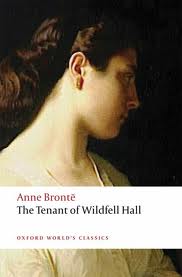 The other thing that muddles me up about reporting on ‘this week’ is that most weeks I am actually focused on next week in my classes, as I need to get the lectures composed and recorded, the discussion prompts up (when they are my job), the quizzes made up and created in the tedious quiz tool with its endless drop-down menus — everything needs to be ready to go ahead of time, so that when the module begins they actually can do it at their own pace, as the asynchronous model promises. Again, this is very different from a regular term, in which preparations for lectures, assessments, and activities are often done close to (sometimes too close to!) the specific hour in which I’m going to use them. This lets me shape them to our current discussions, and it keeps me mentally right in the moment. Today, though, as an example of what’s different, for Mystery and Detective Fiction I will be creating a lecture about “Chasing Meaning in The Maltese Falcon,” while my students work through materials on The Murder of Roger Ackroyd – which I completed almost two weeks ago. (Notice I say “for” this class, not “in” this class, and that’s the key to the difference!) For The Victorian ‘Woman Question’ I just made my slides for next week, our last week on The Tenant of Wildfell Hall, and I already made my slides introducing The Mill on the Floss for the week after that. My mind is all over the place, not here, now, in this week.
 I will spend two hours this week with my students, if not in my classes: Thursday mornings I meet for an online but real-time discussion with the students who are taking The Victorian ‘Woman Question’ cross-listed as a graduate seminar, talking about the novel and also about some secondary readings. Then Thursday afternoon I’m having a drop-in office hour, which I’m pitching as a chance to ask questions about the courses or just to come and hang out for a while. I floated the idea of having some actual real-time class discussion, but scheduling presented a lot of obstacles and students’ reluctance to be recorded (so as not to disadvantage those who couldn’t attend) also proved, understandably, another disincentive. So we won’t dig into questions about our reading except, perhaps, incidentally, but at least we can see each other’s faces and infuse a little shared time into the otherwise radically dispersed experience of this online semester–hopefully, possibly, maybe our last one. Also, maybe, hopefully, possibly, we’ll get nice enough weather in April, before this term is over, that we can try holding that drop-in office hour somewhere outside, near enough to see each other’s faces if still distant enough not to put each other at risk.
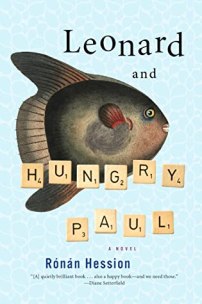 I’m doing pretty well working my way through my Christmas book stack.
  The Gathering is also a very good novel–probably an excellent one. I feel much less inclined to urge you to read it if you haven’t already, though, because it is also a fairly lugubrious one. It is a family story of a particular kind: I want to say, of a particularly Irish kind, which may or may not be fair. Insofar as it has a plot, it is organized around the gathering (of course) of the remaining members of a large family (and assorted spouses and children) after the suicide of their brother Liam. It is narrated by his sister Veronica, and around this present gathering she weaves together a sad tapestry of memories and questions, at first mostly about her grandmother Ada and about Liam–who has never really been ‘right’ since they were first sent as children to stay with Ada-and eventually about what might be painful secrets in Veronica’s own past. If you suspect that the story’s original sin is sexual abuse, you are right, and how awful is it that this revelation not only does not come as a surprise in the novel but felt like a cliché? Enright’s treatment of it is not clichéd, or prurient, or sensational: it is sad and angry, and short on redemptive promises. She writes beautifully, and says a lot of things that will linger with me, like this bit, from early on before we know for sure why Veronica’s outlook is so shadowed:
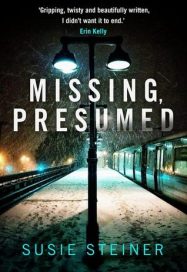 My other recent reading (besides reading for my classes, of course) has been two pretty good mysteries. One was the first in Susie Steiner’s Manon Bradshaw series, Missing, Presumed, which I read out of order because when I first looked, only her most recent was locally available. The one I read then was good enough that I put this on my wish list, and I actually thought it was better in some ways–though that might because I already knew a bit about Manon. It was especially interesting to see how the family situation she’s in, in the later book, comes into being in this one. The other is the second of Dervla McTiernan’s series about Cormac Reilly (Ireland again!), The Scholar. This was very well done but–and this is very rare for me, suggesting I’m either a lazy or an inept reader of detective stories!–I more or less figured out the crime pretty early on. It didn’t matter that much to my enjoyment of the book, as I read crime fiction more for character and atmosphere than for the mystery itself.
 He apologizes if the buffoons have been heavy-handed, but I must realize that to them I am not a girl, I am not even a person, I am the portent of death, I am a decoy, sent to create a distraction before an attack.
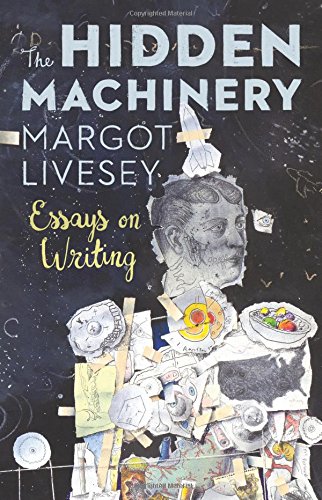
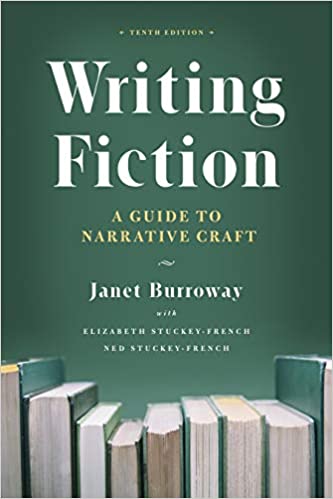
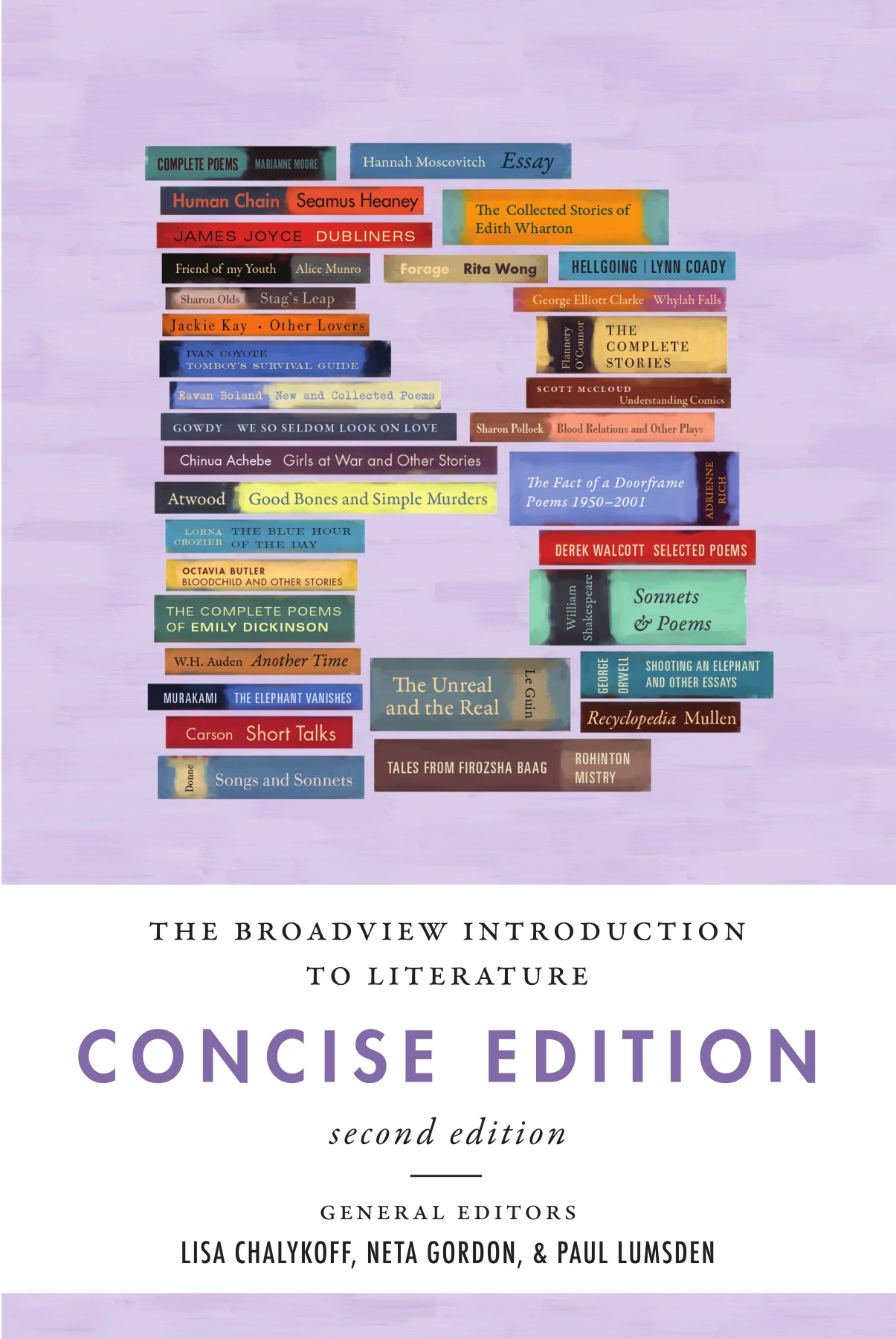
 With that in mind, I asked the Twitter ‘hivemind’ for examples of what people consider the best books for or about teaching creative writing. I got a lot of suggestions: Charles Baxter’s Burning Down the House; Nancy Kress’s Beginnings, Middles, and Ends; Sarah Painter’s Stop Worrying, Start Writing; Robert Boswell’s The Half-Known World; Graywolf Press’s The Art Of series; Tin House’s Between the Covers podcast; Ursula LeGuin’s Steering the Craft, Janet Burroway’s Writing Fiction.* One that got a few strong endorsements was Margot Livesey’s The Hidden Machinery. It sounded appealing, so it’s the one I decided to read first (and, I now think, maybe last).
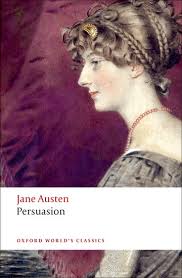 The Hidden Machinery is a perfectly fine book about how some really good novels are written. It is mostly close reading. There are zero revelations in it for anyone who has read, say A Passage to India or Persuasion or Madame Bovary attentively with an eye to things like point of view or narrative form or metaphorical patterns or character development. Livesey does a good job walking us through her examples; she is an observant and insightful reader. In her discussion about her own fiction, she explains clearly what she thinks she learned, where she thinks she succeeded or failed, as a result, at least in part, of the attention she learned to pay to other writers. These sections are interesting, but they are not really transferable “lessons”, because each of her novels (like every novel) is unique. There is absolutely no specific advice about how to be as good as her exemplary writers are–and how could there be? There is, near the end, a list of “rules” (derived, a bit unexpectedly for a novelist, from her study of Shakespeare) and it is as useful and as useless as every such list I’ve ever seen: “don’t keep back the good stuff”; “negotiate your own standard of plausibility”; “don’t overexplain”; “write better sentences.” “Don’t overexplain” would probably rule out a novel like Byatt’s
  I was looking for something in Livesey’s book that would be an “aha” moment for me about creative writing as something that can be taught. There was such a moment, but it didn’t exactly confirm for me that what’s most important is classes or programs dedicated to the how-to side. Many, many times I have sat at the English Department’s table at the “academic program fair” held yearly to showcase and recruit students to our various majors and honours program. Year after year, since we started offering creative writing courses, the vast majority of student inquiries are about them, not about our “standard” literature courses. But in those literature courses we do exactly what Livesey does in The Hidden Machinery,** and if you do a majors or honours degree in our department you will perforce study examples across a range of periods and genres–not just the contemporary ones or the ones students already know they are interested in, but the ones they don’t know they are going to love, the literary “unknown unknowns.” Many, many times I have asked prospective creative writing students what other writers, what literary periods or forms, they are most interested in, and many, many times they have had no answer: they just “like to write.”
 I love that they like to write! But I have always thought (and sometimes said, as tactfully as I could) that to write well you really, really need to read widely. If Livesey’s typical at all–and in this respect I do think she is–that’s what creative writing teachers think too. I’m just still left wondering why an English degree isn’t, then, the right or even best way for these students to proceed, and why they don’t know that. The counter-argument probably turns as much on time, encouragement, and mentorship as on the belief that you can actually teach someone to write something worth reading or even, one day, something that is itself worth studying as an example. Those are definitely good things for aspiring writers to have, even if they are neither necessary nor sufficient factors for producing good, much less great, writers.
 As if converting my courses to online versions wasn’t challenging enough, I also used specifications grading for the first time this fall, for my first-year class “Literature: How It Works.” This is an experiment I had been thinking a lot about before the pandemic struck: in fact, on March 13, the last day we were all on campus, I actually had a meeting with our Associate Dean to discuss how to make sure doing so wouldn’t conflict with any of the university’s or faculty’s policies. Though I did have some second thoughts after the “pivot” to online teaching, it seemed to me that many features of specifications grading were well suited to Brightspace-based delivery, so I decided to persist with the plan, and I spent a great deal of time and thought over the summer figuring out my version of it.
 I won’t go into every detail of the plan I finally came up with (though if anyone is really keen to see the extensive documentation, I’d be happy to share it by email). Basically, I made a list of the kinds of work I wanted students to do in service of the course’s multiple objectives: reading journals, discussion posts and replies, writing worksheets, quizzes, and essays. Then I worked out what seemed to me reasonable quantities of each component for bundles I called PASS, CORE, MORE, and MOST. These bundles corresponded to D, C, B, and A grades at the end of term; students’ grades on the final exam determined if they got a + or – added to their letter grade. I also (and in many ways this is the most important part of the whole system!) drew up the specifications for what would count as satisfactory work of each kind: completing a bundle didn’t mean just turning in enough components but turning in enough that met the specifications. Following the lead of others who have used this kind of system, I tried to make the specifications equivalent to something more like a typical B than a bare pass.
 On a related note, something else that I think was good (though it was a bit hard for me to tell without having a chance to talk it over with the class in person) was that the system gave students a fair amount of control over their final grade for the course. Instead of trying to meet some standard that–no matter how carefully you explain and model it–often seems obscure to students, especially in first-year (“what do you want?” is an ordinarily all-too-frequent question about their essay assignments) they could keep a tally of their satisfactory course components and know exactly what else they needed to do to complete a particular bundle and thus earn a particular grade. That didn’t mean it was an automatic process; again, to be rated satisfactory, the work had to meet the specifications I set. I tried to make the specifications concrete, though: they didn’t include any abstract qualitative standards (like “excellence” or “thoughtful”). The core standards were things like “on time,” “on topic,” “within the word limit,” and, most important, to my mind, “shows a good faith effort” to do the task at hand. I suppose that last one is open to interpretation, but I think it sends the right message to students trying to learn how to do something unfamiliar: if they actually try to do it, that counts. When my TA and I debated the occasional submission that had arguably missed the mark in some other way, we used “good faith effort” as the deciding factor for whether they earned the credit: we used it generously, rather than punitively.
 One other way I consider the experiment a success was that it seemed to me that the students’ quantity of work–their consistent effort over time–did ultimately lead to improvements in the quality of their work. The skepticism I faced from some colleagues when I mentioned this plan tended to focus on concerns about rewarding quantity over quality, or about not sufficiently recognizing and rewarding exceptional quality. Over the term I did sometimes worry about this myself: much as I liked being freed from grading individual assignments, I didn’t always like giving the same assessment of ‘satisfactory’ to assignments that ranged from perfunctory or barely passable at one end of the scale to impressively articulate and insightful at the other. You can signal the difference through your feedback, though, and that’s the big shift specifications grading requires. The other key point is that most people really do get better at writing if they practice (and get feedback, and engage with lots of examples of other people’s writing) and so making it a requirement for a good grade that you had to write a lot had the side-effect (or, met the course objective!) of helping a lot of students improve as writers. Between reading journals and discussion posts and replies, there was no way to get an A in this version of the course without writing a few hundred words every week, which is a lot more than students necessarily have to do in my face-to-face versions of intro classes. Especially in their final batch of essays, I think that practice showed.
 Novel Readings