 As with the earlier news that Lien stayed with the neighbours, this information comes as a shock. So there were other Jews in hiding right where Lien lived on Algemeer. When she meet Maartje or Hester Rubens, as Lien must have done if she stayed here in this house, she could have had no idea of who they really were. The notion that Bennekom was a Jewish refuge comes as a total surprise to me. I have spent a lifetime visiting this village and, even now, though I have talked to my mother and her family about the work that I am doing, no one has ever mentioned this past.
Bart Van Es’s The Cut Out Girl is remarkable as much for Van Es’s thoughtful diffidence as a narrator as it is for the story he so carefully pieces together for us, a story that includes both intimate and often heartrending details about individual lives as well as broader historical explanations about the Netherlands during the Nazi occupation. On the train home after a day of research in the National Archives, Van Es begins “to question myself about the work I am doing:
Lien asked me about my motivation. There are so many stories like hers and, besides, the bare facts have already been recorded for the Shoah Foundation archive, which was set up by Steven Spielberg soon after he completed his film Schindler’s List back in 1994. Is there anything that I could add to that?
It’s a fair question–what more do we need to know?–but also, as his book goes on to show, the wrong question. There are always more stories to be told, or more ways to tell the stories; we can never work too hard to counter the dehumanizing mass persecution and murder perpetrated by the Nazis and their collaborators by giving the people they persecuted and murdered the kind of dedicated attention Van Es gives Lien.
 Van Es pursues Lien’s story initially because it is also the story of his family: his paternal grandparents sheltered Lien, absorbing her into their family in Dordrecht as the lives of Jews in the Hague, where her parents lived, became increasingly precarious. One of the most painful documents in a book full of wrenching details is the letter Lien’s mother wrote to the unknown recipients of her 9-year-old daughter in August 1942. “She has been taken from me by circumstance,” wrote 28-year-old Catherine de Jong-Spiero;
May you, with the best will and wisdom, look after her. . . . I want to say to you that it is my wish that she will think only of you as her mother and father and that, in the moments of sadness that will come to her, you will comfort her as such.
Catherine died in Auschwitz in November 1942; her husband died in Auschwitz in February 1943. Lien survives, but the story of her relationship with the Van Es family is a complicated one and full of different kinds of sadness beyond the one her mother no doubt foresaw most clearly. For one thing, she has to leave them and go into hiding elsewhere when her secret identity gets out. Then, when the war is over and it is time to reunite hidden children with their families, the Van Esses turn down Lien’s initial request to return to them. Though they change their mind and take her back, that first rejection is a significant blow to a young girl already at a loss to know where she belongs. Eventually Lien and her foster parents break ties altogether; when Bart meets Lien for their first interview, it has been thirty years since the breach.
 The Cut Out Girl alternates chapters about Lien’s experiences during the war with chapters recounting Van Es’s research, including interviews with Lien herself, visits to archives and to places Lien lived while in hiding, and meetings with everyone he can find with something to tell him about Lien or about occupied Holland. He shows us Lien as part of the bigger picture, as one girl among many thousands, but also as profoundly individual, as a very particular young girl suddenly removed from everything familiar and having, over and over, to adapt to new people and new expectations, all under a cloud of fear and secrecy. The people who took care of her also are presented with great distinctness. Because most of what he knows about them comes from Lien, it is easy to lose track of the courage these people showed and the fear they must have felt for themselves. Though, as some of their actions show, they were far from perfect, still they rose to the moral occasion at great personal risk and they and people like them saved thousands of lives. “At least 166 Jews spent time in hiding in Bennekom,” Van Es learns, for instance, “a village of just 5,000, and more than 80 per cent of them survived. This is the opposite of the national picture.” It is hard not to be awed at the actions of Jan and Dieuke Heroma, for example, key parts of a large network “constructed to resist the Nazis.” It was Mrs. Heroma who came to take Lien away from her parents, cheering her on the train to Dordrecht with funny place names: “Double Sausage Street,” a road called “Behind the Wild Pig.” Nothing about the kindly face shown in this photograph of her seems extraordinary, but that’s one of the points a story like Lien’s makes for us: ordinary people are capable of doing extraordinary things.
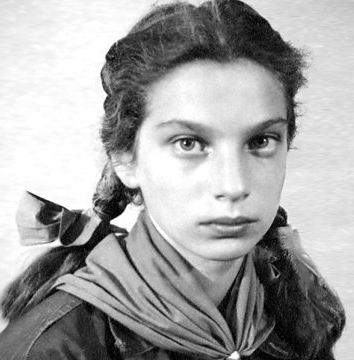 The Heromas’ antagonists are those like Harry Evers, one of many Dutch police officers who eagerly enforced Nazi policies, tracking down Jews to meet “the targets set by their German masters.” Evers too is otherwise ordinary, “unremarkable, modestly educated, fond of a drink …. not especially political.” He turns in the opposite direction to Mrs. Heroma, though, joining the Fascist Union and then flourishing in the Political Police, tracking and capturing the same people the Heromas and their allies are working so hard to protect. Van Es goes through boxes of files about Evers, including hundreds of witness statements about his appalling actions. “As I read these things,” Van Es comments quietly, “I think of Lien in hiding.” He tells us about one particular case very close to hers but with a different ending. Miepe Viskooper, age 7, was also sent by her parents into hiding with sympathetic people, in the hope that she would be safe. Discovered, Miepe is caught by Evers and his colleagues as she tries to run from them: “Evers came in right behind her, pointing his revolver, shouting ‘It’s the choke hole for you’ at the little girl.” She was brought to join her parents, who had also been arrested, at Westerbork. “As I read this,” says Van Es,
I think of my own wife and children and imagine that unwanted reunion. I can see the smile of recognition on the face of the child.
Miepe’s father survives, “but he returned to Holland alone.”
As a story of loss and survival during the Holocaust, The Cut Out Girl is engrossing, moving, and sometimes surprising and infuriating. Lien’s particular hardships, it sadly turns out, go beyond the loss of her parents and her constant danger and displacement: there are other villains in her world besides the Nazis and their agents. All the traumas of her childhood play a part in the complications that develop in later years between her and the Van Esses, and Lien also implicates Henk Van Es, the man she calls “Pa,” Bart Van Es’s grandfather, in a further offense, recalling a terrible day when “before she knows what is happening, he is kissing her and stroking her hair.” It is another later incident, though, a seemingly innocuous miscommunication, that leads Lien to write what her foster mother Jans Van Es calls “the terrible letter,” which in turn prompts Jans to sever ties with her. Lien spent years after that, Bart learns, trying to come to terms with her own history and her relationship with the earlier generations of his family.
 The Cut Out Girl is not a triumphant story: one thing it drives home is that survival by itself is only part of the battle. On a personal level, though, it does end on a hopeful note: Lien has found happiness in a new phase of her life, and gradually new bonds are being formed between her and the family she was first pasted into then cut out from. There is something lovely about the book’s cautious movement towards this happy ending and the self-effacing way Bart reveals that, in ways he could never have anticipated, his work finding out Lien’s story has done more than fill in a gap. The process has led him to think hard about history but also about his own immediate family, especially his relationship with his stepdaughter Josie. Van Es never presents himself as any kind of heroic discoverer: he is learning as he goes, about himself as well as about Lien.
This inviting diffidence–this care to avoid grandstanding or moralizing–extends to his understated observations about parallels between the time he is researching and the time in which he is doing the research. A different (a worse) book might have made this the pitch. Instead, Van Es just quietly points them out as they occur to him, and as a result their implications linger. Driving to Bennekom one night in 2015 he hears on Dutch radio the news of the shooting at the offices of Charlie Hebdo, which is followed by comments and speeches connecting the attack to the shooting of filmmaker Theo van Gogh in Amsterdam in 2004. As he drives along,
the radio shifts to a panel discussion in which the phrase ‘Islamic fascism’ recurs. Tomorrow there will be new developments in Paris: a siege at a kosher supermarket that ends in more killings, this time directly targeting Jews. As I pick up speed in the darkness, I am struck again by the obvious overlap between the present epoch and the last one: absurd conspiracy theories, economic recession, and a loss of faith in moderate politicians, who seem to many people to be irrelevant and corrupt. The little car pulls past container lorries that carry goods into Europe: fridges, televisions, furniture, plastic shoes. From the look of these roads nothing is left of the old Europe, but its ghost remains.
 There have been some shifts, though, some changes in who is feared or hated and how. One day, looking for the exact location of Lien’s first residence in Dordrecht, Van Es realizes his pacing and staring have attracted attention from the current residents: “a middle-aged man in a kameez comes towards me, asking suspiciously, with a heavy accent, what I am doing. . . . ‘You ought not to be spying on people,’ the man tells me.” As he walks away, Van Es is
reminded of the obvious fact that the Muslim community, in terms of the hatred directed towards them, is probably closer to the Jews of the previous century than any other. There are no easy parallels but, all the same, the language of Geert Wilders (whose Party for Freedom has hit 15 per cent in national elections) has an air of the 1930s to it . . . He has spoken of the threat of an ‘Islamic invasion’ and wants no more Muslims to enter the country at all.
50 people were murdered in New Zealand yesterday by someone wielding the same hateful rhetoric along with his high-powered weaponry. Thinking of the suspicion and scrutiny the new inhabitants of the Bilderdijkstraat endure, Van Es is ashamed that he came by “pointing a camera, only to look and not tell.” The project he is there to further, though, is surely part of the larger responsibility we all have not to look away, and then to reflect on the meaning of what we have seen.
 I have been trying to figure out how (or, perhaps more aptly, why) to write a post about The Years, which I finished reading a while ago. How many times can I confess to my inability to grasp what is going on in Woolf’s fiction? It’s not like I’m proud of it; I certainly don’t think it means Woolf’s fiction is “overrated.” It does mean I can’t say much about the novel itself. At most I can quote some bits I liked–the opening to 1913, for instance, which in both its subject and its cadences reminded me very much of the famous conclusion to Joyce’s “The Dead” and yet, somehow, is obviously not Joyce:
 It’s easy for me to find individual sentences or moments or even longer passages from The Years that I liked: that made me pause to reread them, to think about them, to appreciate them. The problem for me is at the higher (or is it lower?) level of structure, of support for meaning: even as I grasp at these pieces, with what sometimes feels like a nice firm grip, I find myself, or them, slipping again soon after. I lose the thread, I miss the connection, I falter, I am lost. What just happened? Why did he say that? Who is she talking to now, and about what? Why is this the detail we’re getting right now? It’s as if I am looking at the novel through something and so not seeing all of it, or, to reverse the image, as if the novel itself is a screen (and this actually feels like a better, more Woolfian, metaphor) over a fuller version, allowing only indirect access to it. I can tell that there is more to the novel than I am understanding, but it eludes me.
 One reasonable response is that I need to work harder as a reader. Another way to put it–my preferred way, since I don’t think I am a lazy reader!–is that I am still learning how to read Woolf (or, Woolf’s fiction, since I am a reasonably good reader of her non-fiction, and of her criticism, which I love and admire). That seems both true and fair, and I believe it would (will) be worth it to keep trying. I also find my difficulties with Woolf’s fiction salutary and productive: they reinforce my conviction that reading really is a skill, something that we can learn and practice. That doesn’t mean you can’t be a good reader unless you study literature formally, any more than you absolutely must take lessons to play an instrument well or learn a language. When pressed to declare course objectives or “learning outcomes” for my classes, though, “helping students become better readers” is at the top of my list. In some respects this is a one-size-fits-all effort, but the example of Woolf is a good reminder that different writers require different things of their readers. I thought The Years would be closer to the kind of novel I’m better at reading, and it is–but it’s still not close enough to make it easily accessible for me.
 Book orders for our fall classes are due by April 1. It’s not a hard and fast deadline, but earlier orders make things easier for the bookstore staff and also enable them to organize book buybacks from students for texts that will be assigned again next year. In theory (though things have not always worked out this way) it also means that if there is some kind of supply problem with a fall book selection, they and thus we find out in plenty of time to choose an alternative. So I do always try to meet the deadline! The problem is that it comes up right when the current term is at its most hectic, which is one reason it is tempting to default to the same reading lists (or very close to them) that I used last time around–and that, in turn, is why I have made it one of my priorities this term, while I’m on sabbatical, to see what else I might assign.
 For Pulp Fiction, I have changed two of the three novels on the list (I’m keeping the short readings the same, so as not to overwhelm myself with new prep!). The first two times I taught it, we read Valdez Is Coming, The Maltese Falcon, and Lord of Scoundrels. I was actually very happy with this list for my purposes: they are all terrific novels, exemplary of their genres but also thought-provoking in their particulars, and the sequence was unified by their engagement with problematic models of masculinity. In practice, however, things did not go as well as I would like. For one thing, Valdez Is Coming was not popular, and it also proved difficult to use for exercises in close reading: there’s a lot going on but it’s subtle, more below the surface than on it, which fits the book well but gave students a lot of trouble. The Maltese Falcon raised different problems: I had more plagiarism cases involving students’ writing on it than I’ve had (to my knowledge, of course) for any text I’ve ever assigned in first year. As a result, I have replaced both of these books: this time our representative Western will be
  My other fall term course is an upper-level seminar on
  I feel good about these decisions, but I also have some concerns about taking on so much new material. More specifically, I’m worried that the new books for Pulp Fiction will actually prove more difficult for first-year students, not least because of their idiosyncratic first-person narrators–one of my tasks now is to think through their challenging aspects and provide my students with the right tools and approaches to have a productive discussion about them. I was very comfortable with my old reading list for Women & Detective Fiction–too comfortable, of course, as I realized. Now, however, I am anxious about how to handle the difficult scenarios presented in both In A Lonely Place and The Break and about equipping myself to address the appropriate historical and critical contexts for Neely and Vermette responsibly. But there’s plenty of time between now and September to do this work, and at least now that the book orders are placed my attention will no longer be “dispersed over that tempting range of relevancies called the universe” but focused on these particular books.
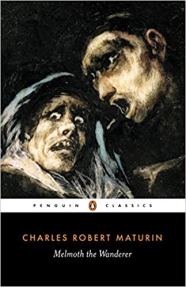 It is Melmoth who is with them, as she is with Joseph and every other malefactor in the novel, including its unassuming protagonist Helen Franklin, whose guilt over a secret from her past has driven her to live a life of penance and self-deprivation. Her crime is betrayal on a small scale, personal rather than political or historical, but then, as Melmoth’s various stories emphasize, even the greatest moral catastrophe is in fact an accumulation of individual acts, and no amount of privacy or secrecy can salve the guilty conscience. Melmoth is at once a legend and a projection of that conscience. Joseph Hoffman learned her story from his teacher, Herr Schröder. Melmoth was one of “a company of women” who found Jesus’s tomb empty after the crucifixion and then saw him resurrected, but Melmoth denied what she had seen:
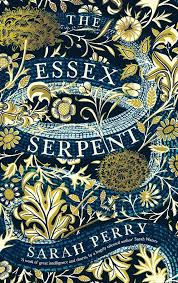 I won’t give away the different ways this sad and creepy story intertwines with the personal and historical narratives that add up to Melmoth the novel, but I will say that I found it wonderfully effective. Though the concept itself is intrinsically melodramatic, as is appropriate to the novel’s Gothic legacy, Perry’s use of it is restrained and she keeps her supernatural wanderer mostly on the margins: a doubt, a shiver, a shadow, a movement of the curtains, a feeling of being followed. The novel itself is not restrained, though: I remarked on Twitter that I was tired of elegant minimalism and looking for writing that showed some writerly glee, and
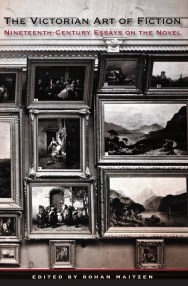 I have first-hand experience of this. After I earned tenure on the basis of my scholarly work on 19th-century women historians, I did some hard thinking and decided I did not want to work on that material any more. It just did not feel very important or interesting to me, so while I could imagine (and in fact had put together some preliminary outlines for) new projects in that field, I decided to take advantage of the security of tenure to do something that mattered more to me–something that felt more urgent–which was the work I went on to do on ethical criticism. I eventually published two peer-reviewed essays based on this work, one in Philosophy and Literature on Martha Nussbaum and the “moral life of Middlemarch” (in 2006), the other in English Studies in Canada on Victorian ethical criticism (in 2007). A further result of this reorientation of my research was the edited volume of Victorian criticism I published with Broadview in 2009.
 Now consider how that phase of my scholarly life was described in the letter denying my promotion appeal. The committee’s assessment was that my record showed “limited scholarly activity between 2000 and 2005″* followed by a “second burst of scholarly output.” Where do you suppose they think that “burst” came from? It came from giving myself time to read, think, and write–and it’s worth keeping in mind that I was in fact writing both of the articles that I’ve mentioned well before their actual publication dates, because the academic submission process takes forever. During those years I also gave conference presentations related to my ongoing research and attended a symposium on literature and ethics in Australia convened by a prominent scholar in the field. This is all scholarly activity! It is “limited” only in the sense that it was preparation for the “output” to come rather than (mostly) measurable outputs in the moment.
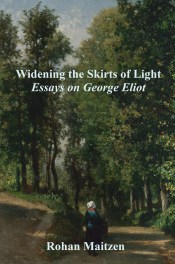 An important step in this process was
 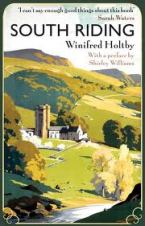 One way to think about where I am now is that I am having the critical and scholarly equivalent of a “but why always Dorothea?” moment! This is a good thing, or it will be, and I do have some ideas about which direction to go in. I’ve been reviewing things I’ve read and written about over the last decade or so, and it quickly became clear to me that the work I did that excited me the most was the reading (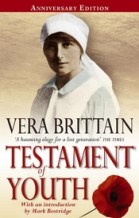
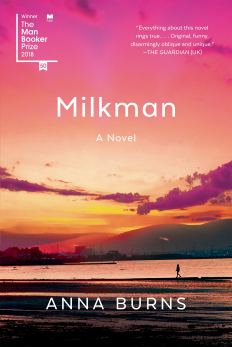
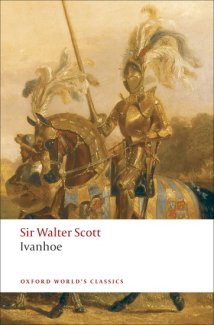 Another element of the novel that presses us to think about a conflict more abstract than its historically specific one (although of course that in some ways was always about abstractions too) is the emphasis on the narrator’s “reading while walking.” As she makes her way around the city, she focuses not (as far as she can help it) on her immediate surroundings but on her books, preferably 19th-century novels. The first time the ominous Milkman pulls up beside her, for example, she is reading Ivanhoe. The narrator knows that in doing this she is “losing touch in a crucial sense with communal up-to-dateness and that that, indeed, was risky.” She is seeking not so much escape as neutrality: reading is a form of withdrawal, a way of refusing or rejecting the whole otherwise intractable situation around her. This is why her reading while walking provokes what initially seems like a disproportionate amount of criticism. Not taking sides is not an option in her world, where nothing is exempt from partisanship–as she and we realize when maybe-boyfriend, a car enthusiast, gleefully shows off his acquisition of a bit of a dismantled Bentley only to be confronted about whether he also got “the bit with the flag on it.”
 The opposition there is also a gendered one, and this is another way that Milkman felt universal (or at least mobile) as well as historically specific. Its central plot is only ambiguously about the actual politics of the Troubles, but it is very clearly a plot about sexual predation and sexual politics. I found the way the narrator loses control of her own story particularly chilling: her frustration that the Milkman’s interest in her negates her own agency, her fear and confusion at his insistent pursuit, her struggle to limit its ramifications, the seeming impossibility of even identifying him as a threat when, as she repeatedly complains, anything short of a physical attack will not be legible to anyone else as the danger she knows it to be. His hints about car bombs connect this story directly to a particular place and time, but her decision not to go running alone anymore is one
  Novel Readings