This Week In My Classes: Lots of Reading

It’s not so much that we are doing a lot of reading this week in particular, but that cumulatively by now, in both classes, we have done a lot of reading. I like this middle phase of term: the logistical confusion of the first couple of weeks is behind us, the frameworks for our class discussions have been established, we have a body of completed work to lean on (bounce off?) as we move along — and the end of term is still far enough away that we aren’t distracted by planning for it.

greatexpectationsIn 19th-Century Fiction we’ve finished our first two novels, Villette and Great Expectations. Although Villette is a fascinating novel, I had more fun (rather to my surprise) rereading Great Expectations. I’ve read and taught it so often that my own expectations were kind of low as we started it up, but I fell right into it, especially the climactic confrontation between Pip, Estella, and Miss Havisham after Pip’s world has been up-ended:

‘You are part of my existence, part of myself. You have been in every line I have ever read, since I first came here, the rough common boy whose poor heart you wounded even then. You have been in every prospect I have ever seen since — on the river, on the sails of the ships, on the marshes, in the clouds, in the light, in the darkness, in the wind, in the woods, in the sea, in the streets. You have been the embodiment of every graceful fancy that my mind has ever become acquainted with. The stones of which the strongest London buildings are made, are not more real, or more impossible to be displaced by your hands, than your presence and influence have been to me, there and everywhere, and will be. Estella, to the last hour of my life, you cannot choose but remain part of my character, part of the little good in me, part of the evil. But, in this separation I associate you only with the good, and I will faithfully hold you to that always, for you must have done me far more good than harm, let me feel now what sharp distress I may. O God bless you, God forgive you!’

In what ecstasy of unhappiness I got these broken words out of myself, I don’t know. The rhapsody welled up within me, like blood from an inward wound, and gushed out. I held her hand to my lips some lingering moments, and so I left her. But ever afterwards, I remembered — and soon afterwards with stronger reason — that while Estella looked at me merely with incredulous wonder, the spectral figure of Miss Havisham, her hand still covering her heart, seemed all resolved into a ghastly stare of pity and remorse.

I know some people recoil from Dickens’s rhetorical excesses and emotional manipulation, and when my defenses are up I can feel the same impatience. But he’s also better than any other novelist I know at ripping the bandage off our wounded humanity and creating moments as morally thrilling as this one. There’s also something fantastic (in both senses of that word) about just how fearless his language and his stories are: his relish for both is practically tangible.

I’ve been thinking about Dickens a lot in the context of the ongoing discussions about YA fiction: why, for instance, should Henry James be the touchstone for grown-up reading? There’s a quality in Dickens that runs afoul of that rarefied, over-intellectualized ideal, but Christopher Beha’s description of the rewards of reading James (and other “adult” fiction) describes Great Expectations astonishingly well:

Much is taken from us as we pass out of childhood, but other human beings who have suffered these losses have created great works of art, works that can only be truly appreciated by those who have suffered the same losses in turn. These works are among the great recompenses that experience offers us.

One of the things we discussed in our last session on Great Expectations is whether it’s worth having made Pip’s mistakes, having suffered as he suffers, because in the end he is capable of narrating the novel — something Joe, for all his admirable qualities, could never do. Dickens, in other words, has built his own novel around just that trade-off between pleasures that can “easily be enjoyed by a child” and hard-won moral and literary maturity. I’m not necessarily disagreeing with Beha’s commentary on James (though I’m on record as not finding James that pleasurable to read — for me, he’s more on the mortgage-payment side of adulthood): I’ve just been thinking Dickens has a more interesting role to play in this conversation than he is usually given (in Beha’s essay, a passing reference to him as someone who wrote “inviting, event-packed novels”).Oxford

Next up for us in this class: Middlemarch. As you can imagine, I’m looking forward to this! I’ve spent a lot of time in the last couple of years thinking and talking about Middlemarch, but I haven’t actually reread it patiently for a while. I started on it this morning while the class was writing their short test on Great Expectations, and even as I winced watching Dorothea be so, so wrong, I was reminded all over again how funny the first few chapters are.

Houn-05_-_Hound_of_Baskervilles,_page_24In Mystery and Detective Fiction we’ve wrapped up not only The Moonstone but Sherlock Holmes and a sampler of other great detectives as well (we read one story each by G. K Chesterton, R. Austen Freeman, and Jacques Futrelle). Today we started our discussion of Agatha Christie’s The Murder of Roger Ackroyd.  I enjoy using Christie to spark discussion about canonicity: I point out that despite being possibly the best-selling novelist of all time, she has no literary standing compared to her contemporaries Henry James, Virginia Woolf or James Joyce, which gives me a chance to suggest that modernism set a lot of the terms for discussions of literary merit that we now often take for granted. This means talking about things like linguistic or syntactical difficulty, which on the face of it, Christie is having none of: her prose is remarkably lucid. Next time, though, when all is known, we’ll go over just how tricky she actually is — telling us everything while keeping everything from us. Is this its own kind of difficulty, or is it just trickery, and if so, is that somehow a lower order of skill? To some extent I am playing devil’s advocate in asking why she should be taken any less seriously than Woolf: for me, conversation about Christie flags pretty quickly once the game is played out, and for my money there are other mystery novelists who are a lot more interesting to think about. But she’s excellent of her kind, and I think it’s worth provoking a conversation about whether it makes sense to value some kinds more than others. This is the “genre fiction” version of the YA debates, of course.

Once we wrap up Ackroyd, it’s midterm time in this class, and then we turn to Hammett and Chandler.
This Week in My Classes: Fun with First-Person Narrators

We’re well into the term now, and thus well into our first readings, which means that in Mystery and Detective Fiction we’re about half way through The Moonstone, while in 19th-Century Fiction we have just wrapped up our class discussions of Villette. Both novels are virtuosic displays of their authors’ skill at voices. Both Collins and Brontë create characters who are not altogether to be trusted, but Collins’s characters give themselves away over and over, usually in spite of themselves, while Lucy is a much more controlling — sly, elusive — narrator. Still, I’m never sure that she should be approached as an unreliable narrator, strictly speaking: her reticences are so selective, and her frankness, at times, so heartbreaking.

moonstone-oupI have yet to get tired of teaching The Moonstone, which has been a staple of the detective class since I introduced it to our curriculum in 2003 and also an occasional offering in the Dickens-to-Hardy class. At this point I actually think I know it better than any other text I teach, with the exception of Middlemarch. What this means in practice is that I feel very relaxed during class discussion: though I do have a pretty clear agenda overall, I don’t need a careful script to make sure I don’t miss any aspects of it the way I do with books I’m still learning my way around. Today was Miss Clack Day, which is one of my favorites days. Here are two of the quotations I brought in to use as starting points:
In this retirement — a Patmos amid the howling ocean of popery that surrounds us — a letter from England has reached me at last. I find my insignificant existence suddenly remembered by Mr. Franklin Blake. My wealthy relative — would that I could add my spiritually-wealthy relative! — writes, without even an attempt at disguising that he wants something of me. The whim has seized him to stir up the deplorable scandal of the Moonstone: and I am to help him by writing the account of what I myself witnessed while visiting at Aunt Verinder’s house in London. Pecuniary remuneration is offered to me — with the want of feeling peculiar to the rich. I am to re-open wounds that Time has barely closed; I am to recall the most intensely painful remembrances — and this done, I am to feel myself compensated by a new laceration, in the shape of Mr. Blake’s cheque. My nature is weak. It cost me a hard struggle, before Christian humility conquered sinful pride, and self-denial accepted the cheque.

He beamed on us with his beautiful smile; he held out a hand to my aunt, and a hand to me. I was too deeply affected by his noble conduct to speak. I closed my eyes; I put his hand, in a kind of spiritual self-forgetfulness, to my lips. He murmured a soft remonstrance. Oh the ecstasy, the pure, unearthly ecstasy of that moment! I sat — I hardly know on what — quite lost in my own exalted feelings. When I opened my eyes again, it was like descending from heaven to earth. There was nobody but my aunt in the room. He had gone.

Really, is it any wonder that I burst out occasionally with exclamations like “isn’t she fun?!” Her passive-aggressive martyrdom in the first excerpt sets us up perfectly to discuss just what kind of a Christian she is, as well as the larger conflict in the novel between spiritual and mercenary motives (neatly epitomized, of course, by the different ways the moonstone itself is viewed and valued). And the second excerpt — oh, the second excerpt! Those deftly placed but utterly unconvincing words “spiritual” and “unearthly” to describe her pleasure! Those “exalted” feelings that carry her quite away from her physical self! Yeah, sure they do. Miss Clack is a comic ticket to much less funny topics: her invasive distribution of edifying pamphlets, for instance, leads us straight to forms of missionary or colonizing work that the novel’s Prologue has already made sure we see as bloody and oppressive. But it was nice of Collins to let us make these serious connections while still having a good laugh. The Mothers’-Small-Clothes-Conversion Society! It’s too delightful.

We worked outward from specific passages of Villette today too. I handed around four samples, but in the end we were able to draw so much out of this one that we had to put the others aside to be sure we had time to discuss what we thought about the novel’s conclusion (which is, of course, heavily foreshadowed here):

villette-charlotte-bronte-paperback-cover-artOn quitting Bretton, which I did a few weeks after Paulina’s departure — little thinking then I was never again to visit it; never more to tread its calm old streets — I betook myself home, having been absent six months. It will be conjectured that I was of course glad to return to the bosom of my kindred. Well! the amiable conjecture does no harm, and may therefore be safely left uncontradicted. Far from saying nay, indeed, I will permit the reader to picture me, for the next eight years, as a bark slumbering through halcyon weather, in a harbour still as glass — the steersman stretched on the little deck, his face up to heaven, his eyes closed: buried, if you will, in a long prayer. A great many women and girls are supposed to pass their lives something in that fashion; why not I with the rest?
 Picture me then idle, basking, plump, and happy, stretched on a cushioned deck, warmed with constant sunshine, rocked by breezes indolently soft. However, it cannot be concealed that, in that case, I must somehow have fallen overboard, or that there must have been wreck at last. I too well remember a time — a long time — of cold, of danger, of contention. To this hour, when I have the nightmare, it repeats the rush and saltness of briny waves in my throat, and their icy pressure on my lungs. I even know there was a storm, and that not of one hour nor one day. For many days and nights neither sun nor stars appeared; we cast with our own hands the tackling out of the ship; a heavy tempest lay on us; all hope that we should be saved was taken away. In fine, the ship was lost, the crew perished.

Oh Lucy, “permitting” us to imagine you peaceful and happy even as you ruthlessly deny us precisely that comfort. What good is an illusion, after all, if its artifice is so completely exposed? What good, too, is laying claim to a conventional life, such as that enjoyed by “a great many women and girls,” if you’re only going to throw convention overboard — and, arguably, not regret its loss? Is a life of happy indolence really preferable, after all, to a life of determination and purpose, however grimly experienced? But if to be “idle, basking, plump, and happy” is to be no better than the pretty spaniel to which she (in an uncharacteristically overt moment of snark) compares Paulina Mary, is the novel’s final shipwreck really a tragedy? Such a vexing question, and such a provoking novel. I’m almost sorry to leave it behind — almost, because I am not nearly as comfortable with it as I am with The Moonstone, and it has been a mental and practical challenge figuring out how to approach each class. Next up in this class is Great Expectations: I think I know my way around that one pretty well.

This Week in My Classes: Setting the Tone

maskWelcome back to another season of “This Week in My Classes“! This will be the 8th year for this series. Sometimes I wish I’d given it a snappier title, but “This Week in My Classes” does have the advantage of being perfectly to the point. In case anyone forgets — or never knew — why I started writing these posts, there’s an explanation here, and in case anyone wonders why I keep on doing them, everything I said in this post still stands. You can track the posts through the years here. They range from very matter of fact updates about course content to broader pedagogical considerations or meditations on the meaning of it all.

One thing you’ll know if you’ve been reading these posts (or realize if you browse through the archive of them) is that I teach the same classes pretty regularly. Almost every year, for example, I teach Mystery and Detective Fiction, which sometimes strikes me as odd (because it’s not a “core” class in any way), but which serves my department well (because it’s a relatively large and consistently popular class). It’s also really fun, so I’m not complaining! Almost every year I also teach one or the other of our courses in Nineteenth-Century British Fiction, either the Austen-to-Dickens one or the Dickens-to-Hardy one. My other teaching duties routinely include sections of our introductory classes, one of our core survey classes (British Literature Since 1800), one of our core methods classes (Close Reading) and a range of upper-level or graduate seminars. All of these kinds of classes involve different problems and rewards. First-year classes are not always the most willing, for instance, though they can sometimes be the most surprising, and the most vigorous; surveys can feel like pulling intellectual teeth or like soaring over a fantastic imaginative landscape; advanced seminars can be either the most frustrating or the most electric experiences of your day.

The funny thing is, though, that not a lot of this has to do (in my experience, anyway) with the actual content of the classes. I’m not saying that it doesn’t matter what we teach, or that there aren’t some works that pose their own special challenges (Waverley, anyone?). But overriding everything else, I’ve come to think, is the relationship we establish with our students. If they trust and respect you — if they believe you are bringing your best self to the table — they will be willing to at least try almost anything, whether it’s scansion, peer-editing, building wikis, or close reading passages of Middlemarch. If they think you’re intimidating, that might help in some ways but hurt in others; if they think you’re a bit (who am I kidding – a lot!) eccentric, ditto; if they look at you with skepticism, resentment, indifference, or outright hostility, that can only be a bad thing for their classroom time and yours.

How can you set yourself up to succeed on these terms, though? I always brood about that as a new term approaches. It’s not a one-sided thing, of course: you can bring the best attitude and intentions to the room but if a student’s mind is already made up about you or the course, or if you accidentally or on purpose rub them the wrong way, that’s probably that (though we have all probably had the experience of seeing a student turn on to a course, or a reading, unexpectedly). You will never please all of the people all of the time (a reality we all lose track of when we obsess over the two most negative evaluations in a pile of otherwise perfectly fine ones). Still, if you don’t do everything you can to establish a good relationship from the start, you won’t be able to comfort yourself when things go sour by saying “well, at least I did everything I could.”

Is it an urban myth that students make up their minds about you in the first five minutes of the first class? I remember first hearing this frankly terrifying claim during one of the many thousands of angst-ridden conversations I’ve had with colleagues about course evaluations, as if had been established scientifically. Honestly, though, there’s really only so much you can do about how you come across in that first five minutes, which are often spent setting up recalcitrant technology or handing out pieces of paper. Or maybe I’m wrong about that: I guess I could do something more theatrical or innovative for five minutes and then get down to business? But no matter how hard you try, you will still look like you, and sound like you — and, not incidentally, think like you. “Behind the big mask and the speaking trumpet,” as George Eliot sagely observes, “there must always be our poor little eyes peeping as usual and our timorous lips more or less under anxious control.” It’s true that teaching is a kind of performance. But after all these years I’ve figured out that the only role I can really play is myself.

Well, it’s too late to worry any more about that for this term, since we are well past our first five minutes! I think (I hope) that the tone I’ve established so far is frank, friendly, and firm. I’m encouraged by seeing a lot of familiar faces, and by what seems like a general atmosphere of good will. We’re already deep into Villette in the 19th-century fiction class, and Friday we start on The Moonstone in Mystery & Detective Fiction: as Joe Gargery would say, “Wot larks!”

Next Week in My Classes: Beginning My 20th Year

IMG_1306I started teaching at Dalhousie in 1995-96, which means that 2014-15 will be my twentieth academic year at the university. What with maternity leaves and sabbaticals, that doesn’t mean 40 consecutive terms (though for many years I did also do summer teaching), but that’s still a long time to be in one place doing the same thing.
Or, at any rate, that’s how it felt to me when I did this calculation a few days ago. In fact, I was suddenly and unexpectedly swept with gloom as I walked across campus with the phrase “twenty years” echoing in my head. It was a beautiful sunny day, with just a hint of fall freshness in the air, but the buildings looked all too familiar, the coming routines felt all too predictable, the inevitable administrative hassles of the new term seemed almost too much to go through yet one more time. Even the prospect of teaching Middlemarch again after a two or three year hiatus wasn’t enough to cheer me up. It’s not that I don’t know how lucky I was to get this job (even in the mid-90s the market was tough, though not as devastatingly so as it has become) and it’s not that I haven’t liked — loved, even — a lot of things about it. I just couldn’t muster much pride or sense of accomplishment. What did I have to show for those 20 years?

You’ll be glad to know that this fit of depression has mostly passed, though not entirely. I think feelings like this are a hazard of what is otherwise a great blessing and comfort, namely the stability and security of my position. If it sometimes feels like a mixed blessing, because the down side to it is a high degree of immobility, it’s obviously still, overall, something to be appreciated and (not incidentally) made the most of, as with the kinds of experimenting I have been able to do with my writing and teaching. A lot of the changes that I have brought about in my working life are not immediately visible, after all. “You know where to find me,” I tell departing students, sometimes a bit ruefully or even wistfully, as they move on to the next stage of their own adventures, and it’s true I do still spend my time in the same literal spaces. But my mental life has moved on quite a bit, to the extent that sometimes I feel strangely detached from some of the preoccupations of my departmental colleagues. (Some of that detachment grew, self-protectively, out of the lack of interest in or support some of them — not, happily, all of them — have shown for my new projects, from blogging to writing for Open Letters: being defensive is not a good long-term strategy, I found, and being an advocate also gets tiring in its own way, so I have had to stop caring so much and measuring myself by their standards.) I’m much more aware than I was in 1995 that there’s life — literary life, even! — outside the academy, and that makes some of what we worry about seem much less interesting and important. Anyway, for better or worse, that’s one way in which I do feel I have not been stagnating but changing and even growing.IMG_1278

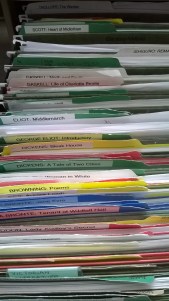
And it’s not as if I don’t have anything to show in other ways for my 20 year investment in Dalhousie. My academic research and publications certainly count as accomplishments, but when I am having a “save Tinkerbell moment” and need my belief restored, my surest remedy is a browse through the fat file folder I have of thank-you cards and messages from students. It’s enormously uplifting to know that the part I played in their lives mattered to them. Teachers at all levels can have this incalculably diffusive effect — I know my own life would be very different without the influence of my own teachers. I hope I told them how much difference they had made; I am certainly very grateful to the students who tell me, because knowing they cared helps me keep trying to bring my best self into the classroom every time. Even at a conservative estimate, twenty years’ worth is a lot of students: even if the majority move on and don’t remember my name, much less what we studied together, there are still plenty who carry something of me away with them — as I am cheeringly reminded every so often when one of them gets back in touch. “I saw someone reading Middlemarch in a restaurant awhile back and thought of how pleased you’d have been,” one former student recently emailed me, and I was pleased, not just that someone was reading Middlemarch (always a good thing!) but that she associated the book with me.

WP_20140827_005The other thing I have to show for my twenty years — something I benefit from every day I’m at work — is experience! It’s easy to forget, now, how new to all this I was in 1995-96. I was hired while still “ABD” (all but dissertation), and my hands-on teaching experience was limited to two of Cornell’s Freshman Writing Seminars (both capped — ah, luxury — at 17 students) and one stint as a TA (in a 19thC fiction class, too, because there were no first year writing classes big enough to use teaching assistants). The class on Browning’s “My Last Duchess” that I taught as part of my on-campus interview here was quite literally the first time I’d ever stood up in front of a room full of students (not to mention a back row of professors there to see how I did). So my first full-time term was really jumping into the deep end for me. I don’t recall any massive screw-ups beyond assigning way too much reading in my first section of Introduction to Literature and way too much writing in almost every class, because I had no idea how much time it would take to mark multiple papers for a class of 50 or 60. I had the time at first: I was keen to throw myself into a job I was excited about and knew I was lucky to have, and at first I had no children, either. But the hours and hours of marking … on top of having no files of teaching notes or materials to draw on, so absolutely every part of absolutely every class had to be prepared entirely from scratch. Good thing I was so young and energetic! (I was 28 when I came here, which means I was barely older than the first crop of graduate students I taught — in fact, now that I think back, I was actually younger than some of them.)
Now, on the other hand, I have a drawer full of notes, handouts, transparencies, and other materials, as well as acres of virtual storage devoted to more of the same. I don’t have everything covered, of course: every year I work in a new book or two somewhere, and I rarely use exactly the same notes or handouts twice. It is reassuring, though, to know that for a lot of texts I teach on a regular basis I have an archive to draw on for information and inspiration. I’m glad, too, that I haven’t recycled even the oldest paper materials, because I pull out treasures sometimes — such as, most recently, a cache of old student discussion questions for Villette including a set by Dorian Stuber, who was in one of the first Victorian novels classes I ever taught. Good questions about interesting books don’t go stale!

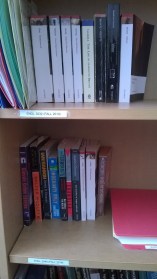
I also have found logistical systems that work well for me. I don’t think they are particularly original (when I mentioned them on Twitter, a number of people said they have similar strategies), but those of us who started teaching long before ProfHacker existed had to fumble our way into them. Since the second-most frequent comment on my student evaluations is “she’s really organized” (first is “she’s very enthusiastic”) I think they must be pretty good ones. One is very dull and basic: setting up spreadsheets to track all administrative aspects of every class, from attendance to essay submission to test scores. I don’t enjoy Excel, but  learning to use it reasonably well has shored up my record-keeping in important ways. A more fun thing I do to keep order is use color-coded folders for each course so that I can be sure I have the right ones when I’m gathering up my materials and heading out the door to teach. Red has become standard for detective fiction, and it’s usually green for 19th-century fiction, though this year I’m using some elegant William Morris folders (thanks, EB!). Other courses vary, but the key thing is that once I internalize a term’s colors I do a lot less scrambling at the last minute.

WP_20140827_004Another very simple thing I do is designate one shelf space for each course. Often coming back from class is a distracting time, with students tagging along for conferences or somewhere else to get to in a hurry, so I don’t have time to do fine sorting. Instead, I dump all the class material onto its shelf and organize it when I get my next chance — but in the meantime if I need to find a book or paper from it, my search is neatly delimited. Again, less scrambling! I have a pretty low tolerance for stress and confusion, so for me it’s well worth the little bit of forethought required. When I see offices with indistinguishable brown folders piled in heaps all over the place, I know that — while it must work for the office’s own occupant — I would be a nervous wreck by the end of a single day in there.
My only other crucial trick is using post-it notes — many hundreds of them, cumulatively — to mark important passages in the (yes, I admit it) very long books I teach so often. One of the treats of re-using a well-worn edition is taking advantage of the existing post-it notes, which often help me regain my footing in key interpretations and patterns as I go along; one of the treats of a brand-new copy (such as this year’s handsome Oxford World’s Classics Villette) is putting in a whole new set. (Yikes, how book-nerdy is that. But it is fun!) On Twitter, people mentioned colored pens, certain kinds of notebooks, and colored printer paper as other things that make their teaching days easier, more efficient, and also brighter. However much we use and now take for granted our electronic devices, there’s clearly still a special charm and a lot of use in old-fashioned school supplies.

So far I haven’t even mentioned the 20 years’ worth of increased knowledge I presumably have: when I consider how little I had read in 1995, and how much of that was not really very useful — well, I’m almost surprised they even let me teach! But they did, and here I still am. I’ve probably got another 20 years until I retire: just think how much more I will have read and learned and filed by then. I just have to keep my spirits up — so I don’t lose that third thing I’m often thanked for in my course evaluations: my sense of humor.

This Week: A Little Class Prep Goes a Long Way

EnglishBayIt’s always hard settling back into ongoing projects after a vacation, isn’t it? Although I’ve been back in my office regular hours every day this week, my progress on my writing has been halting, despite the haunting awareness that summer is ending soon and with it the luxury of relatively uninterrupted time to do it. I’m never altogether sorry about that: I’ve written here before about my tendency to fall into the summer doldrums, and though my two cheerful trips have mitigated the effects this year, I still find myself looking forward to the return of energy and sociability that comes with the start of term.

Since thinking about classes is in fact kind of cheering for me, then, and since I wasn’t being very productive in other ways, I’ve spent some useful hours in the last couple of days puttering away on some nice, concrete course-preparation tasks. I’m teaching just two classes in the fall, both ones I’ve taught before: Mystery & Detective Fiction (you’re probably tired of my reporting anything about this one, I’ve taught it so regularly in the past few years!) and 19th-Century Fiction from Dickens to Hardy (which I’ve also taught regularly but more intermittently). I’m not mixing up the mystery class this year except for taking off An Unsuitable Job for a Woman and adding back in a few more short stories, since in the last couple of rounds of teaching evaluations there was some muttering about the reading list being long and the pace being too fast. Unsuitable Job is one of my own personal favorites, but it doesn’t really represent any central issue or subgenre — I just enjoy teaching it — so if something had to go, it’s the one, not The Big Sleep or The Moonstone or The Hound of the Baskervilles. I guess Knots and Crosses could go, but it’s always very popular, while Unsuitable Job isn’t. But otherwise it will be business as usual. Still, the Blackboard site needs tidying up, dates and details need updating on the syllabus, and I’m tweaking a couple of policies about “bonus” points which in their previous generous form had the unintended consequence of bumping kind of a lot of people up into the A+ range for their final grades. Most of that is done now, though I need to give the syllabus one more careful look.

villette-charlotte-bronte-paperback-cover-artAs for 19th-Century Fiction, as usual I’ve changed up the reading list a bit (it’s so nice that there’s no oversight or interference to worry about with these decisions — it is entirely up to me which and how many books to assign). I’ve mixed and matched a pretty constant set of books in the past several incarnations of this course (you can see the chronicle of them here, if you’re curious) and though I’ve been happy with them, it felt like it was time to try some different ones, so this fall I’m starting with Villette and ending with The Odd Women, neither of which has ever been on my syllabus for this particular course before. In fact, I’ve never lectured on Villette, as I’ve only assigned it in seminars, and that not in well over a decade. Working up notes and materials for it, then, will be a big project for me in the next few weeks. I have taught The Odd Women much more often, but again usually in a seminar (“The Victorian Woman Question”). I do have some lecture notes for it from many years ago when I included it in a full-year class on Victorian literature. That was so long ago that the notes are hand-written! I expect I’ll do some things differently now. I gave the novel some fresh thought when I reread it recently with my book club; the general enthusiasm for it there makes me hope that my students will also enjoy it. I’ve put it last, slightly out of chronological order, so that for once we won’t be ending with Jude the Obscure (though we are still studying it). I’m not sure The Odd Women is much more cheering, really, but at least it has 100% fewer murder-suicides. For this course I needed to do the Blackboard site up from scratch; this is mostly done now, and I’ve made up study questions for the novels that didn’t yet have them and also pretty much completed the syllabus.

All of this is reassuringly finite and useful business to take care of. It all has to get done by the end of August anyway, so I’m not really stealing time away from other things, just redistributing it from writing to teaching for a while. I have set up a list of other class-related tasks, too, which is both calming (because it controls the potentially chaotic future) and practical (because now when I want to take a break from the more amorphous work of writing, I can choose something from the list to do rather than just feeling anxious).

Now that I’ve been overtly productive in these other ways for a while, I hope I’ll find that my mind and my mood are right to turn back with renewed focus to the two writing assignments I’ve given myself for these final weeks of summer. The first is to get as much as I can done on the next piece of my George Eliot book. Earlier this summer I worked hard on a more conceptual piece of it, a kind of draft introduction and sample. Now, having diligently reread Daniel Deronda with this in mind, I am working on an essay or chapter about women and marriage, particularly but not exclusively in Middlemarch and Daniel Deronda. Its current working title is “Smart Women, Foolish Choices” (which some of you may recognize as the title of a dreadful-looking self-help book). The second is a review-essay on Elena Ferrante for Open Letters, which I think will follow (more or less) the pattern of previous “peer review” features we’ve run, that is, a survey of critical reception organized to tell a story about that reception, or to interrogate it in interesting way. I’ve been reading as many reviews of Ferrante’s fiction as I can find, and I think they raise some pretty provocative questions about anger and women’s writing and ideas about “literary” fiction.

This Week in My Classes: Not with a bang but a whimper

Classes wrapped up for the term on Monday. Usually I feel deflated, if also a bit relieved, after my last class meetings. For all that the ongoing pressure to be ready and keep on top of everything can be wearing, the energy I get from actually being in the classroom more than makes up for it. Last term, 19th-C Fiction certainly had its challenges, and students were not as forthcoming in discussion as I would have liked, but overall I thought the course went well, and at least judging by their course evaluations, so did the students. But it was Mystery and Detective Fiction that felt like the most fun: it had great energy and a higher participation level than I have usually had in it, and I usually left the room feeling a dizzying blend of exhaustion and exhilaration. (I wonder if any of that was really due to how fiercely overheated our classroom was.) This term, however, the adrenaline buzz was rarely there after either class, and so now it feels more like stopping than concluding, if that makes sense — more like “we made it” than “we did it!”

This is not to say there wasn’t a lot of good, smart discussion in both classes, and in Intro especially there was a small core of students who seemed to be really present and engaged in all the ways I always hope for. But, as I’ve complained about before, attendance this term — in both classes — was erratic to poor, and in the 4th-year seminar, a context in which I’m used to the students really carrying the ball, it often felt like I was working awfully hard to coax any contributions out of them … which was especially odd because I know (from other classes and from one-on-one meetings) that you couldn’t wish for a nicer or brighter bunch of students. And in our seminar it’s not that they were (as far as I’m aware!) unhappy or bored or being sullenly uncooperative. They were just — on average — kind of quiet. In retrospect, I wonder if it would have helped to have assigned specific critical articles along with our primary readings. I don’t typically do this in undergraduate classes, because I’m usually assigning such a lot of reading to begin with (though for 4th-year seminars I always put a range of articles and books on reserve or on Blackboard) . In this case, though, the novels on their own were not that demanding, and I felt at times as if that had led the students to underestimate the critical work they could (should) be doing. When (if) I offer this particular seminar again, I may build that component in.

In contrast, I think that the next time I teach Intro I will dial back the amount of assigned reading and allow more time for in-class workshops, writing exercises, and group activities — more hands-on practice for everything from punctuation and citations to close reading. Last year I taught a full-year section, and for this half-year course I more or less just adapted the second term of last year’s syllabus. But even without the full week’s worth of classes we ended up losing to storm days, we were a bit rushed because I always forget how much time the logistics take up when you’re starting a course from scratch. Also, over a full year it’s possible to do more repetition and rehearsal of key concepts so that there’s more chance they will sink in, whereas with just one term I think different strategies may be called for. I don’t think we covered an unreasonable amount this term (and I think in many ways the variety keeps things interesting for us all); it’s more a question of shifting the emphasis a bit more next time from reading to writing.

We aren’t entirely done with this term’s classes, of course. I’ve received one set of final essays, which I’ve begun working my way through, and the other batch arrives Friday. Then the final exam for Intro is April 23: the one perk of having it so late in the exam period is that I’ll certainly have time to grade and return all the essays before then. After the exams are marked and final grades calculated and filed, it will be time for my favorite end-of-term activity: cleaning my office! And after that, it will be mental housekeeping time: sorting and setting priorities for summer research and writing projects.

This Week In My Classes: Endings and Beginnings

We aren’t quite done with classes here, at least not those of us on a MWF schedule – my last meetings are Monday. It’s hard to believe we are so close to finishing, though, mostly because today is the first day there’s any hint of spring at all, and usually I strongly associate the last couple of weeks of classes with the lifting of the winter gloom. Two big storms in the last 10 days certainly knocked out that possibility. But whatever the weather, the last few classes of the term do have their own seasonal rhythm: paper proposals sprout; new material gives way to review; editing worksheets and exam review handouts compete for their time in the sun.

editing-symbols-632x345

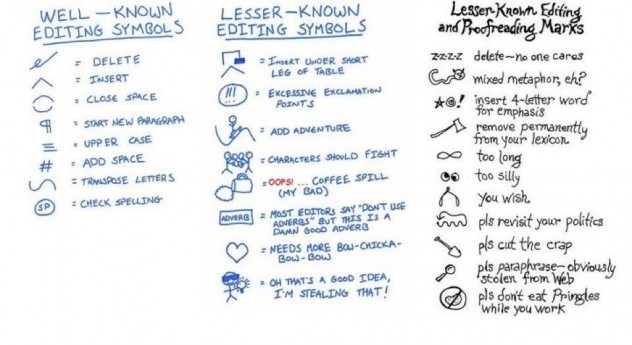
In Intro today it’s our second editing workshop: last time the students did a peer editing exercise, but I’ve opted for a self-editing exercise today in which they will go through their own papers and produce reverse outlines. It can be harder to look critically at your own work than at someone else’s, so I think it’s useful to have some concrete strategies for checking whether you have accomplished what you want and need to. They are writing on Carol Shields’s Unless but the topics they are choosing from are generated by lines in A Room of One’s Own — I wanted to highlight the idea (integral to both books, too) that writers are in conversation with each other and that we, in turn, enter into that conversation when we try to understand and interpret their works. My impression is that Room was (again) quite difficult for a lot of them to make sense of, so I’m glad for their sakes that I didn’t set this up as a straight comparative essay. That said, Unless poses its own challenges, not least because of its somewhat fragmented and episodic form. One good thing about assigning a book structured like that is that it’s harder to fall into plot summary: when you have to collect evidence and examples across a broad and scattered territory, I think you’re more aware of the details as adding up to something, rather than just moving along in linear fashion. We have one more session to come, for exam review and closing perorations, and then a couple of weeks until the final, so I’ll have plenty of time to comment on and return the essays. I think I may have been a bit cranky in my comments on the last set. That did have the beneficent side-effect of getting more people than usual in to see me. This is a not-unfamiliar phenomenon for me as a parent as well – say something temperately and you are likely to end up repeating it, but jump up and down about it and somehow it sticks. But even if yelling sometimes seems to work better, that doesn’t make it ideal!

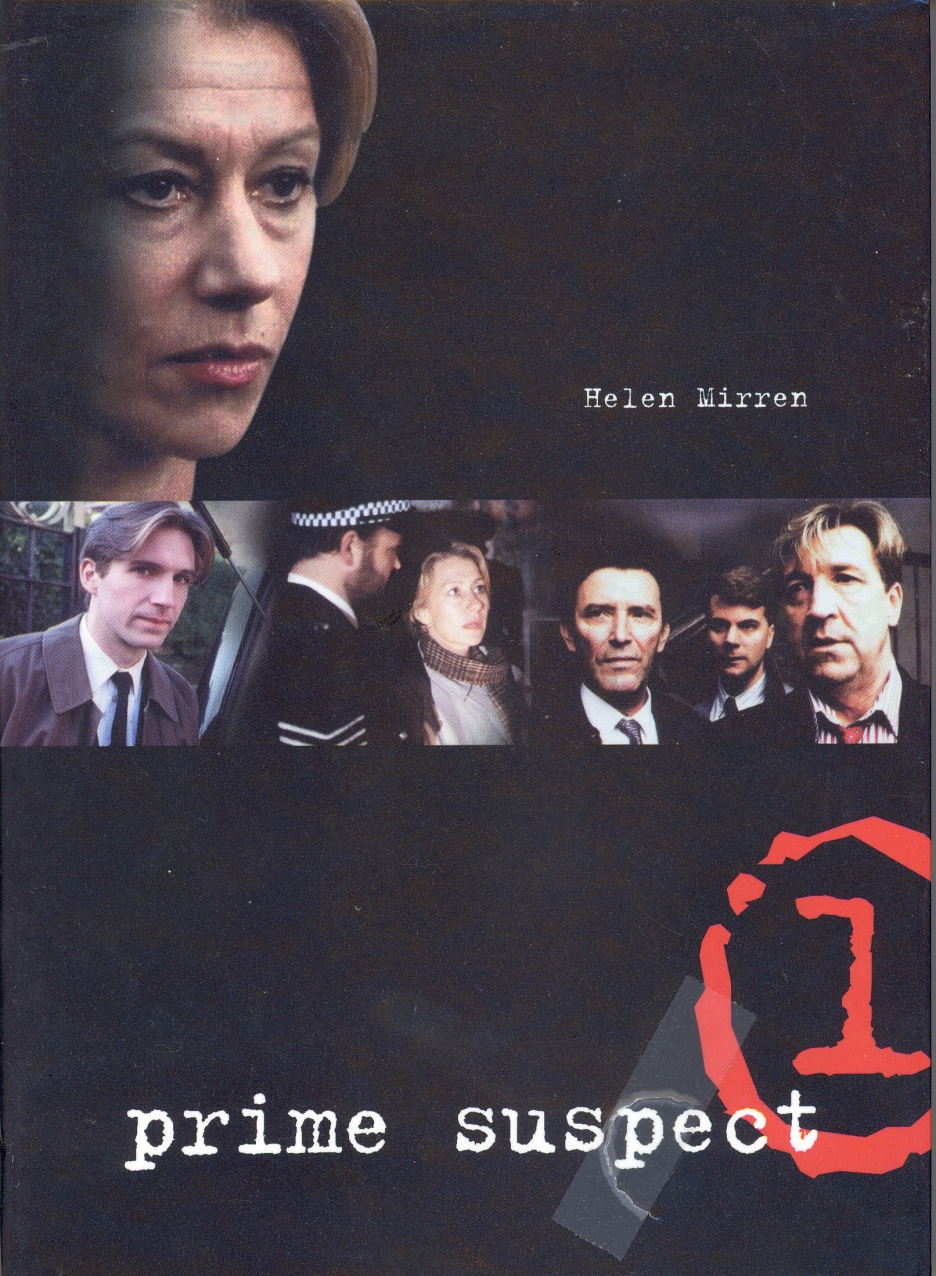
primesuspectIn Women & Detective Fiction, we’ve just wrapped up class discussions of Prime Suspect I. The series seems to have gone over unusually well this year: people who hardly talked at all up till now have been pitching in, and the overall energy has seemed good. We lost (another!) Wednesday to last week’s blizzard, so I’ve had to give up a planned final round-table to discuss people’s term paper projects: I usually make time for this in the schedule and when it has actually happened, it has always been very interesting and, I think, productive as a way to wrap up a seminar. But instead we’ll be having our last group presentation (on Prime Suspect) — which should also be a way to go out on a high note, given how creative and informative the presentations have all been this term. Though there is no requirement that the presentations incorporate a game (just that they include some form of class activity), I think every group has made one up! And that means there are usually prizes in the form of sugary treats.

This was also the week that book orders were due for the fall term! I always try to meet these deadlines — partly because I’m dutiful, partly because I know the bookstore sets them early so that they can work out their buy-back arrangements for students, and partly because I like to have this done and not have to worry about it any more. It’s possible to spend a really long time waffling over book choices but there really are no right answers, so sometimes just making the call and clicking ‘submit’ on the form is better than dithering any longer. I wasn’t waffling much over the next iteration of Mystery and Detective Fiction, which will be pretty much the same book list as this year. The only change I’m making is swapping out An Unsuitable Job for a Woman and putting back a short story anthology. That lets me ease up the pace intermittently, and it also simplifies the logistics of assigning the stories I always use (some Poe, some Sherlock Holmes, etc.).

I did run through a lot of variations on the book list for 19th-Century Fiction from Dickens to Hardy, though. I used to just pick five (or, once upon a time, six) ‘representative’ novels without much concern for an overarching theme. Lately, though, I’ve been experimenting with more deliberate groupings and liking it: last time I did this course, I chose all books dealing one way or another with troublesome or rule-breaking women (Bleak HouseCranfordThe Mill on the FlossLady Audley’s SecretTess). Then this fall in the Austen to Dickens course I did variations on the Bildungsroman (PersuasionWaverleyDavid Copperfield, Jane EyreNorth and South). For next fall I decided on the theme of vocation, or (as these are two persistent concepts of vocation in the 19thC novel) on love and work. I had three sure things (MiddlemarchGreat ExpectationsJude the Obscure) so my dithering was all about which other books to include. Most years I would fill the list in with something by Trollope, something by Gaskell, and/or an example of sensation fiction. This year I decided I’d like to include The Odd Women, which I’ve rarely assigned in lecture courses, and it occurred to me that though I usually keep the Brontës in the earlier course, Villette would be a really interesting contrast in its treatment of women and work and love and solitude … so I cut short the dithering and put it on the list. I’ve never lectured on it, and I haven’t even assigned it since maybe 1998, so that gives me something new to work on for the course, which is always a good thing.  I think the students will like it (and be surprised by it), and the more I think about it, the more provocative I think it will be in juxtaposition to our other readings. Also, much as I love Trollope, I don’t usually get much enthusiasm for him from students (Barchester Towers is boring?!), and I’m feeling a bit tired of sensation novels at the moment, so all in all, I feel good about this impulsive choice. And even if I didn’t, too late now! villette

Once again it’s just two courses for me in the fall. One’s big-ish (90) and one’s kind of medium-sized (40), and both are likely to be full, or very nearly so — but I plan the assignments carefully knowing I’ll be doing all the marking myself, and as both are classes I’m quite comfortable in I think it will be an energetic and not overwhelming term. But it’s still far off on the horizon: now that the books are ordered, I’ll be turning my attention back to the here and now, which means wrapping up this term and lining up my writing priorities for the summer. As always, the academic work cycle epitomizes Eliot’s wise remark that “every limit is a beginning as well as an ending.”

This Week In My Classes: Canons and Complications

unlessMy classes aren’t meeting at all today, thanks to the “weather bomb” we are currently enjoying. It is uncanny how many storms have come through on Wednesdays this winter! And it’s an unpleasant surprise to get a big one this late in the term. The bright side seems to be that it’s supposed to warm up significantly by the weekend, so we can hope that all this snow will just be a bad memory before too long.

What is it interrupting? Well, in Intro to Prose and Fiction we’ve moved on to Carol Shields’s Unless, a novel I appreciate more and more the more time I spend with it. It’s not an in-your-face kind of novel, but (appropriately, given its themes) its sharp edges can take you by surprise: a modest-seeming story about a woman writer rethinking her life and work because of a family crisis, it’s also a commentary on women’s writing and the literary canon, and on women writers and literary culture. Reta is seeking an explanation for her daughter Norah’s decision to drop out of ordinary life and sit speechless on the curb holding a sign that says only ‘GOODNESS.’ In a series of increasingly acerbic letters to intellectuals, writers, and critics (never actually sent) Reta connects Norah’s rejection of the world with the world’s indifference (or worse) to women. To the magazine that has run an advertisement for a series called “Great Minds of the Western Intellectual World,” for instance, Reta writes,

I have a nineteen-year old daughter who is going through a sort of soak of depression . . . which a friend of mine suspects is brought about by such offerings as your Great Minds of the WIW, not just your particular October ad, of course, but a long accumulation of shaded brown print and noble brows, reproduced year after year, all of it pressing down insidiously and expressing a callous lack of curiosity about great women’s minds, a complete unawareness, in fact. . . .

I realize I cannot influence your advertising policy. My only hope is that my daughter, her name is Norah, will not pick up a copy of this magazine, read this page, and understand, as I have for the first time, how casually and completely she is shut out of the universe. I have two other daughters too — Christine, Natalie — and I worry about them both. All the time.

To the author of an article on “The History of Dictionaries,” she observes “there is not a single woman mentioned in the whole body of your very long article (16 pages, double columns), not in any context, not once.” In wry anticipation of the VIDA counts (and their critics), she notes,

Bean counting is tiring, and tiresome, but your voice, Mr. Valkner, and your platform … carry great authority. You certainly understand that the women who fall even casually under your influence (mea culpa) are made to serve an apprenticeship in self-denigration.

 And later, addressing the author of a book review who calls women writers “the miniaturists of fiction,” she says,

It happens that I am the mother of a nineteen-year-old daughter who has been driven from the world by the suggestion that she is doomed to miniaturism. Her strategy  is self-sacrifice.

The letters punctuate the story of Reta’s reconsideration of her own writing: in particular, she is working on the sequel to her earlier work of light fiction, My Thyme is Up; in our class reading, we’ve just arrived at her conclusion that her new novel, “if it is to survive, must be redrafted,” so when we meet again on Friday I hope we’ll be able to have a good discussion about how and why Reta wants to write a different kind of book, with different kinds of options for her heroine, Alicia. Then next week we’ll consider her editor’s advice that she rework it to make it “one of those signal books of our time” — by making Alicia’s fiance, Roman, the central character:

‘I am talking about Roman being the moral centre of this book, and Alicia, for all her charms, is not capable of that role, surely you can see that. She writes fashion articles. She talks to her cat. She does yoga. She makes rice casseroles.’

‘It’s because she’s a woman.’

‘That’s not an issue at all. Surely you — ‘

‘But it is the issue.’

‘She is unable to make a claim to — She is undisciplined in her — She can’t focus the way Roman — She changes her mind about — She lacks — A reader, the serious reader that I have mind, would never accept her as the decisive fulcrum of a serious work of art that acts as a critique of our society while, at the same time, unrolling itself like a carpet of inevitability, narrativistically speaking.’

‘Because she’s a woman.’

‘Not at all, not at all.’

‘Because she’s a woman.’

Clipping these bits out on their own makes the novel sound more didactic than the experience of reading it actually is, partly because Shields plays around with the form of the novel, partly because the other anecdotes and memories Reta shares with us implicitly raise the questions these more pointed sections address explicitly, so that the book reads like an ongoing dialogue — internally, for Reta herself, and then with us — about what we look for in fiction, how we judge what we find, and how those questions are affected by gender. We’re reading it right after A Room of One’s Own, and many of the questions are the same: what (where) is the women’s literary tradition, what is the place or effect of anger in literature, how are our notions of literary greatness tied to ideas about scale? (Shields said “Jane Austen is important to me because she demonstrates how large narratives can occupy small spaces.”)

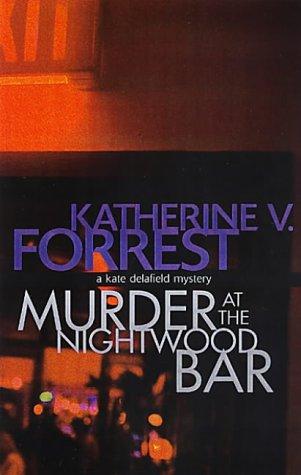
forrestIn Women & Detective Fiction, this week’s reading also raises questions about literary canons and standards, and how we decide what is worth reading and discussing, but in this case it does so more accidentally. I’m not someone who believes that we should assign only the books we believe to be The Greatest (even if we individually felt we could be confident about our standards). Universities are in the business of education, not adulation, and plenty of works that we might feel falter on some grounds are plenty interesting and significant (historically, theoretically, formally) on others. Courses vary in their purposes, too, and the best and most relevant conversations don’t always emerge from the most elegantly crafted narratives. Still, I do sometimes find my principles conflicting with my actual reading experience, and that’s how I’ve felt with Katherine V. Forrest’s Murder at the Nightwood Bar, which has been our class’s reading for the past week.

Murder at the Nightwood Bar is one in a series with inarguable significance (“First, first, first,” emphasizes Victoria Brownworth in her recent profile of Forrest), and it deals explicitly with questions of sexual identity and systemic discrimination both through its closeted detective (alienated, thus, both from her follow officers and from the lesbian community she engages with during the investigation) and through the crime itself. It sets up lots of good points of comparison with our other books, from the detective’s struggle over getting too personally involved with the case (or people involved in it) to the connections it makes between individual crimes and systemic injustices. As far as all that goes, I have no regrets about having added it to the syllabus this year. I just wish it were better written — yes, that awkward evaluative measure! Better at what, to what ends, as I’m always asking? In this case, I just mean “better at the words”: especially during the patient rereadings required for class prep, it has seemed stilted and inartistic, sometimes tediously so. I’ve felt no temptation to discuss anything that’s not literal about it: not its form or its style, not its voice, its attention to setting, none of those “literary” aspects. Mind you, it’s not the first of our readings to make that kind of reading seem beside the point: Agatha  Christie is also not particularly literary. But Christie’s prose has a clarity and economy that gives it its own (superficial?) elegance. That said, while Forrest may not be as good a stylist, her materials are more challenging — her agenda is more ambitious, and she gave us much more to talk about than Christie did, even though Christie is, of the two of them, the one who is obviously part of the ‘canon’ of detective fiction. Not every course can or should be a tour of “the best that has been thought and said” (as if we could be sure what those examples are — as Woolf says, “where books are concerned, it is notoriously difficult to fix labels of merit in such a way that they do not come off”). My goal is always to find the readings that are the best for my purposes, which in this case include considering a wide range of different examples of detective fiction by women as well as examples that are in fruitful conversation with each other when collected on the syllabus. My hope is that they will also reward close reading and rereading. At this point, then, I’m ambivalent about Murder at the Nightwood Bar, then, which certainly serves the first purpose but doesn’t quite fulfill my hopes for the second.

This Week In My Classes: Marching Along

February break is only a memory now: even this short distance into March, it feels as if we’re hurtling towards the end of term. I usually find this an invigorating time in my classes, as all the ‘getting to know you’ stuff is over, we’ve developed some routines and, ideally, some rapport in the classroom, and we’re far enough along in the material that usually students’ confidence for engagement is greater.

I’m not feeling quite this surge this term. One reason is that the attendance in my Introduction to Prose and Fiction section has not been … robust. I’m trying not to take it personally; it helps that I’m hearing plenty of anecdata suggesting that absenteeism is a conspicuous issue for my colleagues and maybe more broadly around campus these days (“I’m glad it’s not just me,” said yet another colleague as we chatted about this on the stairs on Friday). I have been speculating that a discussion-based class might seem particularly expendable to students because of the excessively results-oriented culture they are currently steeped in: if they aren’t intrinsically drawn to the material (which is likely, in a course often taken to fulfill a requirement) and the results of attending (or not) aren’t overtly quantifiable, other things might well take priority. Naturally, I think that’s a shame: one day they may look back and realize that they missed a fairly rare (and potentially transformative) opportunity to get involved in a conversation with at least one person guaranteed to be “listening very intently to everything” they say. But who knows: maybe I (inevitably, egotistically) overestimate the value of spending that time in the room with me following my lesson plan! I have tried hard in recent years to make quite explicit the ways I see our classroom work feeding into the assignments on which they will be evaluated (and the skills and objectives both of these aspects of the course serve). But if they don’t see the pay-off  (or they aren’t even present to hear the peroration) and don’t care about the discussion for its own sake, there’s not much more I can do. Once again the gym analogy seems apt.

road

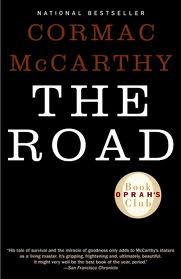
For those Intro students who are coming to class, we’re working our way through The Road. I put a lot of work in preparing materials when I taught it for the first time last winter, so it’s nice to have a file of ideas and notes and handouts to draw on this time around, and to feel more certain what are useful lines of inquiry. For tomorrow’s class, where we’ll be focusing on McCarthy’s style, one of the most useful resources I have is my own blog post from last year, in which I asked (not disingenuously) whether McCarthy is a terrible writer – working through the post and then keeping up with the discussion that ensued was very stimulating, and as I’ve been rereading the book this year I’ve kept trying to figure out if there’s any way to answer the question more confidently than I could then. I’m still not sure, but I will say that on this rereading I’m taking what I can only describe as a tactile pleasure in his writing: I pause to read individual words or phrases out loud and enjoy their crunkly feeling, their resistance to easy reading — “rachitic,” “gryke,” “kerfs,” “claggy” — or, more rarely, their rhythmic poetry: “Borrowed time and borrowed world and borrowed eyes with which to sorrow it.” I also found, a bit to my surprise, that having spent more time intellectualizing the novel has not distanced me from it: rereading the final section this afternoon I found myself weeping uncontrollably. As I remarked on Twitter, I realize that crying over the book does nothing to settle the question of whether McCarthy’s a “good” writer. I wonder what value, if any, does attach to this kind of visceral response. There’s a way in which being moved to tears by a book is inarguable proof of at least something — but is it something about the reader or something about the book? It’s about the connection between reader and book, I suppose, that mysterious alchemical combination by which language becomes meaning and feeling of a particular, and sometimes particularly personal, kind. I value that kind of emotional connection: surely you would hardly choose to specialize in Victorian literature if you didn’t! But at least when I’m wearing my ‘professor’ hat I try to retain some skepticism about it too. Just because you can make me cry doesn’t make you right!

In my Women and Detective Fiction seminar, I’ve also been fretting a bit, not so much about attendance (though this group has not been as reliably present as I am used to in upper-level seminars) as about participation. Last week’s classes were pretty sluggish. But yesterday there was an up-tick in energy, so for now I have deferred my cunning plan to use some of the strategies I’m more accustomed to deploying in lower level classes: “think-pair-share” exercises, break-out groups, and so on. We are currently reading Sue Grafton’s ‘A’ is for Alibi: I had the sense on Friday that they mostly hadn’t even tried to do more than just read it, and I wonder if at first they were lulled into passivity by the fast-paced prose and suspenseful plot and forget to apply the critical frameworks we’ve been developing. By tomorrow we’ll have read to the end, so I expect we’ll talk a lot about [spoiler alert!] what it means that Kinsey turns out to have been sleeping with not just a suspect but one of the murderers: the novel raises all kinds of interesting questions about the temptations and risks of submission and the ways sexual desire can undermine a principled commitment to independence. The novel focuses especially on sexual politics as played out in marriage, but Kinsey’s role as a detective also prompts us to consider how these “private” issues intersect with wider questions of justice and accountability. I haven’t taught Grafton in a while and I’ve appreciated getting reacquainted with her tongue-in-cheek approach to the genre. I kept up with the series for a long time, but my interest in it has flagged over the years, partly because the humor that keeps this first one so fresh gives way to a much more sententious style. I should probably hunt up the latest ones just to see where things have gone. We start Indemnity Only next week and at this point I’m one Sara Paretsky behind as well.

This Week in My Classes: Great Fiction

broadview short fiction

That’s the long and the short of it! Or, I should say, between my two classes we’re reading both long and short examples of it. What a treat.

Last week the university closed (because BLIZZARD!) just before my Introduction to Prose and Fiction class was supposed to meet to talk about Kate Chopin’s “The Story of an Hour.” I ended up compressing some brief mention of it into our next session, which was officially on Poe’s “The Black Cat.” Though these are great stories, the main purpose of those lessons was setting out some key vocabulary for analyzing short fiction (again with the critical tool-kits!), from basic stuff like “exposition” and “characterization” and “setting” to different varieties of narrators to the ever-vexing notion of “theme.” Now that these terms have been introduced, we can review them as necessary while actually using them to talk about our readings, which for another few classes will be more short stories.

I consider short stories very hard work: as I often remark to my students, their length (or rather, their brevity) is misleading! The nice thing about Victorian triple-deckers is that if you don’t get the significance of a detail the first time you see it, it will almost certainly recur another 47 more times until you do get it.  I usually finish a short story feeling as if I have walked off a narrative cliff where I expected there to be much more solid ground: where are the other 790 pages? So I have to go back and work through it again, and again, and again (and usually, again and again!) until I think I know what has just happened. I really enjoy the process, and yet it does not come naturally to me as a reader, which is probably why I almost never choose short story collections for my own leisure reading. The stories we’re doing are so splendid, though, that they make me think I should reconsider. Today, for instance, we discussed Joyce’s “Araby”: everything about it is just so satisfying. I thought the class discussion was very good, too, with lots of participation and what seemed like genuine engagement. Friday’s assignment is Katherine Mansfield’s “The Garden Party,” which is not as economically beautiful but is still dense with interesting things. And then next week it’s Alice Munro’s “Friend of My Youth” and Jhumpa Lahiri’s “Interpreter of Maladies.” And then (thankfully, given what a tough wintry time we’ve been having) we get a scheduled day off, because MUNRO DAY.

One thing I did in today’s class that I have done only rarely before is a bit of “cold calling” on students. I have been pleased with the level of participation so far in this class, but it has also become very clear that there are five or six students who will readily carry it if I let them, and I decided that I wanted to break that pattern up before it sets. I tried to be unthreatening and non-confrontational about it, but I think I made the point in practice that I also make in my syllabus, which is that literary criticism is something you learn by doing, and what we do as critics is try out our readings on other attentive readers. Everyone I called on was able to contribute something, so I think I’ll keep this up! It took a mental push for me to do it, but it felt just fine once I got started.

In Women and Detective Fiction, we’ve moved on from short fiction to our first long — and great — reading, Gaudy Night. I’ve said plenty here about this novel before, and so far I don’t have anything to add. (That post and the ensuing discussion, by the way, stand out for me as one of my favorite and also one of my most valuable blogging experiences.) I can’t really tell yet how this group of students is responding to the novel, as we only just got going on it. As usual, there were signs of some unease over the class issues, but I thought there was a bit less resistance to Harriet’s judgmental habits than on other occasions, and at least one student took her side against Mrs. Bendick — or, rather, agreed that Mrs. Bendick’s farm career was a waste of her very different education. For me it’s quite interesting reading Sayers right after Christie and Nancy Drew, neither of which really offers much of literary or thematic substance…or character development, for that matter. Plenty of interesting things arise from reading the other two, but Sayers is just so much more interesting. Assuming I teach this seminar again in the future (yes, I’m reconsidering book lists again already!) I may rethink my choices. At a minimum, I think I should do a full-length Christie novel rather than short stories. The problem is that I really don’t want to read all the Miss Marple novels in order to pick which one. Would anyone like to suggest a couple of options that highlight women’s roles in some way (besides Miss Marple herself as a woman detective)?