 I’m not sure when I last read George Eliot’s first published fiction, Scenes of Clerical Life. It might have been as much as 15 or 20 years ago that I read any of the stories right through, though I have certainly dipped into “Amos Barton” once or twice when thinking or writing about her realism and her intrusive narrator. I picked the book off my shelf again this week because I have been thinking (and will be writing) about scenes of visiting in Eliot’s novels. So many of her climactic moments are set up that way, with a sympathetic visitor bringing comfort or guidance to someone in crisis: Dinah visiting Hetty in prison in Adam Bede, for instance; Lucy visiting Maggie near the end of The Mill on the Floss; perhaps most notably, Dorothea visiting Rosamond in Chapter 81 of Middlemarch. The key thing, of course, is that these are human, rather than divine, “visitations” and thus neatly encapsulate her ongoing translation of religious beliefs into secular practices. As I was collecting examples, I had a vague memory of Edgar Tryan visiting Janet in “Janet’s Repentance,” so I thought I’d go back to the story and see what it adds to the pattern I’m exploring.
“Janet’s Repentance” is interesting for lots of reasons, including its grim account of Janet’s abusive marriage, which has driven her, in her misery and shame, to drink:
‘I’ll teach you to keep me waiting in the dark, you pale, staring fool!’ he said, advancing with his slow, drunken step. ‘What, you’ve been drinking again, have you? I’ll beat you into your senses.’
He laid his hand with a firm grip on her shoulder, turned, her round, and pushed her slowly before him along the passage and through the dining-room door, which stood open on their left hand.
There was a portrait of Janet’s mother, a grey-haired, dark-eyed old woman, in a neatly fluted cap, hanging over the mantelpiece. Surely the aged eyes take on a look of anguish as they see Janet — not trembling, no! it would be better if she trembled — standing stupidly unmoved in her great beauty while the heavy arm is lifted to strike her. The blow falls — another — and another. Surely the mother hears that cry — ‘O Robert! pity! pity!’
“Do you wonder,” asks our narrator, as the sordid tale unfolds, “how it was that things had come to this pass — what offence Janet had committed in the early years of marriage to rouse the brutal hatred of this man? . . . But do not believe,” she goes on,
that it was anything either present or wanting in poor Janet that formed the motive of her husband’s cruelty. Cruelty, like every other vice, requires no motive outside itself — it only requires opportunity. . . . And an unloving, tyrannous, brutal man needs no motive to prompt his cruelty; he needs only the perpetual presence of a woman he can call his own.
“A woman he can call his own”: that remark is strongly reminiscent of Frances Power Cobbe’s powerful 1878 essay “Wife-Torture in England,” in which Cobbe emphasizes the corrupting effect of presumed “ownership”:
The general depreciation of women as a sex is bad enough, but in the matter we are considering [spousal abuse], the special depreciation of wives is more directly responsible for the outrages they endure. The notion that a man’s wife is his PROPERTY, in the sense in which a horse is his property . . . is the fatal root of incalculable evil and misery. Every brutal-minded man, and many a man who in other relations of his life is not brutal, entertains more or less vaguely the notion that his wife is his thing, and is ready to ask with indignation (as we read again and again in the police reports), of any one who interferes with his treatment of her, “May I not do what I will with my own?”
(If you’re interested in reading more on this aspect of Victorian marriage and its treatment in Victorian fiction — try Lisa Surridge’s Bleak Houses and Kate Lawson’s The Marked Body, both of which discuss “Janet’s Repentance.”)
 It’s also interesting how recognizable George Eliot is here. Many of the things she does better (or at least more fully, or with greater finesse) in her later novels are here already, such as the patient unfolding of social context — the “thick description” within which her plots acquire so much more meaning than their simple actions might indicate — and the pulsation between individual moments and philosophical ideas, facilitated by the narrator’s commentary on the action. Just as, despite her protective camouflage, Eliot’s friends “IRL” knew her when they read her earliest fiction, any readers of The Mill on the Floss know they are in familiar company when they see this anticipation of the famous “men of maxims” passage:
Yet surely, surely the only true knowledge of our fellow-man is that which enables us to feel with him – which gives us a fine ear for the heart-pulses that are beating under the mere clothes of circumstance and opinion. Our subtlest analysis of schools and sects must miss the essential truth, unless it be lit up by the love that sees in all forms of human thought and work, the life and death struggles of separate human beings.
And Janet’s appeal to Mr. Tryan — “It is very difficult to know what to do: what ought I to do?” — is one that has echoes across Eliot’s oeuvre, including in a passage in Middlemarch that is central to my thinking about the broader question of religion in Eliot’s fiction: “Help me, pray,” says an overwrought Dorothea to Dr. Lydgate; “Tell me what I can do.”
The big difference, though, is that in Middlemarch the appeal may have the same impulse as a prayer (“an impulse which if she had been alone would have turned into a prayer”) but it is directed at a doctor, and it’s not even really his medical advice she wants but something more fundamentally human, some guidance about how to be in the circumstances. The transformation from sacred to secular is even more distinct in the climactic encounter between Dorothea and Rosamond much later in the novel. But in “Janet’s Repentance” not only is Janet asking a clergyman (and an Evangelical one, at that) for help, but his advice is religious advice — and it is not undercut, or translated into humanistic terms, by the narrator. David Lodge notes in his introduction to my Penguin edition that “Janet’s Repentance” is “a completely non-ironical account of a conversion from sinfulness to righteousness through the selfless endeavours of an Evangelical clergyman.” He goes on to suggest that Eliot’s “religion of Humanity” is just below the surface, but it’s certainly not visible the way it is in her later works. It’s true that Tryan’s kindly fellowship is essential to his success as a religious ambassador: “Blessed influence of one true loving human soul on another!” says the narrator. But it’s trust in God that Tryan recommends, and that brings Janet peace.
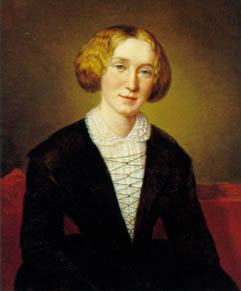 The ending of the story is a bit of a disappointment: like Anne Brontë’s Helen Huntingdon, Janet feels obliged to stand by her man as he pays the final price for his cruel and self-destructive behavior. I think that in both cases this affirmation of ‘proper’ wifely devotion is important to direct our attention to the sins of the husbands. Brontë has a more political point to make, though, about the structural as well as ideological failures of marriage, while Eliot’s story focuses us more on the internal moral life and on the redemptive value of compassion and faith. Janet also does not get the hard-earned Happily Ever After that Helen enjoys, at least, not in this life: as Lodge points out, Eliot “even compromised with her belief in immortality to the extent of allowing her hero and heroine a ‘sacred kiss of promise’ at the end.” Disappointing, as I said, and surprising, from an author who wrote so stringently about the immorality of acting on the basis of future expectations rather than immediate consequences:
The notion that duty looks stern, but all the while has her hand full of sugar-plums, with which she will reward us by and by, is the favourite cant of optimists, who try to make out that this tangled wilderness of life has a plan as easy to trace as that of a Dutch garden; but it really undermines all true moral development by perpetually substituting something extrinsic as a motive to action, instead of the immediate impulse of love or justice, which alone makes an action truly moral.
Was she catering to her as-yet unconverted audience, do you suppose, in setting Janet up as a memorial to “one whose heart beat with true compassion, and whose lips were moved by fervent faith”? Or practicing what she herself preached by inhabiting, as fully as possible, a point of view different from her own?
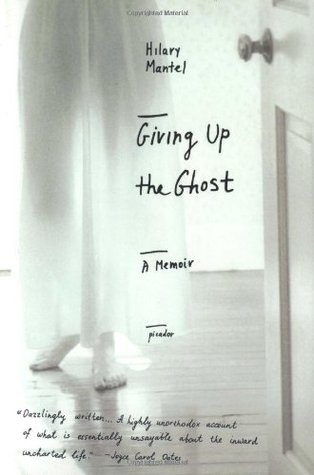
 Clearly Mantel did not consider Giving Up the Ghost the place to talk about her books — at least, not directly. Perhaps the most revealing thing she says about being a writer is a passing remark about Jane Eyre: “I remember the first time I read Jane Eyre: probably every woman writer does, because you recognize, when you have hardly begun it, that you are reading a story about yourself.” But again, she just moves on, so it’s not just her books she’s not talking about, it’s her whole experience of being a writer, a woman writer, a person writing, a person thinking about books, which — though we know they are integral to her life — seem oddly peripheral in her life story.








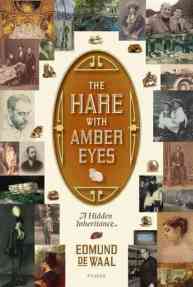
 But the story he’s telling is a story of objects, and for all that we feel the impropriety of caring about the recovery of 264 tiny carvings when “65,459 Austrian Jews had been killed,” de Waal also emphasizes, across the book as a whole, that things routinely outlive their owners, are passed along, given away, inherited. Objects do last; art could perhaps be defined as objects that are meant to last. Every object that endures has a story longer than the story of any individual owners. That doesn’t make objects more important than people, but it creates an interesting counterpoint of caring, and raises many thought-provoking questions about how we understand what matters. It’s not as simple, de Waal’s book asserts, as choosing life over art, people over things — or, it seems simple until you try to explain why. The destruction of the beautiful desk, for instance, seems so gratuitous, until we recognize that the heave over the handrail is not really about gilt or marquetry but about power and anger and hatred: in its own way, that act is as disrespectful of life, of humanity, as any of the physical cruelties the Ephrussi family suffers — or it is, at any rate, part of the same spectrum of horror. To refuse to mourn that loss is to capitulate, at least a little, to the logic of the looters, who see around them only expensive “stuff” to which the watching family has no right. But the Nazis do value the art they loot, in a way: this chilling episode is followed by a very different, methodical pillaging that benefited museums all over the Reich. What they don’t care about is the kind of story de Waal is telling, the intertwining of objects and people. Or maybe they understand it only too well and know that by breaking up collections they are furthering their work of erasing identities, like the official stamps (“‘Israel’ for the men, ‘Sara’ for the women”) that finally make de Waal cry.
 “For no good reason” — and then, a bit later, still marveling at the lavishness of decoration, he wonders, “What was Ignace trying to do? Smother his critics?” It’s too much for de Waal, this cold marble opulence: he finds it unpleasantly slippery, with “nothing to grip onto.” This kind of display seems decadent, overwrought, excessive. What is the use of such splendour, in a family home? Or anywhere? Should the splendor of the Palais impress us, make us envious, or spur us to revolutionary zeal? Can we be both repelled (“I run my hands along the walls,” de Waal says, “and they feel slightly clammy”) and delighted — because this kind of wealth has prompted, supported, or preserved so much beauty for the rest of us? I was reminded, as I puzzled over this, of Trollope’s The Warden:

 I didn’t love Jo Walton’s


 Novel Readings