
“Also,” said Felix, “it’s on a universal theme.” What he had in mind was vengeance – that was certainly universal. He hoped she wouldn’t ask him about the theme: vengeance was so negative, was what she’d say. A bad example. Especially bad, considering the captive audience.
Hag-Seed is one of a series of novels commissioned for the Hogarth Shakespeare project, which is just the kind of hybrid literary-commercial venture that usually puts me off — and which, in its Austen incarnation, I have recently sworn off altogether. Too often, the intent is too clearly to cash in, or the results are too clearly inferior to the inspiration, and I am left wishing authors would just write their own d–n books. (I realize, of course, that many classics are themselves, in one way or another, indebted to or homages to other texts. But who says irritability has to be entirely consistent?)
I was fretful, therefore, when my book club settled on Hag-Seed for our next read. As my experience with Atwood’s fiction has also been mixed over the years, I would at least have been happier if we’d chosen Anne Tyler’s Vinegar Girl: one of Tyler’s main virtues is that she is dependable! But one of the reasons to belong to a book club is so that I read some things I wouldn’t necessarily pick for myself, so I dutifully ordered Hag-Seed, read it … and (surprise!) thoroughly enjoyed it.
Why does Hag-Seed succeed (for me, at least) where so many other derivative novels have failed? I think it’s because throughout, it communicates Atwood’s own gleeful enjoyment of the undertaking. I don’t think Hag-Seed is particularly profound, and it has little (though not none) of the poetry that decorates the original (what grace and beauty there is in the novel often comes by way of lines from The Tempest itself). But — at least for someone with only a passing acquaintance with Shakespeare’s play — Hag-Seed is a clever, as well as entertaining, recreation of The Tempest on Atood’s own chosen terms.
Hag-Seed particularly embraces the “play within a play” conceit of The Tempest, in which Prospero contrives and manipulates events for his own gratification. Atwood’s protagonist, Felix Phillips, is ousted from his position as Director of the Makeshiweg Festival just before he launches a spectacular new production of The Tempest. He had thrown himself into it to distract himself from his heartbreak over the death of his baby daughter Miranda:
What he couldn’t have in life he might still catch sight of through his art: just a glimpse, from the corner of his eye.
He would create a fit setting for this reborn Miranda he was willing into being. He would outdo himself as an actor-director. He would push every envelope, he would twist reality until it twangled. There was a feverish desperation in those long-ago efforts of his, but didn’t the best art have desperation at its core? Wasn’t it always a challenge to Death? A defiant middle finger on the edge of the abyss?
But the treachery of a colleague who then usurps his place ruins Felix’s plans and forces him into exile, where he broods for years over his lost daughter, his lost position, and his dreams of revenge. When he takes on a job promoting literacy in a local prison by producing Shakespeare plays, he unexpectedly discovers the perfect plan.
There’s lots of fun in the development of Felix’s elaborate plot, which both mimics and incorporates the multiple interconnected plots of The Tempest. Though Hag-Seed is ultimately more satirical than earnest, there’s also a more serious strand, woven through the novel’s comedy, about the role of literary programming in prisons, something Atwood addresses in her acknowledgments as well as through the actors’ discussions of real and metaphorical prisons in the play they are putting on. (I found the classroom sessions on The Tempest fascinating, even though — or maybe because — they were wholly unlike the kinds of classroom discussions I am used to.) Though Felix’s quest for vengeance is as absurd as it is diverting, his mourning for his own lost Miranda (whose spirit haunts him) is often very touching; it adds a human dimension to him that balances the novel’s arch tone.
Of course, I have to wonder if not knowing the ‘primary source’ is what freed me up to appreciate Hag-Seed. If The Tempest were dear to my heart the way Jane Eyre and Daniel Deronda are, would I have gone along less cheerfully? There’s a playful quality to Atwood’s interaction with The Tempest throughout that makes me think I would still have liked it: she’s not overriding it or imposing herself on it, or (worst of all) condescending to it or correcting it, but rather (like her actors) immersing herself in it and making it her own. Still, I’d be interested to hear from people who approach the novel from a more informed position.


 I enjoyed Lillian a lot. I particularly appreciated the pleasure she takes in words, which is both appropriate to her vocation and part of what she stands for in the face of a world that she thinks is giving up its commitment to civility and to cleverness in favor of appealing — like the insidious Oreo commercial — to our subconscious desires, rather than our reason and our imagination. She misses the clever “verbosity” she and her friends treasured in her youth. During her New Year’s Eve walk, she finds herself trying to walk to the beat of a rap song she heard from a car window as she set out and reflects that “this is where playful language is cherished now”:
 Rooney’s author’s note explains that Lillian is based on Margaret Fishback, a copywriter and poet whose verses stand in for Lillian’s in the novel. I don’t know how closely Lillian’s character (as opposed to her life) is meant to resemble Fishback’s, but Rooney has given us a woman who is frank and tough enough that the novel is never twee or sentimental. It’s also very evocative of New York, a city where I too have always preferred to walk, so as not to miss anything. When I was a student at Cornell, I used to go there regularly, and I always loved the feeling of freedom it gave me, as if anything is possible on its hectic streets. Lillian Boxfish Takes a Walk doesn’t indulge this visitor’s fantasy — Lillian’s New York is gritty as well as iconic — but I ended the novel feeling renewed enthusiasm for going back and talking another walk around Manhattan myself.
 You’d think from my recent blog posts that I wasn’t doing anything but teaching these days! That’s not quite true, but like a lot of people I know, I’m finding myself too distracted to get a lot of “quality” reading done in my leisure time – what ability I have to concentrate hard I’m expending on work, and on books I am reading for off-blog reviews that have deadlines. The rest of the time my reading alternates between anxiety-inducing news stories and pleasantly diverting romance novels.
 I have some completed reviews that should see the light of day in the near future. One of those is my TLS review of Danielle Dutton’s Margaret the First (which I loved); another is my Quill & Quire review of Jean McNeil’s The Dhow House (which is strange and uncomfortable and gripping); and the last is my review of Yasmine El Rashidi’s Chronicle of a Last Summer, which I wrote last summer and is expected to show up, at long last, in The Kenyon Review Online in early March. Though there are some down sides to all this reviewing, one definite up side is that it has made me a bit more sure-footed as a critic, including with books that are not obvious “fits.” I can’t really say if I am developing my critical voice or style: I’m not deliberately trying to do anything other than what I’ve always done here and at OLM, which is find the best way to express whatever I think about the book. I don’t focus on answering “should I buy this book or not?” — because that’s the kind of review I find the least interesting to read — but instead I try to figure out what kind of book it is and what’s the most interesting conversation for me to have with it or about it. Academics (myself included) often hesitate to get into conversations outside their official area of expertise: this is an anxiety I have largely overcome when it comes to fiction, partly because blogging loosened me up so much as a reader and a writer, and partly because the more I teach, the more I’m aware that my expertise is as a reader — it’s my skill and experience at reading, as much as or more than my body of scholarly knowledge, that equips me to do this kind of criticism.
 As for my romance reading, I’ve been rereading some favorites, just for the good cheer (Georgette Heyer’s Devil’s Cub, for instance, and Tessa Dare’s Any Duchess Will Do), but I’ve also read a scattering of new ones. I have all of Courtney Milan’s Brothers Sinister novels but hadn’t gotten to
  I read Eloisa James’s Seven Minutes in Heaven and thought it was fine — as I mentioned on Twitter, I especially appreciated the heroine’s competence, which is a quality not often portrayed as attractive, and I enjoyed following the character through to their HEA. I also read Fool for Love, which I chose somewhat at random from the ebooks the library had available: I liked the set up but was a bit let down by the conclusion, for reasons I won’t give in case they are spoilers! I have yet to really fall in love with one of James’s novels. They seem very competent and usually keep me interested to the end, but they don’t make me laugh the way Loretta Chase’s do, and I don’t find them as entertaining as Tessa Dare’s (which seem more sprightly, somehow) or as touching as my favorite among Mary Balogh’s. Maybe I haven’t found the right one for me (not all of Dare’s work well for me either, after all).
 We’ve started our discussions of Elizabeth Gaskell’s Cranford in 19th-Century Fiction, and like last week’s reading, it has special resonance in these turbulent times, but not because it is a call to action: more because it provides a refuge. This is not to say that it’s “escapist” in the pejorative way that term is often applied, or that it is all (metaphorically) rainbows and lollipops. Actually, rereading the first few chapters I’ve been particularly struck this time by how melancholy they are, despite the wonderful touches of comedy. There are so many deaths — not nearly as many as in Valdez Is Coming, of course, but whereas in that novel most deaths leave little emotional mark, each of the losses in Cranford is deeply felt. There’s little drama (well, Captain Brown’s is pretty startling) but much tenderness. I love the delicacy with which we are brought to understand the depths of Miss Matty’s grief after Mr. Holbrook dies:
 Although it is often difficult to concentrate on reading fiction right now, amidst the clamor of current events, it is also the case that current events have their usual uncanny way of making some of the novels I’m reading seem more important than ever.
 The other novel I’ve been working on for class is Valdez Is Coming. It is a pretty different reading experience in almost every way, but it too turns on questions about what’s right and what’s fair, and about when and where to draw the line in the face of an injustice. “Why do you bother?” Valdez is asked about his quest to get restitution for a widow whose fate nobody else cares about because she’s Apache and her dead husband (though shot by Valdez himself) was the victim of their unrepentant racism. “If I tell you what I think,” he replies, “it doesn’t sound right. It’s something I know.” By that time we know too why standing up to the men who mocked him, shot at him, then crucified him when he asked for justice is something he has to do. It’s about not letting them win, yes, but that outcome matters because of who they are, and who he is — and, if we’re on his side, who we want to be, and how we want the world to be. “You get one time, mister, to prove who you are” he tells his antagonist during their final showdown. Valdez (true to his genre) proves who he is through action, including a lot of violence. (I wouldn’t like this novel as much as I do if this violence were treated differently — simply as action, for instance, or drama — but Leonard imbues it with
  The past couple of weeks have felt pretty hectic to me, mostly because any time you teach a new course, or just new material, you have to build up all its materials from scratch. This term it’s Pulp Fiction that needs, well, everything! Not only do I not have any lecture notes to draw on for most of the readings (but boy, am I looking forward to our weeks on The Maltese Falcon, which I
  In 19th-Century Fiction we are nearly through Bleak House. They seem to be hanging in there! In this class too I have felt myself falling into too much lecturing, but I have been consciously working on balancing that out with some much more open-ended sessions. I feel as if lecturing in a more orderly way can be an important part of our work on a novel as long and complex as Bleak House, where a risk for newcomers to the novel is getting overwhelmed by minutiae: I try in my lecture segments to give them big grids or maps on which they can later place specific characters or incidents as they arise, or rise to prominence. I also try to plant interpretive seeds in the form of questions to be followed up on as they read further. That way, when we do approach topics through discussion, they will already have been thinking about some of them on their own — which usually seems to work!

 I don’t mean to sound unduly negative about it. I did think it was a good novel; I was just hoping, even expecting, that it would be better than good. Probably it’s another case of my expectations being raised unreasonably by the generally effusive reception it got, or maybe I just read it too soon after



 ll of these activities and interests infused my listening life. I didn’t have any sense of disdain for whatever the top 100 might be; I just didn’t pay that music much attention. I knew and liked some older stuff: when Simon & Garfunkel did their reunion tour in 1983, for instance, I lined up overnight with a friend to get floor tickets, and enjoyed their B.C. Place concert from our spot maybe 3 yards back from the stage. I got to be good friends with Veda Hille (now
  But there really isn’t a list of 10 albums that for me made up a distinct soundtrack of those years, at least not one that really speaks to who I was. Instead, there are particular songs or albums that now have astonishing power to summon up different periods of my life. It’s remarkable how music can do that, isn’t it? A song comes on and suddenly there you are immersed in a whole set of feelings, as if you are being dunked into a vat of memory. These are often not songs that are personal favorites – what matters is that for some reason they became part of a moment in time for me. I was in the grocery store yesterday, for example, and Billy Joel’s “I’m Moving Out” came over their annoyingly loud sound system — and I was instantly back in the New Kent Hotel in London, where my sister and I stayed at both ends of our 6-month tour of Europe in 1986. (I just looked it up, and what do you know:
  Sarah McLachlans’s “
 Although I listen to music almost all the time now, there’s little that has the same emotional power over me: I have to go deeper into my past to get the same effect. I wonder if it’s just that the more immediate events and their associations haven’t yet distilled into part of my history. There is certainly some music that is fundamental to my life — that I have loved for so long, that has given me so much pleasure, that when I hear it it restores me to myself. At the top of that list would be Joan Sutherland’s 1962 recording of La Traviata: my parents gave me the highlights LP as a birthday gift in 1972 and I cherished it even before I had the honor of getting Sutherland’s autograph on the cover years later. (Richard Bonynge’s autograph is on the back: I still feel a bit embarrassed about how indifferent I was to his offer to sign it too, but I was 9 and Sutherland was my idol.) No piano music has ever displaced Chopin’s in my heart since I first tried to learn some of his easier waltzes as a student: practicing
  It starts to feel as if I have written a lot of these ‘start of the term’ posts: I’ve used up every variation I can think of for titles! It’s in the nature of academic work to be cyclical, though, and on the bright side, this term I am doing one all-new course, so at least you can look forward to some novelty in my teaching posts!
 I’ve sometimes wondered if I should have had a plan, or developed one, in order to give Novel Readings a more definite identity. In the decade since I launched this blog, I’ve seen quite a lot of articles or posts giving advice on blogging, and the key to success is apparently having a mission, or filling a specific niche — along with posting on a regular (and frequent) schedule, and keeping your posts under 1000 words. (Hey, I’m 0 for 3!) I do think the hybrid identity of Novel Readings — which is not really, or at least not just, a book blog, and not really, or not altogether, an academic blog — has probably limited its appeal, because for some bookish people there’s no doubt too much academic stuff here, while for some academics, there’s too much book talk (or, too much book talk that’s not sufficiently academic).
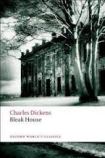 So: what’s up for this winter term? Something old and something new. I’m doing another iteration of 19th-Century British Fiction (Dickens to Hardy), beginning, this week, with Bleak House, which I haven’t taught (or read) since 2013. I was so sad to read Hilary Mantel identifying Dickens as
  Novel Readings