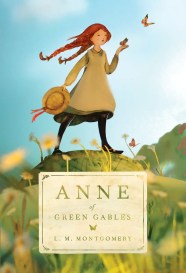
 The last three months haven’t been very good reading months for me: I have picked up and then put back down a lot more books than I have finished. This is true of new (to me) books, at any rate: since January I have actually reread quite a few books that were easy and comforting, including the first four Anne books (thanks to a dear friend who sent me a lovely box set), several favorite romances and mysteries, and The Beethoven Medal (part of one of my all-time favorite ‘YA’ series). I have also, of course, been reading books on grief and loss, and odds and ends of poetry.
But I have read some new books, and I thought I would remark them here, if only sketchily, so that I don’t forget them, and so that this blog doesn’t altogether lose its bookish aspect.
 In January, I read Lauren Groff’s Matrix. I expected to like it more than I did. This is not to say I didn’t like it; the premise was fascinating, and I remember being impressed at how vividly Groff built her world, and how strong, strange, and specific she made Marie as a character. Female agency and empowerment, creativity, desire, spirituality: the book explores them all, with a compelling combination of grittiness and lyricism. For some reason, though, I was disappointed when I learned that this particular work of historical fiction is much more fictional than historical—that almost nothing is actually known about Marie, that Groff’s character and story is all invention. This retroactively took some of the life out of the book for me, which is hardly fair given that I read and love a lot of historical fiction that is mostly made up.
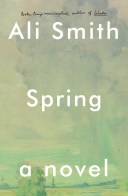
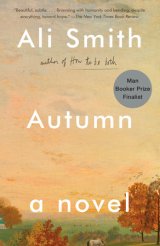 In February, I read through Ali Smith’s seasonal quartet. The sabbatical project I am picking away at has to do with the relationship between fictional form and social or political engagement (or, to put it another way, with fictional form as itself a kind of social or political engagement). With this in mind I was poking around in information about the Orwell Prize and this led me to some articles and interviews about Smith’s win, which in turn made me curious about whether her series might make a good contemporary example for me. I reread Autumn, and then picked up the other three and read them all through. By the end of Spring I was a bit less sure about using this series for my purposes, but some of my hesitation came from feeling unqualified to work on Smith: both her style and her influences, including the explicit invocation of Shakespeare plays, are a bit far afield for me. That doesn’t rule the books out, of course; it would just mean I would have to work hard to figure out how to talk about them, a prospect which is actually kind of appealing, or it would be if my mind didn’t feel so scattered all the time right now.
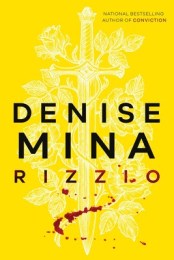 In March I read Denise Mina’s Rizzio, another historical novel I ended up being a bit disappointed in. There was something awkward (to my reading ear, anyway) about the combination of meticulous historical detail and a too-contemporary idiom, especially in the dialogue. Mina is good at foreboding and action, as you’d expect from a crime novelist. I reread Mrs. Palfrey at the Claremont, which I loved all over again, though it is even more melancholy than I’d remembered. Then I read Louise Erdrich’s The Sentence, which went really well at first and then started (I thought) to lose its focus and ended up feeling scattered, full of good bits but not a satisfying whole. I read two recently reissued novels by Rosalind Brackenbury, A Day to Remember to Forget and A Virtual Image, for an upcoming review (I finished a third, Into Egypt, yesterday). My last March book was Katherine Ashenburg’s Her Turn, which I enjoyed a lot. It’s less ambitious than some of my other recent reading, but it seemed to me to do well what it set out to do, including explore the possibilities and implications of both revenge and forgiveness in the context of our most intimate relationships.
I have a lot of unread books to hand that look tempting, including Laurie Colwin’s Happy All the Time, Sarah Winman’s Still Life, Andrew Sean Greer’s Less, Claire Keegan’s Small Things Like These, and the first of Elizabeth Jane Howard’s Cazalet Chronicles. I have more of the Anne books to dip back into, too, and another kind friend set me up with Emily of New Moon and its sequels, more childhood favorites that I haven’t read in decades. I have picked up and put down some of these a few times already but I’m sure their time will come. It’s not them—it’s me. It is rare for me that reading is this difficult: usually books have been a refuge for me in troubled times, but this time is not like the others. We’ll see how April goes.
(Brief update: I finished Small Things Like These this morning—there’s not much of it!—and it was indeed very good, as everyone has said, although I also felt that underneath the beautiful writing and careful minimalism—did I mention there’s not much of it?—it might actually be a bit heavy-handed.)
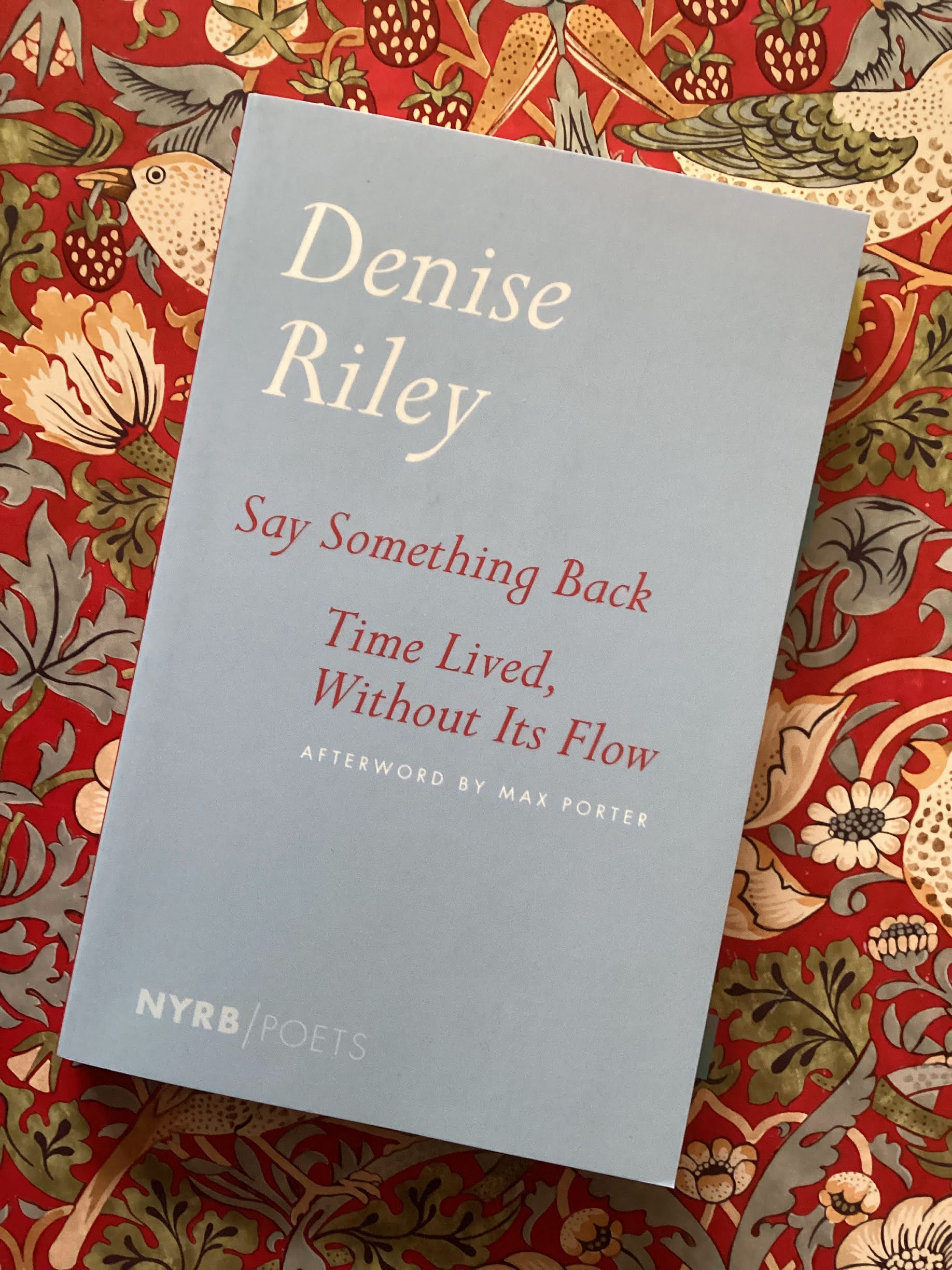


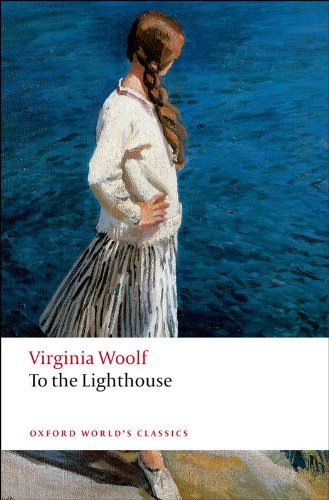


 It is terrible, the damage grief does to one’s own generosity. I don’t like it, though for now I can’t seem to help it. Anger is often mentioned as one of the ‘stages’ of bereavement; I haven’t seen any discussion of selfishness, but that’s what it feels like, or self-absorption. All these years reading Middlemarch and now I can’t displace myself and my sorrows from the center of my narrative: I’m disappointed in myself. How I have always admired Dorothea’s resolution after her night of mourning her lost love: “She said to her own irremediable grief, that it should make her more helpful, instead of driving her back from effort.” Of course, thinking the man you loved is not the man you thought him to be—even believing that your chance at joyful passion is over—is hardly the same as knowing your child walked away from you into the night and will never come back.
 The other question I’m hearing more and more is some variation on “have you considered talking to someone?”—meaning, of course, someone else, someone professional, someone who knows what to say. (Maybe that’s why the “how are you doing” question feels a bit loaded, as the combined subtext starts to seem like “this has gone on long enough.”) This has made me think again about Ignatieff’s comments in On Consolation about our current reliance on “therapeutic professionals” who “treat our suffering as an illness from which we need to recover.” “When suffering becomes understood as an illness with a cure,” he says, “something is lost.” I don’t think anyone who has suggested this to me means to imply that it is wrong for me to still be grieving; again, I know that they want to help, they want—for my sake—for me to be feeling better, doing better, living better. I don’t know if a therapist would approach my grief as something to be fixed or cured. I hope not: I don’t want to “recover” from it, and I don’t think I could. (“Some part of you may still remain in the underworld,” Riley says, and that seems right, meaning both true and appropriate.) I will find out, though: I have found someone to talk to (it’s not an easy process, as many of you probably know), though they can’t fit me in for a while. It is hard to think even that far ahead, but it seems likely I will still need whatever it is that they have to offer.
 The two things I’ve heard or read most often about grief are “it takes time” and “wait until you’re ready.” These are helpful comments, as far as anything is helpful; they lessen my anxiety and confusion by reminding me that there is no timeline, there are no rules, there are no ‘oughts’ that follow from this shocking and disruptive ‘is.’ They are also, less reassuringly, very vague: nobody knows how much time or can say exactly what “it” is, or when, if ever, I’ll be “ready” for the things I currently can’t face doing—sorting through his belongings, for example, so poignantly scant and so heartbreakingly reminiscent of him. But it has been good to remind myself that it is OK for now just to get from one day to the next as best I can.
 The world won’t wait for me, though. The
 As it happens, my recent reading has also been seasonal, though I don’t think there’s any connection to these ruminations. At any rate, if there is a link, it’s not conscious or deliberate. Prompted by my attempts to conceptualize my book project, I looked up information about Ali Smith’s recent Orwell Prize win. What I read about it and her it sent me back to reread

 I am trying. I have read my first new book, now: Lauren Groff’s Matrix. It was a good choice



 Novel Readings