This Week In My Classes: Love Poems and Social Novels

In English 1000, we’ve started our first poetry unit. We’ll be doing more poetry after Christmas, organized into what I hope will be provocative thematic clusters, but for now we’re just working through the basics of reading and analyzing poetry — meter and scansion, figurative language, poetic forms and modes. We haven’t really talked much about specific poems yet, since I’ve been using the assigned ones mostly to teach vocabulary for poetic devices, but on Wednesday we’re reading a little group of love poems and I hope to open things up a bit more than I have been doing so far. I haven’t quite decided how, though. The poems are Anne Bradstreet’s “To My Dear and Loving Husband,” EBB’s “How do I love thee,” and Shakespeare’s “Let Me Not to the Marriage of True Minds.” I guess some talk about sonnet form is probably appropriate, and about EBB’s appropriation of the conventions of love sonnets for a woman’s voice. Maybe we’ll get a bit silly and play Poetry Survivor: set up some standards for a great love poem and then vote one off the island out of the anthology as the weakest of the three. All this talk about metrical variation and synecdoche has probably made them afraid to react viscerally to a poem! The challenge, an exercise like that might show them, is to channel that gut reaction into an energetic analysis of the actual poetry.

In English 2040, it’s hard-boiled detective fiction time. Every year I swear I’ll dump The Maltese Falcon for The Big Sleep and I never do. But the thing is, first of all, that I really do think The Maltese Falcon is brilliant, and it teaches so well, by which I mean it brings up so many of the themes we’re interested in across all of our readings. Also, and this is not incidental, I have been working with it for a while and feel pretty confident talking about it. Even just considering how convoluted the plots of these novels are, that’s no small thing! Still, I’m sure The Big Sleep is just as brilliant in its own style. Maybe next year, since it looks like I’ll be teaching this class yet again…which is fine, as I really do enjoy it. I just find it kind of funny that the class I have offered most often in the last decade is this one, because it gets bums in seats (83 bums this year, to be precise).

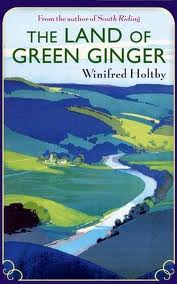
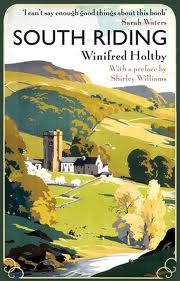
Most fun this week is working on South Riding in the Somerville seminar. The students are very engaged, especially now that we’re past the initially disorienting ‘getting to know all the characters’ phase. We had a lively discussion today about the variable points of view in the novel and how they affect our understanding of the community and also our sympathies. One idea we considered is that the constantly shifting perspective makes it hard for us to arrive at moral judgments about the characters: just when we think we condemn their choices or actions, we are brought to see them in a different context. And yet there seem to be exceptions to this, people whose points of view show off their faults or limits. Alderman Snaith attracted the most attention. He seems clearly set up to be the bad guy, but it was pointed out that he isn’t really after anything so different from what everyone else wants (money, power, success)–he’s just smarmier about it. Also, he is indifferent to suffering caused by his pursuit of his own interests. Holtby has given him a back story that seems calculated to awaken our sympathy: it seems that he was abused or raped as a child by “evil men” and he’s been left “a psychological cripple for life,”  feeling only horror at “all thoughts of mating and procreation.” We haven’t really worked out how this particular trauma fits into the larger themes of the novel, or even into the overall portrayal of his character, but we were noticing other scenes or intimations of sexual violence and the destructive potential of sexual desire, from the death of Mrs. Holly in childbirth to the suggestion that Robert Carne raped his wife (the word he uses is “forced”). It’s a novel full of the rhythms and forces of the natural world, but it’s hardly a pastoral idyll: perhaps this is a way of showing that human life, despite the best efforts of civilization, is driven by the same powerful urges. One implication would be that reform (social, political, educational) is both urgently needed and inevitably futile. Sarah Burton’s idealism can make us want to stand up and cheer. “We’ve got to have courage, to take our future into our own hands,” she declaims to Mrs. Beddows. “If the law is oppressive, we must change the law. If tradition is obstructive, we must break tradition. If the system is unjust, we must reform the system.” But Mrs. Beddowss has “seen compassion impotent and effort wasted”; she reflects on the parade of miseries she has seen, on illness and suffering and injustice all brought on “by circumstances which neither courage nor intelligence could have altered.” Sarah dreams of “the gradual reduction of the areas ruled by chance,” but so far the novel has not filled its readers with optimism that such transformation is possible. Perhaps the novel is a lesson in lowering expectations. As Alderman Astell, the once-idealistic socialist, remarks to Sarah, “You begin by thinking in terms of world-revolution and end by learning to be pleased with a sewage farm.”

This Week in My Classes: Am I Making Excuses for Gaudy Night?

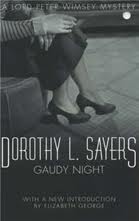
I’ve confessed here before that I can have trouble staying “objective and professorial” during discussions of Gaudy Night because I love the novel so much.  I have loved it pretty much since the first time I read it, which is a long time ago: my personal copy is from a 1978 edition, and though I can’t see any sign on it of when it was actually printed, I wouldn’t be surprised if it was close to that date, which would mean I’ve been rereading it since I was 12 or 13. (Here’s a possible clue: I have the matching edition of Busman’s Honeymoon, and it’s inscribed to me on my 13th birthday, in 1980.)

I don’t think it’s necessarily a bad thing for me to let on that I love a particular novel. I make no secret of my strong feelings about Middlemarch, after all, but I am also clear that it’s not my job or my purpose to get students to love it, or even like it: I’m trying to help them understand it, and teach them to appreciate it. I also teach novels I don’t particularly like, though I don’t typically make a big deal about that; again, my job (and theirs) is about something else.  What’s important is that I encourage, respect, and support students as they develop their own interpretations: my feelings about the novel should not come into this, only my knowledge of the novel and my experience thinking about how its different elements are related, and what they mean.

But are these aspects — my feelings, and what I’ll call my ‘expertise’ — really so unrelated? Don’t I love the novel because of how I interpret it, and don’t I interpret it as I do because of the time and thought I’ve put into reading and rereading it? Or is it that I read and reread it because I love it, and thus I interpret it as I do because of how I feel about it? What does it mean to “love” a novel anyway? And since this particular novel focuses on precisely the challenge of integrating head and heart, can’t I just stop worrying about which came first, the love or the understanding, and be happy that here I find the perfect fusion of the two?

I could, of course, and yet it wouldn’t be intellectually honest not to think carefully about the problems my students routinely raise on their first reading of the novel, and intellectual honesty is the fundamental principle of Gaudy Night. So here are some of them, and some preliminary responses. I think they are intellectual responses, responses based on my ‘objective and professorial’ understanding of the novel. But I worry that they are excuses, ways of getting around problems with the novel, that are motivated by my loving desire to protect it. Maybe — probably — they are some of both! What do you think?

1. The novel is elitist, and/or Harriet is elitist, about education.

I actually think that this is true, but for me it’s not a telling criticism of either Harriet or the novel. Both idealize a certain kind of education, and a set of values, according to which a university education is not for everyone the way we like to think (or talk as if) a university education is for everyone here and now. I thought this objection might be tempered in my Somerville seminar because we’ve already spent quite a bit of time thinking about Oxford as an idealized space as well as a place with very particular social and historical significance for women at this period. Up to this point the university had never been a democratic institution or even, really, a meritocratic one, but women’s access to it mattered and the dream of Oxford as a means for women to transform their lives was very powerful. Gaudy Night explores both this dream and its limits. I also think that it is self-conscious about this as a dream, including for both Harriet and Peter, neither of whom ever really imagines giving up the rest of their lives to embrace an academic vocation. And academic life is shown very much as a vocation, not a profession. It isn’t right for everyone. It isn’t even, as I’ve said, right for Harriet. Oxford itself, too, is shown to be much more (or is it much less?) than that ideal. But to Harriet, and, I think, in the novel overall, the life of the mind that Oxford symbolically represents is something special, something worth aspiring to and cherishing above other options. If that’s elitist, sign me up, I guess.

A key episode that always provokes intense reactions is Harriet’s conversation with her former classmate Catherine Freemantle, now Mrs Bendick, who has become a farmer’s wife. “What damned waste!” Harriet thinks; “All that brilliance, all that trained intelligence, harnessed to a load that any uneducated country girl could have drawn far better.” Is Harriet just being a snob? She asks Mrs Bendick about the “compensations” of her work and Mrs Bendick asserts that it is “a finer thing than spinning words on paper,” but she goes on to admit that she misses “things” and feels resentful of what she has given up. “It seems queer to me now,” she says, “to think that once I was a scholar.” If Sayers had wanted us to see working the land as a genuinely valuable alternative, couldn’t she have made Mrs Bendick happy and confident in her choice instead? Is she, therefore, dismissing farming as lowly labor, unworthy of a certain better class of woman, or is she regretting that a highly educated woman (still a rarity, in 1936) has lost, or given up, the opportunity to use her education?

There’s also Miss Cattermole, the current student who’s getting in all sorts of scrapes and hates that her parents have insisted she go to Oxford when what she wants is to be a nurse or a cook. “We haven’t got room for women who aren’t and never will be scholars,” rages Harriet after their conversation. Cattermole’s mother is of the generation that fought “to get things open to women,” and now Cattermole feels herself a victim of her mother’s feminist ideology. When Harriet demands, “Why do they send these people here?” is she, once again, being elitist, asserting that not everyone is fit to go to university? Or is she upset that a rare space at a women’s college is being wasted on someone who would be perfectly happy without this particular kind of specialized education? Who’s at fault here, anyway? Oxford, for not being right for Cattermole, or Cattermole’s mother, for mistaking her daughter’s opportunity for her daughter’s obligation?

2. The charge of elitism extends also to a more general complaint about class prejudice, and the identity of the perpetrator adds to the sense that the novel overall is kind of snooty.

I think this is partly true, but that it oversimplifies. Harriet herself is not upper class or aristocratic, and the difference in class and wealth between her and Peter is a major stumbling block in their relationship. Her education has changed her social position in some respects, and Oxford itself is a symbolically leveling environment for their relationship (their academic gowns are the same size, even). The privilege represented by the university is not exactly a matter of class, though, and the prejudices most on display in the novel are against the uneducated, or the enemies of (women’s) education. Annie’s own position at the college is a bit of a red herring, as far as class goes: yes, she’s working as a servant, but if things had gone differently she’d be a faculty wife. She’s dangerous and vilified because of her Nazi-affiliated views on women’s proper place, not because the novel (despite being set in a hierarchical, class-conscious world and full of people who take that structure for granted, Harriet included) is anti-working-class. I usually suggest that the central crime in a mystery novel can be read symptomatically. In Gaudy Night, the most dangerous force is a regressive sexism directed against women who have gone, or seek to go beyond, their historically limited roles through education. Such reactionary misogyny is, tragically, not a fiction in today’s world, where as we’ve just seen, it can take a tragically violent turn. Early Oxford women obviously did not face the same literal level of threat, but Annie embodies a version of the kinds of hostilities they really did incite.

3. Peter swoops in and solves the case, reducing Harriet to the status of a sidekick.

BalliolIt’s true that Peter is the ‘closer’ on this case. It’s also true that he withholds information and delays identifying his chief suspect, nominally on the grounds that he does not have sufficient proof and does not want to drive the suspect into hiding. But he also does so explicitly on the grounds that he thinks Harriet can figure things out for herself. He plays very nearly the ‘Great Detective’ role, including a classic reveal scene in which he lays out the facts of the case as he has sorted them out. Harriet’s role in the dénouement is closer to that of victim than that of heroine or detective: in classic Gothic style, she goes wandering down a dark hallway and nearly gets herself killed. But Peter makes clear that he solved the case only with the help of Harriet’s dossier, and Harriet  is taking risks in dark hallways because Peter has joined her on the case but not excluded her from it. Worried for her safety, he nonetheless accepts her right to take risks and encounter danger. Early in the novel he is injured because of a close encounter with a bad guy; now it’s her turn. It might be neater, if equality is the standard, for them to have worked literally together at each stage of the investigation, but their work until this point has been complementary yet not without conflict, and it’s not until after the case has been resolved that their relationship finally achieves mutuality (and they can finally kiss!). Disappointment that Harriet doesn’t triumphantly solve the case on her own ignores the novel’s dual purpose: it’s both a detective novel and a novel about the complicated relationship between Harriet and Peter. It is set up from the beginning so that both of these aspects need resolution. Harriet needs to figure out how she can retain her autonomy and love Peter. Feminism doesn’t have to mean doing everything without anyone else’s help. And love doesn’t have to mean capitulation. Harriet herself at one point imagines how much easier it would be to be “ridden over roughshod,” because hammering out an equitable alternative is exhausting in a world that sets up obstacles rather than providing models. Peter is not the man for that job, however–and a good thing, too, or she’d have to do a full-out Jane Eyre on him before they could marry with no threat to her self-respect.

4. Peter buys Harriet a dog collar to wear. He even wants to put his name on it! Clearly that’s a sign that their relationship is about her submission and his control.

 When I brought this up on Twitter, other readers promptly chimed in to say that, like me, they had never been perturbed by this–one noted that the dog collar is a handy solution to a pragmatic problem (what else could she wear as protection against strangulation?), while another remarked that her sense of the Harriet-Peter relationship was already strong enough at that point that there didn’t seem to be a problem. All three of us are resisting reading the dog collar symbolically, or at least as a symbol of ownership or control. In any other book, I don’t think I would resist this reading. Am I being disingenuous in arguing that I think it’s crucial to put the incident and the gift in context? Peter spends most of the novel explicitly not controlling Harriet: that’s not what he wants from their relationship, and the dog collar is proposed, in fact, as a means to her ends — with its protection, she can continue to take whatever risks she wants and live to fight (or write) another day. He doesn’t force it on her: she accepts it and later chooses to wear it. I’ve always felt that its symbolic role lies in that acceptance, which ties back to the problem of balancing independence with love. She has held Peter at bay because she believes she’s only safe (only retains her dignity and autonomy) if she takes nothing from anybody, or at any rate takes nothing from him. Gaudy Night is about her evolution away from that premise. What she finds at Oxford, and through her work on this case, is enough confidence in herself not to fear his generosity. The admittedly weird but fundamentally pragmatic gift of the dog collar opens the way to the gift of the chess set, which is an apt marker of the changing balance in their relationship. (There was another interpretation bandied about on Twitter, something to do with dog collars and their, er, erotic potential. Can we just rule out of order any attempt to turn this into 50 Shades of Sayers? As your whimsy takes you, indeed…)

5. In Busman’s Honeymoon Harriet is marginalized even further from the detective plot; this just completes the downward trajectory of Gaudy Night.

It is definitely true that in Busman’s Honeymoon Harriet is no longer on the case, and if the true measure of equality in their marriage was co-detecting happily ever after, then I concede the failure. But Harriet is a writer, not a detective! In Gaudy Night, that’s the strength she brings to the case and also the real quest she’s on (transforming the two-dimensional plot of her own detective novel into something more layered and complex)–well, that and learning to love again. I love Busman’s Honeymoon too, but the murder case in it always annoys me because I’m reading it for the romance. Gaudy Night is special because all of these aspects converge so splendidly.

Oh dear. Although I believe everything I’ve said here with all my head and my heart, and also believe these interpretations are entirely, dispassionately, defensible, there is an air of special pleading, isn’t there? And a disconcerting tendency to talk about Harriet and Peter as if they are really truly real … Please feel free to pitch in with your thoughts on the novel, and particularly on Objections 1-5. Clearly, I can use all the help I can get. Luckily for me, and perhaps also for them, tomorrow we begin discussions of South Riding, which I don’t know nearly well enough to love.
Happy Canadian Thanksgiving!

It’s Canadian Thanksgiving today. We cooked and ate our traditional dinner yesterday, which means today we can relax, catch up on some work, and enjoy leftovers for dinner. Despite a threatening forecast, it’s a bright sunny day so far; yesterday was gorgeous too. The foliage isn’t as bright as it sometimes is at this time of year, but it was still lovely on our traditional family walk in Point Pleasant Park yesterday:


And here’s our traditional Thanksgiving dinner: roast pork, mashed sweet potatoes, boiled new potatoes, sauteed carrots and mushrooms, green beans, and homemade cranberry sauce:

Dessert is apple crumble with vanilla ice cream. Delicious!

A Year in the Life of a New Romance Reader

While I was sick last weekend I downloaded a few light reads from the library to help cheer me up and pass the time. All of them were romance novels — which (as I emerged from my Neo-Citran haze) struck me as noteworthy and led me to the realization that it has been about a year since I posted “Confessions of a (Former) Non-Romance Reader.”

In that post I admitted that I’d always been casually dismissive of romance novels because I assumed they were “so formulaic as to be essentially interchangeable and so numerous they are clearly also disposable.” The mind-opening discovery (one that, as I said, would not have been such a revelation to me “if I’d been taking the whole genre more seriously from the start”) was that romance is not so much a formula as a form, a genre which, like mystery or science fiction, “can contain multitudes.” The challenge, once I had belatedly grasped this point, was to pick out ones I would enjoy from the overwhelming array of available titles. A year later, this is still the biggest challenge! I’m aware, now, that there are many subgenres of romance, and both within and across them there’s a whole array of ‘tropes’ which can be tweaked, revised, and subverted in unlimited permutations. And then, of course, there are the more individual factors like an author’s voice and style and pet interests (literal as well as metaphorical). Sometimes it seems you should be able to enter your preferences into some kind of recommendation generator and walk away with exactly the book of your dreams. Wanted: one paranormal romance set in 13th-century Spain, told in first person, featuring an alpha male, a prostitute with a sad back story and a heart of gold, a marriage of convenience, and an English bulldog! And in fact you probably could come pretty close to this mix-and-match perfection, if you were really clear on what you wanted and had enough sources to suggest titles.

As a relative newcomer to the world of romance fiction, I have been discovering my own preferences through trial and error. I’ve tried not to think too hard about what they might reveal about me (as a person or a reader), but I still feel that there’s something more intimate about romance fiction than about mystery fiction because “few of us (happily) have personal experience of murder, but most of us (happily or not) have been through our own experiences of relationships”: I still suspect that “the things we find unrealistic, sentimental, naive, or foolish are as potentially revealing as the things we find admirable, desirable, dreamy, or delightful.” I have also still found the romance novels I’ve read to be mostly slight or insubstantial: though I see no reason why they should be considered a guilty pleasure, for me they are definitely diversions, books I don’t feel obliged to read with great care or without interruption or, in general, to take very seriously. I’ve been reading them for fun. Not that there’s anything wrong with that! But it does mean, for instance, that I shrug off bad writing (and bad grammar! get some editors, you supposed professionals, and learn the difference between ‘lay’ and ‘lie’!) and clichés and stereotypes and other signs of intellectual laziness more casually than I do in books for which I have higher expectations. I’m also still not aware of any books explicitly and deliberately within the genre of romance that ‘transcend the genre’ (that problematic phrase!) and take us into the literary realm the way something like The Maltese Falcon has been seen as doing for crime fiction. Maybe when a novel about relationships goes really literary it simply shades into the ‘marriage plot’ novel and thus loses its identification with genre fiction. (An interesting potential case study: Mark Helprin’s new novel In Sunlight and In Shadow sounds pretty romantic in this review, while in this one the same novel is condemned as a bad imitation of Danielle Steele and Nora Roberts, “a bad romance novel, driven by a preposterous, melodramatic plot and filled with some truly cringe-making prose.” The genre affiliation, that is, comes up only as a condemnation–though Kakutani does seem, by implication, to be allowing that there is such a thing as a good romance novel.)

So what do I like in my romance novels, you may be wondering? Well, as it was Jennifer Crusie’s Anyone But You that turned me around the first time, it’s probably no surprise that my favorites are in that vein: sprightly “contemporaries” with mature characters (mature enough, that is, to be established in some kind of self-respecting career and otherwise doing something interesting with their lives besides falling in love) and a sense of humor to leaven the sentimentality of the love plot. I suspect my preference for novels that closely approximate the film genre of romantic comedy comes from my own resistance to taking the whole idea of instant attraction, mutual adoration, and living happily every after very seriously. I didn’t know this before, but apparently I am both a romantic and a cynic, and so the cheerful lack of realism in this particular approach works well. I’ve read a lot of Crusie’s novels, and of them, Anyone But You (which I reread last weekend) remains my favorite (I find the heroine’s inhibitions about her aging body tedious, but that’s really my only grumble), followed by Bet MeWelcome to TemptationFaking It, and (to my own surprise) The Cinderella Deal. These are all ones I’ll happily reread, sick or not. I also really enjoyed Maybe This Time, which is a sly rewriting of The Turn of the Screw.  Second best so far (though with reservations) is Julie James: Practice Makes Perfect is fun and, again, sprightly, and the ones I’ve read in James’s FBI / US Attorney series mostly entertained me without annoying me,  though I find her men a bit too predictably ‘tall, dark, and smoldering’ and her women too physically perfect and too prone to need rescuing at the end. I liked A Lot Like Love best of these ones because I enjoyed all the details about wine: I realize this may be the wrong place to focus in a romance novel, but hey, it’s my fun that this is all about, right? And this turns out to be a trend: I enjoyed Ruthie Knox’s Ride with Me as much for the biking and the scenery as for the witty repartee and the sexual tension, and though I found Nora Roberts’s Bride Quartet too saccharine for my taste overall, I was intrigued by the inside look at the lives of a florist, a baker, and a photographer. While I like the ‘she humanizes him’ trope of The Cinderella Deal, it’s the painting that really engaged me. I like the emphasis to be more on the emotional and intellectual relationship then on the physical — if the relationship or the novel is mostly about sex, rather than about the people having sex, then it’s not for me. I was raised, after all, on Elizabeth and Mr Darcy:  it’s all about the deferred gratification! Victoria Dahl and Jill Shalvis would be more popular with me if it didn’t seem that they invert these priorities too often; Knox’s About Last Night was not a favorite, for the same reason.

I have yet to read a “historical” that I really like or would promptly download to read again. Mostly they seem to take themselves too seriously and thus run up against my cynical streak. I liked the concept and, mostly, the execution of Judith Ivory’s The Proposition, and after I read my first Mary Balogh (The Ideal Wife) I thought I was on to something and borrowed a bunch more, but I got kind of tired of them. The only Heyer I’ve read is Sylvester and I didn’t love it: no doubt something’s wrong with me, given how beloved she is. I haven’t even tried “paranormal” romances, and though I think Julie James’s novels probably border on this category, I also haven’t focused on “romantic suspense” as I’m reading for fun, not anxiety. I’ve downloaded or sampled a lot of other titles from the library, but just taking what’s available turns out (predictably) to be the worst way of finding something that actually suits me or fits my mood. I’ve realized that this is another way in which my romance reading is not like my other reading: I don’t put down a ‘literary’ book because it’s not exactly what I already want (imagine how far I’d have made it in the Patrick Melrose novels with that attitude!). Also, most of the time I figure the onus is on me to read to the end before making up my mind about a book, but I’ve been happily trying but “DNF”-ing all kinds of romances. Not much really seems to be at stake, and that’s only partly because so many that I’ve read (or started to read) have been borrowed from the library.

And that’s where I find myself a year later: not necessarily wiser but more experienced and less judgmental, both of the books and of myself. Now, as then, I’m open to suggestions. Wanted: sassy, literate contemporary featuring mature independent heroine with interesting job, tall, dark, but not necessarily smoldering and definitely not domineering hero (preferably, neither of them will be stinking rich), plenty of witty banter and sexual tension, sophisticated urban setting preferred but not required, cats (for a change) rather than dogs.*

*Update: It sounds like In Bed with the Opposition is a good bet for me! As it happens, too, I’m rewatching The West Wing when I get the chance (so much more relaxing than watching the actual U.S. election coverage, which tends to give me indigestion).

This Week and Last Week … But (I hope) Not Next Week!

It has been quiet over here, I know. That’s a symptom, as usual, of things not being quiet elsewhere and so my not having enough time and energy to spare for blogging. For the past couple of weeks it seems we haven’t had two straight days in which at least one member of my family hasn’t been home sick. When it’s the kids, that means extra pressure on the usual efforts to juggle schedules (and, of course, time spent giving them all the TLC we can muster). When it’s me, as it was (conveniently?) over the weekend, that means a fair amount of deferred maintenance on everything from class prep to grocery shopping. However, tonight things are looking up–I am mostly better, and my daughter is well (well enough, even, to get to her singing lesson, which we had to cancel two weeks running — ironically, this week her teacher wasn’t well, but she soldiered on so Maddie wouldn’t be three weeks behind). Only my poor son is still feeling pretty lousy, but at least he was sitting up and even eating a bit by the end of the day, so maybe he’s turning a corner, though I know it doesn’t seem that way to him right now because he mostly still can’t breathe.

One of the books I’m prepping for class this week is Gaudy Night–I find myself very sympathetic, on this reading, with poor Mrs. Goodwin who keeps having to leave work to tend to her sickly son. It is reassuring to think (or at least believe) that my own professionalism and suitability for my job isn’t being called into question the way Mrs. Goodwin’s is because I’ve had to cancel some office hours and miss a meeting or two! On the other hand, it hasn’t gotten conspicuously easier, in the intervening century, to find a really happy balance between the demands of work and the demands of family. Although it would be nice, once in a while, to take a real sick day and not actually do (or worry about) any work, I feel very fortunate that in this electronic age much of my work can be done from wherever, and whenever. My husband and I have also, for many years, been able to arrange to teach on alternate days, so that cancelling an actual class meeting is a rarity for both of us. It’s interesting to reflect on the complex triage we’ve developed. Classes trump meetings, meetings trump office hours, specific appointments trump office hours, office hours alone just get rescheduled, class prep gets done one way or another in the interstices, and research and writing … well, you can see how much non-essential writing I’ve been able to do in the past week! It’s notable that for both of us actually making it to class is so clearly the top priority. I have learned that students don’t usually much mind a cancelled class here or there, but we put a lot of thought and planning into our courses and for us, a missed hour can throw off a whole sequence (though I have also learned that it’s easy to overestimate how much that really matters). We are still clearly convinced that there’s real value-added in our physical presence and face-to-face engagement with our students. Just call us “the enforcers.”

Anyway, since I have little of intellectual substance of my own to offer right now, how fortunate that the new issue of Open Letters Monthly is fresh and full of goodies! By the time you’ve read every piece there from top to bottom, surely I’ll actually have finished a book or otherwise come up with something to say. And there’s lots of other good stuff around on teh internets, from proposals to remake the humanities PhD to discussions about the ethics of live-tweeting conferences to posts on Argentinian literary doom. Happy reading–and wish me luck.

Elizabeth Speller, The Return of Captain John Emmett

I picked The Return of Captain John Emmett for my ‘light reading’ over the last couple of weeks because it seemed such a perfect fit: here I am reading and teaching both literature of the First World War and mystery fiction, and it’s a mystery set just after–and preoccupied with events during–WWI. In retrospect, maybe that was exactly the wrong reason to read it now: it couldn’t compete with Testament of Youth, or with my relatively fresh memory of All Quiet on the Western Front, as a book about the experience of the war, and it didn’t seem that effective to me as a mystery, either. I had trouble staying interested in it, and though by the end I was moderately caught up in the story it was untangling, overall I thought it was just OK. Perhaps if I’d read it last summer, or waited until next summer, it would have had more of a chance with me.

What didn’t I like about it? Oh, not much in particular. It’s literate and well-researched, and it didn’t have the ‘checking off boxes’ effect of clunkier period fiction, when you feel the details are being added on purpose rather than because they emerge naturally from the context. (That’s kind of how Season 1 of Downton Abbey struck me–Irish radical? check! suffrage? check! declining aristocrats? check! Maggie Smith? check!) The central case is interesting and it’s a good idea to make an investigation into one particular death a way of exposing the larger catastrophe of the war (something Jacqueline Winspear also does pretty well in Maisie Dobbs, as I recall). Culpability is a complicated thing in this scenario, and the novel’s somber tone aptly reflects the moral bleakness of its reflections on the wholesale slaughter that makes singling out individual killers seem at least redundant, if not necessarily pointless.

The process of the detective story was not particularly interesting, though: Laurence Bartram is not a terribly charismatic figure, and he doesn’t do any impressive detecting, more or less plodding from one person to another asking questions and receiving, in return, unbelievably long statements that masquerade as parts of actual conversations–it gets very speech-y, which is about the most literal form of too much ‘telling’ imaginable. It would have been more fun, and more suspenseful, if Bartram had displayed more ingenuity and done more ratiocination. There are a number of self-conscious references to mystery conventions (and several references to Agatha Christie), but Speller is clearly aiming for a more “literary” mystery, and her effort went into setting, backstory, and, to some extent, character development–but here again, we find things out about people more from long revelatory speeches than anything else.

As an aside, the front cover of my edition features a review proclaiming it’s “The new Birdsong — only better.” Is it just me, or is that kind of insulting to both books? What does The Return of Captain John Emmett really have in common with Birdsong besides the WWI context? Why deprive it of its own claims to originality? And that “only better” is surely a gratuitous dig at Birdsong? I don’t understand what marketing logic lies behind choosing this as the crucial sales pitch.

Blogging is Detrimental to Literature? Make Him Stop Saying That!

Just when you thought maybe, just maybe, the worst was over when it came to casually dismissive generalizations about blogging–you know, of the kind that used to get us all riled up way back in 2008, and that still irked us in 2010–we get this, from the editor of the TLS:

The rise of blogging has proved particularly worrying, [Stothard] says. “Eventually that will be to the detriment of literature. It will be bad for readers; as much as one would like to think that many bloggers [sic] opinions are as good as others. It just ain’t so. People will be encouraged to buy and read books that are no good, the good will be overwhelmed, and we’ll be worse off. There are some important issues here.”

Yes, that’s right: he’s worried that if readers stop tagging along after the “traditional, confident” critics who occupy the literary high ground, they will end up (lemmings that they are) following bloggers over the cliff into the slough of mediocrity, and then they will be worse off! He’s right: there are some important issues here. They just aren’t quite the ones he’s talking about…

Is there really no way we can put an end to this kind of pompous and insulting pronouncement? Can’t we flood the comments with links to book blogs that inspire and excite us as readers and do more than the TLS ever does to bring us to books we would otherwise not discover? Can’t we explain that the world of  “traditional, confident” criticism often seems hopelessly circular and self-referential–that it can only be good for literature to have a variety of voices and perspectives and tastes in play? Can’t we remind him that people have always bought books that others thought were “no good,” and that the process of sorting and judging is always a fraught one? Can’t we get across the basic point that blogging is a form that can hold as great a variety of content as a newspaper (imagine dismissing the TLS because of the existence of the Sun or the Mirror) and that the problem continues to be one of filtering–a problem the TLS could help with by actually reading a wide range of bloggers and encouraging (maybe even engaging with!) those that offer the most informed and provocative and original commentary? Can’t we … Oh, never mind. It’s hopeless.

But actually, no it’s not. Here’s Daniel Mendelsohn,  in his recent ‘Critic’s Manifesto,’ discussing how the “the advent of the Internet [has] transformed our thinking about reviewing and criticism in particular”: “First, there has been the explosion of criticism and reviews by ordinary readers, in forums ranging from the simple rating (by means of stars, or whatever) of books on sites such as Amazon.com to serious longform review-essays by deeply committed lit bloggers.” It’s true he sees this in terms of “ordinary readers” finally going public, not as his having discovered critical peers online, but he certainly acknowledges that there’s more to blogging than seems to be dreamt of in Stothard’s philosophy: he even gives the impression that he might actually have read some book blogs (and not just those run under the aegis of “traditional, confident” publications). Mind you, Mendelsohn (surely someone whose opinion is worth something even to Stothard) has been making more carefully qualified statements like this for years: apparently Peter Stothard doesn’t listen to him either. So, maybe it is hopeless–for Sir Peter.

And for the rest of us? Well, I’m not worried. We’ll just keep reading and writing, and somehow I’m confident nobody will be worse off because of it.

This Week In My Classes: Good, Better, Best!

We’ve almost settled into a routine in my three classes, I think. The one I feel least certain about is my section of Intro. I think we’re doing OK, but I wonder if I made things a bit too intense at the very start of term as I focused on establishing expectations and framing our work as the preliminary stages in mastering a discipline. In my defense, I can say that the course is supposed to be a ‘writing across the curriculum’ offering and thus is supposed to teach writing in the context of training as a literary critic. But since I have a whole year to work with this group, I could have spared a bit more time, maybe, for getting-to-know you kinds of things. Well, we have the rest of the year to keep getting to know each other, and as far as I can tell, they are a nice group and seem willing to do what’s asked of them, and quite a few also seem willing to contribute to discussion already. Next week I’ll see if I can lighten things up a bit.

Mystery and Detective Fiction seems fine too. It’s a much bigger class (around 90) but a reasonable number of people are putting their hands up and saying smart things, and considering we’re working through The Moonstone, which is our longest and most formally complicated book, I’m hopeful that as we move into more accessible ones it will get more lively. The Moonstone is always such fun; though I occasionally wonder if I can make it through the sessions one more time (I think I’ve taught it for at least one class pretty much every year since 2003), once it’s underway I really have no complaints. I can’t imagine doing this particular class without it: I’ve rotated in different titles for many of the other subgenres I cover, but The Moonstone is a fixture.

Of greatest concern to me as this week began was how the first discussions of Testament of Youth would go in my Somerville Novelists seminar. I am so pleased to report that they have gone extremely well! Or, at any rate, that I have thoroughly enjoyed both preparing for them and participating in them–and judging by the level and the quality of the students’ participation, they too are finding plenty to interest them. Hooray! For each class there are three students bringing what I call “Start-Ups”: handouts with two questions and two passages they’ve chosen, to start up our discussion. We take a few minutes at the beginning of class to go through them (I used to require students to post them before the class so their classmates could come prepared, but I learned that invariably, students didn’t do that, or if they had, they still liked having the handout). Then we just go where people want to go.

We’re nearly half way through the book at this point–we’ve just passed Roland’s death–and so the personal drama has become more gripping, and we’ve started sorting out some of the ways she tells the story to make particular kinds of points. Last class, for instance, we talked about her idealization of Roland and how he becomes the embodiment of everything the war destroyed, and we also talked about the attention she pays to the physical bodies of the soldiers she nurses and how for her, that becomes a way of recognizing and valuing the physical side of her love for him. We’ve noticed the ways she emphasizes her feminist principles and the tensions this creates not just in the story she’s telling (for instance, she and Roland are reluctant to announce their engagement because they resist the conventional implications of marriage) but also in how she tells it (is her idealization of Roland perhaps symptomatic of an anxiety about having become one of “those women” she initially disparages, who have love and marriage and children as their first priorities?). We noted how strongly she dichotomizes first her provincial experience and her dreams of Oxford, and then the academic life at Oxford and the harsh realities of war: she seems to approach the world in terms of such antagonisms, and she also always wants to end up where the action is. We’ve talked about her desire to be taken seriously as an individual, not belittled or constrained as a woman, and then about Testament as a way of asserting serious value for a woman’s experience of war; we’ve talked about the frequent exchanges she and her male friends have about courage, and about the different ways they seek to overcome their fears and prove their valor. There’s more, too, but you get the idea: everyone’s noticing lots of interesting things, and we’re working out connections and trying to see where they take us. I’ve done a reasonable amount of steering and also of trying to abstract from particulars to draw out their implications, but there’s been no need for me to step in and fill awkward silences. Here’s hoping the energy continues, and that it motivates everyone to get busy with the wiki projects, which we’ll be focusing on pretty soon.

“Your novelistic language annoys us”: George Sand, Indiana

My intrepid book club, which followed up Madame Bovary with Julian Barnes’s Flaubert’s Parrot, decided that our next step would be something by George Sand. We settled on Indiana because it was the most readily available (there’s a nice Oxford World’s Classics edition, with a “new” [1994] translation and an introduction by eminent literary scholar Naomi Schor). We thought this would be an interesting choice because Sand is more or less the anti-Flaubert: sentimental where he is relentlessly not, idealist where he is realist, not much esteemed (or at least read) today–note, again, the date of that “new” translation. His name is a byword for literary seriousness: he is the Father of the Modern Novel. And George Sand is … something else.

Before reading Indiana I knew George Sand mostly from Elizabeth Barrett Browning’s sonnets about her, which I routinely assign in my seminar on the Victorian ‘woman question.’ “Thou large-brained woman and large-hearted man,” begins “To George Sand: A Desire”:

Self-called George Sand! whose soul, amid the lions
Of thy tumultuous senses, moans defiance
And answers roar for roar, as spirits can…

The sonnets celebrate the power of Sand’s voice and her defiance of convention, particularly her attempt to transcend the limits of her sex. “To George Sand: A Recognition” ends with a vision of her spirit finally set free of such limits:

Beat purer, heart, and higher,
Till God unsex thee on the heavenly shore
Where unincarnate spirits purely aspire

Yet even as the poem seems to reach in those lines towards an idealized androgyny, it also insists that her attempts to deny her “woman’s nature” are vain:

                                      that revolted cry
Is sobbed in by a woman’s voice forlorn,
Thy woman’s hair, my sister, all unshorn
Floats back dishevelled strength in agony,
Disproving thy man’s name…

Together, the sonnets are a moving tribute from one woman writer to another and a fascinating example of the complexity of working out the role of ‘woman writer’ at a time when gendered expectations shaped and limited women’s literary ambitions in so many ways.

Indiana is the only novel of Sand’s I’ve read, so I am in no position to generalize. However, based on this one example at least, EBB’s hyperbole suits her subject. Tumultuous senses, moaning defiance, aspiring spirits, revolted cries: this is the stuff of which Indiana is made. And I admit, though I chafed at Flaubert’s implacable objectivity, the rushing emotionalism of Indiana was even harder for me to take. I know enough to recognize that it belongs, self-consciously, to a tradition that includes its own most conspicuous intertextual reference, Paul et Virginie (which I read years ago for a graduate seminar), and which is not the tradition of either historical or social realism. And I learned from Schor’s boosterish introduction that there are terms for reading Indiana better than I was able to:

no analysis…of Sand’s work can proceed without taking account of her … idealistic aesthetics, without rethinking idealism, idealism being understood here both as the heightening of an essential characteristic (the pretty and the beautiful, but also the ugly and the stupid), and the promotion of a higher good (freedom, equality, spiritual love).

Schor suggests that the opening of the novel is a kind of feint in the direction of Balzacian realism but that the novel moves towards idealism and, more particularly, towards allegory: “each protagonist incarnates an abstraction”–and she has plenty of suggestions about how to read the allegory. With hindsight, I see that it makes sense to read the novel in this way, as a philosophical exercise as much as an aesthetic one. It does read that way, in fact, with both narrator and characters prone to long disquisitions and high-falutin’ pronouncements.

Now, any fan of Middlemarch is in no position to object to philosophical fiction or long disquisitions. And anyone who has complained that Flaubert is all head and no heart probably shouldn’t turn around and complain about a novel that oozes heartfelt emotion from every painfully sincere sentenceBut here I go: Indiana is pretty dreadful. (Alternatively, I did a dreadful job reading Indiana.) The construction was so clumsy I swear sometimes I could actually hear the plot creaking; the elements of that plot range from bizarre to absurd; the paragraphs just go on and on and on; and the characterizations are at once laboured and strangely insubstantial.

If Indiana is meant to be read as an allegory, of course, then complex characterization would be out of place–but that impulse towards realism in the opening of the novel persists throughout, so that while at times people sort of fall into place and what seems to matter is the pattern they make, at others the book gives off every impression of at least trying to be significantly believable. Trying…and failing. My most frequent marginalia is The Exclamation Mark of Disbelief, as in, I can’t believe what just happened, or I can’t believe someone just said that! The love scenes are tedious to the extreme, and a lot of the rest is (inadvertantly, I’m pretty sure) weirdly hilarious. At one point Indiana tests her lover’s faithfulness by giving him what she claims is a clump of her hair, except that it’s actually someone else’s–why does Indiana have a stash of someone else’s hair in a box in her room?  He fails to recognize it as the hair of Indiana’s maid, whom he seduced and then abandoned. “Don’t you recognize that hair, then?” Indiana demands;

Have you never admired it, never caressed it? Has the damp night air made it lose all its fragrance? Haven’t you one thought, one tear, for the girl who use to wear this ring?

Just possibly, the hair has lost its fragrance because its original owner has been dead for some time. But such practical details aside, who makes up a scene like this and gives it to us to read? A trial by hair? The lover is a manipulative jerk, but at this point I sympathized when he “shuddered from head to foot and fell to the floor in a faint.” I think it was his organ of plausibility that shorted out there. (There’s a  great deal of fainting in the novel, just by the way, by men and women alike. It’s because they really, really feel everything, very, very deeply. All that emotion makes it hard to stand up.)

The novel culminates in a a suicide pact which brings Indiana and her faithful swain (not the manipulative jerk, but the pathetic one who has mooned around in the background for the entire novel) literally to the brink. Once there (after a four-month sea voyage, which you’d think might give them time for second thoughts, but no…) they talk for about THREE HOURS and then [SPOILER ALERT! IF ANYONE IS ACTUALLY PLANNING TO READ INDIANA AND WOULD LIKE TO BE SURPRISED, STOP HERE!]  finally jump, much to my great delight. I thought they were never going to get around to it! Except that, quite inexplicably, they didn’t, and they turn up a few pages later living in contented isolation having somehow (!!!) MISSED THE CLIFF IN THE DARK. Or something–even the would-be jumpers aren’t entirely sure what happened. Maybe they got dizzy and “mistook the direction of the path,” or maybe an angel saved them. Whatever.

Like poor Emma, Indiana got her romantic ideas from novels and imagines that love is all you need–provided it’s true love, perfect love, romantic love. “A day will come when my life will be completely changed,” she gushes; “it will be a day when I shall be loved and I shall give my whole heart to the man who gives me his.” While she waits for love, she is literally dying for lack of it: “An unknown sickness was consuming her youth. . . . her silent broken heart was still seeking a young, generous heart to bring it back to life.” At least in Madame Bovary the author knows his character’s fantasies are just that, but Sand throws herself, or at least her novel, wholeheartedly behind Indiana’s dream, even though it makes her vulnerable to the wiles of the manipulative jerk and completely ineffectual at everything else in her life. Sand is also fine, apparently, with the real true love being a fraternal figure to Indiana who eventually admits to having coveted her since she was about seven. But don’t worry: he “didn’t commit the crime of hurrying on by a single day the peaceful course of [her] childhood.” Whew! He would just “bathe [her] little feet in the pure water of this lake,” watch her sleeping, and “lift up [her] fine, silky hair, and kiss it lovingly.” That’s OK, then.

I thought (because it says so on the cover blurb) that Indiana was going to be “a powerful plea for change in the inequitable French marriage laws of the time.” It’s true that Indiana’s husband is a jealous, controlling jerk, that their marriage has nothing to do with love, and that when he discovers in her journals and letters the truth about her (unconsummated) affair with the other jerk, he “grabbed her by the hair, threw her down, and kicked her on the forehead with the heel of his boot.” It’s not hard to put together a plea for change based on the ingredients of the novel–but I had a hard time reading it as being primarily about that. Indiana doesn’t really spend much time realistically trying to get out of her marriage, and periodically she defends her husband and seems willing to conform to expectations. After the kicking-in-the-head scene, the narrator tells us that the husband is “certainly not a bad-natured man” but has just acted rashly out of “the feeling of the moment.” Indiana is intermittently eloquent about her legal subordination:

The law of the land has made you my master. You can tie up my body, bind my hands, control my actions. You have the right of the stronger, and society confirms you in it. But over my will, Monsieur, you have no power. God alone can bend and subdue it. So look for a law, a dungeon, an instrument of torture that gives you a hold over me! It’s as if you wanted to touch the air and grasp space.

But it didn’t seem to me that political liberty is what she really wants. She’s pining for her dream of love, and resents marriage primarily as an obstacle to that imagined fulfillment, not as a contradiction to some more fundamental right. She comes across as someone in the grip of an adolescent delusion who is too ignorant and selfish to focus on anything except her own immediate impulses. Her political speechifying is opportunistic and incidental (to her–it is thematically tied to the novel’s critique of slavery and political oppression, so less peripheral at that level).

Sand seems to be appealing to a Rousseauian ideal of a state of nature in which such impulses can flourish uninhibited (the moral we are offered, at the end of the novel, is “respect [society’s] laws if they protect you; value its judgments if they are fair to you. But if some day it slanders and spurns you, have enough pride to be able to do without it”). But I’m afraid I didn’t want Indiana to flourish. She had no sense of duty, no sense of loyalty, no self-awareness–in short, she was no Maggie Tulliver. If Madame Bovary made me yearn for the balance of intellect and emotion, philosophy and art, that is Middlemarch, this tedious novel about a girl’s passionate and self-indulgent quest for the perfect love and the resulting clash between her and Society made me appreciate all the more the moral complexity (not to mention the artistry and humor) of The Mill on the Floss.

You know what other book it made me appreciate? Madame Bovary. Huh.

This Week in My Classes: Year 6 Begins!

I find this hard to believe, but 2012-13 will be the sixth year for my series on ‘this week in my classes.’ I began this series as a straightforward attempt to document and reflect on what goes on in an actual university English class, as opposed to the phantom indoctrination factory some people seemed to imagine we run. Though I still run into occasional examples of ‘bad old English professors talk nonsense and/or ruin all the fun’ comments, I’ve been thinking that there’s a different context now that makes it newly relevant for me to think about what it means to be ‘in my classes’: the much-hyped, much-debated, perhaps much-exaggerated disruption that is online teaching, and particularly MOOCs.

All summer there’s been an endless stream of commentary about what MOOCs can and can’t do, what they’re good for and what they aren’t–and, directly or by implication, about what, if anything, is the special value of actually being in a classroom face to face with a professor. Often, especially on the pro-MOOC side, and sometimes even in pieces that aspire to be even-handed (like this one, just yesterday), there are a lot of casually dismissive generalizations about the so-called “sage on the stage” model of teaching that supposedly dominates the contemporary academy–just for example, that recent piece talks about in-person education as “a classroom-based activity with a tweed-clad professor at a lectern.” I read these comments (which are then used, more often than not, to argue that face-to-face teaching is old-fashioned and overdue for disruption) and wonder whose teaching they are talking about. It’s true there are huge lectures, mostly (but not altogether) in subjects other than English, and that it is a stretch to call such classes “face-to-face” if one of the faces you mean is the professor’s. But it’s also true that there isn’t a lot of nuance in the claims I’ve seen about which classes might as well be scaled up to 10,000, or 40,000. Humanities classes raise significant pedagogical challenges for the MOOC fantasists; for a thought-provoking chronicle of one university teacher’s experience as a student in an online literature class, see here (I’m tempted to add “read it and weep!”). But it’s early days yet and who knows how things will develop.

At any rate, as I head back into my physical classrooms for the start of term, inevitably I’ve been thinking about whether I’m justified in believing that it’s not just more sociable but also pedagogically valuable to spend a few hours a week actually with my students, looking at their faces as they listen and react to what I say, watching them as I listen to them and respond to what they say. I believe it’s possible to build relationships, form communities, share ideas and knowledge, and get work done online–because I have done all these things myself. Maybe it’s because I know how much reciprocal effort and logistical precision is involved in a successful online venture that I can’t imagine undertaking it on a large scale. Or maybe it’s mostly that, as my grandmother always said, I’m a “people person,” which means I thrive on being around, well, people. I flatter myself (or do I?) that my students would (with exceptions, of course) rather be in a room with me–even on the occasions when I do just lecture (which are pretty occasional)–than watching a video of me (heaven forfend!) or posting on discussion boards. But maybe they wouldn’t! It’s probably salutary for me to have in mind that whatever exactly I do in my classes, it should be something more–more interactive, more spontaneous, more attentive, more in-their-faces–then they could get if they weren’t actually in the room. As a good first step, I can honestly state that I have never, to my recollection, worn anything tweed, and that I am rarely, if ever, sage.

As for specifics, this week is mostly about starting up. Last Friday was the first day in this term’s three courses: Introduction to Literature, Mystery and Detective Fiction, and The Somerville Novelists. Everything seems fine so far. The one I’m most preoccupied with is the Somerville seminar, and I will admit I found it unnerving today, in our first discussion of some readings, when I came up shaky on answers to a couple of straight factual questions–such as when, exactly, Testament of Youth was first published! I should have been ready with this detail, and I thought I knew, but in the moment I wasn’t sure I knew (I said I thought it was published in the early 193os, and the precise date is 1933–so I was OK!). This is the kind of thing I know pretty much cold in my 19thC fiction classes, in which I have taught the same two dozen or so novels in different combinations for about 17 years! I guess I shouldn’t expect to be as good at this new material right away, but that disconcerting moment was a good reminder that when preparing for these sessions, I need to pay as much attention to the basic facts as I do to the larger questions I’m trying to raise, because though they are certainly somewhere in my notes, I can’t count on their being cemented in my memory.