A tangled net of links: Vikram Chandra, Sacred Games

sacredgamesEvery action flew down the tangled net of links, reverberating and amplifying itself and disappearing only to reappear again. . . . There was no escaping the reactions to your actions, and no respite from the responsibility. That’s how it happened. That was life.

Everything and everybody is connected, somehow, somewhere: this is the structuring principle of Vikram Chandra’s Sacred Games. In that respect, at least, this door-stopper of a novel deserves its inevitable comparison to Dickens, as its multitude of plots and characters crisscross and converge in a manner reminiscent of Bleak House. It’s also Dickensian in its tendency towards self-indulgence: there are long stretches that seemed to me to have no real necessity or justification except the author’s own pleasure in including as many details as possible. And it covers Dickensian extremes of horror and tenderness, and juxtapositions of farce and tragedy.

And yet — Sacred Games didn’t move, engross, or delight me in anything like the way Dickens’s novels do, and for all that there were parts that I did really appreciate, by the end there were longer stretches that just bored me. My like/dislike line runs pretty much along the Sartaj Singh / Ganesh Gaitonde divide: I would happily read another whole novel about Sartaj, but I had had more than enough of Gaitonde by the time he finally shot himself in the head — which is not a spoiler, by the way, as it happens very early in the novel, which then takes us back through the tortuous story of how he ended up where we first meet him, in a concrete bunker in a vacant lot on the outskirts of Bombay.

The part of Sacred Games that focuses on Sartaj is a rich, gritty, humane version of a police procedural. It’s very much a story of Bombay, just as Ian Rankin’s novels are as much about Edinburgh as they are about any specific case or character, and Sartaj sees his world through the same jaded, cynical, but affectionate eyes that Rebus sees his, always aware that behind the bright lights, the business or the festivities, are the shadowy possibilities of crime:

Navrati nights are good for pickpockets, certainly. Chain-snatchers and that lot. And a lot of cash gets handled, you know. At five hundred rupees per ticket in some places, that’s a huge amount. People get tempted, the people who are handling the money.

Also like Rebus, he may work for the law but he’s not entirely bound by it — instead, Sartaj operates in a complex economy of bribes and threats, favors and retribution. The lines between crime fighter and criminal are hardly easier to draw here than in any classic of noir fiction, but Chandra’s canvas is not restricted to shades of black and grey: the novel overflows with characters who bring touches of humor or grace, and overall, despite its ugly violence and constant reminders of death and sorrow, the novel (this part of the novel) hums with quiet optimism about the value and beauties of ordinary, struggling, erring human lives:

We are all already lost to each other, he thought. In the moment of our possession we lose those we love, to mortality, to time, to history, to themselves. What we have are these fragments of generosity, these gifts of faith and friendship and desire that we can give to each other. Whatever comes later, nothing can betray this lying in the dark, this breathing together. This is enough. We are here, and we will stay here.

By the end of the novel, we can’t help but feel the fragility of this hopeful contentment, but the chaotic ugliness of so much of the novel also makes it seem just that much more precious.

The part of the novel that focuses on Gaitonde, on the other hand, seemed to me to take us into a tediously artificial world — that it’s based on Chandra’s first-hand research, including meetings with real-life gangsters including “Hussain the Razor,” doesn’t help me get past its glossy amorality. The contrast between the two parts — each about a journey but one heading towards quiet fulfillment while the other collapses into solipsistic disaster — is obviously deliberate, but once he’s reached the pinnacle of power and wealth Gaitonde becomes  as tedious as Shakespeare’s Richard III does at the height of his success, but without the poetry to make the downward spiral worth following to the bitter end. Gaitonde’s flat affect may be meant to convey his distance, his difference, but that doesn’t make it any less flat.

My favorite part of the novel was one of its several “inset” parts, the one called “A House in a Distant City.” This tells the story of Sartaj’s mother Prabhjot, who is something of a mystery to her son: he sees that “she was not telling him everything, there were things she wouldn’t speak of.” We know of these things from this set piece, which tells with powerful understatement of her family’s flight during Partition from their home in what became part of Pakistan. When Prabhjot visits the Golden Temple at Amritsar with Sartaj near the end of the novel, she sits “closed off in some private world of memory and grief and prayer.” Those memories, that grief, is surely for her sister Navneet, “beloved and best of all, and now lost forever.” Prabhjot learned to carry on: “Carry it all, the small dissatisfactions of every day and the huge murderous tragedies of long ago.” For me Sacred Games was at its best when it left the melodramatic world of international crime, terrorism, and film stars and focused on this kind of modest but intensely moving everyday heroism.

This Week in My Classes: Not with a bang but a whimper

Classes wrapped up for the term on Monday. Usually I feel deflated, if also a bit relieved, after my last class meetings. For all that the ongoing pressure to be ready and keep on top of everything can be wearing, the energy I get from actually being in the classroom more than makes up for it. Last term, 19th-C Fiction certainly had its challenges, and students were not as forthcoming in discussion as I would have liked, but overall I thought the course went well, and at least judging by their course evaluations, so did the students. But it was Mystery and Detective Fiction that felt like the most fun: it had great energy and a higher participation level than I have usually had in it, and I usually left the room feeling a dizzying blend of exhaustion and exhilaration. (I wonder if any of that was really due to how fiercely overheated our classroom was.) This term, however, the adrenaline buzz was rarely there after either class, and so now it feels more like stopping than concluding, if that makes sense — more like “we made it” than “we did it!”

This is not to say there wasn’t a lot of good, smart discussion in both classes, and in Intro especially there was a small core of students who seemed to be really present and engaged in all the ways I always hope for. But, as I’ve complained about before, attendance this term — in both classes — was erratic to poor, and in the 4th-year seminar, a context in which I’m used to the students really carrying the ball, it often felt like I was working awfully hard to coax any contributions out of them … which was especially odd because I know (from other classes and from one-on-one meetings) that you couldn’t wish for a nicer or brighter bunch of students. And in our seminar it’s not that they were (as far as I’m aware!) unhappy or bored or being sullenly uncooperative. They were just — on average — kind of quiet. In retrospect, I wonder if it would have helped to have assigned specific critical articles along with our primary readings. I don’t typically do this in undergraduate classes, because I’m usually assigning such a lot of reading to begin with (though for 4th-year seminars I always put a range of articles and books on reserve or on Blackboard) . In this case, though, the novels on their own were not that demanding, and I felt at times as if that had led the students to underestimate the critical work they could (should) be doing. When (if) I offer this particular seminar again, I may build that component in.

In contrast, I think that the next time I teach Intro I will dial back the amount of assigned reading and allow more time for in-class workshops, writing exercises, and group activities — more hands-on practice for everything from punctuation and citations to close reading. Last year I taught a full-year section, and for this half-year course I more or less just adapted the second term of last year’s syllabus. But even without the full week’s worth of classes we ended up losing to storm days, we were a bit rushed because I always forget how much time the logistics take up when you’re starting a course from scratch. Also, over a full year it’s possible to do more repetition and rehearsal of key concepts so that there’s more chance they will sink in, whereas with just one term I think different strategies may be called for. I don’t think we covered an unreasonable amount this term (and I think in many ways the variety keeps things interesting for us all); it’s more a question of shifting the emphasis a bit more next time from reading to writing.

We aren’t entirely done with this term’s classes, of course. I’ve received one set of final essays, which I’ve begun working my way through, and the other batch arrives Friday. Then the final exam for Intro is April 23: the one perk of having it so late in the exam period is that I’ll certainly have time to grade and return all the essays before then. After the exams are marked and final grades calculated and filed, it will be time for my favorite end-of-term activity: cleaning my office! And after that, it will be mental housekeeping time: sorting and setting priorities for summer research and writing projects.

This Week In My Classes: Endings and Beginnings

We aren’t quite done with classes here, at least not those of us on a MWF schedule – my last meetings are Monday. It’s hard to believe we are so close to finishing, though, mostly because today is the first day there’s any hint of spring at all, and usually I strongly associate the last couple of weeks of classes with the lifting of the winter gloom. Two big storms in the last 10 days certainly knocked out that possibility. But whatever the weather, the last few classes of the term do have their own seasonal rhythm: paper proposals sprout; new material gives way to review; editing worksheets and exam review handouts compete for their time in the sun.

editing-symbols-632x345

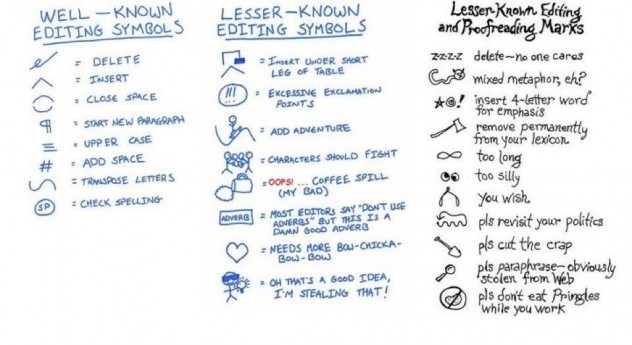
In Intro today it’s our second editing workshop: last time the students did a peer editing exercise, but I’ve opted for a self-editing exercise today in which they will go through their own papers and produce reverse outlines. It can be harder to look critically at your own work than at someone else’s, so I think it’s useful to have some concrete strategies for checking whether you have accomplished what you want and need to. They are writing on Carol Shields’s Unless but the topics they are choosing from are generated by lines in A Room of One’s Own — I wanted to highlight the idea (integral to both books, too) that writers are in conversation with each other and that we, in turn, enter into that conversation when we try to understand and interpret their works. My impression is that Room was (again) quite difficult for a lot of them to make sense of, so I’m glad for their sakes that I didn’t set this up as a straight comparative essay. That said, Unless poses its own challenges, not least because of its somewhat fragmented and episodic form. One good thing about assigning a book structured like that is that it’s harder to fall into plot summary: when you have to collect evidence and examples across a broad and scattered territory, I think you’re more aware of the details as adding up to something, rather than just moving along in linear fashion. We have one more session to come, for exam review and closing perorations, and then a couple of weeks until the final, so I’ll have plenty of time to comment on and return the essays. I think I may have been a bit cranky in my comments on the last set. That did have the beneficent side-effect of getting more people than usual in to see me. This is a not-unfamiliar phenomenon for me as a parent as well – say something temperately and you are likely to end up repeating it, but jump up and down about it and somehow it sticks. But even if yelling sometimes seems to work better, that doesn’t make it ideal!

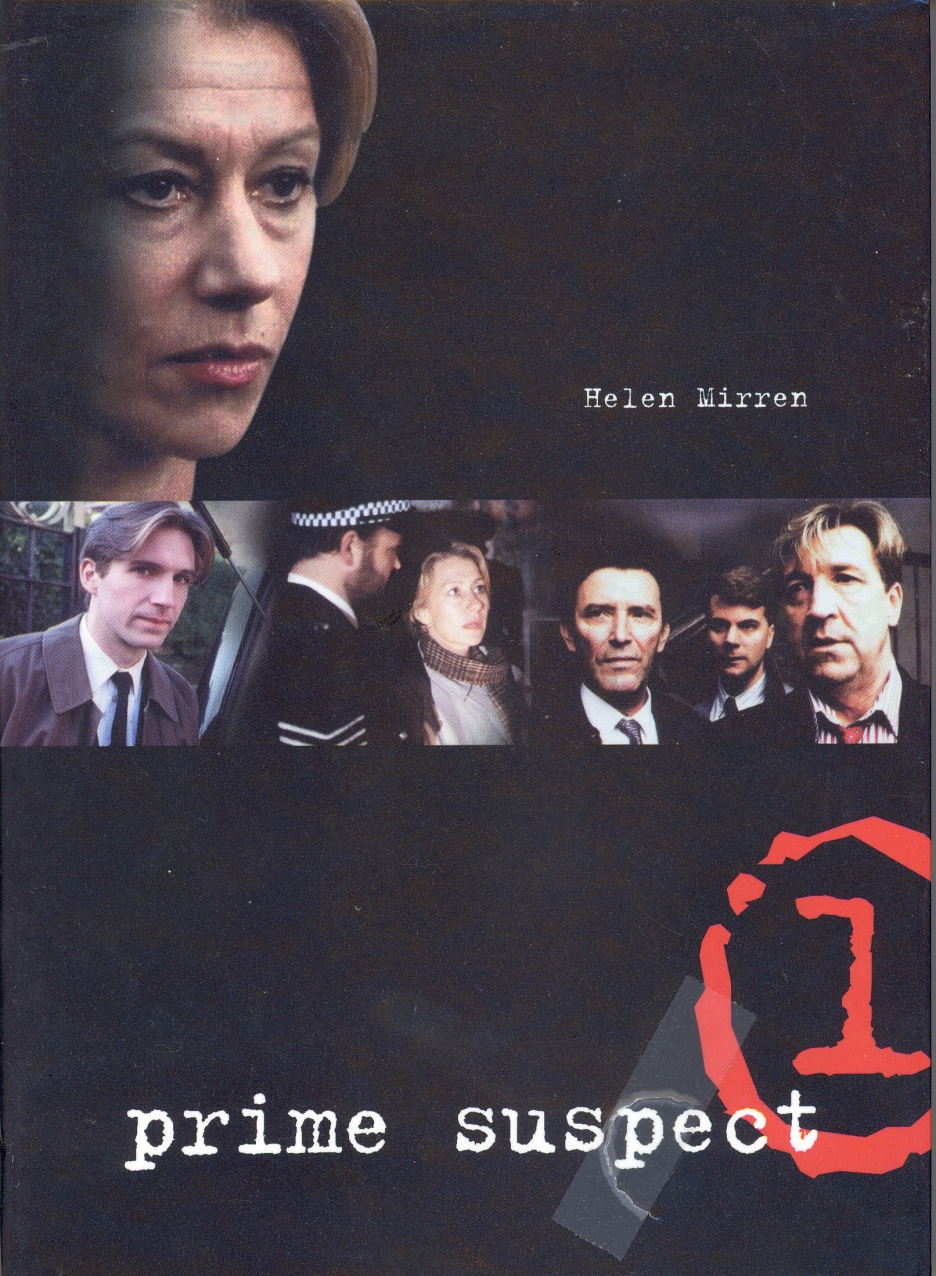
primesuspectIn Women & Detective Fiction, we’ve just wrapped up class discussions of Prime Suspect I. The series seems to have gone over unusually well this year: people who hardly talked at all up till now have been pitching in, and the overall energy has seemed good. We lost (another!) Wednesday to last week’s blizzard, so I’ve had to give up a planned final round-table to discuss people’s term paper projects: I usually make time for this in the schedule and when it has actually happened, it has always been very interesting and, I think, productive as a way to wrap up a seminar. But instead we’ll be having our last group presentation (on Prime Suspect) — which should also be a way to go out on a high note, given how creative and informative the presentations have all been this term. Though there is no requirement that the presentations incorporate a game (just that they include some form of class activity), I think every group has made one up! And that means there are usually prizes in the form of sugary treats.

This was also the week that book orders were due for the fall term! I always try to meet these deadlines — partly because I’m dutiful, partly because I know the bookstore sets them early so that they can work out their buy-back arrangements for students, and partly because I like to have this done and not have to worry about it any more. It’s possible to spend a really long time waffling over book choices but there really are no right answers, so sometimes just making the call and clicking ‘submit’ on the form is better than dithering any longer. I wasn’t waffling much over the next iteration of Mystery and Detective Fiction, which will be pretty much the same book list as this year. The only change I’m making is swapping out An Unsuitable Job for a Woman and putting back a short story anthology. That lets me ease up the pace intermittently, and it also simplifies the logistics of assigning the stories I always use (some Poe, some Sherlock Holmes, etc.).

I did run through a lot of variations on the book list for 19th-Century Fiction from Dickens to Hardy, though. I used to just pick five (or, once upon a time, six) ‘representative’ novels without much concern for an overarching theme. Lately, though, I’ve been experimenting with more deliberate groupings and liking it: last time I did this course, I chose all books dealing one way or another with troublesome or rule-breaking women (Bleak HouseCranfordThe Mill on the FlossLady Audley’s SecretTess). Then this fall in the Austen to Dickens course I did variations on the Bildungsroman (PersuasionWaverleyDavid Copperfield, Jane EyreNorth and South). For next fall I decided on the theme of vocation, or (as these are two persistent concepts of vocation in the 19thC novel) on love and work. I had three sure things (MiddlemarchGreat ExpectationsJude the Obscure) so my dithering was all about which other books to include. Most years I would fill the list in with something by Trollope, something by Gaskell, and/or an example of sensation fiction. This year I decided I’d like to include The Odd Women, which I’ve rarely assigned in lecture courses, and it occurred to me that though I usually keep the Brontës in the earlier course, Villette would be a really interesting contrast in its treatment of women and work and love and solitude … so I cut short the dithering and put it on the list. I’ve never lectured on it, and I haven’t even assigned it since maybe 1998, so that gives me something new to work on for the course, which is always a good thing.  I think the students will like it (and be surprised by it), and the more I think about it, the more provocative I think it will be in juxtaposition to our other readings. Also, much as I love Trollope, I don’t usually get much enthusiasm for him from students (Barchester Towers is boring?!), and I’m feeling a bit tired of sensation novels at the moment, so all in all, I feel good about this impulsive choice. And even if I didn’t, too late now! villette

Once again it’s just two courses for me in the fall. One’s big-ish (90) and one’s kind of medium-sized (40), and both are likely to be full, or very nearly so — but I plan the assignments carefully knowing I’ll be doing all the marking myself, and as both are classes I’m quite comfortable in I think it will be an energetic and not overwhelming term. But it’s still far off on the horizon: now that the books are ordered, I’ll be turning my attention back to the here and now, which means wrapping up this term and lining up my writing priorities for the summer. As always, the academic work cycle epitomizes Eliot’s wise remark that “every limit is a beginning as well as an ending.”

Open Letters Monthly: April 2014!

cotterleader

Does anyone who reads Novel Readings still need to be reminded to check out the new issue of Open Letters Monthly every month? Surely not! Love me, love my friends, right? But just in case, here’s the regular notice that we did it again: a new issue is live.

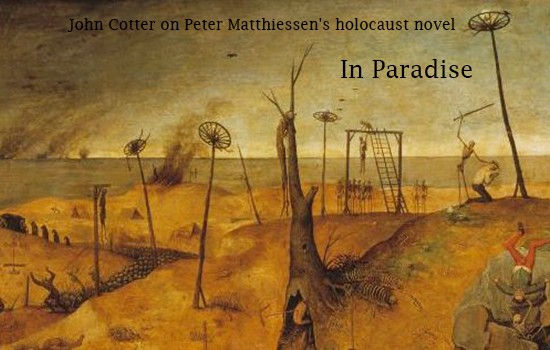
This seems like a particularly rich month. There’s a good showing from “the masthead,” with our editors all playing to their strengths: John Cotter on Peter Matthiessen’s In Paradise, Greg Waldmann on The Struggle for Iraq’s Future, Steve Donoghue on Bart Ehrman’s How Jesus Became God, Maureen Thorson on two new books of poetry, Elisa Gabbert with this month’s “Title Menu” on 10 books that might be poetry. Dorian Stuber weighs in on yet another contribution to the never-ending ‘crisis in the humanities’ (“wasn’t it always thus”?) and finds it opportunistic and clichéd; my Dal colleague Jerry White looks at the remarkable institution that is the Irish Presidency; Steve Danziger explores William S. Burroughs’s notorious Cut-up Trilogy; our own foreign correspondent Michael Johnson feels some déjà vu as he watches events unfold in Ukraine. And that’s not all, so I hope you’ll check it out.

“The bare outline of a useful story”: Ian McEwan, Sweet Tooth

sweettoothIf Sweet Tooth were not by Ian McEwan (author, as is stressed on the cover of my edition, of Atonement — one of my very favorite recent [that is, post-2000] novels) would I have been disappointed in it? How unfair, in a way, that the burden of great expectations should interfere with my appreciation of this well-crafted, elegantly told tale with its clever premise so smoothly executed. If only books could be read “blind,” as orchestral auditions are sometimes done now — with the author’s identity concealed and so no preconceptions or biases to come between us and the words on the page. And yet I’m not sure that pristine anonymity is quite what we want. When writers raise the bar, isn’t it only fair to test their subsequent efforts not just against the books they already outmatched but against their own previous personal best? Once an ice skater has included a quad, doesn’t every program without one seem just a tad safe, no matter how perfect the triple axels?

And I’d say “safe” is a good word for Sweet Tooth, along with “flat” and “smart” — and, again, only for McEwan would that last term not be entirely praise — smart is the least I expect of him. Knowing Sweet Tooth was “an Ian McEwan” I read along in full expectation of a big twist, a surprise, a treat that would throw everything I thought I knew about the book into some new perspective, or draw together its elements into a shape I hadn’t seen before. By page 300, I was getting downright impatient for this revelatory moment, as on its own surface terms the book I was reading wasn’t giving me much of a thrill. Then when the long-anticipated game-changer arrived, it was so obvious that I realized that in one way or another I had already predicted it. (In case you’re wondering why I didn’t know all about it from reviews, I typically avoid reviews of books I know I’m going to read until after I have a chance to read them for myself. I suppose that’s my own modified version of the audition screens. Now that I’ve finally read Sweet Tooth, I’ll be looking up what other people have said about it.)

The revelations of Sweet Tooth are actually not that different from the writerly twists in Atonement, but the payoffs seemed much slighter to me. It’s true that I didn’t see until I did some careful rereading just how artful Atonement is (one of my favorite details is that Briony turns out to have made the changes recommended by Cyril Connolly at Horizon). Maybe if I reread Sweet Tooth, I’ll find the experience a similarly stirring literary treasure hunt. But I’d need some extrinsic motivation to do that (maybe the other reviews will provide it?) because Sweet Tooth never gripped me: it lacks the gutsiness that lies beneath Atonement‘s opening aestheticism and that comes out into the open during the war sections. Where is the equivalent in Sweet Tooth of the Dunkirk sequences? What here even approaches the wrenching pathos of Atonement‘s elegaic conclusion? The cruelty and devastation we see in Atonement are greater than anything in Sweet Tooth, the people in it at least as guilty of selfishness, greed, and betrayal — but they also love passionately. Sweet Tooth, in contrast, seems all head and no heart; its people (like, as it turns out, the narrative itself) are just petty and manipulative. “I was a novelist without a novel,” Tom reflects, “and now luck had tossed my way a tasty bone, the bare outline of a useful story.” He just hasn’t filled that outline in with the richest tints of humanity.

The novel’s “duplicitous point of view” (in McEwan’s — or rather Tom’s — own phrase) is an escape clause for these complaints, of course. How much of the dully plodding quality of the narrative is excused by the revelation that it’s not as it first seems (or as it seems for 300+ pages)? In particular, how many of Serena’s deficiencies as a narrator and protagonist can be blamed on the actual storyteller? Are her limitations really his limitations — he can’t read her, much less convey her, as a more complex character? In that case it’s not McEwan who’s in any way deficient. If anything, he’s doubly clever because he can play at being someone who’s not as good a novelist as he is, and his imitation is pitch perfect! And the lengthy “reveal,” which  lacks both the urgency and and the beauty of Atonement’s conclusion (“I like to think that it isn’t weakness or evasion, but a final act of kindness, a stand against oblivion and despair, to let my lovers live and to unite them at the end”) and offers instead only dreary petulance (“I told you that it wasn’t anger that set me writing the pages in the parcel in front of you. But there was always an element of tit for tat”) before its final, understatedly flamboyant, flourish — any letdown we might experience is attributable to the same cause. But isn’t McEwan ultimately still accountable for inflicting his imperceptive (and somewhat artless?) doppelganger on us through the fictional author he’s created? How can we credit him with knowing better (and somehow also doing better) if he doesn’t give us a sign? I didn’t pick up on any evidence of metafictional distancing, though maybe I didn’t put the clues together: it’s true there are a number of debates about fiction embedded in the novel that perhaps are meant to reflect sardonically on the kind of novel Tom has finally written.

One way in which McEwan never disappoints is his forensically precise diction: who else would describe oysters as “glistening cowpats of briny viscera”? If I somehow hadn’t known the identity of the author of Sweet Tooth –if he were concealed behind that opaque screen — I think that at that moment, I would have started comparing him to McEwan nonetheless.

This Week In My Classes: Canons and Complications

unlessMy classes aren’t meeting at all today, thanks to the “weather bomb” we are currently enjoying. It is uncanny how many storms have come through on Wednesdays this winter! And it’s an unpleasant surprise to get a big one this late in the term. The bright side seems to be that it’s supposed to warm up significantly by the weekend, so we can hope that all this snow will just be a bad memory before too long.

What is it interrupting? Well, in Intro to Prose and Fiction we’ve moved on to Carol Shields’s Unless, a novel I appreciate more and more the more time I spend with it. It’s not an in-your-face kind of novel, but (appropriately, given its themes) its sharp edges can take you by surprise: a modest-seeming story about a woman writer rethinking her life and work because of a family crisis, it’s also a commentary on women’s writing and the literary canon, and on women writers and literary culture. Reta is seeking an explanation for her daughter Norah’s decision to drop out of ordinary life and sit speechless on the curb holding a sign that says only ‘GOODNESS.’ In a series of increasingly acerbic letters to intellectuals, writers, and critics (never actually sent) Reta connects Norah’s rejection of the world with the world’s indifference (or worse) to women. To the magazine that has run an advertisement for a series called “Great Minds of the Western Intellectual World,” for instance, Reta writes,

I have a nineteen-year old daughter who is going through a sort of soak of depression . . . which a friend of mine suspects is brought about by such offerings as your Great Minds of the WIW, not just your particular October ad, of course, but a long accumulation of shaded brown print and noble brows, reproduced year after year, all of it pressing down insidiously and expressing a callous lack of curiosity about great women’s minds, a complete unawareness, in fact. . . .

I realize I cannot influence your advertising policy. My only hope is that my daughter, her name is Norah, will not pick up a copy of this magazine, read this page, and understand, as I have for the first time, how casually and completely she is shut out of the universe. I have two other daughters too — Christine, Natalie — and I worry about them both. All the time.

To the author of an article on “The History of Dictionaries,” she observes “there is not a single woman mentioned in the whole body of your very long article (16 pages, double columns), not in any context, not once.” In wry anticipation of the VIDA counts (and their critics), she notes,

Bean counting is tiring, and tiresome, but your voice, Mr. Valkner, and your platform … carry great authority. You certainly understand that the women who fall even casually under your influence (mea culpa) are made to serve an apprenticeship in self-denigration.

 And later, addressing the author of a book review who calls women writers “the miniaturists of fiction,” she says,

It happens that I am the mother of a nineteen-year-old daughter who has been driven from the world by the suggestion that she is doomed to miniaturism. Her strategy  is self-sacrifice.

The letters punctuate the story of Reta’s reconsideration of her own writing: in particular, she is working on the sequel to her earlier work of light fiction, My Thyme is Up; in our class reading, we’ve just arrived at her conclusion that her new novel, “if it is to survive, must be redrafted,” so when we meet again on Friday I hope we’ll be able to have a good discussion about how and why Reta wants to write a different kind of book, with different kinds of options for her heroine, Alicia. Then next week we’ll consider her editor’s advice that she rework it to make it “one of those signal books of our time” — by making Alicia’s fiance, Roman, the central character:

‘I am talking about Roman being the moral centre of this book, and Alicia, for all her charms, is not capable of that role, surely you can see that. She writes fashion articles. She talks to her cat. She does yoga. She makes rice casseroles.’

‘It’s because she’s a woman.’

‘That’s not an issue at all. Surely you — ‘

‘But it is the issue.’

‘She is unable to make a claim to — She is undisciplined in her — She can’t focus the way Roman — She changes her mind about — She lacks — A reader, the serious reader that I have mind, would never accept her as the decisive fulcrum of a serious work of art that acts as a critique of our society while, at the same time, unrolling itself like a carpet of inevitability, narrativistically speaking.’

‘Because she’s a woman.’

‘Not at all, not at all.’

‘Because she’s a woman.’

Clipping these bits out on their own makes the novel sound more didactic than the experience of reading it actually is, partly because Shields plays around with the form of the novel, partly because the other anecdotes and memories Reta shares with us implicitly raise the questions these more pointed sections address explicitly, so that the book reads like an ongoing dialogue — internally, for Reta herself, and then with us — about what we look for in fiction, how we judge what we find, and how those questions are affected by gender. We’re reading it right after A Room of One’s Own, and many of the questions are the same: what (where) is the women’s literary tradition, what is the place or effect of anger in literature, how are our notions of literary greatness tied to ideas about scale? (Shields said “Jane Austen is important to me because she demonstrates how large narratives can occupy small spaces.”)

forrestIn Women & Detective Fiction, this week’s reading also raises questions about literary canons and standards, and how we decide what is worth reading and discussing, but in this case it does so more accidentally. I’m not someone who believes that we should assign only the books we believe to be The Greatest (even if we individually felt we could be confident about our standards). Universities are in the business of education, not adulation, and plenty of works that we might feel falter on some grounds are plenty interesting and significant (historically, theoretically, formally) on others. Courses vary in their purposes, too, and the best and most relevant conversations don’t always emerge from the most elegantly crafted narratives. Still, I do sometimes find my principles conflicting with my actual reading experience, and that’s how I’ve felt with Katherine V. Forrest’s Murder at the Nightwood Bar, which has been our class’s reading for the past week.

Murder at the Nightwood Bar is one in a series with inarguable significance (“First, first, first,” emphasizes Victoria Brownworth in her recent profile of Forrest), and it deals explicitly with questions of sexual identity and systemic discrimination both through its closeted detective (alienated, thus, both from her follow officers and from the lesbian community she engages with during the investigation) and through the crime itself. It sets up lots of good points of comparison with our other books, from the detective’s struggle over getting too personally involved with the case (or people involved in it) to the connections it makes between individual crimes and systemic injustices. As far as all that goes, I have no regrets about having added it to the syllabus this year. I just wish it were better written — yes, that awkward evaluative measure! Better at what, to what ends, as I’m always asking? In this case, I just mean “better at the words”: especially during the patient rereadings required for class prep, it has seemed stilted and inartistic, sometimes tediously so. I’ve felt no temptation to discuss anything that’s not literal about it: not its form or its style, not its voice, its attention to setting, none of those “literary” aspects. Mind you, it’s not the first of our readings to make that kind of reading seem beside the point: Agatha  Christie is also not particularly literary. But Christie’s prose has a clarity and economy that gives it its own (superficial?) elegance. That said, while Forrest may not be as good a stylist, her materials are more challenging — her agenda is more ambitious, and she gave us much more to talk about than Christie did, even though Christie is, of the two of them, the one who is obviously part of the ‘canon’ of detective fiction. Not every course can or should be a tour of “the best that has been thought and said” (as if we could be sure what those examples are — as Woolf says, “where books are concerned, it is notoriously difficult to fix labels of merit in such a way that they do not come off”). My goal is always to find the readings that are the best for my purposes, which in this case include considering a wide range of different examples of detective fiction by women as well as examples that are in fruitful conversation with each other when collected on the syllabus. My hope is that they will also reward close reading and rereading. At this point, then, I’m ambivalent about Murder at the Nightwood Bar, then, which certainly serves the first purpose but doesn’t quite fulfill my hopes for the second.

“Torn by the claws of reality”: Alexandros Papadiamantis, The Murderess

papadiamantisMy book group’s last read was Mary Stewart’s This Rough MagicWe like to follow some thread from one book to the next; we got to Mary Stewart from Daphne du Maurier’s Jamaica Inn  by way of romantic suspense, and decided to make Greek islands our next connection. The obvious choice would have been Zorba the Greek (and I wouldn’t be at all sorry if we read that next), but we were also looking for something relatively short this time, and so we fixed on Alexandros Papadiamantis’s novella The Murderess. (I blame Tom.)

If the setting of This Rough Magic is, as I proposed, the Greece of tourists, the setting of The Murderess is the Greece of your nightmares. Not that it’s ugly — quite the contrary! The beauties of the scenery are lovingly evoked by Papadiamantis (via his translator, Peter Levi):

It was a sweet May dawn. The blue and rose clarity of heaven shed a golden colouring on plants and bushes. The twitter of nightingales could be heard in the woods, and the innumerable small birds uttered their indescribable concert, passionately, insatiably.

But this beauty only makes the harshness of the story more shocking. Though not a mystery novel, The Murderess is definitely a crime story, and this aspect of it reminds me of P. D. James’s comment that setting “enhances the horror of murder, sometimes by contrast between the beauty and outward peace of the scene and the turbulence of human emotions.”

The turbulent emotions in this case are those of Hadoula, known also as Frankojannou, and the plot is what a canny publicist might describe as “Hardy meets Gissing meets Stephen King.” Like Father Time’s in Jude the Obscure — and with a similarly parable-like resonance — Hadoula’s crimes are “Done because we are too menny”; as in Gissing’s The Odd Women, it’s women who are present in excess, their value as individuals weighed as nothing against the burden they represent to the families that must struggle to marry them off and maintain them if this effort unsuccessful. Add in the pressures of the Greek dowry system and a general climate of ignorance and superstition, and you have the ingredients of a real witch’s brew of cynicism and desperation. Thus Hadoula, sleep-deprived from tending to her infant granddaughter, reflects, “The minute girls are born a person thinks of strangling them!’ “Yes,” says our narrator,

she did say it, but she would certainly never have been capable of doing it. Not even Hadoula herself believed that.

 After all, Hadoula is a healer, a brewer of ‘medicines,’ someone whose mission is to sustain life, not destroy it. But just as Hadoula does not really believe in the remedies she peddles, she is inconsistent about whether the right thing is to nurture or murder little girls:

But I ask you, do there really have to be so many daughters? And if so, is it worth the trouble of bringing them up? ‘Isn’t there,’ asked Frankojannou, ‘isn’t there always death and always a cliff? Better for them to make haste above.

It only makes sense to hasten girls out of life: after all, religion teaches that “grief is joy and death is life and resurrection, that disaster is happiness and disease is health. . . . Would it not really be right,” she plausibly argues,

if only humans were not so blind, to assist the scourge that fluttered in the angels’ wings, instead of trying to pray it away? . . . Ah, the more one works things out, the more one’s brain goes up like smoke.

And sure enough, overcome by the imponderable cruelty of a world in which wanted sons die and unwanted daughters give their parents “a forestaste of hell in this world,” Frankojannou’s brain does “go up in smoke,” and, “out of her mind,” she begins her career as a murderess.

If only she clearly were out of her mind, The Murderess would be a simpler novel and the judgments it brings to bear on its protagonist would be easier to identify and take sides on. The Murderess is not a simple book, though. The murders are shocking, no question, but they make perfect sense, not just in Hadoula’s crazed mind but as a literalization of the many ways in which (according to her own life story and experiences) women are degraded and devalued by the world they live in. Hadoula is wracked by her conscience, tormented by “the lamenting voice of the infant, the tiny girl unjustly slain”; she runs from man’s justice “but prison and Hell were within her.” At the same time, at the next opportunity she finds herself once more with her hand’s at an infant girl’s throat and remembers the context of her cruel acts:

Then the baby daughter began to cry very softly, moaning unbearably. Frankojannou forgot all the remorse she had felt so deeply under the black wings of her dreams. Once again she was torn by the claws of reality, and began to think inside herself,

‘Ach, he’s right, poor Lyringos . . . ‘all little girls, her bad luck, all little girls!’ And what a consolation it would be for him now, and for his unhappy wife, if the Almighty took her straight away! While she’s small, and leaves no great sorrow behind her!’

Is it Hadoula who is really murderous? Or does the blame go to a society that has made such reasoning plausible? Why should she be held accountable for her attempt to short-circuit the tragic cycle these little girls, by their very existence, perpetuate?

But Frankojannou’s own despair at her actions is enough to show us the inhumane flaw in her reasoning — which is in any case more unreasoning intuition than logic, maybe even (as the narrator has said) madness. She seems ultimately, to be running from herself as much as from the “regulars” who pursue her; the voice that haunts her with the cry “Murderess! Murderess!” is as much hers as anyone else’s.

The final sequence of the novel is an extraordinary set piece as we follow her to her death “midway between divine and human justice.” Was she in some sense an agent of justice? Is she herself a victim? Or is she only an unleashed terror, acting on hatred in the guise of mercy? I am caught, myself, in this ambiguity, unsure of my interpretive footing. I expect our discussion next weekend will be a lively one!

You can read more about The Murderess from Steve here and from Tom here. Iagree with Steve about the effectiveness of Levi’s translation: at first I found the book uncomfortable and stilted, but it finds its rhythm, and there are many grimly, hauntingly unforgettable passages. Tom calls it “a hardboiled feminist crime novel.” I think I agree that it is feminist, even though witch-like homicidal Hadoula plays into misogynistic stereotypes: perhaps (as with some women in the original hard-boiled tradition) she upsets those stereotypes even as she inhabits them. Like Tom, I couldn’t resist looking up something about Skiathos: it looks beautiful.

Recent Reading Round-Up: Mysteries, Romances, and Feminists

It isn’t that I haven’t done any reading since I posted on Elena Ferrante’s The Story of a New Name; it’s just that none of the reading has felt really notable, or else it has been reading for work and thus not something I necessarily have more to say about here. I’m actually looking forward to getting into a book with a bit of heft to it (it doesn’t have to be literally weighty, just something that matters when I read it): I have a number of candidates lying around. At a minimum, I’ll be starting on Alexandros Papadiamantis’s The Murderess soon for my book club, which meets at the end of the month. But that’s so short: surely I can read something else before then! In the meantime, here’s a quick catch-up post on my recent, and quite miscellaneous, desultory reading.

rebus

1. Saints of the Shadow Bible. I’m not quite as enthusiastic about Rankin’s latest as Steve, who called it “rippingly good” in his review at Open Letters Weekly. It is good, but for me it was predictably so: it has all Rankin’s characteristic virtues, and now that I’ve gotten over my pleasure at having Rebus back in action, I feel (perhaps unfairly) a bit blasé about it. Rankin is very good at this kind of book, but as a result it doesn’t impress me very much when he does it again. This particular installment of the series is reliable but doesn’t take the characters or the genre in any new directions. I liked the ambition of some of the books from a few years back (Fleshmarket Close or The Naming of the Dead, for instance), which had a social and political agenda that broadened their scope. Here we’re just hunkered down with Rebus again. We are seeing Siobhan grow in stature: to me that remains the most promising direction Rebus could take the series in.

2. Mr. Impossible. Back in Ye Olden Days when I knew not what I was missing by not reading romance novels, Lord of Scoundrels was proposed as a possible conversion book. That did not go well (though the experiment as a whole was ultimately successful). I think that if Mr. Impossible had been proposed instead, it might have won me over, because it’s funnier. For some reason (OK, because I’m cynical), I prefer romance that doesn’t take itself too seriously. This was my second read of Mr. Impossible and I enjoyed it just as much. Actually, technically it was my second almost-read, or mostly-read, since I don’t read to the very end of many romance novels. The last pages (in some, the last chapters) almost always turn too cloying for my taste. Sure, all the way through I know pretty much how things are going to end, but often a lot of the energy goes out of the plot by the time the characters have overcome whatever is keeping them from their HEA. (Is that wrong or unusual of me? I can’t think of another genre in which I have fallen into this DNF habit. If I’m quite interested in the characters or the plot sustains some tension to the end, I’ll read it all, but sometimes I’ve just had enough. I also get most of my romance reading from the library, so I don’t feel any anxiety about dabbling in it rather than committing fully to it.)

3. Along those lines, I’ve been reading Nora Roberts’s Happy Every After, which is the 4th one in her “Bride Quartet.” It is hard to imagine a more anodyne series, really: sure, all of the main characters have tortured backstories of one kind or another, but there’s a bland formulaic simplicity to the novels that belies this attempt to give them depth. As a result, they are kind of relaxing, but the main thing I like about them is their “neepery.” Each protagonist in this quartet has a particular job, and there are lots of specifics about how it gets done. For whatever odd reason, I like that (I learned the wonderful term “neepery” from Victoria Janssen in a thread about the Dick Francis novels, which are full of it). I’m about half way through but I think I’m already about to DNF it for the reasons noted above. Plus, I already watched The Wedding Planner (speaking of predictable) so the neepery here isn’t as novel to me as the stuff about cakes or flowers in the other books.

paretsky

4. Now that I’ve finished with the new Rebus, I’m catching up on V.I. Warshawski with Critical Mass. I’m not very far along in it yet, but like Saints of the Shadow Bible it feels familiar: these are the people, these are the moves, this is the style I expect from Paretsky. In neither case is this a bad thing! I wrote in some detail about Paretsky in a review of Body Work in Open Letters a couple of years ago. I teach her often (we just finished discussing Indemnity Only in ‘Women & Detective Ficton’ today, in fact) and admire her principled determination to use the form of the detective novel to advocate for social justice. If the results are occasionally somewhat didactic, more often than not she integrates her political with her artistic purposes pretty effectively.

5. How to Suppress Women’s Writing, by Joanna Russ. This too came to me by way of Victoria Janssen, and again I’m grateful! I was mentioning on Twitter that I’m working on A Room of One’s Own with my class, and she wondered if I’d ever paired it with Russ’s book. I haven’t, since I’d never read or even heard of How to Suppress Women’s Writing before, but I found it in our university library and have just finished reading it through. It certainly does pair up well with Woolf: I can imagine a lot of conversations that the juxtaposition would spark, not least because Woolf is a major figure in Russ’s own meditations on ways women writers have been opposed and discouraged through the ages. Her approach is (as she says herself) not systematic or scholarly but anecdotal and epigrammatic: she lines up examples under categories such as “Prohibitions,” “Bad Faith,” “False Categorizing,” and “Anomalousness.” Many of her earlier examples were familiar to me, especially those from the 19th century, but she carries her topics forward to her present (the book was published in 1983). At the same time I was preparing my lecture on women and writing and Woolf for my class and reading Russ’s book, an excellent essay by Anne Boyd Rioux on “Women’s Citizenship in the Republic of Letters” appeared at the VIDA site: while it would have been nicer to explain all this to my class as a historical phenomenon, it is good to be able to show them how the conversation we are having in class, through Woolf, is part of a larger ongoing one they might take an interest — and a part — in. And yet things have definitely changed. We read Woolf now in the context of decades of scholarship filling in the absences that preoccupy her; reading Russ I was happily struck by at least a few improvements, such as the availability of works such as Villette (which she recalls being unable to order for a class in 1971 because no US edition was in print) — or the impossibility (surely) that anyone at a university today would read Woolf’s novels “secretively and guiltily like bonbons,” as she describes herself doing, “ashamed of them because they were so ‘feminine.'”

This Week In My Classes: Writing and Talking

escher12“‘It’s the season when the s–t hits the fan,” I observed to the students in my Intro class on Monday. And that’s the truth for all of us: from this point on in the semester, if we want to stay in control it’s all about setting priorities, managing time, and getting things done. For this class in particular, this week they turn in the first fairly heavily weighted essay (they’ve already done two short warm-up assignments, for practice and to clarify expectations). Today they brought in drafts and did a peer-editing exercise. I was pleased that everyone seemed to be taking it seriously. As I told them several times, even professional writers have editors, and editing is a crucial part of the writing process. I think it’s also interesting for them to see how their classmates have approached the same assignment. Sometimes it seems that students believe there’s One Right Way and if only they could guess what it is they could get one of those magical A things, but of course there isn’t, and that’s exactly what makes this kind of work both challenging and interesting. In any case, even those who might think they got little out of the workshop itself will benefit from having almost three more days to review and revise their own essay. I hope they take advantage of it!

The essay they’re working on is a comparative one on Night and The Road. This wraps up our mini-unit on horror and despair. Friday we start on A Room of One’s Own, which we’ll follow up with Unless: I was very pleased with this pairing last year, despite some fretting about the particular challenges of teaching feminism, and I hope it works as well again this time around.

In Women & Detective Fiction, we’re part way through our discussions of Sara Paretsky’s Indemnity Only. Discussion was so sluggish on Monday that I left class feeling quite fed up with everything! I even came up with a cunning plan for today in case I had the same pulling teeth sensation and decided drastic measures were called for … but they weren’t, which is definitely the happier outcome of the two. Still, there is a much larger cohort of non-talkers in this group than I’m used to in a seminar, which is an ongoing frustration. I have long had an explicit policy of not doing cold-calling in seminars: there are incentives built in for participation, and usually that’s enough even for quite shy students. Also (despite what some people may think) I go out of my way to be receptive and respectful: I hope students feel that when they do contribute to discussion, they are listened to and encouraged. I suppose that being really listened to may itself be a bit intimidating!

In this class too, deadlines are looming: they will be submitting paper proposals next week, so if I’m smart I’ll mark the first-year papers very promptly so I don’t have two sets of assignments on my conscience. The past couple of weeks have been very busy with administrative work, but after this Friday the schedule of meetings will lighten up, which will help me keep my mind on these tasks. I’ve also more or less completed two short-ish writing projects I agreed to do for a website being created by the British Library (I’m pretty excited about being involved with something for them!). They were harder than I expected, but also interesting. I was actually working on one of them last night, and as I struggled to fit in all the parts I wanted while not going too wildly over the proposed word limit, I felt a real kinship with my students, out there somewhere laboring over the drafts of their essays! I don’t know if it means anything to them, but I often mention in class now that I too have writing deadlines and challenges and editors. I even pass on little tricks I’ve developed that help me work through the frustrations of producing that “shitty first draft” — putting stuff I’m not happy with in different colored fonts, or surrounding it with XXX’s, or including editorial questions to myself in brackets, for instance, all of which frees me (at least a little) from thinking that because it’s not perfect yet I shouldn’t move on to write the next part. I know that for me it has been helpful to realize that I’m surrounded by writing that did not in fact magically appear in all its current erudition and elegance but had to be done by someone, worked on by someone, edited by someone … In our own ways, we’re all in this together, just trying to put words in the right order and contribute to the big, disorderly, kaleidoscopic conversation about literature!

“For Myself Only”: Elena Ferrante, The Story of a New Name

ferranteI’m glad I kept going with Elena Ferrante’s Neapolitan trilogy. I wasn’t bowled over by My Brilliant Friend: I described myself as interested but not emotionally gripped. To some extent, I felt the same about The Story of a New Name, but now I’m more interested: having spent this much more time with the characters, I’ve caught the “I want to know how this all turns out” bug.

This second book takes the central characters, friends (and antagonists) Elena and Lila, through the first phases of their lives as young adults. For Lila, this means through the years of her marriage to Stefano Carracci. There’s a literal but also a symbolic way in which her transformation into “Signora Carracci” is the source of the novel’s title:  it’s the story of her experiences as a young married woman, but also the story of her ceaseless struggle to retain control of her identity. A crucial sequence involves her remaking an enlargement of her wedding photo — made to use as a promotional image for the shoe line she has helped create. When she’s finished with it, Elena realizes, Lila has managed “to erase herself”:

With the black paper, with the green and purple circles that Lila drew around certain parts of her body, with the blood-red lines with which she sliced and said she was slicing it, she completed her own self-destruction in an image, presented to the eyes of all in the space bought by the Solaras to display and sell her shoes.

This act of paradoxically simultaneous construction and destruction is characteristic of Lila’s energy, which seems always to be at once positive and dangerous. Somehow she is more fiercely herself the more she rejects, repels, or opposes attempts to name her or in any way fix who she is. Later, watching Lila deliberately slicing at the bonds of her stifling and violent marriage, Elena remembers “what she had done to the wedding-dress photograph” and thinks that now “she is behaving in the same way  . . . with the very person of Signora Carracci,” trying “to tear off her condition of wife.” Later still, when Lila has left her husband and imagines that she is starting over, “she was again fascinated . . . by erasing herself.”

In contrast, over the same period Elena is resolutely creating herself, determined to “live for myself only”:

In the past there had been Lila, a continuous happy detour into surprising lands. Now everything I was I wanted to get from myself.

Elena ended My Brilliant Friend despairing that she might never find a way out of the grimly claustrophobic neighborhood of her childhood, and her path is certainly not a straight or easy one. Even as she moves on from high school to college, she feels she cannot escape her upbringing, which — through her accent as well as her ignorance of more sophisticated mores — marks her as a misfit in the more cosmopolitan circles she enters:

I arrived at the university very timid and awkward. I immediately recognized that I spoke a bookish Italian that at times was almost absurd . . . I began to struggle to correct myself. I knew almost nothing about etiquette, I spoke in a loud voice, I chewed noisily; I became aware of other people’s embarrassment and tried to restrain myself.

Gradually, she learns to speak and act like someone who belongs, particularly by downplaying the very intellectual abilities that made her move possible in the first place: “by never appearing arrogant, by being ironic about my ignorance, by pretending to be surprised at my good results.”  She becomes a promising student, gets involved with a well-to-do but militantly Communist boyfriend who takes her to Paris and thus expands her mental horizons as well as her literal ones. Then she takes another step: she begins to write about her life, in a novel, which is immediately accepted for publication. Elena feels, understandably, “very pleased with myself.” Surely this proves that she has an identity of her own, one that will carry her away from her past. But this, too, is not so simple, for no sooner has she written herself into her new existence than she comes across an old manuscript of Lila’s, a story called “The Blue Fairy” that Elena had admired so devotedly as a child. On Lila’s behalf, she had given the story to their teacher, her mentor, Maestra Oliviero, who had never returned it. But there it is among her papers, the pages “full of her wonderful, goods, very goods.” Elena rereads “The Blue Fairy” and discovers that once again, her life and Lila’s are entangled:

Lila’s childish pages were the secret heart of my book. Anyone who wanted to know what gave it warmth and what the origin was of the strong but invisible thread that joined the sentences would have had to go back to that child’s packet, ten notebook pages, the rusty pin, the brightly colored cover, the title, and not even a signature.

No signature: again, Lila has cut herself out, but Elena can no longer imagine that she is the sole author of her own identity.

The interplay of their two characters and stories is intricately developed, and Lila is a fuller presence here because a significant section of Elena’s narrative draws on Lila’s notebooks to present events more or less from her point of view. The emotional intensity of their lives is probably the quality of the novels that strikes me the most . . . and yet, as before, I’m not myself emotionally gripped. The prose itself has a somewhat flat affect: this may be the effect of the translation, of course, but I’m almost tempted to call it plodding: one thing after another is recounted, with no conspicuous change in register. I’ve been reading some of the reviews I linked to last time, trying to see what I’m missing. James Wood’s description of My Brilliant Friend is disconcertingly unlike my own experience of the book: he calls it “beautiful and delicate,” for instance, when I would have said it is ruthless and raw; he calls it “amiably peopled” and thus makes me wonder if he met the same people in it that I did (find me one “amiable” character!); he talks about the “joy in the book not easily found in [Ferrante’s] earlier work.” If My Brilliant Friend is joyful by comparison, I’m not sure I’m up to reading the earlier books! Catherine Morris’s discussion in the TLS comes much closer to what I thought about the novels, and she helped me appreciate what she calls Ferrante’s “forensic attention to psychological states.” But she likes the flat writing style more than I do: “Scenes of high emotion . . .  are all the more powerful for being simply rendered.” Morris praises Ferrante’s “doggedness in unearthing – and fearlessness in articulating – thoughts that usually remain unspoken.” Ivan Kreilkamp’s essay on Ferrante in the LARB is called “A Rage That Had No End.” I wonder if the critical enthusiasm for these novels is connected to the current anxiety about niceness in female characters: is anger the new obligation of the “serious” woman writer, or the new touchstone for critics of women’s writing? Claire Messud’s much-hyped The Woman Upstairs was also all anger, all the time: I found it tedious, and also not all that innovative (Charlotte Brontë was doing anger a long time ago, after all).

That said, I’ve spoken out myself in favor of books, writers, and characters who are interesting: that isn’t everything I look for in a novel, but it’s a lot (and a lot better than boring, that’s for sure). When the third volume in the triology comes out, I’ll definitely read it.