Not a Very Good Week

I’m in a slump — a writing slump, mostly, but (and relatedly) also an emotional slump. I will come out of it, I’m sure, but so far I haven’t figured out exactly how. Some of it is my usual summertime blues, which have been exacerbated this year by how grey and rainy it has been here. Some of it is discouragement about the writing I did over my sabbatical, which right now seems to have led only to dead ends. Some of it is frustration because the teaching tasks I turned to, to cheer myself up by at least getting something concrete done, haven’t gone that well. For instance, twice while I was entering my long list of reserve readings for my fall graduate seminar the library’s form timed out on me after I’d put in all the information — which is a painstaking process, believe me! (Third time’s the charm, thank goodness.)

That’s small potatoes, though, compared to discovering that the work I’d put in on my Blackboard site for my fall intro class has been completely wiped out (my section was mistakenly reset instead of someone else’s). I can do it all again — I’ll have to, obviously. But what is torturing me at the moment is that back in June, when I last worked on the site, I had hit on what I thought was a really good way not just of reorganizing the course materials but of explaining and introducing them: after several tries, I’d found a tone and wording that I thought hit just the note I wanted. And now, of course, I can’t remember exactly what I’d said and done. No doubt it was not perfect in some ideal way, but in my mind now there will always be an imagined but inaccessible Better Version. Working on Blackboard is so fun, too: who wouldn’t want to spend more time on it! That will teach me to start early.

Then there’s the Amazing Disappearing Notebook. For every seminar class I teach, I use a spiral-bound notebook for preparing my own class notes and for taking notes during discussion. I have a shelf full of these notebooks! It is very helpful to leaf through previous versions of them when prepping for a new iteration of a course, so naturally I went looking for my notebook from the last time I taught my grad seminar on George Eliot — and it is nowhere to be found. I have emptied filing cabinets and shelves and done all the insane things you do when you are sure something is in the room but you can’t see it anywhere. It’s not as if I absolutely need it: I wasn’t going to actually use it for teaching the class this time. But I really would have liked to have it as a prompt and a reminder! So, one more small source of frustration that adds to my cumulative feeling of failure.

On all these fronts and more, the fix is simple, in theory at least: I need to take a deep breath and just get back to work. I need to commit to a new writing project and stop second-guessing its interest or value; I need to get the darned Blackboard site back into shape, even if it isn’t the perfect shape; I need to finish drafting my syllabi and handouts and organizing reserve materials and rereading key materials so I’m ready for the first day. I need — and this one is harder — to return to my sabbatical writing and figure out (again) how to shape and direct it. I will do all of these things. In my entire life, I have actually never not done the things required of me — so there’s that to remember, when I exacerbate my slump by criticizing my own lack of resilience and lapses in productivity.

did get my application for promotion completed, so that’s one (pretty big) thing crossed off my list. I suppose that means this is not a good time to mope in public! Someone in a position to (and with a mandate to) judge might be watching. As I’ve said before, though, I think it’s misleading to pretend everything’s going swimmingly all of the time. Who knows: my discouragement might actually end up being perversely encouraging for someone else who is also feeling stymied. It happens! You’re not alone. We’ll get past it.

Update: I went for a walk, then got some small but necessary things done (finished a draft syllabus, did final edits on a submission for Open Letters, played around with my book order for a winter-term course). I feel a bit better. Maybe tomorrow I might even be ready to tackle some of the big things!

“Sailing Into the Darkness”: John Bayley, Elegy for Iris

elegyforiris

Twice, Iris has said to Peter Conradi that she now feels that she is “sailing into the darkness.” It was when he asked her, gently, about her writing. Such a phrase might be said to indicate the sort of inner knowledge that I had in mind. It seems to convey a terrible lucidity about what is going on. . . .

Every day, we are physically closer; and Iris’s little ‘mouse cry,’ as I think of it, signifying loneliness in the next room, the wish to be back beside me, seems less and less forlorn, more simple, more natural. She is not sailing into the dark. The voyage is over, and under the dark escort of Alzheimer’s, she has arrived somewhere. So have I.

Elegy for Iris is a strange book, at once rambling and inexorable, solipsistic and generous, celebratory and poignant. It’s Bayley’s tribute to his wife, but it’s also, inevitably, as much his story, and he’s not always a very likable guy. In fact, he often comes across as a bit of a stodgy old fart (a description I’m not sure he would necessarily have disavowed). One of the main reasons it’s hard to like him, though, is that he’s not always very nice about or to Iris. Yet it was actually when his behavior to her was least admirable that I found myself liking his book the most, because the moments of painful, shameful honesty (“The rage was instant and total, seeming to come out of nowhere. ‘I told you not to. I told you not to.’ In those moments of savagery, neither of us has the slightest idea to what I am referring”) admit both the real difficulty of their situation, and offset the possibility that he himself would emerge the hero of the book. He’s no saint: he just loves his wife and sticks — doggedly, affectionately, imperfectly — to his commitment to her.

One of the most interesting aspects of Elegy for Iris, I thought, was actually how he views their marriage. For him, a good marriage is a condition of being alone though together: “the apartness is part of the closeness,” he says, “perhaps a recognition of it.” “The solitude I have enjoyed in marriage,” he explains,

and, I think, Iris too, is a little like having a walk by oneself and knowing that tomorrow, or soon, one will be sharing it with the other, or, equally perhaps, again, having it alone. It is also a solitude that precludes nothing outside the marriage, and sharpens the sense of possible intimacy with things or people in the outside world.

“So married life began,” he reports of their wedding,

And the joys of solitude. No contradiction was involved. The one went perfectly with the other. To feel oneself held and cherished and accompanied, and yet to be alone. To be closely and physically entwined, and yet feel solitude’s friendly presence, as warm and undesolating as contiguity itself.

“Apartness in marriage,” he says a bit later, “is a state of love, and not a function of distance, or preference, or practicality.” This seems to me a fairly unconventional idea(l) of marriage, nowadays at least. I liked the freedom it suggests — the priority it implicitly places on letting each partner simply be, and be different, rather than obsessing over being together or being the same. It certainly seems to have been the right idea for John and Iris, and it also seems to have prepared them — or John, at least — for the unexpected variety of apartness inflicted on them by Iris’s Alzheimer’s. As he tells it, she was always somewhat elusive to him, always ineluctably other. The disease painfully perfects the mystery, and yet seems, somehow, to leave their union intact.

Elegy for Iris is full of interesting bits and pieces: reflections on Iris’s novels, for instance, and her relationships with other novelists and philosophers; comments on art and artists, including the Canadian painter Alex Colville, whose work she greatly admired; descriptions of their peculiar and somewhat disturbing housekeeping methods, which basically consist of “letting things go” (“a principle which we had once followed almost unconsciously, [but which] was now asserting itself as a positive force”); many scenes of swimming, a cherished shared pleasure. Inevitably, though, these snippets of a life fully lived are overshadowed by our knowledge, and his portrayal, of Iris’s mental decline. Always gentle, she seems to get softer and softer as the disease encroaches, puttering confusedly or anxiously but never angrily — that’s for him to feel. In her prime she had, he says, “Christ-like qualities of tolerance, amusement, and good nature.” This unworldly, or other-worldly, Iris becomes the child-like Iris who watches Teletubbies with rapt fascination: “They trot about, not doing anything much, but while they are there, Iris looks happy, even concentrated.” That’s terribly sad, though she isn’t, which may itself be the hardest and strangest thing about this voyage of hers “into the darkness.”

“But which?” Jo Walton, My Real Children

MyRealChildren_Jo-WaltonWhich were her real children? Poor Doug and dear Helen and brilliant George and troubled Cathy? Or sensible Flora and wonderful Jinny and talented Philip? Was Sammy or Rhodri her favorite grandchild? Only one set of them could possibly be real, but which? She loved them all, and there was no real difference in the quality of her love for them.

Is there a name for the genre of novel that tells one person’s story from birth to death? Bildungsroman isn’t right, as the point in this case is not development towards a place in the world but rather passing through the world, through the ages of life, from start to finish. Any Human Heart would be an example, and so would A God in Ruins (tricks aside), or Moon Tiger. I suppose ‘biographical novel’ would do, but that sounds dull so I’m going to call them “soup to nuts” novels and then claim My Real Children for the list  — though Walton’s trick here is to double it up, giving us not one but two stories of the same person’s life. In a way it’s Life After Life Lite, and it’s hard not to wonder if Walton was influenced in any way by Atkinson’s success. Perhaps she was just annoyed by it, as My Real Children did not, as far as I can tell, get anything like the attention, but then, both the premise and the execution of Walton’s novel are less showy than Atkinson’s.

My Real Children might also be called a “fork in the road” novel: its deceptively simple premise is that its protagonist, Patricia, is confronted with a dramatic “now or never” choice, a proposal, and her decision shapes everything about her subsequent life. But the novel opens with the elderly Patricia “very confused” in her nursing home, unable to remember which life — the “yes” life or the “no” life — she actually lived, and the rest of the book takes us in alternating chapters through both possibilities. That in itself gives Walton plenty of interesting things to do, not the least of which is working out how Patricia’s character is itself affected by the events of her life, either as “Tricia,” who marries Mark, or as “Pat,” who does not. What is fundamental to someone’s identity and what is susceptible to experience? How does someone’s individual personality express itself under different circumstances? How, to look at it from our point of view, can we see double and yet accept the Patricia of the novel’s opening and closing as the same woman we’ve followed along two such different paths? Walton does this with both ingenuity and some subtlety, I thought: arriving back at the nursing home, there’s no awkwardness, no dislocation, as the histories merge.

Both stories are also persistently interesting, though there’s not much artful about Walton’s narration: it’s one-thing-after-another storytelling, without flourishes (the governing premise aside, obviously). Both lives have their share of joy and sorrow, but the highs and lows are related with the same flat affect throughout, so that (for me, anyway) scenes that might have been moving or uplifting were not, or not very. Since the novel sounded the same all the time, I also sometimes forgot which story I was in at the moment and had to ferret around for the last time Patricia was named — and sometimes, even then, to consciously remind myself what that name meant about which story I was following. The sense of a life (or lives) unfolding, though, has its own momentum and, eventually, inevitably, its own poignancy.

There is one other dimension to My Real Children: in both cases, the backdrop to Patricia’s (or Tricia’s or Pat’s) life is not quite 20th-century history as it actually played out but an alternative version — one in which, for instance, John F. Kennedy is killed by a bomb, or the stand-off over Cuba leads to nuclear bombs falling on Miami and Kiev. I didn’t try very hard to keep track of how these variations played out in each case, but at the end of the novel Patricia helpfully sums them up:

Trish’s world was so much better than Pat’s.  Trish’s world was peaceful. Eastern and Western Europe had open frontiers. There had been no nuclear bombs dropped after Hiroshima, no clusters of thyroid cancer. There had been very little terrorism. The world had become quietly socialist, quietly less racist, less homophobic. In Pat’s world it had all gone the other way.

Are these world-historical differences in any way the result of her choices, as her different personal lives are the consequences of her answer to Mark’s marriage proposal? Why is the “better” world the one in which she accepts that early proposal? Is there any necessary connection, she wonders, between her own loss (it’s a terrible marriage) and the world’s gain? She alludes to the “butterfly effect“: I didn’t notice any hints along the way that  we were supposed to make causal connections of that sort, but that might be because I was focusing primarily on the personal elements of the story. This section at the end made me think I might have underestimated the novel I was reading. I found the alternative history aspect mostly just a distraction: I couldn’t see (still can’t really see) why the novel couldn’t have played out its two possible versions of events right here in the real world. Dorian pointed out on Twitter that it wouldn’t really make sense to do that — that’s the unbearable lightness of being, after all. And yet there’s nothing stopping a novelist from playing with possibility in that way, and Walton could have left it open-ended which version, if either, was the “truth” of Patricia’s life.

As it is, though, we’re left with a metaphysical puzzle and also a moral puzzle, both without an answer:

She had made a choice already, one choice that counted among the myriad choices of her life. She had made it not knowing where it led. Could she make* it again, knowing?

The only constant, it turns out, is love: “Whichever way she chose she’d break her heart to lose her children. All of them were her real children.” I liked that, and I was also touched by the evocation of old age that frames the novel, and by the idea of confusion that just might, in its own way, be knowledge.


*My edition actually says “Could she made it again, knowing?” So did the hardcover edition I could ‘look inside’ on Amazon. It’s a mistake, I’m sure, so I’ve made what I think is the proper correction.

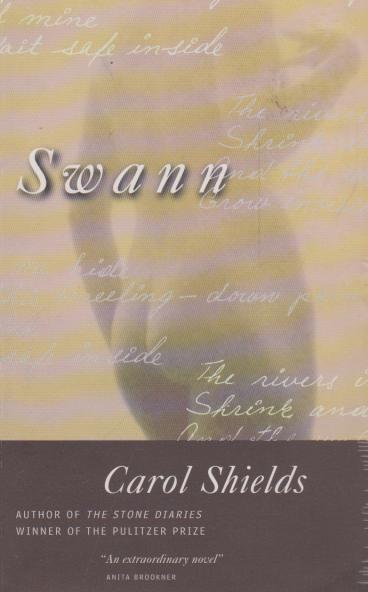
“An Act of Reconstruction”: Carol Shields, Swann

swann

The faces of the actors have been subtly transformed. They are seen joined in a ceremonial act of reconstruction, perhaps even an act of creation. There need be no suggestion that any of them will become less selfish in the future, less cranky, less consumed with thoughts of tenure and academic glory, but each of them has, for the moment at least, transcended personal concerns.

Carol Shields’ Swann is a very clever book — too clever for me, in the end, because as it went on it became more and more clearly a conceptual set-up, the people in it more evidently pieces in a game. I like novels to have ideas. I think I probably criticize more novels here for lacking intellectual depth than for sacrificing character or feelings to abstractions. But the novels I like best (including Shields’ Unless) balance head and heart: they are both thoughtful and, at some level, sincere about their characters’ humanity. There are certainly touches of that sincerity in Swann, especially in the section about town librarian Rose Hindmarsh:

She cannot possibly be the one who set in motion the chain of events that led to Mary Swann’s death since she has never been capable of setting anything in motion. Never mind her work in the town office, in the library, and in the museum — she has always known, not sensed, but known, that she is deficient in power. So many have insisted on her deficiency, beginning with her dimly remembered soldier father who failed to come back home to Nadeau to take his place as her parent, and her grandmother who told her, moving leathery gums stretched with spittle, that she had the worst posture ever seen in a young girl, and her mother who said looks weren’t everything …. and the seditious blood that is pouring out of her day after day after day, making her weaker and weaker so that she can hardly think — all this has interfered with her life and made her deficient in her own eyes, and it is this that mercifully guards her against self-recrimination, from believing she is someone who might possibly have played a part in the death of the poet Mary Swann. Rose is a person powerless to stir love and so she must also be powerless in her ability to hurt and destroy.

For me, Rose’s deficiencies show Shields’ strength: she’s great at hitting that fine line between pathos and poignancy, creating sympathy without overloading us with sentiment. In Unless, she controls these elements with her acerbic first-person narrator. In Swann, though, I felt that she subordinated these emotional layers to the point she wanted to make.

So what is that point? I think (to put it bluntly and thus, inevitably, reductively) it’s that criticism is inimical to art. Swann opens with Sarah Maloney, a feminist professor (at 28, already somehow the author of a bestselling book based on her Ph.D. thesis — yup, that happens all the time!) now building her reputation as an expert on an obscure rural Canadian poet whose work she “discovered” in a classic act of feminist literary recuperation. She narrates one section; Morton Jimroy, who’s writing Swann’s biography, narrates the next; our sad friend Rose, who rather exaggerates how well she knew Mary Swann personally, gets a section; and then Frederic Cruzzi, who published Swann’s slim oeuvre. The final section brings them all together (about this part, more in a minute!).

All of the individual parts have their charms. Even Jimroy, who’s a self-absorbed twit, is occasionally endearing, especially in his meditations on the imperfect glories of biography:

The disjointed paragraphs he is writing are pushing toward that epic wholeness that is a human life, gold socketed into gold. True, it will never be perfect. There are gaps, as in every life, accidents of silence and misinterpretation and the frantic scrollwork of artifice, but also a seductive randomness that confers truth. And mystery, too, of course. Impenetrable mystery.

His phrase “impenetrable mystery” is a hint, it turns out, at the futility of everyone’s attempt (or pretense) to really know Mary Swann. The more they think they know about her, or claim to know about her, the more elusive she turns out to be. Sarah wonders how a woman who seems in every other way to have been unbearably ordinary could have produced extraordinary verse; Jimroy struggles to grasp what her life was like and how it might connect to or illuminate her poems; Rose builds her minimal acquaintance into a story of intimacy that she knows is illusory; Frederic Cruzzi knows almost nothing about Swann herself but is the only one who knows the poems on which everyone else’s interest hangs are themselves already half-truths salvaged from ruined manuscripts. As they try to create a full picture, the scraps of evidence one by one disappear, leaving them less and less certainty. Though there is a story about where all the evidence went, the literal explanation is clearly much less important, thematically, than the symbolic one: their subject evaporates, leaving only their theories of her, which reflect who they are, not who she was.

And they aren’t that great, really: they are indeed selfish, cranky, consumed with thoughts of tenure and academic glory. Their better selves emerge only when they put those unworthy motives aside and turn, purified, to “reconstructions” of Swann’s vanished work. Swann struck me as very much a book of the 80s, and surely “reconstruction” is offered as the better alternative to “deconstruction,” or (since none of the characters is, strictly speaking, a poststructuralist) to theory. Swann is, in part, academic satire á la David Lodge: the culminating sequence at the “Swann Symposium” would fit right into any of his early novels, in flavor if not so much in form. In this section Shields makes the whole academic enterprise look both silly and futile: what do the meanings spun out in deliberately elliptical fragments have to do with the meaning of the lines of poetry we read, or with Mary Swann’s own obscure, tragic life? Her short verses are a flimsy foundation for the edifice constructed on them.

Shields’ satire isn’t blistering: there are some acknowledgements that without the attention of scholars and biographers, many great poets — especially women poets — would have stayed unknown. She also makes each of her characters more than just a caricature, so that it is possible, at least provisionally, to sympathize with their quests to find out more, and to define their own lives through someone else’s. The final section, though, inexplicably presented as a script, strips away much of the nuance and turns the characters’ interconnected stories into an odd and, for me, uncomfortably arch farce. This was the point at which Shields lost me — both the strange formal decision, which I found both distracting and sort of lazy, and the turn to comic maneuvering.

As I finished reading Swann, I found myself thinking of A. S. Byatt’s Possession, which deals with a lot of the same thematic elements. It has been quite a long time since I read Possession, so I may be misremembering, but in my recollection, while it does bring out the comic aspect of scholarly obsession, it also cherishes it, even indulges it, matching its satire with a love story — and I don’t mean (just) the historical love story that’s uncovered but the romance of knowledge itself. The scholars’ quest, there, is balanced by the humanity of their subjects, which is given the kind of scope Mary Swann never gets in Swann. I would have liked the last part of Shields’ novel to be hers — for Shields to use her novelist’s licence to solve her “ineffable mystery,” maybe even to allow for the possibility of something more — something that’s not ridiculous — between the creation and the critic, the subject and the scholar.

“A Place Like This”: Steve Burrows, A Siege of Bitterns

bitterns

“It’s this area, you see, the birds and the people, we’re all intertwined, caught up in one another’s history. We could never let it perish, a place like this.”

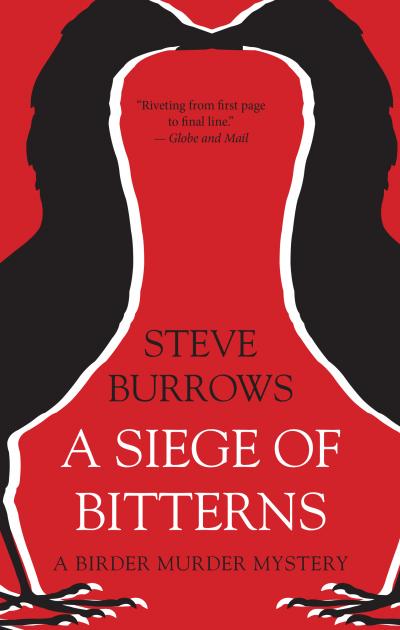
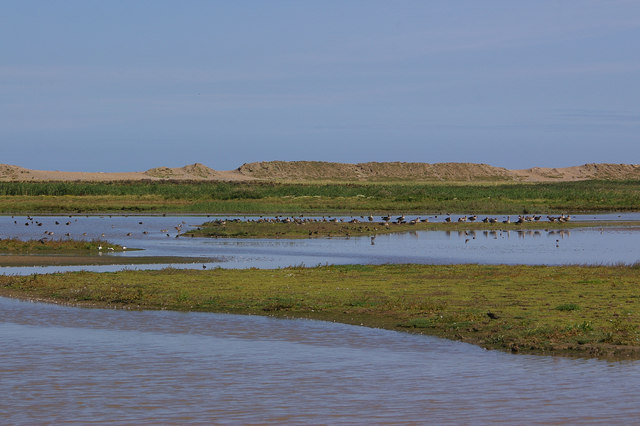
Despite my wariness of new (or just new-to-me) mysteries, I took a chance on Steve Burrows’ A Siege of Bitterns because when I peered at it in Bookmark, I was immediately caught up in the opening pages. It’s not that Burrows leaps right into any suspenseful action — quite the opposite, in fact, though obedient to the rules of the genre he doesn’t take very long to get to a corpse. What I liked was the description of the Norfolk marshland:

At its widest point, the marsh stretched almost a quarter of a mile across the north Norfolk coastline. Here, the river that had flowed like a silver ribbon through the rolling farmlands to the west finally came to rest, spilling its contents across the flat terrain, smoothing out the uneven contours, seeping silently into every corner….

At the margins of land and water, the marsh belonged to neither, and it carried the disquieting wildness of all forsaken things. Onshore winds rattled the dry reeds like hollow bones. The peaty tang of decaying vegetation and wet earth hung in the air. An hour earlier, the watery surface of the wetland had shimmered like polished copper; a fluid mirror for the last rays of the setting sun. But now, the gathering gloom had transformed the marsh into a dark, featureless emptiness.

That’s really good scene-setting: it’s full of specific details addressing all the senses, and it’s elegantly but not floridly written. The scene is full of both beauty and menace, the images suffused with unease but with no heavy-handed ka-thumps of threat or suspense. Here, I thought, is a place I’d like to go — both the marshes and the fictional world this author has created.

cleymarshes

And overall I was not disappointed in A Siege of Bitterns. It is well-written throughout, particularly its descriptions of the landscape, which are consistently both evocative and precise:

Jejeune looked out at the night sky, mesmerized. If he had to give up everything about this part of the world, it would be the skies he would hold onto until the last; the endless, blue, forever skies of the days, and these nights, vast and clear and soft with stars spangled across them as far as the eye could see. The day’s thin tracery of white clouds had been peeled away by the evening’s breezes, and above him now was a spectacular velvety black tapestry shot through with glittering points of light.

The marshes are not just the backdrop to the novel’s crimes: Burrows does a good job at integrating the crimes — the people involved, their motives — with the setting so that we feel that the violence has arisen, in some sense, from the place itself and requires  an understanding of and appreciation for the landscape to solve it. It’s a useful device to have a lead detective who is new to the area, so that our knowledge can grow along with his, even as our interest in it is piqued by seeing it through his birder’s eyes. The birding, too, is not just an accessory, a novel but ultimately unnecessary bit of characterization. It does contribute to our sense of the kind of man Jejeune is — a “watcher,” as he himself thinks at one point, but also someone curious, questing, patient, and moved by flashes of beauty. But it’s part of the case, too, which makes sense in the context of the marshes where, as we’re reminded several times, there’s a particularly high density and variety of birds and thus a correspondingly high number of birders, resident and itinerant.

I really enjoyed the birding material in A Siege of Bitterns. It played right into my general fondness for “neepery” of all kind, for one thing, but Burrows also conveys its specific appeal very well — again, there’s a useful device in the form of Jejeuene’s partner, Lindy, a non-birder, who thus gives the many birders they encounter an excuse to proselytize. I read most of the novel sitting on our back deck, and I admit that I became increasingly aware of the birds around me: there are lots of them around at this time of year, but I can’t identify most of them better than “sea gull” or “blue jay.” I’m pretty sure I saw a humming bird this morning, and sometimes I definitely hear woodpeckers. But which kinds exactly? This site could presumably help me figure it out …

The only element of the novel that I wasn’t really convinced by was Inspector Jejeune himself. On Twitter last night Liz commented that, reading the novel, she “felt like I was coming into a series in progress.” Now that I’ve finished the book, I know what she means: I wondered if the many hints dropped in the first half about things that happened before the story’s own timeline would be resolved, but we never really do get a clear account, either of Jejeune’s family situation or of the case that has turned him into “media darling.” Perhaps this reflects the awkwardness of starting up a new series when some really fine ones in the same style have been running for so long (P. D. James’s Dalgliesh series launched in 1962, for instance, and Peter Robinson’s Inspector Banks novels in 1987). It seems preferable to me to let your character build over time, but maybe relative newcomers feel the pressure to create a kind of instant depth. It didn’t work all that well for me, at any rate: we have to take a fair amount about Jejeune’s brilliance on faith, and sometimes Burrows seemed a bit too insistent on what he’d clearly chosen as Jejeune’s trademark qualities. The secondary characters too felt a bit forced.

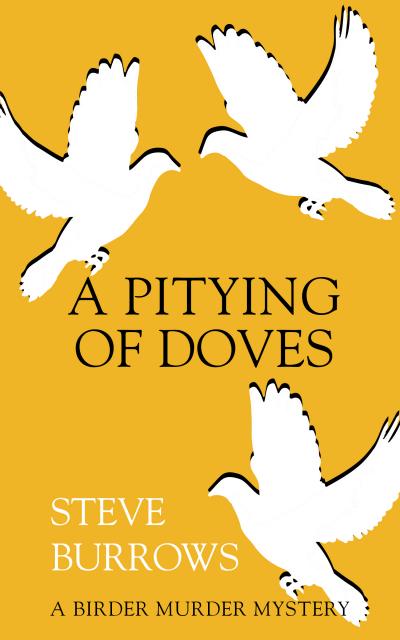
dovesThe plot is good, though, and the writing is good, and the concept is original — though I wonder how long you can sustain birding as a genuine theme, without its lapsing into a gimmick. I liked A Siege of Bitterns enough to want to read A Pitying of Doves, the next in the series. If that goes as well as the first one, I might press on to A Cast of Falcons. And who knows — I might even see if I can figure out just what birds are in my own backyard.

At least as a footnote, I do have to say that there is a very shocking error on page 67 of  A Siege of Bitterns! Dundurn Press should be pretty pleased about this series, but they should also be sure to fix that as soon as they can.

This Week in ‘Not My Sabbatical Any More’

eggMy sabbatical actually ended officially on June 30. I marked the transition with my week’s vacation in Vancouver, and returned to Halifax ready to get back to “regular” work. It’s summer, of course, which means I’m still not teaching, but there’s definitely been a shift in my attitude, attention, and priorities.

For one thing, the fall term is no longer a distant possibility: now it’s a looming reality! So I’ve started drafting syllabi and organizing Blackboard sites. The former is always fun (because it’s both creative and optimistic), while the latter usually has me cursing within the first 15 minutes. I’m incorporating a blog into my graduate seminar, too, and so I’m setting up a WordPress site for that class as well. (Yes, Blackboard now has “blog” options, but one of the points of blogs is that they are not inside boxes. Even though I’m keeping the site private — at least to start with — working in WordPress at least feels more like actual blogging, and one of my goals is to help my students get more comfortable with the possibility of writing where other people can see them. Usually even writing where other students can see them causes a bit of anxiety at first.)

As preparation for the new teaching term, I’ve also been doing some housekeeping: sorting through my file cabinets, recycling redundant or outdated course materials in old teaching folders and properly sorting and filing what remains; archiving hard copies of grade sheets and course evaluations; and generally trying to put things in order. I keep things reasonably organized anyway (at least judging from the stacks of papers and folders visible on some of my colleagues’ floors and bookshelves — though presumably their “system” works for them) but it was a bit surprising to realize how much miscellaneous paper I still had around to deal with.

Another motivation for getting my paperwork sorted is that after much wavering and soul-searching I decided that after 20 years at Dalhousie it was time to put in my application for promotion to Professor. I earned tenure and promotion to Associate Professor back in 2000. It’s actually up to me entirely whether I ever seek another promotion, but it’s tacitly expected that we are all working with that ambition in mind. I’ve been puzzling about how much, if at all, to talk about this here. I think it’s best that I stay away from specifics, both of the case I’m making and of how the application seems to be going, at least until it’s all over. It’s a long, rigorous, and carefully orchestrated process involving every administrative level of the two universities where I am a faculty member (Dalhousie and the University of King’s College — please don’t ask me to explain the relationship, or the complexities of my joint appointment!) as well as external reviewers from at least four other universities. I won’t know the final outcome of my application, one way or the other, until next May, though I suppose I’ll have had some strong hints in the meantime. It will feel strange to keep fairly quiet about something that is going to preoccupy me mentally for months, but I think that talking about the specifics in public might come across as unprofessional, especially to those scrutinizing my file who aren’t accustomed to the relative openness of social media.

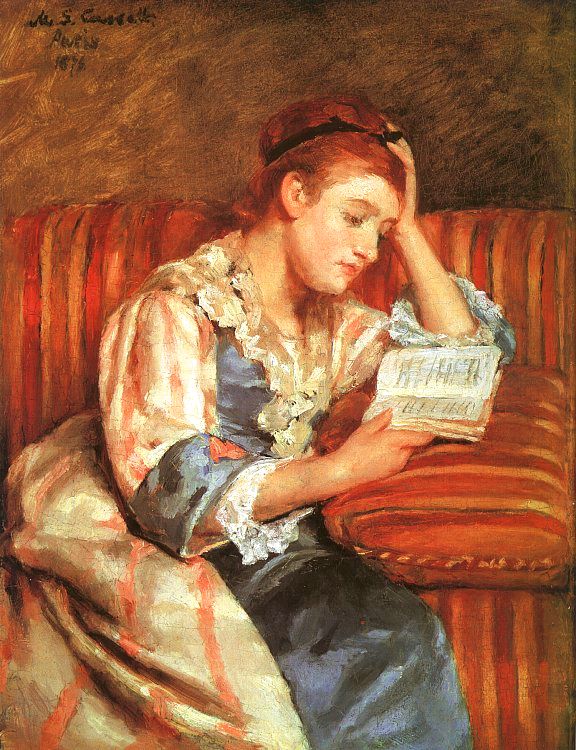
cassatI will say, though, just generally, that I am citing Novel Readings as part of my case, and that I am including it in my research dossier alongside my more conventional scholarship. (My teaching and service contributions are the other two major components of the application.) Where or how to “count” blogging in tenure and promotion cases has been much discussed online of course, and I reread a lot of articles and blog posts — including some of my own — on this topic before making up my mind about how I wanted to present Novel Readings. I was ultimately guided, of course, by departmental and faculty regulations. One of the most important tasks for me this month has been writing up a cover letter and research statement to explain and justify not just the blogging component of my file but also the other online writing I’ve been doing. This has been pretty challenging, mostly because there is so much I want to say but I have limited space to say it in. The other rhetorical challenge is to be assertive without sounding defensive, even though I would be a fool not to expect some skeptical responses. I think (hope) I have found the right tone as well as the right key points to make. I guess I’ll find out!

The other parts of the application are demanding in much more mundane ways. I had to compile a folder of every one of my course outlines, for example, which is one sure way to discover that your filing has not been 100% scrupulous over the years. I need to include a list of every class I’ve ever taught and its actual enrollment, and a table of all my numerical scores on course evaluations next to the departmental mean — I am very fortunate that our office administrator, who is helping me with all this, is fabulously competent, efficient, and also very kindhearted, which means almost more than anything else when you’re doing something that inevitably makes you feel exposed and vulnerable. (“It’s like taking your clothes off in public,” I said to her plaintively the other day, “and at my age, too!”)

I was warned that putting this file together was a big job, and it definitely is: it’s most of what I have been doing, really, since the beginning of July. It has been surprisingly interesting in some ways: even gathering my old course outlines has prompted some reflections on what has changed and what has stayed the same in my pedagogy since 1995. Still, I’m glad that my part of it is almost over: I should be able to turn everything in next week, and then, for me, it’s all about the waiting. And it’s also back to the teaching prep, and on with the writing — I’ve got three book reviews on my to-do list in the short term, plus a guest post for another blog, and I have some essay ideas that I’d like to solidify, before term begins and before the momentum I’d built up during my sabbatical fades away entirely.

Mistakes Were Made: Louise Penny, Bury Your Dead

pennyburyyourdead

I so want to love Louise Penny’s mysteries! She is one of the biggest names in Canadian crime fiction, which means (among other things) she has long been in my sights as a contender for my mystery class. And she has a lot of fervent admirers, including many of my friends. Also, of course, it’s always a pleasure to find books of any kind that I really enjoy, and even better to find a whole series. But after a few tries, I just don’t think it is going to work out that way for me with Penny.

I read Still Life first and thought it was just OK. Since then, I’ve started several others, picking them up almost dutifully on trips to the library, but I’ve always abandoned them after a couple of chapters. I did better with Bury Your Dead: I persisted to the end (though by half way through I wasn’t reading very carefully) because there was actually quite a lot I liked about it. For one thing, my personal taste doesn’t really run to the “village mystery” or cozy, and that’s more or less what Still Life and the other ‘Three Pines’ ones I’ve tried feel like (though formally they are hybridized with the police procedural). Bury Your Dead, however, takes us (mostly) out of Three Pines to Quebec City. There it tackles pretty ambitious historical and political themes with its focus on the beleaguered-feeling Anglophone community, Quebec separatism, and the symbolic significance of the “Father of New France,” Samuel de Champlain. Penny’s use of this broader context to motivate her specific murder mystery reminded me of Ian Rankin’s books dealing with Scottish nationalism.

I also liked Chief Inspector Gamache a lot: if I try another of Penny’s books, it will because he’s the kind of protagonist I enjoy following. Mind you, he’s also a pretty predictable type — not, in this case, like Rankin’s anti-heroic Rebus, but a close cousin to, say, P. D. James’s Adam Dalgleish. That’s OK: I like my detectives tall, dark, and brooding. Since my experience with the series is so limited, I don’t have a strong sense of Gamache’s relationships with the rest of his team, but what I saw seemed well-developed. I was also impressed with Penny’s obvious competence at plotting, and at the way she unified the three central stories of the book around the theme of mistakes — making them, dealing with their consequences, moving past them.

But! Despite these points in its favor, two features of Bury Your Dead really put me off. One was Penny’s stilted prose style, particularly its heavy reliance on portentous sentence fragments. To me, these always come across as cheap gimmicks, as a device an inexperienced writer imagines will create suspense and look stylish, but which really doesn’t and thus should always be edited, if not completely out, at least down to a bare minimum. Then, when it occurs, it would be genuinely striking. This is the sort of thing I mean:

He wished he could take that hand and hold it steady and tell him it would be all right. Because it would, he knew.

With time.

Or,

And now here he was, beneath the Literary and Historical Society, that bastion of Anglo Quebec. With a shovel.

Dead himself. Murdered.

Once or twice in a novel, in moments of extreme emotion, this kind of thing is OK. But Penny relies on this trick a lot, as if she doesn’t trust her readers to feel appropriately worked up without a signal. It got pretty tedious and detracted, I thought, from some of the novel’s most potentially moving or gripping moments. I wonder if her editors have ever resisted this habit — or maybe they like it.

I also got fed up with the manipulative way Penny strung out the novel’s backstory about a botched response to what turns out to be a terrorist plot. The aftershocks are significant and compelling, but because everyone in the novel already knows about it, keeping it from us felt really artificial — a trick, to play on our nerves, rather than a structural or thematic necessity. It’s true that I kept reading because I wanted to know what had happened, but I felt impatient rather than invested, which is not a good thing. It’s also not something I can ever remember having felt reading a Rebus novel, even though they have gotten longer and denser over the years.

Between the clunky writing and the contrived suspense, then, Penny might have forfeited her chance with me! If I’m underestimating the series, well, that’s my mistake and will be my loss. As I’ve said before, though, I have a lot of reading relationships to sustain as it is. Sara Paretsky has a new novel out, for instance, and V.I. and I actually have some catching up to do. I’ve got a lot of Ellis Peters still to read, too …

Family Drama: Balancing Act and Parenthood

balancingactBoth my reading and my TV viewing this week have been all about the intricacies of family life. Joanna Trollope’s Balancing Act is a classic “slice of life novel” — classic Joanna Trollope, anyway. I haven’t liked Trollope’s recent novels as much as her older ones (A Village Affair, for instance), and Balancing Act didn’t break that pattern: it felt a bit thin and perfunctory to me, as if she’d come up with the scenario and populated it with characters, but didn’t have much at stake in what happened to them. She’s adept at filling in the outlines of her characters, and I appreciate her attention to the personal significance of minutiae. But underlying Balancing Act are some pretty fraught questions about work and family (or work vs. family, as the novel’s title suggests), about work and identity — or work as a source of identity — as well as about creativity, autonomy, and emotional control. I suppose you could call her treatment of these themes “suggestive”: she doesn’t like a lot of exposition, preferring to step nimbly from one character’s point of view to another’s and let their individual experiences hint at the depths she’s not exploring on our behalf. The result is an easy read and one that highlights Trollope’s strengths — emotional finesse, clever orchestration of time and action — but also one that suggests the limits of her particular formula.

Parenthood is kind of similar. For one thing, like all of Trollope’s novels that I’ve read, it begins with disruption — a spanner (or, in the case of Parenthood, a few spanners) thrown into the works of a family situation that already quivers with the potential for conflict as well as connection and celebration. The first season of Parenthood, for instance, includes Sarah moving back into the fold, bring her own children and thus complications with her and inevitably creating more complications; the unexpected news that Crosby has a son; and Max’s Asperger’s diagnosis. That’s a lot of hares to start running all at once, but a weekly serial drama needs lots of subplots to sustain it, after all! I wasn’t immediately hooked on Parenthood, but I was content to watch something low key after Wallander (which is great but also intense, violent, and pretty dispiriting), and the show has definitely grown on me. (We’re not even done with Season 2 yet, though, so please don’t throw out plot spoilers in the comments!)

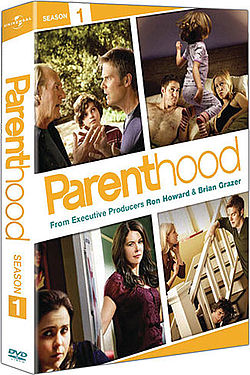
Parenthood_S1One thing that I find different about Parenthood, compared to much of the TV we’ve binged on over the past year, is that precisely because it is so focused on family life, it provokes personal reflections in a way that most crime shows rarely do (the exception would be Last Tango in Halifax, another intimate family drama). Happily, most of us will never encounter the kind of horrific scenarios that drive each episode of Wallander forward. But we all have families, in one form or another! And parenthood has preoccupied a great deal of my time, energy, and mental resources for 18 years now. As I commented in my last post, I prefer to keep the details mostly to myself, so all I’ll say is that there have already been plenty of moments in Parenthood that resonated with my own experience of both the challenges and the rewards of being a parent — or, for that matter, with being a daughter, and being a wife! Watching Wallander, I might mutter “he shouldn’t be going out there without back-up!” but it doesn’t really mean anything to me personally. Watching Parenthood, it’s hard not to get caught up in debating whether they (any of them!) are making the best choices, or wondering what I would say or do in the same situation — or just to laugh ruefully and say “yup, that’s about right.” So far nothing about the show strikes me as particularly artful or groundbreaking, but that’s fine with me: it’s sincere and well-acted, and while some of the plot twists are kind of silly, others seem to me spot-on examples of why parenting is at once the best and the worst gig imaginable. This may not be the most sophisticated reason to like a TV show, but hey, not everything has to be Deadwood, right?

“A Book of All My Secrets”: The M Word, ed. Kerry Clare

mword

I got to a poem about us, about how quickly our children become themselves, and as I blithely read the poem over the air, my five-year-old daughter suddenly, breathlessly, began to sob. She was inconsolable. When my husband could finally calm her down enough to speak, she blurted out, “Mommy wrote a book of all my secrets.”

It seems appropriate to be posting about The M Word: Conversations About Motherhood on my son’s 18th birthday. Milestones like this inevitably provoke reflections: memories good and bad, nostalgic and bitter, celebratory but always (in my experience, anyway) more complicated than you anticipate — or might be willing to admit, at least in public.

That’s what makes The M Word so surprising, and also moving, gripping, funny, and, occasionally, really uncomfortable to read: the writers put it all on the table, all the confusion, ambivalence, difficulty, suffering, hope, despair, and insight that swirl around people’s different experiences with motherhood, whether they are or aren’t mothers, however motherhood is defined, and whether their situation arose from choice or accident, gift or tragedy. As many of the writers observe, there’s a popular public story about motherhood that is all bliss, smiles, and cuddles. For many of them, there is plenty of bliss, but that’s rarely the whole story and often not the story at all. The M Word doesn’t try to tell one story: it allows, even insists, on the coexistence of many different ones.

All of the stories are interesting, though I expect that for most readers, as for me, the intensity of interest will vary. Paradoxically perhaps, since I’m a mother myself, one of the essays I found most compelling was Patricia Uppal’s “Footnote to the Poem ‘Now That All My Friends Are Having Babies: A Thirties Lament,'” a mildly abrasive commentary on pregnancy and motherhood from the perspective of a woman convinced she does not want children. “Perhaps it is my workaholism that keeps me childless,” she speculates. “I know I would resent the time spent away from my computer and notebooks. I already do. I think our three cats are demanding, and I frequently have to shoo them away as they bat my hands while I type.” Although my decision about parenting was not hers, I understand her resistance to it, and I know she’s not wrong about the threat of resentment. Other essays, though, bring out parenting’s rich and varied rewards (which it is hard sometimes not to think of as compensations). Still others emphasize loss — Christa Couture’s heartbreaking “These Are My Children,” for instance:

Sometimes I feel my mothering is finite, or plays on a loop. I can replay both of my children’s lives to their conclusions in my mind, rewind, and play them again. There is no wondering what they will become.

And still others take up abortion, adoption, and infertility with the same frankness, offering the same unsparing emotional revelations.

The M Word is a very personal book. Is there a point at which writing about our own experiences as parents becomes an invasion of our children’s privacy? Sarah Yi-Mei Tsiang’s “Mommy Wrote a Book of All My Secrets” is the only essay that directly confronts this question. I found it very thought-provoking because I have chosen to be fairly reticent about my children — and indeed all my family and friends — here. For one thing, Novel Readings is not meant as a confessional space: its focus is just different. I do write the occasional personal post, and I don’t try to keep the rest of the writing strictly impersonal. One of the things I cherish most about blogging is the freedom to be more openly myself while writing,whether about Christmas or about books.  But my private life remains private (or, you might say, my public presentation of my private life is carefully curated!). Crucially, I choose what to say about myself in this public space, and I don’t think I have the right to make that choice for other people by sharing their stories (or my perspective on their stories) — by turning them into subjects or characters in my story. Clearly, a lot of writers feel otherwise, including everyone who has ever written a memoir and many (such as Miriam Toews) who have written conspicuously autobiographical fiction. I’m not saying they are wrong to do so (and I have read and admired plenty of life writing of one kind or another), but I can sympathize with Tsiang’s daughter (quoted above), with her sense of injury at the unexpected exposure. I’m not sure I agree with Tsiang that this was her daughter’s “first lesson in the fact that you cannot love without exposing yourself”: maybe so, but it’s one thing to expose yourself to your loved ones and another to find your secrets broadcast on the radio. At least Tsiang learns a lesson too: “that it is both a responsibility and a privilege to write about the ones you love.”

There’s lots in The M Word that made me think — often about my own experience of motherhood, as a mother and as a daughter, but also about what I know my family and friends to have gone through, hoped for, lost, or celebrated in this context, and about experiences and attitudes entirely different from mine or theirs. When I picked the book up (motivated by knowing Kerry Clare as a Twitter friend and author of the splendid blog Pickle Me This) I was a tad skeptical: I didn’t think I was actually that interested in motherhood as a topic. I realize now that’s because I hadn’t given it as broad a scope as Kerry and her contributors do. The result is a collection that confounds expectations.

“Intimate and Uncharted Territories”: Auður Ava Ólafsdóttir, Butterflies in November

olafsdottir

I’m not taking much with me. The main thing is to hold onto as little of the old clutter as possible. It’s not that I’m fleeing anything, just exploring my most intimate and uncharted territories in a quest for fresh feelings in a new prefabricated summer cottage planted on the edge of a muddy ravine with my hearing and sight-impaired four-year-old travelling companion. The most important thing is to never look back, to only ever sleep once in the same bed and to use the rear-view mirror out of technical necessity and not to gaze into one’s own reflection. Then, when I eventually return, I will have become a new and changed person, by which time my hair will have grown down to my shoulders.

I can see why the reviewers quoted on the back of Butterflies in November use words like “zany,” “quirky,” and “whimsical” to describe it. I think, though, that they were settling for these terms because they couldn’t find quite the right way to describe the novel’s strange sensibility. They make it sound cute and lighthearted, which it is not, though it is certainly funny — but unexpectedly so, and also sometimes grimly so.

I can’t find quite the right words to describe Butterflies in November either. But I enjoyed it very much, partly because it kept taking me by surprise. Its story is simple in outline. Broken up with by both her husband and her lover, the narrator sets out on a road trip that is also a journey of self-discovery. Her unlikely companion is her best friend’s four-year-old son Tumi, who is in need of a care-taker because his mother Auður, pregnant with twins, has slipped on the ice while bringing food and comfort to the narrator after her break-up, and been hospitalized as a result. “I just don’t have that maternal gene,” protests the narrator when Auður asks her to look after Tumi. Her resistance to having children was in fact one factor in her husband’s departure. “The sight of a small child doesn’t trigger a wave of soft maternal feelings in me,” she explains to us;

All I get is that sour smell, imagining their endless tantrums, swollen gums, wet bibs, sticky cheeks, red chins, the cold dribble on their chins. . . . They need hot dogs and ice creams, after which they’re packed into the cars again, reeking of mustard, their faces plastered in chocolate. The parents look tired and don’t even talk to each other, don’t communicate, don’t notice the dwarf fireweed or glacier because of their carsick children. . . . If one really put one’s mind to it, it might be possible to develop the ability to read two pages of a book in a row. . . . No, it’s not my style.

“Mark my words,” says Auður, “he’ll change you.” And because Auður is her best friend and she can’t see a way to say no, she accepts the charge and sets off with Tumi, who wears a hearing aid and peers at the world through thick glasses. This odd couple heads out on Iceland’s Ring Road, ending up at the small town where the narrator’s grandparents once lived, where they stay for a while before eventually heading back to Reykjavik. Simple, as I said — but  the story is constantly strange in development and detail, with elements and incidents that seem random and yet are somehow suggestive of greater meaning and purpose, to the narrative and perhaps to the narrator’s life.

What unifies the novel’s episodic parts is the narrator herself. She is conspicuous for her reticence (“you’re like a closed book,” says her husband, soon to be her ex-husband), and yet her memories are often heartbreakingly confessional and her observations combine revelation and insight: it’s how she talks about what happens that I liked, more than any particular event. About half way along their drive, for instance, she crashes into a sheep. (This is the second animal she has killed with her car since the book began: the first one was a goose that she went on to cook for Christmas dinner.) Mild weather has kept sheep out roaming later in the season than usual, and many times on the road she has had to slam on the brakes to avoid hitting one, but then, “on the forty-first time, the inevitable happens” and she slams into one. “It is precisely at that moment,” she says,

that it first dawns on me that I am a woman caught in a finely interwoven pattern of feelings and time, that there are many things going on simultaneously that have a significance to my life, that events don’t just simply occur in a linear sequence, but on several planes of thought, dreams and feelings at the same time, that there is a moment at the heart of every moment. It is only much later that a thread through the turmoil that has occurred will emerge. It is precisely in this manner that the destinies of a woman and a beast can intersect. The woman is listening to a Spanish love lament and glances through the rear-view mirror to see how her deaf travelling companion is dealing with his chocolate milk and banana when, at that very same moment, a sheep decides to step onto the road in front of the car, or suddenly panics — how should I know what goes through the mind of a thoroughbred Icelandic sheep? Time is a movie in slow motion.

She’s unsentimental and often has a hint of acid in her tone. When her ex-husband shows a tendency to drop in to their home to pick up things he has “forgotten,” for instance, she wonders,

The question I am confronted with is this; for how long should deserting husbands be allowed to come back and take showers? What if he carries on like this, long into his new relationship? How would I explain these endless repeated clogs of hair in my shower to a new potential partner with perhaps a hairless chest?

She’s unapologetic about her own affairs, which seem incidental compared to her interest in freedom. “I’m not sure I want to be taken care of,” she tells Auður from her new home; “the men here are so considerate; they want to fuss over me.” When her ex-husband tracks her down there, already fretting under the cares of his new wife and child, he says, “The good thing about you is that you never placed any demands on me,” but she tells him to go home.

Her fundamental isolation remains, then, but Auður is right that Tumi changes her, just by being with her and thus forcing her to tend to his needs. The two of them are strangely suited, alike in their uncomfortable relationship with the world around them, and in their struggles to communicate with other people. There’s no dramatic rewriting of her place in the world — no epiphany, no moment in which she resolves that she’d rather be more intimately connected with it, or with others. Instead, she seems to become more at ease with herself, her idiosyncrasies complemented by Tumi’s affectionate clasp, both literal and metaphorical.

At the end of the novel, she has resolved to travel abroad, taking Tumi with her. “I don’t want to lose you,” says her local lover.” “I need to go on my own first,” she tells him, “then we can go somewhere together, if we still want to.” The novel ends with a suggestion of growth and change still to come, rather than an achieved conclusion.

The book isn’t over when the novel ends: the last 30-40 pages turned out to be recipes. That took me by surprise in two ways. First, as usual I’d been keeping an eye on how many pages remained, and so I didn’t realize the novel was ending until I saw that it was over. (This confusion was exacerbated by the inconclusive nature of the ending itself.) Second, I hadn’t thought it was a novel about food in any significant way, so I didn’t understand why the last stage was recipes. I’m still not sure, but I’m glad I didn’t skip this section, as it contains some of the book’s funniest moments as well as the indisputable claim “Tea can never be praised enough as an afternoon refreshment.” I’m taking to heart the author’s caution, though, that “certain of these dishes may work better on the page than on a plate,” and I think I won’t have a go at actually making any of them. Except maybe “Undrinkable Coffee,” and that will be purely by accident, honest.