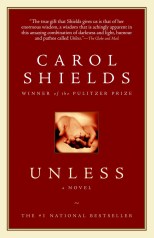
 In a way, this post is also about “this week in my classes,” as it is prompted by the serendipitous convergence of my current reading around questions we’ve been discussing since we started working on Carol Shields’ Unless in my section of Intro to Lit. In our first session on the novel, I give some introductory remarks about Shields — a life and times overview, and then some suggestions about themes that interested her, especially in relation to Unless. One of the things I pointed out is that she also wrote a biography of Jane Austen; in an interview, Shields said “Jane Austen is important to me because she demonstrates how large narratives can occupy small spaces.” We come to Shields right after working through Woolf’s A Room of One’s Own, so I also bring up Woolf’s pointed remark: “This is an important book, the critic assumes, because it deals with war. This is an insignificant book because it deals with the feelings of women in a drawing room.” Both Shields and Woolf are thinking about the relationship between scale and significance, and both of them are drawing our attention to the ways assumptions about what matters — in literature, particularly, since that’s their primary context — have historically been gendered.
Unless itself explores the relationship between scale and significance on several levels. Its protagonist, Reta Winters, is a writer whose first novel, My Thyme Is Up, is light and romantic, a “sunny” book that has won a prize for books that combine “literary quality and accessibility.” Reta has been working on a sequel (with the equally charming title Thyme in Bloom), but over the course of Unless she becomes discontented with it, especially with the happy ending she had blithely anticipated for it. For much of the novel, she is puzzling over what else to do — what other kind of book to write. She grows to dislike her characters as originally conceived: she sees her heroine Alicia as “vapid” and Alicia’s impending marriage as a mistake:
Suddenly it was clear to me. Alicia’s marriage to Roman must be postponed. Now I understood where the novel is headed. She is not meant to be partnered. Her singleness in the world is her paradise, it has been all along, and she came close to sacrificing it, or rather, I, as novelist, had been about to snatch it away from her. The wedding guests will have to be alerted and the gifts returned. All of them, Alicia, Roman, their families, their friends — stupid, stupid. The novel, if it is to survive, must be redrafted.
But how? All we really know is that instead of submitting Alicia to the conventional marriage plot, Reta now wants her to “advance in her self-understanding.”
 Reta’s redrafting is disrupted by her editor, an officious American (of course! Unless is a Canadian novel, after all) named Arthur Springer who has even bigger plans for Thyme in Bloom, which (significantly) he proposes she retitle simply Bloom. His idea is that Alicia should fade into the background while Roman emerges as the “moral center” of the novel. This, he insists, is necessary for the novel to graduate from “popular fiction” to “quality fiction.” He also proposes that Reta retreat behind her initials: she will become R. R. Summers (“Winters” is her husband’s surname). This way her new (“quality”) book can’t possibly be associated with her, or with her earlier (“popular”) novel.
Reta sees exactly what’s up, of course: Springer believes that a book’s literary significance depends on its masculinity — that its standing as great literature will increase as it moves away from the world of women. When Reta presses him about what’s wrong with Alicia, his answer is comically symptomatic of the problems much of the novel is about. “I am talking,” he says, “about Roman being the moral center of this book,”
“and Alicia, for all her charms, is not capable of that role, surely you can see that. She writes fashion articles. She talks to her cat. She does yoga. She makes rice casseroles.”
“It’s because she’s a woman.”
“That’s not an issue at all. Surely you —”
“But it is the issue.”
“She is unable to make a claim to — She is undisciplined in her — She can’t focus the way Roman — She changes her mind about — She lacks — A reader, the serious reader that I have in mind, would never accept her as the decisive fulcrum of a serious work of art that acts as a critique of our society while at the same time, unrolling itself like a carpet of inevitability, narrativistically speaking.”
“Because she’s a woman.”
Reta ultimately resists both Springer’s exhortations and the “critical voice in [her] head that weighs serious literature against what is merely entertainment.” We are never told exactly how Thyme in Bloom ends, only that “Alicia triumphs, but in her own slightly capricious way.” What we do know is that having discovered her dissatisfaction with a particular kind of conventional woman’s fiction, what Reta imagines doing next is not something on a larger scale or a more overtly grandiose style but something even smaller: “I want it to be a book that’s willing to live in one room if necessary,” she says; “I want it to hold still like an oil painting, a painting titled: Seated Woman.”
One of the questions I asked my class to think about is whether Unless is itself a model for a different kind of fiction, maybe even an example of the kind of book Reta imagines writing — one that insists we find, or at least look for, significance in small things. Reta is “just” a fairly ordinary woman but the things that happen in the novel certainly mean a lot to her, and as she connects the incidents in her life to other events, both personal and historical, private and public, significant patterns emerge. Unless initially seems like a really unassuming book, but by the end that feels like part of the plan: Shields’ novel itself asks us to accept an ordinary woman as “the decisive fulcrum of a serious work of art.”
What has been so interesting over the past couple of weeks is how many of the other books I happen to be reading also either explicitly turn on or implicitly raise questions about the relationship between women and scale and significance, in life and in literature.
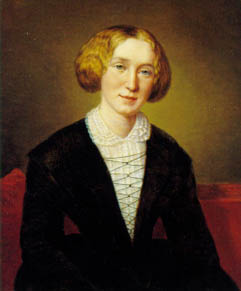
 One of them is Daniel Deronda, which I’ve just finished reading with my graduate students. This novel is famously bifurcated between Gwendolen’s story (a highly personal, small-scale drama) — and Daniel’s (which starts out on a similarly domestic scale but opens out into a potentially epic, world-historical story). Is Gwendolen condemned to insignificance when she is left behind to suffer at home while Daniel goes off to (perhaps) found a nation? The literal scale of Eliot’s treatment of Gwendolen is not belittling: she gets at least half the huge novel to herself, after all. Perhaps this novel insists, formally, on an equivalence between two kinds of significance, one of which occupies a small space. Or perhaps what’s significant is Gwendolen’s discovery of her own insignificance. “Could there be a slenderer, more insignificant thread in human history,” asks the narrator,
than this consciousness of a girl, busy with her small inferences of the way in which she could make her life pleasant?—in a time, too, when ideas were with fresh vigor making armies of themselves, and the universal kinship was declaring itself fiercely; when women on the other side of the world would not mourn for the husbands and sons who died bravely in a common cause, and men stinted of bread on our side of the world heard of that willing loss and were patient: a time when the soul of man was walking to pulses which had for centuries been beating in him unfelt, until their full sum made a new life of terror or of joy.
But then Eliot seems to reject that premise:
What in the midst of that mighty drama are girls and their blind visions? They are the Yea or Nay of that good for which men are enduring and fighting. In these delicate vessels is borne onward through the ages the treasure of human affections.
Isn’t that belittling in its own way, though? It certainly doesn’t allow “girls” much historical agency.
Then, I’m about half way through The Portrait of a Lady, which picks up on exactly this question of how much that girlish presence matters (James even quotes Eliot’s “delicate vessels” line in his 1908 Preface to the novel). Can so small a thing as the consciousness of a young girl support the whole weight of a novel, James wonders?
“Place the centre of the subject in the young woman’s consciousness,” I said to myself, “and you get as interesting and as beautiful a difficulty as you could wish. Stick to that — for the centre; put the heaviest weight into that scale, which will be so largely the scale of her relation to herself. . . . See, at all events, what can be done in this way. What better field could there be for a due ingenuity? The girl hovers, inextinguishable, as a charming creature, and the job will be to translate her into the highest terms of that formula, and as nearly as possible moreover into all of them. To depend upon her and her little concerns wholly to see you through will necessitate, remember, your really ‘doing’ her.”
Is James issuing a corrective to Eliot’s approach, calling her out, as it were, for lacking the courage or “ingenuity” to let Gwendolen carry her whole novel? But notice that his terms are, in their own way, belittling: “the girl” needs to be “translated” into something higher; she needs the novelist to infuse her with importance. Reading The Portrait of a Lady, I feel conscious of the weight of his novel bearing down on Isabel in a way I don’t feel Daniel Deronda weighing down Gwendolen (and certainly don’t feel Unless impressing itself on Reta). Is it possible that, more than James, Eliot does believe in the significance of her heroine’s “little concerns”?
 Neither of these novels, however, whatever their differences, feels in any way light, despite the intimacy of their core casts of characters. It’s the treatment, not the subject, that gives literary significance, isn’t it? Austen’s novels don’t feel trite even though viewed narrowly they are “just” about a handful of “ladies and gentlemen, in their elegant but confined houses” (in Charlotte Bronte’s words) — because her love stories are also stories about values and class structures and social changes with far-reaching effects. When Isabel Archer accepts Gilbert Osmond’s proposal, it feels large because James has imbued Isabel’s choices with philosophical consequence: her decision isn’t just to marry or not to marry, but about how to use her freedom, and about what to value and how to value herself. These are personal questions but also abstract ones, and so the small space of her individual life occupies a large narrative (by which I don’t mean, though I could, just a long book).
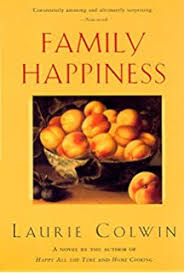
But I’m also reading Laurie Colwin’s Family Happiness, and so far it seems to me a small space filled by a small narrative. Its plot and cast of characters are intimate, domestic, insignificant on anything but a personal scale. It reminds me very much of Anne Tyler’s novels, though (so far, at least) it lacks Tyler’s habit of whimsy. I’m enjoying it, and I’m interested in how things will go for its protagonist, but nice as it is, it feels trivial. I think it shows that you can’t just reverse expectations and insist that the ordinary is always resonant with significance. You have to really ‘do’ it, as James says: you have to go all in. You can enlarge the narrative in a lot of different ways: morally, aesthetically, historically, philosophically — but literary greatness still requires some kind of expansiveness, some reaching beyond the particular. Or does it? (If Austen’s own description of her work as “the little bit . . . of ivory on which I work with so fine a brush” really did, unironically, sum up the scale of her novels, would we admire them as much as we do?)
 I have been thinking that this constellation of questions (not really any answers) is relevant to the discussions about why, say, Jonathan Franzen’s novels about family and private life get treated as more significant than some other books that are about similar topics. Gender may well be part of the explanation, but it would be disingenuous to pretend we don’t know that some books by both men and women simply do more with their material than others, and that that scale — the scale of meaning, of treatment — is ultimately where literary significance lies. But this post has gone on long enough without really arriving anywhere in particular, so that’s probably as good a place to stop as any.


 Years ago, when our children were very little, we decided we were not going to lie to them about the existence of Santa Claus. Though as I recall we did debate it a little, in the end it was not a difficult decision, and it is not one we have ever regretted. As far as possible, we always try to be honest with our children and didn’t like the idea of one day disillusioning them–not just about Santa, but about us (“Yes, Mommy and Daddy lied to you repeatedly, because we thought it was cute!”). Of course we understand that people who pretend Santa Claus is real do so in the cheerful spirit of fun, fantasy, and fairy tales, and overall it’s probably a harmless kind of thing, but we also have a general aversion to unreality when it comes to explaining how things work in the world. No astrology, no alchemy, no holistic medicine or faith healing, no supernatural beings, no Santa Claus.
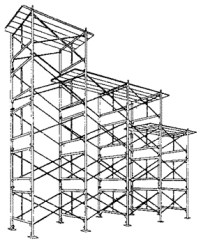 We are rapidly nearing the end of term, which means a lot of time and thought on all sides is going into final assignments. In my Intro to Lit class, I’m particularly conscious of this phase of the course as a time in which I pull back and see if the scaffolding I have tried to build for the students, starting on the first day of classes, supports them now that they have to do their biggest independent project. Last week I gave them a self-assessment exercise that, among other things, asked them to let me know what they thought the teaching staff could do to help them succeed — what else, I should say, since it’s not as if my TAs and I have been passive so far. It was useful to see what they identified as their own strengths and weaknesses. Their anxiety pretty clearly centers on building a viable and interesting argument out of the details they notice while reading. A number of students said that they wished we would “explain” the readings to them more clearly: as I discussed with the class, if this means “tell them the answer to the readings,” tell them what to argue about them, then they aren’t going to get their wish, since learning to develop and support their own interpretations is really the primary course objective. I’ve been stressing the process that leads to a good interpretation, which is what we model and practice in every class, but I’m not going to offer them a “nugget of pure truth to wrap up between the pages of [their] notebooks and keep on the mantel-piece forever,” even if (as Woolf ironically observes) this is “the first duty of a lecturer.”
 My graduate students too are facing end-of-term hurdles. Here my scaffolding has been somewhat less meticulous or overt, but I hope our directed conversations all term have given them lots of ideas to work with as well as a good sense of how to talk about them. They also wrote proposals for their final essays last week, which I have returned to them with comments and suggestions. For the next two weeks, our class time will be dedicated to their presentations. In previous years I’ve integrated presentations into the term’s work, but this year I wanted to use them to extend our class discussions beyond the assigned readings, so I have two students presenting on works by George Eliot that weren’t otherwise on our syllabus, and three presenting on contemporary interpretations of Eliot’s work — Diana Souhami’s Gwendolen, Rebecca Mead’s My Life in


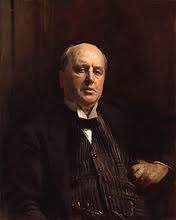 We interrupt our regular programming (specifically, a pending but dispensable installment of ‘This Week In My Classes,’ featuring more moping about how badly Woolf’s A Room of One’s Own always seems to go over with my first-year students, plus some rueful ruminations on my own inability to shut up and let the students in my graduate seminar talk more) for this important preliminary observation about rereading The Portrait of a Lady:
 So far (a mere 75 pages into this edition’s 490) the prose of Portrait itself is only occasionally as baroque as the Preface, but the sentences do often have a similar halting quality (“he was not romantically, he was much rather obscurely, handsome”). More frequently, they oblige me to start them over because I’ve lost track along the way of exactly what the subject and main verb are:
 I’m not irritated at Isabel, though. In the Preface James quotes a line from Daniel Deronda that captures the inspiration for his own novel: “In these frail vessels is borne onward through the ages the treasure of human affection.” “How absolutely, how inordinately,” he says, these frail vessels “insist on mattering”: what he wanted was to write a novel in which, despite that fragility, the “vessel” would bear the whole weight, without “having [her] inadequacy eked out with comic relief and underplots,” as he notes George Eliot did with Hetty and Maggie and Rosamond and Gwendolen. “Place the centre of the subject in the young woman’s own consciousness,” as he puts it, “and you get as interesting and as beautiful a difficulty as you could wish. . . . So far I reasoned,


 Novel Readings