“Life is Never Absent”: May Sarton, Mrs. Stevens Hears the Mermaids Singing

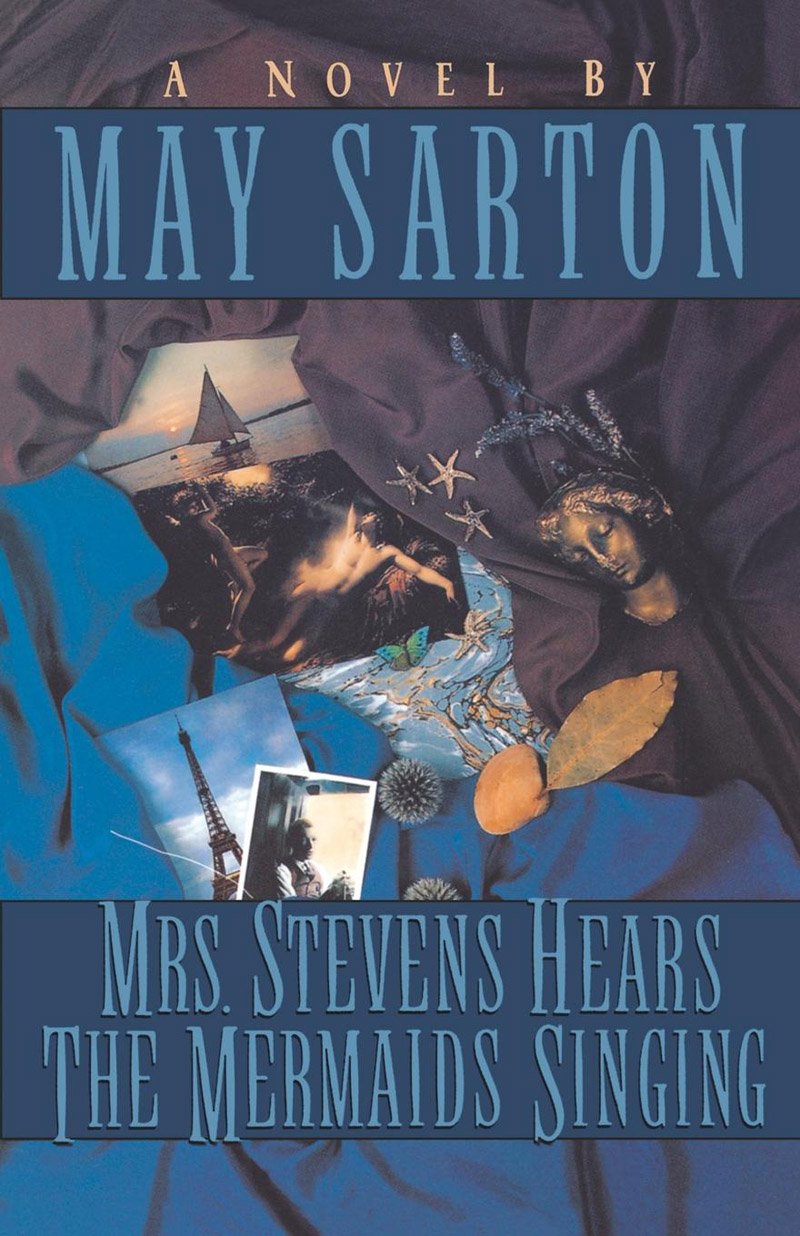
mrs-stevens-hears-the-mermaids-singingIn her 1974 introduction to Mrs. Stevens Hears the Mermaids Singing, Carolyn Heilbrun comments on how little “organized acclamation” or “academic attention” May Sarton has received. I was curious to see if that had changed in the intervening decades, so I did a quick subject search on the MLA Bibliography and turned up 108 results since 1974 — which is within hailing distance of George Eliot’s (surprisingly modest) 117 results for the same time frame, much better than Winifred Holtby’s 36, but far from Virginia Woolf’s startling 5147. Sarton’s star has risen, then, at least a little.

I’m almost as interested in Heilbrun’s interest in Sarton as I am in Sarton herself. Heilbrun clearly found something in Sarton that mattered to her, and thus she became her reader, her critic, and her advocate. She works hard to understand and go beyond strains of conventionality in Sarton’s novels, and particularly in Sarton’s ideas about women and women’s work, and to articulate what it is, despite Sarton’s formal limitations, that gives her work such speaking force. In this introduction, for instance, Heilbrun praises Sarton’s compassion:

Louise Bogan, in a letter to Rush Limmer, calls some poems of Sarton’s “sentimental,” an easy charge, a palpable danger to any writer not barricaded against revelation. But what appears sentimental to the society Mrs. Stevens envisioned as composed of male critics is an inevitable aspect of the compassion which, in Sarton, has never cowered behind the usual defenses. As a result, life is never absent from her work as it is from, to name a master, the work of Flaubert. And even Bogan must have understood something of this. Writing of Elizabeth Bowen’s crystalline and pristine prose, never for a moment lax or sentimental, Bogan observed, “The Death of the Heart is too packed, too brilliant, for its own good. What Miss Bowen lacks is a kind of humility.”

I was struck by how these comments actually bring us back to what I was puzzling over in my last post: the relationship between a certain kind of artistic excellence and a quality of what, in Heilbrun’s terms, might be called lifelessness. Another way to think about it, building on Bogan’s word “humility,” might be that Sarton comes across as a writer trying to figure things out, whereas Flaubert or James seem so sure of themselves — an effect that of course is the result of effort, not ease. There is intellectual excitement as well as beauty in their achieved confidence, but there’s something appealing in a different way in Sarton’s awkwardness — a quality that (in my limited experience, at least) is more apparent in her fiction, as if when writing memoir some obstacle (psychological, formal, whatever) melts away and she finds her own kind of writerly certainty.

Mrs. Stevens Hears the Mermaids Singing is actually a lot like a memoir: it’s hard not to read the story of novelist and poet Hilary Stevens reflecting — through the device of an interview — on her life’s work as a version of Sarton’s own story, as an attempt to dramatize questions she had thought a lot about regarding creativity and love. I think I might have found it more engaging if I were a creative writer myself: as it is, I have little idea what the relationship between a poet and her “muse” might be, and I care a lot more about the results! Still, I was quite interested in Hilary’s comments on poetic form:

Inspiration? It felt more like being harnessed to wild horses whom she must learn to control or be herself flung down and broken. The sonnet form with its implacable demand to clarify, to condense, to bring to fulfillment, became the means to control. Now for the first time she understood about form, what it was for, how it could teach one to discover what was really happening, and now to come to terms with the impossible, how it was not a discipline imposed from outside by the intellect, but grappled with from inner necessity as a means of probing and dealing with powerful emotions.

But what I liked best here, as in Plant Dreaming Deep or Journal of a Solitude, is Sarton’s ability (or, perhaps, her willingness) to convey the vitality of a single person: a person alone in her own space, observing it closely but also filling it with her thoughts and memories; a person deeply, persistently, without self-satisfaction, simply being herself. “You’ve given me courage,” says Jenny Hale, one of the interviewers and herself an aspiring writer, near the end of the visit: “courage to be myself, to do what I want to do!” “How did I do that, I wonder?” asks Hilary. “Maybe –” replies Jenny, “maybe because you have dared so greatly to be your self.” It doesn’t sound like much, to be your self, but it is a lot, isn’t it? And it’s hard to do, especially among other people who inevitably, often quite legitimately, make their own explicit or implicit demands on who you can be. Sarton’s fascination with being alone is tied to this sense that solitude brings (albeit at a cost) a certain freedom otherwise inaccessible — perhaps especially for women.

Henry James and “le mot juste”

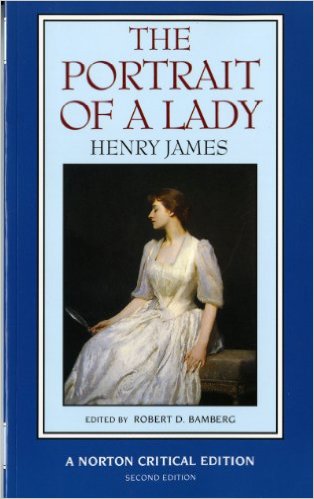
nortonportraitI feel I owe Henry James a bit of an apology. In my previous post on The Portrait of a Lady I complained that his sentences were irritating. Yet, as several people commented at the time, they really aren’t, or, not much, not in Portrait. (Of course, it’s also possible that, as Dorian predicted, I have become accustomed to their cadence, but Portrait is early enough in his oeuvre that I think it is partly that the worst was yet to come — a theory which my memory of reading The Golden Bowl confirms.) Now that I’m back to the novel again, what I find myself making note of are not places where I tripped over stuttering syntax but moments where I let out a small sigh of satisfaction: that, yes, that word (or phrase or, especially, metaphor) exactly. A few samples:

A young gentlewoman without visible relations had always struck her as a flower without foliage.

To live in such a place was, for Isabel, to hold to her ear all day a shell of the sea of the past.

Every now and then Isabel heard the Countess, at something said by her companion, plunge into the latter’s lucidity as a poodle splashes after a thrown stick.

She mightn’t be inhaled as a rose, but she might be grasped as a nettle.

The flower of her youth had not faded, it only hung more quietly on its stem.

It’s Flaubert, of course, who’s most associated (as far as I know, anyway) with the relentless search for “let mot juste,” and Flaubert is the last writer I can remember reading who provoked this kind of appreciation for his thrillingly precise yet somehow unexpected details. James was a fan of Flaubert, whom he called “a novelist’s novelist,” and both are known as key figures in the aestheticization of fiction, so this similarity isn’t surprising.

Thinking of James and Flaubert together, both writers I can admire but don’t really like, makes me wonder if these marvelous details are symptoms of the problem — my problem, that is. In his essay “How Flaubert Changed Literature Forever,” James Wood discusses Flaubert’s comments on “the monstrous difficulty of writing a sentence. “Style had always been a battle for novelists,” Wood says, “but Flaubert, in his letters at least, turned it into a perpetual defeat.” His writing becomes a site of struggle for a particular kind of perfection, a struggle which is part of how the novel becomes self-consciously artistic and thus great. And yet, Wood proposes, “under Flaubert … the novel’s great expansion was perhaps an expansion into limit”:

When the nineteenth-century novel became madly ambitious to be everything, it began to chastise itself for failing to do everything. Taking everything as its only measure, it became afflicted with a sense of its failure, and began to throw off those ambitions, like a plane dumping fuel, until only one was left: its very essence, style itself. Until Flaubert, the novel had been mithridated in its own unself-consciousness, as an alcoholic thoughtlessly medicates himself; but Flaubert took away its sweet, ignorant poisons.

As so often with Wood, and with any generalization about “the” nineteenth-century novel, I am not entirely comfortable with this account of literary history. Certainly not every novelist threw off every ambition but style — only the novelists in whom Wood takes a particular interest. And Wood’s own metaphors are so hopelessly biased against the novelists who aren’t Flaubert-like in their repudiation of the “ignorant poisons” of everything besides style! I do like Wood’s phrase “an expansion into limit”: it’s just that for me, what he interprets as a sign of progress feels to me, as the reader I am, like a loss, a decline. There’s something claustrophobic about this highly-crafted prose that never rushes, that’s never excitable, that sculpts and places and polishes its pieces so perfectly. I don’t concede that other 19th-century novel(ist)s are formless, but their forms are not (or, not just) verbal, not just stylistic but also spatial, not singular but plural.

It’s absurd, of course, to call James’s prose a “decline,” and in any case I don’t actually want to fall into Wood’s habit of identifying a favorite kind of novel as the best kind: as James himself said (in his Preface to The Portrait of a Lady) “the house of fiction has not one window, but a million.”  I just find myself wishing James would open his window up a bit wider and let some air in! But if you’re that self-conscious, I suppose you can’t take a risk that an errant breeze will shuffle your papers or, worse, carry in some sweet but destructive — that is, distracting — poison. Is oxygen really too high a price to pay for le mot juste?

Loyalty and Cutting Your Losses

banquetAlex at Thinking in Fragments has an interesting post up about how to decide whether to carry on with a series if you aren’t that impressed with its first installment — and asking for examples of writers whose books got better as they went on. She cites the Peter Wimsey novels, for instance: if Whose Body? had been her first experience with them, she wonders if she would have read any further. (As someone who is not a fan of the early ones in Sayers’ series either, I wonder the same — I first met Wimsey in Strong Poison, fell for Harriet, and read on for her sake as much as his.) She also mentions Ian Rankin: while I like Knots and Crosses quite a bit, I agree that it’s not Rankin’s best.

I’m slow to pick up new series: life is short and books are so, so  many! So I need a strong testimonial to carry one if I’m not immediately convinced it will be worth it. One relatively recent example of a case where I’m glad I persisted would be the Martin Beck books: I didn’t like Roseanna all that much, but I could tell something interesting was going on and Dorian in particular was persuasive about the merits of the series overall. With Tana French’s Dublin Murder Squad series, on the other hand, or the Brother Cadfael mysteries, one book was enough to convince me to read them all — though I’m doling out Brother Cadfael because it’s comforting to know there are more when I need them. My first Commissario Ricciardi mystery has given me yet another series I expect I’ll be faithful to.

Where I have the most trouble, though, is knowing when to give up on a series that I’ve enjoyed for a long time but that seems to have lost its lustre. I’m instinctively loyal: I like to stick with things I’ve started. This means I do keep picking up Sue Grafton’s novels, for instance, even though I haven’t really enjoyed any of them for a long time. Keeping up with Kinsey is one motive, and now that she’s up to X, my completist instincts might kick in — having come this far, how can I not read all the way to Z? But what about Elizabeth George, whose A Banquet of Consequences I have been slogging through? I am about 3/4 through at this point, and that’s only because I’ve taken to skimming a lot of the details about the case and focusing closely only when Lynley and Havers are actively involved. Her books seem to get longer and longer, and it’s hit or miss whether I’ll be interested enough in them to make it worth while. For me, 600 pages just seems excessive for a mystery novel — or any novel, really — that is all plot and character, with no thematic complexity or depth of insight. I do want to know how things are going for her main characters though, because her early novels were so good at making me care about them. I’ve felt this way about George for some time (2009, 2012) — but then I really liked 2013’s Just One Evil Act, which I suppose makes it reasonable to at least keep trying.

Maybe it’s time I broke up with some of these series. Is loyalty really a virtue for a reader, after all? I have sometimes wondered if the guaranteed sales an author like Grafton or George has now becomes a factor in what strikes me as pretty poor editing of their books; I remember Josephine Tey’s Inspector Grant, too, scoffing at people who buy “the new Lavinia Fitch” or “the new Silas Weekley” exactly as they would “a new hairbrush”: “they never said ‘a new book by’ whoever it might be. Their interest was not in the book but in its newness. They knew quite well what the book would be like.”

Sameness is comfort, of course: we don’t always want to (and never really have to) keep ourselves constantly alert by reading only what is unfamiliar. But, as I said, life is short and there are so many books to read! Are there series you have grown disappointed enough in, or tired enough of, to cut your losses? What keeps you going back to a series even if it doesn’t always live up to its best examples?

This Week In My Classes: End of Term Reflections

Vanessa  BellI’m always relieved at the end of the term, because the last phase is always quite stressful. But I’m also always aware that it’s really only the end of a term — another one immediately looms, and another, and another! Every limit is, indeed, a beginning as well as an ending, and so this in-between time inevitably prompts reflections. What went well — and what could I do better next time? What fell flat — and what might, nonetheless, be worth trying again? From class policies to book lists, from the layout of the syllabus to the assessment of final exams, teaching is always a work in progress, isn’t it?
I don’t think there’s really any way to judge if a course as a whole has been a success: what would that mean, especially for my first-year class, which was populated largely by people taking it, not out of interest, but as a requirement? Their success (in learning to write better, for example, or learning more about literature) is only partly in my hands, too: this term I was particularly struck by the difference it makes when a student really shows up for class — meaning, not just attending (though that is very important), but being truly present and engaged, following up on feedback, and so on. Another article complaining about a consumerist mindset among students recently made the rounds on Twitter, and again the gym membership analogy seemed apt to me: you literally cannot buy an education, but if you energetically use what you are paying for (expertise, guidance, support), you can get what you came for. Another measure of success, this one perhaps more dependent on my efforts, would be seeing students who arrived with low expectations  discover how interested they get in our readings and discussions. That was me, once upon a time — an avid reader but one who didn’t really understand why or how to “study” books, who lit up at what I found in my own first-year class. So I try to keep in mind, as I work with my first-year students, that both they and I can’t predict what this required class will end up meaning to them.

woolfI was more or less happy with the reading list this year for intro, which wasn’t much changed from the course’s last iteration. Because, with a larger class size, we had regularly scheduled tutorial meetings, I did cut back the reading: our only two long texts were A Room of One’s Own and Unless. (Last time, we also did Night and The Road.) I didn’t make this choice because of the recent Dentistry scandal, but that context gave these readings new urgency, and (perhaps because of it?) this group seemed more receptive than usual to the discussions these books invite.

During our discussions of Woolf and Shields, I also felt very aware of ways that my years of reading and writing with an eye to the book world outside the academy enhanced our discussions. I brought in things like the VIDA counts and the recent kerfuffle over David Gilmour‘s narrow-minded braggadocio; I also provided a link to one of many stories about the way YA writers get segregated by gender. My point was to show that the literary history both Woolf and Shields talk about and intervene in is an ongoing one; that these are not just academic issues; that the problems that frustrated them as women writers aren’t solved, though they may have some new forms; and that the feminist critique Woolf made so eloquently is still necessary. One of my most important goals as a teacher is to help my students think about how and what they’ll read when they aren’t under orders: I hope that some of this discussion will stick with them and they will look out for these things, not just in their own reading but in their parenting, in their work as librarians or teachers or editors or journalists or programmers, or in any other context where books and reading and gender matter. Now that would be a success!

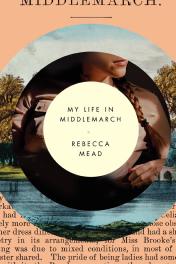
mylifeinmiddlemarchI enjoyed a lot about my graduate seminar on George Eliot, but it was a source of some pedagogical frustration for me. I felt all term that I was talking too much, for instance. But also I felt somewhat confused about the aims of the seminar now that we’ve all openly admitted that graduate school isn’t now (if it ever was) wholly populated by people aiming at academic careers. I couldn’t decide how much that could or should change the conversations we had in class, the research I asked the students to do, or the kind of writing I asked for. I don’t think it’s possible to turn a specialized seminar in a particular discipline into an all-purpose smorgasbord of skills and knowledge, so in the end I didn’t change much of what I’ve routinely done in graduate seminars.  But I did (for the second time) include a blogging component aimed both at encouraging preparation for our once-a-week face-to-face sessions and at increasing the students’ comfort with the idea of writing more publicly. I also included as options seminar topics on George Eliot ‘outside’ the academic context, which led to three presentations on recent ‘popular’ versions of George Eliot: Diana Souhami’s Gwendolen, Rebecca Mead’s My Life in Middlemarch, and the BBC adaptation of Daniel Deronda. These examples all gave them real-life proof that people talk about, write about, and care about Victorian literature in non-academic contexts, and the presentations all raised good questions about how and why they do, especially in comparison to the kinds of reading and writing that are more typically academic.
For me, it didn’t feel like a great term, but I think overall it went smoothly — as surely it should, after all these years. I think one reason it felt rough at times is that I was mentally (and sometimes emotionally) preoccupied with my promotion case, which has been moving slowly along through its various stages. For obvious reasons, this is not something I can address in detail here, at least before it’s all over. I will say, though, that in general it has already been a learning experience, in some ways a very good one (thought-provoking, constructive, illuminating) and in other ways an unwelcome one —  it’s one thing to anticipate what executive types call “pushback,” after all, and  another to see what form it actually takes. Eventually (once I know the ending!) I may have a longer tale to tell.

Next term I hope to have a bit more straight-up fun in the classroom — even though it is winter. I’m teaching the mystery class again, which I still find really stimulating even after teaching it almost every year for a dozen years. One reason I think the atmosphere is generally so positive and the students so engaged in this class is that it’s an elective for everyone: this can have its down sides (sometimes it’s not a top priority for students, for example), but mostly it means hardly anyone is there who doesn’t want to be. Plus, of course, I do try to make it as lively, interesting, and thought-provoking as I can!

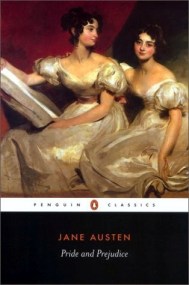
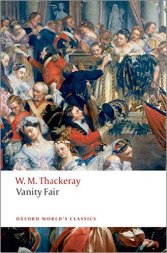
vanityfairMy other course is yet another incarnation of “The 19th-Century Novel from Austen to Dickens,” for which as usual I have mixed up the reading list: instead of Persuasion, I’ve switched in Pride and Prejudice (which I haven’t done in 5 years); instead of Waverley, I’m bringing back Vanity Fair; instead of Jane Eyre, we’ll read The Tenant of Wildfell Hall*; and then I’m pairing Mary Barton and Hard Times at the end. Mary Barton is not as accomplished a novel as North and South, but its raw power always surprises me, and its importance as a social novel is perhaps greater. Hard Times is not everyone’s favorite Dickens novel, but I think it too is very powerful in its strange, excessive, fabular way. It’s a line-up I chose more for variety than continuity: the last time around, the novels were all variations on the Bildungsroman. I am most curious about how Vanity Fair will go over; I think the last time I assigned it was 2008. Will I need to stage an intervention, as I did last time with Waverley? Or will the inimitable Becky carry them all along with her, in her unscrupulous clamber up the social ladder?

*Update: So much for working from memory: I chose Jane Eyre again for this round, as I was reminded today when I went to check the stock in the bookstore! I was a bit disappointed to realize that at first, but actually it’s good, as 2016 is the 200th anniversary of Charlotte Brontë’s birth, so we really ought to be reading her most famous book. And I do love Jane Eyre.

Dogs and Cats

alexisI’m back! It has been quite a week, and I still have work to do to finish up the term, but I can see my way through it now — and really, it hasn’t been that bad compared to terms when I’ve had more or bigger classes and no teaching assistants. Still, it feels good to have everything under control, and thus to be able to contemplate the stacks of books around my desk with anticipation rather than anxiety or guilt. Hang in there, Isabel: you’re next! (Egad, was it really a whole month ago that I started The Portrait of a Lady?)

The one book I have managed to get to the end of recently is Andre Alexis’s Fifteen Dogs, which was my book club’s latest selection. Usually we try to follow some kind of link from one book to the next, but we settled on Fifteen Dogs a bit randomly because a few people had heard about and thought it sounded interesting. A few days after we chose it, it won the Giller Prize, so that seemed like validation! (Coincidentally, it did turn out to resemble Ending Up in one respect: all of its main characters end up the same way Amis’s do.)

I didn’t like Fifteen Dogs. The premise was initially interesting, and I have nothing in principle against adapting old forms (in this case, the apologue) for contemporary use. But Alexis’s choice to write the book in stiltedly formal diction as if to recreate the form’s antiquity really didn’t work for me: to my ear, it just sounded artificial, and it kept me from ever feeling anything about the dogs. Perhaps that was the intent: to keep it intellectual, to give it the (supposed) objectivity of a philosophical exercise. Or perhaps (and equally likely) I just wasn’t the right reader for the book, as at least one other member of my book club said it made her cry.

Was I unmoved by Fifteen Dogs because I’m a cat person and have never been particularly comfortable around dogs, which usually strike me as loud, messy, and intrusive? I wondered about that a lot while I was reading Alexis’s book. I wan’t convinced by his dogs as either dogs or dogs-with-human-consciousness, but I thought that might be because I don’t have an intimate knowledge of what he repeatedly calls “the canine.” I think Alexis does manage not to simply anthropomorphize his dogs once they can think and talk — he works hard to keep them still dog-like (as he understands that) and then to animate the strange hybrid his thought experiment has created. (There’s a pretty funny bit about a dog watching a movie who, despite being otherwise pretty interested in it, gets frustrated that he can’t smell anything in it.)

alexis2But it turned out that although I am the only person in my book club who doesn’t own (and love) dogs, most of the others also didn’t like the book much. One was offended by it because she loves dogs and thought the book showed Alexis doesn’t actually like them: his version of them is negatively selective, uncharitable, she proposed. The nobility of the dog who waits years for his owner to come back struck a chord with some of the others (though why this dog, in spite of his grasp of human language and motives, never figures out that she has died did bother us). We all agreed with the one who cried that the last dog’s death was very pathetic — but she recently lost her own dog, so she thought she might have also been emotionally vulnerable. I was the only one who had gotten both distracted and annoyed by the weirdly specific allusions to Victorian novels (if you were going to train your preternaturally talented dog to recite just one 19th-century novel, would you choose Vanity Fair? and what is it exactly that makes Mansfield Park the pooch’s preferred Austen?). In general, the complaint was simply that it wasn’t very engaging, though as is often the case, as we talked we found it getting more interesting, at least theoretically: why does the acquisition of language so immediately cause such a deep rift? what is it about poets that makes them both outcasts and – or so Alexis proposes – the only ones likely to find happiness? We had a little fun going through the poems, too, looking for the hidden dog names that we’d missed the first time.
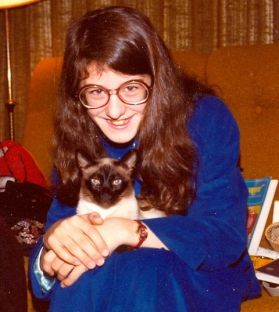
Their tepid response to Fifteen Dogs notwithstanding, there’s no doubt that I was surrounded by dog lovers, and the book prompted some impassioned discussion of their dogs, which naturally made me feel both left out and a bit defensive. I have met some individual dogs over the years that I’m fine with, and every once in a while I think it might be nice to be met with panting enthusiasm when I come home from work, but really, if getting a pet were an option for me, I’d absolutely get a cat, not a dog. As a child, I longed for a cat above all things, but my father and both siblings are allergic, so it always seemed like an impossible dream. Then on Christmas Day in 1977, a mysterious basket was delivered that seemed to be making a sad mewling noise — and inside was an absolutely beautiful seal point Siamese kitten. This very old and sadly discolored photo shows us on our very first day together:

scan0001 (2)

I was at once completely in love and completely petrified! And I was deep into my Mary, Queen of Scots phase, so I named him “Bothwell,” an aristocratic title he quickly grew into:

scan0003

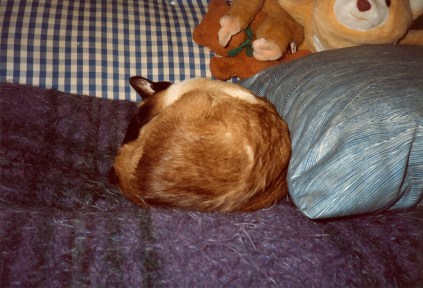
Bothwell was a truly splendid cat: smart, elegant, expressive, loyal. In retrospect, I wasn’t the greatest owner: I didn’t clean out the litter box as often as I should have, and sometimes I just dumped new food in without cleaning out his bowl. But he was definitely mine — or, since cats do tend to resist being possessed, he was definitely my friend more than anyone else’s. I spent many hours reading in my comfy chair with him curled on my lap, and when I wasn’t in the chair, he kept it warm for me:

scan0008

When I moved into my first apartment, the hardest part was not being able to bring him with me; I was at Cornell when he died, and though it had been a few years at that point since I’d lived with him, I felt completely bereft.

scan0004

My husband is allergic to cats; I wouldn’t be surprised if my children were too. So it seems unlikely I’ll ever get another one: I’m back where I was long ago, dreaming of the perfect feline companion!

After reading Fifteen Dogs, I thought my book club might want to try a different dog book, so I looked around for possibilities and there are lots of them. In the end, we went a different way (in fact, we went back to Kingsley Amis to find our thread, and chose Elizabeth Jane Howard’s The Beautiful Visit). But my search got me wondering what the great cat novels are. I got a number of good suggestions on Twitter including May Sarton’s The Fur Person, Takashi Haraide’s The Guest Cat, Paula Fox’s Desperate Characters, and Natsume Soseki’s I Am a Cat. Maybe I can talk all those dog lovers into reading one of these soon: fair’s fair! In the meantime, it’s probably time I read “The Cat That Walked By Himself.”

Update: I realized right after I published this that I have posted about cats once before: see here for my daughter’s memorable poem CATS.

“The Sorrow of the Dead”: Maurizio de Giovanni, I Will Have Vengeance

ricciardi

I see it. I feel it, the sorrow of the dead who remain attached to a life they no longer have. I know it; I hear the sound of the blood draining away. The mind that deserts them, the brain clinging by the fingernails to the last shred of life as it runs out. Love, you say? If you only knew how much death there is in your love …

It turns out I do have a little time for reading and writing in among the essays and exams (it’s better for everyone if you don’t get too single-minded about marking, after all). So tonight I was able to finish up Maurizio de Giovanni’s I Will Have Vengeance, which Steve Donoghue kindly sent my way after he learned I had never read any of the Commissario Ricciardi mysteries. (Steve has written about the series a few times at his blog and in Open Letters Weekly.)

I enjoyed  I Will Have Vengeance very much. It is an atmospheric whodunit set in Mussolini’s Italy in 1931. The case itself is a murder mystery wrapped in opera – specifically, the famous duo of Cavelleria Rusticana and I Pagliacci: de Giovanni elegantly combines his own plot with the themes and stories of the operas, and especially with the powerful emotions evoked by and in the music.

Commissario Ricciardi is an opera skeptic: “he didn’t like the theatrical representation of emotions,” we’re told. Listening to one of the novel’s many opera enthusiasts, he wonders “how opera, mere make-believe, could produce such emotion.” It’s understandable that he would resist such artificial stimulation, as he has abundant experience of real, if vicarious, suffering: the strange and somewhat risky gimmick of the series is that he sees dead people — or, rather, dying people:

He saw the dead. Not all of them, and not for long: only those who had died violently, and only for a period of time that revealed extreme emotion, the sudden energy of their final thoughts. He saw them as though in a photograph that captured the moment their lives ended, one whose contours slowly faded until they disappeared. Better yet, he saw them as in a film, like those he sometimes saw at the movies, only the same scene kept playing over and over again.

Risky, as I said, because this could easily be a trick that feels as artificial as Ricciardi believes operatic melodrama to be. But I thought de Giovanni pulled it off, partly because he makes Ricciardi’s visions interesting and often moving, and also because he emphasizes not their inexplicability but the psychic toll they take on Ricciardi, who cannot go for a walk or enjoy an espresso without some horrid violence flashing on his inward eye. De Giovanni integrates these chilling moments into his narrative with so little specific notice that I wasn’t always sure if we were seeing a death that is present — in our present, that is — or absent. Here’s an example will give you the idea, both of this device and of the bleak overall tone and imagery of the novel:ricciardi2

The cold wind gradually grew stronger as the tram clambered up the hill, trudging along; Ricciardi could tell from the swaying of the vegetation that was now more dense. Trees, shrubs, cultivated fields, dirt paths leading into the countryside; here and there a villa surrounded by palm trees. On either side of the road — the tramway running down the middle of it — were occasional shacks with women washing clothes and children playing outdoors. A boy with a dog and two goats tied to a rope was selling ricotta cheese and bread to a small group of bricklayers at a construction site. One of them, standing a little apart, had his head bent in an unnatural way. The Commissario looked away: one of the thousands of workplace accidents, which no one ever heard about.

Actually, I’m still not sure what he’s seeing here: is this broken man dead or living? The reality is clearer, and creepier, when Ricciardi sees a little girl outside his cafe, carrying “a bundle of rags, perhaps a doll”:

Her left arm was missing: a fragment of white bone protruded from the torn flesh, splintered like a piece of fresh wood. Her hip was staved in, her chest cavity crushed. A tram, Ricciardi thought. The girl stared at him then, all of a sudden, held out the rag doll to him: ‘This is my daughter. I feed her and bather her.’ Ricciardi set down the cup, paid, and went out. Now he would feel cold for the rest of the day.

Against the chill of all this reiterated suffering we get Ricciardi’s own effortful humanity, which in this case becomes dedicated (as it does for so many fictional detectives) to reconciling the competing demands of law and justice. There’s a glimmer of warmth, too, in his relationship (if that’s the right word) with the young woman he watches every night from his window (to her satisfaction, we discover, which saves the situation from being uncomfortably voyeuristic).

I Will Have Vengeance is the first of the Commissario Ricciardi mysteries. Though (as the translator’s note at the end spells out) de Giovanni is meticulous in his recreation of the period, the historical context is mostly just background here — the murder victim, an opera singer, is admired by Il Duce and so the higher-ups put extra pressure on the Commissario to solve the case. There are some comments about the relentless emphasis of the regime on order and conformity, which is contrasted with the city’s unruliness as well as people’s emotional turbulence. I’ll be interested to see if the later books draw us and the Commissario more deeply into the era’s troubled politics. Happily, Steve also sent me the newest one, The Bottom of Your Heart — though I wonder if I should jump straight to the seventh book or work my way up to it.

The books are published in English translations by Europa Editions, in case you think they look interesting.

From the Novel Readings Archives: Santa Clause is People!

The lull is over: papers are in, exams are incoming, and for the next little while I’ll have my head down taking care of business. Last week, while I waited for the work to arrive, I got in some Christmas shopping, including wrapping and shipping some things to my family out west as well as browsing for gifts for family and friends here in Halifax. I know this kind of thing makes some people grumpy, and if I let myself get frazzled over it, I can lose the Christmas spirit too. But basically I love doing it: it’s not just about commercialism or obligation — presents, to me, are one way of connecting to people we care and think about. Gifts create a tangible trail across our lives: they become concrete representations or reminders of our histories, and especially of our relationships. Since I probably won’t have time to write a new post any time soon, here’s one I wrote a few years ago about this. Things have changed a bit in our household since then (the kids have grown up a lot, for one thing!) but the sentiments are the same.


IMG_0861Years ago, when our children were very little, we decided we were not going to lie to them about the existence of Santa Claus. Though as I recall we did debate it a little, in the end it was not a difficult decision, and it is not one we have ever regretted. As far as possible, we always try to be honest with our children and didn’t like the idea of one day disillusioning them–not just about Santa, but about us (“Yes, Mommy and Daddy lied to you repeatedly, because we thought it was cute!”). Of course we understand that people who pretend Santa Claus is real do so in the cheerful spirit of fun, fantasy, and fairy tales, and overall it’s probably a harmless kind of thing, but we also have a general aversion to unreality when it comes to explaining how things work in the world. No astrology, no alchemy, no holistic medicine or faith healing, no supernatural beings,  no Santa Claus.

The thing is, taking what might sound like a ‘hard line’ approach has not meant any diminution in our household’s appreciation of the wonders of the world we live in. We find it extremely uplifting and inspiring, for example, to contemplate the vastness of the universe: my husband has been reading Sizing Up the Universe and sharing all kinds of astonishing facts that expand the imagination beyond the utmost bounds of human thought. Who can watch Planet Earth and not be overwhelmed with the beauty and terror of nature in ways that could be described as spiritual? Richard Dawkins’s wonderful series of Royal Institution Christmas Lectures, Growing Up in the Universe, is an eloquent and invigorating appreciation of our known place in time and space; his new book The Magic of Reality is wrapped and under the tree now, tagged “for the whole family.”

Yes, under the tree, because as I’ve written about before on this blog, I don’t think there’s any hypocrisy in a family of atheists celebrating Christmas. The spirit we celebrate in is that expressed by George Eliot in a well-known line from one of her letters: “The idea of God, so far as it has been a high spiritual influence, is the ideal of a goodness entirely human.” Ours is a Christmas–and a Santa–that is “entirely human,” and known to be so. Our kids know that the presents under our tree come from their friends and family. Instead of being (putatively) supernaturally outsourced, our gift-giving is between us, the presents tangible reminders of and connections to our friends and family. I think it’s actually much nicer to think that someone thought of you and wanted to bring some pleasure and interest into your life by giving you something they knew you would enjoy. “It’s nice to know presents come from people who love you,” Maddie said to me the other day as we looked at the cheerful array of packages, and I completely agree.

We have a somewhat unusual approach to Christmas presents in our household. Some years ago, reflecting on the effect Christmas morning was having on us all–cluttered and overwhelmed–we decided to spread out the present opening across Christmas break. Now the children open one gift each every morning starting the day after school ends (the parents take turns too, though a little less often). We put on a little festive music, the parents sit down with their tea and coffee, the kids take turns reading our daily installment from our Christmas Carol Advent Calendar, and then they pick something out and open it while everyone is relaxed, attentive, and cheerful. It’s much easier to appreciate a gift when it’s the only one you are opening that day! Also, because of the kinds of gifts we tend to give in our family–lots of books, but also puzzles, games, and cozy things to wear–this also makes the break more fun, because each day there’s something new to read or play or snuggle in. (We don’t take a particularly extravagant approach: I learned from my mother that Christmas and birthdays are good times to restock the basics.  My kids always know they will have both new books and new socks by the end of the season!)  Sizing Up the Universe was one of my husband’s gifts this year; Maddie has been enjoying the new Jacqueline Wilson novel she opened yesterday and snuggling in her new soft hoodie from Aeropostale; Owen has been reading avidly in Cliff Pickover’s The Math Book and having a lot of fun playing Kirby’s Epic Yarn with the rest of us;  I’m looking forward to starting Robert Graves’s Goodbye to All That [update: here’s what I thought of it!].  There’s a box under the tree that sounds an awful lot like a new jigsaw puzzle, which will be nice to work on with some music playing, on one of the snowy afternoons I’m sure we’ll have. Each present we open (like each present we send–and we do a lot of sending, since all of our extended family lives far away) always feels to me like one end of an invisible thread connecting us to the other people in our lives. Santa Claus makes for some great stories, but the reality is every bit as nice to think about, and it has the added virtue of being true.

(Originally posted in December 2011)

Other Holiday-Themed Posts:

Christmas Music (December 2009)

Christmas Books (December 2010)

Holiday Concerts (December 2012)

Holiday Traditions (December 2013)


This Week In My Reading: Scale and Significance

book-cover-unless-by-carol-shieldsIn a way, this post is also about “this week in my classes,” as it is prompted by the serendipitous convergence of my current reading around questions we’ve been discussing since we started working on Carol Shields’ Unless in my section of Intro to Lit. In our first session on the novel, I give some introductory remarks about Shields — a life and times overview, and then some suggestions about themes that interested her, especially in relation to Unless. One of the things I pointed out is that she also wrote a biography of Jane Austen; in an interview, Shields said “Jane Austen is important to me because she demonstrates how large narratives can occupy small spaces.” We come to Shields right after working through Woolf’s A Room of One’s Own, so I also bring up Woolf’s pointed remark: “This is an important book, the critic assumes, because it deals with war. This is an insignificant book because it deals with the feelings of women in a drawing room.” Both Shields and Woolf are thinking about the relationship between scale and significance, and both of them are drawing our attention to the ways assumptions about what matters — in literature, particularly, since that’s their primary context — have historically been gendered.

Unless itself explores the relationship between scale and significance on several levels. Its protagonist, Reta Winters, is a writer whose first novel, My Thyme Is Up, is light and romantic, a “sunny” book that has won a prize for books that combine “literary quality and accessibility.” Reta has been working on a sequel (with the equally charming title Thyme in Bloom), but over the course of Unless she becomes discontented with it, especially with the happy ending she had blithely anticipated for it. For much of the novel, she is puzzling over what else to do — what other kind of book to write. She grows to dislike her characters as originally conceived: she sees her heroine Alicia as “vapid” and Alicia’s impending marriage as a mistake:

Suddenly it was clear to me. Alicia’s marriage to Roman must be postponed. Now I understood where the novel is headed. She is not meant to be partnered. Her singleness in the world is her paradise, it has been all along, and she came close to sacrificing it, or rather, I, as novelist, had been about to snatch it away from her. The wedding guests will have to be alerted and the gifts returned. All of them, Alicia, Roman, their families, their friends — stupid, stupid. The novel, if it is to survive, must be redrafted.

But how? All we really know is that instead of submitting Alicia to the conventional marriage plot, Reta now wants her to “advance in her self-understanding.”

unless2Reta’s redrafting is disrupted by her editor, an officious American (of course! Unless is a Canadian novel, after all) named Arthur Springer who has even bigger plans for Thyme in Bloom, which (significantly) he proposes she retitle simply Bloom. His idea is that Alicia should fade into the background while Roman emerges as the “moral center” of the novel. This, he insists, is necessary for the novel to graduate from “popular fiction” to “quality fiction.” He also proposes that Reta retreat behind her initials: she will become R. R. Summers (“Winters” is her husband’s surname). This way her new (“quality”) book can’t possibly be associated with her, or with her earlier (“popular”) novel.

Reta sees exactly what’s up, of course: Springer believes that a book’s literary significance depends on its masculinity — that its standing as great literature will increase as it moves away from the world of women. When Reta presses him about what’s wrong with Alicia, his answer is comically symptomatic of the problems much of the novel is about. “I am talking,” he says, “about Roman being the moral center of this book,”

“and Alicia, for all her charms, is not capable of that role, surely you can see that. She writes fashion articles. She talks to her cat. She does yoga. She makes rice casseroles.”

“It’s because she’s a woman.”

“That’s not an issue at all. Surely you —”

“But it is the issue.”

“She is unable to make a claim to — She is undisciplined in her — She can’t focus the way Roman — She changes her mind about — She lacks — A reader, the serious reader that I have in mind, would never accept her as the decisive fulcrum of a serious work of art that acts as a critique of our society while at the same time, unrolling itself like a carpet of inevitability, narrativistically speaking.”

“Because she’s a woman.”

Reta ultimately resists both Springer’s exhortations and the “critical voice in [her] head that weighs serious literature against what is merely entertainment.” We are never told exactly how Thyme in Bloom ends, only that “Alicia triumphs, but in her own slightly capricious way.” What we do know is that having discovered her dissatisfaction with a particular kind of conventional woman’s fiction, what Reta imagines doing next is not something on a larger scale or a more overtly grandiose style but something even smaller: “I want it to be a book that’s willing to live in one room if necessary,” she says; “I want it to hold still like an oil painting, a painting titled: Seated Woman.”

One of the questions I asked my class to think about is whether Unless is itself a model for a different kind of fiction, maybe even an example of the kind of book Reta imagines writing — one that insists we find, or at least look for, significance in small things. Reta is “just” a fairly ordinary woman but the things that happen in the novel certainly mean a lot to her, and as she connects the incidents in her life to other events, both personal and historical, private and public, significant patterns emerge. Unless initially seems like a really unassuming book, but by the end that feels like part of the plan: Shields’ novel itself asks us to accept an ordinary woman as “the decisive fulcrum of a serious work of art.”

What has been so interesting over the past couple of weeks is how many of the other  books I happen to be reading also either explicitly turn on or implicitly raise questions about the relationship between women and scale and significance, in life and in literature.

derondaOne of them is Daniel Deronda, which I’ve just finished reading with my graduate students. This novel is famously bifurcated between Gwendolen’s story (a highly personal, small-scale drama) — and Daniel’s (which starts out on a similarly domestic scale but opens out into a potentially epic, world-historical story). Is Gwendolen condemned to insignificance when she is left behind to suffer at home while Daniel goes off to (perhaps) found a nation? The literal scale of Eliot’s treatment of Gwendolen is not belittling: she gets at least half the huge novel to herself, after all. Perhaps this novel insists, formally, on an equivalence between two kinds of significance, one of which occupies a small space. Or perhaps what’s significant is Gwendolen’s discovery of her own insignificance. “Could there be a slenderer, more insignificant thread in human history,” asks the narrator,

than this consciousness of a girl, busy with her small inferences of the way in which she could make her life pleasant?—in a time, too, when ideas were with fresh vigor making armies of themselves, and the universal kinship was declaring itself fiercely; when women on the other side of the world would not mourn for the husbands and sons who died bravely in a common cause, and men stinted of bread on our side of the world heard of that willing loss and were patient: a time when the soul of man was walking to pulses which had for centuries been beating in him unfelt, until their full sum made a new life of terror or of joy.

But then Eliot seems to reject that premise:

What in the midst of that mighty drama are girls and their blind visions? They are the Yea or Nay of that good for which men are enduring and fighting. In these delicate vessels is borne onward through the ages the treasure of human affections.

Isn’t that belittling in its own way, though? It certainly doesn’t allow “girls” much historical agency.

Then, I’m about half way through The Portrait of a Lady, which picks up on exactly this question of how much that girlish presence matters (James even quotes Eliot’s “delicate vessels” line in his 1908 Preface to the novel). Can so small a thing as the consciousness of a young girl support the whole weight of a novel, James wonders?

“Place the centre of the subject in the young woman’s consciousness,” I said to myself, “and you get as interesting and as beautiful a difficulty as you could wish. Stick to that — for the centre; put the heaviest weight into that scale, which will be so largely the scale of her relation to herself. . . . See, at all events, what can be done in this way. What better field could there be for a due ingenuity? The girl hovers, inextinguishable, as a charming creature, and the job will be to translate her into the highest terms of that formula, and as nearly as possible moreover into all of them. To depend upon her and her little concerns wholly to see you through will necessitate, remember, your really ‘doing’ her.”

Is James issuing a corrective to Eliot’s approach, calling her out, as it were, for lacking the courage or “ingenuity” to let Gwendolen carry her whole novel? But notice that his terms are, in their own way, belittling: “the girl” needs to be “translated” into something higher; she needs the novelist to infuse her with importance. Reading The Portrait of a Lady, I feel conscious of the weight of his novel bearing down on Isabel in a way I don’t feel Daniel Deronda weighing down Gwendolen (and certainly don’t feel Unless impressing itself on Reta). Is it possible that, more than James, Eliot does believe in the significance of her heroine’s “little concerns”?

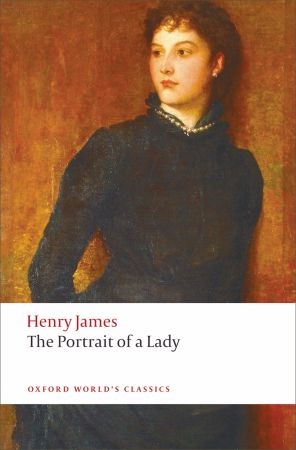
oxfordportraitNeither of these novels, however, whatever their differences, feels in any way light, despite the intimacy of their core casts of characters. It’s the treatment, not the subject, that gives literary significance, isn’t it? Austen’s novels don’t feel trite even though viewed narrowly they are “just” about a handful of “ladies and gentlemen, in their elegant but confined houses” (in Charlotte Bronte’s words) — because her love stories are also stories about values and class structures and social changes with far-reaching effects. When Isabel Archer accepts Gilbert Osmond’s proposal, it feels large because James has imbued Isabel’s choices with philosophical consequence: her decision isn’t just to marry or not to marry, but about how to use her freedom, and about what to value and how to value herself. These are personal questions but also abstract ones, and so the small space of her individual life occupies a large narrative (by which I don’t mean, though I could, just a long book).

But I’m also reading Laurie Colwin’s Family Happiness, and so far it seems to me a small space filled by a small narrative. Its plot and cast of characters are intimate, domestic, insignificant on anything but a personal scale. It reminds me very much of Anne Tyler’s novels, though (so far, at least) it lacks Tyler’s habit of whimsy. I’m enjoying it, and I’m interested in how things will go for its protagonist, but nice as it is, it feels trivial. I think it shows that you can’t just reverse expectations and insist that the ordinary is always resonant with significance. You have to really ‘do’ it, as James says: you have to go all in. You can enlarge the narrative in a lot of different ways: morally, aesthetically, historically, philosophically — but literary greatness still requires some kind of expansiveness, some reaching beyond the particular. Or does it? (If Austen’s own description of her work as “the little bit . . . of ivory on which I work with so fine a brush” really did, unironically, sum up the scale of her novels, would we admire them as much as we do?)

family-happinessI have been thinking that this constellation of questions (not really any answers) is relevant to the discussions about why, say, Jonathan Franzen’s novels about family and private life get treated as more significant than some other books that are about similar topics. Gender may well be part of the explanation, but it would be disingenuous to pretend we don’t know that some books by both men and women simply do more with their material than others, and that that scale — the scale of meaning, of treatment — is ultimately where literary significance lies. But this post has gone on long enough without really arriving anywhere in particular, so that’s probably as good a place to stop as any.

A New Open Letters Monthly Is Up! Again!

Bookworm's Table (Hirst)A monthly schedule really is relentless, isn’t it? And yet somehow, every month, we pull it off and present to the world another brand spanking new issue. As usual, I hope you’ll be tempted to go browse and read in it directly, but here are a couple of teasers:

Once again we wrap up the year with our special “Year in Reading” feature, in which the Open Letters editorial team picks favorites read, not (or not necessarily) published, in 2015. I always enjoy reading through everyone’s contributions: we are all avid readers, but we all read differently, and different things, so you can never predict what will turn up there. There was some competition for my own top spot this year; I’ll get a chance to revisit more of my own personal bests when I do my year-end post.

My review of Adam Johnson’s Fortune Smiles is up. I thought The Orphan Master’s Son was an extraordinary novel — gripping, sad, funny, and really original — and I thought the same of this collection of stories, though they certainly take us to some disturbing places.

Jane Schmidt reviews what sounds like a really interesting book on the history and ideology of makeup. Is it oppressive or expressive? Read the review and find out!

Also in this month’s issue: Steve Donoghue on a new book about atheism, Luciana Magniafico on the art and legacy of Edward Gibbon, new poetry, and more.

This Week In My Classes: Letting Go

scaffoldingWe are rapidly nearing the end of term, which means a lot of time and thought on all sides is going into final assignments. In my Intro to Lit class, I’m particularly conscious of this phase of the course as a time in which I pull back and see if the scaffolding I have tried to build for the students, starting on the first day of classes, supports them now that they have to do their biggest independent project. Last week I gave them a self-assessment exercise that, among other things, asked them to let me know what they thought the teaching staff could do to help them succeed — what else, I should say, since it’s not as if my TAs and I have been passive so far. It was useful to see what they identified as their own strengths and weaknesses. Their anxiety pretty clearly centers on building a viable and interesting argument out of the details they notice while reading. A number of students said that they wished we would “explain” the readings to them more clearly: as I discussed with the class, if this means “tell them the answer to the readings,” tell them what to argue about them, then they aren’t going to get their wish, since learning to develop and support their own interpretations is really the primary course objective. I’ve been stressing the process that leads to a good interpretation, which is what we model and practice in every class, but I’m not going to offer them a “nugget of pure truth to wrap up between the pages of [their] notebooks and keep on the mantel-piece forever,” even if (as Woolf ironically observes) this is “the first duty of a lecturer.”

Still, I can see that it’s stressful working towards a goal that maybe you can’t quite picture, not having seen a strong thesis before, or not having seen details from a close reading integrated into an essay’s overall argument. So I devised a couple of exercises that I hope have helped bring that desired result into better focus, including a handout with a sample paragraph drawing on an example we’d worked on together in class, and in today’s tutorial we’re working with a sample thesis statement for a text they aren’t writing on for their final essays (as I told them, I don’t want 61 essays all arguing for my interpretation of Unless!) and, again, a process-oriented worksheet focusing on choosing good evidence and organizing it into an interpretive argument. I hope this boosts their confidence about what to do — what steps to take — and makes them feel better about the fact that they need to do it in service of their best reading and thinking about the novel. I have said since day 1 that there aren’t “right answers” to the kind of work a critic does. There can be wrong ones (if you just flat out misunderstand the words on the page, for instance), but after that there are just better, more convincing ones or weaker, less persuasive ones. Next week they have drafts due and tutorials will be spent on peer editing, so that gives them one more chance to run their plans past another reader before they commit fully.

mylifeinmiddlemarchMy graduate students too are facing end-of-term hurdles. Here my scaffolding has been somewhat less meticulous or overt, but I hope our directed conversations all term have given them lots of ideas to work with as well as a good sense of how to talk about them. They also wrote proposals for their final essays last week, which I have returned to them with comments and suggestions. For the next two weeks, our class time will be dedicated to their presentations. In previous years I’ve integrated presentations into the term’s work, but this year I wanted to use them to extend our class discussions beyond the assigned readings, so I have two students presenting on works by George Eliot that weren’t otherwise on our syllabus, and three presenting on contemporary interpretations of Eliot’s work — Diana Souhami’s Gwendolen, Rebecca Mead’s My Life in Middlemarch, and the BBC adaptation of Daniel Deronda. (These were the students’ choices from a menu of options I gave them.) I’m looking forward to these! I have kept my own reviews of Souhami and Mead a bit under wraps (though I suppose the students might turn them up during their research) as I didn’t want to preempt what might be very different responses.

In terms of my own teaching chores, I’m in a bit of a lull at this point. There are still classes to prep on Unless, but I’ve got notes to work with, and I’ve drafted both the quiz I still need to give in Intro and the peer editing worksheet they’ll use. It will all come crashing upon me at once as soon as classes actually end, though, with both sets of papers coming in and the final exam for Intro scheduled the very first day of the exam period. I’m taking advantage of this week’s lighter demands by getting a start on the syllabi for next term. I’m also digging in to Portrait of a Lady, which I had been making only slow progress on. It really isn’t that irritating, it turns out — or maybe I’m just acclimatizing.

Update: As Stacey requested in the comments, here are the handouts I drew up for my Intro class to model and them help them practice moving from close reading details to using those details to support an interpretation: English 1010 Worksheets Close Reading in Context.