
She’d learned to live with him, with his transformation. Yes, it was if Einar were on a perpetual track of transformation, as if these changes — the mysterious blood, the hollow cheeks, the unfulfilled longing — would never case, would lead to no end. And when she thought about it, who wasn’t always changing? Wasn’t everybody always turning into someone new?
In the “Conversation with David Ebershoff” that follows the text of The Danish Girl in my edition, the author explains that one facet of his interest in the story of Einar Wegener and Lili Elbe, the woman he became (or, the woman he already was) is its universality. “We all, in some ways,” he says, “are born into the wrong body”:
We struggle throughout our lives to learn to accept the shell that transports us through this world. I believe everyone has at least once looked in the mirror and thought, “That is not who I am. I was meant to be someone else.” Obviously, most of us do not take such drastic measures to come to terms with who we are, but there is universality to Einar’s question of identity — look not at my body, look at my soul.
This seems right to me as a comment on many, perhaps most, people’s experience (not just mirrors but also photographs and, even worse, videos can certainly be disorienting for me in the way he describes) — but it seems a bit disingenuous as a comment on the specific story he tells in The Danish Girl, which is very deeply and complexly concerned with Einar’s body, which is also Lili’s body. If it was the intangible soul that mattered most, would it in fact be so important for Einar’s body to give way to Lili’s? The Danish Girl immerses us in the physicality of identity, exploring (though not, probably rightly, purporting to explain) the complex interplay between embodied gender and expressed gender roles. Through Einar’s life as Lili (or, as we are really brought to understand it over the course of the novel, Lili’s life as Einar), The Danish Girl rejects simple binaries, giving us a character whose gender identity is fluid, uncertain — almost translucent, like the fabrics and the light in which Einar’s wife Greta so often paints Lili. But at the same time the novel anchors us in Lili’s very tangible reality: she has ovaries, for instance, and her quest is ultimately to correct her body and thus her life — to complete her transformation so that she can be just one of the two people, of the two sexes. Her “soul,” that is, needs to take what feels to her like the right physical form: it’s not enough for Einar to dress or act as Lili without actually being Lili.
Ebershoff’s story is intensely particular: this trajectory is just Einar / Lili’s, and also Greta’s. The Danish Girl is not a didactic or overtly political novel about transgender issues or identities more generally, except, I’d say, insofar as just by its sympathetic attention it insists on incorporating these questions and experiences into our thinking about what it means to be human, to live in society, to be in relationships, to be male or female. But of course that inclusivity is not an uncontroversial position in all circles today, so in that respect it is a quietly confrontational novel even though I don’t think it sets out to be. As much as anything else, it is a novel about marriage — about what Greta calls “that small dark space between two people where a marriage exists.” For a long time, Lili lives in that small dark space: one way of thinking about her emergence as fully her own person is that she outgrows it — though she does so at least partly because she is nurtured and encouraged to by Greta. Though Greta is no saint, her fundamental generosity is extraordinary. “I hope you are comfortable,” she writes to Lili as Einar waits in Dresden for the operation that will end his life and give Lili hers;
That’s what worries me the most. I wish you had let me come with you but I understand. Some things you must do alone. Lili, don’t you just sometimes stop and think about what it will be like when it’s all over? The freedom! That’s how I think of it. Is that how you think of it? I hope so. I hope you think of it that way because that is what it should feel like to you. It does to me, at least.
How many husbands or wives really value their partners’ freedom in this way, especially if it means the end of the very marriage that made it so important? “If you love something, let it go,” say the inspirational posters — but for most people love and possession, love and control, or just love and stasis go together much more easily than love and liberation. In Ebershoff’s telling, though, it’s absolutely Greta who makes Lili’s transformation possible. She’s the one who believes in the reality of Lili: while the medical experts recommend “cures” from repression to a lobotomy, Greta persists in seeking a solution that will help Einar become, rather than deny, the woman he already is.
 Ebershoff ties Greta’s journey as a painter to Lili’s emergence: it’s Greta’s invitation to Einar to model for her in women’s stockings that precipitates Lili’s emergence, and it’s her paintings of Lili that propel Greta into prominence as an artist even as Einar, initially the more successful of the two, fades into artistic insigificance. Ebershoff’s prose is beautiful throughout — lyrical but precise, poignant but restrained — but it rises to something like exuberance when he writes about her painting:
When she painted, Greta thought of nothing, or what felt to her like nothing: her brain, her thoughts, felt as light as the paints she mixed into her palette. It reminded her of driving into the sun, as if painting were about pressing on blindly but in good faith. On her best days, ecstasy would fill her as she pivoted from her paint box to the canvas, and it was as if there were a white light blocking out everything but her imagination. When her painting was working, when the brush strokes were capturing the exact curve of Lili’s head, or the depth of her dark eyes, Greta would hear a rustling in her head that reminded her of the bamboo prodder knocking oranges from her father’s orange trees. Painting well was like harvesting fruit: the beautiful dense thud of an orange hitting the California loam.
As Greta’s career expands, Einar’s declines, his small, dark landscapes — once esteemed and popular — becoming just “a constant and sometimes sad reminder of their inverted lives.” By the end of the novel, Lili opts not to take them with her to the new life she is creating:
“It’s not that I don’t want them,” Lili heard herself saying, one of her last in the Widow House, already slipping away into memory. But whose memory? “I just can’t take them with me,” and she shuddered, for suddenly it felt as if everything around her belonged to someone else.
Lili’s dissociation from her old life and identity is a thought-provoking aspect of the story Ebershoff tells (one he is careful to say is fiction, despite being loosely based on the true story of Einar Wegener — “most of the novel,” he says, “is invented”). After Lili’s surgery, Greta actually tries hard to get a death certificate issued for Einar, who, after all, no longer exists. After their long struggle, Greta wants some kind of closure, some finality to the hard-won separation of Lili’s self from Einar’s body. Where does someone go, what is left of someone, after such a transformation? Again, Ebershoff’s story feels particular, rather than prescriptive: in this case, for this woman who once was, but never really was, a man, what’s left is a kind of truth, one Einar had always, inadvertantly, obscured. The remarkable realities of the present don’t obliterate the past Lili (as Einar) shared with Greta, but the continuities now exist only in their memories. I suppose this too is universal — we all look back on our previous selves and wonder what became of the person we once were. For Lili, though, as The Danish Girl ends, the pressing question is not “how did I get here?” but “where will I go now?” It’s a question that, the novel shows us, sometimes takes both extraordinary love and extraordinary courage to ask as well as to answer.
 A friend of mine highly recommended Kent Haruf’s Plainsong, but when I looked for it at the bookstore they didn’t have it, so instead I brought home his more recent novel Benediction. It seems to me to have been a happy enough substitution: Plainsong may yet turn out to be better, but I thought Benediction was very good.
 Dad is at the center of Benediction, but the novel’s attention radiates out from him to the small struggles and successes of those around him. Notable among these is the town minister, Rob Lyle, who has been sent to the town of Holt after causing trouble in Denver — trouble he ends up reiterating in Holt because (as he says in his own defense) “I had to say it . . . It’s the truth.” The truth he preaches is love, which sounds common enough except that he suggests people should really mean it, not just pay lip service to it:
 I’m pleased to announce that I’ve completed one of my first summer projects: turning the materials for my
  When I posted about Brooklyn
  I understand that this can be taken as symptomatic of Eilis’s character. Early in her first year in Brooklyn she recognizes that her survival there in fact depends on suppressing her feelings:
 I feel as if I should begin with a disclaimer: this post is just a preliminary attempt to sort something out for myself that I am sure has been discussed a lot already! I know it’s not a new question, but it is a new one for me to be thinking carefully about — and that’s what my blog is for, not for presenting absolutely finished position papers but for exploration. So don’t jump on me if, for you, this is old news or already a settled question! Instead, tell me what you think, since one thing I’m hoping will come from writing a little about this question here is that I’ll get some leads and ideas for how to think about it better, or where to read more about it.
 Not that there’s anything wrong with that! Lots of (maybe even most) critical work is at least implicitly advocating on behalf of its specific topic — whether for its underestimated importance to literary history or for its political efficacy or for a right understanding of its aesthetic properties. Romance is a special case, too: as pretty much everyone I’ve read who writes about romance says at some point, it seems to call for overt special pleading simply because it is so routinely dismissed and its readers and writers so routinely shamed. If Regis seems at times to protest too much, it’s probably just that she knew her choice of subject would be met with skepticism, if not derision, and not just by her academic colleagues. (I expect that more recent scholarship is less defensive, as genre fiction and popular culture more generally have become increasingly familiar parts of the academic landscape. Eric Selinger and Sarah Frantz’s collection New Approaches to Popular Romance Fiction, which came out in 2012, is also on my reading list; I’ll be curious to see if I’m right that the tone has changed.)
 Regis is completely right that by her definition, Pride and Prejudice is a romance novel. But here’s the thing: to me, that suggests she’s using the wrong definition. First of all, it’s too broad to be interesting (even her list of canonical “romances” hardly seems to hang together in a meaningful way, outside a very bare skeletal similarity). It also seems anachronistic, in the same way that calling The Moonstone a “mystery” does: there wasn’t really such a category at the time (that’s not really the kind of book Collins himself thought he was writing), and applying our current terms so absolutely means losing sight of the genealogy of our modern genres. Books can be closely related in kind (or, as Regis sets it up, in structure) with being the same kind exactly.
 Alternatively, you could argue (as I have seen done) that romance, like all genres, comes in both “high” and “low” — or literary and popular — versions.** There’s still a kind of hierarchy, but now you’re separating out those who “transcend the genre” (to use the phrase Ian Rankin hates when applied to crime fiction) from those who happily take their place within it. No direct comparisons are called for, then, and Heyer or Chase (or choose your preferred exemplars) get considered more or less on their own terms. I still think the larger category (the one being subdivided into high and low forms) conflates too many different kinds of things, and the end result can be condescending — it implies, or could, that the serious stuff is going on in some sense over the heads of both readers and writers of the popular incarnations of the genre, or that those who really take themselves and their work seriously will aim at that transcendent kind. But at least this approach doesn’t pretend all novels organized around love and marriage are the same kind of books.
 Once it became more solid, the emerging story and all its ramifications and possibilities lifted him out of the gloom of his failure. He grew determined that he would become more hardworking now. He took up his pen again — the pen of all his unforgettable efforts and sacred struggles. It was now, he believed, that he would do the work of his life. He was ready to begin again, to return to the old high art of fiction with ambitions now too deep and pure for any utterance.
 Something that moved me deeply about Tóibín’s vision is that, as he tells it, there really are costs to such an extraordinarily intellectual life. It isn’t easy to be “one of those on whom nothing is lost”: The Master is suffused with melancholy, and with a strange, contradictory longing for decisive moments that never quite arrive, for connections that are never quite achieved. Every time Henry ventures further out into the world, whether literally or emotionally, just as promptly he retreats. For him, to be fully himself is, paradoxically, to be distant from himself; his best company, it sometimes seems, is his memory, but that is an equivocal solace:
 Classes ended last Wednesday, and I held my first final exam at 8:30 the following Saturday morning. That seemed hasty to me! Students have a lot going on at the end of term, and two days isn’t much time for them finish other assignments, regroup, and rest up a bit. On the bright side (for me, at least) I don’t have another exam until next Tuesday, so this has given me plenty of time to get that first batch graded. Since the only thing I have left to do for my other exam is copy it, I have a nice little window to sort out my own end-of-term mess and start organizing — literally and mentally — for my summer reading and writing projects. I spent some cheerful time this afternoon filing papers, reorganizing my bookshelves, and reflecting on the year that was.
 Often at the end of term I am full of resolutions about things I will do differently next time. One thing I am almost certain I’m going to change is my use of reading journals in the 19thC Fiction course.
  Recently I went out for a very pleasant lunch with a group of local Victorianists. One of the topics of discussion was retirement, and particularly how demoralizing it has been for people we know who have given literally decades of their lives to their universities only to be urged to consider retirement before they themselves feel ready for it. Nobody that we know wants to work past the point where they can’t do their job well, but for many professors 60-ish can actually be a peak time for creative productivity. Academic careers start slowly anyway, given the years it takes to earn qualifications, to land a permanent position (for the increasingly small number privileged enough to do so), then to meet the demands for tenure. Women with children, in particular, may have waited a long time to really flex their intellectual muscles: researchers have shown that
 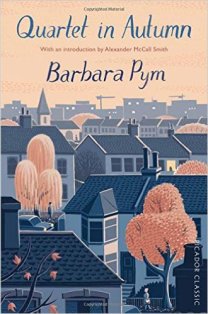 Anyway! Retirement is not the main subject of this post (though it’s related to it, in ways I’ll come back to): it’s just the context for how, at our nice lunch, I ended up mentioning Barbara Pym’s
  This is not to say that there are not pleasures to be had in the kinds of professional reading I’ve mentioned, or that English professors don’t ever want to do that reading. Of course they — we — do. But it’s still reading for work, and it’s pretty clear that “how do you find time to read?” really means “how do you find time for reading that isn’t for work?” Again, this is a question that can be tinged with envy, as if to say the person would also like to do that, but it’s also implicitly, inevitably, judgmental: “why aren’t you as busy with work as I am — why aren’t you too busy to read?”
 But the truth is, I’m probably not, if by “busy” you mean spending every available minute doing academic work — though that depends, of course, on how you define “working” (not to mention “academic”). I have
 In These Old Shades, however, despite the age gap (the Duke is forty, Léonie is twenty), I was quite reconciled to the romance by the end, and not just because twenty is older than sixteen. Avon protests too much about Léonie’s youth, for one thing; as one by one the other characters perceive the romantic potential in their relationship, he keeps insisting that it is a strictly platonic one, even declaring more than once that she sees him as a grandparent. “Infant, it’s madness!” he exclaims about the possibility of her marrying someone as decrepit as he.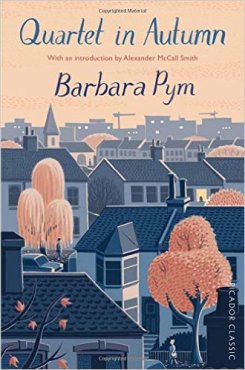
 Novel Readings