 Earlier this year there was a lot of buzz when a Princeton professor published a “CV of Failures.” I know: “Princeton professor” and “failure” hardly seem to belong in the same sentence. But that was pretty much exactly why Johannes Haushofer decided to make his record of rejection public. “Most of what I try fails,” he wrote in his preamble,
but these failures are often invisible, while the successes are visible. I have noticed that this sometimes gives others the impression that most things work out for me. As a result, they are more likely to attribute their own failures to themselves, rather than the fact that the world is stochastic, applications are crapshoots, and selection committees and referees have bad days. This CV of Failures is an attempt to balance the record and provide some perspective.
I admit that it seemed a bit silly to me at the time. Don’t we all fail a lot, and isn’t the point of a curriculum vitae to make the positive case? But he and the many people who responded enthusiastically to the whole idea of going public with failure weren’t wrong that in academic culture failures are hidden while successes are trumpeted — not just in the relatively discreet form of CVs (which are all-too-rarely made public anyway), but by announcements from Deans, or applause at Department meetings, or faculty book fairs, for example. In this context failure always feels a bit shameful (which is just one of many reasons the terrible job market for PhDs is so psychologically damaging). Academia is a profoundly evaluative, and thus incessantly judgmental, culture, and thus also a culture that all too easily divides us (if only tacitly) into winners and losers.*
 I have been thinking about the question of failure in academia again since my promotion was denied. The appeal is ongoing, so I don’t yet know how the story will finally turn out, but no matter how it does, the fact will always remain that I was not successful in this process.** It has recently occurred to me that one reason last year was so difficult for me is that when things took a turn for the worse, one of my most intense reactions was humiliation. I felt profoundly embarrassed, because I had been held up for scrutiny and found wanting: I had not passed the test, and in this world, that feels not just like a professional evaluation but also like a very personal and all-too-public shaming. I know that this is not an entirely rational response, but I bet it also isn’t unusual for academics who fail in this way, especially when you add in imposter syndrome (endemic among academics) — this is the time you were finally exposed as the pretender you always were.
 What I have been thinking about more recently, though, is how much worse this cringing attitude made the whole experience for me, because it led me to be not just discreet but downright secretive about what was going on. I’m not saying that I should have made all aspects of the case public (and I don’t plan to now, either): I have some doubts about the advice on Historiann’s blog (about another case) to “YELL AND SCREAM ABOUT WHAT’S HAPPENING,” not just because it seems to me a strategy that could backfire but also because it could look as if you’re trying to do an end-run around proper procedures. (Not that those procedures themselves might not sometimes deserve yelling and screaming about, of course, but as a general rule I don’t think professional matters should be litigated in the court of public opinion.) I just mean being frank about the basics, so, for instance, when people ask how you are doing, instead of saying “fine” and then going in your office and throwing things to relieve the stress of keeping up appearances, maybe saying “not great, actually, because my promotion application isn’t going as well as I’d hoped.”
My overwhelming desire to hide in my office and listen to Adele may have protected me in some ways, but it also, I belatedly realize, cut me off from what might have been really valuable gestures of support. Mind you, being more open might well have created other problems, since the sources of my troubles are one way or another all colleagues: presumably we don’t routinely discuss these processes more openly precisely because the airing of internal grievances threatens our collective collegiality. Of course, from my point of view the damage is already done: there are people I’ll never look at the same way again. Also, the prevailing norm of confidentiality strips away some kinds of accountability. My feeling at this point is that like any dissension between co-workers, it’s awkward any way you handle it, but my way — which meant closing myself off from many of the people around me — ended up being quite personally debilitating.
 I don’t rule out that some of the intensity of my own reactions might be idiosyncratic: I myself was surprised that I took it all so hard, and that has been cause for some self-reflection. (Indeed, I have experienced fits of meta-failure in which I have been thoroughly unimpressed with myself for not handling everything better!) That’s what got me thinking again about the general context, though — about what failure means and how failure is treated in the academic world. And it also got me thinking about other failures in my own life, along the lines of the ‘CV of Failures.’ It isn’t, after all, as if this is the first time I have swung at something and missed. So in the spirit of Johannes Haushofer, here are a few more of my own failures. I’ll restrict the list to things that quantify more easily than, for instance, my general failure to thrive during my graduate coursework, and that are on a larger scale than, say, the many books I have failed to understand.
- I was rejected by most of the graduate schools I applied to, including the one I most wanted (the History of Consciousness program at UC Santa Cruz, which in retrospect I think might have been a complete disaster for me).
- I was also did not get most of the jobs I applied for, including the one I really (really) wanted (at Simon Fraser University, where I came close enough to have a campus interview). (Worse, almost, is that they sent the rejection by email so I wept over it in a dank basement computer lab, which is where we read email in those days.) Obviously, I did still get a very good job (just as I did get into a good graduate program) but I didn’t know at the time that’s how things would turn out.
- I didn’t get the only SSHRC grant I ever applied for. The funny thing about that, in this context, is that one criticism of my promotion case (from some quarters) was that I hadn’t applied for a SSHRC grant — I had, but it wasn’t on my CV because I didn’t think failed applications belonged there.
- I’ve been fairly lucky with articles submitted for publication, though I’ve certainly had failures there too. One that I remember with particular clarity came back with a very dismissive assessment and then was accepted unchanged by a different journal — good evidence for the “crapshoot” theory. Another came back as a revise and resubmit: that ended up being one of the most valuable experiences of my early professional career, as it was for Victorian Studies, the revision advice was both generous and rigorous, and they accepted it when I sent it back.
- I don’t yet have much experience with “pitching” essays to magazine editors, but I’ve failed almost every time I’ve tried. Sometimes these failures come in the form of absolute total silence in response — that I don’t really want to get used to, as it seems to me just plain bad manners. There was also that book review that was declared unpublishable.
- I have so far failed to turn my miscellaneous writing on George Eliot into a viable book project. I do consider this particular failure a work in progress, though. At the very least, as time goes on and I try different variations of it, I hope maybe I am failing better!
- (I thought of this one after I’d published this post originally.) Although I have been nominated 5 times for teaching awards, I have never won.
- (Updated) It turns out I did lose the appeal, so that’s a story that ends in a resounding failure. (Not just for me, IMHO, but definitely and specifically for me.)
Like Haushofer, I’ve been very fortunate overall in my academic career. The point is not to complain (that would be absurd, for someone in my privileged position, and anxiety over giving just such an impression has nearly kept me from posting this at all) but to reveal more of the whole picture, to be clear that my career has not been an unimpeded string of successes that nobody with any failures on their record could possibly hope to emulate. I’ve learned over the past year, too, that for all my successes — maybe even to some extent because of them — I still need to work on my own fear of failing, or, more specifically, of being seen to fail. This post is a start.
*I’m sure these attitudes are not unique to academia, but I think they may have some unique features there given the particular form and very long process of indoctrination professionalization we’ve gone through by the time we end up in these jobs.
**I know now; see #8 above.
 High Rising is the first of Angela Thirkell’s Barsetshire novels. I read the second, Wild Strawberries, a few years ago — that I barely remember it and also apparently didn’t write about it hints at what to me is both the appeal and the limitation of Thirkell (so far, since this is a pretty small sample): she offers charm without much substance, so the reading experience is light and enjoyable but not particularly memorable.
 The series clearly aims to be associated with Trollope’s Chronicles of Barsetshire, and my edition even includes a map with Barchester at the center. Based on the two novels I’ve read, Thirkell doesn’t really deserve to stand as Trollope’s equal: for all their similarly companionable charm, his novels are both more subtle and more profound. (Jenny at Shelf Love is further along in the series; from her review of
  In Close Reading I always start with poetry, partly because it’s just easier to model and practice mining details for meaning when working with shorter, denser texts. Even in Middlemarch (don’t tell anyone I said this!) there are places it’s probably okay not to scrutinize every word, but a sonnet such as Robert Frost’s “Design” demands our unrelenting attention. I reviewed some key terminology on Monday, and then Wednesday and Friday were all about scansion, something I think is not just vital (who can talk well about poetry without considering rhythm?) but kind of fun. However, despite my best efforts, I am almost never able to convince the majority of my students that it is anything but aggravating: the stress was palpable in both tutorials on Friday!
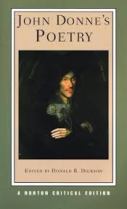 I almost always end up using lines from Donne’s Holy Sonnet X (“Death, Be Not Proud”) to illustrate just how interesting, important, and even exciting scanning poetry can be. For one thing, it’s a poem that quickly teaches you not to read it in anything like mechanical iambic pentameter: “Death, BE not PROUD, though SOME have CALLed THEE / mighTY and DREADful, FOR thou ART not SO”? You wouldn’t. You mustn’t. And not just because that’s not how you pronounce “mighty.” You’re standing up to Death! At the very least, you have to call him out in that first syllable: “DEATH, BE not PROUD.” You might even do four stresses in a row — “DEATH, BE NOT PROUD” — or maybe that’s too much. I’m tempted to do “for THOU ART NOT SO” as well, but my reading of the poem may be more confrontational than others would like. At any rate, you have to say it as if you mean it, which makes scanning the poem actually quite a profound exercise:
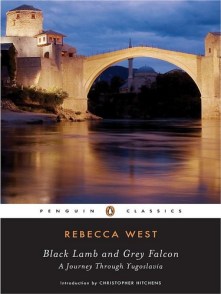 I started reading Rebecca West’s Black Lamb and Grey Falcon four years ago. I’m still reading it – or, more accurately, I am reading it again. I didn’t stop reading it then because it was no good or I wasn’t interested. On the contrary, I was fascinated and endlessly impressed. But the very thing that so fascinated and impressed me – the astonishing density and rhetorical brilliance of
  Now that I’m almost half way through the book, I am still impressed above all by West’s writing. In his introduction, Christopher Hitchens (after acknowledging some of the idiosyncrasies and problems of West’s commentary on the world she was exploring) concludes that “writing on this level must be esteemed and shown to later generations, no matter what the subject.” I’m not sure that quality of prose (even if we had a 100% reliable and universal measure for it) is or should always be a sufficient condition for reading something. One of the challenges of Black Lamb and Grey Falcon for me is that it is so vast and complex that I doubt my own ability, even when I finally finish it, to evaluate its worth on other grounds, though. At this point I do feel some frustration, in fact, at being so immersed in details and yet still so unable to perceive, never mind assess, larger patterns.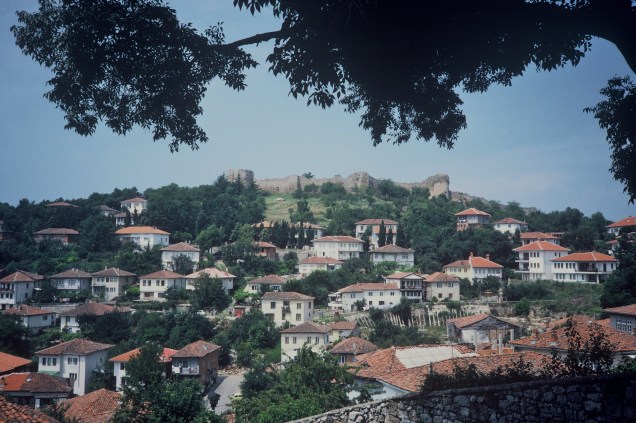
 I was struggling over what to write about in this post, which begins the 10th season of my
 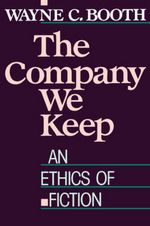 I opened Close Reading on Wednesday with a lecture focused primarily on choices: first ours, in the department, to include the course among our suite of requirements; then theirs to take it, which includes their choice to major in English (not something I’ve ever heard of anyone being pressured into); then, moving into the course materials, the choices writers make, from the biggest (to write anything at all) to the smallest (to use this word or that one). My broader pitch is for the connection between aesthetics and ethics; I quote Wayne Booth, which won’t surprise regular visitors here:
 In today’s tutorials we looked at one writer’s specific choices, comparing Robert Frost’s “In White” to the later, much more famous version, “Design.” You can see the two poems side by side
  For a somewhat different perspective, we’re also reading Margaret Oliphant’s essay “The Condition of Women.” (Both are in Susan Hamilton’s excellent
  I decided to ease out of the summer with some light reading on this long weekend — first
  The novels of
 The case itself is cleverly contrived but not, I think, particularly meaningful. On a completely personal and thus mostly irrelevant note, I enjoyed that it turned on the victim’s fondness for retsina: retsina is actually the first wine I ever drank, back when I was a regular in a Greek dance performing group, so for some time I didn’t realize just how distinctive (many would say, just how disgusting) it actually is. I haven’t had any in years, but now I’m tempted to see if our local wine store carries any. As I recall, it certainly goes well with the robust flavors of Greek cooking — garlic, lemon, and lamb especially. It isn’t really key to the crime, though, except that because nobody likes it but the victim, it proves a useful vehicle for delivering the fatal poison. (This is not a spoiler, as the method of the murder is one of the first things we find out!)
 I finished Honest Doubt thinking that, though I didn’t love it this time either, I should reread more of the series. Even 2000 was a long time ago in my own academic career, and for all that aspects of Honest Doubt seemed faintly archaic already, some of its truths hit home in a way they didn’t before. Even its title, in fact, has new resonance to me, taken as it is from Tennyson’s lines (from In Memoriam) “There lives more faith in honest doubt / Believe me, than in half the creeds.” My own doubts about a range of academic values and practices have made me seem to some, I think, like a negative force, maybe even a threat (or, and I’m not sure if this is better or worse, like an irrelevance). I’ve described myself as feeling sometimes like “a nonbeliever in church”: to me, though, my doubts have always been indications of my faith that what we do not only is valuable but can be even more so.
 September is here, which means that even though technically it’s still summer, it feels like fall. From now on, every nice day is to be cherished and even the sunniest Sunday will be under the shadow of Monday’s impending classes — though not quite yet, because my first class meetings of the new term aren’t until Wednesday. And as it happens, I will be able to wind up my summer without too much angst: yesterday I realized that right now, though as always there are plenty of things I could be doing, there’s really nothing I must be doing. All the writing I’d promised has been sent along to editors; my courses are prepped, including handouts, lecture notes, and slides for the first day(s); other odds and ends of administrative tasks have been completed. I suppose this is my reward for not really taking a vacation: though I did take it easy when I could, I didn’t travel, and I was in my office almost every weekday getting things done. As a result, I will head into the last long weekend of the summer without either the ambition or the pressure to be working.
 I had intended to create another book club site, probably for The Mill on the Floss, but in the end the time that would have gone into this project went instead into doing more book reviews than I had anticipated. One of my more general goals has been to get more experience and also more recognition for my criticism by writing for a wider range of venues. Because reviews are usually commissioned rather than pitched, I wasn’t sure quite how to do this, but I reached out to a couple of editors and was contacted by a couple of others, and in the end I was kept fairly busy! I consider this time very well spent for a number of reasons. First, I read and thought about a lot of books, some of them ones I would probably not have sought out if left entirely to my own devices. Then, in addition to the intellectual and literary benefits of engaging with a wide range of books, I had to work to deadlines and within space constraints set by other people, and also work with their editorial feedback. I cherish the freedom I have at Open Letters, but sometimes it paralyzes me a bit as I look for “just the right book” to review. I also think my colleagues there are among the very best editors around, but it’s bracing to venture outside, if only to find out what else I might learn. And I do feel that I’ve learned a lot this summer, partly about the genre of reviewing, and partly about my own writing process. I had hoped that writing more and faster would make me, ultimately, a more confident as well as a more widely competent writer, and I think it has.
 Here’s the tally of my summer reviewing, meaning books read and written about since classes got out in April:
 It happens so gradually at first: there’s a slight chill in the evening air, the sky is a little darker on my morning run, the leaves look just a little less green. Then a faint hum begins on campus: more people are in their offices, the sidewalks are a bit more crowded, signs of arrivals and departures — abandoned sofas and mattresses, extra trash bags, boxes for recycling — appear in the neighborhood. It’s at once depressing and enlivening: summer is over, and soon we’ll be back at school.
 So, what will I be busy with this term? I have just two classes, both ones I usually enjoy teaching very much and both of which I haven’t taught since 2011-12. The first is English 3000, Close Reading, which is part of our suite of required classes for majors and honours students. They don’t have to take English 3000 in particular: they have to chose one of our ‘theory and methods’ courses, which also include The History of Criticism and Contemporary Critical Theory. The first time I taught English 3000, in 2003, that wasn’t the case: then, it was one of two classes we’d introduced that were to be core requirements for every student in our program (the other was a survey, Literary Landmarks). Then, it had an enrollment of 120; this year, it is capped at 60 and right now has 42 students in it — so, quite a different undertaking. Still, my approach to the class was shaped by thinking about it as something that should be as useful and as engaging as possible to every English student — to every reader, in fact. It is actually the most conceptually interesting class I’ve ever developed (for me, at least) because it isn’t organized around content, the way my classes usually are, but around a method, a habit, a practice.
 In addition to working on how to read attentively (including learning precise vocabulary for explaining what we read), I try to focus our attention on why it matters to read carefully, not just for class but for life. In working out my approach, I drew especially on Wayne Booth’s The Company We Keep and on the ways he links aesthetics to ethics. My hope is that this connection motivates students to see our work, not as an intellectual parlor game, but as something with vital implications for living an examined life. We’ll be reading a selection of poetry and short fiction, and then really digging into Middlemarch and The Remains of the Day. The juxtaposition of these two very different novels has proven extremely fruitful in past iterations of the course. There is always some grumbling about Middlemarch (“it’s TOO LONG to read in a one-term course,” a student once exclaimed in her course evaluation — which amuses me because of course I always teach it in one-term courses, which are all we offer now, and usually with four other fairly long books). My justification is that if we’re going to pay really close attention to a novel, it should be a novel that I am confident will reward that attention. And we take five whole weeks to read it, so we don’t exactly rush through it.
 My other fall class is an upper-level seminar, The Victorian ‘Woman Question.’ It has 23 students in it, which is actually pretty big for a seminar — it’s going to be a tight fit, for instance, getting in all the student presentations. But if past years are any indication, the discussion should be fairly robust. I’ve done this class with an exclusive focus on fiction, but this year I’m doing my more standard mix of genres. We’ll start with some non-fiction, including Mill’s The Subjection of Women and essays by Frances Power Cobbe and Margaret Oliphant (included in Susan Hamilton’s excellent Broadview anthology Criminals, Idiots, Women, and Minors), then we’ll read The Tenant of Wildfell Hall, The Mill on the Floss, Aurora Leigh (all of it, hooray!), The Odd Women, and an array of other short poems and stories. From the outset I emphasize that there wasn’t just one ‘question’ about women’s roles, and there certainly, too, wasn’t just one ‘answer.’ I provide some historical context at the outset, including information about women’s legal, economic, political, and educational realities, and then we approach each of our readings to see what terms it sets for the debate: how it poses and answers the ‘woman question.’
 I had hoped that
  Novel Readings