 2016 has been a somewhat unusual reading year for me because quite a few of the books I read were ‘assigned’ for reviews — or else were books I chose not entirely because I wanted to read them but because they looked like books I could pitch for reviews. Although at times I ended up feeling a bit stifled as a result, because it felt as if reading obligations were crowding out reading pleasures, at other times it meant a thrill of discovery, as a book or author I wouldn’t otherwise have read turned out to be wonderful. This was also a sign that as a writer I was being pushed in new directions and, as a result, learning new skills and finding (I hope) new strengths — about which, more in my next post on my year in writing!
Looking back on 2016, here are some of the books that stand out.
 Book of the Year: Moby-Dick. Really, how could it not be? I’m not saying I read it particularly well, but hey — it was my first time! And I read it with a great deal more pleasure than I expected, and also a sense of expanding horizons. Yes, it’s about whales, the way War and Peace is about Russia — it’s not only about so much more but it just does so much more that’s surprising and amazing and, yes, occasionally tedious, or just plain baffling. I was just reading an earnest article about the importance of revising and revising and revising to perfect every last word: though I don’t actually know what Melville’s own writing process was, it seems to me that this is the kind of well-intentioned advice for novelists about their “craft” that yields books as impeccable but somehow lifeless as Anthony Marra’s A Constellation of Vital Phenomena while guaranteeing us no more fearless Moby-Dick-like masterpieces.
Runners-Up:
Edith Wharton, The House of Mirth and Henry James, The Portrait of a Lady. Together with Daniel Deronda, these make a remarkable trilogy of variations on a theme. Each of them features a young woman of great intelligence and high spirits hemmed in on every side by social and personal contexts that deny her suitable outlets for her energy. My love-hate relationship with James’s prose continues; Wharton, on the other hand, proved much more congenial, and I’ve got The Custom of the Country on my list of books to read in 2017.
Other Highlights:
 Inspired in part by The Portrait of a Lady, I finally read Colm Tóibín’s The Master — and loved it. I’d put it off because I was so underwhelmed with Brooklyn (an impression that was basically confirmed when, inspired by The Master, I reread it), but The Master is artful and tender and brilliant. I expect it’s even better to a true Jamesian, who would get all the subtle allusions and nuances, but it’s a sign of Tóibín’s skill that even a James-skeptic like myself could become totally absorbed in his character.
I loved David Ebershoff’s The Danish Girl. Above all, it is a story about the kind of love and acceptance we all dream of, but it’s also about art and beauty and identity, about how we see ourselves and each other.
A friend recommended Kent Haruf’s Plainsong and I’m so glad she did: I ended up reading three of his novels and being touched and impressed by all of them. I think Plainsong is the best (most complex, most ambitious) of them, but my personal favorite was Our Souls At Night: something about its evocation of loneliness, and the delicacy with which it explores the possibility of overcoming it, really spoke to me.
 Another author I discovered thanks to a prompt from someone else was David Constantine: Scott Esposito asked me to review The Life-Writer and In Another Country for The Quarterly Conversation, and as he predicted I was really impressed. Constantine is a writer’s writer, meticulous and nuanced, but like Alice Munro he embeds both plot twists and emotional surprises into his understated but beautiful prose.
I read Andrea Levy’s Small Island soon after the U.S. election, and it turned out to be unexpectedly timely and somewhat comforting in the tenderness with which it shows disparate people doing their best to live together.
With an eye to my upcoming ‘pulp fiction’ class, I dipped into westerns, a genre I previously knew almost nothing about. I sampled quite a few but the only ones I read attentively all the way through were Charles Portis’s True Grit and Elmore Leonard’s Valdez is Coming. I enjoyed them both thoroughly, but I can’t really see myself reading many more westerns for my own pleasure: reading about them will probably do. Lonesome Dove, maybe? And speaking of genre fiction, I read some good new crime novels this year too, including Phonse Jessome’s gritty Halifax noir Disposable Souls and Maurizio de Giovanni’s Bastards of Pizzofalcone books.
 Finally, Gerald Durrell’s My Family and Other Animals was an absolute tonic as this rather depressing year drew to its close. And one more last-minute success was Danielle Dutton’s Margaret the First, which turned out to be a small, glittering jewel of a novel. (My review will be out in the TLS early in 2017.)
Low Points:
This is 100% about a failure on my part, and also my own disappointment — with myself, though also (however irrationally) with the novel: I tried and failed to read To the Lighthouse. I did read it, in the sense of turning every page, but I could not seem to find the novel I knew was in there somewhere, waiting to transform me. I will try again, after a decent interval.
Curtis Sittenfeld’s Ineligible made me swear off Austen pastiches forever. And I vehemently disliked Dinitia Smith’s The Honeymoon, which I reviewed for the TLS. I saw another novel about George Eliot in the bookstore not long ago and shuddered away from it: though it would be nice to be pleasantly surprised, I have yet to read a really good example of this particular species.
Ian McEwan’s Nutshell was the worst book I may ever have read by an author I fervently admire.
Not Reading, Exactly, But:
 I finished my first full viewing of both Buffy the Vampire Slayer and Angel this year. I’ve been rewatching both shows intermittently ever since, which tells you a lot about how interested I got in them. It also indicates something that those who’d seen both series before already knew: both reward rewatching (which is a kind of reading, really) more than many television shows: they reveal layers and connections and themes that aren’t always obvious at first when you’re caught up in the immediate drama. Even when I found the particulars absurd, which did occasionally happen (maybe more for me than for people who are more at home in fantasy as a genre), I never stopped caring about the characters, and now that I’ve seen how all the story arcs turn out, I’m finding myself even more emotionally involved with them.
My 2017 TBR List:
There are a lot of books I look forward to reading in 2017, including (as already mentioned), more Edith Wharton. I have David Ebershoff’s The 19th Wife standing by, along with volumes 2 and 3 in Jane Smiley’s “Last 100 Years” trilogy. In the same stack is Marilynne Robinson’s Housekeeping, partly because of my questions about My Name Is Lucy Barton and minimalism in fiction, and partly just because; Max Porter’s Grief is the Thing With Feathers is there too, and Sarah Moss’s Body of Light, and China Mieville’s The City and the City. My success with Moby-Dick has had me wondering if I should stop being scared of Ulysses and give it a try in 2017. Part of what’s exciting about a new year, though, is not knowing yet what great books lie in wait that I haven’t even thought of reading yet!


 ll of these activities and interests infused my listening life. I didn’t have any sense of disdain for whatever the top 100 might be; I just didn’t pay that music much attention. I knew and liked some older stuff: when Simon & Garfunkel did their reunion tour in 1983, for instance, I lined up overnight with a friend to get floor tickets, and enjoyed their B.C. Place concert from our spot maybe 3 yards back from the stage. I got to be good friends with Veda Hille (now
  But there really isn’t a list of 10 albums that for me made up a distinct soundtrack of those years, at least not one that really speaks to who I was. Instead, there are particular songs or albums that now have astonishing power to summon up different periods of my life. It’s remarkable how music can do that, isn’t it? A song comes on and suddenly there you are immersed in a whole set of feelings, as if you are being dunked into a vat of memory. These are often not songs that are personal favorites – what matters is that for some reason they became part of a moment in time for me. I was in the grocery store yesterday, for example, and Billy Joel’s “I’m Moving Out” came over their annoyingly loud sound system — and I was instantly back in the New Kent Hotel in London, where my sister and I stayed at both ends of our 6-month tour of Europe in 1986. (I just looked it up, and what do you know:
  Sarah McLachlans’s “
 Although I listen to music almost all the time now, there’s little that has the same emotional power over me: I have to go deeper into my past to get the same effect. I wonder if it’s just that the more immediate events and their associations haven’t yet distilled into part of my history. There is certainly some music that is fundamental to my life — that I have loved for so long, that has given me so much pleasure, that when I hear it it restores me to myself. At the top of that list would be Joan Sutherland’s 1962 recording of La Traviata: my parents gave me the highlights LP as a birthday gift in 1972 and I cherished it even before I had the honor of getting Sutherland’s autograph on the cover years later. (Richard Bonynge’s autograph is on the back: I still feel a bit embarrassed about how indifferent I was to his offer to sign it too, but I was 9 and Sutherland was my idol.) No piano music has ever displaced Chopin’s in my heart since I first tried to learn some of his easier waltzes as a student: practicing
  It starts to feel as if I have written a lot of these ‘start of the term’ posts: I’ve used up every variation I can think of for titles! It’s in the nature of academic work to be cyclical, though, and on the bright side, this term I am doing one all-new course, so at least you can look forward to some novelty in my teaching posts!
 I’ve sometimes wondered if I should have had a plan, or developed one, in order to give Novel Readings a more definite identity. In the decade since I launched this blog, I’ve seen quite a lot of articles or posts giving advice on blogging, and the key to success is apparently having a mission, or filling a specific niche — along with posting on a regular (and frequent) schedule, and keeping your posts under 1000 words. (Hey, I’m 0 for 3!) I do think the hybrid identity of Novel Readings — which is not really, or at least not just, a book blog, and not really, or not altogether, an academic blog — has probably limited its appeal, because for some bookish people there’s no doubt too much academic stuff here, while for some academics, there’s too much book talk (or, too much book talk that’s not sufficiently academic).
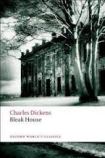 So: what’s up for this winter term? Something old and something new. I’m doing another iteration of 19th-Century British Fiction (Dickens to Hardy), beginning, this week, with Bleak House, which I haven’t taught (or read) since 2013. I was so sad to read Hilary Mantel identifying Dickens as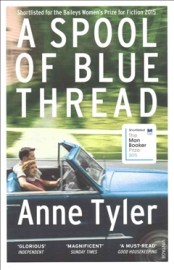
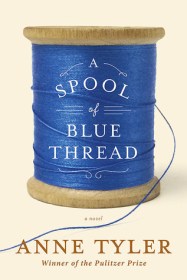 A Spool of Blue Thread is chronologically wider-ranging than some of Tyler’s novels, which means it has a wider range of characters and some sense of being not just a personal story but also an American story — not as overtly as Smiley’s Some Luck and its sequels, with their relentless chronological march through American history, but still, we get a sense of people shaped by different eras, from the Depression through the Sixties and into the 21st century. I liked the novel’s structure, reaching back into the past and then back yet again, so that we first meet the characters and then learn more about how they came to be who they are, or to be with who they’re with (a process that turns out, in some cases, to be much more fraught than the cherished family stories reveal).
 I think that’s what, for me, makes Tyler an author whose new books I always seek out, in spite of (or maybe because of) the strong family resemblances between them. They are all books about people coming to terms with life, which is, after all, what most of us are doing ourselves, most of the time — and the wry, resigned tenderness of her storytelling seems to me a model for how we ought to approach both ourselves and others: with honesty, but also with kindness and humor.
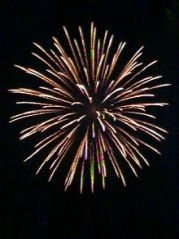 We don’t stay up until midnight on New Year’s Eve anymore. I can’t remember when we gave up on this tradition, exactly. The last New Year’s Eve I specifically remember was 1999-2000: remember the Y2K panic? We didn’t really expect a dramatic catastrophe on the stroke of midnight, but it was hard not to wonder just what would go wrong. I think we rang in the New Year a few times after that, but there came a point at which it was just too obvious that nothing significantly changed with a new date, and also while the children were small, staying up late on purpose when we were already tired all the time didn’t make much sense. This is one way in which I have broken with my upbringing: to this day my intrepid parents and whoever’s celebrating with them stand out on their front porch in Vancouver and listen for the ships in the harbor to tell them when it’s officially midnight, then bang enthusiastically on pots and pans — a ritual I participated in with glee for many years. (To my knowledge, none of our neighbors ever complained.) I don’t think they still have Pêches Flambées for dessert, though: that used to be the showy finale to our elaborate New Year’s Eve dinner.
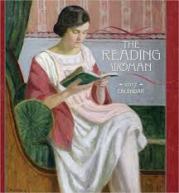 Anyway, here we are now, writing 2017 instead of 2016 but otherwise puttering along more or less as usual. For me, that means getting things in order for my winter term classes, which begin on Monday — a week later than is typical, which has been a real boon. The campus itself, including the administrative offices, opened up this week, so I’ve been able to get handouts printed and copied and all kinds of other preparatory business done, including a trek across campus to scout out the room where I’ll be teaching ‘Pulp Fiction,’ which is in an unfamiliar building. Will that preemptive action ward off anxiety dreams about getting lost en route? Here’s hoping.
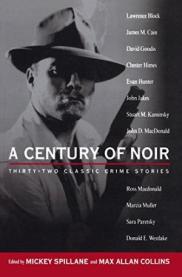 The very first reading we’re doing, though, is a nifty little short story by Lawrence Block called “How Would You Like It?” I often begin the fiction unit in an introductory class with Kate Chopin’s “The Story of an Hour”: it’s really short, but also full of things to talk about, so it makes a great warm-up exercise. It didn’t really fit ‘Pulp Fiction,’ though, so I hunted through my anthologies looking for something else equally brief that would help us get some key literary terms on the table right away while also (hopefully) catching people’s interest. I found the Block story in an excellent anthology called A Century of Noir; though it actually isn’t exemplary of noir, I liked that it was twisty as well as short, so I thought I’d try it out. One of the topics I always address early on is point of view, along with the different options for narrators; the story will work well for that, and it also provocatively introduces questions about vigilante justice that we will be discussing with both our Westerns and our mystery readings.
 My other course this term is 19th-Century British Fiction from Dickens to Hardy. As regular readers will know, I do this class (or its prequel, 19th-Century British Fiction from Austen to Dickens)


 Lovely as Durrell’s scenery is, he’s at his best (as you’d expect) with animals:
 Perhaps, then, the child’s point of view (though of course the sophistication of the writing subtly belies it) is one reason children have loved this book. Another would be its humor: when things do happen, they are usually very funny. There’s some high drama, as well: the epic battle, for example, between the gecko Geronimo and the giant mantid Cicely:
