Practically from our first meeting, she’d been after me to write a recovery journal. I told her I don’t write, I draw. She said this would be for myself only. I could share it, but only if I chose to do so. The idea being to get clarity and process some of my traumas. On that particular ball of yarn I didn’t know where to start. She suggested pinpointing where my struggles had started with substance abuse, abandonment, and so forth . . . I’ve made any number of false starts with this mess. You think you know where your own troubles lies, only to stare down the page and realize, no. Not there. It started earlier. Like these wars going back to George Washington and whiskey. Or in my case, chapter 1. First, I got myself born. The worst of the job was up to me. Here we are.
For a novel that has (more or less) exactly the same plot and (more or less) the same characters as David Copperfield, Demon Copperhead is remarkably unlike David Copperfield. This confused me a lot when I read the first half of Kingsolver’s novel back in January—confused and also alienated me, to the point that I not only put it aside unfinished but wrote plaintively to my book club asking if maybe we could choose something else for our next read. I’m glad now that other members said they were enjoying it and so we stayed the course: with our meeting to talk about it finally looming, I picked it up again yesterday and ended up reading right through to the end in a few hours. I was not delighted by it, but I became engrossed in it, and though overall I am still disappointed in it as a revision of Dickens’s novel, as its own novel Demon Copperhead is, I think, actually pretty good.
It is tempting but probably pointless to track through Demon Copperhead comparing its main ingredients to their counterparts in David Copperfield. On the other hand, some comparison is irresistible, if only to illustrate how Kingsolver both does and doesn’t do what Dickens does. “First, I got myself born,” her novel begins. Here, in contrast, is the famous opening of David Copperfield:
Whether I shall turn out to be the hero of my own life, or whether that station will be held by anybody else, these pages must show. To begin my life with the beginning of my life, I record that I was born (as I have been informed and believe) on a Friday, at twelve o’clock at night. It was remarked that the clock began to strike, and I began to cry, simultaneously.
 Kingsolver jumps right into the action, and really, it never stops, for the next 500+ pages. Demon Copperhead is a rush of narrative—a copious, colorful, fast-moving torrent of words. Although it is clear by the end of the novel that it is, like the original, retrospective, it has none of the layers of David Copperfield, which is complicated and enriched by foreshadowing and dramatic irony. It is perhaps surprising, given his reputation for exaggeration and hyperbole, that, on my reading anyway, Dickens is by far the more subtle and nuanced author of the two. Kingsolver (or, properly, her first-person protagonist Damon Fields) just keeps going and going and going, a kind of tireless Energizer Bunny of grim revelations about the hardships of life for a child born in poverty in Appalachia and growing up through the worst of the opioid crisis. At a time when the idea that fiction should have a purpose is (in elite circles, anyway) often dismissed as incompatible with real art, Demon Copperhead is, unapologetically, a fully committed ‘social problem’ novel: it has more in common, in that respect, with Mary Barton, or even with Bleak House, then with David Copperfield, which is, as its opening line tells us, a story about moral development—an individual story, a Bildungsroman. Its action is always, more than anything else, about David’s character, and especially about his tender, loving heart.
As novel about Appalachia and the opioid crisis, Demon Copperhead is quite compelling, although it is also pretty heavy-handed. (I might not have thought this about the novel if I hadn’t recently watched the excellent series Dopesick, which covers a lot of similar sociological territory and hits some of the same beats, in terms of storytelling.) What I figured out, when I returned to the novel after my long hiatus, is that the David Copperfield framing is a red herring, perhaps based on a misunderstanding or a misapplication of the kind of novel Dickens wrote. This point really clicked for me when I reached Kingsolver’s Acknowledgments, at the end of Demon Copperhead:
I’m grateful to Charles Dickens for writing David Copperfield, his impassioned critique of institutional poverty and its damaging effects on children in his society. Those problems are still with us. In adapting this novel to my own place and time, working for years with his outrage, inventiveness, and empathy at my elbow, I’ve come to think of him as my genius friend.
 It’s notable to me that the rest of her acknowledgments are to people who helped with expertise related to social problems (“foster care and child protective services . . . logistics and desperations of addiction and recovery, Appalachian history” etc.) – not to Dickens or David Copperfield. It isn’t that David Copperfield is not about child poverty and harsh social conditions; it’s that (I would say, anyway) these circumstances are incidental in David Copperfield to David’s perceptions of his experiences, and to Dickens’s own preference for addressing material conditions as external manifestations of moral and imaginative conditions. At best, Kingsolver is taking Dickens more literally than is usually appropriate; at worst, she is entirely overlooking his preoccupation with David’s inner life.
One of the costs of Kingsolver’s approach is prose that is also excessively literal, chock full of vivid, concrete details but leaving very little to—or providing very little stimulation for—our imaginations. Something I often discuss with my classes is the way Dickens’s writing itself creates in us, as we read it, the kind of mental activity he fears modern life is devaluing and suppressing: the flights of fancy in his language do for us, cultivate in us, what he fears we are losing. He writes in defiance of political economy, of utilitarianism, of facts—at least, of facts reduced to discrete and definitive units of measurement, the way they are in the famous opening of Hard Times:
 ‘Now, what I want is, Facts. Teach these boys and girls nothing but Facts. Facts alone are wanted in life. Plant nothing else, and root out everything else. You can only form the minds of reasoning animals upon Facts: nothing else will ever be of any service to them. This is the principle on which I bring up my own children, and this is the principle on which I bring up these children. Stick to Facts, sir!’
Hard Times is Dickens’s most insistent and programmatic condemnation of sticking to “facts,” and also his most dogged but also (I think) rhetorically powerful defense of what he calls “fancy.” But he fights this fight in all of his novels in ways I have talked about here before, including in reference to David Copperfield, at least as much, if not more, through his style as through his explicit content.
I’m not saying Kingsolver’s prose is devoid of fancy. Most of its creative energy seems to me to rest in Damon’s voice, which is blunt and colloquial and observant, but not at all poetic. There is a lot of vivid imagery, although so much of it is in aid of things we’d rather not see that it can be hard to appreciate it as artistic. It’s the other qualities that, to my mind, define “Dickensian” writing that I really miss, though. For one thing, Kingsolver’s novel is entirely unleavened with humor. OK, our introduction to her version of Aunt Betsy and Mr. Dick (here, Damon’s grandmother Betsy Woodall and Brother Dick) is amusing, but oh, how I missed Janet and the donkeys! And though the basics of the plot about Uriah Heep’s malevolent machinations are the same, the exposure of U-Haul has none of the exuberant joy of Mr. Micawber’s increasingly vehement denunciations:
And last. I am now in a condition to show, by—HEEP’S—false books, and—HEEP’S—real memoranda, beginning with the partially destroyed pocket-book (which I was unable to comprehend, at the time of its accidental discovery by Mrs. Micawber, on our taking possession of our present abode, in the locker or bin devoted to the reception of the ashes calcined on our domestic hearth), that the weaknesses, the faults, the very virtues, the parental affections, and the sense of honour, of the unhappy Mr. W. have been for years acted on by, and warped to the base purposes of—HEEP. That Mr. W. has been for years deluded and plundered, in every conceivable manner, to the pecuniary aggrandisement of the avaricious, false, and grasping—HEEP.
Yes, he goes on like this for pages—and (as Joe Gargery would say), what larks!
 What I missed most of all in Demon Copperhead was the melancholy tenderness that suffuses David Copperfield, and the way Dickens shades David’s highs and lows with his profound understanding of both the necessity and the heartbreak of losing our childhood innocence. The David that worships Steerforth and adores Dora is so loving and lovable: he is wrong, of course, in both cases, but Dickens is so good at making us feel to our core the cost of outgrowing mistakes like these, of becoming someone too savvy and knowing and suspicious to follow our hearts without question.
There’s also just nothing in Demon Copperhead that rises to the level of Dickens’s sheer virtuosity as a writer in David Copperfield. The scene in which Kingsolver’s Steerforth (Fast Forward) comes to his end is dramatic and suspenseful but it has neither the rich pathos nor the glorious prose of Dickens’s chapter “The Tempest”:
The tremendous sea itself, when I could find sufficient pause to look at it, in the agitation of the blinding wind, the flying stones and sand, and the awful noise, confounded me. As the high watery walls came rolling in, and, at their highest, tumbled into surf, they looked as if the least would engulf the town. As the receding wave swept back with a hoarse roar, it seemed to scoop out deep caves in the beach, as if its purpose were to undermine the earth. When some white-headed billows thundered on, and dashed themselves to pieces before they reached the land, every fragment of the late whole seemed possessed by the full might of its wrath, rushing to be gathered to the composition of another monster. Undulating hills were changed to valleys, undulating valleys (with a solitary storm-bird sometimes skimming through them) were lifted up to hills; masses of water shivered and shook the beach with a booming sound; every shape tumultuously rolled on, as soon as made, to change its shape and place, and beat another shape and place away; the ideal shore on the horizon, with its towers and buildings, rose and fell; the clouds fell fast and thick; I seemed to see a rending and upheaving of all nature.
The ending of the chapter is in a different register altogether from the extravagance of that description: quieter, sadder, and resonant with everything that David has known and been and loved and lost:
As I sat beside the bed, when hope was abandoned and all was done, a fisherman, who had known me when Emily and I were children, and ever since, whispered my name at the door.
‘Sir,’ said he, with tears starting to his weather-beaten face, which, with his trembling lips, was ashy pale, ‘will you come over yonder?’
The old remembrance that had been recalled to me, was in his look. I asked him, terror-stricken, leaning on the arm he held out to support me:
‘Has a body come ashore?’
He said, ‘Yes.’
‘Do I know it?’ I asked then.
He answered nothing.
But he led me to the shore. And on that part of it where she and I had looked for shells, two children—on that part of it where some lighter fragments of the old boat, blown down last night, had been scattered by the wind—among the ruins of the home he had wronged—I saw him lying with his head upon his arm, as I had often seen him lie at school.
Honestly, it seems kind of unfair to point out that Kingsolver doesn’t—perhaps can’t—write like that. There’s a reason Dickens was called “the Inimitable!” No doubt, too, there are some of you who prefer what she does to what Dickens does. (To each their own, of course, but also, you’re just wrong!) To invite comparison with the greats is to set yourself up for failure, and I definitely wouldn’t say Demon Copperhead is a failure. I doubt I’ll read it again, though, whereas I am wholeheartedly looking forward to rereading David Copperfield again this fall with my students.

 They belonged here. Of course. It was obvious. They belonged here and they should be here. Why not? Why on earth not? Why should she and Polly leave the Point to a land trust rather than to the people who had loved it the longest? Her heart pounded. It had taken her her whole life to see it, but now that she did, nothing could be as clear. The simple truths are always hidden in plain sight, only veiled by the complications of the human mind.
 Agnes, in contrast, has to get out of her own way, to stop guarding her secrets and make space in her life for love and forgiveness. This means reckoning with a traumatic incident from her past, which we learn about through the device of a long series of letters she wrote to her dead sister, which she eventually decides to share with the novel’s third protagonist, Maud Silver, an ambitious young editor eager to convince Agnes to write a full and frank memoir.
 It was a strange teaching term, at times hard, awkward, and demoralizing, but also at times invigorating, engaging, even restorative. This is true of every term, I suppose, but I really felt this emotional ebb and flow this time, probably because I am still grappling with what it means to carry on with my “normal” life after Owen’s death: I can’t really take any aspect of it for granted, and the more normal things seem in the moment the more
  I have always worried that students who attend irregularly are missing out on that broader learning experience, and also that sporadic attendance can become a self-fulfilling prophecy because if you just show up occasionally, you might not recognize the value of what we are doing or know how to join in to get the most out of it. The most obvious policy response is to require attendance, and I do believe in a version of “if you build it, they will come”—if you mandate it, they will (maybe, eventually, hopefully!) start to see the value of it. Mandatory attendance creates its own problems, though, from the administrative burden of recording it (especially with large classes) to the difficulty of having and applying fair policies that take accessibility and other issues into account and don’t lead to constant wrangling over what counts as a “legitimate” absence. For many years now I have not required or graded attendance, though I do always take attendance, so that I have some sense of who is or isn’t showing up and can reach out to anyone who seems like they might be in trouble. Before COVID, I also experimented with a range of different in-class exercises for credit, using them both for low-stakes practice at key course objectives and to “incentivize” being present. I think this is the approach I will go back to next year.
 Another reason to return to more in-class work is the relentless encroachment of AI. Other people have written well about what it means for those of us whose life’s work is helping students learn to read, think, and write better, and about what we can and can’t, should and shouldn’t, do in response. (See
 Actually, I kind of love the idea that the novel’s narrator “would rather have tea than everything else in the world” (me too!)—but of course this is absolutely not a passage from the novel; it’s just a jumble of nonsense. Students are already willing to put in a remarkable (to me) amount of effort “hiding” or “fixing” material they have copied from other sources, to conceal their reliance on it, but I doubt most of them are up to the task of getting crap like this into passable form. Mind you, to know it’s crap, they would need at least some familiarity with the novel: what shocked me with the ChatGPT cases I had this term was that they included quotations that were simply not in the actual assigned text, and the students didn’t even notice. As students get more familiar with the bot’s limitations, they may (may!) find it is actually less work (and less risk) to just do the reading and assignment themselves.
 Next term: what a thought. A year ago the very idea of being back in the classroom was completely overwhelming. It seemed impossible, unthinkable. “How do they do that?” I puzzled as I reflected on
 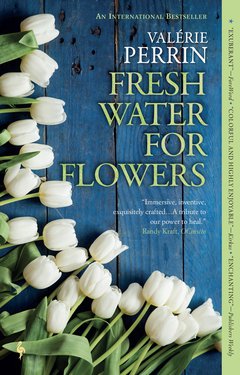 And then, just like the cemetery cats, the sun reached as far as my room, reached under my sheets. I opened the curtains, and then the windows. I went back downstairs to the kitchen, boiled the water for the tea, and aired the room. I finally returned to the garden. Finally gave fresh water to the flowers. I welcomed the families once again, served them something hot and strong to drink.
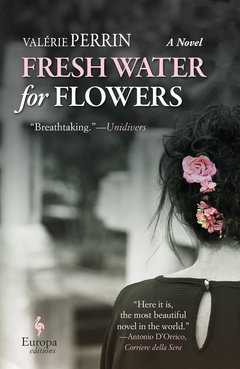 It isn’t that Violette isn’t warm or compassionate: reflecting on the demands of her strange job, which include assisting and often comforting those who come to bury or visit their loved ones in the cemetery she oversees, she says “for a woman like me, not feeling compassion would be like being an astronaut, a surgeon, a volcanologist, or a geneticist. Not part of my planet. Or my skill set.” She has been “destroyed,” though, and as a result has retreated into herself, leaving love and happiness to others—until things change and she resolves that “unhappiness has to stop someday,” even unhappiness stemming from a grief as intense as hers for her dead daughter Léonine.
 As a cemetery keeper, Violette is surrounded by other people’s death and mourning: a connoisseur of funerals, she believes you can understand and maybe even judge someone’s life by the send-off they get. She records every one in her notebook: the weather, the coffin, the flowers, the family and friends, the speeches. She knows her quiet neighbors’ birth and death dates and often much of the story of what came in between; she tends affectionately to their graves, watering, weeding, cleaning. Her work and thus the novel is a provocation to think about the many ways people live and then die. “Death,” as Violette observes
 It’s a long list, two pages, and even though it’s not Owen’s list, I couldn’t (can’t) stop crying as I read it, because it’s so true that part of what you are grieving is that future, the one you pour your hope, your effort, your time, your love, your heart into as a parent. Thankfully, Perrin avoids easy, inadequate clichés about consolation, the kind of implicit or explicit messages that hurt rather than help. There is no
  In fact, there’s quite a lot going on in Fresh Water for Flowers, and although overall I really enjoyed the novel, I did wonder sometimes if it needed quite so many elements. Violette seemed like enough to me, although I suppose it would be harder to appreciate the journey she makes from death back to life without the rich ambience the novel provides, in which life and love and loss and death and humor and tragedy and pain and beauty are constantly mingling and the sheer variety of human character and experience is a recurrent motif. Every chapter begins with what I saw as epigraphs, but which are referred to in the discussion questions at the end of the novel as “epitaphs,” which surprised me and then made perfect sense, even though many of them are not quite the kind of thing you’d actually carve on a tombstone. It’s a novel that immerses us in death, but in the spirit of inviting us to think about life. Violette’s specific path from the darkness back into the light felt a bit pat to me, a bit too easy and romantic, but maybe that’s what novels are for, at least some of the time. In the book of life, after all, as the epigraph / epitaph for Chapter 5 reminds us,
 Griffith brings the same dedication of detail to the fight scenes, which are brutal but also fluid in a way that reflects Peretur’s mystical connection to nature and especially to animals, including the horse she rides in a dramatic test bout with Lanza (better known to most of us as Sir Lancelot). And she brings a commitment to another kind of historical accuracy: inclusion. “This could not be a story of only straight, white, nondisabled men,” she explains;
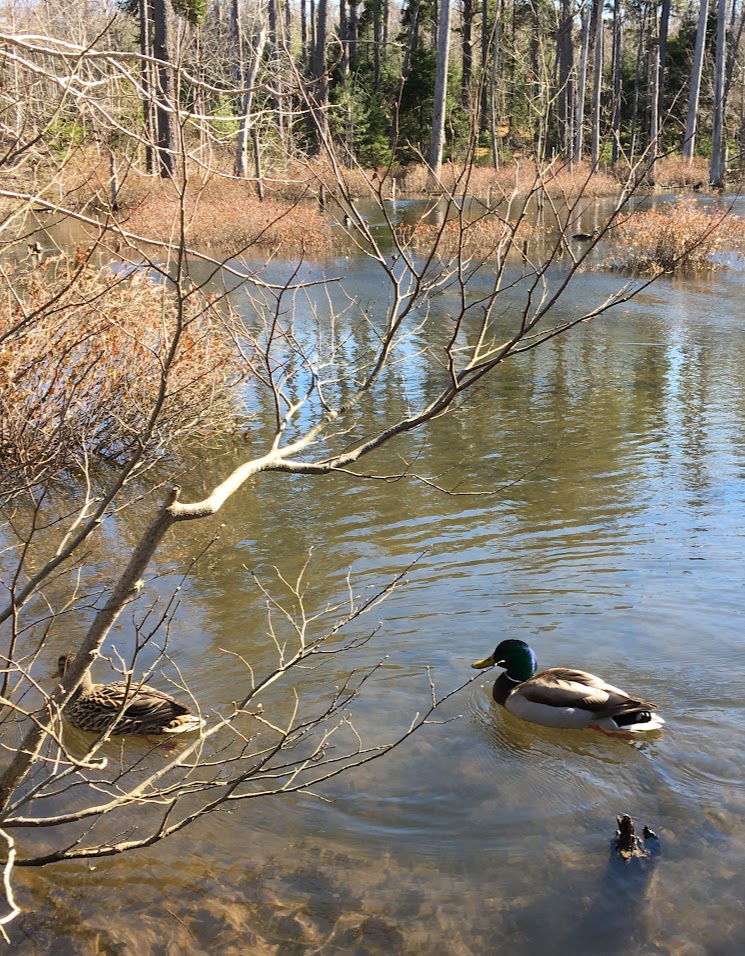 April comes and April goes, whether you want her to or not. In the teaching term, it is always a blur of a month—a bit out of control, like rolling down a hill. I used to welcome the feeling—the exhilaration of finishing up, the anticipation of summer—but this year it is just one more reminder of how relentlessly, and how strangely, time passes.
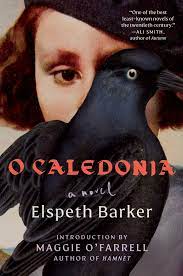 The other books I read all of in April (I’m assuming I won’t finish another one by Sunday) were Elspeth Barker’s O, Caledonia and Martin Riker’s The Guest Lecture. It’s hard to imagine two books with less in common! I enjoyed O, Caledonia a lot, although it is strange and wild and—I thought—a bit random, almost artless: as I read it, I was often surprised, even confused, by it, uncertain why this was what was happening or this particular detail was in it. Yet it felt unified, nonetheless: maybe that strangeness itself unifies it! Its fierce protagonist Janet takes the “not like other girls” trope to an extreme: she’s equal parts compelling and appalling. It has something of the flavor of We Have Always Lived in the Castle.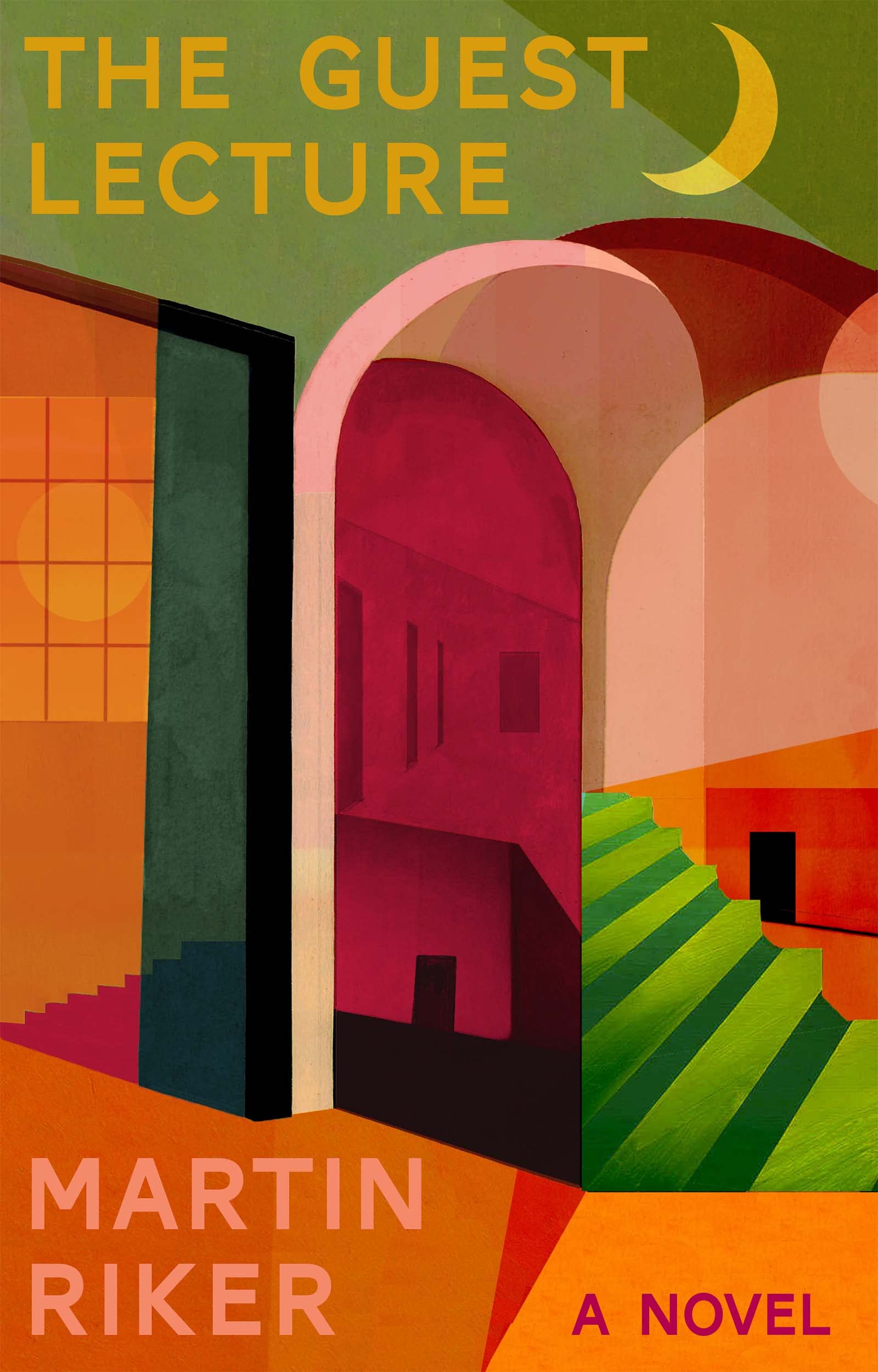
 March was a rough month. For one thing, I had more academic integrity hearings stemming from a single assignment than I’ve ever had in one term. It was an exceptionally disheartening experience, especially given the lengths I have gone to in my introductory class to reduce the risk for students of just trying to do the work for themselves: this is the class in which I’m using specifications grading, meaning there is really no risk involved. As I plaintively reminded the class as it became clear just how widespread the problem was, the class is designed to make it safe to be wrong, safe to be confused, safe to be learning. But if you don’t actually do your own writing, you strip the whole process of its meaning. Plus (as I pointed out to many students in the actual hearings), if your uncertainty leads you to copying other people’s writing, you will never build your own skills and your own confidence: you will never find out that you can in fact do the work, and get better at it.
 Easily the best novel I read in March was Claudia Piñeiro’s Elena Knows. This was recommended to me last year when I was (as I so often am) casting about for new ideas for my two mystery fiction courses. I started it then but had to abandon it, as a novel about suicide and a mother’s grief was not an experience I could bear. I kept it on my mental TBR, though, and I’m glad I tried again, because it really is exceptional: slight but fierce and complex, with its overlapping interests in disability, ageism, misogyny, and autonomy. I think it would be a really interesting book to read in my course on Women & Detective Fiction, even though in many ways it is not really a mystery. It is certainly about a crime – or, crimes, if you think socially and systemically – and there is an investigation, even if there isn’t a detective, or evidence, or any of the other conventional elements.
 It has been quiet around here. I’m not really sure why that is. I’ve been busy at work, but that has never stopped me before. When this term began, I intended to make posting about my teaching routine again. When I kept that up, in the old days, it didn’t matter if I felt I had something in particular to say when I started: eventually I would discover what I had to say, because (as I’ve been trying to convince my first-year students) that’s how writing works. My reading hasn’t been going very well, but I used to write about it anyway.
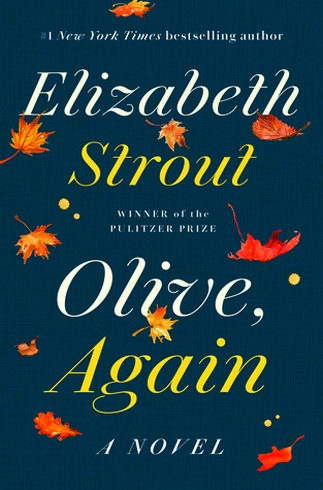 After I finished Gwendoline Riley’s My Phantoms, I commented on Twitter that I was finding cold, meticulous novels wearing and asked for recommendations of good, recent warm-hearted fiction. Along with the understandable and spot-on nods to writers I already know well (such as Barbara Pym and Anne Tyler), I got a lot of good tips, which I am still working through. Here are the ones I have read so far. I have to say that while they have all been fine, none of them really got much traction with me: I don’t think it is necessarily the case that “warm-hearted” means lightweight, but that’s how these mostly felt. I don’t think I will remember much about them. The exception so far is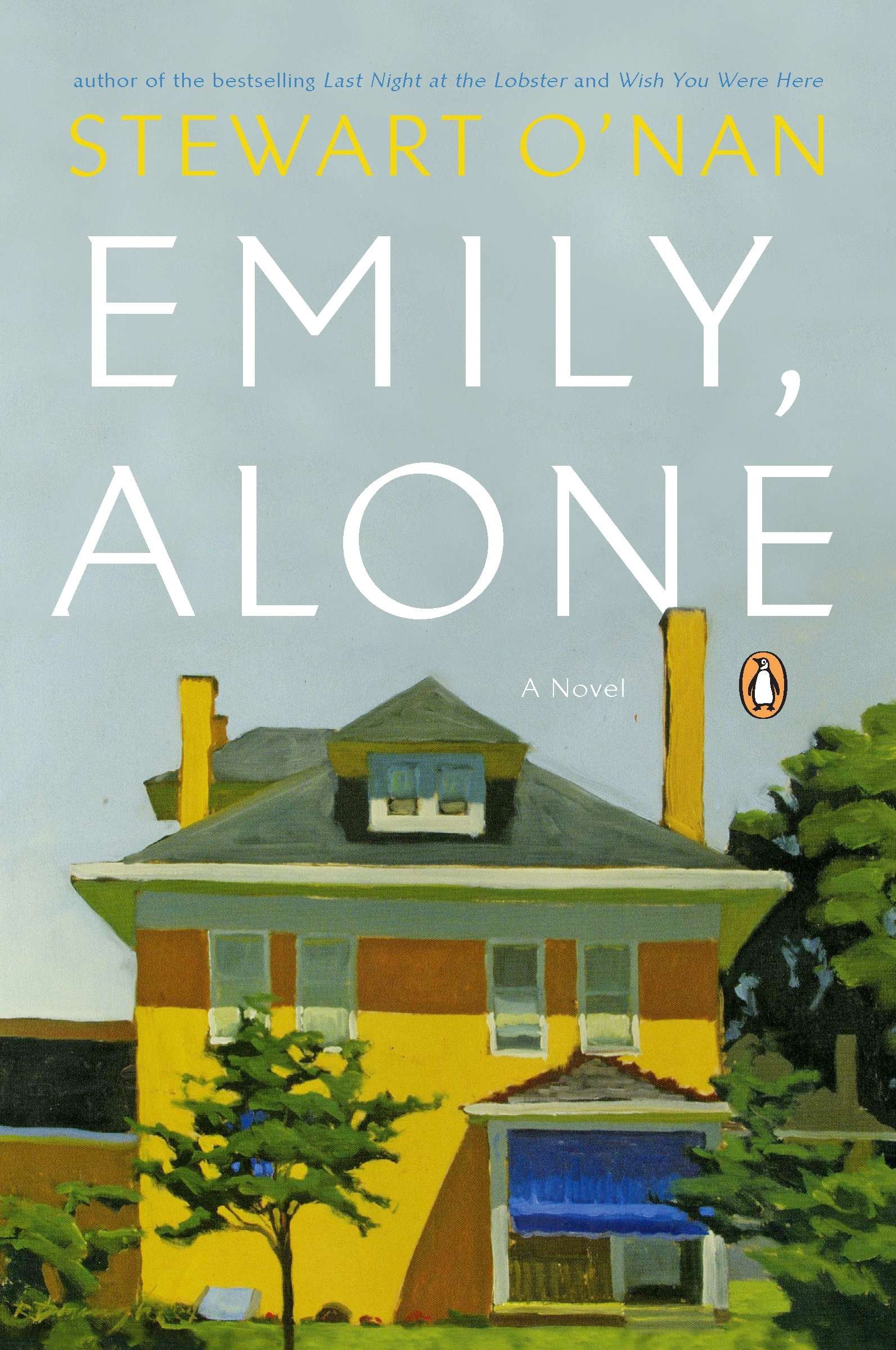
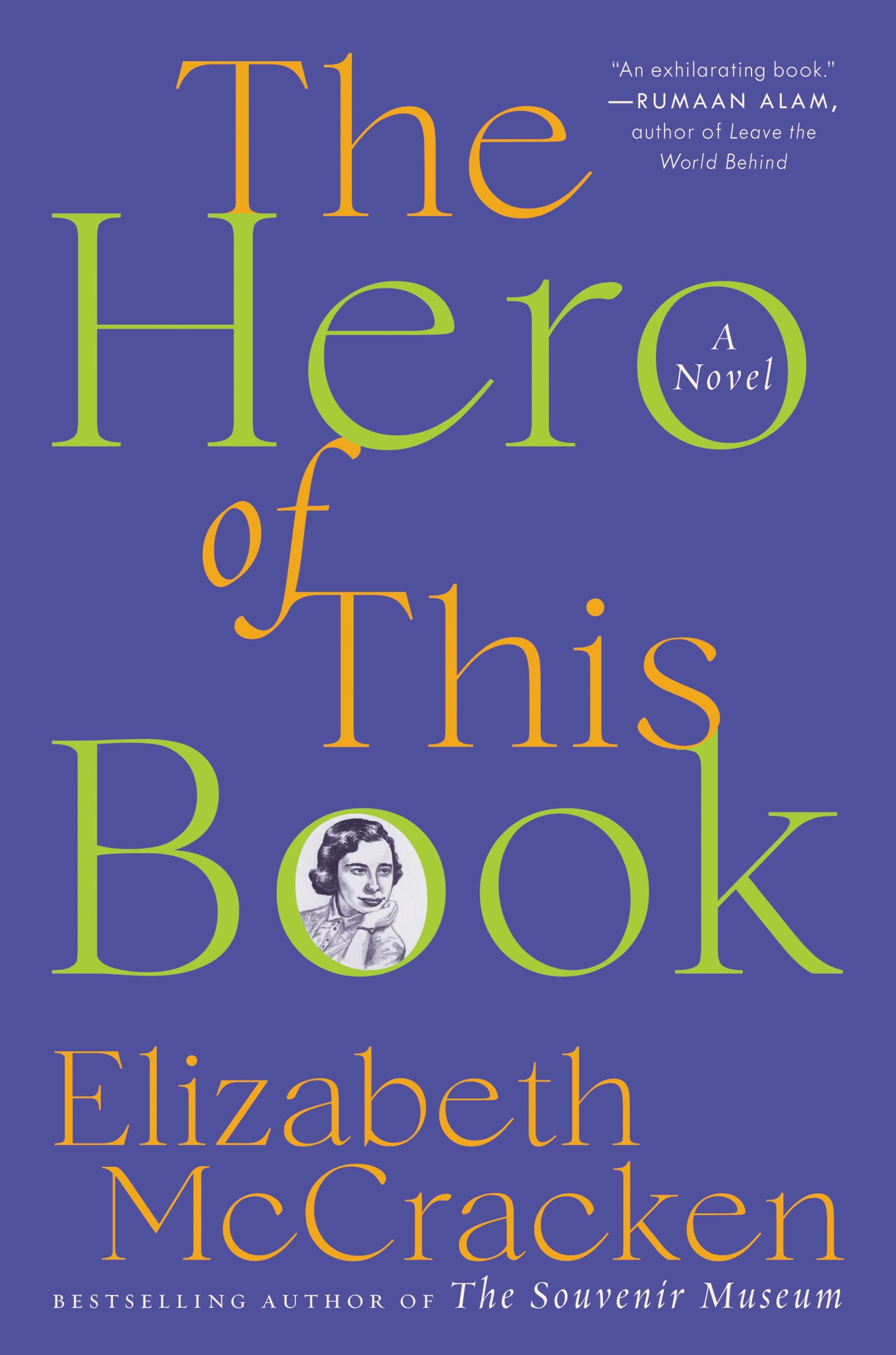 Elizabeth McCracken, The Hero of This Book. I liked this one quite a lot except for the uneasiness it created in me about what kind of book it is, exactly. I realize that is one of the main points of the book, to destabilize assumptions about what constitutes a memoir or a novel or autofiction or whatever. I understood this because McCracken makes rather a lot of noise about it: “What’s the difference between a novel and a memoir?” she asks; “I couldn’t tell you. Permission to lie; permission to cast aside worries about plausibility.” “It’s not a made-up place,” she says about a trip she and her mother make to the theater (or do they?),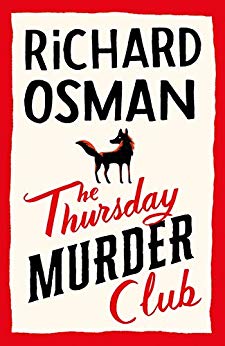
 I’ve been ordering next year’s books — not because I’m that ahead of the game in general but because early ordering enables the bookstore to retain leftover copies from this year’s stock and students to get cash back at the end of term if they have books we’re using again. I’m teaching a couple of the same classes again in 2023-24 (my first-year writing class and Mystery & Detective Fiction) and so it isn’t too hard to get those orders sorted out. While I was at it, I thought I’d also make my mind up about which novels I’d assign for the Austen to Dickens course (this year I’m doing Dickens to Hardy — once upon a time I taught them both every year, but now I do them in alternate years) . . . and this has had me thinking about how my reading lists have changed over the past twenty years.