This Month in My Sabbatical: Reading and Writing

Though nothing especially momentous marks this month in my sabbatical, I am pleased that I have continued to move fairly steadily through the various projects I set for myself back in January. Though I appreciate having the time to read, reflect and reconsider, though, I have to say that this month I have felt particularly isolated, because it’s the two aspects of this job that you are relieved of on sabbatical (administration and teaching) that actually bring you into regular contact with other people. Without classes and meetings, much of what we do is strictly solitary, and during a regular term that quiet can be very welcome, precisely because teaching and committee work are hectic, demanding, and often as annoying as they are stimulating. At first, it was just a relief to be free of the incessant demands on my time and attention. But after a while, it’s lonely, even a bit depressing, puttering away by myself. That’s one reason this post on academic blogging (thanks to Jo VanEvery for the link) resonated with me, especially this bit:

a college of one’s own is essential to scholarship. Sometimes we get lucky and our collaborators are able to participate in that world, but more often they need us for narrower purposes: our technique, students, or grants. Who then to bump ideas off of? Who to share our latest little discovery or epiphany? How to communicate the interest of an article or book? Where to find a reader? Who will forgive us our latest and dumbest ideas? How to feel that slight flare of getting the last word in a debate among learned colleagues?

It’s true, as the author continues, that “a blog can provide those things, and more besides,” and I’ve been grateful for the interest and input I receive from so many of you on my posts here. (The post I link to also gives a thoughtful account of changes in the culture of academic life that have made that collegial interaction more difficult to achieve–if anything, I think he underestimates the role played by sheer day to day busy-ness.) I was thinking that it’s no accident I first began blogging on my previous sabbatical: without really knowing much about it, I was looking for more ways to communicate with other people, and it was exhilirating to discover the conversations going on online and then to become part of them myself. I wonder sometimes why I feel this lack, even when I’m not on sabbatical, and (as far as I can tell) most of my colleagues don’t. It’s true I’ve always been a chatty type (if my parents are reading this, they are muttering “no kidding” and recalling their coinage “talkit” … ) so there’s that; some of my colleagues are just more reclusive or scholarly by instinct, happy to burrow away in their research; some, I think, for whatever reason have a better network of peers and collaborators that provide input, support and energy; others might enjoy blogging but haven’t tried it, or think it would be a distraction from their “real” reading and writing. In any case, the solitude of sabbatical work has made me appreciate my online network more than ever. And it has also made me realize how much of the return I get for my investment in this career comes from my students, from the challenge and the fun of getting them involved in our readings, from their curiosity and energy and enthusiasm. I miss students! (Remind me I said this when I’m whining about grading their assignments in the fall, would you?) I miss my colleagues, too, a little bit … but it’s not like we do spend much time on the kinds of conversations evoked above. When we do talk about work-related topics, it’s more often griping conferring about workload, curriculum, or policy issues, about pedagogical problems–or about each other! Well, it’s a workplace, after all. (Those colleagues who are also personal friends are another matter, of course.)

So: what have I done? I’ve read and commented on more thesis material–and another 120+ pages sit in my inbox at this minute. I’ve read, or scrolled through, a large number of the nearly 100 reviews and articles I downloaded, getting “caught up” on–or at least refreshing my sense of–recent work in Victorian studies. That has not been as disheartening as I frankly expected it to be. The sheer quantity of scholarship in this field is potentially overwhelming if the idea really is to internalize all of it. It quickly becomes apparent, though, that most of it is of peripheral signifiance: the accumulation of it, trends and directions, are more revealing than any particular arguments, and even at that level I haven’t seen anything that suggests a paradigm shift on the scale of, say, feminist criticism or post-colonial criticsm: I haven’t seen anything that makes me think I need to fundamentally change what I think about or say about the material I teach. It’s possible to acquire lots of little insights, or to file things away in case they become relevant to some future class or project, but most of what I’ve read has left me unmoved. This result, in turn, has me reflecting on the pleasures of learning new topics. I have one colleague whose list of teaching interests struck me, back when I was first interviewing for my job here, as astonishingly diverse–but there’s an intellectual buzz that comes from discovery, and it’s hard to get that feeling at the level of highly specialized research. On the other hand, it is easy to get it when you don’t already know the central problems and paradigms of a field you are just starting to explore for yourself, so I can see the appeal of turning to new things, like a kind of learning junkie who can’t be satisfied anymore with yet another way to read the economics of Bleak House or the poetics of Goblin Market!

I’ve read more books that I thought might be appropriate for my classes, including Walter Mosley’s Devil in a Blue Dress and more of the Martin Beck mysteries–and in the last week or so I’ve drafted up a schedule for the course that actually includes Devil in a Blue Dress and The Terrorists. Other course-related reading included most of Rhoda Broughton’s Cometh Up as a Flower (which I ultimately decided not to assign),  a text book called Close Reading and the TOCs of numerous anthologies of crime fiction. I haven’t made the call yet about Close Reading but I did finally discover a Dover anthology of crime fiction that includes all the authors I wanted and is economical too–this is one more small testimony to the value of a sabbatical, because it took me ages to find and consider the alternatives here and if I had been in the midst of teaching, I would have given up and stuck with one of the books I’ve used before, even though for various reasons I wasn’t happy with them. (I have now ordered almost all the books for my fall classes and set up preliminary websites for them.)

I’ve also read a lot that wasn’t strictly for teaching or research, but then, as I say so often, in this job you never really know what reading will end up affecting your work, and I’ve been finding Vera Brittain and Winifred Holtby so interesting I am now wondering if at some point I could put together a course on the “Somerville Novelists”–not least because we have no in-house specialist in 20th-century British literature (crazy, I know) so I’d actually be helping round out our curriculum a bit if I did so. Just think: another excuse to assign Gaudy Night! (There’s that lure of the new, again: this would involve a whole process of learning and discovery.) Coming up for my two reading groups I have Somerset Maugham and Elizabeth Bowen–so more 20thC British fiction there too.

As for writing, well, there’s the blogging that goes along with all that reading, and I also decided to review Marjorie Garber’s The Use and Abuse of Literature after all. Following on my meditation about “giving myself permission,” I thought it might help overcome my writer’s block if I worked in a form I am very familiar with, so I did the review as a kind of feedback form. I thought it suited, because the book, though full of interesting and provocative threads, really read to me like something unfinished. I don’t understand why it got published without further revision, to be honest: what editor would be satisfied with something so amorphous? Despite my anxiety that it would seem unforgivably snarky to treat the book as I did, I did find it freeing to write it that way: for better or for worse, that is who I am, after all. And just as I do when responding to student work, I made sure to give credit for strengths as well as weaknesses, and to try to be constructive in my criticisms…

Salley Vickers, Dancing Backwards

dancing_backwardsWhen I posted about Rosy Thornton’s Tapestry of Love a few weeks ago, I put it in the context of “comfort reads,” “books that I reread when I want to wander mentally away from home without feeling adrift, to be distracted without being distraught or dismayed.” (Other writers with books this category are Anne Tyler and Joanna Trollope.) In the comments, I was pointed to Salley Vickers, who sounded like someone whose books I would also enjoy, so when I happened across a copy of Dancing Backwards at The Jade *W* on Friday I picked it right up. It turned out to be just right for weekend reading: like Tyler, Trollope, and Thornton, Vickers writes with understated care, her focus primarily on characters in situations requiring more reflection than action. Dancing Backwards is not demanding reading, but it’s intelligent, particularly in its development of the main character, recently widowed Violet Hetherington. She is taking a cruise across the Atlantic to New York that is at once a literal journey and (of course) a mental voyage, in her case through her past. She is on her way to visit an old friend; her separation from him took place under circumstances that have haunted her conscience, and in fact for “comfort” reading, the story of Violet’s past is actually fairly uncomfortable, as Vickers quite grippingly portrays the emotional bullying and abuse that destroyed this friendship and left Violet unable to continue writing poetry. There’s a particularly painful scene in which Violet’s fiancé, himself an aspiring (but, Violet thinks, not very talented) poet lambastes her for winning a prize for her book. “I don’t know how you could have done this,” he leads off;

“How could you enter for a poetry prize and not tell me? Unless it was that you didn’t want me to compete.”

This was dreadful. She did not say, You couldn’t have entered, or been entered (for it was not her idea after all but the publisher’s), you’ve not published a collection of poems, because now, suddenly, the greater terror was not what she might have done to him but that he might recognise that he was not a poet and never could be one.

“I hadn’t realized you were so competitive,” he continued.

They carried on down the hill in single file, tears like acid channeling Vi’s cheeks.

On reflection, I’m not sure that Vickers does enough to explain why Vi would accept this psychological abuse, but she does well showing its lingering effects. The novel is simply but effectively structured, with flashbacks to Violet’s early history intercut with wry, sometimes poignant, sometimes funny encounters with her fellow passengers. The reunion in New York is handled well–again, the best word to describe it is “understated,” and overall I think that’s what I appreciated most about the novel, that Vickers keeps the tone controlled in a way that suits Violet’s self-contained personality. Like Tyler’s novels, this one is character-driven, with no formal complexities, and works on a very small scale. But it’s important not to underestimate how interesting that kind of careful attention to people can be, and how morally significant small individual problems and choices can be when taken seriously. So Vickers was a good recommendation; I’ll definitely look for her other novels.

As a side note, I’ve always wondered about cruises. I worry that I’d feel a bit claustrophobic, and also that I’d have trouble going to sleep with the thought of all that water underneath me. I also don’t much like being organized by other people, and I’m not inclined to join in group activities. Still, maybe it’s just all those episodes of The Love Boat when I was a child, but there’s something alluring about the idea. Maybe one day I’ll do one of those river cruises along the Rhine or the Danube…

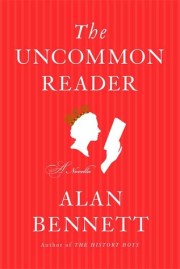
Alan Bennett, The Uncommon Reader

bennettI can’t imagine why (!) but it seemed like a good week to pluck Alan Bennett’s novella The Uncommon Reader off my shelf. I eyed it skeptically when I first acquired it, but I should have trusted the discerning reader who sent it my way: it turns out to be a gently whimsical little fable about the beneficially disruptive effects of reading. For those of you who don’t know the premise, the reader in question is HRH Queen Elizabeth II,* who, in pursuit of straying corgis, ends up at the City of Westminster “travelling library” (what we would call a “bookmobile” out this way) and borrows a book to get herself gracefully out of an awkward moment.

“One” doesn’t usually have time to read (Her Majesty’s habit of referring to herself as “one” turns out to anticipate, deftly, her eventual realization that she lacks a distinct voice of her own) but once begun, she finds herself enjoying the unaccustomed experience and eventually can hardly be trusted to show up on time for state occasions, so much more interesting are her books than the canned speeches she is required to deliver. She begins handing out books, asking literary questions on walkabouts, and developing a new interest in the perspectives of those around her. So changed is she that she is suspected, not of emerging sensibility, but of encroaching senility…and things go on from there, but it’s such a tiny and delicious confection of a book that I won’t give out any further details here.

It’s unapologetically middle-to-highbrow (Her Majesty learns to appreciate Henry James and disdains Harry Potter) and wholly in service to the nice liberal idea that reading (at least, reading the right books) is morally as well as intellectually beneficial, not to mention inherently democratic. But that’s OK: it’s just a reader’s fairy tale, a happily-ever-after for the bookworm set. That’s as nice a use of the charming anachronism that is the royal family as I could want. And at the same time, it’s oddly convincing: watching the Queen arrive at her grandson’s wedding, I half expected to see her tuck a novel into her handbag on her way into Westminster Abbey, or to see Howards End peeking out from behind the program.

*The same discerning reader who sent me the book points out that the queen of the book is never explicitly identified as Queen Elizabeth, though it’s perfectly obvious (the profile on the cover of my edition is also perfectly recognizable from our currency).

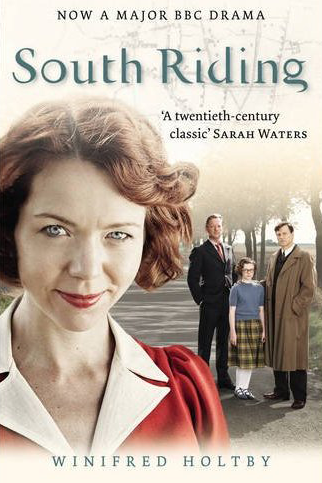
Winifred Holtby, South Riding

I finished up South Riding yesterday and enjoyed it right up to the end–though overall I’m not as impressed by it as I expected to be. It didn’t seem quite balanced, somehow. One thing that really threw me off was Sarah Burton’s falling in love so precipitously with Robert Carne. I knew something of the sort was coming, not just by fictional convention (and I would have been glad to have that expectation disappointed), but because the back of my edition says she “finds she is drawn to him.” Still, when the moment of revelation arrived, it felt much too sudden. Where was it prepared for? What motivated it? Even she acknowledges she hardly knows the man. And yet we get this:

“I love him!” she cried aloud, as though struck by sudden anguish. Immediately she felt that she understood everything. All her past slid into an inevitable and discernible pattern; all her future lay before her, doomed to inevitable pain.

She knew love; she knew its aspect, its substance and its power. She knew that she faced no possible hope, no promise, no relief.

I didn’t like it! More to the point, I didn’t believe it! Where does this melodramatic posturing come from? Is it actually ironic, at Sarah’s expense? A bit, I think, at least at a metafictional level, given how things turn out, but overall her passion is given full credit as sincere. What is the source of these sudden strong feelings? Why are they nearly allowed to derail her characterization, so vivid and sparky to this point, by giving her a tendency to mope as well as a predilection for self-loathing, for her failure (as she believes) to win his love in return? I know, I know: how can I complain when I enjoy so much the burst of melodrama that carries Dorothea into Will Ladislaw’s arms at the end of Middlemarch? But that moment is anticipated by all kinds of hints and indications of Dorothea’s needs and feelings, not to mention by their much closer relationship (unlike Sarah and Carne, Dorothea and Will have had numerous long conversations, for one thing), and by thematic pressures such as … well, I won’t go into this since I’m writing about South Riding, not Middlemarch, but I don’t quite see the thematic necessity or satisfaction of Sarah’s love, and as a plot development, it felt contrived, though after that jarring moment its effects and implications are worked out in very interesting ways.

I really liked the diffuse attention of the novel, the way it held true to an idea of community, giving pretty much equal time to all of its diverse range of characters. The emphasis on Sarah as a central protagonist–not just in the cover blurb, but in the small amount of criticism I’ve looked into–seems misleading to me, insisted on almost as if we don’t know what to do with a novel that doesn’t really have one main character. Though Sarah’s work at the school is significant, and the school itself is a useful organizing point for some of the intersecting plot lines, the novel does not spend a lot of time there or focus conspicuously on Sarah as a newcomer or force for change–she’s not a female version of Dr. Lydgate, for example, just to keep up the Middlemarch comparisons. Am I underestimating her centrality to the novel’s larger concerns? Because I felt she was really just one element among many, it seemed odd that she takes up so much of the novel’s conclusion, and yet the values she articulates do seem to represent what the novel is itself trying to show us.  Again, something felt not quite balanced–straining, almost–about the conclusion. And yet it is rousing nonetheless. (I wonder if this is what Lauren Elkin means when she says Holtby is more interested in the possibilities of message than of form.)

Because the novel kept making me think of Middlemarch, I was struck by the difference between its ending and that novel’s Finale. George Eliot emphasizes the importance of honoring the individual contribution to the ‘growing good of the world,’ insignificant as it may seem at first glance or when measured against more grandiose forms of heroism. In contrast, Holtby celebrates the participation of the individual in a communal enterprise, almost to the point of submerging the one in the many:

She was one with the people round her, who had suffered shame, illness, bereavement, grief and fear. She belonged to them. Those things which were done for them–that battle against poverty, madness, sickness and old age, the battle which Mrs Beddows had called local government–was fought for her as well. She was not outside it.

Local government is the structuring idea of this “English landscape” (geez, even the subtitle provokes Middlemarch comparisons!) so the horizontal structuring makes sense. What makes less sense to me is why Sarah needs to go through the crucible of love and loss to realize her place in this landscape. That said, there is something surprising about her standing alone at the end, though I’m still thinking about Susan Leonardi’s argument (in The Somerville Novelists):

That Holtby’s heroines triumph convincingly and unequivocally attests to the success of her strategy for telling in a traditional narrative the story of the educated woman: the systematic elimination of men from the lives of her heroines and from her texts.

I haven’t read any of Holtby’s other novels, but I didn’t see men being eliminated from South Riding, just from Sarah’s immediate (romantic) future. If Sarah triumphs, what is it over, and how unequivocal is it?

I liked South Riding best, as it turned out, at the level of its sentences, which are constantly strong, frequently funny, and often surprising. Of Mrs Beddows, for instance, we’re told, “Her clothes were a compromise between her spiritual and chronological ages”; of Carne, “His unfeigned pleasure in killing the correct animals at their orthodox seasons made him an affectionately respected neighbour.” These fondly acerbic epigrammatic lines remind me (you guessed it) of Middlemarch.

Monday Miscellany: Friday Night Lights, South Riding, Ian McEwan, & a Musical Bonus

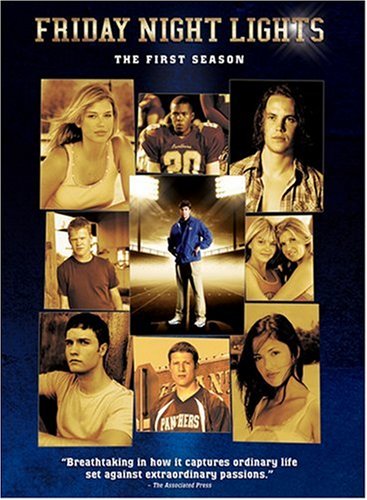
We’re finishing out a four-day weekend here based on a holiday we don’t even celebrate in its hopelessly commercial secular form–Maddie is the only one of us who’d really appreciate Easter Bunny stuff but she’s allergic to both eggs and nuts, so never mind, and just as well too, really. It doesn’t seem like much really went on or got done, but the grown-ups did finish up the first season of Friday Night Lights, which I’d heard buzz about on Twitter from folks including Maud Newton (and Daniel Mendelsohn held it up as a counter-example in his recent smackdown of Mad Men, as well). I was finally motivated to get going on it by Sonya Chung’s post on it at The Millions. We both enjoyed it, which is no small thing considering that I wouldn’t ordinarily ever watch that much football. The characters are engaging and brought to life very convincingly, and there’s plenty of interest in the storylines. But we weren’t swept away by it: it already seems to be falling into the usual TV drama pattern of just one damn plot twist after another–when in doubt, throw in a crisis!–with the additional fairly melodramatic use of the football games to bring things to fever pitch (my husband, who does watch football, was amused that nearly every game was won or lost on the last play, in the final seconds). So far, there’s no sense of a larger project or developing insight of the kind that you get with The Wire or Deadwood, and the premise itself is not as breathtakingly stark and unexpected as In Treatment. I appreciate good storytelling, and I share Chung’s appreciation for the show’s commitment to heartfelt emotion, even to sentimentality.  It’s just that now we know it’s possible to do something more ambitious within the same basic structure. I’ll probably watch at least the second season (though I think my husband won’t), to see if it builds over time into something more, or at least to see if my initial attachment to the characters keeps me hooked, wanting to know what happens next.

In the meantime, I’m about 2/3 throug Winifred Holtby’s South Riding and enjoying it a lot–for some of the same reasons I liked Friday Night Lights, actually, including its straightforward commitment to character development and its interest in the dynamics of a tight knit community under pressure. I particularly like Holtby’s narrative voice, which is smart and analytical without being pedantic. The introduction to my (badly proofread) BBC Books edition promptly and plausibly compares it to Middlemarch. If I were writing one of those annoying “X meets Y” jacket blurbs for it I might call it “a post-war Middlemarch written by a socialist Anthony Trollope,” because while it has the wide range of Middlemarch and the sensitivity to the ways multiple stories can be interconnected, it has none of the formal sophistication of the earlier novel: in fact, it is structured very much like Friday Night Lights or any other conventional multiplot fiction, simply moving from focus to focus while progressing more or less linearly towards its conclusion. Not that there’s anything wrong with that! And in fact it’s a more interesting choice in 1940 than it was in 1860, if only because by then other alternatives had been so abundantly demonstrated, and Holtby’s own awareness of her more immediate literary context is pointed to by conversations within the novel itself about writers including Virginia Woolf. Lauren Elkin has some thought-provoking comments about this at Maitresse, comparing Holtby to Elizabeth Bowen (whom I’ll be reading for one of my book clubs soon, making Lauren’s post doubly relevant!):

It would be a stretch to classify South Riding within the category of modernism.  Although they share thematic concerns, Bowen seems more interested in the possibilities of form, whereas Holtby seems more interested in the possibilities of message. “We are members of one another,” Holtby writes in her prefatory letter to her mother, quoting Paul’s letter to the Romans (Romans 12:3-8). She is not only referring to members of the same community, of course, but to the community of humanity. Bowen’s citydwellers, on the other hand, feel more alienated than ever, and have an awareness of themselves as estranged from anything as conventional as a community. Communities, for Bowen, are in the process of being dissolved, and there is not much that can be done about it. Bowen’s novels and essays constantly interrogate and ironize concepts like “community,” and “humanity.”  Her novels interpret themselves for the reader, her sentences twist in syntax to avoid banality, her young heroines are intensely aware of themselves as young heroines, her novelistic forms double back on themselves. Andrew Bennett and Nicholas Royle call this aspect of Bowen’s work the “dissolution of the modern novel.”

I’m intrigued by the phrase “the possibilities of message,” and I’ll think more about how or whether Holtby’s form is or is not integral to the “message” of her novel as I finish it up–tonight, perhaps!

On a completely different topic–or maybe not, since it’s also about novels and what ideas inform them–I found this discussion with Ian McEwan about books that have influenced his fiction very interesting. Not surprisingly, he emphasizes books about science. An excerpt:

I don’t need to ask what the influence on your novels is here, as science plays a big part in many of them – most noticeably in Solar, but also in Saturday and Enduring Love. What is the nature of your individual relationship, as a writer, with science?

I would like to inhabit a glorious mental space in which books like Slingerland’s would not need to be written. In other words – and this comes back to the notion of mental freedom – your average literary intellectual, just as much as your average research scientist, would take for granted a field of study in which the humanities and sciences were fluid, or lay along a spectrum of enquiry. This is the grand enlightenment dream of unified knowledge. If you think of the novel as an exploration or investigation into human nature, well, science undertakes a parallel pursuit. Of course, much science is concerned with the natural world, but increasingly it has invaded the territory of the novelist. Neuroscience routinely deals with issues not only of consciousness, but of memory, love, sorrow, and the nature of pain. I went to a fascinating lecture on revenge and the reward system by a German neuroscientist a few years ago.

I’m sometimes asked by a literary intellectual in an on-stage discussion – often through the medium of a puzzled frown – why I’m interested in science. As if I was being asked why I had a particular fascination for designs of differential gears in old Volkswagens, or car-parking regulations in Chicago in the 1940s. Science is simply organised human curiosity and we should all take part. It’s a matter of beauty. Just as we treasure beauty in our music and literature, so there’s beauty to be found in the exuberant invention of science.

Finally, once before I posted a sample of one of Owen’s original compositions. If you’re interested, you can follow this link to another, this time the slow movement of the Sonatina for Piano and Violin that was his entry in the composition category at this year’s Kiwanis Festival. It’s an amateur recording of a live performance, so not studio quality, but I think it’s beautiful…

Giving Myself Permission

Among the many thoughtful comments on my post about the “PhD Conundrum,” one that really struck a chord with me is a remark by Joanna Scutts about “typical grad-student behaviors,” which she notes include asking for permission and working for praise. I would say that these are not grad-student behaviors only but good-student behaviors, in that they are typical among academically high-performing undergraduates as well: it makes sense that they appear in exaggerated form among graduate students (who were all strong undergrads to begin with) and are exacerbated by the grad school experience. I am surprised at how much I am still affected by the habits of asking for permission, the key difference at this level being that the person I really need to ask is myself. I’m also distressed at how much I seek praise for my work and feel disappointed in myself when it is not forthcoming: though I realize that my ongoing craving for external validation is inappropriate to my status as a qualified professional, that sense that if you do your work right you will get an A has never quite gone away. (I suspect that the years of being graded for our efforts set us up for the anxiety with which most of us look at our course evaluations.)

It’s the whole asking for permission thing that is most bothersome to me these days, particularly in the context of my writing. One of the payoffs I expected from my blogging is that I would shake off that nagging, doubting voice that tells me I’m not qualified or ready to write about something: that I haven’t read enough or done enough research, that my own opinion doesn’t count for anything unless it’s backed up and depersonalized and abstracted, that I haven’t justified or adequately theorized my approach. As a student, I found deadlines eventually forced me to write what I could, though I was often wracked with despair as I handed something in or presented it in seminar, sure it was a disastrous misfire. The feedback I got almost never (though not quite never) confirmed my worst fears, but somehow my confidence was never boosted. Since graduate school, I have hardly been the world’s most prolific scholar, but I’ve placed my pieces well and in general I’m satisfied that they are good work. Still, I usually declare something finished with a strange mixture of defiance and resignation, rather than satisfaction, and I have a terrible time starting to write something, because to do so I have to silence that voice. (Sometimes I try to drown it out with music!)

By and large I don’t hear that voice when I’m blogging, though, and that has been wonderfully liberating. It helped that I started my blog with no particular goals except to keep track of my reading: it was my space, and it was a kind of space outside the usual parameters of academic judgment. Also, blog posts don’t claim to be definitive or authoritative, the way academic writing does: when blogging, it’s OK (maybe even preferable) to show that you’re still thinking things through, that intellectual life is an ongoing process prone to discoveries, reversals, and confusions. By the time anyone besides my immediate family and friends was reading it, I was comfortable enough to just keep going as I had begun. Some early controversies in the comments set me back and made me more cautious in some respects (which is probably good, though I worry sometimes that the self-censorship I practice keeps my blogging blander than I am in other contexts). Overall, though, I have no inhibitions as a blogger that compare to the insecurities that slow me down when I write anywhere besides here in this WordPress box. My frustration is that the increased confidence I have found in my own voice and views as expressed here has not made a noticeable difference to my other writing. It feels as if I have given myself permission to write as myself, but only within this specific framework. Everywhere else, the old rules still apply! I notice this particularly when writing for Open Letters, where I have been encouraged to write more like I blog (this is not the only feedback I’ve gotten, and I think my co-editors are happy with the pieces I’ve done for OLM–but there I go again, worrying about external validation!). Even though OLM pieces specifically and deliberately are not supposed to sound academic, the minute I know I’m writing something official for publication, I get all serious and anxious again, laboring over every word. It’s nuts!

Yesterday I tried an experiment. When I decide to post on something here, my rule is: write it (online), tidy it, post it. No second-guessing, no (major) rewriting.  I think the longest I’ve spent on a post is 4 hours (oddly, that was the Sex and the City 2 post), but more often I write for an hour or two at most, and usually I’m pretty satisfied with the results–not that there’s nothing more to be said, or nothing that could be said any better, but I have said what seemed important to say, said it pretty clearly, and been myself. What if (I wondered) I wrote the review I’m currently working on right here in WordPress, pretending it was a blog post? Maybe at the very least in a couple of hours I’d have a draft I could work with.

Sadly, as my daughter pointed out, it’s hard to pretend to yourself, because you know too well what you are really doing. An hour or so in, I was not reviewing (as I would have been if I’d known it was really a blog post) but still taking notes. I gave up and pasted what I had into a Word document. What I need is not to fool myself into thinking I have permission to write: somehow, I need to believe it.

The Ph.D. Conundrum

I recently followed a link to yet another post giving advice on “what to tell your graduate students.” This is something I worry about a lot, not just for the Ph.D. students I currently advise but for the B.A. and M.A. students who come asking for advice and reference letters, so I clicked over with interest. This latest one, at Inside Higher Education, responds to an earlier piece by Lennard Davis in the Chronicle of Higher Education, in which Davis explains how he tells students the secret to their future success:

First I inform them of the current job situation, whatever that is at the time. I don’t sugarcoat the dismal nature, say, of today’s academic market. But I also say that I have had very good success in placing my graduate students. Then I make it clear that the first thing they need to do is start thinking about the minimum requirements for going on the job market.

They often look a little stunned to be getting a lecture about professional development when they have just come in to ask me if I’ll be on their master’s-thesis defense. But I think it’s not just the early bird who gets the worm; it’s the very, very early bird.

The next thing I do is set the bar for the minimum requirements in my field. To even get into the race, I tell students, you need three published articles, two or three book reviews, attendance and paper presentation at professional conferences, and, ideally, a contract for the publication of the dissertation.

As others (including some in the comments) have discussed, these days even a student who meticulously and miraculously accomplished all of these things still might not win the job lottery; Davis’s piece problematically implies that students themselves bear the responsibility for their success or failure on the job market, that if they only do everything right, they will be OK. Plenty of “very, very early birds” will go hungry because there are so few worms at all; the idea that the best, or earliest, are the ones who are rewarded is one of the more demoralizing aspects of a failed job search. Davis also shows a discomfiting anti-intellectualism, in the guise of pragmatism, in his suggestion that students should be “strategic” in selecting their thesis topics. His advice here is also not as practical as he makes out: academic fads come and go, and by the time the student has completed 3-5 years (or more) of research and writing on that trendy topic, the jobs might all be in a different area. With outcomes impossible to predict or control, I’d think the only certainty is that students should do work they are passionate about and think is intrinsically interesting and important, so that whatever happens on the job market, they won’t regret the investment of their time and passion.

I do think we need to tell our students something like what Davis says: they need to understand that there are very few tenure-track positions available, and that if they hope to be competitive, they have to professionalize and publish. But we shouldn’t tell them, or even let them persist in thinking, that there’s any formula that guarantees they will win. The majority of them will not end up in tenure-track positions. So what else should we tell them?  In the Inside Higher Ed piece, Christine Kelly offers a corrective to Davis’s essay, focusing in particular on what she feels is his belittling of non-academic options:

First, tell them that even if they follow all your advice and build a strong C.V., the reality is there are not enough tenure-track jobs for all the Ph.D.s, so many candidates will not receive offers. Let them know that if they do not get a tenure-track job they are not failures. . . .

Second, tell your students there are viable career alternatives where they can use their skills. Don’t suggest that their options are between a tenure-track job or a low-level dead-end job . . . Tell your students that while they prepare for their academic career, they should also explore their alternatives. While they are doing all the activities that may help them land a tenure-track job, they are also developing skills that will be useful in other professions.

Kelly’s piece seems sensible and level-headed to me, overall, especially her point about having “honest and open” discussions about career prospects and non-academic options. I don’t think I’ve personally ever belittled or shut out anyone who talked to me about non-academic options, but there is a sort of cult-like assumption within the academy as a whole that anyone who’s got anything on the ball intellectually ought to want to join us, and it would be better all around if we stopped imagining that our goal as departments is self-replication. One of Kelly’s comments points out that she “still seems to regard careers outside academia as consolation prizes when she talks about students who seek ‘non-academic careers when they don’t land faculty positions.’ What about those of us who wanted the PhD but not faculty position?”I agree that her phrasing reflects the assumption that the first choice of all Ph.D. students is a professorial career.

That said, I myself have never once met with a prospective or current Ph.D. student who wasn’t primarily interested in the Ph.D. as preparation for an academic job. At least in my field, in my experience, people want a Ph.D. because they want to become professors. They are the ones who see non-academic options as second-best, because that is not what they were aiming for when they started down this path. And if someone came to me and said they had different career goals but thought they’d do a Ph.D. along the way, I would discourage them.

It’s not that I see no portable value in the deep learning and intensive skills training acquired through graduate work in English. But at least as currently constituted, Ph.D. programs in English (at least all those with which I am at all familiar) are designed as professional training, and the profession they train you for is Professor. I’ve already written at some length about my dissatisfaction with the “skills argument” when applied to graduate school; here’s an excerpt from that earlier post:

[D]oing a PhD in the humanities will certainly enhance a student’s critical analysis and writing skills. But . . . the particular specialized demands of a PhD make it an astonishingly indirect and inefficient way to master those skills[.] Most PhD students in the humanities complete at least a year of coursework, to increase the breadth and depth of their expertise in the materials and methodologies of their field.In English, that will almost certainly include not just sustained attention to literature from the medieval to the contemporary period, but also exhausting (if not, probably, exhaustive) engagement with esoteric theorists and critics of all persuasions. One goal is to become reasonably fluent in a style of argumentation and writing that is not universally practised, as anyone who has ever coached a student initially trained in, say, . . .  philosophy, to do work in literary criticism (as I have) would know. A related goal is mastery of, or at least familiarity with, a vocabulary that really has little or no place outside the academic study of literature. [2011 update: in fact, if you use it elsewhere, people typically stop listening to or reading you!] Then follows a year of really intensive reading in preparation for a set of qualifying exams. Precise requirements vary: at Dalhousie, our exam lists are field-specific and teaching oriented. The exam itself is a grueling combination of written essays and an oral examination–aha! writing to deadlines and oral presentation skills! And of course the final phase is the production of the thesis, a 300+ page document demonstrating your ability to first create and then resolve a critical ‘problem’ or ‘crux’ that hasn’t yet been addressed, or at least not from your unique angle. Anyone who has revised a PhD thesis into an academic book knows that even that step requires changing almost the entire tone, not to mention the supporting apparatus, of the original work, and probably expanding its scope.

Arguments for treating Ph.D.s as reasonable preparation for non-academic careers continue to abstract general skills from the work we specifically ask our students to do, as if the particulars don’t matter. For instance, a colleague directed me to Kel Morin-Parsons’ essay “Infinite Hope – and for Us; or, Come on in, the Real World is Fine.” Morin-Parsons did a Ph.D. in literature but decided to seek out non-professorial options and, at the time of the article’s publication, was “the manager of the Aid to Scholarly Publications Program, part of the Canadian Federation for the Humanities and Social Sciences.” Morin-Parsons is very happy with her decision and urges those of us “who teach PhD students [to] think beyond the pointless dichotomy of a PhD put to ‘proper’ use in the academy versus a PhD ‘wasted’ elsewhere.” Again, I think it’s the students themselves at least as much as their faculty advisors who consider an academic job the ‘proper’ use of their graduate training, but setting that quibble aside, here’s Morin-Parsons’ case for the benefits of the Ph.D.:

the graduate programs made demands on us that developed tremendously applicable capacities. As most of us not only took seminar courses but taught or assisted with undergraduate courses, we all had experience in organizing teaching material, developing it and presenting it as lectures, managing people, and managing time. Added to this experience were the skills developed by all graduate students as they learn to conduct research—the gathering and analyzing of information and the transformation of that raw data into coherent pieces of writing. On top of all of this is the fact that those of us trained in literature can, as a rule, write well—something not always a given—and tend to understand the basics of good communication. In a world inundated with information and people trying to extract from the pile some genuine knowledge, a graduate degree in English literature can situate a person beautifully. What I have not yet mentioned is what underpins all of this—the deep and wide understanding of connections, narratives, and the world in general that comes with humanities education. This is not some sop to the high-mindedness of higher education in some degraded context; this is the thing that seals the deal for those taking the things they’ve developed inside the academy and applying them outside. I have grown to cherish more and more warmly a notion which, I think, we have largely lost sight in the early twenty-first century—that which proposes that a liberal arts education, as we once termed it, is to fit people not just for a particular institution but for the world. The long view of history and the insight into human action nurtured by such an education combine with the often incredible demands for production, organization, and analysis now made upon graduate students as they turn into well-trained scholars. The world needs this, and wants it—not just in the classroom but virtually everywhere else.

Though I don’t doubt she’s right that graduate students have and hone those core skills, what I’m missing is why Ph.D. work that also involves (and indeed explicitly prioritizes) expert knowledge of highly specialized kinds is the best way to “deep and wide understanding of connections, narratives, and the world in general.” I don’t actually think understanding of “the world in general” really describes Ph.D. work very well: this all sounds more like what we hope a good undergraduate liberal education will achieve. Maybe the subtext here is that undergraduate education can no longer be counted on to turn out good writers (not with classes of 1500, that’s for sure!) or a “deep and wide” engagement with ideas and narratives. But many specific elements of Ph.D. programs still seem to me not so much unsuited as unnecessary to the “long view and insight into human action” Morin-Parsons emphasizes. Is this really what preparing for comprehensive exams gives us? What about writing a thesis? I’m not saying that doing this work in any way makes Ph.D. students unfit for the world, but I have a hard time finding it reasonable that someone should deliberately undertake it if they have already ruled out academia as a career path. It’s too much work, not just for them, but for me, as I would have to treat them (unless we institute streaming of some kind) as pre-professional students. Their course papers would have to be just as academic as anyone else’s. They would deserve just as much time for coaching sessions before their comprehensive exams. Their thesis would still need to be defensible to a panel of academic experts, so I’d give their drafts just as much time, and guide them in the same academically-approved directions. I guess if they were self-declared non-academics I wouldn’t urge them into publication, but they couldn’t escape the pedagogical training or experience. Well, marking stacks of first-year essays is good for time-management, after all.

Now, maybe there are people who are happy to do all the specific components of an English Ph.D. with no intention of going into academic work, who find it (or imagine they will find it) intrinsically interesting and rewarding enough that they don’t mind deferring the start of their actual career for seven years or so. My disbelief probably stems from my own Ph.D. years, which were marked by unhappiness, self-doubt, and intellectual uncertainty. I actually had it pretty easy: I had an excellent funding package, a supportive supervisor, small classes, lots of flexibility in setting up my exams and thesis topic. And even so I can’t imagine anyone choosing to do a Ph.D. for the sheer intellectual satisfaction of it! But maybe there are such people, and if so, may they flourish as Morin-Parsons has. I do consider hers a good-news story (and it’s one that also takes a stand for values I share); I think it’s a story we should share with our current Ph.D. students, as part of our attempt at having those open and honest discussions Kelly mentions. They can do other things with their Ph.D.–in fact, most of them, by recent statistics, will have to–and they can be happy doing them. Happier even, perhaps, than their tenure-track or tenured friends, who are expected to do more and more for more and more students with less and less encouragement and support. We should do everything we can to encourage and help them (including, of course, steering them to the many websites and resources now available to guide and assist them, like Versatile Ph.D or Jo VanEvery’s Conscious Career Course).

Still, I wonder if a different kind of program wouldn’t make more sense for those who are really after the broadly applicable skills Morin-Parsons (and those I cite in the earlier post about the “skills argument”) focus on. Even in today’s difficult circumstances, we do need Ph.D. programs to continue training new professors (don’t we?), but we could conceivably work on streaming students into academic and non-academic tracks. However, not only are the logistics and the differentiated curriculum hard to imagine (how many academics would know how to proceed? our training has been of a different kind), but the Ph.D. means certain things, professionally, academically, so I’m not sure any single institution could just transform what they considered worthy of the degree. And what if students didn’t know, or changed their mind about, their desired goals? Maybe multidisciplinary MA programs could be devised to provide the enhanced “liberal education,” with a focus on ‘deep wide understanding’ of ‘the world in general,’ that Morin-Parsons talks about. They could include a lot of research and writing–not of the micro-specialized, often highly technical / jargon-filled kind we generate for academic publication (which has its own value, but is not of universal application or interest), but work aimed at smart nonspecialists, with lots of emphasis on editing and revision, and more focus on fitting people for ‘the world’ than (as per Davis’s advice) molding them for departmental positions.

And these remain, for me, hypothetical cases. Again, in my 16-year experience, I have only ever met with students whose interest in a Ph.D. is as a path to the professoriate. (In fact, almost all of the undergraduates are primarily interested in it as a path to a teaching career: undergraduates are often quite surprised to learn that the Ph.D. is primarily a research degree, and that the work they see us doing in the classroom, the work that inspires them to follow in our footsteps, is a fraction [and the least valued fraction, at that, professionally speaking] of the job we have.) Those who actually want to do something else are making different choices earlier on. It’s not easy to counsel someone to want something else, but that still makes more sense to me than encouraging students to pursue a Ph.D. because while they struggle through their specialized coursework, teaching, and research, acquiring deep literary expertise, they will also be, as Kelly says, “developing skills that will be useful in other professions.”

Sjöwall and Wahlöö, The Terrorists

I’ve just finished reading three more of the Martin Beck books by Maj Sjöwall and Per Wahlöö: The Abominable Man, Cop Killer, and The Terrorists, which are, respectively, numbers 7, 9, and 10 in the series. There are now only two I haven’t read (The Man on the Balcony and The Locked Room)–not by design but because they haven’t turned up in the library or at any of the used bookstores I haunt. I think that the eight I’ve read have given me a very good idea of the series as a whole, and my interest in and respect for what Sjöwall and Wahlöö do in it has only increased as I’ve read along. By the end of the final book the scope and intensity of their critique of contemporary Swedish society has finally become explicit. It is even, finally, articulated at length, rather than gestured at through repeated jabs by the characters and in the narration or through the accumulating examples of incompetence, hypocrisy, and stupidity we got in book after book. It’s interesting that it’s a relatively peripheral character who finally voices the most sustained piece of social criticism in the series. It is carefully prepared for, in The Terrorists, by the juxtaposition of an “actual” terrorist cell that engineers two political assassinations (one of which is ultimately unsuccessful) with a very different kind of attack by someone who, as her lawyer argues, may have committed murder but is best understood as a victim. The terrorists’ attacks are not glorified: in fact, we get a rare close-up of brutality from one of the main characters when two of them are finally cornered (I’m trying to avoid really explicit spoilers, as it is quite a suspenseful story!):

He felt the hatred welling up inside him, a wild, uncontrollable hatred against these people who killed for money without caring who they killed and why. . . . [he] proceeded to smash his opponent’s face and chest repeatedly against the wall. On the last two occasions, [the man] was already unconscious, his clothes soaked with blood, but [he] kept his grip and raised the large limp body, ready to strike again.

“That’s enough now,” says Martin Beck, but there’s no sign that anyone, including Beck, is surprised or moved in any way by the violence shown. In contrast, the alt-assassin is treated sympathetically–during her initial interrogation (which even seems the wrong term to use) Beck offers her food, proposes that they resume after she’s had a rest, and generally gives her every consideration. There’s no question that her action is political, in the broadest sense of the word. She aims (pun intended!) at the head of a state that has shown her only indifference or hostility through its pervasive but ineffective bureaucracies. Nobody in particular has done her any harm: the problems and injustices she faces are systemic. What recourse does one individual have, in such a situation?  “She realized,” her lawyer explains, “that someone must bear the responsibility”–and so she has acted, with a slightly pathetic naïveté. ‘It does seem a bit pointless,” one policeman remarks; “They’ll find another one just like him inside half an hour.”  But her lawyer suggests, that “she is wiser and more right-thinking than most of us.” It’s almost a call to revolution, except that it’s so carefully embedded within the particularities of the case and of the wind-bag lawyer that its risk is contained. Still, it’s out there, as an idea, and the direction of our sympathies towards someone who has basically turned political terrorist because of the repeated small ways she has, in her own private life, been terrorized, is consistent with the overall message of the series that violence generates violence, and that we should not be too quick to equate legality with justice.

There is quite a lot of violence in The Terrorists, some of it quite gruesome. The tone is never sensational, though, only dispiritedly matter-of-fact, even when a head decapitated by an explosion strikes an officer in the chest. The grim potential of these moments is also leavened by Sjöwall and Wahlöö’s characteristic dry humor, which perfectly conveys the attitude of rueful stoicism shown by most of the police officers. The one who is struck in the chest, for instance, is immediately upset about his nice suit. Later the head of a decapitated dog is displayed as evidence and the annoyingly smarmy and incompetent Superintendent, Stig Malm, “at once threw up on the floor,” a moment which gave me more gratification than it probably should have because his bad police work has cost a lot of lives across the series. The cynicism that drives the series is also on full display, as when the proceedings against the apprehended terrorists are described as “among the most farcical that had even been enacted in any Stockholm courtroom.” If we had any lingering idealism about the system that has failed the first accused assassin, it’s dispelled here. After the case and the evidence against the men has been presented, we get this:

“I oppose the arraignment,” said the defense counsel.

“Why?” asked the judge, a flash of genuine surprise in his voice.

The defense counsel sat in silence for a moment, then said, “I don’t really know.”

With this brilliant remark, the proceedings collapsed…

We end the book, and the series, on an ambivalent note. On the one hand, we settle down for a pleasant evening with four of our main characters,

just the kind of evening everyone hopes for more of.  When everyone is relaxed and in tune with themselves and the world around them. When everyone has eaten and drunk well and knows they are free the next day, as long as nothing too special or horrible or unexpected happens.

If by “everyone” we mean a very small group of humankind.

Four people, to be exact.

The restoration of order and domestic harmony promised by the form of the detective novel is offered but promptly rejected or subverted. Even if that harmony is achieved, it is only for the fortunate few, and even they enjoy it only precariously, only until it is broken once again. In the Martin Beck books, such happy moments actually happen often, but it seems to be a law that the more comfortable you are with your aquavit and your book, or your lover, the more likely it is that the phone will ring and pull you back into the corrupt world. What hope does one individual have against all the wrongs, all the injustices, all the stupidity? The one person who has taken a stand in this book has been labelled insane and locked away, destroyed, not helped. Martin Beck’s long-time partner, Lennart Kollberg, offers his friend some consoling perspective: “Violence has rushed like an avalanche throughout the whole of the Western world over the last ten years. You can’t stop or steer that avalanche on your own. It just increases. That’s not your fault.” “Isn’t it?” asks Beck. “Kollberg … looked at Martin Beck and said, “The trouble with you, Martin, is just that you’ve got the wrong job. At the wrong time. In the wrong part of the world. In the wrong system.” “Is that all?” Becky drily responds.

The final word of the series goes to Kollberg, and, as has been widely noted, is “Marx.” Certainly there’s plenty of disgust expressed for capitalism, by characters but also through theplots of the  novels and their typical allocation of guilt and innocence. The Terrorists even has a long screed against Christmas, which “had changed from a fine traditional family festival into something that might be called economic cheapjackery or commercial insanity.” The defense lawyer’s statement explicitly condemns the way “large and powerful nations within the capitalist bloc have been ruled by people …  who from a lust for power and financial gain have led their peoples into an abyss of egoism, self-indulgence and a view of life based entirely on materialism and ruthlessness toward their fellow human beings.”

Clearly these are books with a political agenda, and moments like these are didactic, riskily so. I think they are dramatically effective, however, because they are rare, and because the series shows no crusading or utopian zeal. In its world, systems are necessary. Bureaucracies are imperfect but essential. Some good police work is better than none; trying to find a just outcome is better than not trying. Change is slow. Work is hard. Patience is a virtue. Life is bleak, but there are small pleasures, like dinner with friends. Martin Beck has no illusions, but he still shows up every day and does his job. It’s an unimpressive but ultimately quite moving form of moral heroism.

I think I may choose The Terrorists for my class in the fall. Usually when approaching a series I assign the first one, as it often makes most obvious what is going to be different, how this author will bend and reshape the conventions of the genre. That also gets me out of the awkward backstory problem (teaching Gaudy Night, I’m always tempted to [and often do] interject with context from the previous books). But here, though I think all the ones I’ve read are outstanding, and Roseanna would be a really interesting book to read right after studying hard-boiled detective fiction and then Ed McBain, I think this one makes the political work Sjöwall and Wahlöö are doing most evident, and that is something that really does make their series distinct. It shows a conviction (one often echoed by today’s practitioners of the genre, such as Ian Rankin) that the detective novel really be both artistically effective and ideologically significant, and not just as a means for celebrating and protecting the status quo. That doesn’t mean Sjöwall and Wahlöö are necessarily successful or persuasive in every aspect of their project, but I think it will give us a lot to talk about.

ö

Books vs. Textbooks

I have almost never assigned a “textbook” for any of my classes. Readers and anthologies of all kinds, of course, some including teaching apparatus of one kind or another (author biographies, glossaries, suggestions for further reading, sometimes discussion questions or a sample paper)–but usually I shy away from books that set out to do a lot of the teaching themselves. I figure that’s my job, for one thing, and I (rightly or wrongly) usually think I will do it better, or in ways better suited to my idiosyncratic goals and interests, than the authors of the textbook. Often I don’t like the exercises or examples provided very much, or I think the commentary is too intrusive, leaving students (and me!) insufficient space to think about and interpret the readings on our own. I also have an instinctive recoil from the textbook atmosphere, which seems to me more suited to high school than university. I don’t like to say to my students things like “For your homework, do exercises 1-5.” I realize that these prejudices are not universal: in other disciplines, textbooks are absolutely standard, and in English many people (including colleagues of mine) happily select textbooks that suit them just fine. But I’ve always felt that for me, all that stuff would just get in the way.

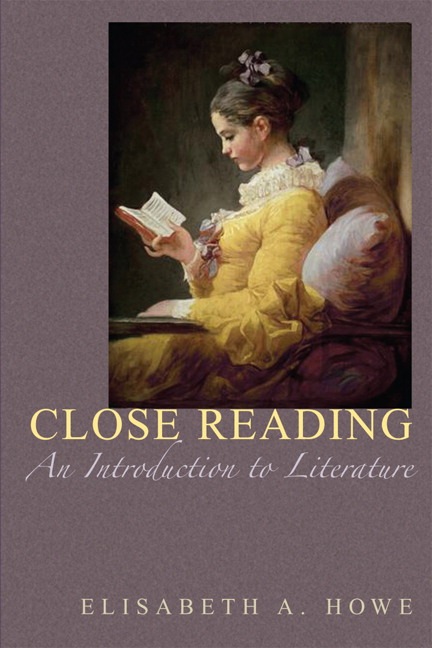
Here I am, though, to my surprise, seriously considering a textbook for adoption next year, and not even for an intro course (where I have always assumed that kind of support would be most appropriate). I’m scheduled to teach our 3000-level course on “Close Reading,” which is one of a suite of three courses on theory and methods of literary criticism, one of which must be completed by all of our majors and honours students. I taught it before, three times running (2003, 2004, 2005) but haven’t come back to it for a while. Of all the courses I’ve ever taught, this is the one that required the most thought and creativity to prepare, and it remains, in its old form, the course of which I am most proud. I framed our work in ways that I think were both interesting and important, I developed lectures but also course materials (handouts, worksheets, tutorial exercises, assignments) that were unlike any I’d used before but many of which I still look back on with pleasure, and I know the course had a big impact on a lot of students. I can (and no doubt will) reuse a lot of that material, but my experience has been that you can’t capture the energy of a course years later if you just recycle your previous approach. Lecture notes, for instance, can look much less coherent and vigorous when you look at them again after even a few months, never mind a few years: all the connections you used to fill in between what is written down have evaporated, the urgency you felt behind certain questions now eludes you, poems you couldn’t stop talking about stare blankly at you from the page. I’ve been open, therefore, to new ideas for the course, and in particular I’ve been looking for a different poetry reader to use.

Browsing around for options, I came across a book at Pearson called Close Reading. Given my bias against textbooks, I doubted I would ultimately adopt it, but it sounded worth a closer look so I requested an exam copy, and darned if I don’t quite like it, for my purposes. For one thing, thanks to some of the Twitter folk I follow, I’ve been thinking a lot about modeling as a pedagogical strategy, and this book models a number of things I want my students to be able to do–not just extended close readings (though it’s good that there are a number of these included, which could serve both as models and as starting points for discussion, because they aren’t 100% what I’ll be asking for) but the preliminary steps as well: noting interesting details, asking patient and attentive questions, using the right specialized vocabulary to talk about literary forms and effects. The questions aren’t always exactly the ones I would ask, the details not necessarily the ones I find most interesting, but again, this can be a way to start discussion, and the author, Elisabeth Howe, does a good job insisting on the importance of that kind of persistent attention by showing how it illuminates both the craft and the meaning of a poem or story. So far (though I haven’t read every word) I find it clear without being simplistic. There are models of poems or passages with key elements circled or annotated; there are model questions, but there’s also the clear expectation built in that eventually the students will make up their own questions; there are sample analyses, and then prompts for doing your own. Yes, this is the kind of thing I do with my students in class (providing or modeling questions, working up ‘readings’ of our texts), but I think it might really reinforce our class efforts to have samples written out for them like this, and to be able to assign readings and questions from the book instead of just telling them how to do that kind of attentive reading as class preparation. My recent experiences with lower-level courses suggest that students now seem to prefer things to be very explicit, and I wonder if using a textbook (or at least this textbook) would actually improve the overall level of engagement, rather than diminish it as I’ve usually feared. It would be nice, too, not to have to generate all the bits and pieces myself, particularly for tutorials (it’s a large class, or may be, with weekly tutorial meetings).

On the other hand…I also wonder if I am giving in to the high-school-ization of higher ed. And I wonder if students in 2nd and 3rd year, as these would be, would respond badly to using a textbook (though I wouldn’t adopt it, in the end, if I don’t conclude after going through it really meticulously that it is at a high enough level for the course). Are my general prejudices against textbooks shared by any of you, from either a student’s or an instructor’s perspective? Is it infantilizing to assign upper-level students “exercises” for their “homework”? Or am I just projecting onto a new generation of students my own intense commitment to university as an adult endeavor? The other day in the main office I ran into a woman who said she was there to drop off a paper for her son. My first thought was not “What a nice mom!” but “What kind of student asks his mom to submit his university assignments?” (My reaction is even more negative when students blithely tell me they always get mom or dad to “proofread” their papers. No offense to my own much-loved mom and dad, but I didn’t want them having anything to do with my university work, and I’m also quite certain they would have been quite surprised to be asked for their input!) Times have changed, and students seem to see themselves as younger and less independent than I was determined to be when I was in their position. They are also used to a fairly different high school experience, I think, and they seem prone to a great deal of anxiety about what exactly they are supposed to do. Should I insist they discover some self-direction and take some initiative, or should I support them in the manner to which they have become accustomed? I think this particular book may actually help me find a middle ground, modeling what to do and then backing off–and I’d still be the teacher, so I can set all kinds of expectations beyond what’s there. Plus I do plan to assign Middlemarch, as I did when I taught the course before. There’s no way any textbook can reduce the challenge (and reward!) of that, but if it made them stronger going into that work, we’d all be happier.

Any thoughts about textbooks, particularly from any of you who teach or take English courses at the college or university level? Pros and cons? A lot depends, I know, on the particular book and the aims of a particular course.

Walter Mosley, Devil in a Blue Dress

I was a bit disappointed when I finished reading Devil in a Blue Dress last night. Easy Rawlins is a great character, no doubt, and there are some very interesting aspects of the book. One of them is its post-war context, specifically as felt and explained by Easy himself as a black man who fought in what some saw as a white man’s war, his experiences of tension but also solidarity in the army, his frustrations on returning to an America where despite being a veteran he found himself still an outsider, still vulnerable to the degradation of police harassment and abuse. Mosley manages to make Easy’s social commentary and criticism seem natural to his first-person narration, moments of articulated reflection rather than didactic exposition. Easy’s narration itself is also very interesting, particularly when juxtaposed against the speaking voice he uses in conversation–or speaking voices, I should say, as he shifts deftly between registers to suit his purposes, or to meet or surprise his audience.

What I found less interesting was the book’s take on its adopted genre. The deliberate throw-back to hard-boiled detection has its provocative features, as discussed, for instance, in Daylanne English’s essay “The Modern in the Postmodern: Walter Mosley, Barbara Neely, and the Politics of Contemporary African-American Detective Fiction,” which I read after finishing the book. English disputes other critics, who emphasize the difference it makes that Mosley’s hard-boiled private eye is black, and instead argues for the significance of the similarities between Mosley and his predecessors: “Mosley’s…return to a quintessentially modern and quintessentially cynical genre now is to argue that we have not yet earned the ‘post’ in postmodernity.” That is, if I follow her correctly, Mosley’s close imitation of a form with its origins in a particular moment in the American past, rooted in particular critiques of that moment, is his way of saying not much has changed:

He chooses to return in the 1990s and early 2000s to a genre born of 1930s discontent in order to write novels set in the 1940s-60s, thereby enacting a complex process of literary anachronism that describes and inscribes present-day injustice and discontent.

The familiarity of Easy Rawlins’s situation as a black man in America, even the ready-to-hand recent parallels between real events and things that happen in the series (such as the Rodney King beating) tell us that the past is not as past as we like to imagine–“at least some things are liable to stay the same, across time, for poor and working-class black men in Los Angeles.” I find this a plausible reading of the effect of this ‘literary anachronism,’ though at the same time that seems a potentially ineffective, because fairly oblique, way to offer social critique aimed at present problems. It has to occur to the reader to make the modern-day comparisons–not that they are terribly remote, but there are ways they could be made immediate in the novel itself (for instance, by placing Rawlins’s narrative specifically in the present so that he could incorporate some retrospective comparisons? he is speaking from the future, as he does make some ‘the way things were back then’ remarks, but I don’t think we know exactly when he is telling the story from). Still, this is one of the ways I would probably approach the novel if I taught it, asking not only what difference it makes to the genre of hard-boiled detection when the protagonist is black (as, with Paretsky’s Indemnity Only, we ask what difference it makes when the investigator is a woman), but what it means to recreate not just the style but the period, as Mosley does so well.

But it’s that very close imitation of an earlier form, good as it is, that leaves me reluctant to use the novel. For me, it didn’t seem different enough. It recreates the things that worry and weary me about hard-boiled detective fiction: it portrays a grim, violent world and the violence is quite sensationalized; the men are tough, callous even, and the women are peripheral, victims or (as in the case of the eponymous ‘devil’) vamps. The case itself turns primarily on money and power–and it’s every bit as tangled in its details as its hard-boiled models, meaning by the end I wasn’t even really trying to keep all the deals and double-crosses straight. It didn’t seem to me, either (though I haven’t thought this through all the way yet) that race played a key thematic, rather than contextual, role. Maybe there are other books later in the series that let go of, or interrogate more forcefully, the problematic features of this particular kind of detective novel. I have time to do some more reading and thinking, and I should, as I would like my reading list to represent better the diversity of voices working in the genre. English’s essay makes me think that in addition to more of Mosley’s, I should look up Neely’s books; I also have Gar Haywood and Grace Edwards on my list. Any other suggestions?