 I had such good intentions to post regularly again this term about my classes . . . and somehow the first month has gone by and I’m only just getting around to it. The thing is (and I know I’ve said this a few times recently) there was a lot going on in my life besides classes in September, much of it difficult and distracting in one way or another—which is not meant as an excuse but as an explanation. Eventually, someday, maybe, my life won’t have quite so many, or at least quite such large, or quite such fraught, moving pieces. Honestly, I am exhausted by the ongoing instability—about which (as I have also said before) more details later, perhaps—and the constant effort it requires to keep my mental balance.
Anyway! Yes, I’m back in class, and that has actually been a stabilizing influence overall: it turns out I do better when I am busier. I have two courses this term. One is a section of “Literature: How It Works,” one of our suite of first-year offerings that do double-duty as introductions to the study of literature and writing requirement classes. In the nearly 30 years I’ve been teaching at Dalhousie, I’ve offered an intro class pretty much every year, though multiple revisions of our curriculum over that same long period have changed their names, descriptions, formats, and especially sizes. I don’t think it’s just nostalgia that makes me look back wistfully on the version that was standard in my first years here: called “Introduction to Literature,” running all year, capped at 55 with one teaching assistant per section to keep us in line with the 30:1 ratio required by the writing requirement regulations. So many things about that arrangement were preferable to the current half-year version with 90 students . . . but even as demand has stayed robust for these classes, our available resources have shrunk, and so here we are. (Oh, but how much more I could do when I didn’t lose so much time to starting and stopping anew every term—and actually the change to half-year courses was brought about because the university acquired registration software that could not accommodate full-year courses and so we were forced to change our pedagogy to fit it. That still makes me angry!)
 There are still things I like about teaching first-year classes, though, chief among them the element of surprise, for them as well as for me: because students mostly sign up for them to fulfill a requirement, and choose a section based on their timetable, not the reading list, they often have low expectations (or none at all) for my class in particular, meaning if something lights them up, it’s kind of a bonus for them; and for me, it’s a rare opportunity to have a room full of students from across a wide range of the university’s programs who bring a lot of different perspectives and voices to the class. I do my best to keep a positive and personal atmosphere—and some interactive aspects—even in a tiered lecture hall that makes it essential for me to use PowerPoint and wear a microphone; we have weekly smaller tutorials that also give us a chance to know each other better.
I continue to think a lot in my first-year teaching about the issues of products and processes that I have written about here before. This year I am also using specifications grading again, with its emphasis on practice and feedback rather than polish and judgment. I feel good about the basic structure of the course I have worked out over its recent iterations—but it seems possible I will get a break from teaching intro next year, and that would buy me time to give it a refresh, perhaps (who knows) the last one before I retire. This week is the last one of our initial unit on poetry (we will return to some more complex poems at the end of term). We’ve approached it in steps, focusing first on diction, then on point of view and voice, then on figurative language, then subject and theme—all, as I’ve tried to emphasize, artificially separated so that we can be clear about what they are and how to talk about them, but actually happening and mattering all at once. So this week’s lecture is “Poetry: The Whole Package” and the reading is “Dover Beach”—last year it was “The Love Song of J. Alfred Prufrock” but that seemed to be too much for most of them, and no wonder. (Still, it was fun to teach “Prufrock,” which I’m not sure I’d done before.)
 My other class is 19thC Fiction, this time around the Dickens to Hardy version. (Speaking of full-year classes, once upon a time I got to teach a full year honours seminar in the 19th-century British novel and let me tell you we did some real reading in that class! Ah, those were the days.) (Is talking like this a sign that I should be thinking more seriously about retirement?) I went with “troublesome women” as my unifying theme this time: Bleak House, Adam Bede, Lady Audley’s Secret, and Tess of the d’Urbervilles. We have been making our way through Bleak House all month; Wednesday is our final session on it, and I am really looking forward to it. I hope the students are too! But I’m also already getting excited about moving on to Adam Bede, which I have not taught since 2017. It was wonderful to hear a number of students say that they were keen to read Bleak House because, often against their own expectations, they had really loved studying David Copperfield with me last year in the Austen to Dickens course. (You see, this is why we need breadth requirements in our programs: how can you be sure what you are interested in, or might even love, if you aren’t pushed to try a lot of different things? And of course even if you don’t love something you try, at least now you know more about it than whatever you assumed about it before.)
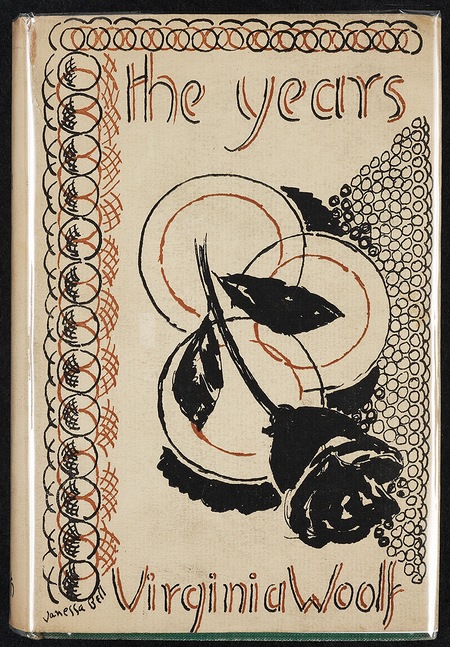 In many ways the first month of term is deceptively simple: things are heating up now, for us and for our students, as assignments begin to come due. After a fairly dreary summer, though, when the days often seemed to drag on and on, I appreciate how much faster the time passes when there’s a lot to do and I’m making myself useful (or so I hope) to other people. I also decided to put my name on the list for our departmental speaker series, to make sure the work I did over the summer didn’t go to waste, so I will wrap up this week by presenting my paper “‘Feeble Twaddle’: Failure, Form, and Purpose in Virginia Woolf’s The Years.” Wish me luck! It has been a long time since I did this exact thing; in fact, I believe the last presentation I made to my colleagues was about academic blogging, more than a decade ago. I have given conference papers and other public presentations since then: I haven’t just been talking to myself—and you—here, I promise! But I haven’t felt that I was doing work that fit very well into this series, which for related reasons I haven’t attended regularly for many years. I made a vow to engage more with my department and my colleagues this year, though, and so I’m going to the talks as well as giving my own. This is one result of my recent reflections on what I want this last stage of my professional life to be like: difficult as it still sometimes is for me to do this, I want to be present for it, if that makes any sense.
And that’s where things are at the moment, after the first month back in my classes. I probably shouldn’t make any promises about returning to the kind of regular updates I used to make to this series, but as always, I have found the exercise of writing this stuff up both fun and helpful—that hasn’t changed since I reflected on my first year of blogging my teaching. It’s a bit like exercise, I guess: if you can just get past the inertia, you feel better for doing it! We’ll see if that’s motivation enough.







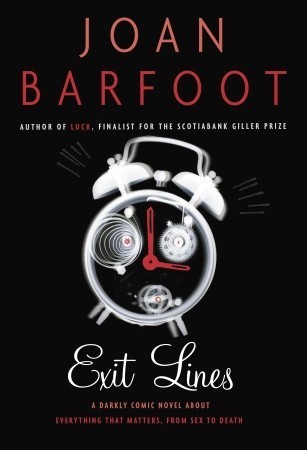 Ruth sighs. It takes a great deal of energy, week after week, pressing her one remaining desire. “Try thinking of doneness as an awful illness then, and bound to be terminal. If you can’t even imagine feeling finished, you must think it’s a pretty terrible state to be in. So it’s about accepting what a person—me—regards as the end of the line. My definition of a fatal disease, which isn’t necessarily yours.”
 The others’ counterarguments are also not that robust. “God crops up,” but none of them is religious, or at least doctrinally secure, enough to insist that her plan is wrong or sinful. They are all in varying stages of physical decline, and the one certainty they share is that they will eventually leave the Idyll Inn the same way other residents have, their bodies whisked away as quickly and quietly as possible so as not to discourage the rest. Still, it’s one thing to die and another to kill yourself, or so they try to convince Ruth (“Those people who struggle to be alive. When we are safe and comfortable here—they feel their lives are precious even when they are so very difficult, but you do not feel your life is?” challenges Greta). Ruth is resolute, however, and finally, one by one, they come around. As Sylvia puts it after her own change of heart, “Whatever anyone says—lawyers, doctors, governments, religions, all those nincompoop moral busybodies that float around like weed seeds—we should be in charge of our own selves.”
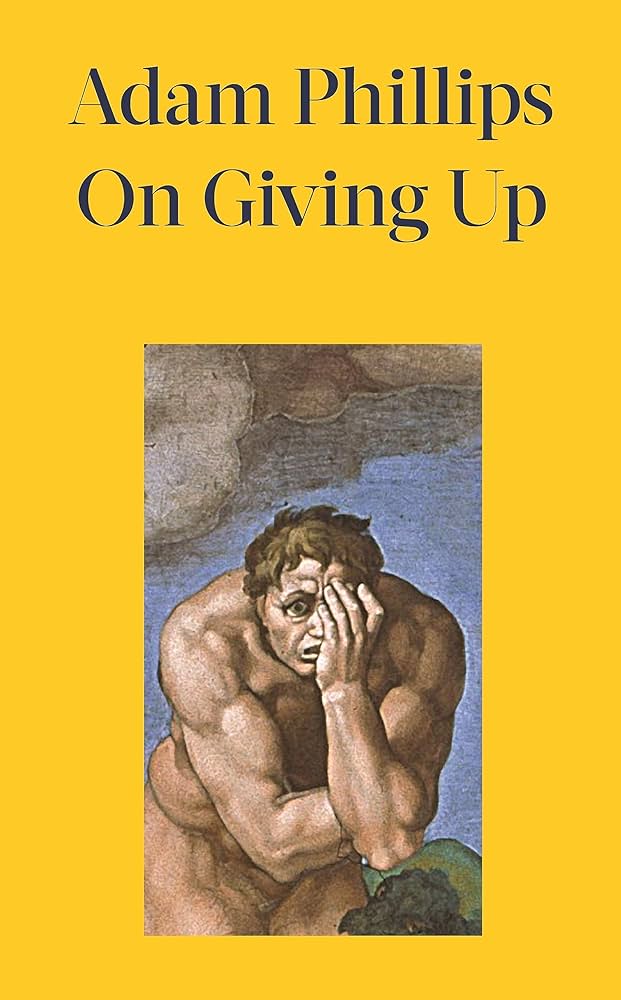 Barfoot simplifies things for her characters by emphasizing Ruth’s clarity of mind and purpose: whether you find her desire to die more or less acceptable as a result is going to depend on your values, but it does, I think, help answer the question “who decides” in her favour. Illnesses like depression affect, perhaps distort, people’s perception of reality: it is harder to defer to their autonomy, then, although perhaps it shouldn’t be, as what makes the most difference to someone’s quality of life is how they experience the world, how they experience life, not what other people insist it is actually like. Of course, we want to believe things will change for them, that they will get better, and most depressed people will. What does that mean about their right to say, as Ruth does, “my time, my place, my way,” or our right to intervene? One of the most insightful discussions I’ve heard about suicide since Owen’s death is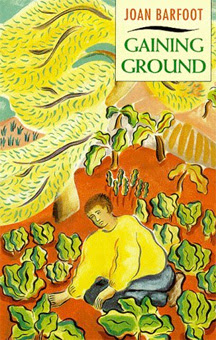
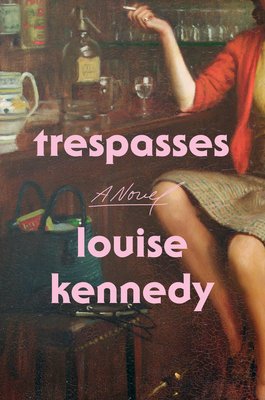 I’m trying to get back in the habit of writing up most (maybe not all) of the books I read so here we go with a quickish update on two novels that I recently finished.
 In contrast, I had never heard of Jazmina Barrera’s Cross Stitch when I first spotted it in the bookstore a couple of months ago. Its title caught my eye because I do cross stitch myself, though it has been a while since I picked up any of my works in progress. (As my eyes age,
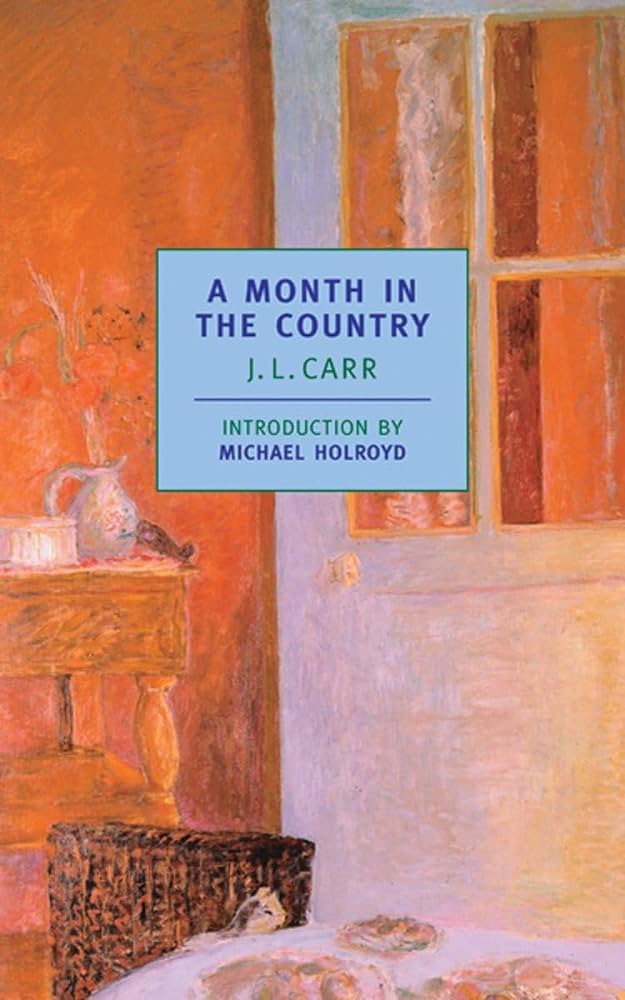 Ah, those days . . . for many years afterwards their happiness haunted me. Sometimes, listening to music, I drift back and nothing has changed. The long end of summer. Day after day of warm weather, voices calling as night came on and lighted windows pricked the darkness and, at day-break, the murmur of corn and the warm smell of hayfields ripe for harvest. And being young.
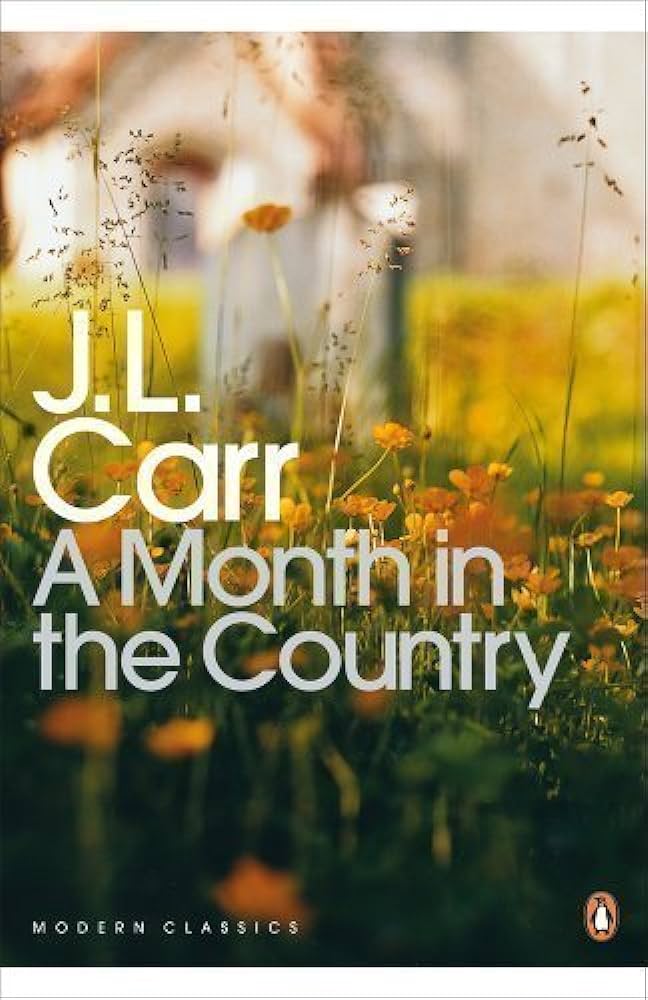 Throughout the novel there is a neat but never pat association between the restoration of the mural and Tom’s reconnection with a world full of life and colour—and along the way we get to follow Tom’s growing excitement about the painting itself, which he comes to believe is a true masterpiece:
 June began slowly, as a reading month anyway, as I was in Vancouver for the first 10 days of it and, as is pretty typical on these trips, I was too busy to settle down with a book. I did read about half of John Vaillant’s The Golden Spruce on the plane, and most of Donna Leon’s Drawing Conclusions while I was there (I borrowed it from my parents’ well-stocked mystery shelves but did not manage to finish it before I left). I’m definitely not complaining! It was a cheerful visit, made more so because Maddie was with me and I loved sharing my favorite people and places with her. Because we were also sharing a suitcase, I was also very restrained and did not buy any books while I was there. The only one I acquired was a very cool gift from my mother: a second impression of the first edition of The Waves
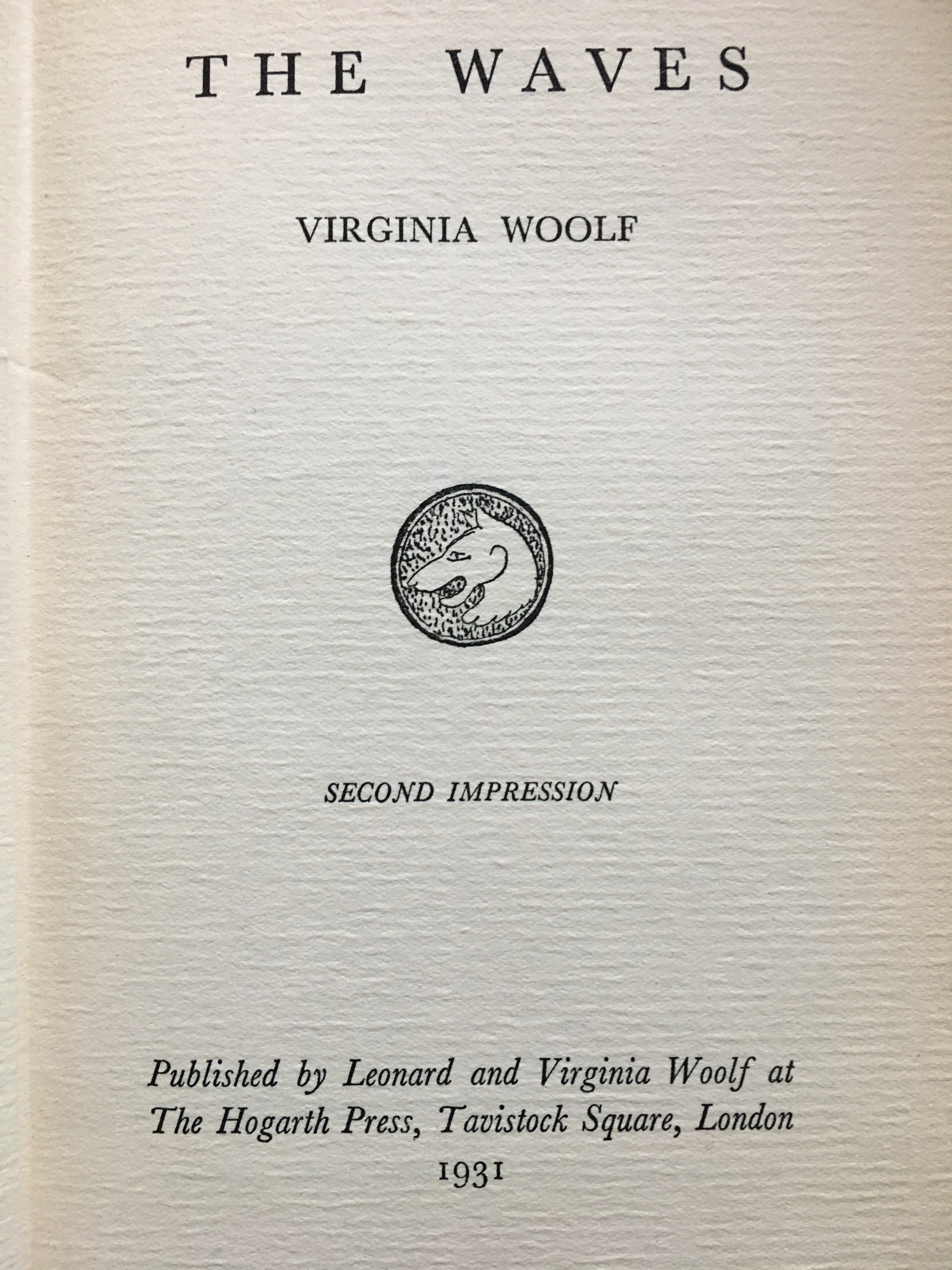 , from the Hogarth Press.
  , that while all of its detail about the history and processes of the lumber industry in BC were interesting enough, the book also gave the impression of a single man’s story elaborated or built up with background and contexts until it made a large enough whole. Sometimes I just wanted to get on with the actual events!
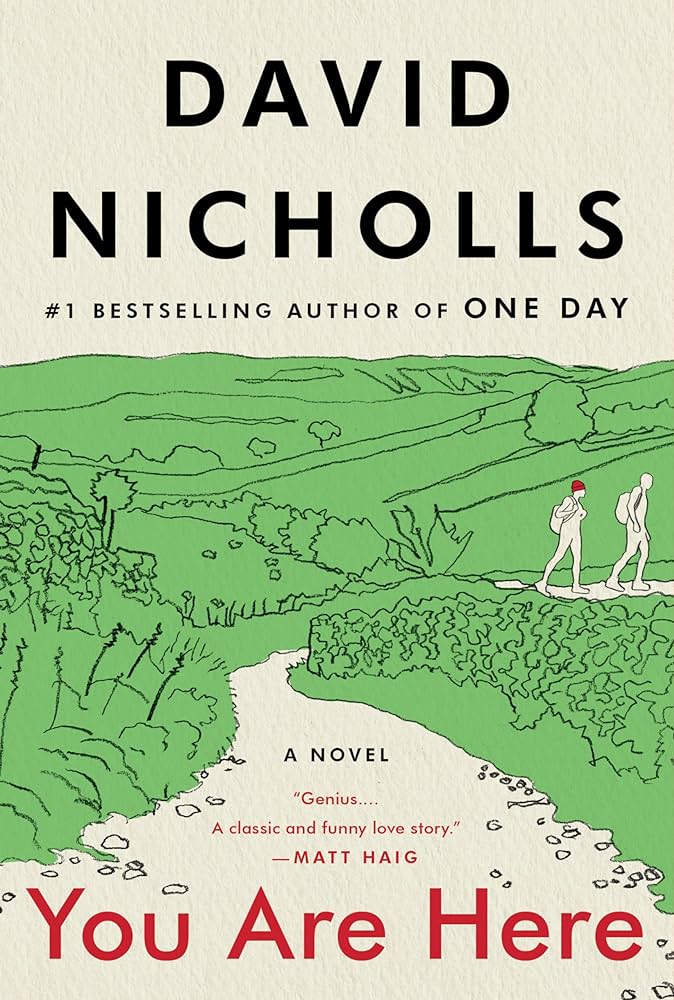 On the approach to Richmond, they passed a sign, a large board with a map of the path they were following, the scrawled red line from west coast to east, an arrow two-thirds of the way across labelled ‘You Are Here’.
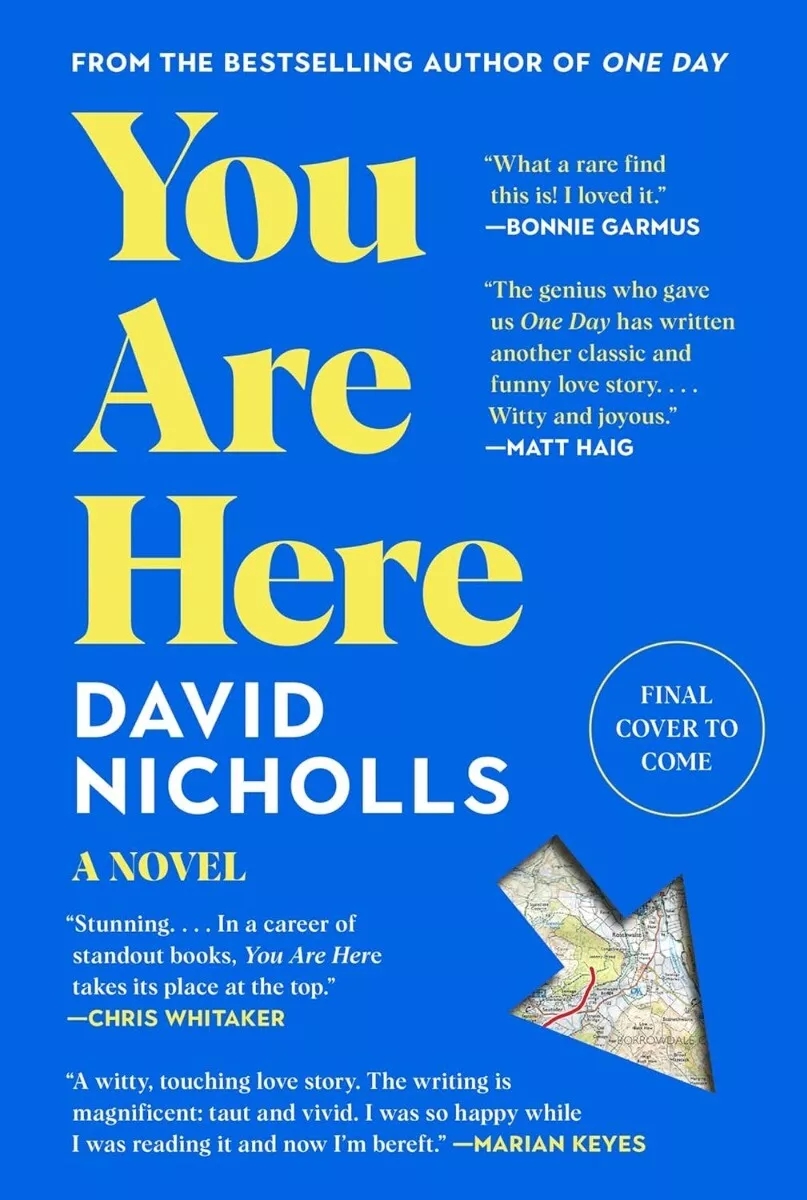 The other clever thing about You Are Here is how neatly the walking trip fits the underlying movement of both plot and character: that it’s obvious (in a novel, a literal journey is pretty much always also a metaphorical journey) doesn’t make it dull, and the gradual progress of our protagonists towards tolerance, then interest, then understanding, then liking, then affection as they trudge and clamber and stroll towards each new stopping point is well done. Even though it seemed pretty clear what their final destination was, the route they take to get there is not, unlike the literal journey, mapped out ahead of time, and it was satisfying arrivingthere with them after the requisite Big Misunderstanding.
