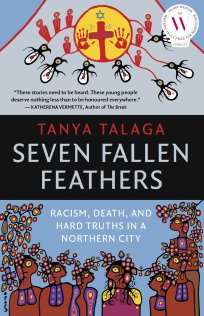
Education and Failure: Tanya Talaga, Seven Fallen Feathers

talaga-cover“To understand the stories of the seven lost students who are the subjects of this book,” Tanya Talaga begins her devastating, angry, and thought-provoking book Seven Fallen Feathers: Racism, Death, and Hard Truths in a Northern City,

you must understand Thunder Bay’s past, how the seeds of division, of acrimony and distaste, of a lack of cultural awareness and understanding were planted in those early days, and how they were watered and nourished with misunderstanding and ambivalence. And you must understand how the government of Canada has historically underfunded education and health services for Indigenous children, providing consistently lower levels of support than for non-Indigenous kids, and how it continues to do so to this day.

Seven Fallen Feathers provides a lot of that necessary context, beginning with a summary of the history of the area on the norther shores of Lake Superior that was once a meeting place for the Indigenous people of the area, then became “the hub of the fur trade,” and then saw the development of the modern city with its “two faces”: “the Port Arthur side is the white face and the Fort William side is the red face.”

Throughout the book, more general historical background is interwoven with the stories of the seven students. Their deaths eventually prompted an inquest intended both to probe what happened and to issue recommendations to improve conditions for and better protect other students who, like them, traveled to Thunder Bay to attend high school. By addressing each student’s case separately, Talaga is able to emphasize their individuality: their personalities, their family situations, the specific conditions of their lives, hopes, struggles, and premature deaths. By presenting them collectively, as the inquest also finally did, she is also able to highlight the common systemic factors that contributed to their deaths: the devastation wrought on their families and communities by the residential school system; the restricted opportunities that forced them to travel far from home to a hostile city to continue their educations; the abuse and racism they faced in Thunder Bay both from residents and from the police, who were slow to investigate when they disappeared and then quick to blame the victims.

Talaga is a good storyteller; her anger and grief are often obvious, but the emotional undercurrents reinforce the book’s purpose, which is not just to inform but to motivate. “Can the settlers and the Indigenous people come together as one and move forward in harmony?” she asks in the Epilogue. This is clearly one of the most important questions currently being raised in “the country that we call Canada”; her book offers, as the subtitle says, “hard truths,” ones that are necessary to face before the next stage, reconciliation, can really be contemplated.

MOASeven Fallen Feathers left me with a lot to think about. Some of my lingering questions are historical or sociological; more reading, presumably, is the next step there. On a more personal level, the book prompted me to reflect uncomfortably on my own education in the B.C. public schools in the 1970s and early 1980s. If you’d asked me then, I would probably have said that we did pay attention to Indigenous history. Mostly, as far as I recall, this took the form of visiting museums with exhibits that included First Nations art, clothing, and tools — the kind of things always on display at the Museum of Vancouver, for example. We made regular trips to the Museum of Anthropology, too, where we saw the art and artifacts, looked with awe at the vast carvings in the great hall, and wandered through the Haida houses on the grounds. I was used to seeing totem poles on display, in parks as well as in museums, and I always found them impressive but didn’t really inquire into their meaning or how they were being used.

Back then, I would probably have explained all of this as a benign part of Canada’s larger commitment to multiculturalism: to me it was positive and interesting, but also remote from my own life in present-day Canada. I don’t recall ever hearing the terms “residential school” or “sixties scoop,” or learning anything specific about treaties, land claims, or anything else related to the current political or social situation of Canada’s Indigenous population. We took trips to Fort Langley and took away square nails as souvenirs — but the idea that we are still in some sense settlers, that colonialism is an ongoing process, not just something to be reenacted by guides in “period” costumes, would have been wholly unfamiliar to me.

MOA IVIn retrospect, I still think some of this early experience was benign: it’s good that I took for granted the interest and value of Indigenous art and culture, for instance, seeing them as as part of my own national habitus. It’s thought-provoking, however, to consider how the whole idea of multiculturalism, with its celebratory overtones, might have contributed to a certain kind of complacency: for me, as far as I even thought about it self-consciously, looking at Haida carvings and going to Greek Day were about on a par as ways of appreciating “other” cultures.

Though to some extent I do blame public schools that surely should have made the history and politics of my own country seem more urgent to me, my comfortable oblivion to grimmer contexts was certainly, as I got older, partly my own fault. I was never particularly interested in politics, or in Canadian history, so when I got old enough to look outside the school curriculum, I was going in different directions. I almost never read the newspaper as a teenager–though if I had, I wonder if I would have seen anything, in those years, that would have shown me the part of Canada’s history that Talaga’s book addresses, or shown it in the light she does. That I am learning more about it only so belatedly is itself a symptom of educational failures, some of them my own but some of them also systemic, part of the same large and uneven patterns of race and privilege, knowledge and power, that Talaga’s book indicts. Now at least I can see something my childhood self couldn’t: that my ignorance was a luxury her seven subjects never had.

Happy Thanksgiving!

It’s Canadian Thanksgiving today. If you aren’t Canadian (or even if you are) and you’ve never understood why we celebrate Thanksgiving (“isn’t that an American thing?”), here’s a really informative post by Andrea Eidinger at “Unwritten Histories” on just that topic.

I was industrious last week and returned two sets of assignments, plus with today off, I don’t have to fret (much) about class prep until tomorrow. My weekend has thus been unusually free of the typical haunting sense of guilt. I took advantage of that to spend a nice couple of hours in the Public Gardens on Saturday: the fall colors are only just coming in, so the park had a lovely muted green and gold ambience:

The planters are still overflowing with glorious abundance:

In the formal flower beds you can see the last roses of summer, beautiful yet inevitably poignant:

It’s my favorite spot in the city, and it won’t be open that much longer (it shuts completely during the winter), so I was happy to wander around soaking in its orderly loveliness. It’s also dangerously close to Bookmark, one of our remaining independent bookstores, where I stopped and picked up Tanya Talaga’s Seven Fallen Feathers. It’s sad and often harrowing reading, and it seemed like an appropriate choice for a weekend when we spend a lot of time thinking about what it means to be “Canadian”; I expect I’ll have more to say about it here when I’ve finished it.

Our traditional holiday meal is roast pork with various fixings–cranberry sauce (homemade, of course!), mashed sweet potatoes, green bean casserole, apple crumble–so I have a lot of cooking to do! Happy Thanksgiving to you all.

If At First You Don’t Succeed, Must You Try Again?

DALHOUSIE-UNIVERSITYI’m trying to move on from my promotion debacle–honest! But I recently went another round with someone about whether I will, or should, reapply, one consequence of which is that I want to sort out my response (literal and emotional) to that question.

Since my final appeal was denied in November, I have actually had a version of this conversation fairly frequently. Usually, it reflects a friendly spirit of boosterism: it is supposed to make me feel better that people think I did deserve the promotion–and of course that is a nice thing to hear, and I do quite genuinely appreciate the expressions of support. Even so, I find these conversations stressful, because of their unspoken and (I assume) unintended implications, as well as some of the tacit assumptions behind them.

One plausible implication of pressing me to try again, for instance, is that getting promoted counts as professional success, and so until and unless it happens, I’m a professional failure. By some measures, this conclusion is obviously true, though it relies on rather circular logic. One of the hardest things about the whole process for me was precisely that I began it feeling proud of my accomplishments and ended it feeling like a failure. Pressure (however encouraging) to reapply makes me feel that way all over again, and reflects, I think, the general feeling among academics that of course we all want to achieve these professional milestones, which of course are meaningful indicators of the worth of our work.

For me, however, the pressure to reapply undermines the hard mental work I’ve been doing since last summer to distinguish my own standards for success from the standards against which I was measured by so many people involved in my promotion case. Regardless of what our regulations actually say, only very specific kinds of work were ultimately treated as eligible contributions to my discipline. Repeatedly and with conviction, I made the case for a more expansive and flexible definition of “scholarship,” but I was told in so many words that if I want professional advancement my body of work must conform in both kind and quantity to “past practice.” More than once I was told (as if to soften the blow of rejection) that my application was “premature”: the message was not, however, that eventually the quantity of my non-academic writing and other projects would meet the necessary (though nowhere specified) requirements, or that if I reached some higher (again, nowhere specified) level of achievement in my public writing, then my file would ripen into eligibility. Very specifically, I was told that I would deserve promotion if and only if I met the “usual” standard for peer reviewed publications.

I feel very strongly, however, that I should not allocate my time and expertise based solely on how my institution will reward me for it. That, to me, would be a poor use of my tenure, and of the academic freedom it secures for me. (Indeed, I think a case could be made that by insisting that if I want professional advancement I must work in one way and not in another–despite the university’s own regulations and the positive judgments of peers in my discipline–several levels of review at Dalhousie compromised, perhaps even violated, my academic freedom.) If I get nothing else positive out of this whole dreary experience, I hope that at least I have finally made my peace with the consequences of choosing to do critical work of a kind I find valuable, intellectually stimulating, and challenging, and that I have learned (or am learning) to stop seeking external validation for it–at least, not from Dalhousie. Instead, I am thinking hard about what success looks like on my terms and how best to achieve it. In this respect, applying again would be a real step backwards.

Another way of looking at my situation, of course, (and the way I’m sure my friends and colleagues intend when they urge me to reapply) is not that I am a failure but that the system failed me–but in that case, what do I have to gain by having another run at it,  except possibly vindication? If I’m not in fact a failure, why do I need to be promoted in order to carry on  precisely as I have been doing? This is a question I have spent a lot of time thinking about. I actually started asking this question even before my final appeal, which for a while I wasn’t 100% sure I would go through with. Why had I applied in the first place? What was in it for me, really? The professional payoff (including financial) is actually not significant–it’s mostly about pride and prestige–and there are even some down sides to it. I did think I had earned the promotion, and it is the usual next step for professors of a certain seniority, so part of my initial decision was just thinking that my time had come. But I also, I admit, had wanted to prove something, to myself and to some of the people around me. I wanted validation for the decisions I’d been making. I wanted my work to get an A! That’s an awfully hard habit to break–but, to reiterate my previous point, that’s exactly what this process has finally (I hope) managed to do for me.

I think my friendly boosters also don’t quite realize the time and the toll the process has already taken. I began compiling materials for my file in June 2015; the decision on my appeal arrived in November 2016. For nearly a year and a half, that is, I was frequently (and mostly negatively) preoccupied with it, including many hours in meetings, many more hours writing responses, rebuttals, and appeals, and many, many, more hours brooding–many of those hours lying unhappily awake while arguments and counter-arguments and what seemed like willful misrepresentations of my work went round and round in my head. Because so much of my social life is bound up in my departmental life, there has been significant fall-out. Some of my relationships, including with formerly close colleagues, have been irreparably damaged. I’m only just recovering my individual equilibrium, something that, as Timothy Burke aptly observes, isn’t easy to do, given the peculiar nature of academic culture. (That post of his has given me a lot to think about.) There’s absolutely no guarantee of smooth sailing if I opt to do this all again–so blithely urging me to press on seems a bit callous! Besides, I’m 50 now. How many of my remaining full-time years should I put into seeking approval from other people instead of just doing the work that matters to me?

For myself personally, then, applying again just does not seem worth the effort and the risk. I might change my mind, but it’s hard right now to imagine why. Another frequent component of these discussions, though, is that I owe it to other people to try again. It is often pointed out to me, for instance, that women are underrepresented in the higher ranks of the academy. I’m not sure my particular case has much to do with this general situation, and I’m not so far convinced that I should feel any special obligation because of it either.

I’m somewhat more persuaded by the argument that the kind of change or challenge to academic norms that I represent won’t happen unless people like me fight for and then use the influence that comes with seniority to turn advocacy into policy. But we have already changed our policies here at Dalhousie: it’s attitudes that haven’t changed–at least, not much. A lot of us were pretty excited about blogging for a while, but our more recent discussions showed a significant (and understandable) decline in optimism about that. Also, while there’s a lot of talk about “knowledge dissemination” and “public engagement,” it looks to me as if the trend is towards shaping that work into something recognizably academic and institutional–incorporating peer review into blogging, for instance, and establishing university programs and centers for things like the “public humanities,” rather than cheering on people who just go out there into the public sphere and participate in forms and discussions of different kinds. In this context, I’m not sure how much good I can do, individually, to instigate or support change, or at least why I have to put myself through another grueling round of extreme academic vetting in order to do it. It seems to me that I am doing as much good by persisting on my own, just trying to exemplify one of many alternative models.

“Never say never” is perfectly reasonable advice, and who knows how differently I will feel in the future, or what else might have changed in the world around me. For now, though, being promoted to full professor is simply no longer one of my goals.

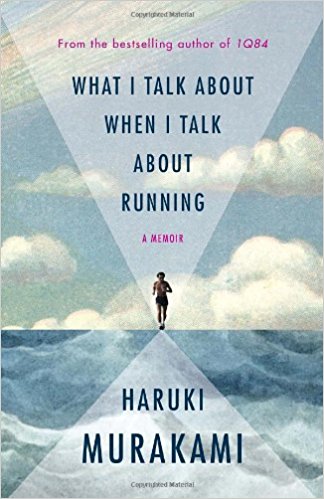
YMMV: Haruki Murakami, What I Talk About When I Talk About Running

murakamiIt turns out I wasn’t entirely wrong to have avoided Haruki Murakami’s What I Talk About When I Talk About Running. A number of people recommended it to me after I posted last week about hoping that I can learn to approach my writing in the same spirit as I do my running: focused on my own goals and the intrinsic satisfaction of reaching them, without comparing myself to others, without feeling inadequate because I don’t run faster or further. I knew Murakami’s book was out there, but because I also knew that he ran marathons, I had figured it would probably provide just one more potentially demoralizing comparison of my own modest efforts to someone else’s much more impressive accomplishments.

To be honest, to some extent that was how I reacted to What I Talk About When I Talk About Running. The book made me feel a little bit defensive, a little bit apologetic, a little bit embarrassed not to be pushing myself harder and achieving more–not just as a runner, but as a writer. After all, it turns out Murakami doesn’t just run marathons: even when he’s not running in races, he runs for hours at a time, and in addition to marathons he also does triathlons. And, of course, he isn’t just an obscure writer puttering away, doing his best and trying to find satisfaction in that, but an internationally renowned, best-selling, prize-winning writer. Gee, thanks, everyone! As if my Salieri syndrome doesn’t flare up enough quite on its own.

That wasn’t the entirety of my response to Murakami’s book, though: there was also a lot about it that I liked. Above all there’s Murakami himself. I was amused and a bit touched by his remark that he thinks most people would not like his personality very much:

There might be a few–very few, I would imagine–who are impressed by it, but only rarely would anyone like it. Who in the world could possibly have warm feelings, or something like them, for a person who doesn’t compromise, who instead, whenever a problem crops up, locks himself away alone in a closet? . . . I just can’t picture someone liking me on a personal level. Being disliked by someone, hated and despised, somehow seems more natural.

Later in the book he describes his own “nature” as “individual, stubborn, uncooperative, often self-centered.” “I’ve carried this character around like an old suitcase,” he goes on,

down a long dusty path. I’m not carrying it because I like it. The contents are too heavy, and it looks crummy, fraying in spots. I’ve carried it with me because there was nothing else I was supposed to carry. Still, I guess I have grown attached to it. As you might expect.

Maybe it’s because I recognize something of myself in these descriptions that they didn’t alienate but rather charmed me. I also appreciated that his self-deprecation doesn’t come in the rather arch form that seems common in some kinds of personal essays these days but instead seemed (surprisingly, given his accomplishments) quite sincere. At one point he describes himself as a teenager staring at his naked body in a mirror and adding up all his (perceived) flaws. His evaluations of his own character here don’t seem immaturely judgmental, the way he now knows that earlier exercise was; it seems as if he has simply assessed himself as honestly and dispassionately as he can and learned to live with what he found.

murakami-2In a similar way, he talks about both his running and his writing without flourish or posturing. There’s no false modesty, but also no braggadocio. Further, though he does talk a lot about training and personal bests, he never seems competitive against anyone but himself. He certainly has a different relationship to running than I do, an interest in pushing himself and seeing (literally but also metaphorically) how far he can go as a runner, but he does it because it suits him: for him, it’s a way of expressing himself, not proving anything. In fact, sometimes what he seeks and finds in running is humility: when he feels he has been “criticized unjustly,” for example, he runs “for a little longer than usual”:

By running longer it’s like I can physically exhaust that portion of my discontent. It also makes me realize again how weak I am, how limited my abilities are.

He also believes that for him, running enables writing. Keeping it up has been worth it for him not just for its immediate benefits but because “I like the novels I’ve written . . . and if running helps me accomplish this, then I’m very grateful to running.”

What I Talk About When I Talk About Running is kind of a meandering book: it mixes some memoir with bits of travel writing, thoughts on music, a few practical notes on long-distance running, and some reflections on the writing process. One of the things I liked best about it is that just as I would be getting a bit impatient with details about training regiments or running shoes, Murakami would take a turn through some more metaphysical scenery. The insights he offers aren’t, I suppose, particularly profound or surprising, but he doesn’t present them as if they are: only as if he has thought about them, or they have become clearer to him, and so he’s sharing them. “Exerting yourself to the fullest within your individual limits,” he says, for instance: “that’s the essence of running, and a metaphor for life–and for me, for writing as well.” Or,

For me, running is both exercise and a metaphor. Running day after day, piling up the races, bit by bit I raise the bar, and by clearing each level I elevate myself. At least that’s why I’ve put in the effort day after day: to raise my own level. I’m no great runner, by any means. I’m at an ordinary–or perhaps more like mediocre–level. But that’s not the point. The point is whether or not I improved over yesterday.

When he talks about writing more directly, he often emphasizes how difficult it is:

Writing itself is mental labor, but finishing an entire book is closer to manual labor. It doesn’t involve heavy lifting, running fast, or leaping high. Most people, though, only see the surface reality of writing and think of writers involved in quiet intellectual work done in their study. If you have the strength to lift a coffee cup, they figure, you can write a novel. But once you try your hand at it, you soon find that it isn’t as peaceful a job as it seems. The whole process–sitting at your desk, focusing your mind like a laser beam, imagining something out of a blank horizon, creating a story, selecting the right words, one by one, keeping the whole flow of the story on track–requires far more energy, over a long period, than most people realize. . . . Everybody uses their mind when they think. But a writer puts on an outfit called narrative and thinks with his entire being; and for the novelist that process requires putting into play all your physical reserve, often to the point of overexertion.

Implicit here is that he means this writer, this novelist, just as when he describes the routines he thinks are essential to success, such as “sit[ting] down every day at your desk and train[ing] yourself to focus on one point,” he means they worked for him. Your mileage may vary, he might have said, if he were offering this advice today! I don’t know if that’s how all novelists work, and since I’m no more likely to attempt a novel than I am a marathon (I think, anyway), I’ll probably never know if that’s what it would be like for me. What he describes is not totally different, though, from what it takes to do even the kind of writing I do, which also requires focus and effort, especially “selecting the right words, one by one.” His fundamental insight, too, is not so different from the one I arrived at in my own minor epiphany, though he seems to live it, while I still aspire to it:

What’s crucial is whether your writing attains the standards you’ve set for yourself. In this sense, writing novels and running full marathons are very much alike. Basically a writer has a quiet, inner motivation, and doesn’t seek validation in the outwardly visible.

A Minor Epiphany About Writing and Running

sneakersI had a minor epiphany this morning: I should try to approach writing in the same spirit I approach running.

I’ve been running fairly regularly for over a decade now. It has turned out to be just the kind of exercise that suits me. Growing up, gym class was always a nightmare for me, from the embarrassment of the changing rooms to the alienating exposure of team sports–and that’s not even getting into the stress of the “Canada Fitness Tests,” with their gold, silver, and bronze levels, which Canadian readers of a certain age will probably also remember. I dreaded every aspect of gym, and as a result, when I was finished with school I shunned every form of exercise. It took me years to get over the bad memories and to admit that getting more exercise would probably be good for me–that I might even enjoy it, if I could do it on my own terms. As a graduate student, I started going to aerobics classes (hey, it was the early 90s–everybody was doing it!); some years after we moved here, when that habit (and fad) had lapsed, I took a beginner’s clinic at the Running Room and I have kept up a running program since then.

This does not mean I excel as a runner. I don’t run very far or very fast. In fact, pretty much everyone else I know who also runs goes further and is more ambitious: many of them have taken to doing “events”–5Ks, 10Ks, even marathons–while I’m happy just to complete my modest route around the neighborhood. When I’m out on my morning runs, I move quickly out of the way when I hear footsteps behind me so whoever it is can pass me easily, which they always do. My intransigent allergies–wholly resistant, as far as I can tell, to all non-drowsy antihistamines–mean I always need to carry a kleenex (how I wish more running gear had real pockets!), and in colder weather especially my eyes water terribly: I’m probably quite a sorry sight!

Why, then, would I want my writing in any way to resemble my running? Here’s what clicked with me this morning, after my run: none of these things about my running bother me, because I get out of it exactly what I want. I don’t feel any shame or pressure about how fast or how far I run; I feel no competitive desire either to race against others or to improve my own “personal bests.” I run for one reason only: because I feel better (more energetic, more focused, healthier both physically and psychologically) when I do it regularly. When I don’t, both my energy and my mood slump, and that prompts me to get back to it. I have set my own standard for success,  and the intrinsic rewards are enough to motivate me.

I sincerely hope that I am a better writer than I am a runner. No doubt, up to a point, that’s because I am more ambitious about my writing than I am about my running: I aspire to be an excellent writer, while I have never aimed to be (or imagined I could be) a serious athlete. I don’t want to let go of that ambition. I would, however, like to set my own standard for success in this arena as well. I would like not to be dependent on others to measure it for me, and not to be envious or discouraged in the face of what other writers accomplish. It’s hard, sometimes, to see other writers appear to sprint past me or achieve marathon-like projects while I am (or feel as if I am) still running in circles. It’s also hard not to judge myself by the goal posts other people have set up–even if I am deliberately running in a different direction. (Have I tortured this analogy enough?!) I need to find, in writing, the same sure sense of what I’m doing it for that I have about my morning runs. I need to remind myself–until I don’t need reminders anymore–that a lot of the satisfaction and rewards are intrinsic, that I’m doing it my way for a reason, and, above all, that I feel better when I write than when I don’t.

It’s a good goal, anyway, something for me to think about as I set my priorities, not just for the summer but for the longer term. Changing attitudes is harder than changing shoes, though!

Back Again, Bearing Books!

I am back from my trip to Vancouver, where in spite of the rain (even, in some ways, because of it) I had a lovely time visiting with family and friends and drinking in the always inspiring sight of the mountains rising above the city and the sea. It was a a welcome interlude between the end of a challenging term and the beginning of a summer of reflection and writing.
I didn’t end up doing a lot of reading while I was in Vancouver. During the day I was often out and about, and in the evenings we talked and then wound down with a little TV. A particular treat was watching Dr. Thorne, which my Trollope-loving father had saved up for me. I thought it was delightful, though as I rather sheepishly confessed to him, it has been many years since I read the novel (one of his personal favorites) — perhaps it’s time I reread it! In return (?) I introduced my parents to the quirky little comedy Detectorists, which my husband and I found both hilarious and unexpectedly touching. I’m not 100% sure my parents were converted, but at least now they know it’s there.

I did get some travel reading done. I’m nervous on planes, so light or fast-paced books are good as my concentration isn’t always great. En route to Vancouver, I found Miranda Neville’s The Amorous Education of Celia Seaton an excellent diversion, and on the way home I alternated between Georgette Heyer’s Black Sheep (reliably amusing) and Adam Sternbergh’s The Blinds, which I’m reviewing for Quill & Quire. I plucked several promising titles off my mother’s well-stocked shelves, but the only one I read cover to cover was Martha Gellhorn’s A Stricken Field. I didn’t think it was a very good novel, but it tells an important story based on Gellhorn’s experience reporting on the plight of refugees from the Sudetenland after its annexation by Nazi Germany: it’s not particularly artful, but it is certainly gripping. I read about two-thirds of a Donna Leon mystery but left it behind unfinished: I might try to find it here, just to know whodunit and why–but I don’t feel highly motivated to as I was finding Leon’s prose terribly stilted.

Though I didn’t manage a lot of good reading while I was away, I did bring back a nice stack of books to read here at home. One ritual my mother and I have on my visits is an expedition to Hager Books, which is a small store with a nice atmosphere and thoughtfully stocked shelves. We peer around at everything and kibitz, in our opinionated and idiosyncratic ways, about authors and titles we’ve read or are interested in–or, for whatever reason, want nothing to do with! I picked out Rose Tremain’s The Gustav Sonata and Anita Brookner’s Providence as part of my “keep independent bookstores in business” project. As I observed when reporting on my last trip to Vancouver, my mother’s personal book collection is another great resource, and recently she has been pruning it, putting some boxes together to donate to the public library’s book sale. I had the bright idea to “just take a look” through them and of course found a few I couldn’t resist, including another by Anita Brookner, one by Angela Huth I haven’t read before (I really like both Invitation to the Married Life and Easy Silence), and Elizabeth Taylor’s A View of the Harbour.

Including The Blinds, then, which had been mailed to Vancouver so I could get started on it sooner rather than later, I came home with 8 more books than I left with. And yet wouldn’t you know it: the book I most want to read next turned out to be waiting for me when I got back to Halifax. It’s Marina Benjamin’s The Middlepause: On Life After Youth, a 50th birthday gift which seems like just the right book to help me think about where my own life is now and what I want to make of it next. That is likely, then, to be the next book I write about here.

A Decade of Novel Readings!

My very first post to Novel Readings went up 10 years ago today. It wasn’t much: a quick comment on Zadie Smith’s White Teeth. Rereading it today, I’m amused to see that careless applications of the label “Dickensian” was already a pet peeve, but I’m also interested to see that my appreciation for Dickens himself, as a self-conscious and effective artist, has increased since then.

As I’ve often remarked, starting a blog was not, at first, a very purposeful action for me. It turned out to be a life-changing one, though. I’ve written before about the ways blogging has opened up new opportunities for me, but today I find myself thinking more about the intrinsic value of Novel Readings itself. For me, blogging turned out to be an outlet, a distraction, a pleasure, a challenge, a learning experience, an intellectual adventure.  In some circles, Novel Readings is the work of mine that deserves the least credit. But in many ways I am more proud of my archive of blog posts than of any other writing I’ve done, precisely because the value of doing this lies all in the doing! I’ve never been under any obligation to blog, or had any extrinsic incentive to do it, or received any external reward (or, god knows, any professional advancement) for it. As a result, there’s an authenticity to this writing, a freedom, that means Novel Readings has allowed me to discover a lot about who I am as a reader, a writer, a critic, a scholar, and a teacher — which is to say that blogging has contributed a lot to my understanding of myself as a person. A lot has changed for me, both personally and professionally, since 2007, and some of that is indubitably because of the degree of reflection this blog has prompted, as well as of the habits, skills, and interests it has helped me cultivate.

At the same time, Novel Readings has never been primarily a personal exercise, a vehicle for self-exploration or self-expression. In fact, I’ve deliberately kept a lot of aspects of my private life off the blog! Though like all blogs Novel Readings ebbs and flows somewhat in its aims and accomplishments, overall I am as proud of the results of my blogging as I am pleased with the process of it, because I think I have actually (if, initially, accidentally) made something of substance here. Over the past decade I have produced a significant body of thoughtful, articulate commentary on books, on criticism, and on academic and pedagogical issues. I have done this in the face of a fair amount of skepticism — even some outright scorn — but also buoyed by some precious encouragement. In the end, though, what really mattered was my own commitment, and that came (as I expect it does for all bloggers) from my belief, born of experience, that it was something that, for me, was worth doing.

So, Happy Birthday, Novel Readings! And sincere thanks, as always, to those of you who help make this effort worthwhile by reading, commenting, and writing your own wonderful blogs.

The Soundtracks of Our Lives

On Facebook there’s a meme going around of people posting a list of the albums that inspired or defined their teenage identities. One thing all the lists I’ve seen so far have in common is that they’re all pop music of one kind or another. I wonder if that’s because it’s a genuine rarity for a teenager to listen to classical music, or jazz, or folk, or opera — or because popular music is in some sense more personal, or speaks more immediately to mood and time and place.

My own teenage listening was a pretty odd mixture. I probably listen to more pop music now than I did in high school. I was an opera lover from a young age, and the music I heard at home was most often classical or folk: my parents deny ever being hippies, but their record collection certainly bore signs of their having lived in Berkeley for much of the 60s, with lots of Joan Baez, Bob Dylan, and Peter, Paul, & Mary. During my high school years, most of my family was quite involved in international folk dancing. My father and I, more specifically, were involved with a group called the “Philhellenic Dancers”: we met weekly to learn and practice dances from all regions of Greece, and a subset of the group, including the two of us, gave performances in restaurants and at festivals, including a few times at Greek Day. (As almost none of us were actually Greek, I have thought a lot about this group in light of current debates about cultural appropriate. But that would be — maybe will be — a separate post some day.) flute logo

In Grade 11, I started working part-time at The Magic Flute, a classical record store that for many years was a Vancouver institution: this was a job that both reflected and supported my orientation towards classical music. My first gig there was doing inventory, for which I was paid in store credit. The fruits of that labor are now boxed up in my parents’ basement. With vinyl making a comeback, maybe I should finally get the boxes shipped out here for sorting. (I can’t find any photos of the store online, but I did find this clip of its graphic logo, which was on all our shopping bags and on the cover of the mail-order catalog that I assembled and edited for many years.)

Acentral_parkll of these activities and interests infused my listening life. I didn’t have any sense of disdain for whatever the top 100 might be; I just didn’t pay that music much attention. I knew and liked some older stuff: when Simon & Garfunkel did their reunion tour in 1983, for instance, I lined up overnight with a friend to get floor tickets, and enjoyed their B.C. Place concert from our spot maybe 3 yards back from the stage. I got to be good friends with Veda Hille (now an original and successful musician in her own right) and she introduced me to the Beatles (imagine needing an introduction to the Beatles in the mid-80s, but I did), and then when we were co-editors of our high school year book, we listened to a lot of David Bowie while developing photos in the darkroom. Other people’s influence brought in other music: my boyfriend was a Eurythmics fan, for instance (I died my hair purple to go with him to their concert — though since my hair is naturally quite dark, the result was more like a purple aura than a bold statement). It was Vancouver in the 80s, so perhaps Bryan Adams fandom was inevitable, and when Born in the USA came out, my best friend and I put it on our Sony Walkmen and listened to it over and over. (That friend liked to get out and have some fun, so she is also the reason I saw Michael Jackson live when the Victory Tour came to Vancouver.)

Bryan at New Kent HotelBut there really isn’t a list of 10 albums that for me made up a distinct soundtrack of those years, at least not one that really speaks to who I was. Instead, there are particular songs or albums that now have astonishing power to summon up different periods of my life. It’s remarkable how music can do that, isn’t it? A song comes on and suddenly there you are immersed in a whole set of feelings, as if you are being dunked into a vat of memory. These are often not songs that are personal favorites – what matters is that for some reason they became part of a moment in time for me. I was in the grocery store yesterday, for example, and Billy Joel’s “I’m Moving Out” came over their annoyingly loud sound system — and I was instantly back in the New Kent Hotel in London, where my sister and I stayed at both ends of our 6-month tour of Europe in 1986. (I just looked it up, and what do you know: it’s still there.) It was really a kind of hostel, with a lot of long-term guests, many of them Australians on work visas, and the ones we roomed with played Billy Joel a lot. In the photo you can see the Bryan Adams poster my best friend gave me to take along, to remind me of my roots (I guess). I took photos of it on display in a lot of different hostels! The song brought it all back to me, perhaps because I don’t think I have ever played it myself in any other context: I remember all the excitement and anxiety of being on that big adventure.

surfacingSarah McLachlans’s “Building a Mystery” is another really evocative song for me. It’s on her album Surfacing, which came out the year Owen was born. I was up a lot at night nursing, and I used to play it softly as I rocked with him. It was a hot summer, and I was equal parts miserably exhausted and desperately in love with this new little person. If I hear songs from that album without warning — especially “I Love You” or “Angel” — I am liable to get teary, though I’m not sure why these memories are quite so poignant. Maybe it’s the sense of distance, the realization of just how much has changed, and how inexorably time keeps moving forward. Then there’s Enya’s “Caribbean Blue,” which my husband and I danced to at our wedding rehearsal dinner in 1992: an unlikely choice, perhaps, but it is a waltz and it had become one of “our” songs. One of our first joint activities (cliché alert!) during our daringly brief courtship was taking ballroom dance classes together, so we actually did a pretty good job of our dance, if I may say so myself! Of course I can’t hear that song now without remembering what a happy weekend that was, as our friends and family gathered around us to wish us well. We walked down the ‘aisle’ (we were married in a restaurant, so it was pretty informal — the plan had been to use their waterfront garden, but it rained) to one of Dvorak’s string serenades: this, along with my turquoise silk dress, helped make the ceremony itself seem less clichéd!

Joan-Sutherland-005Although I listen to music almost all the time now, there’s little that has the same emotional power over me: I have to go deeper into my past to get the same effect. I wonder if it’s just that the more immediate events and their associations haven’t yet distilled into part of my history. There is certainly some music that is fundamental to my life — that I have loved for so long, that has given me so much pleasure, that when I hear it it restores me to myself. At the top of that list would be Joan Sutherland’s 1962 recording of La Traviata: my parents gave me the highlights LP as a birthday gift in 1972 and I cherished it even before I had the honor of getting Sutherland’s autograph on the cover years later. (Richard Bonynge’s autograph is on the back: I still feel a bit embarrassed about how indifferent I was to his offer to sign it too, but I was 9 and Sutherland was my idol.) No piano music has ever displaced Chopin’s in my heart since I first tried to learn some of his easier waltzes as a student: practicing the A-major Polonaise in the little room I signed out in the music building helped me sustain myself emotionally during my terrible first year of graduate school at Cornell. And speaking of graduate school, The Proclaimers’ “I’m Gonna Be (500 Miles)” promptly delivers me back to my friend Bernie’s green pick-up truck and all the times we drove in it across the Catskills to my sister’s house in Mamaroneck…

I think my problem with the “10 albums” meme is not that there is no soundtrack to my teenage years but that my teenage years were just a few in a much longer musical history, an idiosyncratic collage of constant listening. What about you: are there songs or albums that invariably recall either high school or some other memorable moments in your life?

2017: In with the New Year, Much Like the Old Year!

fireworksWe don’t stay up until midnight on New Year’s Eve anymore. I can’t remember when we gave up on this tradition, exactly. The last New Year’s Eve I specifically remember was 1999-2000: remember the Y2K panic? We didn’t really expect a dramatic catastrophe on the stroke of midnight, but it was hard not to wonder just what would go wrong. I think we rang in the New Year a few times after that, but there came a point at which it was just too obvious that nothing significantly changed with a new date, and also while the children were small, staying up late on purpose when we were already tired all the time didn’t make much sense. This is one way in which I have broken with my upbringing: to this day my intrepid parents and whoever’s celebrating with them stand out on their front porch in Vancouver and listen for the ships in the harbor to tell them when it’s officially midnight, then bang enthusiastically on pots and pans — a ritual I participated in with glee for many years. (To my knowledge, none of our neighbors ever complained.) I don’t think they still have Pêches Flambées for dessert, though: that used to be the showy finale to our elaborate New Year’s Eve dinner.
calendarAnyway, here we are now, writing 2017 instead of 2016 but otherwise puttering along more or less as usual. For me, that means getting things in order for my winter term classes, which begin on Monday — a week later than is typical, which has been a real boon. The campus itself, including the administrative offices, opened up this week, so I’ve been able to get handouts printed and copied and all kinds of other preparatory business done, including a trek across campus to scout out the room where I’ll be teaching ‘Pulp Fiction,’ which is in an unfamiliar building. Will that preemptive action ward off anxiety dreams about getting lost en route? Here’s hoping.
It’s ‘Pulp Fiction’ that I’ve been working on the hardest so far, because although it is “just” a first-year writing class using popular fiction for its main texts, most of the readings are ones I haven’t taught before, which means I have no notes or handouts or exercises or assignments to draw on. The general remarks I want to make about the course’s aims and interests are also affected by the shift in focus to ‘pulp fiction’: I’ll be talking more than usual about canonicity, for example, and paying more attention than usual to best practices for talking and writing about difficult topics, or about books that include problematic language (like the racial slurs in Valdez is Coming). As Westerns are the first genre we’re working with, I am also working on synthesizing the historical and contextual material I’ve been reading (which is all new to me) into lecture notes.

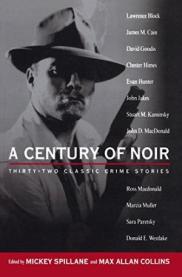
century-of-noirThe very first reading we’re doing, though, is a nifty little short story by Lawrence Block called “How Would You Like It?” I often begin the fiction unit in an introductory class with Kate Chopin’s “The Story of an Hour”: it’s really short, but also full of things to talk about, so it makes a great warm-up exercise. It didn’t really fit ‘Pulp Fiction,’ though, so I hunted through my anthologies looking for something else equally brief that would help us get some key literary terms on the table right away while also (hopefully) catching people’s interest. I found the Block story in an excellent anthology called A Century of Noir; though it actually isn’t exemplary of noir, I liked that it was twisty as well as short, so I thought I’d try it out. One of the topics I always address early on is point of view, along with the different options for narrators; the story will work well for that, and it also provocatively introduces questions about vigilante justice that we will be discussing with both our Westerns and our mystery readings.

adambedeMy other course this term is 19th-Century British Fiction from Dickens to Hardy. As regular readers will know, I do this class (or its prequel, 19th-Century British Fiction from Austen to Dickens) pretty much every year, but I mix up the reading lists at least a little every time to keep it fresh. This year I’m using almost the same list as in 2013, which was organized around the theme of “troublesome women”: then, we read Bleak HouseCranfordThe Mill on the FlossLady Audley’s Secret, and Tess of the d’Urbervilles. (More recently, in 2014-15, the list was VilletteGreat ExpectationsMiddlemarchThe Odd Women, and Jude the Obscure.) This year I’m substituting Adam Bede for The Mill on the Floss: I think Hetty’s sad story will make a nice complement to both Lady Dedlock’s and Tess’s. I have taught Adam Bede several times in graduate seminars, but never in an undergraduate class, so I’m curious to see how it goes over. Because I have never actually lectured on it, that means a bunch of new prep there too, but otherwise I’m on pretty familiar ground in this course.

I haven’t made any particular resolutions about research or writing for the new year — which doesn’t mean I don’t have ambitions in these areas, just that at this point I’m mostly still thinking over my priorities. I submitted three book reviews over Christmas (you can see one of them now in the January issue of Open Letters) and I have a couple more lined up. I’m never sure how much other writing I’ll manage during a teaching term, especially one with this much new prep. I will certainly keep up my blogging, though. Novel Readings will be 10 years old later this month, which is somewhat astonishing! I was reading Tom’s New Year’s post at Wuthering Expectations and feeling a bit sheepish that my own blogging (meaning, in part, my own reading) is so much more random than his: what a journey he has been on, since he too started up in 2007. But one of the great pleasures of blogging for me is being able to go wherever my interests take me — or my life and work. I will almost certainly say more about blogging and what it has meant to me when that anniversary arrives.

The one way in which I really hope 2017 is not like 2016 is in the level of angst around my professional life. I’m not doing as well as I’d like at putting my promotion debacle behind me, but though it can still work me up into mental knots when I think about it, I am certainly not thinking about it as often anymore. It would help not to be constantly running into the people responsible for it, but there’s not much I can do about that. I mostly don’t mutter epithets under my breath as I pass them in the hallway now: that’s progress, right? And one resolution I do have is, as I said in my post about my year in writing, “to stop seeking validation on other people’s terms.” This is a very hard habit for me (and most academics) to break, but if nothing else good comes from last year’s experience, it has certainly clarified for me just how debilitating and counterproductive it is to focus on getting approval, rather than on doing the work.

So, 2017! Bring it on.

Happy Holidays!

15665726_10154693478485803_3063078615230284385_n

It has been quiet around here again! And what’s my excuse, since I turned my grades in so long ago? Well, in my infinite wisdom I had committed to three book reviews to be done by the end of the year, so while I have been reading and writing, it hasn’t been for Novel Readings. I’ve sent along two of the reviews now, though (one of Jean McNeil’s The Dhow House, for Quill & Quire, and one of Danielle Dutton’s Margaret the First, for the TLS), and started on the last one, of Graeme Macrae Burnet’s His Bloody Project, which I hope will be ready for the January issue of Open Letters Monthly (where my byline has been sadly scarce recently).

We’ve also been enjoying our traditional (and entirely secular) Christmas celebrations, which today include pancakes for breakfast and roast pork for dinner, along with some presents and perhaps a family Christmas movie tonight — it’s shocking, actually, that we’ve made it all the way to December 25th without having seen The Muppet Christmas Carol!

I will be back soon with my traditional look back at highs and lows of my reading — and writing — in 2016. I always get so many good books as Christmas presents that I don’t like to start these posts too soon. Who knows: the best of the year may be yet to come! Until then, my best wishes for the season for all those who also mark it in some festive way.