Music Books: “A little private imitation of what is good is a sort of private devotion to it.”

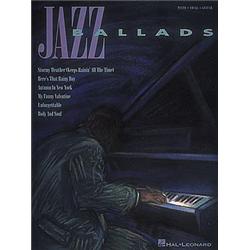
My title is a line from Daniel Deronda, from a conversation between Daniel and Gwendolen in which he urges her to look past the egotistic gratifications of performance (inaccessible to her, as she has discovered, because of her “middlingness”) to the other values of music as “private study.” As a long-time amateur pianist, I appreciate his suggestion that our private efforts are a way of paying tribute to musical excellence, a way, also, as he says, of preparing “to understand and enjoy what the few can do for us.” His sentiments give some dignity to my laborious attempts at the Rondo alla turca this evening! And I think he is right that playing privately, however badly, is a gesture towards something we believe in as good and beautiful, even aside from the intrinsic value of applying ourselves to something challenging and learning, if we are industrious, the rewards of getting a little bit better at it and maybe even, if we are lucky, approximating something good and beautiful ourselves.

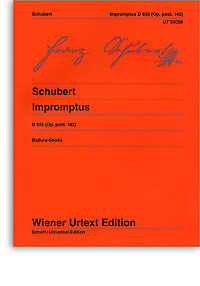
I stopped taking piano lessons when I realized I had to decide between really taking music seriously and accepting myself as a dabbler, but I’ve never been sorry I learned to play–and not just because my former teacher was and is a kindred spirit and one of my favourite people in the world. Music has always been an emotional outlet for me, and over the years, as it turns out, the piano has been an essential accompaniment to all the major (and minor) changes in my life. As a moody adolescent, I channelled all kinds of angst through my family’s old Heinzman upright. After several years away from the keyboard, as a homesick, insecure  graduate student at Cornell, I took regular refuge in a practice room in the basement of the music building and rediscovered not just the challenge and pleasure of playing but also some important part of myself that helped me stand up to the intellectually intimidating environment I found myself in. I also, not incidentally, could eventually give quite a creditable rendition of at least one fabulous Schubert Impromptu.

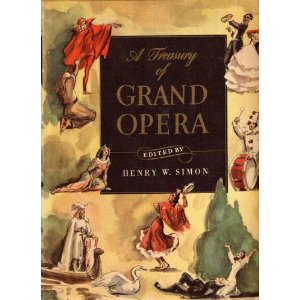
Then I became the accompanist in my family life: my husband and I share a fondness for the great songs of Cole Porter, the Gershwins, and Richard Rodgers, and later expanded our “songfest” repertoire to include old movie classics like “Laura” as well as sappy 70s hits like “The First Time Ever I Saw Your Face.” We used to soothe our infant son after bathtime (which he hated) with rousing renditions of “Di quella pira” (which may explain both his perfect pitch and his aversion to opera), and now our daughter loves to gather with us for carols at Christmas. On those rare occasions these days when I’m home quite alone, I sometimes treat myself to a browse through some old favourites, especially my beloved Treasury of Grand Opera, and almost every summer I vow (as I have again this year) to use some of my ‘down’ time to achieve at least some approximation of mastery over a real piece or two. Our library of music books is relatively small, but I consider them every bit as essential to what Nathan Schneider has just memorably discussed at Open Letters as my “memory theater” as the novels, memoirs, histories, and other genres in the collection. A lot of them turn out to be too old to find images of online–and that, in itself, is one reason I’ll continue to cherish them.

What about you? Do you have music books you cherish, or musical habits that are your own form of “private devotion” to the good?

Munro’s Books

I’m still on vacation in Vancouver, though I head back to Halifax tomorrow. Obviously, I haven’t had much time for blogging–in fact, I just spent two days in Victoria, at the elegant Empress Hotel, where they are far too elegant for wireless and so I went without the internet for as long as I have in ages! I was too busy playing sentimental tourist to notice, really, though it was odd not to be able to look things up when they occurred to me.

My trip has not been without benefit to my life as a blogger, though, because I am coming back with some good new reading material, mostly thanks to a long stop in Victoria’s amazing “indie” bookstore, Munro’s Books. I can’t think of a better use for a blog post than to put in a plug for them. What a treat it was to browse shelves crowded with such a fine selection; it was particularly notable to me, after being limited often to Coles and Chapters in Halifax, that they carry what I think of as the “catalogue of the recent past”: not just the blockbuster bestsellers and the latest releases by big name ‘literary’ authors, with a selection of ‘classics’ to round things out (and really, for all the miles of shelf space at Chapters, that’s still about what you find), but writers’ back catalogues and interesting works that are no longer new releases but haven’t, after all, expired, as you might think from looking for them elsewhere. Just as an example, they had about eight titles by William Boyd (whose remarkable Any Human Heart I reviewed a while ago), and about five by Hilary Mantel that predate Wolf Hall (I bought Beyond Black). Sure, you can usually get ahold of these older releases through Amazon (or Chapters online), but I like to take a look at books when making my selections, a luxury I have often had to forego in recent years. It was difficult to limit myself to three books (my other two, after much deliberation, were Anne Enright’s The Gathering and Penelope Fitzgerald’s The Bookshop), but I had to keep in mind that I would be packing and carrying them on the bus and ferry back to Vancouver and then stuffing them into my suitcase to come home as well (along with all the Kidsbooks purchases). That’s why I didn’t get, for instance, Mark Helprin’s A Winter’s Tale, or Laurence Durrell’s The Alexandria Quartet, or . . .

Anyway, I’ll be home soon, with a few books and lots of memories. I have to say that a particularly fun, and particularly nostalgic, part of the trip to Victoria was a visit to Miniature World. This little museum was a childhood favourite, and the most remarkable thing about going back after a gap of probably 30 years is that it doesn’t seem to have changed at all. The displays, including a whole series of war scenes (under the heading “Fields of Glory”), a cross-Canada model train, several scenes from Dickens, and a great collection of doll houses (with all kinds of working lights and fireplaces and other moving parts), are the work of dedicated amateurs, as is evident in the hand-done calligraphy signs on the exhibits. The carpets are dingy, the ceilings are low, but the glass is so clean you frequently foget it’s there and bang your forehead on it as you lean in trying to see all the astonishing little details, done with so much loving care. In its own quirky way, it’s just as moving as the great hall of totem poles in the Royal B. C. Museum.

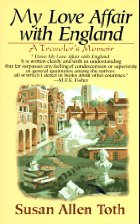
Being and Travelling: Susan Allen Toth, My Love Affair with England

I’m currently on holiday in Vancouver, the beautiful city in which I had the great good fortune to grow up. I have more or less reconciled myself to being unable to live here myself, but coming home to visit is always a mixture of pleasure and poignancy for me. Walking the sea wall around Stanley Park, or even just coming around the crest of the hill near 16th and Alma and seeing the skyline come into view, with the mountains rising behind it and the lush trees in front, I feel the truth of George Eliot’s evocative passages about the landscapes of our childhood, from The Mill on the Floss, for example:

The wood I walk in on this mild May day, with the young yellow-brown foliage of the oaks between me and the blue sky, the white star-flowers and the blue-eyed speedwell and the ground ivy at my feet – what grove of tropic palms, what strange ferns or splendid broad-petalled blossoms, could ever thrill such deep and delicate fibres within me as this home-scene? These familiar flowers, these well-remembered bird-notes, this sky with its fitful brightness, these furrowed and grassy fields, each with a sort of personality given to it by the capricious hedgerows – such things as these are the mother tongue of our imagination, the language that is laden with all the subtle inextricable associations the fleeting hours of our childhood left behind them. Our delight in the sunshine on the deep bladed grass today, might be no more than the faint perception of wearied souls, if it were not for the sunshine and the grass in the far-off years, which still live in us and transform our perception into love.

Halifax has its charms (as shown, for instance, in my recent post about the Public Gardens) but they generally still seem to me slim compensation for the wintry grey drabness of the city for most of the year, and for the less tangible but more difficult effects of living apart from family and old friends, and from the landscape that is laden with the “subtle inextricable associations” of my past. It’s nourishing to my own “wearied soul” to be here again: sometimes I feel as if I’m literally drinking in the city through my senses, recharging some important internal source of energy.

At the same time, I can’t really imagine living here any more. It has been too long: my life has changed too much, and I have too. So being in Vancouver also has a disorienting effect, as I follow the footsteps of my former self and try to relocate myself in the world. Being in Vancouver now feels oddly like hanging around on the road not taken: it’s a beautiful place, but it isn’t my place.

I have been thinking about these issues because last year, instead of coming to Vancouver, I went to England. I hadn’t been there since 1986, and so the trip provided its own measures of how far I have travelled personally, internally, in the meantime. But mostly it was just exhilirating to step into a landscape that was not part of that cycle of  nostalgia and regret, and to regenerate or recharge different enthusiasms–some, admittedly, with their own roots in my past (like my childhood obsession with Tudor history) but also literary interests that were no part of my intellectual life in 1986 (when I had no intention of majoring in English) and a more open-ended pleasure in seeing different people and places, in seeing a much wider and faster current of life than usual.

I felt so renewed by last year’s expedition that I had initially hoped to return to England this year–so when scanning my parents’ vast and remarkably various book collection, my eye was drawn to Susan Allen Toth’s book My Love Affair with England. There aren’t a lot of personal memoirs in my library–or my parents’, for that matter. The memoir usually strikes me as a strange genre: unless you are someone who has a real claim on our attention, why would you presume to tell us quite so much about yourself? Why should I be interested in you? And yet (as blogging certainly demonstrates) often we are interested in other people’s lives, either because for some reason they resonate with our own or because their differences engage us, or sometimes just because they are good writers and storytellers.

Toth is a good storyteller. One thing she recounts in My Love Affair with England is in fact her own discovery of the value of that ability. Leading a group of students on a study trip to England, she finds herself answering their questions about herself:

those story-telling nights with my students were my real beginning as a writer. Until they gave me their eager attention, I had never realized that anyone might be interested in the anecdotes that seemed to form a narrative of my life. I was surprised that they could sympathize with stories that troubled or haunted me and that they could laugh at the odd or humiliating or ironic details I could now, at some distance, finally see as funny.

Just as the first paragraphs of this post don’t tell you anything, really, about Vancouver, considering the city instead in the context of my own life, Toth’s book is not really about England but about her feelings about England, her experiences of it and the personal significance of her travels there. She begins, in fact, with a series of disclaimers reminiscent of those often found in 19th-century travel books by women*: “I do not think of myself as an authority on contemporary English life,” she says, for instance:

My only gudes to society, politics, or economics are what I observe, read, or gather from casual conversations in gardens, on walking trails, in the greengrocers, or at bed-and-breakfast tables.

“Nor,” she adds a bit later, “am I a scholar of English history. How could I pose as one when I shamefacedly doze over almost any definitive volume of economic, social, military, or political commentary?” She has written the book not to elucidate the kinds of questions addressed in such “definitive” volumes, but to answer the question, “Why England?”:

What does it offer that I lack in my life? What in my background . . . has made England my country of choice for pilgrimage? What have I found there, what have I learned, what has nourished me?

In the book, Toth does not set out an explicit response or conclusion about these questions. Instead, she shares stories of her visits, from her earliest visit as a young college student in 1960 to a difficult stop-over on her honeymoon (her first husband’s lack of interest in her England foreshadows their eventual divorce) to many subsequent trips on her own and with her second husband, her daughter, and her mother. Interspersed with these more directly autobiographical chapters are themed ones: food, gardens, sheepdog trials. I particularly enjoyed “Up the primrose path,” about the English “national pastime” of walking and some of Toth’s own favorite rambles:

The joy of most English paths is how quickly anyone can feel alone on them. Just being able to disappear from a busy road between high hedgerows is wizardry. One moment, a straight cement line, whizzing cars and thundering lorries, acrid fumes and oily smoke. Another moment, a quick turn of the path, violets poking up through a hawthorn-and-hazel hedge, the gray flash of a disappearing rabit, and the tantalizing scent of unseen wild roses.

The best paths usually lead to the most remote places. After negotiating the hairpin curves of Hardknott Pass in the Lake District, James and I decided to unwind by taking a walk to Devoke Water, a small mountain tarn not far away. . . . Our path turned out to be a rocky track, an easy half-mile walk that took us gradually over a slight incline and then down to the shores of the lake. The track cut across the top of a moorland that seemed absolutely deserted, not even any sheep drifting over its barren slopes. It was late September, and under heavy gray skies, the grass looked almost brown, and the empty fells as if they had already fallen into a winter sleep.

Devoke Water lay in a shallow bowl formed by treeless gray-green fells. The surface of the lake was absolutely still, a steely gray that seemed a mirror image of the lowering sky. An old stone boat house, which seemed abandoned but was securely locked, looked as ancient as the landscape to which it now belonged. . . . Since dusk was just beginning to shadow thehills, we did not try to walk around the tarn. It looked forbidding, hidden away from the ordinary world among these treeless fells, bereft of any living presence. Slowly we followed the rutted lane back to our car. We did not talk much. Devoke Water had cast a spell, and neither of us wanted to break it.

It’s not showy writing but it’s good reading, clear, detailed, and evocative. Overall, though, the book is mostly about Toth; because she doesn’t offer much information or context about the sites she visits, my interest in her chapters ebbed and flowed depending on how interested I already was in their topics, or in how caught up I got in her personal life: England provided the occasion for building a relationship with her. Here I had a head start, as one reason her book is on the shelf here is that she was my mother’s college roommate (and remains a friend). Thus there are already points of connection between her life and mine, though none that make an explicit appareance here. Still, it’s easier to overcome the memoir skepticism when it’s someone you know, if only remotely. She’s also an English professor, so there’s some affinity there too, in the literary interests that underwrite some aspects of her ‘love affair’ with England. But I think I would have enjoyed this book anyway, for its companionable tone and lack of pretension, and for its interest in the ways places in the world are always, also, places in our lives.


*I know this because I am working with a PhD student doing very interesting analyses of travel writing by 19th-century English and German women travellers in Italy.
Happy Mother’s Day from Victorian Halifax

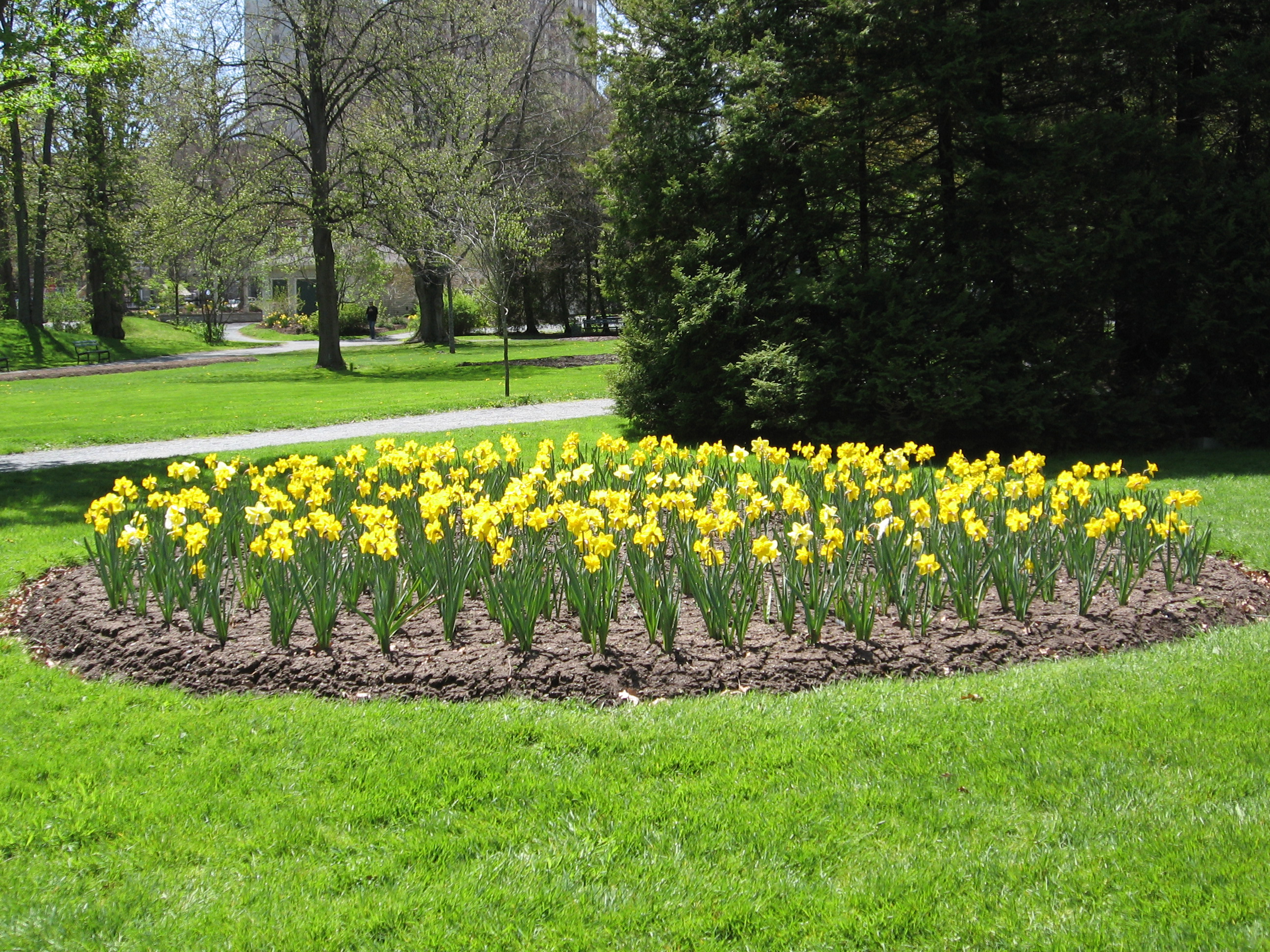
From the Novel Readings Archives: A bright, if cold and breezy, outing this morning to my favorite place in Halifax, the Victorian Public Gardens, inspires this re-post. I went with my lovely daughter, as a Mother’s Day treat. At this point the flowers and trees are not yet in full bloom, as they are in the pictures below, but the bulbs have opened and it’s exhilirating, after another long winter, to see the signs of spring.


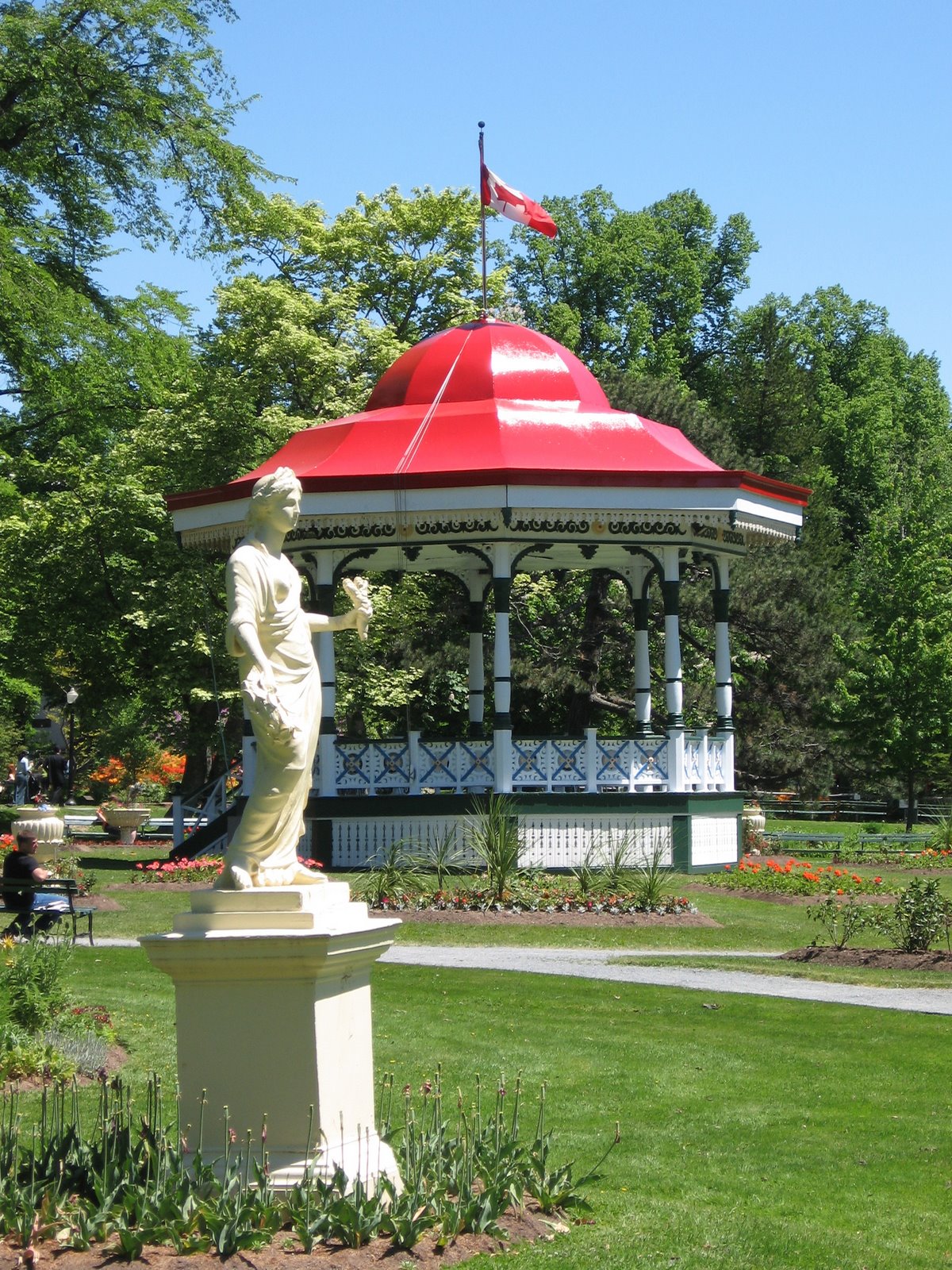
First opened in 1867, the Public Gardens feature the most spectacular rhododendrons I’ve ever seen, as well as formal flowerbeds, a gazebo (with band concerts on Sunday afternoons), a large duck pond (with abundant ducks) and all manner of fountains and statues. It’s a green oasis in the middle of downtown: you can barely hear the hum of traffic, and as you stroll the well-kept walkways (no dogs, no joggers, and no bicycles allowed!), you can easily feel as if you have stepped back into a Victorian fantasyland.

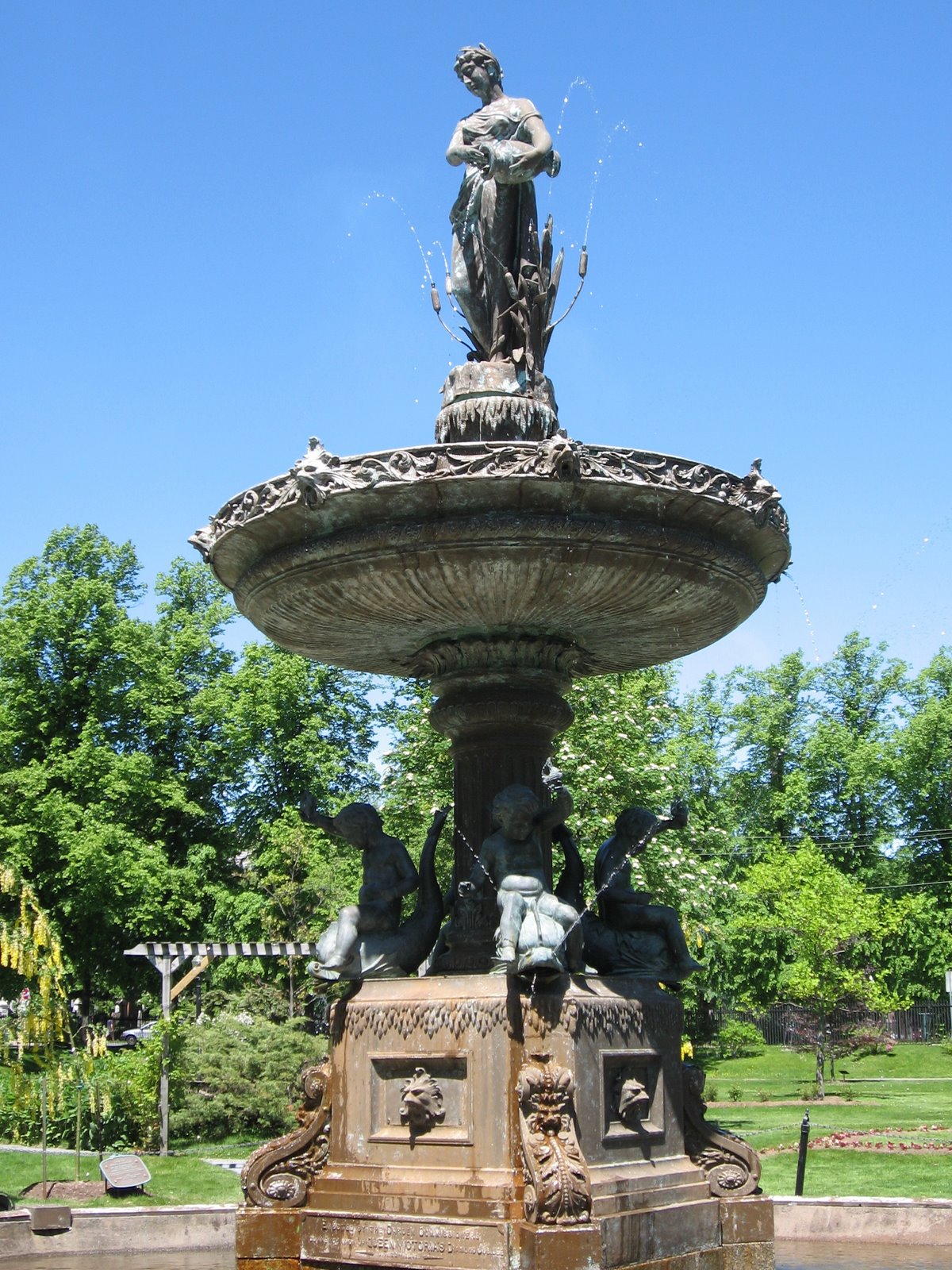
There’s a Boer War memorial fountain, and a fountain commemorating Queen Victoria’s Diamond Jubilee. Even the swans are named ‘Horatio’ and ‘Nelson.’

Diamond Jubilee Fountain
Horatio (or Nelson)

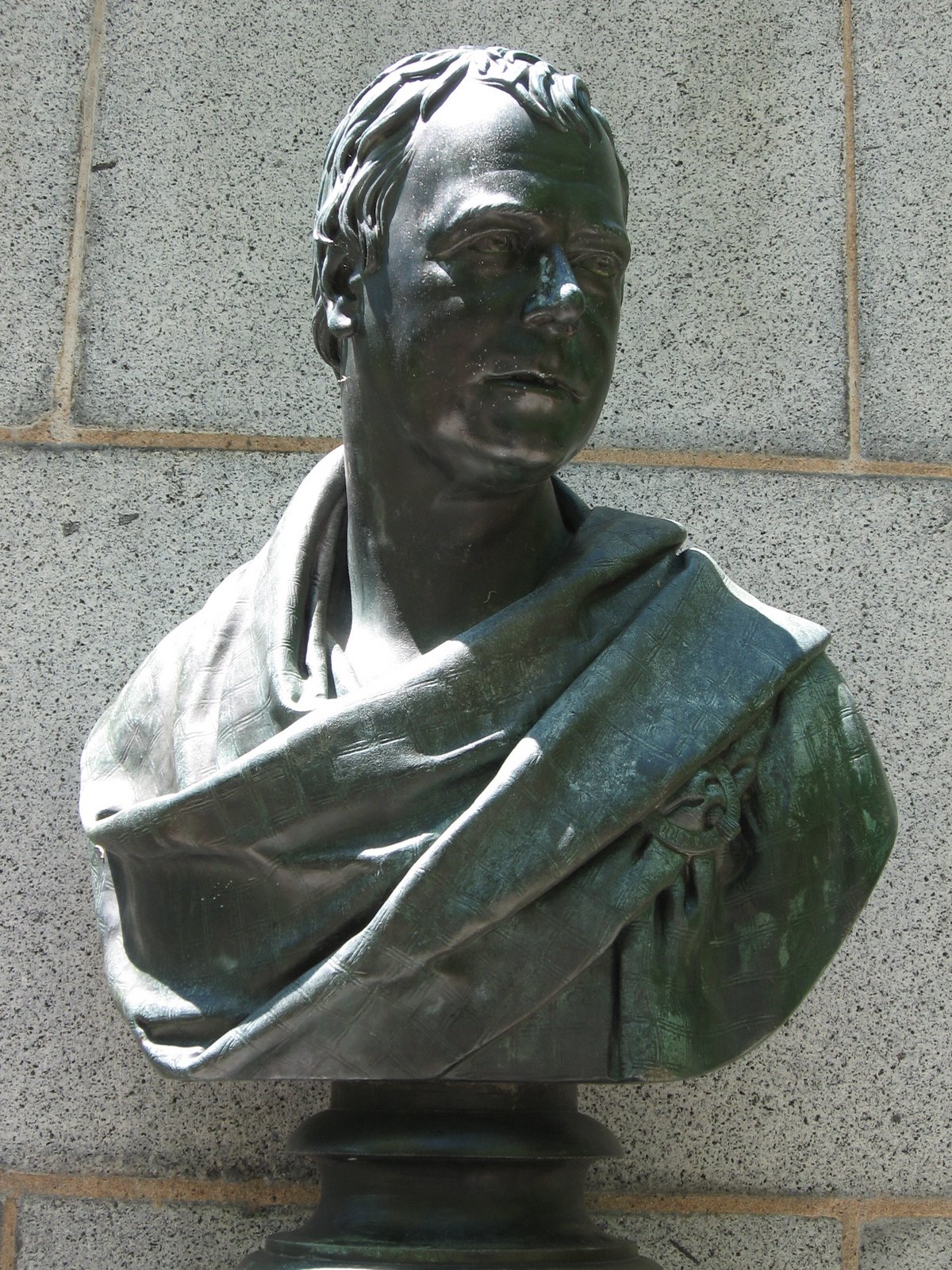
When Hurricane Juan struck Halifax in 2003, the Public Gardens were hit hard (though not with quite the devastating results seen at nearby Point Pleasant Park, which lost an estimated 70% of its trees). Since then, the Gardens have been beautifully restored. Here are a couple more pictures from [last year’s] trip, including a shot of the bust of Walter Scott that used to be right outside the front gates (during the restoration, it was relocated to just across the street, near the statue of Robbie Burns–we’re not called New Scotland for nothing).

Sir Walter Scott

Robbie Burns

Massive Rhododendrons

Victorian Gazebo

A Victorianist in Halifax today.

Happy Mother’s Day!

Saturday Afternoon at the Opera

Joan-Sutherland-005I’ve been an opera lover at least since I was five years old, when I received this LP of highlights from the Sutherland-Bergonzi La Traviata as a birthday present. Of course, I must have been primed for this gift by hearing opera around the house: both of my parents are also opera lovers, and my father in particular cherished the Metropolitan Opera’s Saturday afternoon broadcasts. One of my first school writing projects was a guide to Lucia di Lammermoor (below); see my pithy summary of Act III? 🙂
A major life highlight was going backstage at the Vancouver Opera to meet La Stupenda in person–hence the personalized autograph on the record cover, which is one of the items I would probably take risks for in the event of a fire. I was nine at the time and so overwhelmed by the event that I completely blew off Richard Bonynge, who very courteously hailed me as we progressed down the corridor and offered his autograph as well. “OK, if you want,” was my careless reply–but I suppose he was accustomed to being Mr. Joan Sutherland by then. (Clearly recognizing his place in my pantheon, he signed the back of the record.)LuciaActIII

Predictably, as a teenager I did rebel for a while, not so much against opera, as against other people’s interest in it: I remember sulking about the need to tip-toe around on Saturday afternoons and being obstreperous about being put in charge of recording the occasional broadcast when my parents had to be out. But I (we!) got through that phase, and then I started working part-time at a classical music store, where my operatic know-how was actually an asset (mandatory brush-with-celebrity anecdote: when Goldie Hawn came in the shop–she and Mel Gibson were in town filming Bird on a Wire–I helped her pick out the Bjoerling-de los Angeles La Boheme when she said she was looking for something gorgeous). Initially I was ‘hired’ to do inventory for specific record labels, for which I was ‘paid’ in store credits. My parents are currently storing the archive of LP box sets I accumulated before I was promoted to minimum wage and starting saving money instead.

When, as a university student, I moved into my own apartment, one thing that came with me was the Saturday afternoon ritual. I still have, as a matter of fact, a stash of cassette tapes of broadcasts from that period, including a superb Rigoletto with June Anderson as Gilda. But I reached the pinnacle of my opera-loving career when, as a graduate student at Cornell, I had season tickets to the Met, for the Saturday afternoon performances, no less. I was able to do this because my sister was living in Mamaroneck (you NY types will know just where that is on the Northern Line), so I could take the long bus trip across the Catskills (coming from BC, I didn’t recognize them as mountains the first time) and stay with her for the weekend. I’m not sure there’s a better feeling than coming out of Grand Central Station knowing that you have all morning to roam the city and all afternoon to spend at Lincoln Center–even if it was about $10 to get a coffee at intermission.

Now I live in a city without a full-scale opera company, though our music department puts on some small-scale productions, and now we too are the beneficiaries of the brilliant live broadcasts from the Met. I haven’t been to one here yet, though: apparently the demand is so strong you have to show up at least a couple of hours in advance, and Saturdays are typically busy enough for working parents. Having children of my own, in fact, has changed my understanding of what those broadcasts must have meant to my parents: like reading, listening (at least in any serious way) becomes a rare thing when your children are small. That said, our children too are growing up with opera. We used to soothe–or at least distract–our son after baths (which for some reason he found very traumatic as an infant) by getting out my beloved books of opera songs for voice and piano and going through our favorites as loudly as we could, and my daughter has already sat by and comforted me as I sob my way through the Zeffirelli film of La Traviata. Sometimes it’s best, though, when everyone else is out and I can revert to my childish self. Today, as the spring sunshine streamed in the windows, I took The Art of the Prima Donna from the cabinet and spent my own Saturday afternoon happily at the opera.

I know operatic voices are profoundly personal and not everyone loves Sutherland’s rich tone or joyous facility. They are wrong of course, but that’s OK: some of my best friends (my grandmother, even) have been Callas fans. But to my ear, nurtured on her voice from childhood, there’s just nobody else, at least for certain repertoire. (For Puccini, I’m a Price fan, except when I’m a Caballe fan.) Also, I’m not altogether satisfied with this choice of clip, which doesn’t altogether convey the magic. Still, from me to you, through the magic of YouTube, enjoy.

Christmas Music

For me (as for many people, I’m sure) one of the things I like best about the holiday season is its music. I grew up in a house full of all kinds of music, and for about six years I worked part time (and sometimes full time) in what we then called a ‘record’ store, The Magic Flute, which specialized in classical music. Getting out the Christmas records was part of an elaborate set of holiday rituals and meals in my family, beginning with our ‘Advent’ brunch the first weekend in December (Eggs Benedict) and culminating on New Year’s Eve (Chicken Florentine and Pêches Flambées, followed by charades and then banging pots and pans on the front porch when we heard the ships in the harbour signal midnight). For probably a decade, somewhere in between these dates my parents hosted a big carol singing party and pot-luck dinner: as their friends are all both musical and great cooks, this was always a joyful occasion! Music was either playing or being played (and sung) nearly all the time, so it’s no wonder that hearing carols now brings back a lot of memories–some more specific than others. For instance, we usually sang ‘Children, Go Where I Send Thee’ driving back over the Lions Gate Bridge from my grandmother’s house in West Vancouver after Christmas dinner (we loved Odetta’s Christmas Spirituals). A highlight of the carol sing event was always ‘The Carol of the Bells’ with all its parts. I used to take Joan Baez’s Noel up to my room when I wanted some quiet time. As a die-hard Joan Sutherland fan, of course I had her Christmas album, and though sometimes I admit her operatic flair is too much for the simpler songs, her version of ‘O Divine Redeemer’ still brings tears to my eyes. (I met her once–but that’s a story for another post.) And of course we had many traditional choral albums, and the Canadian Brass, and Bing Crosby, and Burl Ives singing ‘A Holly Jolly Christmas,’ and a great LP with “Mr Pickwick’s Christmas” on one side and “A Christmas Carol” on the other, read by Ronald Coleman and Charles Laughton (and how fabulous to discover that this is still available! I highly recommend it).

At The Magic Flute, Christmas was a big season, of course. My fellow employees and I used to shudder at the first playing of the Bach Choir Family Carols because we knew we would hear it probably 3000 times before the doors closed on Christmas Eve. The year Kathleen Battle’s A Christmas Celebration came out, it sold like crazy; I recommended it to one woman who came back the next year and sought me out specially to tell me how much she loved it (I love it too, especially its version of ‘Lo, How a Rose E’er Blooming,’ though lately I have been listening more to the Christmas album Battle recorded with Christopher Parkening, Angel’s Glory, which includes what I consider the most beautiful recording of ‘Silent Night’ ever made). One of the biggest issues every year was which recording of Messiah to recommend. Opinions were always divided between ‘original’ and modern instruments; the version with the English Baroque Soloists under John Eliot Gardiner was a big seller. To soothe our nerves during quiet spells, my colleague Mandy and I used to slip on George Winston’s December.

Music is still essential to all holiday festivities, as far as I’m concerned. We got out our current stash of Christmas CDs this weekend. A lot of my old favourites are in the collection, along with ones that evoke holiday memories for my husband (Andy Williams, for instance, and Jo Stafford). We enjoy the Boston Camerata’s Renaissance Christmas and the hyper-traditional O Come All Ye Faithful with the Choir of King’s College, Cambridge; On Yoolis Night by the Anonymous Four will undo any damage wrought by long days at work–or at the mall, which is equally likely this time of year. There are now, too, albums that evoke memories, not of our childhoods, but of our childrens’, such as Loreena McKennit’s To Drive the Cold Winter Away and Sarah McLachlan’s Wintersong. We have rituals of our own, including decorating the tree while listening to Michael Bawtree’s wonderful recording of A Christmas Carol (available only by private sale at this time, as far as I know)–and when we gathered this morning for our own ‘Advent’ brunch, the first thing we did was to put on some Christmas music.

I do think sometimes about the potential incongruity of an atheist embracing Christmas. But then I think of all the sacred music–and art, and architecture–that brings so much aesthetic and emotional pleasure, and I feel reassured that there is no hypocrisy in loving the music even though I do not believe in the specific doctrines it sometimes expresses. After all, when the overall worldview for so long was overwhelming theistic, it is inevitable that art and music should have taken religious form; to turn our back on these great achievements because they belong to a different mentalite is to turn our back on the past simply for being the past. I think, too, of George Eliot’s attitude, expressed implicitly and explicitly in so much of her fiction–that, as she wrote in a letter in 1874, “the idea of God, so far as it has been a high spiritual influence, is the ideal of a goodness entirely human.” I feel the same about the “Christmas” spirit: it’s really just the human capacity for love, charity, forgiveness, and generosity (not to mention reverence, sacrifice, and inspiration) that’s being celebrated, with nothing supernatural about it. The feelings evoked by carols such as ‘Silent Night,’ ‘It Came Upon a Midnight Clear,’ or ‘I Heard the Bells on Christmas Day’ (to mention just a few of my personal favourites) are really no different from the feelings evoked by any beautiful music, and the fundamental ideals of peace on earth and goodwill to men do not in fact require (and may even be hindered by) the specific myths of the Christian tradition. And yet that tradition (as GE acknowledges) for centuries provided a key framework for the development of these ideals (if not their perfect realization–indeed, quite the contrary, as history shows). And so I’m quite comfortable with the secularization of Christmas, which seems to me consistent with the goal of recognizing in ourselves–claiming for ourselves–those qualities most important to making the world a better place. It’s not God who blesses Tiny Tim, after all, it’s Scrooge! Why tie ourselves to the Christian calendar, then? Well, just as Christian traditions were superimposed on pagan and other rituals, so too our modern values and ideas are incorporating old ways and turning them to our own purposes. And the music really is beautiful–so I sing along, rejoicing.

What about you? What holiday albums bring back your fondest memories? Is there a song or a singer you can’t do without at this time of year?

Juvenilia

for Ric–little arms!

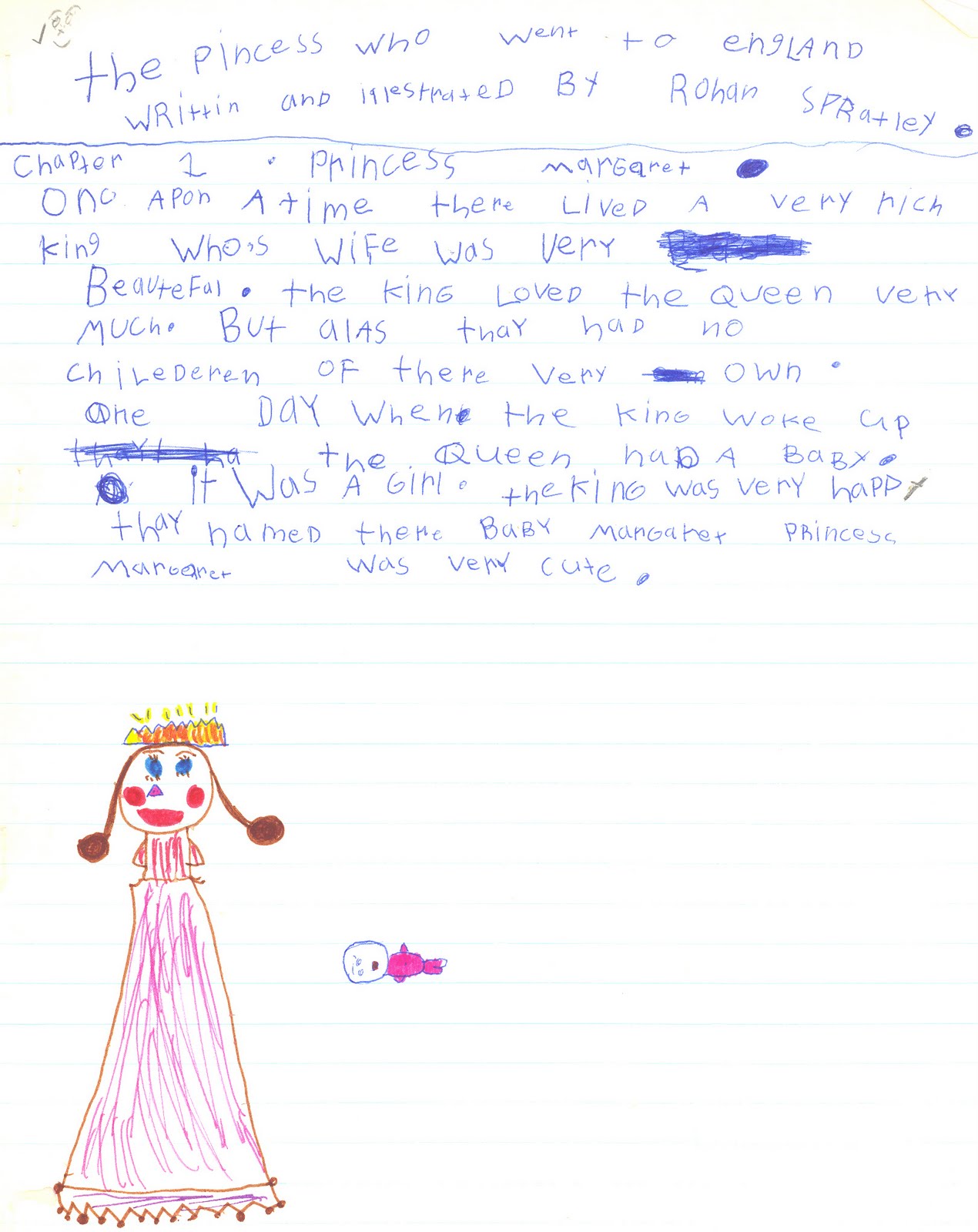
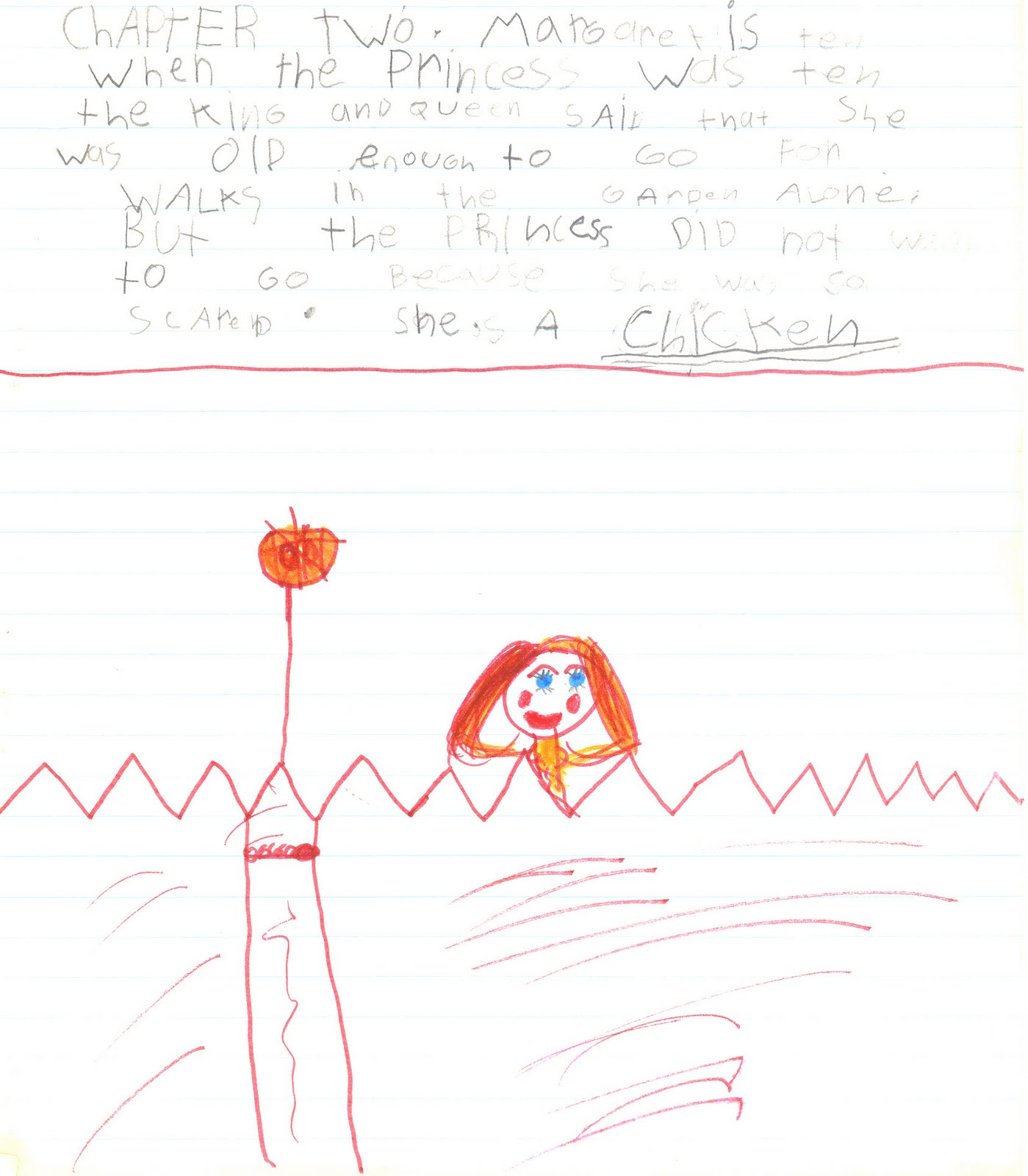
Forget Jane Austen’s History of England. . . Introducing, for the first time ever in digital form, The Princess Who Went to England — also partial, also prejudiced, with even fewer dates, and with a surprise ending!

(technical hint: clicking on the image brings it up full size)


See? I bet you hadn’t anticipated the war. And how postmodern is it to end, and then to end again?

Bonus Feature: Lucia Di Lammermoor in a nutshell:


More real posts soon.

P.S. Princess Margaret is still a chicken; she had a lovely time in England this time too.

Summer Reading

My daughter signed up for the summer reading club at our local public library. She pledged to read at least 20 new books between the beginning of July and the end of the summer. I pledged to match her. Because it was summer, ‘light’ reading was fine. Here’s how we did:

Rohan:

1. Kate Atkinson, When Will There Be Good News?
2. Arthur Conan Doyle, The Hound of the Baskervilles
3. Raymond Chandler, The Big Sleep
4. Lloyd Jones, Mister Pip
5. Dick (and Felix) Francis, Silks
6. Robert B. Parker, The Godwulf Manuscript
7. Nadeem Aslam, The Wasted Vigil
8. Mary Ann Shaffer, The Guernsey Literary and Potato Peel Pie Society
9. Virginia Woolf, Mrs. Dalloway
10. Sarah Dunant, In the Company of the Courtesan
11. Penelope Lively, Consequences
12. Stieg Larsson, The Girl with the Dragon Tattoo
13. Ian Colford, Evidence
14. Louise Penny, Dead Cold
15. David Lodge, Deaf Sentence
16. K. Anthony Appiah, Cosmopolitanism
17. Penelope Lively, Cleopatra’s Sister
18. Daniel Mendelsohn, The Lost: A Search for Six of Six Million
19. Deborah Crombie, Where Memories Lie
20. Joseph O’Neill, Netherland (whew, I’m just squeaking this one in under the wire!)

Maddie:

1. Puppy Place: Princess
2. Princess Power: The Charmingly Clever Cousin
3. Puppy Place: Pugsly
4. Alice Finkle’s Rules for Girls: Moving Day
5. What Every Girl (Except Me) Knows
6. Happily Every After
7. Ivy and Bean Break the Fossil Record
8. Clementine’s Letter
9. Princess Power: The Awfully Angry Ogre
10. Junie B. Jones, Boss of Lunch
11. Judy Moody M.D., The Doctor is In
12. Junie B. Jones Has a Peep in Her Pocket
13. Ready Freddie, King of Show and Tell
14. Mercy Watson: Something Wonky This Way Comes
15. Ready Freddie: The Pumpkin Elf Mystery
16. Junie B. Jones, Dumb Bunny
17. Canadian Flyer Adventures: Pioneer Kids
18. The Magic Tree House: Night of the New Magicians

She didn’t quite make 20, but as she pointed out, she spent a lot of weeks in summer camps that didn’t allow any time at all for reading–which strikes me as interesting and unfortunate, in retrospect. Two weeks were in a science camp, so she learned a lot, and two in a “mini-university” camp, also a good mix of education and fun. The YMCA camp was all outings and swimming; these are both good things, and I know we are all obsessing about keeping kids physically active, but aren’t books important too? I’m sure Maddie would also want me to point out that we are pretty inflexible about bedtimes. But you see, that’s important so that I can get some reading done! And she and I are both proud of all the reading she did.

I enjoyed most of the books I read, but the highlights for me were certainly The Wasted Vigil, Mrs Dalloway, and The Lost. In the Company of the Courtesans and The Girl with the Dragon Tattoo were the low points, the first because it was all show and no substance, the second because it somehow managed to be at once prurient and dull. I’m still thinking about Netherland, which I just finished. I have never thought so much about cricket, before, that’s for sure; until I read it, the only other literary cricket scene I knew was the awesome match in Dorothy L. Sayers’s Murder Must Advertise (I love that scene!).

Escallonia Hedge

Gently they go, the beautiful, the tender, the kind;
Quietly they go, the intelligent, the witty, the brave.
I know. But I do not approve. And I am not resigned.

One of my favourite quiet corners around here is a site called Escallonia Hedge. The name, as explained on the site, refers to the hedges surrounding the garden at Talland House, Virginia Woolf’s childhood summer home. Its author describes it as “a space through which things are meant to be discerned,” an opportunity for “trying to get comfortable with talking about texts in a comfortable but nonetheless what is called a ‘productive’ way. Maybe some dawdling along the way.”

I’ve read Escallonia Hedge since its inception. There aren’t many posts there, just over a dozen altogether, but every one showcases the author’s playful intellect and her delight in words and ideas. Here’s an excerpt, for instance, from a post on “Woolf and the Body”:

I have been thinking lately about Woolf and the body. Woolf is always thought of as being incredibly cerebral—which, no doubt, she was—but always to the point that I think there must be a popular misconception that she somehow rejects the body, does not think it important or take it seriously, just as there is the popular conception that she is somehow of a parcel with figures like T. S. Eliot, or how she must always and only be egotistical, when, really, she has one of the most sympathetic eyes ever.Thinking about this I am of course reminded of a frequently cited passage in On Being Ill, on the body as a pane of glass:

“[L]iterature does its best to maintain that its concern is with the mind; that the body is a sheet of plain glass through which the soul looks straight and clear, and, save for one or two passions such as desire and greed, is null, and negligible and non-existent. On the contrary, the very opposite is true. All day, all night the body intervenes; blunts or sharpens, colours or discolours, turns to wax in the warmth of June, hardens to tallow in the murk of February. The creature within can only gaze through the pane—smudged or rosy; it cannot separate off from the body like the sheath of a knife or the pod of a pea for a single instant; it must go through the whole unending procession of changes, heat and cold, comfort and discomfort, hunger and satisfaction, health and illness, until there comes the inevitable catastrophe; the body smashes itself to smithereens, and the soul (it is said) escapes.”

It just occurred to me as I lay in bed this morning, procrastinating on my papers (actually, not wanting to face the world), that Woolf’s frequent use of metaphors of glass is connected to this. Why is it sometimes that these very obvious things take so long to process or register?

Here’s another excerpt, this one from some commentary on a collection of Woolf’s writings called The Platform of Time:

The satire “JB” I found especially striking: it’s full of very interesting nonsense. It reminds me of how I tried to write at one point because I couldn’t find a sentence or a sense-making group of words that expressed what I thought, only I was writing that way sincerely whereas VW parodies the practice as confusion and excess. The character VW tells the character JB to find a single “image” to express what he means instead of clumping together various descriptors, and then JB tries to figure out what an “image” (simile, metaphor) means! (What is its use; where he can find an example of one; how it’s no good because it’s not GE Moore-ish enough (“how can a thing be like anything else except the thing it is?”).) This in contrast to JB looking at a “male siskin under a microscope” in an effort to compose a poem “in the manner of Gerard Hopkins” (“The siskin’s been dead a week”):

“Seepy, creaking, sweeping, with a creaking kind of beating of the penultimate dorsal jutting out femoral crepitational tail. The siskin whisking round the peeled off mouldy bottle green pear tree rivers. Well, I flatter myself that’s a pretty good poem—all true to an inch.”

Then there’s a big fuss about finding an image for the siskin, which in the end is arrived at by what JB has for lunch: “The siskin lies like—like cold salt roast beef the siskin lies. My word—that does it.” It’s moments like this I feel like saying “Oh Virginia Woolf, you’re the best!” I think the interesting thing about that line “like cold salt roast beef the siskin lies” is that it sounds beautiful but is being a framed in a way that makes it silly, reaching, and untrue. This is always the interesting thing about Woolf’s satirical moments, I think, and why I would say “Oh VW you’re the best”—many of them are a mixture of a form of sympathy and ridicule. Like Samuel Johnson’s satire manqué.

The author, Samantha Li, graduated from Dalhousie in May with first-class Honours in English. She would have begun her M.A. in English at U.B.C. in September. Tragically, she died on July 11, in a terrible car accident. She was 24. Her funeral service was today; I had the honour of being one of those invited by the family to speak at this heartbreaking event. All of us who had the pleasure and the privilege of working with Samantha will always remember her questing intelligence, her self-deprecating grace, her vivacious warmth, and her kindness. She was much loved, and will be greatly missed.

The lines I’ve quoted at the head of this post are from Edna St. Vincent Millay’s “Dirge Without Music.” As Samantha was also an exceptionally talented musician, however, it seems fitting to remember her with music as well. In this video, she is playing the violin; she is second from the left as we watch.