 My fall classes start exactly three weeks from today. I’m pretty well prepared already: both of them are repeat offerings, so although I have changed up the readings (quite significantly, in the case of Women and Detective Fiction, and just a bit in Pulp Fiction) I’m not starting from scratch in terms of either course concepts or course materials. I have been working on the syllabi, schedules, and Brightspace sites off and on for a while, because that’s the kind of task I don’t like to do in a rush and also because when other things I’m working on start to feel too amorphous, it is a relief to do a concrete task that can then be crossed off my to-do list. There’s only so much you can do in advance, though, I find, or you sap the first class meetings of the spontaneity that gives them energy.
I am well aware that I use class preparation as both procrastination and comfort in the summer. I’ve written before about the way my mood often slumps in this season, and though it has been better overall this year — thanks in part to the work but also fun of preparing for and then attending the George Eliot conference in July — I have still sometimes felt the same dreary listlessness coming over me. One factor this summer has been that I haven’t been able to settle into a writing project that excites me. I have nobody to blame for this but myself, which just makes me feel worse about it! I have been experiencing crippling indecision about what to write — a strange inability to commit to any project beyond the immediate demands of whatever book I’m currently reviewing. That I have not been finding reviewing very rewarding recently only compounds the problem. I have really enjoyed some of the books I’ve been assigned over the past couple of years, but this year, not so much; also, I have been finding the space constraints I’m typically working within frustrating, although of course if the book I’m writing about is not particularly exciting it is a relief not to have to spin 2000 or more words about it.
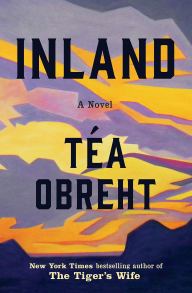 I thought it might help to write for some places that do run longer pieces, so I wrote a review “on spec” for one such venue but they didn’t want it–in the end it maybe wasn’t a great fit with the place I sent it, although the book I chose (Téa Obreht’s Inland) is getting a lot of coverage, as I anticipated it would. I suppose I could (should?) keep trying to branch out. It’s a bit frustrating to feel I’m still relatively invisible as a critical presence, even after writing regularly for the TLS for 4 years, but then except for the piece I wrote on the Lymond Chronicles in 2017 I haven’t really had much room to stretch out there and show what I (think I) can do. I suppose here too I have only myself to blame, though it’s hard to think of what I could do in 600 words that would be particularly notable. There was recently a letter to the editor about one of my TLS reviews–a sort-of correction about an implication (not even a direct statement) in an “In Brief” review of a scholarly book about malaria and 19th-century fiction. That is its own kind of irksome, especially considering there’s basically never been any feedback or conversation around anything else I’ve published there.
Anyway, the question that has been much on my mind is, if not (only) reviews, then what? I am running out of time to answer that question this summer, never mind to have any significant result to show for it. The possibilities go round and round in my head (and in my notes). I can’t even decide whether it makes more sense to just work hard on something and then worry about where I might try to publish it or to focus on a particular publication, or type of publication, and then work up the kind of piece that seems likely to fit there. I am thin-skinned about rejections so it is hard to motivate myself to write towards uncertainty rather than a definite goal, but I’m also terrible at pitching. Further, my sense of pacing has been confused by the years I’ve spent doing writing that can be conceived of, executed, and published in a fairly short time; if I’m not working to a fairly immediate publication deadline I feel unproductive, but writing for and then submitting to the kinds of places I think I might like to appear in requires both confidence and patience.
 This is why I keep returning to class prep! It’s so straightforward, and after all, it does have to get done. Maybe I should think of it this way: the better prepared I am for the term, the more likely it is that I can keep working on some kind of writing project even after classes start. My colleagues and I often talk about the way teaching expands to fill however much time you can (or are willing to) give it: this is something we advise TAs and junior colleagues to guard against. Good, detailed course planning is part of a strategy for achieving better balance between my various professional obligations; it’s not just a diversionary tactic when your other commitments are getting you down. Right? RIGHT?!
I do have some time left, though, before the day-to-day demands of teaching become pressing, as they inevitably will, and I am determined not to spend it all fretting and second-guessing myself. I have one review underway (my mixed feelings about the book lie behind some of my current angst about the reviewing process) and a couple of other things I particularly want to wrestle into shape, not as finished pieces but as plans, before September. One of these is the work I was doing during my sabbatical on Woolf’s The Years and related questions about the “social” novel. I felt really good while I was reading and thinking about that material but so far I haven’t figured out what to do with it. Three weeks: that’s enough time, surely, to do at least that much, especially if I stop brooding and complaining. Here goes!
 Over the past week I read three novels. Only one, Michele Roberts’s
 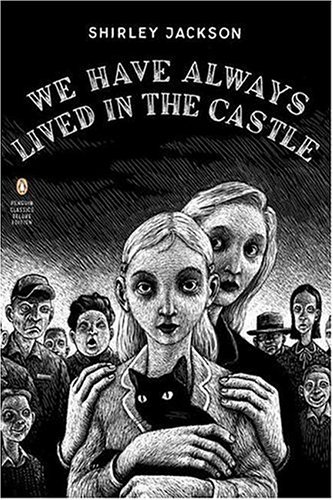 For my book club, I read Shirley Jackson’s We Have Always Lived in the Castle. What a treat that was. It’s like a perverse inside-out fairy tale. In our discussion of it, we got particularly interested in the way it destabilizes our sympathies. There’s the initial instinct to side with the narrator, which of course quickly turns out to be a mistake, except that she is being persecuted–though not unfairly, since after all, she is a murderer. Jackson evokes the horror of mob violence as well here as she does in “The Lottery”: the scene that begins with the fire chief throwing the first stone unfolds in an equally horrifying way–except that at least one of the targets is in no way an innocent victim, and later on, some of the villagers seem to be horrified, in their turn, at what they’ve done. We puzzled over Merricat’s motivation, or rather, over whether she has one, for killing her family. The suggestion seems to be that she didn’t much like being sent to her room without dinner, or in any way being thwarted or crossed. So the murders may be the act of a vengeful narcissist, a spoiled brat gone rogue. On the other hand, maybe there is no reason, which in its own way is even scarier. It’s a brilliantly written little book. I was hooked from the first paragraph, which is a perfect combination of whimsy and menace:
 I expected Sarah MacLean’s The Day of the Duchess to be a lot of fun too, but I really didn’t enjoy it and ended up skimming the last third or so of it just to get to the end. I have liked some of MacLean’s romances a lot, including The Rogue Not Taken, the first one in this series, but this book tilted too far towards the “feels” for me: it’s all angst and yearning, without any frolicking. I’m not necessarily saying it isn’t well done. It’s just that my own taste in romance tilts instead towards comedy. Also, more than I remember noticing in MacLean’s books before, The Day of the Duchess is full of the kind of writing that seems meant to force feelings on you, rather than allow you to arrive at your own reactions–lots of fragments, and lots of single line paragraphs, devices which to me almost always backfire: rather than increasing the impact of the line, they make it seem artificial, especially if the trick is used over and over again. I’ve been trying to think if there are any consistently serious romances that I really like. Laura Kinsale’s Flowers from the Storm is the only one I can come up with. Blame my inner cynic, which, as I’ve said before, makes me accept an HEA only if it doesn’t take itself too seriously.
 My version of “otherwise” has
 I have also appreciated the way reviewing has expanded my reading, particularly when the books are suggested by other editors rather than hand-picked by me to suit my own known tastes and sensibilities. I would point, for example, to the increase in Canadian titles I have read since taking on some commissions for Quill & Quire and, more recently, Canadian Notes and Queries, though the best example of a writer I would probably never have discovered on my own but loved would be
 You’d think from my recent blog posts that I wasn’t doing anything but teaching these days! That’s not quite true, but like a lot of people I know, I’m finding myself too distracted to get a lot of “quality” reading done in my leisure time – what ability I have to concentrate hard I’m expending on work, and on books I am reading for off-blog reviews that have deadlines. The rest of the time my reading alternates between anxiety-inducing news stories and pleasantly diverting romance novels.
 I have some completed reviews that should see the light of day in the near future. One of those is my TLS review of Danielle Dutton’s Margaret the First (which I loved); another is my Quill & Quire review of Jean McNeil’s The Dhow House (which is strange and uncomfortable and gripping); and the last is my review of Yasmine El Rashidi’s Chronicle of a Last Summer, which I wrote last summer and is expected to show up, at long last, in The Kenyon Review Online in early March. Though there are some down sides to all this reviewing, one definite up side is that it has made me a bit more sure-footed as a critic, including with books that are not obvious “fits.” I can’t really say if I am developing my critical voice or style: I’m not deliberately trying to do anything other than what I’ve always done here and at OLM, which is find the best way to express whatever I think about the book. I don’t focus on answering “should I buy this book or not?” — because that’s the kind of review I find the least interesting to read — but instead I try to figure out what kind of book it is and what’s the most interesting conversation for me to have with it or about it. Academics (myself included) often hesitate to get into conversations outside their official area of expertise: this is an anxiety I have largely overcome when it comes to fiction, partly because blogging loosened me up so much as a reader and a writer, and partly because the more I teach, the more I’m aware that my expertise is as a reader — it’s my skill and experience at reading, as much as or more than my body of scholarly knowledge, that equips me to do this kind of criticism.
 As for my romance reading, I’ve been rereading some favorites, just for the good cheer (Georgette Heyer’s Devil’s Cub, for instance, and Tessa Dare’s Any Duchess Will Do), but I’ve also read a scattering of new ones. I have all of Courtney Milan’s Brothers Sinister novels but hadn’t gotten to
  I read Eloisa James’s Seven Minutes in Heaven and thought it was fine — as I mentioned on Twitter, I especially appreciated the heroine’s competence, which is a quality not often portrayed as attractive, and I enjoyed following the character through to their HEA. I also read Fool for Love, which I chose somewhat at random from the ebooks the library had available: I liked the set up but was a bit let down by the conclusion, for reasons I won’t give in case they are spoilers! I have yet to really fall in love with one of James’s novels. They seem very competent and usually keep me interested to the end, but they don’t make me laugh the way Loretta Chase’s do, and I don’t find them as entertaining as Tessa Dare’s (which seem more sprightly, somehow) or as touching as my favorite among Mary Balogh’s. Maybe I haven’t found the right one for me (not all of Dare’s work well for me either, after all).
 Now I’m rereading Ruthie Knox’s Truly: I liked it the first time, partly for the beekeeping ‘neepery,’ and it’s holding up well on a reread. I am starting to feel a bit restless, though, as if it’s almost time for me to read something else again. I picked up Lillian Boxfish Takes a Walk on a recent trip to the bookstore: it looks like it might be a good intermediate step between light and really serious reading.
 September is here, which means that even though technically it’s still summer, it feels like fall. From now on, every nice day is to be cherished and even the sunniest Sunday will be under the shadow of Monday’s impending classes — though not quite yet, because my first class meetings of the new term aren’t until Wednesday. And as it happens, I will be able to wind up my summer without too much angst: yesterday I realized that right now, though as always there are plenty of things I could be doing, there’s really nothing I must be doing. All the writing I’d promised has been sent along to editors; my courses are prepped, including handouts, lecture notes, and slides for the first day(s); other odds and ends of administrative tasks have been completed. I suppose this is my reward for not really taking a vacation: though I did take it easy when I could, I didn’t travel, and I was in my office almost every weekday getting things done. As a result, I will head into the last long weekend of the summer without either the ambition or the pressure to be working.
 I had intended to create another book club site, probably for The Mill on the Floss, but in the end the time that would have gone into this project went instead into doing more book reviews than I had anticipated. One of my more general goals has been to get more experience and also more recognition for my criticism by writing for a wider range of venues. Because reviews are usually commissioned rather than pitched, I wasn’t sure quite how to do this, but I reached out to a couple of editors and was contacted by a couple of others, and in the end I was kept fairly busy! I consider this time very well spent for a number of reasons. First, I read and thought about a lot of books, some of them ones I would probably not have sought out if left entirely to my own devices. Then, in addition to the intellectual and literary benefits of engaging with a wide range of books, I had to work to deadlines and within space constraints set by other people, and also work with their editorial feedback. I cherish the freedom I have at Open Letters, but sometimes it paralyzes me a bit as I look for “just the right book” to review. I also think my colleagues there are among the very best editors around, but it’s bracing to venture outside, if only to find out what else I might learn. And I do feel that I’ve learned a lot this summer, partly about the genre of reviewing, and partly about my own writing process. I had hoped that writing more and faster would make me, ultimately, a more confident as well as a more widely competent writer, and I think it has.
 I actually hadn’t intended to read The Story of the Lost Child. By the time I finished
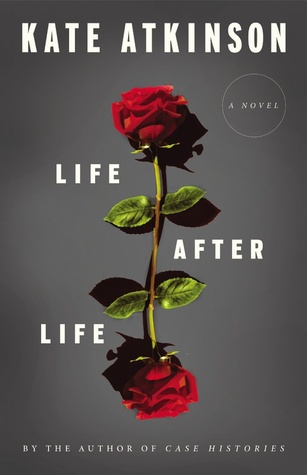
 I began my annual look back at 2012 with my small contribution to the Open Letters
 Novel Readings