 It’s not that the topic of my classes this week is uncertainty, exactly, or that there is anything particularly uncertain about this week—although I suppose that depends on where you’re looking, as nationally and globally there is plenty of unease to go around, while on campus, as the university shapes and shares its plans for coping with a massive budget shortfall (created in large part by heavy-handed federal decisions about international students, on whom universities have unfortunately come to depend because of decades of inadequate provincial funding) we are all wondering just how bad it will get. These are the external contexts for my classes, but by and large I try not to focus on them when I’m actually in the classroom, where persisting with what we find interesting and worthwhile to talk about seems like one way to make sure we uphold our values in the face of all of this.
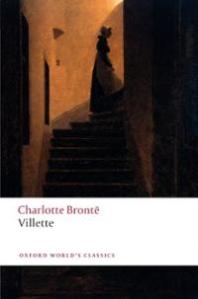
So why bring up uncertainty? Because in Victorian Women Writers this week we are finishing up our work on Villette, and more than once in class I have acknowledged my own uncertainty about what exactly is going on in this strange, brooding, gripping novel. As I said yesterday, I have pretty clear interpretive ideas about most of the novels I assign, which is not to say (I hope) that my teaching is all about coercing students into seeing things my way. What it means is that I have a sense of how things add up, of how form contributes to or reflects content, of how details are parts of wholes. This still leaves plenty to be discussed, but overall we usually arrive at a sense of what the open questions are, or of what some alternative (but still basically unifying) readings are.
With Villette, though, I find that kind of clarity or unity really elusive. Lucy herself is such a slippery narrator, for one thing, but typically with an unreliable narrator we end up with a reasonably clear sense of the two stories they are telling, the one they mean to tell and the other one they reveal as they show us who they are. With Lucy, it is never really clear why she is so coy with us about some things while being almost excessively forthcoming about others. If it’s a novel primarily about the effects of repression, then why does she freely recount all the times when she really lets loose? If it’s a novel about a struggle for female agency, why does she make such a point about being by nature inert, and why does she seem to respond so well to being pushed around, including by her eventual love interest? If it’s a novel about asserting Protestantism or Englishness, then why does Lucy love (if she does) a Catholic and settle abroad? If these oppositions are reconciled over the course of the novel, why does it not have a happy ending? Etc. There are many complex and sophisticated critical analyses of Villette, some of which we are reading for the graduate seminar version of the course, and they say lots of things I find smart and convincing but they rarely leave me thinking “OK, that makes sense of it all.” (The ones we’ve read this term focus on national identity, religion, theatricality, and queerness—one highlighting Lucy’s resistance to ‘compulsory heterosexuality’ and arguing that she is trying to find an alternative relationship between men and women, such as being a “female brother,” another arguing, counterintuitively, for the ending of the novel as a rare instance of “queer joy.”)
 The main thing I’m thinking about, however, is not so much “what is the meaning of Villette?” (though if you have a favorite essay or theory about it, I’d love to know!) as “what is the role of uncertainty in pedagogy?” I don’t think of myself as a particularly authoritarian teacher, but in general I think it makes sense to acknowledge that I am a teacher because of my expertise; shouldn’t I act and talk as if I know what I am talking about? On the other hand, I don’t think any interpretation is definitive; if it were, our whole discipline would operate completely differently! I’m always so amused by Thurber’s story “The Macbeth Murder Mystery,” which concludes, tongue in cheek, with its wry narrator promising to “solve” Hamlet. Literature can’t be “solved”! Books worth paying attention to are layered or multifaceted; they look different or mean differently depending on how we approach them. I often explain literary interpretation to my first-year students with an analogy to the transparencies used to teach anatomy: each question or approach draws our attention to specific features. Just as all the parts and systems of the body cohere, interpretations have to be compatible to the extent that they can’t ignore or contradict facts about the text, but they do not replace each other or rule each other out. This means, of course, that it is fine that the articles I’ve mentioned illuminate issues in Villette without satisfying every question I have about the novel.
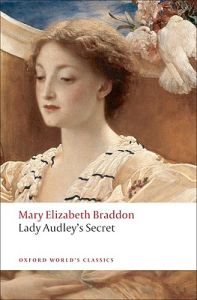
I like the uncertainty I feel about Villette. Some novels feel uncertain to me in a different, less interesting way. Lady Audley’s Secret, for example, I think is genuinely undecided about whether Lady Audley is a villain or a victim. I have come to consider this a genuine weakness in the novel, evidence of inadequate care or thought on Braddon’s part, although another way to put it is she is just not that kind of a novelist, or Lady Audley’s Secret is just not that kind of a novel—it entertains, it provokes, it surprises, but it is not underwritten by a consistent concept or idea. It is incoherent about its themes . . . but maybe that only matters to someone trained and committed, as I am, to interpret fiction with that as a priority.
 Villette, on the other hand, feels uncertain by design. It is destabilizing. Our confusion feels like part of the point. Maybe that is the underlying unity of the novel! Maybe there is no ‘right’ way for Lucy to be, to act, to love, to live, and so the novel, by immersing ourselves in her struggles, is just replicating them formally. “Who are you, Miss Snowe?” demands Ginevra Fanshawe at one point, with exasperation: aren’t we asking the same question, right to the very end? Why should unity be the end point, even for a novel that seems to be some kind of a Bildungsroman? I do wonder, though, why I am willing to give Brontë so much more credit than Braddon for the artfulness of her uncertainty. One factor is probably that there is so much evidence of design in Villette, if if I’m not sure what the patterns mean: all the buried (or not!) nuns, for example, and their tendency to show up when Lucy is most emotional; the recurrent imagery of storms and shipwrecks; the emphasis on surveillance, discipline, and self-control; the proliferation, almost to excess, of foil characters for Lucy, from little Polly to Vashti. At every moment of the novel I feel sure there is something meaningful going on.
Anyway, I hope admitting my own uncertainty made my students feel that there was room for their own ideas, not that I was not up to my job! We start North and South next, a novel that includes many thought-provoking elements but which is also patterned in a pretty clear way—and after a couple of weeks on that, we will spend the rest of the course on Middlemarch, about which, for better or for worse, I am much more confident and opinionated, although it is such a complex and capacious novel that there too there is plenty of room for discussion. It is such a good group of students: what a treat for me, and I hope for them too, that we can tune out the madness for a few hours a week and explore what these novels have to offer us.
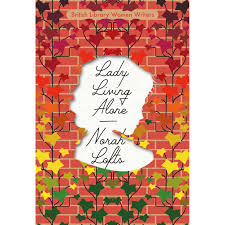 And now, in this low and critical moment, something in Penelope, something which had understood courage and resource and action, though she herself had never been brave or resourceful or active, stirred and shook itself. The pirate woman, Jane Moore, the Aztec girl, Xhalama, the misunderstood Tudor stateswoman and others of their blood, stood by her bed, urging her to save herself . . . and to justify them.
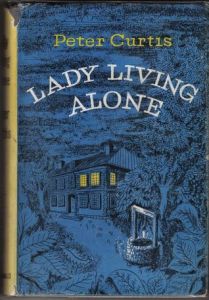 Terry is a great addition to Penelope’s household and her life: he takes excellent care of her, even giving her massages when she is stiff and tired from typing. Once again things seem to be going well for Penelope, but Terry’s presence kindles gossip. When he confronts her about it, he shocks her by adding “I happen to be terribly in love with you.” He kisses her, “and Penelope was lost.” She agrees that they should marry. Hooray! you might think: our mousy heroine has found love. But before the chapter closes, the novel shifts gears, giving us a glimpse of the real Terry in his “expression of calculating triumph”: “After all, one likes six months of hard labour to bear some result.”
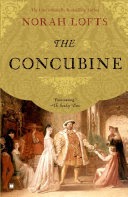 —and gets ideas. “If we are part of all we have been,” comments the narrator, “how much more are we part of all we have made?” I loved this moment, which picks up on an idea that has been central to a lot of my own work on women’s writing. “Lives do not serve as models,” Carolyn Heilbrun wrote in Writing A Woman’s Life; “only stories do that.” For Penelope, the stories she has written quite literally empower her—and then it is “over and done with, and Penelope was no more a clever, cunning, ruthless creature, but a gentle little woman with a conscience.”
  It has been a long time since I worked through Elizabeth Gaskell’s Life of Charlotte Brontë with a class. In fact, the last time I did so was the first year I began this blog series, in the
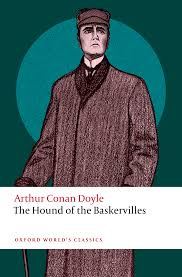 We started with Sherlock Holmes in Mystery & Detective Fiction this week. I’m not the world’s biggest Holmes enthusiast, but as I have documented here often enough over the years, I greatly appreciate The Hound of the Baskervilles, which we will get to on Wednesday. Today was “The Adventure of the Blue Carbuncle,” with its famous “interpret everything about a man from his hat” set piece, and “A Scandal in Bohemia,” with Irene Adler (“To Sherlock Holmes, she was always the woman”). These are good ones: I enjoy them. I think the class is going fine so far: it ought to be, considering how often I’ve taught it now! One thing I’m noticing is spotty attendance. It isn’t making me rethink my long-ago decision not to give grades for attendance, but it gives me food for thought in other ways, as this seems to be a trend in this class in recent years. Perhaps it’s because the course is an elective for pretty much everyone taking it, so they give it lower priority than their other obligations? Is it that students who don’t take a lot of English classes assume the pertinent course content is exclusively in the “textbooks” (what we call the “readings”!) and don’t expect our class time to offer much “value added”? I know that in some subjects lectures often do simply reiterate content in that way, but of course I’m not standing there rehearsing the plot of The Moonstone. Anyway, I try not to take it personally but it rather baffles me: what is the point in signing up to “take” a class but then not really “taking” it? Sure, you can read on your own (or, sigh, just search online summaries and call that “keeping up”), but unless all you are after is the course credit, aren’t you skipping the good part, not to mention the part you are actually paying for?
 I pretended everything would be okay because it seemed impossible to always be saying goodbye. To blueberries. To the ocean. To ravens. To pelicans and plovers. To the cormorants. To the sunlight on the living room wall at four o’clock. To the sound of you in the next room.
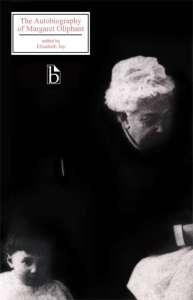 In my Victorian Women Writers seminar, we are discussing Margaret Oliphant’s Autobiography. When I was drawing up the syllabus for this version of the course, I included this book without much reflection, as it has always been a staple of the reading list. Preparing for class over the past few days has been a bit rough, though, as the last time I had actually read it was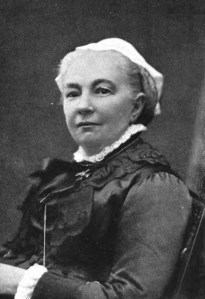
 In Mystery & Detective Fiction, we have begun our work on The Moonstone. I usually really enjoy teaching this novel as I know it well enough now and am confident enough in my own ideas about it that, while I do always reread it and update my notes, I can lead a fairly fluid discussion without worrying that we won’t get where I want us to go. Tomorrow is mostly “talk about Betteredge” day: I’ll start by just gathering up observations about what kind of fellow he is, considering both the things he explicitly says and how he says them—which is at least as important, given the novel’s emphasis on first-person testimony and the way eye-witnesses see according to their assumptions and prejudices. We can build out from there into a sense of the novel’s setting: what kind of world does Betteredge serve, what are the threats to or problems with that world, who in the novel begins to counter his point of view, and so on, which should lead us into Sergeant Cuff and what he brings to the investigation—and then the sources of his failures to solve the crime.
 I don’t want you to blame yourself for what happened. I know you would have come to get me if you could, but I couldn’t have gone anyway, not with Agnes ill.
 This is very much Kivrin’s experience, and thus ours, as we read both Willis’s conventional narration of Kivrin’s time in 1348 and the more fragmentary bulletins Kivrin records for those back home in her own time, which gradually take on more and more the character of the few remaining testaments of those who actually lived through the plague years, documents which had once seemed to Kivrin melodramatic and implausible. Where the archive is scant, as it must be in such dire circumstances, we rely on our imaginations to fill in the blanks and to fully humanize it. I don’t think anyone could read Doomsday Book and not be overcome with horror and pity for those who faced what they understandably believed was the end of the world.
 —until his turn comes as well. It turns out that Father Roche sees Kivrin’s arrival as literally miraculous, her presence among them a kind of gift or grace from God, whose love and mercy he never doubts, in spite of everything he sees and experiences. For Kivrin, fighting against a malicious, invisible enemy, and always thinking of those who care for her and especially of her tutor, Mr. Dunworthy, whom she believes to the very end will come to her rescue, the line between science and religion starts to blur. Who is Mr. Dunworthy to Kivrin, after all, but an unseen presence—the thought of whom gives her hope and strength in her darkest hours—and an audience for her testimony, which is spoken into a recording device which it had seemed so clever to place in her wrist, so that she would appear to be praying? “It’s strange,” she says in one of her final such messages to someone who may or may not ever receive it;
 In summer, and particularly when the wind blows from the south-west across the lawn, the septic tank gives out a strong stench, and guests move uneasily nearer the house. ‘Oh, it is a body,’ the girls say. ‘We have a body in there, no one you know. It decomposes, of course, but so slowly one quite despairs.’
 Before this term picks up much steam (today was the first day of classes, so we are still in the warming-up phase, with its illusions of ease), I thought I’d catch up a bit on last term. I had good intentions to post at least more regularly, if not weekly, as I once did. Maybe it’s boldly declaring such intentions that fatally undermines them! Just in case, I won’t make that mistake here.
 How much of a shadow did AI cast over my term? It’s actually a bit hard to say. I tried not to be preoccupied with it. I had just two cases of clear use, both evident from their hallucinations. There were many other submissions that made me wonder. I hated that. I don’t want to be suspicious about my students; I certainly don’t want fluency to become grounds for accusations. I’ve seen a lot of professors confidently declaring that they can spot AI usage. Maybe I’m naïve, or maybe I don’t assign tricky enough questions, or maybe my general expectations are too low, but I’m not nearly so confident. I know what they mean when they talk about the vacuity of AI responses and the other (likely) “tells”—previously rare (for students) words like “delve,” everything coming in threes, too-rapid turns to universalizing proclamations. I caught what I considered a whiff of AI from a lot of students’ assignments. But many of these things used to show up before there was Chat GPT, sometimes because of high school teachers who taught them that’s what good writing or literary analysis should look like, or because some students are authentically fluent, even glib, and nobody has pulled them up short before and demanded they say things that have substance, not just style. I honestly don’t really know how to proceed, pedagogically, beyond continuing to make the best case I can for the reasons to do your own reading, writing and thinking. I do know that I wish we could slow the infiltration of AI into all of the tools we and our students routinely use. I also believe that there are many students still conscientiously doing their own work, and they deserve to have teachers who trust them. I try hard to be that teacher unless evidence to the contrary really stares me in the face.
 Anyway. The first-year course went fine, I thought. I wish it didn’t have to be a lecture class, but with 90 students (next year we will all have 120), there’s really no other option. I always try to get some class discussion going, and we meet in tutorial groups of “only” 30 once a week as well, but the real answer to “what to do about AI” is the same as the answer to most pedagogical problems we have: smaller classes, closer relationships, more individual attention, especially to their writing. I probably won’t be teaching a first-year class next year, for the first time in a long time, because I will have a course release for serving as our undergraduate program coordinator. In part but not just because of AI, I am glad for the chance to give the course a refresh, maybe even a complete redesign. I want to keep using specifications grading but I’d like to reconsider the components and bundles I devised. I want to think about the readings again, too, maybe moving towards more deliberate thematic groupings, or including some full-length novels again. When you teach a course for several years in a row the easiest thing to do is repeat what you just did, because the deadlines for course proposals and timetabling and book orders come earlier and earlier. I’ve done a lot of different first-year classes since I started at Dalhousie in 1995. Who knows: the next version I develop might be my last! And maybe by the time I am offering it, probably in Fall 2026, the AI bubble will have burst. I mean, surely at some point the fact that it is no good—that it spews bullshit and destroys the environment and relies on theft—will matter, right? RIGHT?
 My other class was The 19th-Century British Novel from Dickens to Hardy. I enjoyed it so much! The reading list was one I haven’t done since 2017: Bleak House, Adam Bede, Lady Audley’s Secret, and Tess of the d’Urbervilles. It was particularly lovely to hear so many students say they had no fears about Bleak House because they had enjoyed David Copperfield so much last year in the Austen to Dickens course. I think I have mentioned before in these posts that in recent years I have been making a conscious effort to wean myself from my teaching notes. I still prepare and bring quite a lot of notes, but I try to let that preparation sit in the background and set up topics and examples for discussion that then proceeds in a looser way. The notes are always there if I think we are losing focus or running out of steam, but I don’t worry about whether I’m following the plan I came with. It was interesting, then, to dip into my notes from that 2017 version, because I realized how much my approach has in fact changed since then. I was very glad to have them to draw on and adapt, but although if you’d asked me in 2017 whether I did much “formal” lecturing I would have said I did not, in fact they show that I did run much more scripted classes than I do now. The things I want to talk about have not changed that much, although of course I do browse recent criticism and introduce new angles or approaches that interest me. Basically, though, I guess my attitude to this class (and the Austen to Dickens one) is “if it ain’t broke, don’t fix it”: I believe them to be rigorous, stimulating, and fun, and students seem to agree. Unlike the first-year course, then, these ones are likely to stay more or less the same until I retire. More or less, not exactly! They have evolved a lot already, in more ways than my own teaching style, and I will not let them go stale. I wouldn’t want that for my own sake, never mind for my students’.
 This is all very general, without the kind of “here’s what we talked about today” specificity that I used to incorporate when I really did post nearly every week about my classes. (There are 318 posts in that
 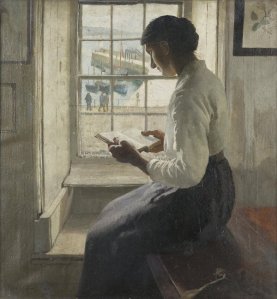 What a nice conversation unfolded under my previous post! I suppose it isn’t surprising that those of us who gather online to share our love of books also share a lot of experiences with books, including making often difficult decisions about what to keep. Acquiring books is the easy part, as we all know, especially because our various social channels are constantly alerting us to tempting new ones. I have really appreciated everyone’s comments.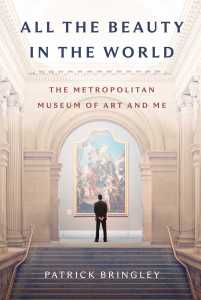
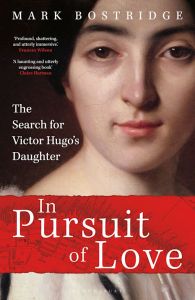 I read two fabulous memoirs in 2024: Mark Bostridge’s In Pursuit of Love (which deserved but did not get its own post) and Sarah Moss’s My Good Bright Wolf (
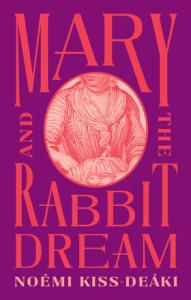 If I had to identify a low point of my reading year, it would probably be
 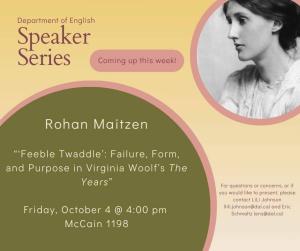 I’m a bit disappointed in how much (or, I should say, how little) writing I got done in 2024. It was my slowest year yet for reviews at the TLS, with just two, of Perry’s Enlightenment and, “in brief,” Sara Maitland’s True North. (I am working now on a review of Anne Tyler’s Three Days in June, so they haven’t quite forgotten me!) I reviewed three novels for Quill and Quire in 2024: Elaine McCluskey’s