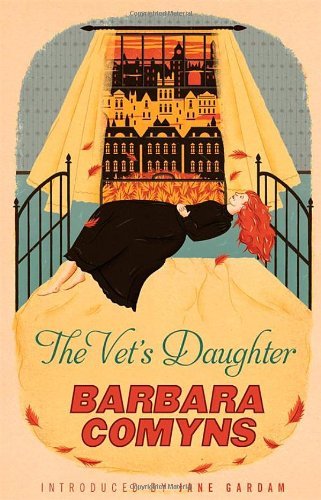
And then in the night it happened again and I was floating, definitely floating. The moonlight was streaming whitely through the window, and I could see the curtains gently flapping in the night wind. I’d left my bed, and except for a sheet, the clothes lay scattered on the floor. I gently floated about the room. Sometimes I went very close to the ceiling, but I wouldn’t touch it in case it made me fall to the ground.
What a strange, and strangely compelling, novel The Vet’s Daughter is! It seems like a grimly realistic story at first, with its details about the sordid life of eponymous Alice, her coarse, brutal father, and her sad mother, doubled up with a pain that only makes her husband despise her the more: “For Christ’s sake, woman, send for a doctor; and, if he can’t put you right, keep out of my sight!” It continues in what seems like a straightforward enough way, with her mother’s decline and death, and then the arrival of Rosa, the wicked would-be stepmother. It’s an unrelentingly dark story with a gothic atmosphere only rendered stranger by the constant presence of the vet’s patients:
At night I was all alone in the house. Although I slept with my head under the bedclothes, I could hear awful creakings on the stairs, and sometimes I thought I could hear whisperings by my bed. I asked Mrs. Churchill if she would stay and keep me company; but she said her husband didn’t like her to be out at night, and she had ‘our Vera’s’ boy staying with her while his mother was in hospital. One night the dogs started barking and yelping and I thought something terrible really had happened. I lay in bed shivering, too afraid to go and see if the house were on fire, or if burglars were creeping through the pantry window. In the morning I found the cage that contained the old cock with the diseased eye had fallen to the ground, and the bird was dead and heavy.
Things only get stranger, and grimmer, as the novel goes on — and then just when you wonder whether Alice has hit rock bottom, she rises — quite literally — to the top:
In the night I was awake and floating. As I went up, the blankets fell to the floor. I could feel nothing below me — and nothing above until I came near the ceiling and it was hard to breathe there. I thought, ‘I mustn’t break the glass globe.’ I felt it carefully with my hands, and something very light fell in them, and it was the broken mantle. I kept very still up there because I was afraid of breaking other things in that small crowded room; but quite soon, it seemed, I was gently coming down again. I folded my hands over my chest and kept very straight, and floated down to the couch where I’d been lying. I was not afraid, but very calm and peaceful. In the morning I knew it wasn’t a dream because the blankets were still on the floor and I saw the gas mantle was broken and the chalky powder was still on my hands.
It’s possible to move past this moment and assume that, Alice’s own conviction (and the physical evidence) notwithstanding, it was a dream . . . except that it keeps happening: she keeps “floating” above the dreary circumstances that she seems so powerless to change, above the disappointments that follow so bitterly one after another, above the people who fail her or leave her or just don’t love her. Her levitation brings no levity to the novel, though it is darkly comical. For instance, when she asks her one ally, her admirer Henry Peebles, “if it was unusual for people to sometimes rise into the air when they were resting in their beds — particularly in strange beds” he is understandably “very slow in understanding what I meant”; when she decides to show her false lover Nicholas that she “can do things others can’t do” he watches her rise, horrified, and then “in a scared and awful whisper” tells her to “Stop it, stop it, I say!”
Alice can rise above her life but not leave it behind; it seems only fitting that the last indignity she suffers is having her gift used against her, and poetic justice that her final fall should precipitate destruction. The novel has the tautness of a fairy tale and the patness of an allegory. Though it ends up not being a realist novel, though, it’s very specific about Alice’s oppression and her psychic suffering: its critique is perhaps more resonant and devastating because it resorts to fantasy rather than offering restitution or resolution.
The Vet’s Daughter is the first Comyns novel I’ve read and it definitely makes me want to read more (I’ve got Our Spoons Came from Woolworths and Who Was Changed and Who Was Dead in my Virago collection). Her prose is not elaborate or florid but her turns of phrase are remarkably satisfying and often surprising. The very first line of The Vet’s Daughter is actually a good example: “A man with small eyes and a ginger moustache came and spoke to me when I was thinking of something else.” Aren’t you immediately curious, both about the man’s business with her and about what she was thinking when he interrupted? I see that the other two novels also have brilliant, irresistible starts: “The ducks swam through the drawing-room window,” begins Who Was Changed, while Our Spoons opens “I told Helen my story and she went home and cried.” The Vet’s Daughter also shows that Comyns can do vivid, tactile description, full of the kinds of little details that make a scene particular, and also scenes full of dramatic action, fear, and pathos — such as the terrible attempted rape, after which Alice — bruised and bleeding, stands in the street and thinks “There is no hope for me — no hope at all.”
The Vet’s Daughter is at once compact and suggestive: it is dense with details that feel meaningful, and meaningfully connected, but whose meaning is not immediately transparent. Why, for instance, is Alice’s father a vet? I don’t mean literally, in terms of the plot, of course: is there something about his meticulous care for animals (his skill as a vet is often mentioned) that helps us understand Alice’s place in the world? Why does Alice call Henry “Blinkers”? What doesn’t he see? How does his mother’s life or death reflect Alice’s situation? What exactly is Nicholas’s role — if he even exists? Does any of it happen the way Alice says it does, in fact? I found myself thinking that it would teach very well: it’s eerie and fast-paced enough to catch students’ attention and puzzling enough to keep it.
The Vet’s Daughter is the latest choice of the Slaves of Golconda reading group. You will find more great posts and discussion of the book at the Slaves of Golconda site!
 I really enjoyed reading Rabih Alameddine’s An Unnecessary Woman. How could I not, being who I am? The novel is custom-made for its inevitable audience (readers!): not only is it about an avid reader but one of its central themes is the transporting exhilaration of reading itself. Its voice is wry and ironic, acerbic and occasionally even acidic — because these are the qualities of its heroine and narrator, Aaliya. It is also, as Aaliya is not (or, only very rarely), sympathetic: it prompts us, implicitly, to understand Aaliya and to be on her side, despite how prickly and anti-social she is. It’s hard to be this close to someone, to see things from her point of view, and not end up, if not her friend, at least her ally. And for a lot of readers, being prickly and anti-social is probably pretty familiar anyway: if we’re reading An Unnecessary Woman in the first place, there’s a better than zero chance that we too like being in a book better than being in most rooms, being with our favorite authors and characters better than being with many of the people we know in real life. So Aaliya, though she is not particularly nice or likable, is perversely “relatable.”
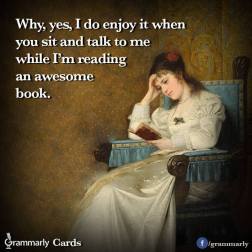 Up to a point, then, Aaliya’s tale is a celebration of the intrinsic pleasures and challenges of literature. Reading is, after all, a fundamentally individual activity: it’s your mind alone with the words on the page. From the outside it can look like a form of self-absorption. It is certainly a kind of self-sufficiency: as long as I have a good book, I don’t need anyone else. Someone reading intently projects (usually without meaning to) a tacit hostility — a wish to be left alone, to be uninterrupted. Every avid reader has probably, at one time or another, been teased or hassled about this, which may be one reason Aaliya is (for all her faults) such an appealing heroine to other readers: she’s a dedicated, unrepentant reader who relishes (and fights quite selfishly for) her lonely apartment with its stacks of books. Her life epitomizes a reader’s life (which is a loner’s life), perfected but not idealized.
 For all the enjoyment I took in the novel, I also ended up feeling that perhaps it’s too pat: that it plays too neatly into my hands and the hands of other readers who like nothing better than to have their passion for literature confirmed in an interesting and non-platitudinous way. For people who like this sort of thing, is An Unnecessary Woman too deliberately exactly what they like — is Aaliya too ready-made a literary heroine? She was certainly easy for me to side with, so cosmopolitan and secular and apolitical. A lot goes on around her while she reads and reads and reads (in this respect, An Unnecessary Woman reminded me of another irresistible fictional reader, Elizabeth Brown in Sarah Stewart’s
  I’m not sure when I last read George Eliot’s first published fiction, Scenes of Clerical Life. It might have been as much as 15 or 20 years ago that I read any of the stories right through, though I have certainly dipped into “Amos Barton” once or twice when thinking or writing about her realism and her intrusive narrator. I picked the book off my shelf again this week because I have been thinking (and will be writing) about scenes of visiting in Eliot’s novels. So many of her climactic moments are set up that way, with a sympathetic visitor bringing comfort or guidance to someone in crisis: Dinah visiting Hetty in prison in Adam Bede, for instance; Lucy visiting Maggie near the end of The Mill on the Floss; perhaps most notably, Dorothea visiting Rosamond in
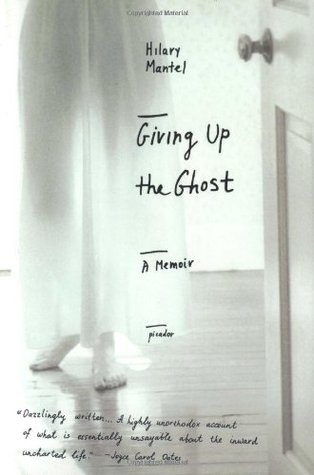
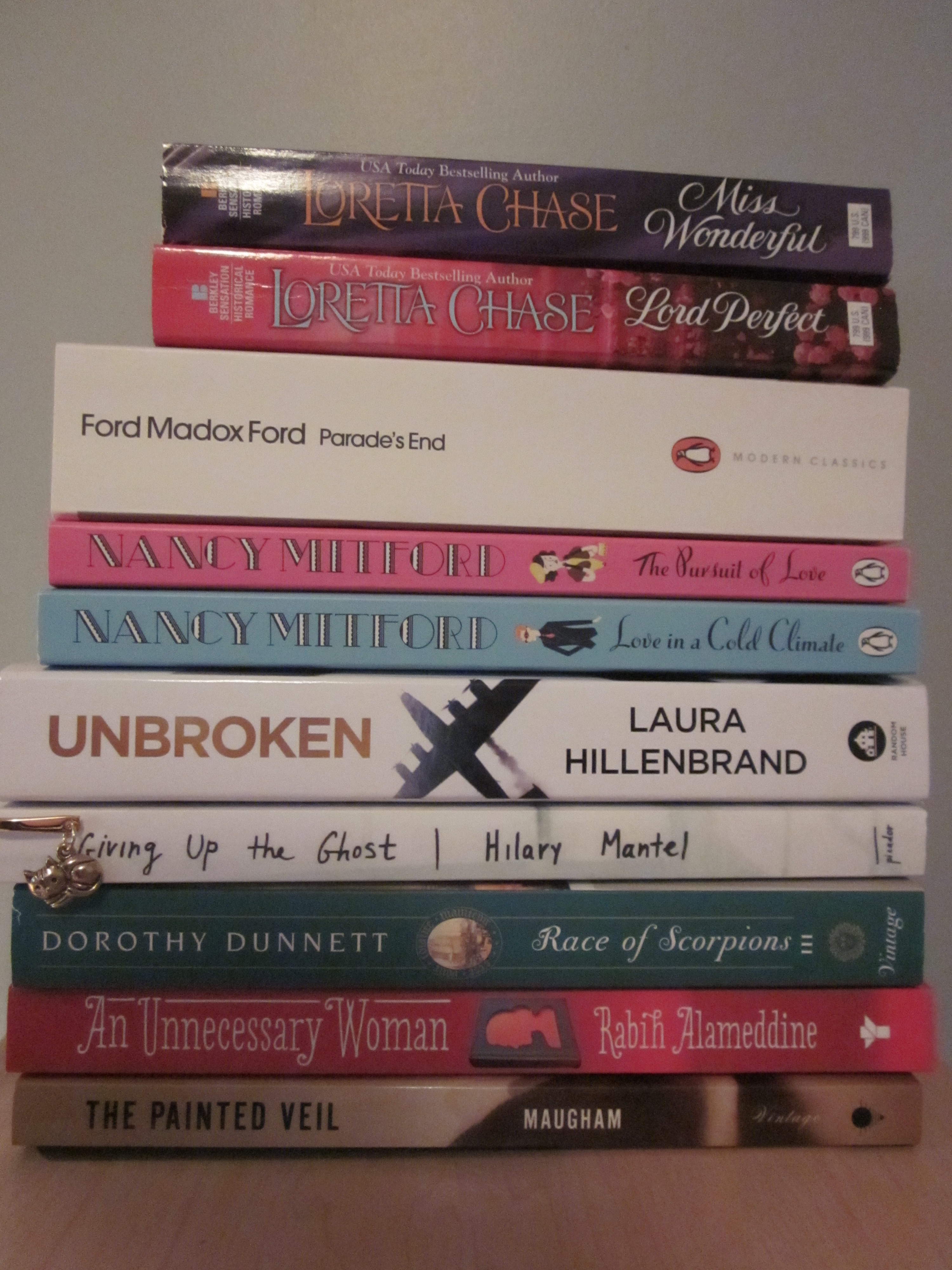
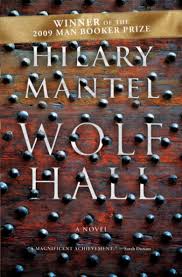 Clearly Mantel did not consider Giving Up the Ghost the place to talk about her books — at least, not directly. Perhaps the most revealing thing she says about being a writer is a passing remark about Jane Eyre: “I remember the first time I read Jane Eyre: probably every woman writer does, because you recognize, when you have hardly begun it, that you are reading a story about yourself.” But again, she just moves on, so it’s not just her books she’s not talking about, it’s her whole experience of being a writer, a woman writer, a person writing, a person thinking about books, which — though we know they are integral to her life — seem oddly peripheral in her life story.





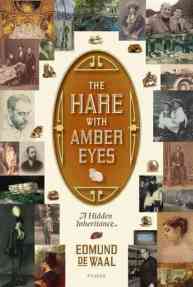
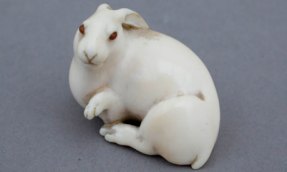 But the story he’s telling is a story of objects, and for all that we feel the impropriety of caring about the recovery of 264 tiny carvings when “65,459 Austrian Jews had been killed,” de Waal also emphasizes, across the book as a whole, that things routinely outlive their owners, are passed along, given away, inherited. Objects do last; art could perhaps be defined as objects that are meant to last. Every object that endures has a story longer than the story of any individual owners. That doesn’t make objects more important than people, but it creates an interesting counterpoint of caring, and raises many thought-provoking questions about how we understand what matters. It’s not as simple, de Waal’s book asserts, as choosing life over art, people over things — or, it seems simple until you try to explain why. The destruction of the beautiful desk, for instance, seems so gratuitous, until we recognize that the heave over the handrail is not really about gilt or marquetry but about power and anger and hatred: in its own way, that act is as disrespectful of life, of humanity, as any of the physical cruelties the Ephrussi family suffers — or it is, at any rate, part of the same spectrum of horror. To refuse to mourn that loss is to capitulate, at least a little, to the logic of the looters, who see around them only expensive “stuff” to which the watching family has no right. But the Nazis do value the art they loot, in a way: this chilling episode is followed by a very different, methodical pillaging that benefited museums all over the Reich. What they don’t care about is the kind of story de Waal is telling, the intertwining of objects and people. Or maybe they understand it only too well and know that by breaking up collections they are furthering their work of erasing identities, like the official stamps (“‘Israel’ for the men, ‘Sara’ for the women”) that finally make de Waal cry.
 “For no good reason” — and then, a bit later, still marveling at the lavishness of decoration, he wonders, “What was Ignace trying to do? Smother his critics?” It’s too much for de Waal, this cold marble opulence: he finds it unpleasantly slippery, with “nothing to grip onto.” This kind of display seems decadent, overwrought, excessive. What is the use of such splendour, in a family home? Or anywhere? Should the splendor of the Palais impress us, make us envious, or spur us to revolutionary zeal? Can we be both repelled (“I run my hands along the walls,” de Waal says, “and they feel slightly clammy”) and delighted — because this kind of wealth has prompted, supported, or preserved so much beauty for the rest of us? I was reminded, as I puzzled over this, of Trollope’s The Warden:

 I didn’t love Jo Walton’s
  Novel Readings